Adhyaya 21
Bṛhaspati’s Counsel on Contentment (Santoṣa), Restraint, and Adroha (Non-injury)
Upa-parva: Rājadharmānuśāsana (Instruction on Kingly Duty) — Contextual Unit
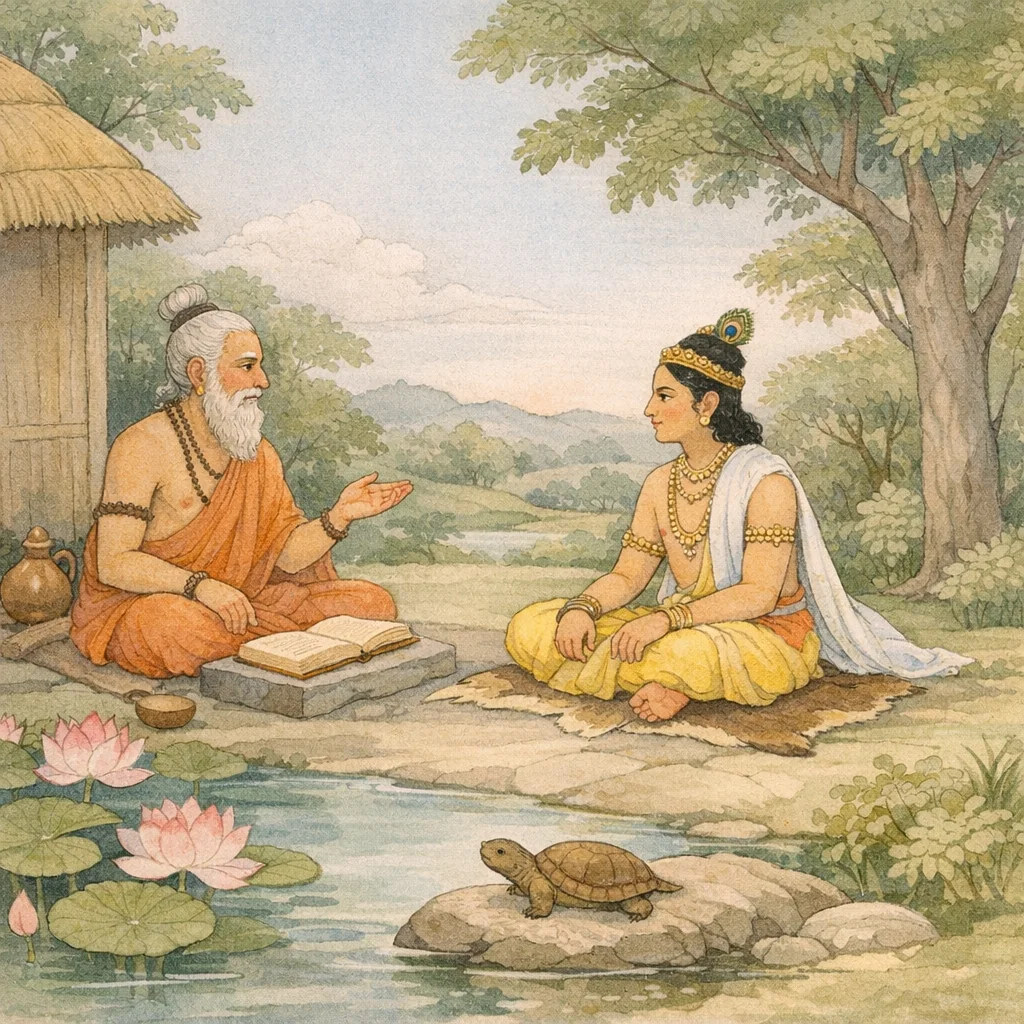
A speaker introduces an ancient exemplum: when Indra questioned Bṛhaspati, the preceptor articulated a graded interior discipline culminating in ethical clarity. Contentment (santoṣa) is identified as a highest felicity; desire is to be withdrawn like a tortoise drawing in its limbs, producing inner lucidity and composure. Fearlessness and the cessation of mutual fear are linked to victory over desire and aversion. The discourse then shifts from interior mastery to civic virtue: one who is not hostile toward any being—by deed, mind, or speech—approaches brahman-like steadiness. The text surveys plural human endorsements (calm, exertion, sacrifice, renunciation, giving, receiving, solitary discipline, governance), and concludes that the wise determine adroha toward beings as the core dharma. A compact list of stabilizing virtues follows—truthful speech, equitable distribution, fortitude, forgiveness, marital fidelity, gentleness, modesty, and non-restlessness—then the chapter applies these to rājadharma: the ruler should be self-controlled, impartial to like and dislike, restrain the non-virtuous, support the virtuous, and establish subjects on the path of dharma. It notes that such rule yields success here and beyond, while final liberation is described as difficult and obstacle-laden.
Chapter Arc: युद्ध की धूल बैठ चुकी है, पर युधिष्ठिर के भीतर का कोलाहल नहीं थमता—ऐसे में मुनिके ‘देवस्थान’ एक प्राचीन इतिहासनुमा उपदेश का द्वार खोलते हैं: धर्म का सार बाह्य वैभव नहीं, अंतःसंतोष है। → देवस्थान राजन् के सामने जीवन-मार्गों की बहुलता रखते हैं—कोई सब त्यागकर मौन-ध्यान में बैठता है, कोई राज्य-पालन को श्रेष्ठ मानता है, कोई यज्ञ-कर्म में रत रहता है। इसी विविधता में प्रश्न तीखा होता जाता है: राजा के लिए ‘श्रेष्ठ’ धर्म कौन-सा—संन्यास, कर्म, या प्रजा-रक्षा? → उपदेश का शिखर ‘संतोष’ और ‘इन्द्रिय-निग्रह’ के घोष में आता है—संतोष को स्वर्ग से भी बढ़कर कहा जाता है, और कूर्म के समान कामनाओं को समेट लेने पर आत्म-ज्योति का अपने ही भीतर प्रसाद पाना बताया जाता है। यही क्षण युधिष्ठिर के लिए धर्म का आंतरिक मानदण्ड स्थिर करता है। → देवस्थान मनु-प्रणीत आचार-धर्म की रेखाएँ खींचते हैं—द्रोह-त्याग, सत्य, मृदुता, अचापलता, विधिपूर्वक श्रवण-आधारित कर्म, तथा सत्य-दान-तप और अनृशंस्य (करुणा) से युक्त जीवन। निष्कर्ष यह कि जो काम-क्रोध से रहित होकर विधि से कर्तव्य करता है, वही ‘धर्मनिश्चित’ राजा है। → युधिष्ठिर के मन में यह संकेत छोड़ दिया जाता है कि बाह्य कर्म (यज्ञ/राज्य) तभी पवित्र हैं जब उनका मूल संतोष, संयम और करुणा हो—अब आगे प्रश्न यह रहेगा कि इस मानदण्ड को राज्य-व्यवहार में कैसे उतारा जाए।
Shlokas
Verse 1
अप्-४#-#क+ एकविशो< ध्याय: देवस्थान मुनिके द्वारा युधिष्ठिरके प्रति उत्तम धर्मका और यज्ञादि करनेका उपदेश देवस्थान उवाच अनत्रैवोदाहरन्तीममितिहासं पुरातनम् | इन्द्रेण समये पृष्टो यदुवाच बृहस्पति:,देवस्थान कहते हैं--राजन्! इस विषयमें लोग इस प्राचीन इतिहासका उदाहरण दिया करते हैं। किसी समय इन्द्रके पूछनेपर बृहस्पतिने इस प्रकार कहा था--
Devasthāna said: “O King, in this very matter people cite an ancient precedent from tradition. Once, when Indra questioned him at an opportune time, Bṛhaspati replied in this manner.”
Verse 2
संतोषो वै स्वर्गतम: संतोष: परमं सुखम् | तुष्टेन किंचित् परत: सा सम्यक् प्रतितिष्ठति,“राजन! मनुष्यके मनमें संतोष होना स्वर्गकी प्राप्तिसे भी बढ़कर है। संतोष ही सबसे बड़ा सुख है। संतोष यदि मनमें भलीभाँति प्रतिष्ठित हो जाय तो उससे बढ़कर संसारमें कुछ भी नहीं है
“O King, contentment in a person’s heart is greater even than attaining heaven. Contentment is the highest happiness. When contentment is rightly established within, there is nothing in this world beyond it.”
Verse 3
यदा संहरते कामान् कूर्मोडज़ानीव सर्वशः । तदा<5<त्मज्योतिरचिरात् स्वात्मन्येव प्रसीदति
Devasthāna said: “When a person withdraws all desires, just as a tortoise draws in its limbs on every side, then the inner light of the Self soon becomes calm and clear, resting in one’s own true being.”
Verse 4
“जैसे कछुआ अपने अंगोंको सब ओरसे सिकोड़ लेता है, उसी प्रकार जब मनुष्य अपनी सब कामनाओंको सब ओरसे समेट लेता है, उस समय तुरंत ही ज्योतिःस्वरूप आत्मा अपने अन्तःकरणमें प्रकाशित हो जाता है ।। न बिभेति यदा चायं यदा चास्मान्न बिभ्यति | कामद्वेषौ च जयति तदा55त्मानं च पश्यति,“जब मनुष्य किसीसे भय नहीं मानता और जब उससे भी दूसरे प्राणी भय नहीं मानते तथा जब वह काम (राग) और द्वेषको जीत लेता है, तब अपने आत्मस्वरूपका साक्षात्कार कर लेता है
“As a tortoise draws in its limbs from every side, so too when a person gathers in and restrains all desires from every direction, the Self—whose nature is pure light—at once shines forth within the mind-heart. When one neither fears any being nor is feared by others, and when one conquers craving and hatred, then one comes to see the Self as it truly is.”
Verse 5
यदासोौ सर्वभूतानां न द्रह्मति न काड्क्षति । कर्मणा मनसा वाचा ब्रद्म सम्पद्यते तदा,“जब वह मन, वाणी और क्रियाद्वारा सम्पूर्ण प्राणियोंमेंसे किसीके साथ न तो द्रोह करता है और न किसीकी अभिलाषा ही रखता है, तब परब्रह्म परमात्माको प्राप्त हो जाता है'
“When a person neither bears malice toward any living being nor hankers after anything, and maintains this harmlessness and non-craving through deed, thought, and speech, then that person attains Brahman—the supreme reality.”
Verse 6
एवं कौन्तेय भूतानि तं त॑ धर्म तथा तथा । तदा5>त्मना प्रपश्यन्ति तस्माद् बुद्धयस्व भारत,कुन्तीनन्दन! इस प्रकार सम्पूर्ण जीव उस-उस धर्मका उसी-उसी प्रकारसे जब ठीक- ठीक पालन करते हैं, तब स्वयं आत्मासे परमात्माका साक्षात्कार कर लेते हैं; अतः भरतनन्दन! इस समय तुम अपना कर्तव्य समझो
Thus, O son of Kuntī, when all beings duly follow that dharma—each in the manner appropriate to it—then, through the Self, they directly behold the Supreme Self. Therefore, O Bhārata, awaken to discernment and understand your duty now.
Verse 7
अन्ये साम प्रशंसन्ति व्यायाममपरे जना: | नैकं॑ न चापरं केचिदुभयं च तथापरे,कुछ लोग साम (प्रेमपूर्ण बर्ताव) की प्रशंसा करते हैं और कोई व्यायाम (यत्न और परिश्रम) के गुण गाते हैं। कोई इन दोनोंमेंसे एक (साम) की प्रशंसा नहीं करते हैं तो कोई दूसरे (व्यायाम) की, तथा कुछ लोग दोनोंकी ही बड़ी प्रशंसा करते हैं
Some people praise sāma—gentle, conciliatory speech and affectionate conduct—while others extol vyāyāma, vigorous effort and exertion. Some approve neither the one nor the other, and yet others commend both together.
Verse 8
यज्ञमेव प्रशंसन्ति संन्यासमपरे जना: । दानमेके प्रशंसन्ति केचिच्चैव प्रतिग्रहम्,कोई यज्ञको ही अच्छा बताते हैं तो दूसरे लोग संन्यासकी ही सराहना करते हैं। कोई दान देनेके प्रशंसक हैं तो कोई दान लेनेके
Devastāna said: “Some people praise sacrifice alone; others praise renunciation. Some extol the giving of gifts, while others even commend the receiving of gifts.”
Verse 9
केचित् सर्व परित्यज्य तूष्णीं ध्यायन्त आसते । राज्यमेके प्रशंसन्ति प्रजानां परिपालनम्
Devastāna said: “Some, renouncing everything, sit in silence absorbed in contemplation. Others praise kingship—specifically the protection and proper governance of the people.”
Verse 10
एतत् सर्व समालोक्य बुधानामेष निश्चय:
Having carefully surveyed all this in its entirety, this is the settled conclusion of the wise.
Verse 11
अद्रोहेणैव भूतानां यो धर्म: स सतां मतः । इन सब बातोंपर विचार करके विद्वानोंने ऐसा निश्चय किया है कि किसी भी प्राणीसे द्रोह न करके जिस धर्मका पालन होता है, वही साधु पुरुषोंकी रायमें उत्तम धर्म है ।। १०६ || अद्रोह: सत्यवचनं संविभागो दया दम:,किसीसे ट्रोह न करना, सत्य बोलना, (बलिवैश्वदेव कर्मद्वारा) समस्त प्राणियोंको यथायोग्य उनका भाग समर्पित करना, सबके प्रति दयाभाव बनाये रखना, मन और इन्द्रियोंका संयम करना, अपनी ही पत्नीसे संतान उत्पन्न करना तथा मृदुता, लज्जा एवं अचंचलता आदि गुणोंको अपनाना--ये श्रेष्ठ एवं अभीष्ट धर्म हैं--ऐसा स्वायम्भुव मनुका कथन है
Devastāna said: “That dharma which is practiced through non-hostility toward all beings is regarded by the virtuous as true dharma. Non-injury (non-hostility), truthfulness in speech, fair sharing and due offering of one’s portion to living beings, compassion, and self-restraint—these are declared to be the excellent and desired forms of dharma.”
Verse 12
प्रजन॑ स्वेषु दारेषु मार्दवं हीरचापलम् । एवं धर्म प्रधानेष्टं मनु: स्वायम्भुवो5ब्रवीत्,किसीसे ट्रोह न करना, सत्य बोलना, (बलिवैश्वदेव कर्मद्वारा) समस्त प्राणियोंको यथायोग्य उनका भाग समर्पित करना, सबके प्रति दयाभाव बनाये रखना, मन और इन्द्रियोंका संयम करना, अपनी ही पत्नीसे संतान उत्पन्न करना तथा मृदुता, लज्जा एवं अचंचलता आदि गुणोंको अपनाना--ये श्रेष्ठ एवं अभीष्ट धर्म हैं--ऐसा स्वायम्भुव मनुका कथन है
Devastāna said: “Beget offspring only with one’s own lawful wife; cultivate gentleness, modesty, and steadiness free from fickleness. Such are the foremost and most desired principles of dharma—so declared Manu Svāyambhuva.”
Verse 13
तस्मादेतत् प्रयत्नेन कौन्तेय प्रतिपालय । यो हि राज्ये स्थित: शश्वद् वशी तुल्यप्रियाप्रिय:
Therefore, O son of Kuntī, guard and uphold this with earnest effort. For the one who stands in kingship should always be self-controlled, remaining even-minded toward what is pleasant and what is unpleasant—thus protecting the realm through disciplined impartiality.
Verse 14
क्षत्रियो यज्ञशिष्टाशी राजा शान््त्रार्थतत्त्ववित् । असाधुनिग्रहरत: साधूनां प्रग्रहे रत:
A kṣatriya king should live on what remains after sacrifice, be a knower of the true purport of peace and right governance, take delight in restraining the wicked, and take equal delight in supporting and protecting the virtuous.
Verse 15
धर्मवर्त्मनि संस्थाप्य प्रजा वर्तेत धर्मत:ः । पुत्रसंक्रामितश्री श्व वने वन्येन वर्तयन्
“Having established the people upon the path of dharma, let them live in accordance with righteousness. Even if one’s prosperity has passed on to one’s son, one should continue to live in the forest, sustaining oneself on what is wild—maintaining a life shaped by discipline and duty rather than by possession.”
Verse 16
विधिना श्रावणेनैव कुर्यात् कर्माण्यतन्द्रित: । य एवं वर्तते राजन् स राजा धर्मनिश्चितः
By duly listening to the prescribed teachings, one should perform one’s duties without negligence. O King, the ruler who conducts himself in this manner is firmly established in dharma—his course is settled by righteousness.
Verse 17
कुन्तीनन्दन! अतः तुम भी प्रयत्नपूर्वक इस धर्मका पालन करो। जो क्षत्रियनरेश राज्यसिंहासनपर स्थित हो अपनी सम्पूर्ण इन्द्रियोंको सदा अपने अधीन रखता है, प्रिय और अप्रियको समानदृष्टिसे देखता है, यज्ञसे बचे हुए अन्नका भोजन करता है, शास्त्रोंके यथार्थ रहस्यको जानता है, दुष्टोंका दमन और साधु पुरुषोंका पालन करता है, समस्त प्रजाको धर्मके मार्गमें स्थापित करके स्वयं भी धर्मानुकूल बर्ताव करता है, वृद्धावस्थामें राजलक्ष्मीको पुत्रके अधीन करके वनमें जाकर जंगली फल-मूलोंका आहार करते हुए जीवन बिताता है तथा वहाँ भी शास्त्र-श्रवणसे ज्ञात हुए शास्त्रविहित कर्मोका आलस्य छोड़कर पालन करता है, ऐसा बर्ताव करनेवाला वह राजा ही धर्मको निश्चितरूपसे जानने और माननेवाला है ।। तस्यायं च परश्चैव लोक: स्यात् सफलोदय: । निर्वाणं हि सुदुष्प्राप्यं बहुविघ्नं च मे मतम्,उसका यह लोक और परलोक दोनों सफल हो जाते हैं, मेरा यह विश्वास है कि संन्यासके द्वारा निर्वाण प्राप्त करना अत्यन्त दुष्कर एवं दुर्लभ है; क्योंकि उसमें बहुत-से विघ्न आते हैं
Devastāna said: “O son of Kuntī, therefore you too should strive carefully to uphold this dharma. That Kṣatriya king who, while seated upon the royal throne, keeps all his senses continually under control; looks with equal vision upon what is pleasing and displeasing; eats only the food that remains after sacrifice; understands the true inner purport of the scriptures; restrains the wicked and protects the virtuous; establishes all his subjects on the path of dharma and himself acts in accordance with dharma; and, in old age, entrusts royal fortune to his son and goes to the forest, living on wild fruits and roots—there too, abandoning laziness, performing the scripturally enjoined duties he has learned through hearing the śāstras—such a king alone truly knows and honors dharma with certainty. For him, both this world and the next become fruitful. In my view, liberation through renunciation is exceedingly hard to attain and beset with many obstacles.”
Verse 18
एवं धर्ममनुक्रान्ता: सत्यदानतप:परा: । आनुृशंस्यगुणैर्युक्ता: कामक्रोधविवर्जिता:,इस प्रकार धर्मका अनुसरण करनेवाले, सत्य, दान और तपमें संलग्न रहनेवाले, दया आदि गुणोंसे युक्त, काम-क्रोध आदि दोषोंसे रहित, प्रजापालन-परायण, उत्तम धर्मसेवी तथा गौओं और ब्राह्मणोंकी रक्षाके लिये युद्ध करनेवाले नरेशोंने परम उत्तम गति प्राप्त की है
Thus, those kings who walked in the path of dharma—devoted to truthfulness, generosity, and austerity; endowed with virtues such as compassion; and free from faults like desire and anger—attained the highest and most excellent state. Their rule was oriented toward the protection of subjects and the service of righteous conduct, and they were prepared to fight to safeguard cows and Brahmins, holding such protection to be a central duty of kingship.
Verse 19
प्रजानां पालने युक्ता धर्ममुत्तममास्थिता: । गोब्राह्माणार्थे युध्यन्त: प्राप्ता गतिमनुत्तमाम्,इस प्रकार धर्मका अनुसरण करनेवाले, सत्य, दान और तपमें संलग्न रहनेवाले, दया आदि गुणोंसे युक्त, काम-क्रोध आदि दोषोंसे रहित, प्रजापालन-परायण, उत्तम धर्मसेवी तथा गौओं और ब्राह्मणोंकी रक्षाके लिये युद्ध करनेवाले नरेशोंने परम उत्तम गति प्राप्त की है
Those kings who were devoted to protecting their subjects, firmly established in the highest dharma, and who fought for the sake of cows and Brahmins, attained the unsurpassed state. The statement praises rulers whose governance is grounded in righteousness and whose use of force is restrained to the defense of the vulnerable and the upholding of sacred social duties.
Verse 20
इस प्रकार श्रीमह्याभारत शान्तिपर्वके अन्तर्गत राजधमनुशासनपर्वमें देवस्थानवाक्यविषयक बीसवाँ अध्याय पूरा हुआ,एवं रुद्रा: सवसवस्तथा55दित्या: परंतप । साध्या राजर्षिसंघाश्ष धर्ममेतं समाश्रिता: । अप्रमत्तास्तत: स्वर्ग प्राप्ता: पुण्यै: स्वकर्मभि: शत्रुओंको संताप देनेवाले युधिष्ठिर! इसी प्रकार रुद्र, वसु, आदित्य, साध्यगण तथा राजर्षिसमूहोंने सावधान होकर इस धर्मका आश्रय लिया है। फिर उन्होंने अपने पुण्यकर्माद्वारा स्वर्गलोक प्राप्त किया है
O Yudhiṣṭhira, scorcher of foes: in this very way the Rudras, the Vasus, the Ādityas, the Sādhyas, and hosts of royal seers, remaining vigilant, took refuge in this dharma. Thereafter, by the merit of their own righteous deeds, they attained the heavenly world. The passage underscores that careful, sustained adherence to dharma—rather than mere status or power—leads to auspicious destiny.
Verse 93
हत्वा छित्त्वा च भित्त्वा च केचिदेकान्तशीलिन: । कोई सब छोड़कर चुपचाप भगवानके ध्यानमें लगे रहते हैं और कुछ लोग मार-काट मचाकर शत्रुओंकी सेनाको विदीर्ण करके राज्य पानेके अनन्तर प्रजापालनरूपी धर्मकी प्रशंसा करते हैं तथा दूसरे लोग एकान्तमें रहकर आत्मचिन्तन करना अच्छा समझते हैं
Having slain, having cut down, and having shattered the enemy, some men—inclined to solitude—still choose the path of withdrawal. Others, after wreaking slaughter and rending the hostile army to win a kingdom, extol the dharma of protecting subjects as the highest duty; while yet others consider it best to dwell apart and engage in inward contemplation of the Self.
Verse 231
इति श्रीमहाभारते शान्तिपर्वणि राजधर्मानुशासनपर्वणि देवस्थानवाक्ये एकविंशो5ध्याय:
Thus, in the Śrī Mahābhārata, within the Śānti Parva—specifically the section on the instruction of royal duties—ends the twenty-first chapter, consisting of the words spoken by Devastāna. This closing formula marks the completion of a unit of teaching on rājadharma, the ethics and responsibilities of kingship.
Frequently Asked Questions
How a ruler (and by extension any agent) can choose among many praised practices—ritual, charity, renunciation, governance—while preserving social stability; the chapter resolves this by prioritizing non-injury and self-restraint as the ethical baseline.
Cultivate contentment and withdraw desire; conquer desire and aversion to remove fear and hostility; then express this inner discipline outwardly through adroha, truthful speech, equitable sharing, forgiveness, and impartial governance.
Rather than a formal phalaśruti, the chapter offers a meta-assessment: righteous kingship yields success “here and beyond,” while nirvāṇa is acknowledged as difficult to attain and impeded by many obstacles, underscoring the need for sustained discipline.