Adhyaya 196
Śarīrin, Buddhi, and the Limits of Sense-Perception (इन्द्रियबुद्धिशरीरिविचारः)
Upa-parva: Mokṣa-dharma (Mokṣa-dharma-parvan) — Discourse on liberation and the nature of the Self
Manu articulates an epistemology of the embodied knower (śarīrin) and the constraints of indriya-based cognition. The chapter argues that while the senses register prior experiences and objects, the ‘buddhi-form’ principle persists even when sense faculties are impaired, indicating a superior organizing capacity. The śarīrin is described as one, moving according to capacity, and entering the senses as fire enters fuel or wind animates a locus. A key claim is reflexive asymmetry: the senses do not perceive their own selfhood, whereas the kṣetrajña (knower of the field) ‘sees’ the senses and their operations. Multiple analogies support non-visibility without non-existence: unseen sides of Himavat, the moon’s invisibility on new-moon night, and the changing ‘sheaths’ (kośa) through which the moon appears to wax and wane—paralleling how embodiment changes while the embodied principle is not directly observed. The text further distinguishes the observable alterations of manifest forms (birth, growth, decay) from the unobserved status of the śarīrin, and uses Rahu-like imagery to indicate that certain entities are only cognized when conjoined with perceptible supports. The chapter concludes by stressing method: the knowable is grasped by knowledge, as like apprehends like, and not by an instrument incapable of reaching beyond its domain.
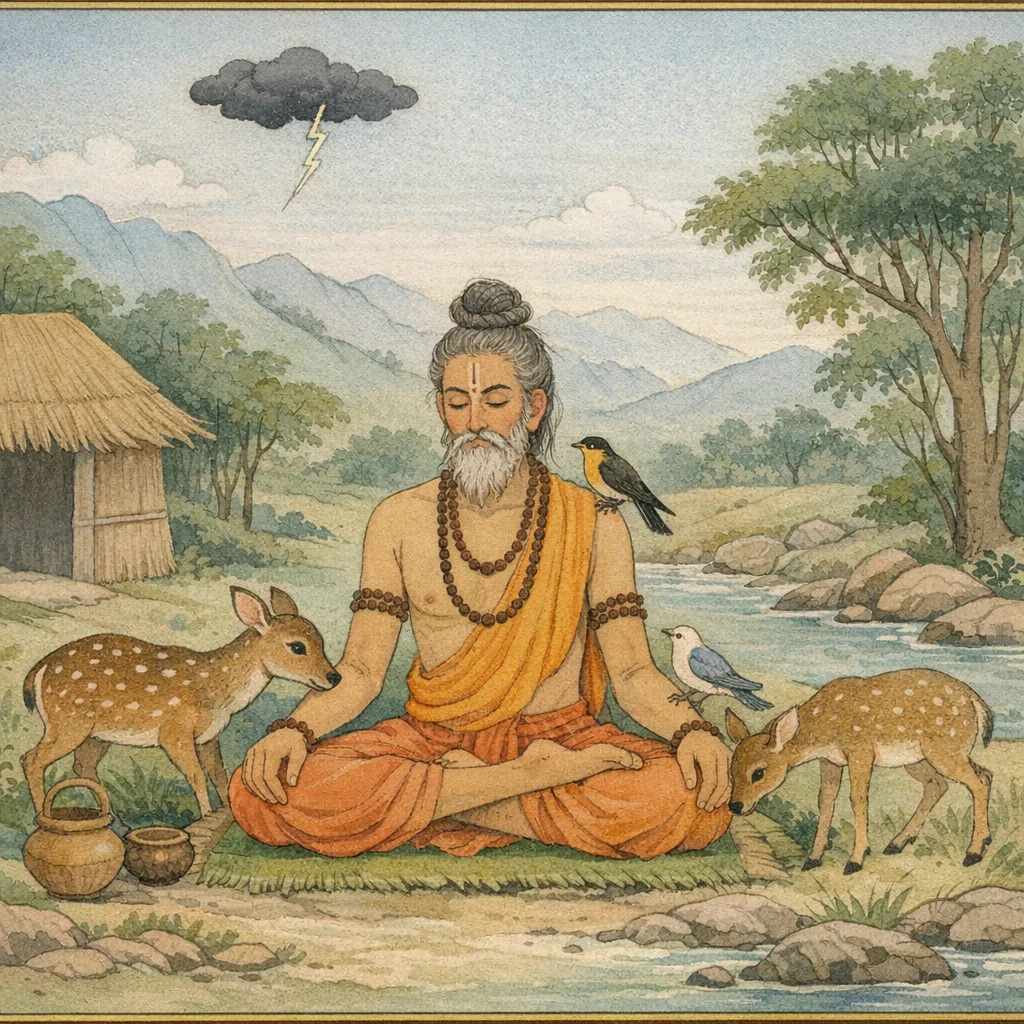
Chapter Arc: भीष्म, शोकाकुल युधिष्ठिर के सामने, मोक्ष की ओर ले जाने वाले ‘ध्यानयोग’ का चार प्रकारों में विधान करने का संकल्प लेते हैं—ऐसा ज्ञान जो जान लेने पर शाश्वत सिद्धि का द्वार खोल दे। → वे बताते हैं कि महर्षि-योगी जैसे ध्यान करते हैं वैसा ही साधक को करना चाहिए: इन्द्रियों को समेटकर, द्वन्द्वों से अप्रभावित होकर, काष्ठवत् स्थिर आसन में मन को एकाग्र धारण करना। पर मन-इन्द्रियाँ बार-बार भटकती हैं; साधक को उन्हें भीतर खींचकर पुनः संयमित करना पड़ता है। → संयम के पूर्व अभ्यास के बाद भी भीतर का ‘छठा’—मन—अचानक बिजली की तरह उछलता-भटकता है; उसी क्षण साधक की परीक्षा है: वह पाँच इन्द्रियों सहित मन को फिर से बुद्धि द्वारा समेटकर एकाग्रता में टिकाए। → धीरे-धीरे, क्रमशः (शनैः शनैः) परिभावना से ध्यान पकता है—जैसे सूखे चूर्ण का संस्कार धीरे-धीरे एकरस होता है। ध्यानजन्य सुख से संयुक्त योगी उसी कर्म में स्थिर होकर निर्वाण—निरामय, दोषरहित शान्ति—की ओर गमन करते हैं; वे संसार-दोषों से मुक्त होकर पुनर्जन्म के बन्धन में नहीं लौटते।
Shlokas
Verse 1
ऑपनआ प्रात बछ। >> 2 पज्चनवर्त्याधेकशततमो< ध्याय: ध्यानयोगका वर्णन भीष्म उवाच हन्त वक्ष्यामि ते पार्थ ध्यानयोगं चतुर्विधम् । य॑ंज्ञात्वा शाश्वतीं सिद्धि गच्छन्तीह महर्षय:,भीष्मजी कहते हैं--कुन्तीनन्दन! अब मैं तुमसे ध्यानयोगका वर्णन करूँगा जो आलम्बनके भेदसे चार प्रकारका होता है। जिसे जानकर महर्षिगण यहीं सनातन सिद्धिको प्राप्त करते हैं
Bhishma said: “Come, O Partha, I shall explain to you the discipline of meditation, which is fourfold according to the different supports (objects) on which it rests. By understanding it, the great seers attain, even here in this very life, the everlasting perfection.”
Verse 2
यथा स्वनुष्ठितं ध्यानं तथा कुर्वन्ति योगिन: । महर्षयो ज्ञानतृप्ता निर्वाणणतमानसा:,निर्वाणस्वरूप मोक्षमें मन लगानेवाले ज्ञानतृप्त योगयुक्त महर्षिगण उसी उपायका अवलम्बन करते हैं, जिससे ध्यानका भलीभाँति अनुष्ठान हो सके
Bhishma said: “The yogins practice in such a way that meditation is properly and fully carried out. Those great seers—satiated with true knowledge and with minds intent upon nirvāṇa—adopt precisely that method by which meditation can be well accomplished, fixing their attention on liberation as their very nature.”
Verse 3
नावर्तन्ते पुनः पार्थ मुक्ता: संसारदोषत: । जन्मदोषपरिक्षीणा: स्वभावे पर्यवस्थिता:,कुन्तीनन्दन! वे संसारके काम, क्रोध आदि दोषोंसे मुक्त तथा जन्मसम्बन्धी दोषसे शून्य होकर परमात्माके स्वरूपमें स्थित हो जाते हैं, इसलिये पुनः इस संसारमें उन्हें नहीं लौटना पड़ता
Bhishma said: “O son of Kuntī, the liberated do not return again, for they are freed from the faults of saṃsāra. When the defects bound up with birth are exhausted, they abide in their own nature, established in the essence of the Paramātman; therefore they need not come back to this world.”
Verse 4
निर्दन्द्धा नित्यसत्त्वस्था विमुक्ता नियमस्थिता: । असड्ान्यविवादीनि मन:शान्तिकराणि च,ध्यानयोगके साधकोंको चाहिये कि सर्दी-गर्मी आदि द्वन्द्धोंसे रहित, नित्य सत्त्वगुणमें स्थित, सब प्रकारके दोषोंसे रहित और शौच-संतोषादि नियमोंमें तत्पर रहें। जो स्थान असंग (सब प्रकारके भोगोंके संगसे शून्य), ध्यानविरोधी वस्तुओंसे रहित तथा मनको शान्ति देनेवाले हों, वहीं इन्द्रियोंको विषयोंकी ओरसे समेटकर काठकी भाँति स्थिरभावसे बैठ जाय और मनको एकाग्र करके परमात्माके ध्यानमें लगा दे
Bhishma said: “Let the practitioners of meditation-yoga be free from the pairs of opposites such as cold and heat, ever established in the quality of sattva, liberated from faults, and steadfast in disciplines like purity and contentment. Let them choose places that are free from attachment and distraction, devoid of anything that provokes dispute, and conducive to peace of mind.”
Verse 5
तत्र ध्यानेन संश्लिष्टमेकाग्रं धारयेन्मन: । पिण्डीकृत्येन्द्रियग्राममासीन: काष्ठवन्मुनि:,ध्यानयोगके साधकोंको चाहिये कि सर्दी-गर्मी आदि द्वन्द्धोंसे रहित, नित्य सत्त्वगुणमें स्थित, सब प्रकारके दोषोंसे रहित और शौच-संतोषादि नियमोंमें तत्पर रहें। जो स्थान असंग (सब प्रकारके भोगोंके संगसे शून्य), ध्यानविरोधी वस्तुओंसे रहित तथा मनको शान्ति देनेवाले हों, वहीं इन्द्रियोंको विषयोंकी ओरसे समेटकर काठकी भाँति स्थिरभावसे बैठ जाय और मनको एकाग्र करके परमात्माके ध्यानमें लगा दे
There, with the mind joined to meditation, one should hold it steady and one-pointed. Having gathered the whole host of senses into a single restraint, the sage should sit motionless like a piece of wood, fixing the mind in contemplation.
Verse 6
शब्दं न विन्देच्छोत्रेण स्पर्श त्वचा न वेदयेत् । रूपं न चक्षुषा विद्याज्जिह्दया न रसांस्तथा,योगको जाननेवाले समर्थ पुरुषको चाहिये कि कानोंके द्वारा शब्द न सुने, त्वचासे स्पर्शका अनुभव न करे, आँखसे रूपको न देखे और जिह्ढासे रसोंको ग्रहण न करे एवं ध्यानके द्वारा समस्त सूँघने योग्य वस्तुओंको भी त्याग दे तथा पाँचों इन्द्रियोंको मथ डालनेवाले इन विषयोंकी कभी मनसे भी इच्छा न करे
Bhīṣma said: A capable practitioner who truly understands yoga should not chase sensory objects—he should not seek sound through the ear, not register touch through the skin, not apprehend form through the eye, and not grasp tastes through the tongue. Likewise, through meditative discipline he should relinquish even all objects of smell, and he should not, even in the mind, entertain desire for these sense-objects that agitate and churn the five senses. The teaching emphasizes inner restraint and the ethical mastery of desire as the basis of steadiness and liberation.
Verse 7
प्रेयाण्यपि च सर्वाणि जह्याद् ध्यानेन योगवित् | पज्चवर्गप्रमाथीनि नेच्छेच्चैतानि वीर्यवान्,योगको जाननेवाले समर्थ पुरुषको चाहिये कि कानोंके द्वारा शब्द न सुने, त्वचासे स्पर्शका अनुभव न करे, आँखसे रूपको न देखे और जिह्ढासे रसोंको ग्रहण न करे एवं ध्यानके द्वारा समस्त सूँघने योग्य वस्तुओंको भी त्याग दे तथा पाँचों इन्द्रियोंको मथ डालनेवाले इन विषयोंकी कभी मनसे भी इच्छा न करे
Bhishma said: Even the pleasant objects of sense should be relinquished by a knower of yoga through meditation. A man of steadfast strength should not even desire those sense-objects that violently agitate the fivefold group of faculties.
Verse 8
ततो मनसि संगृहा पञ्चवर्ग विचक्षण: । समाददध्यान्मनो भ्रान्तमिन्द्रियेः सह पठ्चभि:,तत्पश्चात् बुद्धिमान एवं विद्वान् पुरुष पाँचों इन्द्रियोंको मनमें स्थिर करे। उसके बाद पाँचों इन्द्रियोंसहित चंचल मनको परमात्माके ध्यानमें एकाग्र करे
Bhishma said: “Thereafter, the discerning person should gather the fivefold group (the senses) into the mind. Then, together with the five senses, he should steady the wandering mind by fixing it in meditation upon the Supreme Self.”
Verse 9
विसंचारि निरालम्बं पठ्चद्वारं चलाचलम् । पूर्व ध्यानपथे धीर: समादध्यान्मनो5न्तरा,मन नाना प्रकारके विषयोंमें विचरण करनेवाला है। उसका कोई स्थिर आलम्बन नहीं है। पाँचों ज्ञानेन्द्रियाँ उसके इधर-उधर निकलनेके द्वार हैं तथा वह अत्यन्त चंचल है। ऐसे मनको धीर योगी पुरुष पहले अपने हृदयके भीतर ध्यानमार्ममें एकाग्र करे
Bhīṣma said: “The mind roams restlessly among many kinds of sense-objects. It has no firm support; the five senses are its gates through which it runs outward, and it is exceedingly fickle. Therefore, the steadfast yogin should first gather and place this mind within—on the inner path of meditation—making it one-pointed in the heart.”
Verse 10
इन्द्रियाणि मनश्वैव यदा पिण्डीकरोत्ययम् । एष ध्यानपथ: पूर्वो मया समनुवर्णित:,जब यह योगी इन्द्रियोंसहित मनको एकाग्र कर लेता है, तभी उसके प्रारम्भिक ध्यानमार्गका आरम्भ होता है। युधिष्ठिर! यह मैंने तुम्हारे निकट प्रथम ध्यानमार्गका वर्णन किया है
Bhishma said: When this practitioner gathers the senses together with the mind into a single, unified focus, then the first path of meditation truly begins. O Yudhishthira, this is the initial discipline of contemplation that I have described to you.
Verse 11
तस्य तत् पूर्वसंरुद्धमात्मन: षष्ठमान्तरम् । स्फुरिष्यति समुदशभ्रान्ता विद्युदम्बुधरे यथा,इस प्रकार प्रयत्न करनेसे जो इन्द्रियोंसहित मन कुछ देरके लिये स्थिर हो जाता है, वही फिर अवसर पाकर जैसे बादलोंमें बिजली चमक उठती है, उसी प्रकार पुनः बारंबार विषयोंकी ओर जानेके लिये चंचल हो उठता है
Bhishma said: Even when, through prior effort, the mind together with the senses has been restrained and held steady for a time, it flares up again when it finds an opening—just as lightning suddenly flashes within a cloud. In the same way, the mind repeatedly becomes restless and rushes back toward sense-objects, showing how vigilance and continued discipline are required in self-control.
Verse 12
जलबिन्दुर्यथा लोल: पर्णस्थ: सर्वतश्नलः । एवमेवास्य चित्तं च भवति ध्यानवर्त्मनि,जैसे पत्तेपर पड़ी हुई पानीकी बूँद सब ओरसे हिलती रहती है, उसी प्रकार ध्यानमार्ममें स्थित साधकका मन भी प्रारम्भमें चंचल होता रहता है
Bhīṣma said: “Just as a drop of water resting on a leaf quivers and shifts in every direction, so too the practitioner’s mind, when set upon the path of meditation, is at first unsteady and restless.”
Verse 13
समादितं क्षणं किज्चिद् ध्यानवर्त्मनि तिष्ठति । पुनर्वायुपथं भ्रान्तं मनो भवति वायुवत्,एकाग्र करनेपर कुछ देर तो वह ध्यानमें स्थित रहता है; परंतु फिर नाड़ी मार्ममें पहुँचकर भ्रान्त-सा होकर वायुके समान चंचल हो उठता है
Bhishma said: When the mind is first gathered and set to practice, it remains for a brief moment upon the path of meditation. But then, straying again into the course of the vital winds, it becomes confused and, like the wind itself, turns restless and unsteady.
Verse 14
अनिर्वेदो गतक्लेशो गततन्द्रिरमत्सरी । समाददध्यात् पुनश्चेतो ध्यानेन ध्यानयोगवित्,ध्यानयोगको जाननेवाला साधक ऐसे विक्षेपके समय खेद या क्लेशका अनुभव न करे; अपितु आलस्य और मात्सर्यका त्याग करके ध्यानके द्वारा मनको पुनः एकाग्र करनेका प्रयत्न करे
Bhishma said: When the mind is distracted, the knower of the discipline of meditation should not sink into dejection or feel afflicted. Casting off lethargy and envy, he should again gather and steady the mind through meditation.
Verse 15
विचारश्न विवेकश्न वितर्कश्षोपजायते । मुने: समादधानस्य प्रथमं ध्यानमादितः,योगी जब ध्यानका आरम्भ करता है, तब पहले उसके मनमें ध्यानविषयक विचार, विवेक और वितर्क आदि प्रकट होते हैं
Bhīṣma said: When a sage-yogin begins the practice of meditation and gathers the mind toward concentration, at the very outset there arise mental movements such as reflective thought, discriminative discernment, and deliberative reasoning connected with the object of meditation. This marks the initial stage of inner discipline, where the mind first learns to turn from distraction toward clarity.
Verse 16
मनसा क्लिश्यमानस्तु समाधानं च कारयेत् । न निर्वेद॑ मुनिर्गच्छेत् कुयादिवात्मनो हितम्,ध्यानके समय मनमें कितना ही क्लेश क्यों न हो, साधकको उससे ऊबना नहीं चाहिये; बल्कि और भी तत्परताके साथ मनको एकाग्र करनेका प्रयत्न करना चाहिये। ध्यानयोगी मुनिको सर्वथा अपने कल्याणका ही प्रयत्न करना चाहिये
Bhishma said: Even when the mind is afflicted and strained, one should still bring it to steadiness and cultivate concentration. A sage should not fall into despondency; rather, he should act only for his own true welfare—persisting in the discipline that leads to inner good.
Verse 17
पांसुभस्मकरीषाणां यथा वै राशयश्िता: । सहसा वारिणासिक्ता न यान्ति परिभावनम्,जैसे धूलि, भस्म और सूखे गोबरके चूर्णकी अलग-अलग इकट्टी की हुई ढेरियोंपर जल छिड़का जाय तो वे सहसा जलसे भीगकर इतनी तरल नहीं हो सकतीं कि उनके द्वारा कोई आवश्यक कार्य किया जा सके; क्योंकि बार-बार भिगोये बिना वह सूखा चूर्ण थोड़ा-सा भीगता है, पूरा नहीं भीगता; परंतु उसको यदि बार-बार जल देकर क्रमसे भिगोया जाय तो धीरे-धीरे वह सब गीला हो जाता है, उसी प्रकार योगी विषयोंकी ओर बिखरी हुई इन्द्रियोंको धीरे-धीरे विषयोंकी ओरसे समेटे और चित्तको ध्यानके अभ्याससे क्रमशः स्नेहयुक्त बनावे। ऐसा करनेपर वह चित्त भलीभाँति शान्त हो जाता है
Bhishma said: Just as heaps of dust, ash, and dried cow-dung, when suddenly sprinkled with water, do not at once become properly moistened and workable, so too the mind does not become fit for steady contemplation by abrupt effort. It is by repeated, gradual wetting that the dry mass softens throughout; in the same way, the yogin should patiently and step by step withdraw the scattered senses from their objects and, through sustained practice of meditation, make the mind supple and calm until it becomes truly tranquil.
Verse 18
किज्चित् स्निग्धं॑ यथा चस्याच्छुष्कचूर्णम भावितम् । क्रमशस्तु शनैर्गच्छेत् सर्व तत्परिभावनम्,जैसे धूलि, भस्म और सूखे गोबरके चूर्णकी अलग-अलग इकट्टी की हुई ढेरियोंपर जल छिड़का जाय तो वे सहसा जलसे भीगकर इतनी तरल नहीं हो सकतीं कि उनके द्वारा कोई आवश्यक कार्य किया जा सके; क्योंकि बार-बार भिगोये बिना वह सूखा चूर्ण थोड़ा-सा भीगता है, पूरा नहीं भीगता; परंतु उसको यदि बार-बार जल देकर क्रमसे भिगोया जाय तो धीरे-धीरे वह सब गीला हो जाता है, उसी प्रकार योगी विषयोंकी ओर बिखरी हुई इन्द्रियोंको धीरे-धीरे विषयोंकी ओरसे समेटे और चित्तको ध्यानके अभ्याससे क्रमशः स्नेहयुक्त बनावे। ऐसा करनेपर वह चित्त भलीभाँति शान्त हो जाता है
Bhīṣma said: Just as a dry powder that has not been properly moistened cannot become suitably soft and workable all at once, but only gradually—little by little—through repeated wetting, so too the yogin should, step by step, draw back the senses that have scattered toward their objects and, by sustained practice of meditation, make the mind steadily imbued with calm. When done in this gradual way, the mind becomes thoroughly pacified.
Verse 19
एवमेवेन्द्रियग्रामं शनै: सम्परिभावयेत् । संहरेत् क्रमशश्नचैव स सम्यक् प्रशमिष्यति,जैसे धूलि, भस्म और सूखे गोबरके चूर्णकी अलग-अलग इकट्टी की हुई ढेरियोंपर जल छिड़का जाय तो वे सहसा जलसे भीगकर इतनी तरल नहीं हो सकतीं कि उनके द्वारा कोई आवश्यक कार्य किया जा सके; क्योंकि बार-बार भिगोये बिना वह सूखा चूर्ण थोड़ा-सा भीगता है, पूरा नहीं भीगता; परंतु उसको यदि बार-बार जल देकर क्रमसे भिगोया जाय तो धीरे-धीरे वह सब गीला हो जाता है, उसी प्रकार योगी विषयोंकी ओर बिखरी हुई इन्द्रियोंको धीरे-धीरे विषयोंकी ओरसे समेटे और चित्तको ध्यानके अभ्याससे क्रमशः स्नेहयुक्त बनावे। ऐसा करनेपर वह चित्त भलीभाँति शान्त हो जाता है
Bhīṣma said: “In just this way, one should steadily cultivate and refine the whole ‘community of the senses.’ One should draw them back little by little, in due sequence; then the mind becomes properly pacified. As dry dust, ash, or powdered dried dung does not at once become workable merely by a single sprinkling of water, but gradually becomes fully moistened only by repeated wetting, so too the yogin should slowly gather the senses that have scattered toward objects and, through repeated practice of meditation, make the mind supple and inward-turned. By such disciplined repetition, true calm is attained.”
Verse 20
स्वयमेव मनश्लैवं पञचवर्ग च भारत । पूर्व ध्यानपथे स्थाप्य नित्ययोगेन शाम्यति,भरतनन्दन! ध्यानयोगी पुरुष स्वयं ही मन और पाँचों इन्द्रियोंको पहले ध्यानमार्गमें स्थापित करके नित्य किये हुए योगाभ्यासके बलसे शान्ति प्राप्त कर लेता है
Bhishma said: O Bharata, O joy of the Bharatas—when a man of meditation, by his own effort, first places the mind and the fivefold group of senses upon the path of contemplation, he attains inner quietude through the steady discipline of daily yoga. The teaching emphasizes self-governance: peace is won not by outward conquest but by repeatedly training attention and the senses toward contemplation.
Verse 21
न तत्पुरुषकारेण न च दैवेन केनचित् । सुखमेष्यति तत् तस्य यदेवं संयतात्मन:,इस प्रकार मनोनिग्रहपूर्वक ध्यान करनेवाले योगीको जो दिव्य सुख प्राप्त होता है, वह मनुष्यको किसी दूसरे पुरुषार्थसे या दैवयोगसे भी नहीं मिल सकता
Bhīṣma said: That happiness which comes to one whose self is thus restrained will not be attained through any other kind of personal exertion, nor by any stroke of fate. It arises from disciplined inner control and meditative restraint, not from external effort or chance.
Verse 22
सुखेन तेन संयुक्तो रंस्थते ध्यानकर्मणि । गच्छन्ति योगिनो होवं निर्वाणं तन्निरामयम्,उस ध्यानजनित सुखसे सम्पन्न होकर योगी उस ध्यानयोगमें अधिकाधिक अनुरक्त होता जाता है। इस प्रकार योगीलोग दुःख--शोकसे रहित निर्वाण (मोक्ष) पदको प्राप्त हो जाते हैं
Bhīṣma said: Endowed with that happiness born of meditation, the yogin becomes steadily more absorbed in the discipline of contemplative practice. In this way, yogins attain nirvāṇa—liberation that is free from sorrow and suffering—resting in a state untouched by affliction.
Verse 194
इस प्रकार श्रीमहाभारतमें शान्तिपवके अन्तर्गत गोक्षधर्मपर्वमें अध्यात्मतत््वका वर्णनविषयक एक सौ चौरानबेवाँ अध्याय पूरा हुआ
Thus, in the Śrī Mahābhārata, within the Śānti Parva—specifically in the Mokṣa-dharma section—the one hundred and ninety-fourth chapter, whose subject is the exposition of the truth of the Self (spiritual reality), is concluded.
Verse 195
इति श्रीमहाभारते शान्तिपर्वणि मोक्षधर्मपर्वणि ध्यानयोगकथने पजञ्चनवत्यधिकशततमो<ध्याय:
Thus, in the Śrī Mahābhārata, within the Śānti Parvan—specifically in the Mokṣa-dharma section—ends the chapter that expounds the discipline of meditation (dhyāna-yoga): the one hundred and ninety-fifth chapter (195).
Frequently Asked Questions
How the śarīrin/ātman can be affirmed when it is not directly perceived by the senses; the chapter answers by distinguishing sensory instruments from the knowing principle and by using inference supported by analogy.
The senses have limited scope and cannot reflexively certify themselves; buddhi functions as a higher lamp that organizes cognition, and the kṣetrajña is posited as the overseer that ‘knows’ sensory operations.
Yes: the chapter explicitly states that no aim is achieved without an appropriate means (upāya), and that the knowable (jñeya) is grasped by knowledge (jñāna), illustrated through ‘like apprehends like’ examples (animals grasped by their kind).