Adhyaya 145
लुब्धक-कपोत-कपोती-आख्यानम् (The Hunter and the Pigeon Couple: Expiation and Refuge-Ethics)
Upa-parva: Āpaddharma / Anukathā (Exemplum of the Hunter and the Pigeons)
Bhīṣma narrates that a hunter (lubdhaka) observes a couple already situated in a celestial conveyance, prompting him to reflect on the discipline by which he might attain a higher state. He undertakes a renunciatory course—described as mahāprasthāna-like resolve—reducing bodily activity, subsisting on air, and abandoning possessiveness, motivated by aspiration for heaven. He encounters an expansive lotus-adorned lake and then enters a perilous forest inhabited by predators; thorns wound him as he wanders among wild animals. A wind-driven conflagration arises and consumes the dense woodland. Seeking release from the body, the hunter runs into the intensified fire; burned, he is described as freed from demerit and attaining a supreme accomplishment. He then perceives himself in heaven among yakṣas, gandharvas, and siddhas, radiant. The account concludes that the pigeon and the faithful female pigeon (pativratā) also reached heaven along with the hunter through meritorious action. A phalaśruti states that regular hearing or recitation prevents misfortune. Bhīṣma then articulates a normative distinction: even severe wrongdoing may admit expiation in this framework, but killing one who has sought refuge admits no expiation.
Chapter Arc: भीष्म एक वृक्ष-शाखा पर बसे कबूतर (विहंग) की कथा छेड़ते हैं—जिसकी पत्नी भोर से दाना चुगने गई है और लौटती नहीं। → आँधी-बारिश और रात के उतर आने पर कबूतर की व्याकुलता बढ़ती जाती है; वह आशंका, प्रेम और निर्भरता के बीच विलाप करता है कि ऐसी विपत्ति में पत्नी का न लौटना किस कारण से है। → कबूतर पत्नी के गुणों का स्मरण करते हुए पतिव्रता स्त्री की महिमा का उत्कर्ष गाता है—‘जहाँ प्रिय पत्नी है वही घर है; उसके बिना प्रासाद भी कान्तार है’ और ‘पत्नी ही असहाय की लोक-यात्रा की सहचरी’—यह स्त्री-धर्म/गृहस्थ-धर्म का भावनात्मक शिखर बनता है। → विलाप कथा-उपदेश में रूपांतरित होता है: पत्नी को पुरुष की परम संपत्ति, औषधि, बंधु, गति और धर्म-संग्रह में सहायक बताकर गृहस्थ जीवन की नैतिक-आध्यात्मिक आधारशिला स्थापित की जाती है।
Shlokas
Verse 1
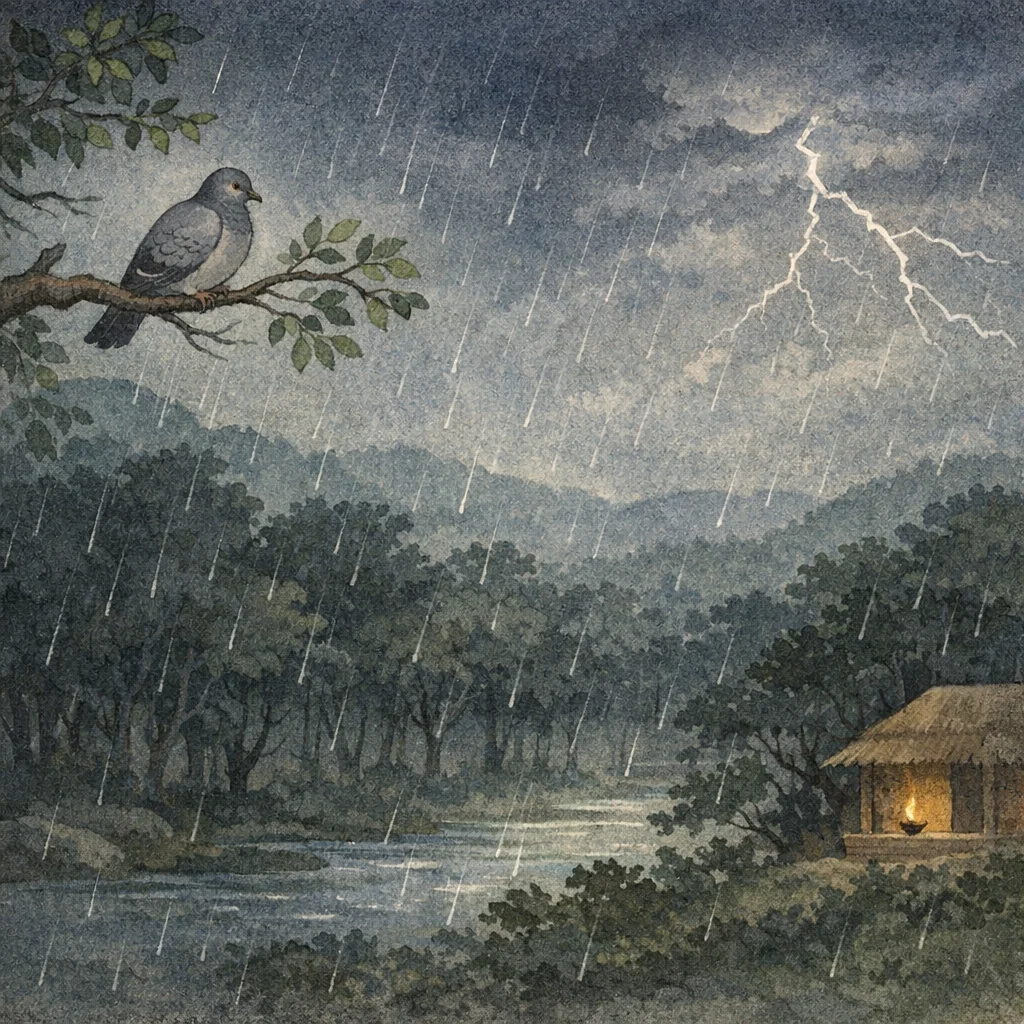
चतुश्नत्वारिशर्दाधिकशततमो< ध्याय: कबूतरद्वारा अपनी भार्याका गुणगान तथा पतिव्रता स्त्रीकी प्रशंसा भीष्म उवाच अथ वृक्षस्य शाखायां विहड़: ससुहृज्जनः । दीर्घकालोषितो राजंस्तत्र चित्रतनूरुह:,भीष्मजी कहते हैं--राजन्! उस वृक्षकी शाखापर बहुत दिनोंसे एक कबूतर अपने सुहृदोंके साथ निवास करता था। उसके शरीरके रोएँ चितकबरे थे
Bhishma said: “O King, on a branch of a certain tree there lived for a long time a pigeon, together with its friendly companions. Its body was marked with variegated feathers.”
Verse 2
तस्य कल्यगता भार्या चरितुं नाभ्यवर्तत । प्राप्तां च रजनीं दृष्टवा स पक्षी पर्यतप्यत,उसकी पत्नी सबेरेसे ही चारा चुगनेके लिये गयी थी, जो लौटकर नहीं आयी। अब रात हुई देख वह कबूतर उसके लिये बहुत संतप्त होने लगा
Bhishma said: “His wife had gone out early to forage, but she did not return. Seeing that night had fallen, the bird was overcome with distress for her.”
Verse 3
वातवर्ष महच्चासीन्न चागच्छति मे प्रिया । कि नु तत् कारणं येन साद्यापि न निवर्तते,कबूतर दुखी होकर इस प्रकार विलाप करने लगा--'अहो! आज बड़ी भारी आँधी और वर्षा हुई है; किंतु अबतक मेरी प्यारी भार्या लौटकर नहीं आयी। ऐसा कौन-सा कारण हो गया, जिससे वह अभीतक नहीं लौट सकी है
The pigeon, stricken with sorrow, lamented: “Alas! Today a mighty windstorm and heavy rain have come; yet even now my beloved wife has not returned. What cause could there be, that she has still not come back?”
Verse 4
अपि स्वस्ति भवेत् तस्या: प्रियाया मम कानने । तया विरहितं हीद॑ शून्यमद्य गृहं मम
Bhishma said: “May well-being attend that beloved one of mine in the forest. For without her, this home of mine is today truly empty.”
Verse 5
“क्या इस वनमें मेरी प्रिया कुशलसे होगी? उसके बिना आज मेरा यह घर-यह घोंसला सूना लग रहा है ।। पुत्रपौत्रवधू भृत्यैराकीर्णमपि सर्वतः । भारयहिीनं गृहस्थस्य शून्यमेव गृहं भवेत्,“पुत्र, पौत्र, पतोहू तथा अन्य भरण-पोषणके योग्य कुट॒म्बीजनोंसे भरा होनेपर भी गृहस्थका घर उसकी पत्नीके बिना सूना ही रहता है
Bhishma said: “Even if a householder’s home is filled on every side with sons, grandsons, daughters-in-law, and servants, without his wife it is truly empty.”
Verse 6
न गृहं गृहमित्याहुर्गृहिणी गृहमुच्यते । गृहं तु गृुहिणीहीनमरण्यसदृशं मतम्,*वास्तवमें घरको घर नहीं कहते, घरवालीका ही नाम घर है। घरवालीके बिना जो घर होता है, उसे जंगलके समान ही माना गया है
Bhīṣma said: “People do not call a mere building a ‘home.’ It is the mistress of the household who is truly called ‘the home.’ A house bereft of the householder-wife is regarded as like a wilderness.”
Verse 7
यदि सा रुक्तनेत्रान्ता चित्राड़ी मधुरस्वरा । अद्य नायाति मे कानन््ता न कार्य जीवितेन मे,“जिसके नेत्रोंके प्रान््न्भाग कुछ-कुछ लाल हैं, अंग चितकबरे हैं और स्वरमें अद्भुत मिठास भरा है, वह मेरी प्राणवल्लभा यदि आज नहीं आ रही है तो मुझे इस जीवनसे क्या प्रयोजन है?
“Her eyes were tinged with red at the corners, her limbs were beautifully variegated, and her voice was filled with wondrous sweetness. If today my beloved—dearer to me than life—does not come, what use is this life to me?”
Verse 8
न भुड्धक्ते मय्यभुक्ते या नास्नाते स्नाति सुव्रता । नातिष्ठत्युपतिछेत शेते च शयिते मयि,“वह उत्तम व्रतका पालन करनेवाली पतिव्रता थी, इसलिये मुझे भोजन कराये बिना भोजन नहीं करती, नहलाये बिना स्नान नहीं करती, मुझे बैठाये बिना बैठती नहीं तथा मेरे सो जानेपर ही शयन करती थी
Bhishma said: “She was a woman of excellent vows, steadfast in wifely fidelity. She would not eat unless I had eaten; she would not bathe unless I had bathed. She would not sit unless she had first seated me, and she would lie down to sleep only after I had fallen asleep.”
Verse 9
हृष्टे भवति सा हृष्टा दु:खिते मयि दुःखिता । प्रोषिते दीनवदना क्रुद्धे च प्रियवादिनी,“मेरे प्रसन्न रहनेपर वह हर्षसे खिल उठती थी और मेरे दुखी होनेपर वह स्वयं भी दुःखमें डूब जाती थी। जब मैं बाहर जाने लगता तो उसके मुखपर दीनता छा जाती थी और जब कभी मुझे क्रोध आता, तब मीठी-मीठी बातें करके शान्त कर देती थी
Bhishma said: “When I was joyful, she would blossom with joy; when I was distressed, she too would sink into sorrow. When I had to be away, her face would grow forlorn; and when anger rose in me, she would soothe me with gentle, affectionate words.”
Verse 10
पतिव्रता पतिगति: पतिप्रियहिते रता । यस्य स्यात् तादृशी भार्या धन्य: स पुरुषो भुवि,“वह बड़ी पतित्रता थी। पतिके सिवा दूसरी कोई उसकी गति नहीं थी। वह सदा ही पतिके प्रिय एवं हितमें तत्पर रहती थी। जिसको ऐसी पत्नी प्राप्त हुई हो, वह पुरुष इस पृथ्वीपर धन्य है
Bhishma said: “Blessed is that man on this earth who has a wife of such a kind—steadfast in wifely fidelity, taking her husband alone as her highest refuge and goal, and continually devoted to what is dear and beneficial to him.”
Verse 11
सा हि श्रान्तं क्षुधार्त च जानीते मां तपस्विनी । अनुरक्ता स्थिरा चैव भक्ता स्निग्धा यशस्विनी,“वह तपस्विनी यह जानती है कि मैं थका, माँदा और भूखसे पीड़ित हूँ, सो भी न जाने क्यों नहीं आ रही है? मेरे प्रति उसका अत्यन्त अनुराग है, उसकी बुद्धि स्थिर है, वह यशस्विनी भार्या मेरे प्रति स्नेह रखनेवाली तथा मेरी परम भक्त है
Bhishma said: “That ascetic woman knows well that I am exhausted and afflicted by hunger. Yet, for some reason, she does not come. She is deeply attached to me, steady in mind, devoted, affectionate, and of good repute.”
Verse 12
वृक्षमूलेडपि दयिता यस्य तिष्ठति तद् गृहम् । प्रासादो5पि तया हीन: कान्तार इति निश्चितम्
Bhishma said: “Even if one lives at the foot of a tree, that place is truly his home when his beloved is there with him. But even a palace, if it lacks her presence, is certainly no better than a desolate wilderness.”
Verse 13
“वृक्षेके नीचे भी जिसकी पत्नी साथ हो, उसके लिये वही घर है और बहुत बड़ी अट्टालिका भी यदि स्त्रीसे रहित है तो वह निश्चय ही दुर्गग गहन वनके समान है ।। धर्मार्थकामकालेषु भार्या पुंस: सहायिनी । विदेशगमने चास्य सैव विश्वासकारिका,“पुरुषके धर्म, अर्थ और कामके अवसरोंपर उसकी पत्नी ही उसकी मुख्य सहायिका होती है। परदेश जानेपर भी वही उसके लिये विश्वसनीय मित्रका काम करती है
Bhishma said: “Even in a low place beneath a tree, if a man’s wife is with him, that is his home. But even a great mansion, if it is without a woman, is surely like a perilous, deep forest. In matters of dharma, the pursuit of wealth, and the fulfillment of rightful desire, a wife is a man’s foremost helper. And when he goes to foreign lands, she alone remains his sure ground of trust.”
Verse 14
भार्या हि परमो हार्थ: पुरुषस्येह पठ्यते | असहायस्य लोके<स्मिंललोकयात्रासहायिनी,'पुरुषकी प्रधान सम्पत्ति उसकी पत्नी ही कही जाती है। इस लोकमें जो असहाय है, उसे भी लोक-यात्रामें सहायता देनेवाली उसकी पत्नी ही है
Bhishma said: “In this world, a man’s highest wealth is declared to be his wife. Even for one who is otherwise without support, she becomes the helper by whom the journey of life in this world is carried on.”
Verse 15
तथा रोगाभि भूतस्य नित्यं कृच्छूगतस्य च । नास्ति भार्यासमं किंचिन्नरस्यार्तस्य भेषजम्,“जो पुरुष रोगसे पीड़ित हो और बहुत दिनोंसे विपत्तिमें फँसा हो, उस पीड़ित मनुष्यके लिये भी स्त्रीके समान दूसरी कोई ओषधि नहीं है
Bhishma said: “Just as for a man overwhelmed by disease and for one who has long fallen into hardship, there is no remedy for a suffering man equal to a wife.”
Verse 16
नास्ति भार्यासमो बन्धुर्नास्ति भार्यासमा गति: । नास्ति भाययासमो लोके सहायो धर्मसंग्रहे,'संसारमें स्त्रीके समान कोई बन्धु नहीं है, स्त्रीके समान कोई आश्रय नहीं है और स्त्रीके समान धर्मसंग्रहमें सहायक भी दूसरा कोई नहीं है
Bhīṣma said: “In this world there is no kinsman equal to a wife, no refuge or course of life equal to a wife, and no helper equal to a wife in the sustaining and gathering of dharma. She stands closest in companionship and is the most effective support for a life ordered by righteousness.”
Verse 17
यस्य भार्या गृहे नास्ति साध्वी च प्रियवादिनी । अरण्यं तेन गन्तव्यं यथारण्यं तथा गृहम्,“जिसके घरमें साध्वी और प्रिय वचन बोलने-वाली भार्या नहीं है, उसे तो वनमें चला जाना चाहिये; क्योंकि उसके लिये जैसा घर है, वैसा ही वन”
Bhīṣma said: “For the man whose home lacks a virtuous wife who speaks with kindness, the forest is where he should go; for him, a house without such companionship is no different from the wilderness.”
Verse 144
इति श्रीमहाभारते शान्तिपर्वणि आपद्धर्मपर्वणि भार्याप्रशंसायां चतुश्चत्वारिंशदधिकशततमो< ध्याय:,इस प्रकार श्रीमहाभारत शान्तिपर्वके अन्तर्गत आपद्धर्मपर्वमें पत्नीकी प्रशंसाविषयक एक सौ चौवालीसवाँ अध्याय पूरा हुआ
Thus, in the Śrī Mahābhārata, within the Śānti Parva—specifically in the section on conduct in times of distress (Āpaddharma)—the chapter devoted to the praise of the wife comes to its close: the one hundred and forty-fourth chapter is completed. The colophon signals the end of Bhīṣma’s instruction on the ethical value of the wife as a sustaining partner in dharma, especially under adversity.
Frequently Asked Questions
How to evaluate wrongdoing and restoration: the chapter contrasts acts that may be met with niṣkṛti through disciplined transformation versus the uniquely grave violation of harming a refuge-seeker, treated as beyond expiation.
Ethical governance must protect the vulnerable and honor refuge; personal reform is possible through rigorous resolve, but policy and conduct must treat śaraṇāgati as a categorical boundary.
Yes. It states that one who regularly hears or recites this account encounters no inauspicious outcome even through inadvertence, framing the narrative as a protective ethical remembrance.