Adhyaya 138
आपद्धर्मे राज्ञः नीतिः — Bharadvāja’s Counsel on Crisis-Statecraft (Śānti Parva 138)
Upa-parva: Rājadharmānuśāsana Parva (राजधर्मानुशासन पर्व) — Āpaddharma-oriented counsel within royal instruction
Yudhiṣṭhira opens by asking how a ruler should remain steady when the age declines, dharma is depleted, and society is harassed by predatory forces. Bhīṣma answers by promising instruction on policy in calamity (āpatsu nīti) and introduces a ‘purātana itihāsa’: Bharadvāja’s dialogue with King Śatruṃtapa of Sauvīra. The king asks a fourfold administrative problem: how to obtain what is not yet gained, how to increase what is gained, how to protect what is increased, and how to deploy what is protected. Bharadvāja’s response emphasizes daṇḍa as foundational to political order, recommending constant readiness, detection of vulnerabilities in rivals while concealing one’s own, and decisive action against the ‘root’ of hostile power structures. The chapter outlines calibrated tactics: strategic conciliation without naïve trust, temporary burden-bearing of adversaries until timing shifts, and the use of intelligence (cāra) and social monitoring across public spaces. It stresses situational timing (deśa-kāla), risk management, and avoiding procrastination, while also warning that these measures describe adversarial practice and should be understood as defensive prudence rather than indiscriminate conduct. The exemplum concludes with the king’s compliance and resultant prosperity, reinforcing the didactic aim: stable governance requires vigilance, proportional coercion, and context-sensitive judgment under crisis conditions.
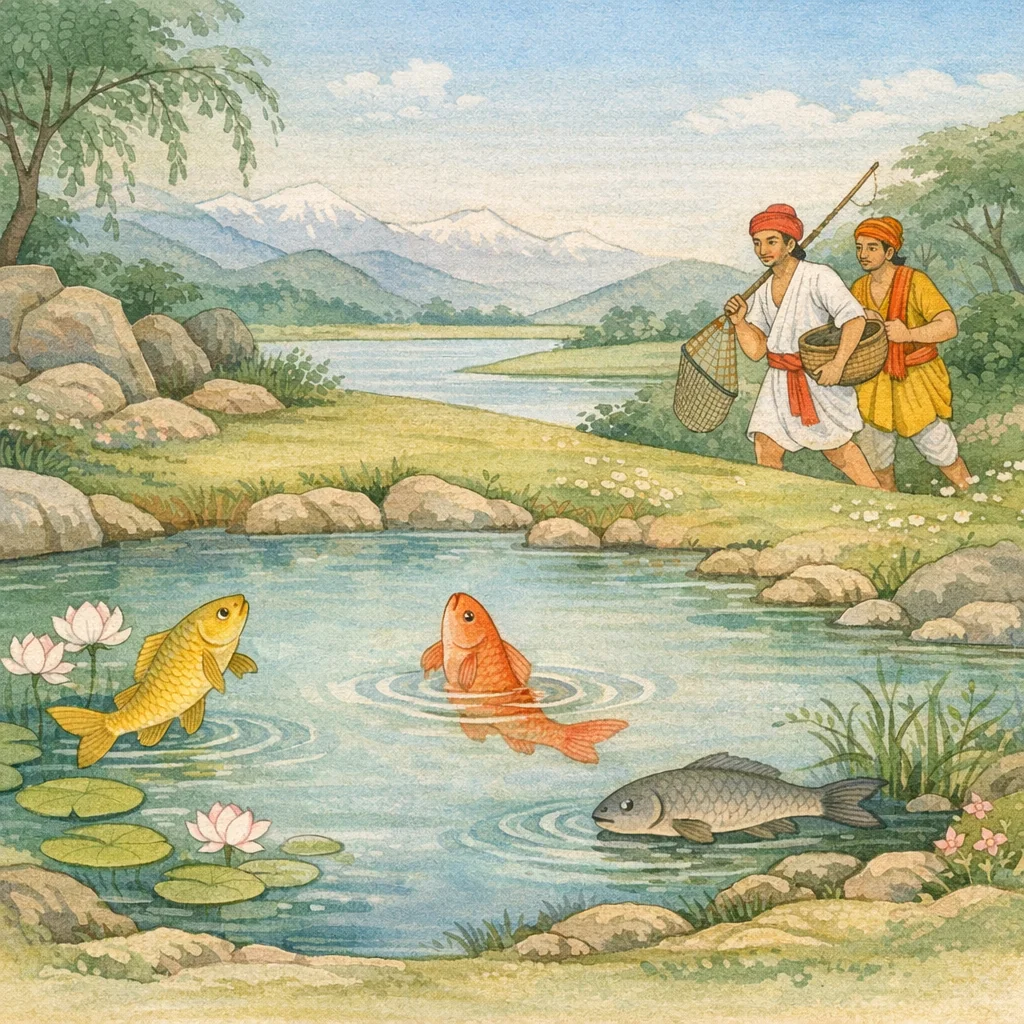
Chapter Arc: आपद्धर्म के उपदेश-क्रम में कथावाचक ‘अनागत संकट’ को पहचानने की विद्या पर श्रोता का ध्यान खींचता है और तीन मत्स्यों का दृष्टान्त सुनाने का प्रस्ताव करता है—दूरदर्शी, प्रत्युत्पन्नमति और दीर्घसूत्री। → एक उथले-से जलाशय में बहुत-सी मछलियों के बीच ये तीन मित्र रहते हैं। मनुष्य-जगत की तरह यहाँ भी ‘काल’ चुपचाप पास आता है—जाल, मछुआरे, या जल का सूखना—और तीनों की प्रवृत्तियाँ अलग-अलग दिशा में खिंचती हैं: एक पहले ही संकेत पकड़ता है, दूसरा अवसर आते ही उपाय गढ़ता है, तीसरा टालता रहता है। → प्रत्युत्पन्नमति, दूरदर्शी से कहता है कि ‘समय आ जाने पर’ कोई भी युक्ति-न्याय से परे नहीं; पर दीर्घसूत्री ठीक उसी क्षण ‘प्राप्त काल’ को न समझ पाने के मोह में फँसकर विनाश की ओर बढ़ता है—जैसे श्लोक कहता है, दीर्घसूत्री झष (मछली) शीघ्र नष्ट होता है। → दृष्टान्त का निष्कर्ष स्पष्ट किया जाता है: जो पुरुष देश-काल का परीक्षण करके, कार्य-अकार्य का निर्णय कर, सावधानी और युक्ति से चलता है वही फल पाता है; जो काल को अदृश्य मानकर टालता है, वह आपत्ति में टूट जाता है।
Shlokas
Verse 1
ऑपनआ प्रात बछ। अर: सप्तत्रिशर्दाधिकशततमोब< ध्याय: आनेवाले संकटसे सावधान रहनेके लिये दूरदर्शी, तत्कालज्ञ और दीर्घ॑सूत्री--इन तीन मत्स्योंका दृष्टान्त भीष्म उवाच अनागतविधाता च प्रत्युत्पन्नमतिश्न यः । द्वावेव सुखमेधेते दीर्घसूत्री विनश्यति,भीष्मजी कहते हैं--युधिष्ठिर! जो संकट आनेसे पहले ही अपने बचावका उपाय कर लेता है, उसे अनागतविधाता कहते हैं तथा जिसे ठीक समयपर ही आत्मरक्षाका उपाय सूझ जाता है, वह (प्रत्युत्पन्नमति” कहलाता है। ये दो ही प्रकारके लोग सुखसे अपनी उन्नति करते हैं; परंतु जो प्रत्येक कार्यमें अनावश्यक विलम्ब करनेवाला होता है, वह दीर्घसूत्री मनुष्य नष्ट हो जाता है
Bhishma said: “O Yudhishthira, the one who makes provision in advance for dangers yet to come, and the one whose intelligence rises promptly to meet an immediate crisis—these two alone prosper with ease. But the procrastinator, who drags matters out, perishes.”
Verse 2
अन्रैव चेदमव्यग्र॑ शृणुष्वाख्यानमुत्तमम् । दीर्घसूत्रमुपाश्रित्य कार्याकार्यविनिश्चये,कर्तव्य और अकर्तव्यका निश्चय करनेमें जो दीर्घसूत्री होता है, उसको लेकर मैं एक सुन्दर उपाख्यान सुना रहा हूँ। तुम स्वस्थचित्त होकर सुनो
Bhīṣma said: “If you are indeed attentive and unagitated, listen to this excellent tale. With reference to one who is ‘long-sutred’—who delays and procrastinates when deciding what ought to be done and what ought not to be done—I shall relate a fine illustrative narrative. Listen with a steady mind.”
Verse 3
नातिगाधे जलाधारे सुहृदः कुशलास्त्रय: । प्रभूतमत्स्ये कौन्तेय बभूवु: सहचारिण:,कुन्तीनन्दन! कहते हैं, एक तालाबमें जो अधिक गहरा नहीं था, बहुत-सी मछलियाँ रहती थीं, उसी जलाशयमें तीन कार्यकुशल मत्स्य भी रहते थे, जो सदा साथ-साथ विचरनेवाले और एक-दूसरेके सुहृद् थे
Bhishma said: O son of Kunti, in a reservoir that was not very deep, yet teeming with fish, there lived three skilled fish—close friends—who always moved about together.
Verse 4
तत्रैको दीर्घकालज्ञ उत्पन्नप्रतिभो5पर: । दीर्घसूत्रश्न तत्रैकस्त्रयाणां सहचारिणाम्,वहाँ उन तीनों सहचारियोंमेंसे एक तो (अनागतविधाता था, जो) आनेवाले दीर्घकालतककी बात सोच लेता था। दूसरा प्रत्युत्पन्नमति था, जिसकी प्रतिभा ठीक समयपर ही काम दे देती थी और तीसरा दीर्घसूत्री था (जो प्रत्येक कार्यमें अनावश्यक विलम्ब करता था)
Bhīṣma said: “Among those three companions, one was a far-sighted planner who could foresee what would unfold over a long span of time. Another was quick-witted, whose presence of mind and timely ingenuity served him exactly when needed. The third was a procrastinator, one who needlessly delayed every undertaking.”
Verse 5
कदाचित् तं जलस्थायं मत्स्यबन्धा: समन्ततः । निस्रावयामासुरथो निम्नेषु विविधैर्मुखै:,एक दिन कुछ मछलीमारोंने उस जलाशयमें चारों ओरसे नालियाँ बनाकर अनेक द्वारोंसे उसका पानी आसपासकी नीची भूमिमें निकालना आरम्भ कर दिया
Bhishma said: Once, the fishermen, surrounding that reservoir on all sides, cut channels and began to drain its water out through many openings into the lower-lying ground nearby—setting in motion a deliberate act of emptying what had been a sustaining habitat.
Verse 6
प्रक्षीयमाण तं दृष्टवा जलस्थायं भयागमे । अब्रवीद् दीर्घदर्शी तु तावुभौ सुहदौ तदा,जलाशयका पानी घटता देख भय आनेकी सम्भावना समझकर दूरतककी बातें सोचनेवाले उस मत्स्यने अपने उन दोनों सुहृदोंसे कहा--
Bhīṣma said: Seeing that the water in the reservoir was steadily diminishing and foreseeing the approach of danger, the far-sighted fish then addressed those two friends of his who lived there—warning them in time, as one who thinks ahead should, when peril is near.
Verse 7
इयमापत् समुत्पन्ना सर्वेषां सलिलौकसाम् । शीघ्रमन्यत्र गच्छाम: पन्था यावन्न दुष्यति,“बन्धुओ! जान पड़ता है कि इस जलाशयमें रहनेवाले सभी मत्स्योंपर संकट आ पहुँचा है; इसलिये जबतक हमारे निकलनेका मार्ग दूषित न हो जाय, तबतक शीघ्र ही हमें यहाँसे अन्यत्र चले जाना चाहिये
“Friends! This calamity has arisen for all who dwell in these waters. Therefore, before our path of escape is fouled or blocked, let us quickly go elsewhere.”
Verse 8
अनागतमनर्थ हि सुनयैर्य: प्रबाधयेत् । स न संशयमाप्रोति रोचतां भो व्रजामहे,“जो आनेवाले संकटको उसके आनेसे पहले ही अपनी अच्छी नीतिद्दारा मिटा देता है, वह कभी प्राण जानेके संशयमें नहीं पड़ता। यदि आपलोगोंको मेरी बात ठीक जान पड़े तो चलिये, दूसरे जलाशयको चलें”
Bhishma said: “Indeed, one who, by sound policy and good counsel, wards off a misfortune before it arrives never falls into doubt about the loss of life. If my words seem right to you, then come—let us go to another water-reservoir.”
Verse 9
दीर्घसूत्रस्तु यस्तत्र सो5ब्रवीत् सम्यगुच्यते । न तु कार्या त्वरा तावदिति मे निश्चिता मति:,इसपर वहाँ जो दीर्घसूत्री था, उसने कहा--'मित्र! तुम बात तो ठीक कहते हो; परंतु मेरा यह दृढ़ विचार है कि अभी हमें जल्दी नहीं करनी चाहिये”
Bhīṣma said: “There, the man known for procrastination spoke: ‘Friend, what you say is indeed correct; yet my settled conviction is that we should not act in haste just now.’”
Verse 10
अथ सम्प्रतिपत्तिज्ञ: प्राब्रवीद् दीर्घदर्शिनम् । प्राप्ते काले न मे किंचिन्न्यायत: परिहास्यते,तदनन्तर प्रत्युत्पन्नमतिने दूरदर्शीसे कहा--“मित्र! जब समय आ जाता है, तब मेरी बुद्धि न्यायतः कोई युक्ति ढूँढ़ निकालनेमें कभी नहीं चूकती है”
Bhishma said: Then the man skilled in sound judgment addressed the far-seeing one: “When the proper time arrives, my intellect, guided by what is right, does not fail to discover a fitting course; nothing that accords with justice is missed or left undone.”
Verse 11
एवं श्र॒ुत्वा निराक्रम्य दीर्घदर्शी महामति: । जगाम स्रोतसा तेन गम्भीर॑ं सलिलाशयम्,यह सुनकर परम बुद्धिमान दीर्घदर्शी (अनागत-विधाता) वहाँसे निकलकर एक नालीके रास्तेसे दूसरे गहरे जलाशयमें चला गया
Hearing this, the far-seeing and greatly wise one withdrew from that place and, following that very channel of water, went on to another reservoir—deep and still—thus choosing a prudent course rather than a rash advance.
Verse 12
ततः प्रसृततोयं त॑ प्रसमीक्ष्य जलाशयम् । बबन्धुर्विविधैयोगैर्मत्स्यान् मत्स्योपजीविन:,तदनन्तर मछलियोंसे ही जीविका चलानेवाले मछलीमारोंने जब यह देखा कि जलाशयका जल प्राय: बाहर निकल चुका है, तब उन्होंने अनेक उपायोंद्वारा वहाँकी सब मछलियोंको फँसा लिया
Bhīṣma said: Then the fishermen, who made their living from fish, seeing that the water of that reservoir had mostly flowed out, trapped all the fish there by various means.
Verse 13
विलोड्यमाने तस्मिंस्तु खुततोये जलाशये । अगच्छद् बन्धन तत्र दीर्घसूत्र: सहापरैः,जिसका पानी बाहर निकल चुका था, वह जलाशय जब मथा जाने लगा, तब दीर्घ॑सूत्री भी दूसरे मत्स्योंके साथ जालमें फँस गया
Bhishma said: When that pond—its water already drained away—was churned and disturbed, Dīrghasūtra too, along with the other fish, went there into captivity, becoming caught in the net.
Verse 14
उद्याने क्रियमाणे तु मत्स्यानां तत्र रज्जुभि: | प्रविश्यान्तरमेतेषां स्थित: सम्प्रतिपत्तिमान्,जब मछलीमार रस्सी खींचकर मछलियोंसे भरे हुए उस जालको उठाने लगे, तब प्रत्युत्पन्नमति मत्स्य भी उन्हीं मत्स्योंके भीतर घुसकर जालमें बँध-सा गया
Bhīṣma said: “There in the pond, when the fishermen began to draw up the net full of fish by pulling the ropes, the quick-witted fish slipped in among those very fish and remained as though bound within the net.”
Verse 15
गृह्मेव तदुद्यानं गृहीत्वा तं तथैव सः । सवनिव च तांस्तत्र ते विदुर्गथितानिति,वह जाल मुखसे पकड़ने योग्य था; अतः उसकी ताँतको मुहमें लेकर वह भी अन्य मछलियोंकी तरह बँधा हुआ प्रतीत होने लगा। मछलीमारोंने उन सब मछलियोंको वहाँ बँधा हुआ ही समझा
Bhīṣma said: “Seizing that device as one would a snare, he held it so that he appeared just like the others. Taking the cord into his mouth, he looked as though he too was bound like the rest; therefore the fishermen there understood all of them to be tied up.”
Verse 16
ततः प्रक्षाल्यमानेषु मत्स्येषु विपुले जले । मुक्त्वा रज्जुं प्रमुक्तोडसौ शीघ्र सम्प्रतिपत्तिमान्,तदनन्तर उस जालको लेकर वे मछलीमार जब दूसरे अगाध जलवाले जलाशयके समीप गये और उन मछलियोंको धोने लगे, उसी समय प्रत्युत्पन्नमति मुखमें ली हुई जालकी रस्सीको छोड़कर उसके बन्धनसे मुक्त हो गया और जलमें समा गया
Bhīṣma said: “Then, while the fishes were being washed in deep, abundant water, that quick-witted one slipped free—letting go of the rope—and, released from his binding, swiftly disappeared into the water.”
Verse 17
दीर्घसूत्रस्तु मन्दात्मा हीनबुद्धिरचेतन: । मरणं प्राप्तवान् मूढो यथैवोपहतेन्द्रियः,परंतु बुद्धिहीन और आलसी मूर्ख दीर्घसूत्री अचेत होकर मृत्युको प्राप्त हुआ, जैसे कोई इन्द्रियोंके नष्ट होनेसे नष्ट हो जाता है
Bhīṣma said: “The procrastinating man—dull in spirit, deficient in understanding, and senseless—meets his death in folly, just as one whose faculties have been struck down perishes when the senses no longer serve.”
Verse 18
एवं प्राप्ततमं काल॑ यो मोहान्नावबुद्धयते । स विनश्यति वै क्षिप्र॑ दीर्घसूत्रो यथा झष:,इसी प्रकार जो पुरुष मोहवश अपने सिरपर आये हुए कालको नहीं समझ पाता, वह उस दीर्घसूत्री मत्स्यके समान शीघ्र ही नष्ट हो जाता है
Bhīṣma said: “In this way, the man who, out of delusion, fails to recognize Time (Death) when it has come right upon him, perishes swiftly—like a fish that lingers too long and is slow to act.”
Verse 19
आदी न कुरुते श्रेय: कुशलो<स्मीति यः पुमान् | स संशयमवाप्रोति यथा सम्प्रतिपत्तिमान्,जो पुरुष यह समझकर कि मैं बड़ा कार्यकुशल हूँ, पहलेसे ही अपने कल्याणका उपाय नहीं करता, वह प्रत्युत्पन्नमति मत्स्यके समान प्राणसंशयकी स्थितिमें पड़ जाता है
Bhishma said: A man who, thinking “I am competent,” does not take up measures for his own welfare at the outset, falls into peril and uncertainty—like a fish that is clever in the moment yet ends up with its very life in danger. Therefore one should secure one’s good early, not rely on mere self-confidence or last-minute cleverness.
Verse 20
अनागतविधाता च प्रत्युत्पन्नमतिश्न यः । द्वावेव सुखमेधेते दीर्घसूत्रो विनश्यति,जो संकट आनेसे पहले ही अपने बचावका उपाय कर लेता है, वह “अनागतविधाता' और जिसे ठीक समयपर ही आत्मरक्षाका कोई उपाय सूझ जाता है, वह 'प्रत्युत्पन्नमति'-- ये दो ही सुखपूर्वक अपनी उन्नति करते हैं; परंतु प्रत्येक कार्यमें अनावश्यक विलम्ब करनेवाला *दीर्घसूत्री' नष्ट हो जाता है
Bhīṣma said: The one who provides beforehand for dangers yet to come is called anāgatavidhātā; and the one whose presence of mind finds a means of self-protection at the very moment of crisis is called pratyutpannamati. These two prosper with ease. But the person who drags matters out with needless delay—the “long-threaded” procrastinator—comes to ruin.
Verse 21
काष्ठा: कला मुहूर्ताश्न दिवा रात्रिस्तथा लवा: । मासा: पक्षा: षड़ ऋतव: कल्प: संवत्सरास्तथा,काष्ठा, कला, मुहूर्त, दिन, रात, लव, मास, पक्ष, छः ऋतु, संवत्सर और कल्प--इन््हें 'काल' कहते हैं तथा पृथ्वीको “देश” कहा जाता है। इनमेंसे देशका तो दर्शन होता है, किंतु काल दिखायी नहीं देता है। अभीष्ट मनोरथकी सिद्धिके लिये जिस देश और कालको उपयोगी मानकर उसका विचार किया जाता है, उसको ठीक-ठीक ग्रहण करना चाहिये
Bhishma said: “Kāṣṭhās, kalās, muhūrtas, day and night, and lavas; months, fortnights, the six seasons, the kalpa, and years as well—these are all called ‘Time’ (kāla). The earth is called ‘Place’ (deśa). Of these, place can be directly perceived, but time is not seen. Therefore, for the successful accomplishment of one’s intended aims, one should accurately discern and adopt the appropriate place and time, judging them by their usefulness.”
Verse 22
पृथिवी देश इत्युक्त: काल: स च न दृश्यते । अभिप्रेतार्थसिद्धयर्थ ध्यायते यच्च तत्तथा,काष्ठा, कला, मुहूर्त, दिन, रात, लव, मास, पक्ष, छः ऋतु, संवत्सर और कल्प--इन््हें 'काल' कहते हैं तथा पृथ्वीको “देश” कहा जाता है। इनमेंसे देशका तो दर्शन होता है, किंतु काल दिखायी नहीं देता है। अभीष्ट मनोरथकी सिद्धिके लिये जिस देश और कालको उपयोगी मानकर उसका विचार किया जाता है, उसको ठीक-ठीक ग्रहण करना चाहिये
Bhishma said: “The earth is called ‘place’ (deśa), while time (kāla) is so named—yet time is not seen. Time is spoken of through its measures: a kāṣṭhā, a kalā, a muhūrta, day and night, a lava, a month, a fortnight, the six seasons, a year, and a kalpa—these are called ‘time’; and the earth is called ‘place.’ Of these two, place can be directly perceived, but time cannot. Therefore, for the accomplishment of one’s intended purpose, one should correctly grasp and choose that place and that time which, upon reflection, are found to be truly suitable.”
Verse 23
एतौ धर्मार्थशास्त्रेषु मोक्षशास्त्रेषु चर्षिभि: । प्रधानाविति निर्दिष्टी कामे चाभिमतौ नृणाम्,ऋषियोंने धर्मशास्त्र, अर्थशास्त्र तथा मोक्षशास्त्रमें इन देश और कालको ही कार्य- सिद्धिका प्रधान उपाय बताया है। मनुष्योंकी कामना-सिद्धिमें भी ये देश और काल ही प्रधान माने गये हैं
Bhīṣma said: “In the treatises on dharma and artha, and likewise in the teachings on liberation, the sages have declared these two to be the foremost factors. Even in the fulfillment of human desires, these two are regarded as the principal means.”
Verse 24
परीक्ष्यकारी युक्तश्न स सम्यगुपपादयेत् । देशकालावभिप्रेतो ताभ्यां फलमवाप्नुयात्,जो पुरुष सोच-समझकर या जान-बूझकर काम करनेवाला तथा सतत सावधान रहनेवाला है, वह अभीष्ट देश और कालका ठीक-ठीक उपयोग करता है और उनके सहयोगसे इच्छानुसार फल प्राप्त कर लेता है
Bhishma said: “A person who acts after due examination, with disciplined conduct and constant alertness, should carry out his undertakings in the right way. Keeping in view the desired place and time, he makes proper use of both and, with their support, attains the result he seeks.”
Verse 137
इति श्रीमहाभारते शान्तिपर्वणि आपद्धर्मपर्वणि शाकुलोपाख्याने सप्तत्रिंशदधिकशततमो< ध्याय:,इस प्रकार श्रीमह्याभारत शान्तिपर्वके अन्तर्गत आपद्धर्मपर्वमें शाकुलोपाख्यानविषयक एक सौ सैतीसवाँ अध्याय पूरा हुआ
Thus, in the Śrī Mahābhārata, within the Śānti Parva—specifically the section on dharma in times of distress (Āpaddharma Parva)—the narrative episode known as the Śākula-upākhyāna concludes here, marking the completion of the 137th chapter. The colophon signals a transition point: the teaching on ethical conduct under crisis conditions has reached a formal close for this chapter.
Frequently Asked Questions
The dilemma is how a ruler can preserve public order when normal dharmic conditions are degraded—balancing compassion and restraint against the need for deterrence, surveillance, and decisive coercive measures in emergencies.
Dharma in governance is operational and contextual: stability depends on disciplined vigilance, proportional daṇḍa, and deśa-kāla judgment, with trust treated as conditional and repeatedly tested rather than presumed.
A functional meta-commentary appears in the closing outcome statement: the king follows the counsel and attains prosperity with his kin, presenting pragmatic ‘result-validation’ of the teaching rather than a ritualized phalaśruti formula.