Adhyaya 78
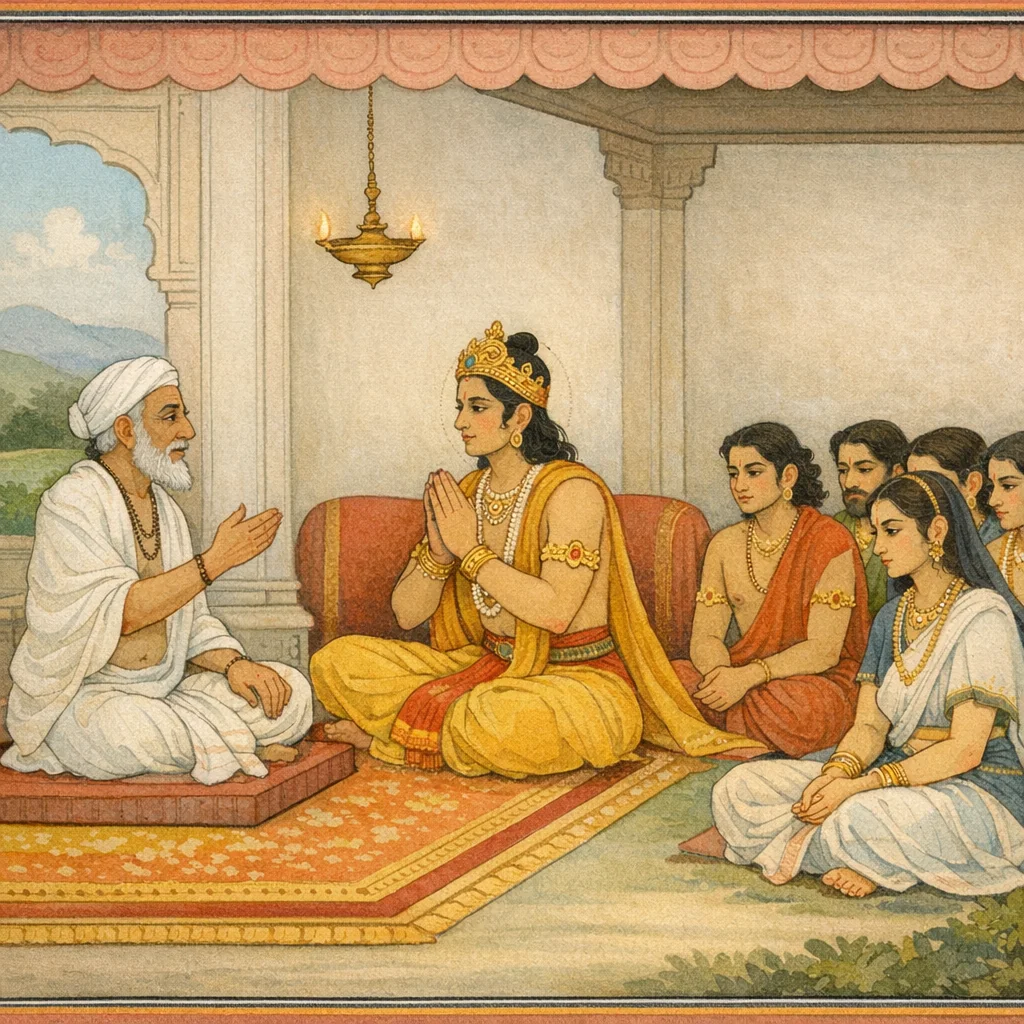
Chapter Arc: द्यूत-पराजय के बाद युधिष्ठिर सभा के गुरुजनों, धृतराष्ट्र और सभासदों के सम्मुख खड़े होकर वन-गमन की प्रतिज्ञा निभाने हेतु अंतिम अनुमति और आशीर्वाद माँगते हैं। → वे द्रोण, कृप, अश्वत्थामा, विदुर, धृतराष्ट्र, समस्त धार्तराष्ट्रों, युयुत्सु, संजय तथा अन्य सभासदों को संबोधित कर कहते हैं कि सबको प्रणाम कर मैं वन को जा रहा हूँ—और लौटकर फिर दर्शन दूँगा; यह विदाई राजसभा को मौन, भारी और अनिश्चित बना देती है। → विदुर युधिष्ठिर को धर्म का कठोर सत्य सुनाते हैं—अधर्म से जीता हुआ कोई भी अंततः पराजय में व्यथित होता है; यह वचन पराजय के क्षण को नैतिक निर्णय में बदल देता है और युधिष्ठिर के वन-प्रस्थान को केवल दंड नहीं, धर्म-मार्ग की परीक्षा बना देता है। → विदुर सहदेव की संयमशीलता, धौम्य के ब्रह्मविद्या-बल और द्रौपदी की धर्मनिष्ठा का स्मरण कर पाण्डवों के साथ जाने वाली शक्ति-रेखा रेखांकित करते हैं; फिर मंगलाशीष देते हैं—रोग न हो, कल्याण हो, समय-समय पर यथावत आचरण करो, और कृतार्थ होकर लौटो। → युधिष्ठिर ‘तथेत्युक्त्वा’ कहकर भीष्म-द्रोण को नमस्कार कर प्रस्थान करते हैं—अब प्रश्न यह रह जाता है कि वनवास की अवधि में धर्म की यह परीक्षा किस रूप में पलटेगी और लौटने पर न्याय का पलड़ा किस ओर झुकेगा।
Shlokas
Verse 1
इस प्रकार श्रीमहाभारत सभापववके अन्तर्गत अनुद्यूतपर्वमें पाण्डवोंकी प्रतिज्ञासे सम्बन् रखनेवाला सतहत्तरवाँ अध्याय पूरा हुआ ।/ ७७ ॥ अपना छा | अ-क्राछ अष्टसप्ततितमो< ध्याय: युधिष्ठिरका धृतराष्ट्र आदिसे विदा लेना, 63205 कक न्तीको अपने यहाँ रखनेका प्रस्ताव और पाण्डवोंको रहनेका उपदेश देना युधिछिर उवाच आमन्त्रयामि भरतांस्तथा वृद्धं पितामहम् । राजानं सोमदत्तं च महाराजं च बाह्विकम्,युधिष्ठिर बोले--मैं भरतवंशके समस्त गुरुजनोंसे वनमें जानेकी आज्ञा चाहता हूँ। बड़े-बूढ़े पितामह भीष्म, राजा सोमदत्त, महाराज बाह्लिक, गुरुवर द्रोण और कृपाचार्य, अश्वृत्थामा, अन्यान्य नृपतिगण, विदुर, राजा धृतराष्ट्र, उनके सभी पुत्र, युयुत्सु, संजय तथा दूसरे सब सदस्योंसे पूछकर सबकी आज्ञा लेकर वनमें जाता हूँ, फिर लौटकर आप लोगोंका दर्शन करूँगा
Yudhiṣṭhira said: “I seek leave of the elders of the Bharata line, and of the aged grandsire as well—of King Somadatta and of the great king Bāhlīka.” After the calamity of the dice, he casts his departure not as flight but as a dharmic act: formally asking permission of revered authorities, honoring hierarchy, and upholding social order even amid humiliation and exile.
Verse 2
द्रोणं कृप॑ नृपांश्चान्यानश्वत्थामानमेव च । विदुरं धृतराष्ट्रं च धार्तराष्ट्रांक्ष सर्वश:,युधिष्ठिर बोले--मैं भरतवंशके समस्त गुरुजनोंसे वनमें जानेकी आज्ञा चाहता हूँ। बड़े-बूढ़े पितामह भीष्म, राजा सोमदत्त, महाराज बाह्लिक, गुरुवर द्रोण और कृपाचार्य, अश्वृत्थामा, अन्यान्य नृपतिगण, विदुर, राजा धृतराष्ट्र, उनके सभी पुत्र, युयुत्सु, संजय तथा दूसरे सब सदस्योंसे पूछकर सबकी आज्ञा लेकर वनमें जाता हूँ, फिर लौटकर आप लोगोंका दर्शन करूँगा
Yudhiṣṭhira said: “(I seek permission from) Droṇa, Kṛpa, and the other kings, and also Aśvatthāmā; from Vidura and King Dhṛtarāṣṭra; and from all the sons of Dhṛtarāṣṭra in their entirety.” Here he formally names the elders and authorities whose consent he must obtain before departing for the forest—obedience to dharma, respect for hierarchy, and restraint amid humiliation.
Verse 3
युयुत्सुं संजयं चैव तथैवान्यान् सभासद: । सर्वनामन्त्र्य गच्छामि द्रष्टास्मि पुनरेत्य व:,युधिष्ठिर बोले--मैं भरतवंशके समस्त गुरुजनोंसे वनमें जानेकी आज्ञा चाहता हूँ। बड़े-बूढ़े पितामह भीष्म, राजा सोमदत्त, महाराज बाह्लिक, गुरुवर द्रोण और कृपाचार्य, अश्वृत्थामा, अन्यान्य नृपतिगण, विदुर, राजा धृतराष्ट्र, उनके सभी पुत्र, युयुत्सु, संजय तथा दूसरे सब सदस्योंसे पूछकर सबकी आज्ञा लेकर वनमें जाता हूँ, फिर लौटकर आप लोगोंका दर्शन करूँगा
Yudhiṣṭhira said: “Having respectfully taken leave of Yuyutsu, Sañjaya, and all the other members of the royal assembly, I shall depart. After returning again, I shall come to see you all.”
Verse 4
वैशम्पायन उवाच न च किंचिदथोचुस्तं द्विया सन्ना युधिष्ठिरम् । मनोभिरेव कल्याण दध्युस्ते तस्थ धीमत:,वैशम्पायनजी कहते हैं--राजन! युधिष्ठिरके इस प्रकार पूछनेपर सब कौरव लाजके मारे सन्न रह गये, कुछ भी उत्तर न दे सके। उन्होंने मन-ही-मन उन बुद्धिमान् युधिष्ठिरके कल्याणका चिन्तन किया
Vaiśampāyana said: When Yudhiṣṭhira had spoken in this way, the twice-born elders, overcome with shame, could not utter a single reply to him. Standing there, they could only, in their hearts, wish well to that wise Yudhiṣṭhira—an inward assent to dharma when speech failed them.
Verse 5
विदुर उवाच आर्या पृथा राजपुत्री नारण्यं गन्तुमर्हति । सुकुमारी च वृद्धा च नित्यं चैव सुखोचिता,विदुर बोले--कुन्तीकुमारो! राजपुत्री आर्या कुन्ती वनमें जाने लायक नहीं हैं। वे कोमल अंगोंवाली और वृद्धा हैं, सदा सुख और आरामके ही योग्य हैं; अतः वे मेरे ही घरमें सत्कारपूर्वक रहेंगी। यह बात तुम सब लोग जान लो। मेरी शुभ कामना है कि तुम वहाँ सर्वथा नीरोग एवं सुखसे रहो
Vidura said: “Lady Pṛthā (Kuntī), the noble princess, should not be made to go to the forest. She is delicate-limbed and also advanced in years, ever accustomed to comfort. Therefore, let her stay in my own house, honored and well cared for. Let all of you know this. My blessing is that you live there in complete health and with peace.”
Verse 6
इह वत्स्यति कल्याणी सत्कृता मम वेश्मनि । इति पार्था विजानीध्वमगदं वो<स्तु सर्वश:,विदुर बोले--कुन्तीकुमारो! राजपुत्री आर्या कुन्ती वनमें जाने लायक नहीं हैं। वे कोमल अंगोंवाली और वृद्धा हैं, सदा सुख और आरामके ही योग्य हैं; अतः वे मेरे ही घरमें सत्कारपूर्वक रहेंगी। यह बात तुम सब लोग जान लो। मेरी शुभ कामना है कि तुम वहाँ सर्वथा नीरोग एवं सुखसे रहो
Vidura said: “The noble lady will stay here, honored, in my own house. Know this, O sons of Pṛthā. May you all be wholly free from affliction.”
Verse 7
पाण्डवा ऊचु. तथेत्युक्त्वाब्रुवन् सर्वे यथा नो वदसेडनघ । त्वं पितृव्य: पितृसमो वयं च त्वत्परायणा:,पाण्डवोंने कहा--बहुत अच्छा, ऐसा ही हो। इतना कहकर वे सब फिर बोले --“अनघ! आप हमें जैसा कहें--जैसी आज्ञा दें, वही शिरोधार्य है। आप हमारे पितृव्य (पिताके भाई) हैं, अतः पिताके ही तुल्य हैं। हम सब भाई आपकी शरणमें हैं
The Pāṇḍavas said: “So be it.” Having agreed, they all spoke again: “O blameless one, whatever you tell us—whatever command you give—we will accept as binding. You are our paternal uncle, equal to a father; and we brothers take refuge in you and depend upon your guidance.”
Verse 8
यथाअज्ञापयसे दिद्वंस्त्वं हि नः परमो गुरु: । यच्चान्यदपि कर्तव्यं तद् विधत्स्व महामते,“विद्वन! आप जैसी आज्ञा दें, वही हमें मान्य है; क्योंकि आप हमारे परम गुरु हैं। महामते! इसके सिवा और भी जो कुछ हमारा कर्तव्य हो, वह हमें बताइये”
“As you command, O learned one, so shall we act—for you are our highest teacher. And whatever else remains our duty, O great-minded one, please determine and instruct us accordingly.”
Verse 9
विदुर उवाच युधिष्ठिर विजानीहि ममेदं भरतर्षभ । नाधर्मेण जित: कश्चिद् व्यथते वै पराजये,विदुर बोले--भरतकुलभूषण युधिष्ठिर! तुम मुझसे यह जान लो कि अधर्मसे पराजित होनेवाला कोई भी पुरुष अपनी उस पराजयके लिये दुःखी नहीं होता
Vidura said: “O Yudhiṣṭhira, bull among the Bharatas, understand this from me: no one who is defeated through adharma truly grieves over that defeat.”
Verse 10
त्वं वै धर्म विजानीषे युद्धे जेता धनंजय: । हन्तारीणां भीमसेनो नकुलस्त्वर्थसंग्रही,तुम धर्मके ज्ञाता हो। अर्जुन युद्धमें विजय पानेवाले हैं। भीमसेन शत्रुओंका नाश करनेमें समर्थ हैं। नकुल आवश्यक वस्तुओंको जुटानेमें कुशल हैं
Vidura said: “You indeed understand dharma. Dhanañjaya (Arjuna) is the victor in battle; Bhīmasena is capable of destroying enemies; and Nakula is skilled at gathering and managing the necessary resources.”
Verse 11
संयन्ता सहदेवस्तु धौम्यो ब्रह्म॒विदुत्तम: । धर्मार्थकुशला चैव द्रौपदी धर्मचारिणी,सहदेव संयमी हैं तथा ब्रह्मर्षि धौम्यजी ब्रह्म॒वेत्ताओंके शिरोमणि हैं। एवं धर्मपरायणा द्रौपदी भी धर्म और अर्थके सम्पादनमें कुशल है
Vidura says: “Sahadeva is self-restrained and fit to guide and govern; and Dhaumya, the foremost knower of Brahman, stands as an unsurpassed spiritual authority. Draupadī too, steadfast in dharma, is skilled in securing both righteousness and practical welfare.”
Verse 12
अन्योन्यस्य प्रिया: सर्वे तथैव प्रियदर्शना: । परैरभेद्या: संतुष्टा: को वो न स्पृहयेदिह,तुम सब लोग आपसमें एक-दूसरेके प्रिय हो, तुम्हें देखकर सबको प्रसन्नता होती है। शत्रु तुममें भेद या फूट नहीं डाल सकते, इस जगत्में कौन है जो तुमलोगोंको न चाहता हो
Vidura said: “All of you are dear to one another, and your very appearance brings delight. Content and united, you cannot be split by outsiders. In this world, who would not wish for people like you?”
Verse 13
एष वै सर्वकल्याण: समाधिस्तव भारत | नैनं शत्रुर्विषहते शक्रेणापि समोडप्युत,भारत! तुम्हारा यह क्षमाशीलताका नियम सब प्रकारसे कल्याणकारी है। इन्द्रके समान पराक्रमी शत्रु भी इसका सामना नहीं कर सकता
Vidura says: “O Bhārata, this steadfast discipline of yours—grounded in forbearance—is wholly auspicious. No enemy can withstand it, even one as mighty as Śakra (Indra).”
Verse 14
हिमवत्यनुशिष्टोडसि मेरुसावर्णिना पुरा । द्वैपायनेन कृष्णेन नगरे वारणावते,पूर्वकालमें मेरुसावर्णिने हिमालयपर तुम्हें धर्म और ज्ञानका उपदेश दिया है, वारणावत नगरमें श्रीकृष्णद्वैपायन व्यासजीने, भृगुतुंग पर्वतपर परशुरामजीने तथा दृषद्वतीके तटपर साक्षात् भगवान् शंकरने तुम्हें अपने सदुपदेशसे कृतार्थ किया है। अंजन पर्वतपर तुमने महर्षि असितका भी उपदेश सुना है
Vidura reminds Dhṛtarāṣṭra: “Long ago Merusāvarṇi instructed you in the Himalayas, and Kṛṣṇa Dvaipāyana Vyāsa instructed you in the city of Vāraṇāvata.” The moral force of the reminder is that true counsel has been offered again and again; continued blindness to dharma is not from lack of teaching, but from refusal to heed it.
Verse 15
भगुतुज़े च रामेण दृषद्धत्यां च शम्भुना । अश्रौषीरसितस्यापि महर्षेरञ्जनं प्रति,पूर्वकालमें मेरुसावर्णिने हिमालयपर तुम्हें धर्म और ज्ञानका उपदेश दिया है, वारणावत नगरमें श्रीकृष्णद्वैपायन व्यासजीने, भृगुतुंग पर्वतपर परशुरामजीने तथा दृषद्वतीके तटपर साक्षात् भगवान् शंकरने तुम्हें अपने सदुपदेशसे कृतार्थ किया है। अंजन पर्वतपर तुमने महर्षि असितका भी उपदेश सुना है
Vidura reminds Dhṛtarāṣṭra: “On Mount Bhṛgutunga you received instruction from Rāma (Paraśurāma); on the bank of the Dṛṣadvatī you were taught by Śambhu (Śiva); and at Añjana you also heard the counsel of the great seer Asita.” The ethical force is a reproach: despite so many chances to learn dharma and right governance from the highest teachers, he still fails to act with discernment and justice.
Verse 16
कल्माषीतीरसंस्थस्य गतत्त्वं शिष्यतां भूगो: । द्रष्टा सदा नारदस्ते धौम्यस्तेडयं पुरोहित:,कल्माषी नदीके किनारे निवास करनेवाले महर्षि भृगुने भी तुम्हें उपदेश देकर अनुगृहीत किया है। देवर्षि नारदजी सदा तुम्हारी देखभाल करते हैं और तुम्हारे ये पुरोहित धौम्यजी तो सदा साथ ही रहते हैं
Vidura reminds the king that he has not been left without guidance: the sage Bhṛgu, dwelling on the bank of the river Kalmāṣī, has instructed and favored him; the divine seer Nārada continually watches over him; and his own family priest Dhaumya remains ever at his side. The ethical thrust is that one who is surrounded by such teachers and guardians should act with restraint and righteousness, not claiming ignorance or lack of counsel.
Verse 17
मा हासी: साम्पराये त्वं बुद्धि तामृषिपूजिताम् । पुरूरवसमैलं त्वं बुद्धया जयसि पाण्डव,ऋषियोंद्वारा सम्मानित उस परलोकविषयक विज्ञानका तुम कभी त्याग न करना। पाण्डुनन्दन! तुम अपनी बुद्धिसे इलानन्दन पुरूरवाको भी पराजित करते हो
Vidura said: “Do not ever abandon that understanding concerning the hereafter—an insight honored by the sages. O son of Pāṇḍu, by your own intellect you surpass even Purūravas, the son of Ilā.”
Verse 18
शक््त्या जयसि राज्ञो<न्यानृषीन् धर्मोपसेवया । ऐन्द्रे जये धृतमना याम्ये कोपविधारणे
Vidura said: “By your strength you can surpass other kings; by devoted service to dharma you can surpass even sages. In Indra’s sphere, be steady-minded in victory; in Yama’s sphere, restrain anger.”
Verse 19
शक्तिसे समस्त राजाओंको तथा धर्मसेवनद्वारा ऋषियोंको भी जीत लेते हो। तुम इन्द्रसे मनमें विजयका उत्साह प्राप्त करो। क्रोधको काबूमें रखनेका पाठ यमराजसे सीखो। तथा विसर्गे कौबेरे वारुणे चैव संयमे । आत्मप्रदानं सौम्यत्वमद्धयश्नैवोपजीवनम्,उदारता एवं दानमें कुबेरका और संयममें वरुणका आदर्श ग्रहण करो। दूसरोंके हितके लिये अपने-आपको निछावर करना, सौम्यभाव (शीतलता) तथा दूसरोंको जीवन-दान देना --इन सब बातोंकी शिक्षा तुम्हें जलसे लेनी चाहिये
Vidura said: “By your own strength you can subdue all kings, and by serving dharma you can win over even the seers. From Indra, take into your heart the zeal for victory. From Yama, learn the discipline of restraining anger. In generosity and giving, adopt Kubera as your model; in self-control, adopt Varuṇa. And from water learn these lessons: to offer yourself for the welfare of others, to remain gentle and cool in temper, and to sustain life—giving life to others and supporting them.”
Verse 20
भूमे: क्षमा च तेजश्न समग्र॑ सूर्यमण्डलात् । वायोर्बल प्राप्रुहि त्वं भूते भ्यक्षात्मसम्पदम्,तुम भूमिसे क्षमा, सूर्यमण्डलसे तेज, वायुसे बल तथा सम्पूर्ण भूतोंसे अपनी सम्पत्ति प्राप्त करो
Vidura said: “From the earth, take for yourself endurance and forbearance; from the full orb of the sun, take radiant energy and clarity; from the wind, take strength and vigor; and from all living beings, gather the true wealth of the self. Thus, by learning from the elements and from creatures, cultivate the inner resources needed to act rightly amid adversity.”
Verse 21
अगदं वो<चस्तु भद्रं वो द्रष्टास्मि पुनरागतान् । आपरद्धर्मार्थकृच्छेषु सर्वकार्येषु वा पुन:,तुम्हें कभी कोई रोग न हो, सदा मंगल-ही-मंगल दिखायी दे। कुशलपूर्वक वनसे लौटनेपर मैं फिर तुम्हें देखूँगा। युधिष्ठिर! आपत्तिकालमें, धर्म तथा अर्थका संकट उपस्थित होनेपर अथवा सभी कार्योंमें समय-समयपर अपने उचित कर्तव्यका पालन करना। कुन्तीनन्दन! भारत! तुमसे आवश्यक बातें कर लीं। तुम्हें कल्याण प्राप्त हो
Vidura said: “May you be free from illness; may auspiciousness attend you. When you return again, I shall see you once more. In times of calamity, when the claims of dharma and artha become difficult and conflicted—and likewise in all undertakings again and again—act according to what is truly your proper duty.”
Verse 22
यथावत् प्रतिपद्येथा: काले काले युधिष्ठिर । आपूृष्टोडसीह कौन्तेय स्वस्ति प्राप्रुहि भारत,तुम्हें कभी कोई रोग न हो, सदा मंगल-ही-मंगल दिखायी दे। कुशलपूर्वक वनसे लौटनेपर मैं फिर तुम्हें देखूँगा। युधिष्ठिर! आपत्तिकालमें, धर्म तथा अर्थका संकट उपस्थित होनेपर अथवा सभी कार्योंमें समय-समयपर अपने उचित कर्तव्यका पालन करना। कुन्तीनन्दन! भारत! तुमसे आवश्यक बातें कर लीं। तुम्हें कल्याण प्राप्त हो
Vidura said: “Yudhiṣṭhira, at each proper time act as is fitting—discerning your rightful duty in every situation, especially when adversity arises and when dharma and material welfare come under strain. O son of Kuntī, descendant of Bharata, I have said what needed to be said; now I take my leave. May you attain well-being and auspiciousness, free from illness. When you return safely from the forest, I shall see you again.”
Verse 23
कृतार्थ स्वस्तिमन्तं त्वां द्रक्ष्याम: पुनरागतम् । नहि वो वृजिनं किंचिद् वेद कश्चित् पुरा कृतम्,जब वनसे कुशलपूर्वक कृतार्थ होकर लौटोगे, तब यहाँ आनेपर फिर तुमसे मिलूँगा। तुम्हारे पहलेके किसी दोषको दूसरा कोई न जाने, इसकी चेष्टा रखना
Vidura said: “When you return again—successful in your purpose and in safety—we shall see you here once more. Take care that no one comes to know of any former fault or wrongdoing of yours.”
Verse 24
वैशम्पायन उवाच एवमुक्तस्तथेत्युक्त्वा पाण्डव: सत्यविक्रम: । भीष्मद्रोणौ नमस्कृत्य प्रातिष्ठत युधिछ्िर:,वैशम्पायनजी कहते हैं--जनमेजय! विदुरके ऐसा कहनेपर सत्यपराक्रमी पाण्डुनन्दन युधिष्ठिर भीष्म और द्रोणको नमस्कार करके वहाँसे प्रस्थित हुए
Vaiśampāyana said: Thus addressed, the Pāṇḍava Yudhiṣṭhira—whose valor was grounded in truth—replied, “So be it.” Having bowed in reverence to Bhīṣma and Droṇa, he then departed from that place.
Verse 78
इति श्रीमहा भारते सभापर्वणि अनुद्यूतपर्वणि युधिष्ठटिरवनप्रस्थाने5ष्टसप्ततितमो5ध्याय:
Thus ends the seventy-eighth chapter of the Anudyūta section in the Sabha Parva of the Mahābhārata, concerning Yudhiṣṭhira’s departure for the forest—narrated by Vaiśampāyana.