Adhyaya 70
Kuntī’s Consolation to Draupadī and Lament for the Dispossessed Pandavas (सभा पर्व, अध्याय 70)
Upa-parva: Vanapravēśa (Departure for the Forest) — Kuntī–Draupadī Lament Sequence
Vaiśaṃpāyana narrates that as the departure for exile proceeds, Draupadī (Kṛṣṇā) approaches Kuntī (Pṛthā) and other women to take leave with appropriate salutations and embraces. A loud lament rises within the Pandavas’ inner quarters. Seeing Draupadī leaving in distress, Kuntī—overwhelmed—addresses her with effortful speech: she discourages despair, affirms Draupadī’s knowledge of women’s duties and conduct, and urges her to travel safely with steadfast remembrance and protection through adherence to elder-duty (guru-dharma). Kuntī then turns to her sons, seeing them deprived of ornaments and garments, covered with animal skins, downcast with shame and surrounded by hostile onlookers and grieving friends; she embraces them and laments the reversal of order and fortune, attributing blame to destiny and to her own misfortune in having borne sons now forced into hardship. She worries about their life in difficult forests and regrets having remained in the city had she known exile was certain. The Pandavas console and bow to Kuntī and proceed to the forest. Vidura and others comfort Kuntī and lead her home, while Dhṛtarāṣṭra, mentally shaken by grief, sends for Vidura; Vidura goes to the king, who anxiously questions him.
Chapter Arc: सभामण्डप में द्रौपदी के अपमान और करुण क्रन्दन को देखकर भी वातावरण काँप उठता है—वह कुररी-सी आर्त होकर रोती है, और राजसभा मौन-सा हो जाता है। → धृतराष्ट्र-पुत्र दुर्योधन, अन्य राजाओं और कुरुवृद्धों की उपस्थिति में, द्रौपदी को छल-कपटयुक्त वचनों से घेरता है और उसे प्रश्नों में बाँधकर अपमान को ‘न्याय’ का रूप देने का प्रयास करता है। सबकी दृष्टि धर्मज्ञ युधिष्ठिर पर टिकती है कि वे क्या उत्तर देंगे। → कोलाहल थमते ही भीमसेन चन्दनचर्चित भुजा उठाकर गर्जना करता है—यदि धर्मराज की मर्यादा बाधक न होती तो वह धार्तराष्ट्रों को सिंह की भाँति कुचल देता; वह अपनी परिघ-सी भुजाओं के बीच से इन्द्र तक के न बच पाने की प्रतिज्ञा-सी घोषणा करता है और द्यूत-धर्म के नाम पर हुए अन्याय को असह्य बताता है। → भीष्म, द्रोण और विदुर भीम को संयम का उपदेश देते हैं—सभा में अभी क्षमा और धैर्य ही उचित है; भीम का रोष रोका तो जाता है, पर शान्त नहीं होता। → भीम का प्रतिशोध-वचन सभा के ऊपर काले बादल की तरह टिक जाता है—धर्म और क्रोध के इस संघर्ष का परिणाम आगे किस रूप में फूटेगा, यह अनिश्चित रह जाता है।
Shlokas
Verse 1
अफ्--णक+ सप्ततितमो< ध्याय: दुर्योधनके छल-कपटयुक्त वचन और भीमसेनका रोषपूर्ण उद्गार वैशम्पायन उवाच तथा तु दृष्टवा बहु तत्र देवीं रोरूयमाणां कुररीमिवार्ताम् । नोचुर्वच: साध्वथ वाप्यसाधु महीक्षितो धार्तराष्ट्रस्य भीता:,वैशम्पायनजी कहते हैं--जनमेजय! महारानी द्रौपदीको वहाँ आर्त होकर कुररीकी भाँति बहुत विलाप करती देखकर भी सभामें बैठे हुए राजालोग दुर्योधनके भयसे भला या बुरा कुछ भी नहीं कह सके
Vaiśampāyana said: Seeing the queen Draupadī there, crying out loudly in anguish like a kurarī-bird, the kings seated in the assembly—afraid of Dhṛtarāṣṭra’s son (Duryodhana)—uttered not a word, neither in support of what was right nor in condemnation of what was wrong. The verse highlights how fear and dependence can silence moral judgment in public life.
Verse 2
दृष्टवा तथा पार्थिवपुत्रपौत्रां- स्तृष्णी भूतान् धृतराष्ट्रस्य पुत्र: । स्मयन्निवेदं वचनं बभाषे पाञ्चालराजस्य सुतां तदानीम्,राजाओंके बेटों और पोतोंको मौन देखकर धृतराष्ट्रपुत्र दुर्योधनने उस समय मुसकराते हुए पांचालराजकुमारी द्रौपदीसे यह बात कही
Seeing the sons and grandsons of the kings fall silent, Duryodhana, son of Dhṛtarāṣṭra, smiled as if in mockery and at that time spoke these words to Draupadī, the daughter of the king of Pāñcāla.
Verse 3
दुर्योधन उवाच तिष्ठत्वयं प्रश्न उदारसत्त्वे भीमे<र्जुने सहदेवे तथैव । पत्यौ च ते नकुले याज्ञसेनि वदन्त्वेते वचन त्वत्प्रसूतम्
Duryodhana said: “Let this question stand, O noble-hearted one—(to be answered) by Bhīma, by Arjuna, and likewise by Sahadeva; and also by your husband Nakula, O Yājñasenī. Let these men speak the words that arise from you.”
Verse 4
दुर्योधन बोला--द्रौपदी! तुम्हारा यह प्रश्न तुम्हारे ही पति महाबली भीम, अर्जुन, सहदेव और नकुलपर छोड़ दिया जाता है। ये ही तुम्हारी पूछी हुई बातका उत्तर दें ।। अनीशथ्ररं विब्रुवन्त्वार्यम ध्ये युधिष्ठिरं तव पाज्चालि हेतो: । कुर्वन्तु सर्वे चानृतं धर्मराजं पाज्चालि त्वं मोक्ष्यसे दासभावात्,पांचालि! इन श्रेष्ठ राजाओंके बीच ये लोग यह स्पष्ट कह दें कि युधिष्ठिरको तुम्हें दाँवपर रखनेका कोई अधिकार नहीं था। सभी पाण्डव मिलकर धर्मराज युधिष्ठिरको झूठा ठहरा दें। फिर पांचालि! तुम दास्यभावसे मुक्त कर दी जाओगी
Duryodhana said: “Draupadī, let this question of yours be put to your own husbands—mighty Bhīma, Arjuna, Sahadeva, and Nakula. Let them themselves answer what you have asked. Let them declare here, in the presence of these noble kings, that Yudhiṣṭhira had no authority to stake you. Let all the Pāṇḍavas together brand Dharmarāja Yudhiṣṭhira as speaking falsely; then, O Pāñcālī, you will be released from the condition of slavery.”
Verse 5
धर्मे स्थितो धर्मसुतो महात्मा स्वयं चेद॑ कथयव्विन्द्रकल्प: । ईशो वा ते ह्नीशो5थ वैष वाक्यादस्य क्षिप्रमेके भजस्व,ये धर्मपुत्र महात्मा युधिष्ठिर इन्द्रके समान तेजस्वी तथा सदा धर्ममें स्थित रहनेवाले हैं। तुमको दाँवपर रखनेका इन्हें अधिकार था या नहीं? ये स्वयं ही कह दें; फिर इन्हींके कथनानुसार तुम शीघ्र दासीपन या अदासीपन किसी एकका आश्रय लो
Duryodhana said: “Yudhiṣṭhira, the son of Dharma—great-souled and ever established in righteousness, Indra-like in majesty—should himself declare this point here: did he truly have the authority to stake you, or did he not? According to his very statement, choose quickly one of the two conditions—bondage as a slave, or freedom from slavery.”
Verse 6
सर्वे हीमे कौरवेया: सभायां दुःखान्तरे वर्तमानास्तवैव । न वि्लुवन्त्यार्यसत्त्वा यथावत् पतींश्व ते समवेक्ष्याल्पभाग्यान्,द्रौपदी! ये सभी उत्तम स्वभाववाले कुरुवंशी इस सभामें तुम्हारे लिये ही दुःखी हैं और तुम्हारे मन्दभाग्य पतियोंको देखकर तुम्हारे प्रश्चका ठीक-ठीक उत्तर नहीं दे पाते हैं
Duryodhana said: “All these Kuru princes here in the royal assembly are distressed on your account. Seeing your husbands—so unfortunate in this moment—these noble-hearted men cannot frame a proper reply to your question.”
Verse 7
वैशम्पायन उवाच ततः सभ्या: कुरुराजस्य तस्य वाक्यं सर्वे प्रशशंसुस्तथोच्चै: । चेलावेधांश्वापि चक्रुर्नदन्तो हाहेत्यासीदपि चैवार्तनाद:,वैशम्पायनजी कहते हैं--जनमेजय! तदनन्तर एक ओर सभी सभासदोंने कुरुराज दुर्योधनके उस कथनकी उच्च स्वरसे भूरि-भूरि प्रशंसा की और गर्जना करते हुए वे वस्त्र हिलाने लगे तथा वहीं दूसरी ओर हाहाकार और आर्तनाद होने लगा
Vaiśampāyana said: Then all the courtiers loudly applauded the words of that Kuru king (Duryodhana). Shouting with excitement, they waved their garments; yet at the same time there arose cries of “hā hā!” and a wail of distress—signaling that the assembly was split between partisan triumph and moral anguish.
Verse 8
श्रुत्वा तु वाक््यं सुमनोहरं त- दर्षश्वासीत् कौरवाणां सभायाम् | सर्वे चासन् पार्थिवा: प्रीतिमन्तः कुरुश्रेष्ठ धार्मिकं पूजयन्त:,दुर्योधनका वह मनोहर वचन सुनकर उस समय सभामें कौरवोंको बड़ा हर्ष हुआ। अन्य सब राजा भी बड़े प्रसन्न हुए तथा दुर्योधनको कौरवोंमें श्रेष्ठ और धार्मिक कहते हुए उसका आदर करने लगे
Vaiśampāyana said: Hearing that exceedingly pleasing speech, the Kauravas in the royal assembly were at once heartened and filled with joy. The other kings too became delighted, and, praising Duryodhana as the foremost among the Kurus and as a righteous man, they began to honor him—revealing how public acclaim and the language of “dharma” can be used to confer legitimacy and prestige in a courtly setting.
Verse 9
युधिष्ठिरं च ते सर्वे समुदैक्षन्त पार्थिवा: । कि नु वक्ष्यति धर्मज्ञ इति साचीकृतानना:,फिर वे सब नरेश मुँह घुमाकर राजा युधिष्ठिरकी ओर इस आशासे देखने लगे कि देखें, ये धर्मज्ञ पाण्डुकुमार क्या कहते हैं?
All those kings then turned their gaze toward Yudhiṣṭhira, their faces angled aside, wondering, “What will this knower of dharma say?”
Verse 10
कि नु वक्ष्यति बीभत्सुरजितो युधि पाण्डव: । भीमसेनो यमौ चोभौ भृशं कौतूहलान्विता:,युद्धमें कभी पराजित न होनेवाले पाण्डुनन्दन अर्जुन किस प्रकार अपना मत व्यक्त करते हैं? भीमसेन, नकुल तथा सहदेव भी क्या कहते हैं? इसके लिये उन राजाओंके मनमें बड़ी उत्कण्ठा थी
Vaiśampāyana said: “What, indeed, will Bībhatsu—Arjuna, the Pāṇḍava unconquered in battle—declare as his considered view? And what will Bhīmasena and the two twins say?” The assembled kings were filled with intense curiosity, eager to hear the counsel that would shape the course of righteous conduct amid impending conflict.
Verse 11
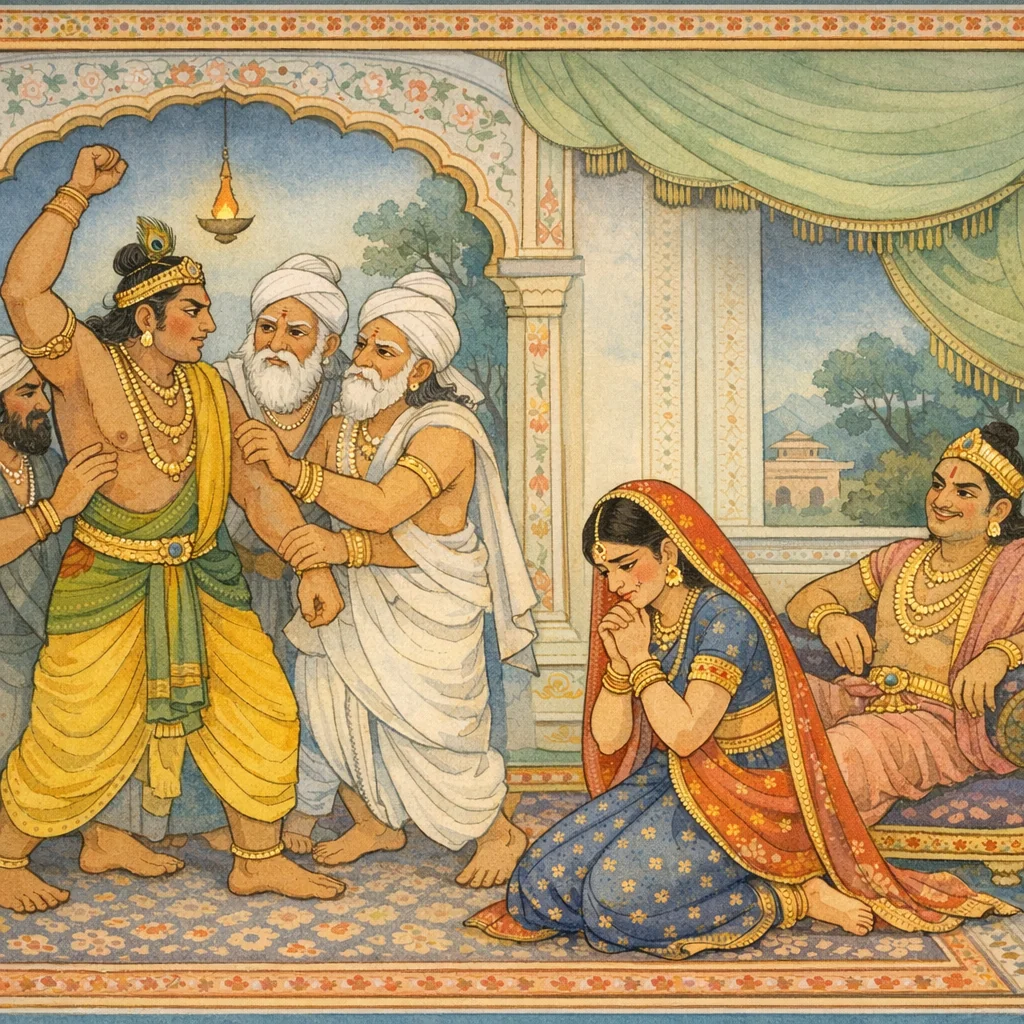
तस्मिन्नुपरते शब्दे भीमसेनो<ब्रवीदिदम् । प्रगृह्म रुचिरं दिव्यं भुजं चन्दनचर्चितम्,वह कोलाहल शान्त होनेपर भीमसेन अपनी चन्दनचर्चित सुन्दर दिव्य भुजा उठाकर इस प्रकार बोले
When the clamour had subsided, Bhīmasena, lifting up his beautiful, radiant arm anointed with sandalwood paste, spoke these words—signalling that he was about to address the assembly with forceful intent and moral indignation at what had just occurred.
Verse 12
भीमसेन उवाच यद्येष गुरुरस्माकं धर्मराजो महामना: । न प्रभु: स्थात् कुलस्यास्य न वयं मर्षयेमहि
Bhīmasena said: “If this high-minded Dharmarāja—our revered elder and guide—were not the rightful master and protector of this family, then we would not endure it. We would not tolerate such a state of affairs.”
Verse 13
भीमसेनने कहा--यदि ये महामना धर्मराज युधिष्छिर हमारे पितृतुल्य तथा इस पाण्डुकुलके स्वामी न होते तो हम कौरवोंका यह अत्याचार कदापि सहन नहीं करते ।। ईशो नः पुण्यतपसां प्राणानामपि चेश्वर: । मन्यतेडजितमात्मानं यद्येष विजिता वयम्,ये हमारे पुण्य, तप और प्राणोंके भी प्रभु हैं। यदि ये द्रौपदीको दाँवपर लगानेसे पूर्व अपनेको हारा हुआ नहीं मानते हैं तो हम सब लोग इनके द्वारा दाँवपर रखे जानेके कारण हारे जा चुके हैं। यदि मैं हारा गया न होता तो अपने पैरोंसे पृथ्वीका स्पर्श करनेवाला कोई भी मरणथधर्मा मनुष्य द्रौपदीके इन केशोंको छू लेनेपर मेरे हाथसे जीवित नहीं बच सकता था। राजाओ! परिघके समान मोटी और गोलाकार मेरी इन विशाल भुजाओंकी ओर तो देखो। इनके बीचमें आकर इन्द्र भी जीवित नहीं बच सकता
Bhima said: “If the high-minded Dharmaraja Yudhishthira—who is like a father to us and the lord of the Pandu line—were not so, we would never have endured this outrage of the Kauravas. He is our master—master even of our merit, our austerities, and our very lives. If he does not regard himself as defeated before staking Draupadi, then we, having been placed by him as stakes, are already counted as lost. Had I not been defeated, no mortal who walks upon the earth would have touched Draupadi’s hair and escaped alive from my hands. O kings, look at these mighty arms of mine—thick and rounded like iron clubs. Even Indra would not come between them and live.”
Verse 14
न हि मुच्येत मे जीवन् पदा भूमिमुपस्पृशन् | मर्त्यधर्मा परामृश्य पाज्चाल्या मूर्थजानिमान्,ये हमारे पुण्य, तप और प्राणोंके भी प्रभु हैं। यदि ये द्रौपदीको दाँवपर लगानेसे पूर्व अपनेको हारा हुआ नहीं मानते हैं तो हम सब लोग इनके द्वारा दाँवपर रखे जानेके कारण हारे जा चुके हैं। यदि मैं हारा गया न होता तो अपने पैरोंसे पृथ्वीका स्पर्श करनेवाला कोई भी मरणथधर्मा मनुष्य द्रौपदीके इन केशोंको छू लेनेपर मेरे हाथसे जीवित नहीं बच सकता था। राजाओ! परिघके समान मोटी और गोलाकार मेरी इन विशाल भुजाओंकी ओर तो देखो। इनके बीचमें आकर इन्द्र भी जीवित नहीं बच सकता
Bhīmasena said: “No mortal who still lives and walks upon the earth would have escaped from my hands, had he dared to touch these locks of hair of Pāñcālī. If I had not been bound by the disgrace of defeat, such an outrage would never have gone unpunished.”
Verse 15
पश्यध्वं ह्वायतौ वृत्तौ भुजी मे परिघाविव । नैतयोरन्तरं प्राप्प मुच्येतापि शतक्रतु:,ये हमारे पुण्य, तप और प्राणोंके भी प्रभु हैं। यदि ये द्रौपदीको दाँवपर लगानेसे पूर्व अपनेको हारा हुआ नहीं मानते हैं तो हम सब लोग इनके द्वारा दाँवपर रखे जानेके कारण हारे जा चुके हैं। यदि मैं हारा गया न होता तो अपने पैरोंसे पृथ्वीका स्पर्श करनेवाला कोई भी मरणथधर्मा मनुष्य द्रौपदीके इन केशोंको छू लेनेपर मेरे हाथसे जीवित नहीं बच सकता था। राजाओ! परिघके समान मोटी और गोलाकार मेरी इन विशाल भुजाओंकी ओर तो देखो। इनके बीचमें आकर इन्द्र भी जीवित नहीं बच सकता
Bhīmasena said: “Look at my two arms—rounded and massive like iron clubs. Even Śatakratu (Indra) would not escape alive if he came within the space between them. This is the measure of my wrath at the outrage done to Draupadī: had I not been bound by the loss at dice and the constraints of dharma in this hall, no mortal who touched her hair would have left my hands alive.”
Verse 16
धर्मपाशसितत्त्वेवं नाधिगच्छामि संकटम् । गौरवेण विरुद्धश्न निग्रहादर्जुनस्य च,मैं धर्मके बन्धनमें बँधा हूँ, बड़े भाईके गौरवने मुझे रोक रखा है और अर्जुन भी मना कर रहा है, इसीलिये मैं इस संकटसे पार नहीं हो पाता
Bhīmasena said: “Thus, bound fast by the fetters of dharma, I cannot find a way through this crisis. Reverence for my elder brother restrains me, and Arjuna too holds me back; therefore I am unable to overcome this peril.”
Verse 17
धर्मराजनिसृष्टस्तु सिंह: क्षुद्रमृगानिव । धार्तराष्ट्रानिमान् पापान् निष्पिषेयं तलासिभि:,यदि धर्मराज मुझे आज्ञा दे दें तो जैसे सिंह छोटे मृगोंको दबोच लेता है, उसी प्रकार मैं धृतराष्ट्रके इन पापी पुत्रोंको तलवारकी जगह हाथोंके तलवोंसे ही मसल डालूँ
Bhīmasena declared: “If King Dharmarāja (Yudhiṣṭhira) grants leave, I shall crush Dhṛtarāṣṭra’s sinful sons as a lion seizes and destroys petty beasts—not with a sword, but with my own palms.”
Verse 18
वैशम्पायन उवाच तमुवाच तदा भीष्मो द्रोणो विदुर एव च । क्षम्यतामिदमित्येवं सर्व सम्भाव्यते त्वयि,वैशम्पायनजी कहते हैं--राजन्! तब भीष्म, द्रोण और विदुरने भीमसेनको शान्त करते हुए कहा--“भीम! क्षमा करो, तुम सब कुछ कर सकते हो”
Vaiśampāyana said: Then Bhīṣma, Droṇa, and Vidura spoke to him to calm him: “Bhīma, forgive this. Truly, through you all things are possible.”
Verse 70
इति श्रीमहाभारते सभापर्वणि द्यूतपर्वणि भीमवाक्ये सप्ततितमो5ध्याय:
Thus, in the Śrī Mahābhārata, within the Sabhā Parva—specifically the Dyūta Parva—ends the seventieth chapter, known as “Bhīma’s speech.”
Frequently Asked Questions
The dilemma is how to preserve dharma and composure when authority and procedure have produced unjust outcomes—especially how Draupadī and Kuntī negotiate duty, dignity, and emotional truth during forced exile.
The chapter models disciplined resilience: grief is acknowledged but should not disable duty; adherence to ethical conduct and protective norms (guru-dharma/strī-dharma) is presented as a stabilizing strategy amid political collapse.
No explicit phalaśruti appears here; the meta-significance is narrative and ethical—this farewell sequence functions as a moral bridge from courtly injustice to exile, sharpening the epic’s inquiry into dharma’s endurance under coercion.