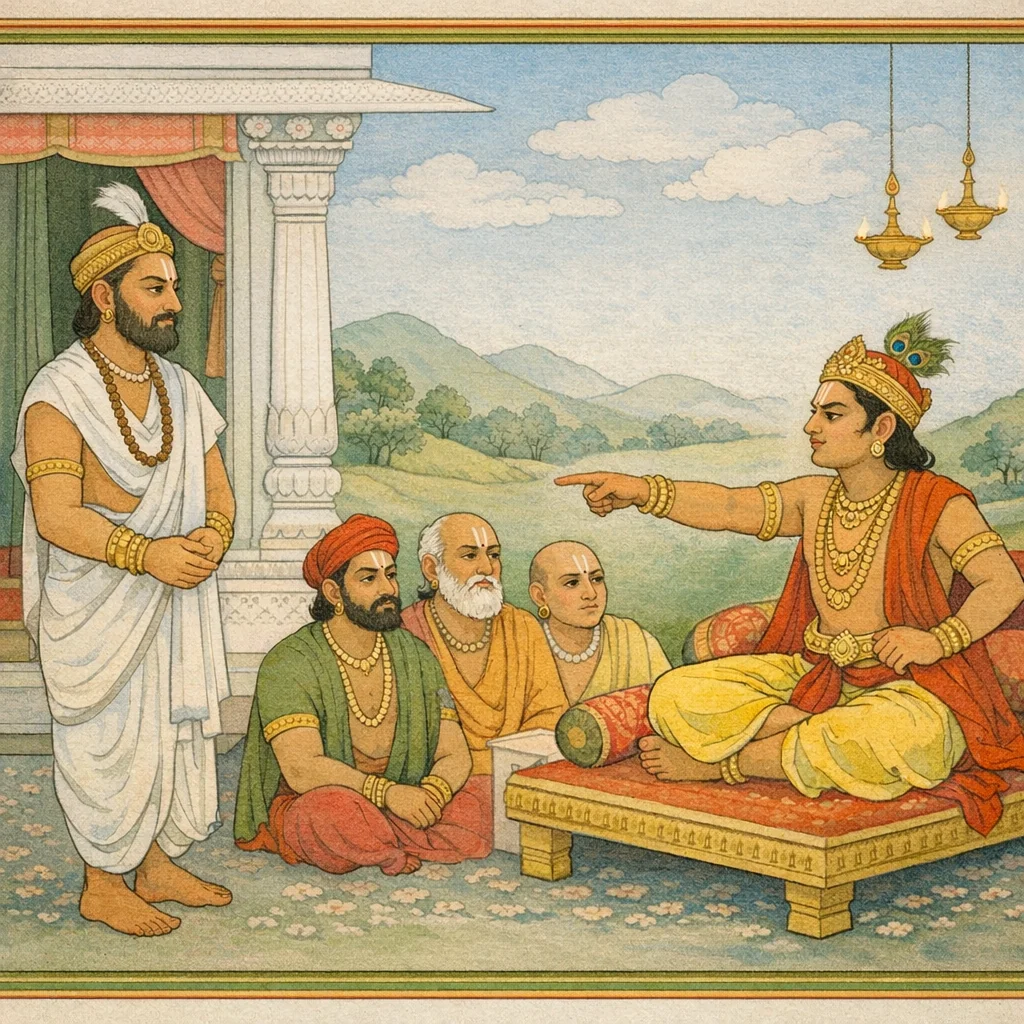
Adhyaya 64
अध्याय ६४ — सभामध्ये क्रोध-निवारणम् (Restraint of wrath in the royal assembly)
Upa-parva: Dyūta Parva (Dice-Match Episode within Sabhā Parva)
The chapter presents a sequence of courtly reactions following severe provocation. Karṇa opens by framing the situation as unprecedented conduct among women renowned for beauty, implying normative shock. In contrast, Draupadī (Kṛṣṇā, Pāñcālī) is described as a source of śānti for the Pāṇḍavas—metaphorically a boat carrying those sinking in unfordable waters, emphasizing stabilizing counsel amid institutional crisis. Vaiśaṃpāyana then narrates Bhīma’s intense indignation in the Kuru assembly and introduces a maxim attributed to Devala: a man’s three ‘lights’—offspring, action, and knowledge—persist beyond the body, linking personal injury to generational and reputational continuity. A question is raised about how lineage can arise if marital honor is violated, foregrounding anxiety about social order. Arjuna responds with a normative statement on noble speech: the eminent do not trade in harsh words; the virtuous remember merit rather than enmity, implying strategic restraint and moral self-verification. Bhīma, however, urges immediate elimination of assembled adversaries and offers sovereignty to Yudhiṣṭhira, escalating the rhetoric of retaliation. The narration intensifies Bhīma’s embodied rage through imagery of heat, smoke, sparks, and an apocalyptic countenance. Finally, Yudhiṣṭhira physically restrains Bhīma and approaches Dhṛtarāṣṭra with folded hands, reasserting procedural containment and hierarchical petition as the chosen mode of action within sabhā-dharma.
Chapter Arc: सभामण्डप में दुर्योधन का अहंकार उफनता है—वह विदुर पर ‘पराये यश’ की श्लाघा करने और अपने ही कुल के विरुद्ध झुकने का आरोप लगाकर कटु वाणी से आक्रमण करता है। → दुर्योधन विदुर को ‘पोषक का उपहास करने वाले’ और ‘भर्तृघ्न’ के समान बताकर उनकी निष्ठा पर प्रहार करता है; वह मित्रता और हितवचन को भी शत्रुता मानकर विदुर को दरबार से हट जाने का आदेश देता है। → विदुर प्रत्युत्तर में राजधर्म का कठोर सत्य रखते हैं—राजाओं के चित्त डगमगाते हैं; वे पहले सांत्वना देते हैं और फिर ‘मुसल’ समान प्रहार करते हैं। वे दुर्योधन को चेताते हैं कि विषधर सर्पों और नेत्र-विष वाले क्रोध को विद्वान् नहीं उकसाते—पर दुर्योधन उसी विष को जगाने पर तुला है। → दुर्योधन का निर्णय अटल रहता है—वह विदुर को स्पष्ट कह देता है कि जहाँ इच्छा हो वहाँ चले जाएँ; हितवचन का स्थान सभा में नहीं, क्योंकि वह उसे अपमान प्रतीत होता है। विदुर सत्य कहकर भी राजहृदय को न मोड़ पाने की विवशता स्वीकारते हैं। → विदुर के निष्कासन/विमुखीकरण के साथ हस्तिनापुर में नीति की ज्योति मंद पड़ती है—अब द्यूत और विनाश की राह पर कौन रोकेगा?
Shlokas
Verse 1
2: छा 5 - कुरुकुलके एक पूर्वपुरुष । चतुष्षष्टितमो<5 ध्याय: दुर्योधनका विदुरको मा और विदुरका उसे चेतावनी ना दुर्योधन उवाच परेषामेव यशसा श्लाघसे त्वं सदा क्षत्त: कुत्सयन् धार्तराष्ट्रानू | जानीमहे विदुर यत् प्रियस्त्व॑ बालानिवास्मानवमन्यसे नित्यमेव,दुर्योधन बोला--विदुर! तुम सदा हमारे शत्रुओंके ही सुयशकी डींग हाँकते रहते हो और हम सभी धूृतराष्ट्रके पुत्रोंकी निन्दा किया करते हो। तुम किसके प्रेमी हो, यह हम जानते हैं, हमें मूर्ख समझकर तुम सदा हमारा अपमान ही करते रहते हो
Duryodhana said: “O Kṣattā (Vidura), you always boast only of the fame of our opponents, while continually disparaging the sons of Dhṛtarāṣṭra. We know well, Vidura, where your affection lies; taking us for mere children, you constantly treat us with contempt.”
Verse 2
स विज्ञेय: पुरुषो<न्यत्रकामो निन्दाप्रशंसे हि तथा युनक्ति | जिह्दा कथं ते हृदयं व्यनक्ति यो न ज्यायस: कृथा मनस: प्रातिकूल्यम्,जो दूसरोंको चाहनेवाला है, वह मनुष्य पहचानमें आ जाता है; क्योंकि वह जिसके प्रति द्वेष होता है, उसकी निन््दा और जिसके प्रति राग होता है, उसकी प्रशंसामें संलग्न रहता है। तुम्हारा हृदय हमारे प्रति किस प्रकार द्वेषसे परिपूर्ण है, यह बात तुम्हारी जिह्ना प्रकट कर देती है। तुम अपनेसे श्रेष्ठ पुरुषोंके प्रति इस प्रकार हृदयका द्वेष न प्रकट करो
“A man who longs for others (and is not steady in loyalty) is easy to recognize: he busies himself in blaming those he dislikes and praising those he is attached to. How your heart is filled with hostility toward us is revealed by your very tongue. Do not, in this way, display the mind’s antagonism toward those who are your superiors.”
Verse 3
उत्सज्े च व्याल इवाहितोडसि माजरिवत् पोषकं चोपहंसि । भर्तृघ्न॑ त्वां न हि पापीय आहु- स्तस्मात् क्षत्त: कि न बिभेषि पापात्,हमारे लिये तुम गोदमें बैठे साँपके समान हो और बिलावकी भाँति पालनेवालेका ही गला घोंट रहे हो। तुम स्वामिद्रोह रखते हो, फिर भी तुम्हें लोग पापी नहीं कहते? विदुर! तुम इस पापसे डरते क्यों नहीं?
Duryodhana said: “You are like a serpent kept in one’s lap—once given the chance, you bite. Like a cat, you turn upon the very one who feeds you and seek to harm your benefactor. Though you are a slayer of your master—one who betrays his lord—people still do not call you the worst of sinners. Therefore, O Kṣattā (Vidura), why do you not fear this sin?”
Verse 4
जित्वा शत्रून्ू फलमाप्तं महद् वै मास्मान् क्षत्त: परुषाणीह वोच: । द्विषद्धिस्त्वं सम्प्रयोगाभिनन्दी मुहुर्देषं यासि नः सम्प्रयोगात्,हमने शत्रुओंको जीतकर (धनरूप) महान् फल प्राप्त किया है। विदुर! तुम हमसे यहाँ कटु वचन न बोलो। तुम शत्रुओंके साथ मेल करके प्रसन्न हो रहे हो और हमारे साथ मेल करके भी अब (हमारे शत्रुओंकी प्रशंसा करके) हमलोगोंके बारंबार द्वेषके पात्र बन रहे हो
Duryodhana says: “Having conquered our enemies, we have gained a great reward. Vidura, do not speak harsh words to us here. You seem to take pleasure in aligning with our foes, and even when you associate with us you end up—by praising our enemies—making yourself again and again an object of our resentment.”
Verse 5
अमित्रतां याति नरो$क्षमं ब्रुवन् निगूहते गुह्ममित्रसंस्तवे । तदाश्रितो5पत्रप कि नु बाधसे यदिच्छसि त्वं तदिहाभिभाषसे,अक्षम्य कटुवचन बोलनेवाला मनुष्य शत्रु बन जाता है। शत्रुकी प्रशंसा करते समय भी लोग अपने गूढ़ मनोभावको छिपाये रखते हैं। निर्लज्ज विदुर! तुम भी उसी नीतिका आश्रय लेकर चुप क्यों नहीं रहते? हमारे काममें बाधा क्यों डालते हो? तुम जो मनमें आता है, वही बक जाते हो
Duryodhana said: “A man who speaks unforgivable, harsh words turns into an enemy. Even while praising an enemy, people conceal their secret intentions. Shameless Vidura—why do you not keep silent by resorting to that very policy? Why do you obstruct our undertaking? Whatever comes into your mind, you blurt out here.”
Verse 6
मा नो5वमंस्था विद्य मनस्तवेदं शिक्षस्व बुद्धि स्थविराणां सकाशात् । यशो रक्षस्व विदुर सम्प्रणीतं मा व्यापृत: परकार्येषु भूस्त्वम्,विदुर! तुम हमलोगोंका अपमान न करो, तुम्हारे इस मनको हम जान चुके हैं। तुम बड़े-बूढ़ोंके निकट बैठकर बुद्धि सीखो। अपने पूर्वार्जित यशकी रक्षा करो। दूसरोंके कामोंमें हस्तक्षेप न करो
Duryodhana said: “Do not slight us, O wise Vidura. We have already understood the bent of your mind. Sit near the elders and learn discernment from them. Guard the reputation you have earned and maintained. Do not busy yourself in other people’s affairs—do not interfere, Vidura.”
Verse 7
अहं कर्तेति विदुर मा च मंस्था मा नो नित्यं परुषाणीह वोच: । न त्वां पृच्छामि विदुर यद्धितं मे स्वस्ति क्षत्तर्मा तितिक्षून् क्षिणु त्वम्
Duryodhana said: “Vidura, do not think, ‘I am the doer,’ and do not keep speaking harsh words to us here again and again. I am not asking you, Vidura, what would be for my good. Farewell, O chamberlain—go and attend to those who are patient and forbearing.”
Verse 8
विदुर! “मैं ही कर्ता-धर्ता हूँ" ऐसा न समझो और हमें प्रतिदिन कड़वी बातें न कहो। मैं अपने हितके सम्बन्धमें तुमसे कोई सलाह नहीं पूछता हूँ। तुम्हारा भला हो। हम तुम्हारी कठोर बातें सहते चले जाते हैं, इसलिये हम क्षमाशीलोंको तुम अपने वचनरूपी बाणोंसे छेदो मत ।। एक: शास्ता न द्वितीयो5स्ति शास्ता गर्भ शयानं पुरुषं शास्ति शास्ता । तेनानुशिष्ट: प्रवणादिवाम्भो यथा नियुक्तोडस्मि तथा भवामि,देखो, इस जगत्का शासन करनेवाला एक ही है, दूसरा नहीं। वही शासक माताके गर्भमें सोये हुए शिशुपर भी शासन करता है; उसीके द्वारा मैं भी अनुशासित हूँ। अतः जैसे जल स्वाभाविक ही नीचेकी ओर जाता है, वैसे ही वह जगन्नियन्ता मुझे जिस काममें लगाता है, मैं वैसे ही उसी काममें लगता हूँ
Duryodhana said: “Vidura, do not think that I am the sole doer and supporter of all actions, and do not address us day after day with bitter words. I do not seek your counsel regarding my own advantage. May it go well with you. We have been enduring your harsh speech; therefore do not pierce us—who are patient—with arrows made of words. Look: there is only one ruler of this world, not a second. That very Ruler governs even a person lying in the mother’s womb. I too am disciplined by Him; and so, just as water naturally flows downward, I act in the very way that the Controller of the universe appoints me to act.”
Verse 9
भिनत्ति शिरसा शैलमहिं भोजयते च य: । धीरेव कुरुते तस्य कार्याणामनुशासनम् | यो बलादनुशास्तीह सोअमित्रं तेन विन्दति,जिनसे प्रेरित होकर मनुष्य अपने सिरसे पर्वतको विदीर्ण करना चाहता है--अर्थात् पत्थरपर सिर पटककर स्वयं ही अपनेको पीड़ा देता है तथा जिनकी प्रेरणासे मनुष्य सर्पको भी दूध पिलाकर पालता है, उसी सर्वनियन्ताकी बुद्धि समस्त जगत्के कार्योंका अनुशासन करती है। जो बलपूर्वक किसीपर अपना उपदेश लादता है, वह अपने उस व्यवहारके द्वारा उसे अपना शत्रु बना लेता है
Duryodhana said: “He who would try to split a mountain with his head, and he who would even feed and rear a serpent—such a one is driven into self-harm by misguided prompting. Yet it is the steady, all-governing intelligence that orders the workings of all affairs. But the man who here tries to rule others by sheer force turns them, by that very conduct, into his enemy.”
Verse 10
मित्रतामनुवृत्तं तु समुपेक्षेतर पण्डित: । प्रदीप्य य: प्रदीप्ताग्निं प्राक् चिरं नाभिधावति । भस्मापि न स विन्देत शिष्टं क्वचन भारत,इस प्रकार मित्रताका अनुसरण करनेवाले मनुष्यको दविद्वान् पुरुष त्याग दे। भारत! जो पहले कपूरमें आग लगाकर उसके प्रज्वलित हो जानेपर देरतक उसे बुझानेके लिये नहीं दौड़ता, वह कहीं उसकी बची हुई राख भी नहीं पाता
A wise man should abandon one who merely follows the name of friendship yet proves indifferent in action. O Bhārata, if someone kindles a fire and, once it is blazing, does not hurry in time to put it out, he will find nowhere even the remaining ash—so too, negligence at the critical moment destroys even what might have been saved.
Verse 11
न वासयेत् पारवर्ग्य द्विषन्तं विशेषत: क्षत्तरहितं मनुष्यम् | स यत्रेच्छसि विदुर तत्र गच्छ सुसान्त्विता हासती स्त्री जहाति,विदुर! जो शत्रुका पक्षपाती हो, अपनेसे द्वेष रखता हो और अहित करनेवाला हो, ऐसे मनुष्यको घरमें नहीं रहने देना चाहिये। अतः तुम्हारी जहाँ इच्छा हो, चले जाओ। कुलटा सत्रीको मीठी-मीठी बातोंद्वारा कितनी ही सान्त्वना दी जाय, वह पतिको छोड़ ही देती है
Duryodhana said: “One should not keep in one’s house a man who is hostile—especially one who is partial to the enemy’s side, bears hatred toward us, and is intent on harm. Therefore, Vidura, go wherever you wish. For a wanton woman, even when sweetly consoled with many soothing words, still abandons her husband.”
Verse 12
विदुर उवाच एतावता पुरुष ये त्यजन्ति तेषां वृत्तं साक्षिवद् ब्रूहि राजन् । राज्ञां हि चित्तानि परिप्लुतानि सान्त्वं दत्त्वा मुसलैर्घातयन्ति,विदुरने कहा--राजन्! जो इस प्रकार मनके प्रतिकूल किंतु हितभरी शिक्षा देनेमात्रसे अपने हितैषी पुरुषको त्याग देते हैं, उनका वह बर्ताव कैसा है, यह आप साक्षीकी भाँति पक्षपातरहित होकर बताइये; क्योंकि राजाओंके चित्त द्वेषसे भरे होते हैं, इसलिये वे सामने मीठे वचनोंद्वारा सान्त्वना देकर पीठ-पीछे मूसलोंसे आघात करवाते हैं
Vidura said: “O King, those men who abandon a well-wisher merely for offering such counsel—unpleasant to the mind yet beneficial—tell me, like an impartial witness, what sort of conduct is that. For the hearts of kings are often flooded with hostility: they soothe a man with sweet words to his face, and then have him struck down from behind with clubs.”
Verse 13
अबालत्वं मन्यसे राजपुत्र बालो5हमित्येव सुमन्दबुद्धे । यः सौहदे पुरुषं स्थापयित्वा पश्चादेनं दूषयते स बाल:,राजकुमार दुर्योधन! तुम्हारी बुद्धि बड़ी मन्द है। तुम अपनेको विद्वान् और मुझे मूर्ख समझते हो। जो किसी पुरुषको सुहृदके पदपर स्थापित करके फिर स्वयं ही उसपर दोषारोपण करता है, वही मूर्ख है
Vidura rebuked the prince: “You imagine yourself not childish and think, ‘I am wise and he is a mere boy,’ O dull-witted one. But the true fool is the man who first installs someone in the place of a trusted friend and then, afterward, turns around and maligns him.”
Verse 14
न श्रेयसे नीयते मन्दबुद्धि: स्त्री श्रोत्रियस्थेव गृहे प्रदुष्टा । ध्रुवं न रोचेद् भरतर्षभस्य पति: कुमार्या इव षष्टिवर्ष:,जैसे श्रोत्रियके घरमें दुराचारिणी स्त्री कल्याणमय अग्निहोत्र आदि कार्योंमें नहीं लगायी जा सकती, उसी प्रकार मन्दबुद्धि पुरुषको कल्याणके मार्गपर नहीं लगाया जा सकता। जैसे कुमारी कन्याको साठ वर्षका बूढ़ा पति नहीं पसंद आ सकता, उसी प्रकार भरतवंशशिरोमणि दुर्योधनको निश्चय ही मेरा उपदेश रुचिकर नहीं प्रतीत होता
A dull-witted man is not led to what is good—just as a woman of corrupt conduct in the house of a Veda-knowing brahmin cannot be set to auspicious rites like the Agnihotra. And as a maiden cannot take pleasure in a husband of sixty years, so Duryodhana, foremost of the Bharatas, surely finds my counsel distasteful.
Verse 15
अतः प्रियं चेदनुकाड्क्षसे त्वं सर्वेषु कार्येषु हिताहितेषु । स्त्रियश्ष राजन् जडपडजुकांश्व पृच्छ त्वं वै तादृशांश्वैव सर्वान्,राजन! यदि तुम भले-बुरे सभी कार्योमें केवल चिकनी-चुपड़ी बातें ही सुनना चाहते हो, तो स्त्रियों, मूर्खों, पंगुओं तथा उसी तरहके अन्य सब मनुष्योंसे सलाह लिया करो
Therefore, O king, if in every matter—whether beneficial or harmful—you desire only what is pleasant to hear, then consult women, the dull-witted, the crippled, and childish persons, and indeed all others of that same sort.
Verse 16
लभ्यते खलु पापीयान् नरो नु प्रियवागिह । अप्रियस्य हि पथ्यस्य वक्ता श्रोता च दुर्लभ:,इस संसारमें सदा मनको प्रिय लगनेवाले वचन बोलनेवाला महापापी मनुष्य भी अवश्य मिल सकता है; परंतु हितकर होते हुए भी अप्रिय वचनको कहने और सुननेवाले दोनों दुर्लभ हैं
In this world one can certainly find even a very sinful man who speaks only what is pleasing. But a person who will speak what is truly beneficial though unpleasant—and one who will listen to such beneficial yet unpleasant words—both are rare.
Verse 17
यस्तु धर्मपरश्न स्याद्धित्वा भर्तुः प्रियाप्रिये | अप्रियाण्याह पथ्यानि तेन राजा सहायवान्,जो धर्ममें तत्पर रहकर स्वामीके प्रिय-अप्रियका विचार छोड़कर अप्रिय होनेपर भी हितकर वचन बोलता है, वही राजाका सच्चा सहायक है
The true helper of a king is the one who is devoted to dharma, who sets aside concern for whether his words will please or displease his master, and who speaks what is wholesome and beneficial—even when it is unwelcome.
Verse 18
अव्याधिजं कटुजं तीक्ष्णमुष्णं यशोमुषं परुष॑ पूतिगन्धि । सतां पेयं यन्न पिबन्त्यसन्तो मन्युं महाराज पिब प्रशाम्य,महाराज! जो पी लेनेपर मानसिक रोगोंका नाश करनेवाला है, कड़वी बातोंसे जिसकी उत्पत्ति होती है, जो तीखा, तापदायक, कीर्तिनाशक, कठोर और दूषित प्रतीत होता है, जिसे दुष्टलोग नहीं पी सकते तथा जो सत्पुरुषोंके पीनेकी वस्तु है, उस क्रोधको पीकर शान्त हो जाइये
O great king! There is a draught which, once swallowed, destroys the maladies of the mind: it is born of bitterness, sharp and burning, harsh and foul-smelling, a thief of fame. The wicked cannot drink it, but the good can. Therefore, O king, drink down this anger and be pacified.
Verse 19
वैचित्रवीर्यस्थ यशो धनं च वाञ्छाम्यहं सहपुत्रस्य शश्वत् यथा तथा ते>स्तु नमश्न ते<स्तु ममापि च स्वस्ति दिशन्तु विप्रा:,मैं तो चाहता हूँ कि विचित्रवीर्यनन्दन धृतराष्ट्र और उनके पुत्रोंकोी सदा यश और धन दोनों प्राप्त हो, परंतु दुर्योधन! तुम जैसे रहना चाहते हो, वैसे रहो, तुम्हें नमस्कार है। ब्राह्मणलोग मेरे लिये भी कल्याणका आशीर्वाद दें
Vidura said: “I continually wish for lasting fame and wealth for Dhṛtarāṣṭra, the son of Vicitravīrya, together with his sons. Yet, Duryodhana, live as you choose; I bow to you. May the brāhmaṇas also pronounce blessings of well-being for me.”
Verse 20
आशीविषान् नेत्रविषान् कोपयेन्न च पण्डित: । एवं ते5हं वदामीदं प्रयतः कुरुनन्दन,कुरुनन्दन! मैं एकाग्र हृदयसे तुमसे यह बात बता रहा हूँ, 'विद्वान् पुरुष उन सर्पोंको कुपित न करें, जो दाँतों और नेत्रोंसे भी विष उगलते रहते हैं (अर्थात् ये पाण्डव तुम्हारे लिये सर्पोंसे भी अधिक भयंकर हैं, इन्हें मत छेड़ो)”
Vidura warns the prince: “A wise man should never provoke deadly serpents—those that pour out poison from their fangs and even from their eyes. In the same way, O Kuru prince, I tell you with focused intent: do not stir up those who can become far more dangerous when angered; such provocation invites ruin.”
Verse 63
इस प्रकार श्रीमह्याभारत सभापव॑के अन्तर्गत झ्वूतपर्वमें विदुरवाक्यविषयक तिरसठवाँ अध्याय पूरा हुआ
Thus ends the sixty-third chapter of the Dyūta (Dice) section within the Sabhā Parva of the Śrī Mahābhārata, a chapter centered on Vidura’s counsel.
Verse 64
इति श्रीमहा भारते सभापर्वणि द्यूतपर्वणि विदुरहितवाक्ये चतुष्षष्टितमो5ध्याय: ।। ६४ ।। इस प्रकार श्रीमह्ाभारत सभापवके अन्तर्गत ट्यूतपर्वमें विदुरके हितकारक वचनविषयक चौसठवाँ अध्याय पूरा हुआ
Thus, in the Śrī Mahābhārata, within the Sabhā Parva—specifically in the Dyūta Parva—ends the sixty-fourth chapter, known for Vidura’s well-intentioned, welfare-seeking counsel.
Frequently Asked Questions
Whether immediate retaliatory force is justified under extreme provocation, or whether restraint within the assembly—preserving procedural legitimacy and preventing uncontrolled escalation—better serves dharma and long-term political stability.
The chapter contrasts reactive anger with disciplined conduct: noble speech avoids corrosive harshness, virtue remembers merit over hostility, and leadership may require restraining even justified rage to protect order and future outcomes.
No explicit phalaśruti appears here; the meta-function is narrative-ethical—using authoritative maxim (Devala) and vivid characterization to frame restraint and speech-ethics as integral to sabhā-dharma and dynastic continuity.