Adhyaya 53
अक्षदेवन-प्रवर्तनम् | Commencement of the Dice Game
Upa-parva: Dyūta-Āhvāna (Dice-Invitation) Episode
Chapter 53.0 is a tightly structured dialogue that transitions from invitation to enacted contest. Śakuni announces the assembly is prepared and urges Yudhiṣṭhira to begin play, implying timeliness and readiness as justifications. Yudhiṣṭhira responds with an ethical critique: gambling is framed as sinful deception (nikṛti), lacking kṣātra valor and stable nīti; he warns against victory achieved by cruel or crooked means. Śakuni counters by redefining competence in dice as knowledge of procedure and calculation, normalizing endurance of the game’s processes. Yudhiṣṭhira cites ascetic authority (Asita Devala) to argue that righteous victory belongs to straightforward combat rather than trick-based play, and he emphasizes non-deceptive conduct as a satpuruṣa-vrata. Despite this, he accepts participation due to a vow not to withdraw when challenged and attributes events to overpowering destiny (diṣṭa/vidhi). Duryodhana declares himself the provider of wealth and jewels for the wagering while appointing Śakuni as his agent-player. The narrative frame (Vaiśaṃpāyana) then depicts the court’s convening—Bhīṣma, Droṇa, Kṛpa, Vidura, and other kings—followed by the first wager of ornaments and Śakuni’s immediate declaration of Yudhiṣṭhira’s loss, establishing the chapter’s theme: ethical warning voiced, procedure activated, and institutional witnessing enabling escalation.
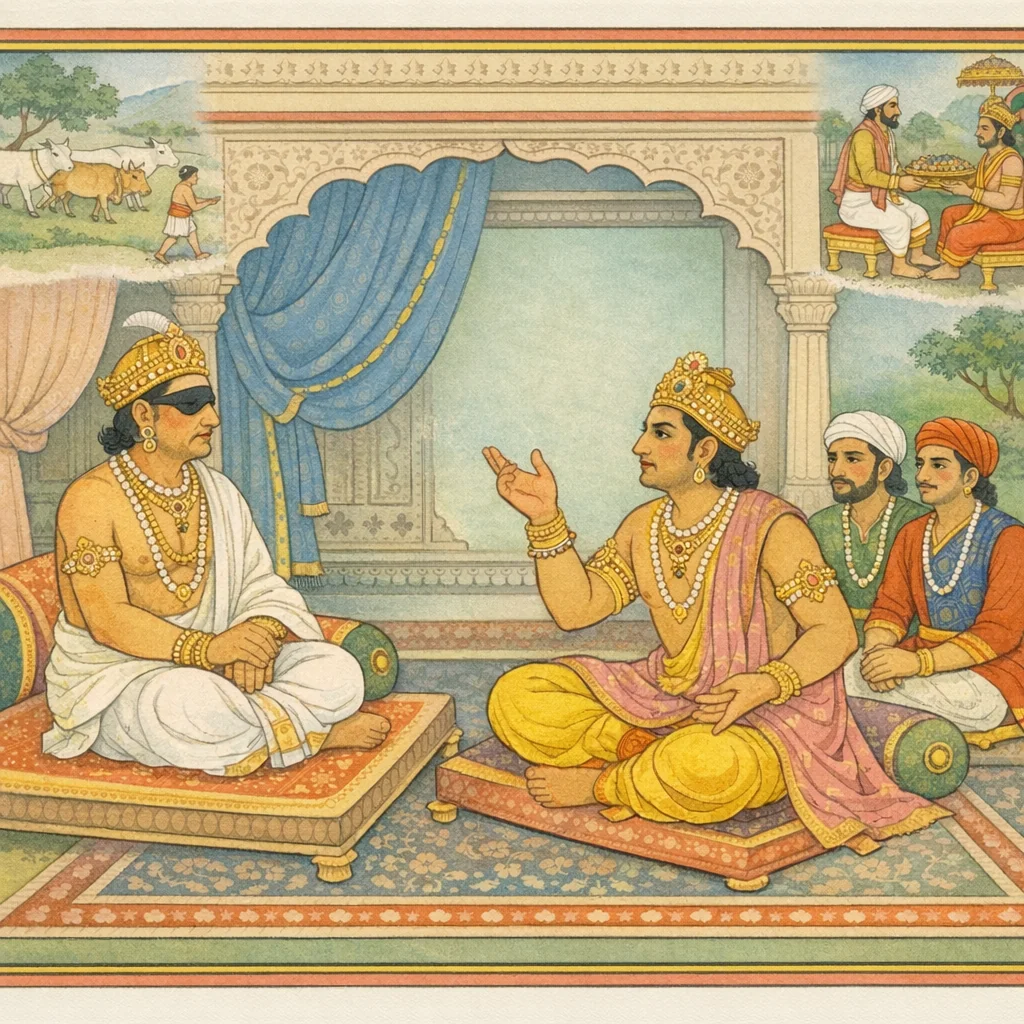
Chapter Arc: दुर्योधन धृतराष्ट्र के सम्मुख युधिष्ठिर के राजसूय-अभिषेक का वैभव गिनाने लगता है—कौन-कौन सत्यसंध, महाव्रती, यशस्वी राजा उनके चरणों में उपस्थित थे। → वह एक-एक कर उपहारों और सेवाओं का वर्णन करता है: असंख्य गौएँ, स्वर्ण-विभूषित रथ, श्वेत काम्बोज अश्व, दक्षिणात्य वस्त्र-आभूषण, मगध की सामग्री, गजेन्द्र, जल-कलश, और विविध प्रदेशों की राजकीय भेंटें—यह सब सुनाते-सुनाते उसका स्वर प्रशंसा से जलन में बदलता जाता है। → वैभव की सूची अचानक विषाद-घोष में फट पड़ती है: ‘यह युग मानो अन्धे विधाता से बँधा है—कनीयान बढ़ते हैं, ज्येष्ठ घटते हैं’; युधिष्ठिर की उन्नति देखकर वह स्वयं को कृश, विवर्ण और शोकाकुल बताता है। → धृतराष्ट्र के सामने दुर्योधन का ‘अभिषेक-वर्णन’ वस्तुतः ‘संताप-वर्णन’ बन जाता है—युधिष्ठिर की समृद्धि को वह अपने अपमान और हानि के रूप में अनुभव करता है, और यही भाव आगे की नीति-चालों का बीज बनता है। → दुर्योधन का यह संताप अब किस उपाय में बदलेगा—क्या वह इसे सहन करेगा या छल-प्रपंच का मार्ग चुनेगा?
Shlokas
Verse 1
मिस अल ह्यु हि त्रिपज्चाशत्तमो<ध्याय: दुर्योधनद्वारा युधिष्ठिरके अभिषेकका वर्णन दुर्योधन उवाच आयंस्तु ये वै राजान: सत्यसंधा महाव्रता: । पर्याप्तविद्या वक्तारो वेदोक्तावभूथप्लुता:
Duryodhana said: “Those kings who have come here—steadfast in truth and firm in their great vows—are fully accomplished in learning, skilled in speech, and well-versed in the Vedic utterances and sacred rites.”
Verse 2
धृतिमन्तो दह्वीनिषेवा धर्मात्मानो यशस्विन: । मूर्धाभिषिक्तास्ते चैनं राजान: पर्युपासते
Duryodhana said: “Steadfast, devoted to the sacred fire, righteous in spirit, and renowned—those kings who have been consecrated by royal anointing attend upon this king and wait upon him with deference.”
Verse 3
दक्षिणार्थ समानीता राजभि: कांस्यदोहना: । आरण्या बहुसाहस्रा अपश्यंस्तत्र तत्र गा:
Duryodhana said: “For the sake of tribute (dakṣiṇā), the kings have brought cows whose milk is drawn into bronze vessels. Yet I see, here and there, many thousands of cattle that dwell in the forests.”
Verse 4
दुर्योधन बोला--पिताजी! जो राजा आर्य, सत्यप्रतिज्ञ, महाव्रती, विद्वान, वक्ता, वेदोक्त यज्ञोंके अन्तमें अवभूथ-स्नान करनेवाले, धैर्यवानू, लज्जाशील, धर्मात्मा, यशस्वी तथा मूर्धाभिषिक्त थे, वे सभी इन धर्मराज युधिष्ठिरकी उपासना करते थे। राजाओंने दक्षिणामें देनेके लिये जो गौएँ मँगवायी थीं, उन सबको मैंने जहाँ-तहाँ देखा। उनके दुग्धपात्र काँसेके थे। वे सब-की-सब जंगलोंमें खुली चरनेवाली थीं तथा उनकी संख्या कई हजार थी।। आजहुस्तत्र सत्कृत्य स्वयमुद्यम्य भारत | अभिषेकार्थमव्यग्रा भाण्डमुच्चावचं नूपा:,भारत! राजालोग युधिष्ठिरके अभिषेकके लिये स्वयं ही प्रयत्न करके शान्तचित्त हो सत्कारपूर्वक छोटे-बड़े पात्र उठा-उठाकर ले आये थे। बाह्नीकनरेश रथ ले आये, जो सुवर्णसे सजाया गया था। सुदक्षिणने उस रथमें काम्बोजदेशके सफेद घोड़े जोत दिये
Duryodhana said: “Father, all those kings—noble in conduct, true to their vows, great in austerity, learned and eloquent, who had completed Vedic sacrifices and performed the concluding avabhṛtha bath—steadfast, modest, righteous, renowned, and duly consecrated rulers—were all paying homage to Dharmarāja Yudhiṣṭhira. I saw, scattered here and there, the cows the kings had brought to be given as dakṣiṇā; their milk-vessels were of bronze, they grazed freely in the forests, and they numbered in many thousands. And today, O Bhārata, they themselves, with calm minds, respectfully exerted themselves for Yudhiṣṭhira’s consecration, carrying in all manner of large and small vessels. The king of Bāhlīka brought a chariot adorned with gold, and Sudakṣiṇa yoked to it white horses from the land of Kāmboja.”
Verse 5
बाह्लीको रथमाहार्षीज्जाम्बूनदविभूषितम् । सुदक्षिणस्तु युयुजे श्वेतैः काम्बोजजै्हयै:,भारत! राजालोग युधिष्ठिरके अभिषेकके लिये स्वयं ही प्रयत्न करके शान्तचित्त हो सत्कारपूर्वक छोटे-बड़े पात्र उठा-उठाकर ले आये थे। बाह्नीकनरेश रथ ले आये, जो सुवर्णसे सजाया गया था। सुदक्षिणने उस रथमें काम्बोजदेशके सफेद घोड़े जोत दिये
Duryodhana said: “The king of Bāhlīka brought a chariot adorned with Jāmbūnada gold; and Sudakṣiṇa yoked to that chariot white horses bred in the land of Kāmboja.”
Verse 6
सुनीथ:ः प्रीतिमांश्वैव हानुकर्ष महाबल: । ध्वजं चेदिपतिश्वैवमहार्षीत् स्वयमुद्यतम्,महाबली सुनीथने बड़ी प्रसन्नताके साथ उसमें अनुकर्ष (रथके नीचे लगनेयोग्य काष्ठ) लगा दिया। चेदिराजने स्वयं उस रथमें ध्वजा फहरा दी। दक्षिणदेशके राजाने कवच दिया। मगधनरेशने माला और पगड़ी प्रस्तुत की। महान् धनुर्धर वसुदानने साठ वर्षकी अवस्थाका एक गजराज उपस्थित कर दिया। मत्स्यनरेशने सुवर्णजटित धुरी ला दी। एकलव्यने पैरोंके समीप जूते लाकर रख दिये। अवन्तीनरेशने अभिषेकके लिये अनेक प्रकारका जल एकत्र कर दिया। चेकितानने तृूणीर और काशिराजने धनुष अर्पित किया। शल्यने अच्छी मूठवाली तलवार तथा छींकेपर रखा हुआ सुवर्णभूषित कलश प्रदान किया
Duryodhana said: “Sunītha, mighty and full of goodwill, gladly fitted the hānukarṣa (the wooden undercarriage/drag-piece) to that chariot. And the king of Cedi himself raised and set up the banner, already held aloft and ready.”
Verse 7
दाक्षिणात्य: संनहनं स्रगुष्णीषे च मागध: । वसुदानो महेष्वासो गजेन्द्रं षष्टिहायनम्,महाबली सुनीथने बड़ी प्रसन्नताके साथ उसमें अनुकर्ष (रथके नीचे लगनेयोग्य काष्ठ) लगा दिया। चेदिराजने स्वयं उस रथमें ध्वजा फहरा दी। दक्षिणदेशके राजाने कवच दिया। मगधनरेशने माला और पगड़ी प्रस्तुत की। महान् धनुर्धर वसुदानने साठ वर्षकी अवस्थाका एक गजराज उपस्थित कर दिया। मत्स्यनरेशने सुवर्णजटित धुरी ला दी। एकलव्यने पैरोंके समीप जूते लाकर रख दिये। अवन्तीनरेशने अभिषेकके लिये अनेक प्रकारका जल एकत्र कर दिया। चेकितानने तृूणीर और काशिराजने धनुष अर्पित किया। शल्यने अच्छी मूठवाली तलवार तथा छींकेपर रखा हुआ सुवर्णभूषित कलश प्रदान किया
Duryodhana said: “The king of the southern country presented the harnessing-gear (saṃnahana); the king of Magadha offered a garland and a turban (uṣṇīṣa). The great archer Vasudāna brought forward a lordly elephant, sixty years of age.”
Verse 8
मत्स्यस्त्वक्षान् हेमनद्धानेकलव्य उपानहौ । आव्न्त्यस्त्वभिषेकार्थमापो बहुविधास्तथा,महाबली सुनीथने बड़ी प्रसन्नताके साथ उसमें अनुकर्ष (रथके नीचे लगनेयोग्य काष्ठ) लगा दिया। चेदिराजने स्वयं उस रथमें ध्वजा फहरा दी। दक्षिणदेशके राजाने कवच दिया। मगधनरेशने माला और पगड़ी प्रस्तुत की। महान् धनुर्धर वसुदानने साठ वर्षकी अवस्थाका एक गजराज उपस्थित कर दिया। मत्स्यनरेशने सुवर्णजटित धुरी ला दी। एकलव्यने पैरोंके समीप जूते लाकर रख दिये। अवन्तीनरेशने अभिषेकके लिये अनेक प्रकारका जल एकत्र कर दिया। चेकितानने तृूणीर और काशिराजने धनुष अर्पित किया। शल्यने अच्छी मूठवाली तलवार तथा छींकेपर रखा हुआ सुवर्णभूषित कलश प्रदान किया
Duryodhana said: “The king of Matsya has brought dice bound with gold. Ekalavya has set footwear at my feet. And the king of Avanti has gathered many kinds of waters for the consecration.” In context, these offerings serve as public tokens of allegiance and honor, showing how royal power is consolidated through gifts and ceremonial support—an ethically charged spectacle of prestige, rivalry, and political submission.
Verse 9
चेकितान उपासड्ले धनु: काश्य उपाहरत् । असिं च सुत्सरुं शल्य: शैक्यं काउ्चनभूषणम्,महाबली सुनीथने बड़ी प्रसन्नताके साथ उसमें अनुकर्ष (रथके नीचे लगनेयोग्य काष्ठ) लगा दिया। चेदिराजने स्वयं उस रथमें ध्वजा फहरा दी। दक्षिणदेशके राजाने कवच दिया। मगधनरेशने माला और पगड़ी प्रस्तुत की। महान् धनुर्धर वसुदानने साठ वर्षकी अवस्थाका एक गजराज उपस्थित कर दिया। मत्स्यनरेशने सुवर्णजटित धुरी ला दी। एकलव्यने पैरोंके समीप जूते लाकर रख दिये। अवन्तीनरेशने अभिषेकके लिये अनेक प्रकारका जल एकत्र कर दिया। चेकितानने तृूणीर और काशिराजने धनुष अर्पित किया। शल्यने अच्छी मूठवाली तलवार तथा छींकेपर रखा हुआ सुवर्णभूषित कलश प्रदान किया
Duryodhana said: “Cekitāna came forward and presented a bow, and the king of Kāśī likewise offered a bow. Śalya, for his part, bestowed a sword with an excellent hilt, along with a golden, ornamented vessel set upon a tray.” In the surrounding narrative, these offerings function as public tokens of alliance and honor, displaying how kings bind themselves through gifts and ceremonial support in the lead-up to conflict.
Verse 10
अभ्यषिज्चत् ततो धौम्यो व्यासश्न सुमहातपा: । नारदं च पुरस्कृत्य देवलं चासितं मुनिम्,तदनन्तर धौम्य तथा महातपस्वी व्यासने देवर्षि नारद, देवल और असित मुनिको आगे करके युधिष्ठिरका अभिषेक किया
Then Dhaumya, together with the great ascetic Vyāsa, performed the consecration. Placing the divine sage Nārada in the forefront—along with Devala and the sage Asita—they proceeded to anoint Yudhiṣṭhira. The scene underscores that royal authority is being publicly grounded in Vedic-ascetic sanction and the witness of revered seers, not merely in power or ambition.
Verse 11
परशुरामजीके साथ वेदके पारंगत दूसरे विद्वान् महर्षियोंने बड़ी प्रसन्नताके साथ राजा युधिष्ठिरका अभिषेक किया
Duryodhana said: Along with Paraśurāma, other learned great seers—masters of the Vedas—joyfully performed the consecration of King Yudhiṣṭhira. The scene underscores how royal authority is publicly affirmed through sacred learning and ritual approval, presenting Yudhiṣṭhira’s kingship as sanctioned by dharma and the spiritual elite.
Verse 12
अभिमजममुर्महात्मानो मन्त्रवद् भूरिदक्षिणम् । महेन्द्रमिव देवेन्द्र दिवि सप्तर्षयो यथा
Duryodhana said: “Those great-souled sages, as if performing a rite with sacred formulas and lavish gifts, attended upon him—just as the Seven Ṛṣis in heaven attend upon Mahendra (Indra), the lord of the gods.”
Verse 13
प्रीतिमन्त उपातिष्न्नभिषेकं महर्षय: । जामदग्न्येन सहितास्तथान्ये वेदपारगा:,जैसे स्वर्गमें देवराज इन्द्रके पास सप्तर्षि पधारते हैं, उसी प्रकार पर्याप्त दक्षिणा देनेवाले महाराज युधिष्ठिरके पास बहुत-से महात्मा मन्त्रोच्चारण करते हुए पधारे थे ।। अधारयच्छत्रमस्य सात्यकि: सत्यविक्रम: । धनंजयश्न व्यजने भीमसेनश्षू पाण्डव:
Duryodhana said: “Affectionate great seers arrived to attend Yudhiṣṭhira’s consecration, accompanied by Jāmadagnya (Paraśurāma) and other masters of the Vedas, chanting sacred formulas—just as the Seven Ṛṣis approach Indra in heaven. At that ceremony, Sātyaki of proven valor held the royal parasol over him, while Dhanañjaya (Arjuna) and Bhīmasena, the Pāṇḍava, stood by fanning him.”
Verse 14
सत्यपराक्रमी सात्यकिने युधिष्ठिरके लिये छत्र धारण किया तथा अर्जुन और भीमसेनने व्यजन डुलाये ।। चामरे चापि शुद्धे द्वे यमौ जगृहतुस्तथा । उपागृह्नाद् यमिन्द्राय पुराकल्पे प्रजापति:
Duryodhana said: “The two pure yak-tail fans (cāmaras) were likewise taken up by the twin brothers. It is said that in a former age Prajāpati himself once held such a fan for Indra.” In this description, the royal service rendered to Yudhiṣṭhira is deliberately framed as an honor of the highest order—comparing his reception to divine precedent—thereby underscoring the ethical tension of the scene: outward reverence and courtly splendor masking inner rivalry and impending conflict.
Verse 15
तमस्मै शड्खमाहार्षीद् वारुणं कलशोदधि: । शैक्यं निष्कसहस्रेण सुकृतं विश्वकर्मणा
To him, the Ocean—treasury of the Varuṇa-born waters—brought a conch. It was a splendid, well-wrought conch, fashioned by Viśvakarman and valued at a thousand niṣkas. In Duryodhana’s telling, the gift underscores how extraordinary objects and divine craftsmanship can be marshalled to magnify royal prestige and worldly power.
Verse 16
तेनाभिषिक्त: कृष्णेन तत्र मे कश्मलो5भवत् | तथा नकुल और सहदेवने दो विशुद्ध चँवर हाथमें ले लिये। पूर्वकालमें प्रजापतिने इन्द्रके लिये जिस शंखको धारण किया था, वही वरुणदेवताका शंख समुद्रने युधिष्ठिरको भेंट किया था। विश्वकर्माने एक हजार स्वर्णमुद्राओंसे जिस शैक्यपात्र (छींकेपर रखे हुए सुवर्णकलश)-का निर्माण किया था, उसमें स्थित समुद्रजलको शंखमें लेकर श्रीकृष्णने युधिष्ठिरका अभिषेक किया। उस समय वहाँ मुझे मूर्च्छा आ गयी थी ।। गच्छन्ति पूर्वादपरं समुद्र चापि दक्षिणम्
Duryodhana said: “When Kṛṣṇa consecrated him there, a crushing anguish seized me. Then Nakula and Sahadeva took up the two spotless yak-tail fans in their hands. The very conch that Prajāpati had once borne for Indra—Varuṇa’s conch—was presented by the Ocean to Yudhiṣṭhira. From the Ocean-water kept in a golden vessel fashioned by Viśvakarman with a thousand gold coins, Kṛṣṇa filled the conch and performed Yudhiṣṭhira’s anointing. At that moment, I fainted on the spot.”
Verse 17
पिताजी! लोग जल लानेके लिये पूर्वसे पश्चिम समुद्रतक जाते हैं, दक्षिण समुद्रकी भी यात्रा करते हैं ।। उत्तरं तु न गच्छन्ति विना तात पतत्त्रिभि: | तत्र सम दध्मु: शतश: शड्खान् मज़्लकारकान्,परंतु उत्तर समुद्रतक पक्षियोंके सिवा और कोई नहीं जाता; (किंतु वहाँ भी अर्जुन पहुँच गये।) वहाँ अभिषेकके समय सैकड़ों मंगलकारी शंख एक साथ ही जोर-जोरसे बजने लगे, जिससे मेरे रोंगटे खड़े हो गये। उस समय वहाँ जो तेजोहीन भूपाल थे, वे भयके मारे मूर्च्छित होकर गिर पड़े
Duryodhana said: “Father, people go to fetch water as far as the western ocean from the east, and they even travel to the southern ocean. But to the northern ocean, no one goes—except birds. Yet Arjuna reached even there. At the time of the consecration, hundreds of auspicious conches were blown together with great force, and my hair stood on end. And the kings who lacked true splendor collapsed, fainting in fear.”
Verse 18
प्राणदन्त समाध्मातास्ततो रोमाणि मे5हषन् । प्रापतन् भूमिपालाश्न ये तु हीना: स्वतेजसा,परंतु उत्तर समुद्रतक पक्षियोंके सिवा और कोई नहीं जाता; (किंतु वहाँ भी अर्जुन पहुँच गये।) वहाँ अभिषेकके समय सैकड़ों मंगलकारी शंख एक साथ ही जोर-जोरसे बजने लगे, जिससे मेरे रोंगटे खड़े हो गये। उस समय वहाँ जो तेजोहीन भूपाल थे, वे भयके मारे मूर्च्छित होकर गिर पड़े
Duryodhana said: “Then, as the conches were blown with full force, my body-hair stood on end. And those kings who were deficient in their own splendor and courage collapsed to the ground, fainting in fear.”
Verse 19
धृष्टद्युम्न: पाण्डवाश्व॒ सात्यकि: केशवोडष्टम: । सत्त्वस्था वीर्यसम्पन्ना हाुन्योन्यप्रियदर्शना:,धष्टद्युम्न, पाँचों पाण्डव, सात्यकि और आठवें श्रीकृष्ण--ये ही धैर्यपूर्वक स्थिर रहे। ये सभी पराक्रमसम्पन्न तथा एक-दूसरेका प्रिय करनेवाले हैं
Duryodhana said: “Dhṛṣṭadyumna, the five Pāṇḍavas, Sātyaki, and as the eighth, Keśava (Kṛṣṇa)—these alone stood firm with steadfast courage. All of them are endowed with valor, and they look upon one another with affection and goodwill.”
Verse 20
विसंज्ञान् भूमिपान् दृष्टवा मां च ते प्राहसंस्तदा । ततः प्रह्ृष्टो बीभत्सु: प्रादाद्धेमविषाणिनाम्,वे मुझे तथा अन्य राजाओंको अचेत हुए देखकर उस समय जोर-जोरसे हँस रहे थे। भारत! तदनन्तर अर्जुनने प्रसन्न होकर पाँच सौ बैलोंको, जिनके सींगोंमें सोना मँढ़ा हुआ था, मुख्य-मुख्य ब्राह्मणोंमें बाँ- दिया। पिताजी! न रन्तिदेव, न नाभाग, न मान्धाता, न मनु, न वेननन्दन राजा पृथु, न भगीरथ, न ययाति और न नहुष ही वैसे ऐश्वर्यसम्पन्न सम्राट थे, जैसे कि आज राजा युधिष्छिर हैं
Duryodhana said: “Seeing me and those kings lying senseless on the ground, they laughed loudly at that time. Then Arjuna—called Bībhatsu—delighted at the spectacle, distributed five hundred bulls with horns plated in gold among the foremost brāhmaṇas.”
Verse 21
शतान्यनडुहां पज्च द्विजमुख्येषु भारत । न रन्तिदेवो नाभागो यौवनाश्वो मनुर्न च,वे मुझे तथा अन्य राजाओंको अचेत हुए देखकर उस समय जोर-जोरसे हँस रहे थे। भारत! तदनन्तर अर्जुनने प्रसन्न होकर पाँच सौ बैलोंको, जिनके सींगोंमें सोना मँढ़ा हुआ था, मुख्य-मुख्य ब्राह्मणोंमें बाँ- दिया। पिताजी! न रन्तिदेव, न नाभाग, न मान्धाता, न मनु, न वेननन्दन राजा पृथु, न भगीरथ, न ययाति और न नहुष ही वैसे ऐश्वर्यसम्पन्न सम्राट थे, जैसे कि आज राजा युधिष्छिर हैं
Duryodhana said: “O Bhārata, five hundred bulls were distributed among the foremost brāhmaṇas. Neither Rantideva, nor Nābhāga, nor Yauvanāśva, nor even Manu possessed such sovereign prosperity as King Yudhiṣṭhira displays today.”
Verse 22
न च राजा पृथुर्वैन्यो न चाप्पासीद् भगीरथ: । ययातिर्नहुषो वापि यथा राजा युधिष्ठिर:,वे मुझे तथा अन्य राजाओंको अचेत हुए देखकर उस समय जोर-जोरसे हँस रहे थे। भारत! तदनन्तर अर्जुनने प्रसन्न होकर पाँच सौ बैलोंको, जिनके सींगोंमें सोना मँढ़ा हुआ था, मुख्य-मुख्य ब्राह्मणोंमें बाँ- दिया। पिताजी! न रन्तिदेव, न नाभाग, न मान्धाता, न मनु, न वेननन्दन राजा पृथु, न भगीरथ, न ययाति और न नहुष ही वैसे ऐश्वर्यसम्पन्न सम्राट थे, जैसे कि आज राजा युधिष्छिर हैं
Duryodhana said: “Neither King Pṛthu, son of Vena, nor Bhagiratha, nor even Yayāti or Nahuṣa ever possessed sovereignty and splendor in the measure that King Yudhiṣṭhira does today.”
Verse 23
यथातिमात्र कौन्तेय: श्रिया परमया युतः । राजसूयमवाप्यैवं हरिश्नन्द्र इव प्रभु:,कुन्तीनन्दन युधिष्ठिर राजसूययज्ञ पूर्ण करके अत्यन्त उच्चकोटिकी राजलक्ष्मीसे सम्पन्न हो गये हैं। ये शक्तिशाली महाराज हरिश्वन्द्रकी भाँति सुशोभित होते हैं
Duryodhana said: “Thus, O son of Kuntī, Yudhiṣṭhira—having obtained the Rājasūya—has become endowed with supreme royal fortune beyond measure. That mighty lord now shines like King Hariścandra.”
Verse 24
एतां दृष्टवा श्रियं पार्थे हरिश्वन्द्रे यथा विभो । कथं तु जीवितं श्रेयो मम पश्यसि भारत,भारत! हरिश्वन्द्रकी भाँति कुन्तीनन्दन युधिष्ठिरकी इस राजलक्ष्मीको देखकर मेरा जीवित रहना आप किस दृष्टिसे अच्छा समझते हैं?
Duryodhana said: “O Bhārata, seeing this royal splendor of Pārtha (Yudhiṣṭhira)—like that of King Hariścandra—how can you regard it as better for me to go on living? How can my life be considered worthwhile in the face of such prosperity?”
Verse 25
अन्धेनेव युगं॑ नद्धं विपर्यस्तं नराधिप । कनीयांसो विवर्धन्ते ज्येष्ठा हीयन्त एव च,राजन! यह युग अंधे विधातासे बँधा हुआ है। इसीलिये इसमें सब बातें उलटी हो रही हैं। छोटे बढ़ रहे हैं और बड़े हीन दशामें गिरते जा रहे हैं
“O king, this age seems as though it has been bound and led by a blind fate; therefore everything is turned upside down. The younger and lesser rise and prosper, while the elders and those who ought to be foremost steadily decline.”
Verse 26
एवं दृष्टवा नाभिविन्दामि शर्म समीक्षमाणो<पि कुरुप्रवीर । तेनाहमेवं कृशतां गतश्न विवर्णतां चैव सशोकतां च,कुरुप्रवीर! ऐसा देखकर अच्छी तरह विचार करनेपर भी मुझे चैन नहीं पड़ता। इसीसे मैं दुर्बल, कान्तिहीन और शोकमग्न हो रहा हूँ
Duryodhana says: “Seeing this, even after reflecting carefully, I cannot find peace, O hero of the Kurus. Therefore I have fallen into such emaciation—my color and luster have faded, and I am overwhelmed with grief.”
Verse 53
इति श्रीमहाभारते सभापर्वणि द्यूतपर्वणि दुर्योधनसंतापे त्रिपठ्चाशत्तमो5ध्याय: ।। ५३ || इस प्रकार श्रीमह्याभारत सभापरववके अन्तर्गत झ्टूतपर्वमें दुर्योधनयंतापविषयक तिरपनवाँ अध्याय पूरा हुआ
Thus ends the fifty-third chapter of the Sabhā Parva of the Śrī Mahābhārata, within the Dyūta section, describing Duryodhana’s anguish.
Frequently Asked Questions
Yudhiṣṭhira must choose between his ethical judgment that dyūta is deceptive and socially corrosive, and his vow-bound commitment to not refuse a formal challenge, especially in a public sabhā setting where withdrawal is treated as dishonor.
The chapter illustrates how adharma can operate through socially sanctioned procedures: when institutions prioritize form over fairness, ethical clarity may be expressed yet still fail to prevent harmful outcomes.
No explicit phalaśruti is stated here; the meta-commentary functions narratively through Vaiśaṃpāyana’s court-description, showing that collective witnessing and elite participation confer legitimacy on a process even when its morality is contested.