Adhyaya 4
Karṇa-nidhana-śravaṇa, Kṣaya-Varṇana, and Śeṣa-sainika-nirdeśa (Hearing of Karṇa’s Fall, Accounting of Losses, and Naming of Remaining Warriors)
Upa-parva: Kṣaya-Varṇana (Catalogue of Casualties and Survivors) — Saṃjaya’s Report to Dhṛtarāṣṭra
Chapter 4 records a grief-saturated exchange in which Dhṛtarāṣṭra, hearing of Karṇa’s death, queries Saṃjaya about the state of both armies. Saṃjaya first summarizes the cumulative devastation: major Kaurava leaders and allied kings have fallen, and Karṇa himself is described as slain by Arjuna after severe attrition. The report proceeds as a catalogue of notable casualties, moving from prominent commanders to allied rulers and then to broader troop categories, emphasizing the scale of loss. Dhṛtarāṣṭra then demands reciprocal accounting—who among the Pāṇḍava side was slain by Kauravas—prompting Saṃjaya to list key Pāṇḍava-aligned deaths (including major kings and warriors) with attributions to Bhīṣma, Droṇa, Karṇa, and others. Finally, Dhṛtarāṣṭra requests the names of surviving Kaurava champions; Saṃjaya identifies remaining principal fighters (notably Aśvatthāman, Kṛtavarmā, Kṛpa, Śalya, the Gāndhāra king, and Duryodhana with associated retainers). The chapter closes with Dhṛtarāṣṭra’s cognitive overwhelm and temporary collapse, underscoring the epic’s theme that political blindness culminates in personal and institutional disintegration.
Chapter Arc: संजय के वचन सुनते ही अम्बिकासुत धृतराष्ट्र शोक के अथाह में डूब जाते हैं—मन में यह निश्चय कर लेते हैं कि अब दुर्योधन भी यमलोक को चला गया। → राजा भूमि पर गिर पड़ते हैं; भीतर-भीतर महल की स्त्रियाँ घबराकर, बार-बार काँपती हुई, आँसुओं की धार बहाती हुई विलाप करती हैं। रोदन का शब्द समूचे भूमण्डल में फैलता-सा प्रतीत होता है। → धृतराष्ट्र की मूर्छा/विह्वलता के साथ स्त्रियों का सामूहिक आर्तनाद चरम पर पहुँचता है—कदली-वृक्षों की भाँति वायु से हिलती हुई वे स्त्रियाँ शोक में डगमगाती हैं। → संजय व्याकुल स्त्रियों को आश्वासन देने का प्रयत्न करता है, उन्हें संभालता है; धृतराष्ट्र भी संजय से पुनः पूछते हैं कि दुर्योधन का क्या हुआ। → धृतराष्ट्र की आशंका—‘कच्चित् दुर्योधन यमक्षय को तो नहीं गया?’—अगले वृत्तान्त की ओर कथा को धकेल देती है।
Shlokas
Verse 1
चतुथों5 ध्याय: धृतराष्ट्रका शोक और समस्त स्त्रियोंकी व्याकुलता वैशम्पायन उवाच एतच्छुत्वा महाराज धृतराष्ट्रोअम्बिकासुतः । शोकस्यान्तमपश्यन् वै हतं मेने सुयोधनम्
Vaiśampāyana said: Hearing this, O King, Dhṛtarāṣṭra—the son of Ambikā—finding no end to his grief, indeed concluded that Suyodhana had been slain.
Verse 2
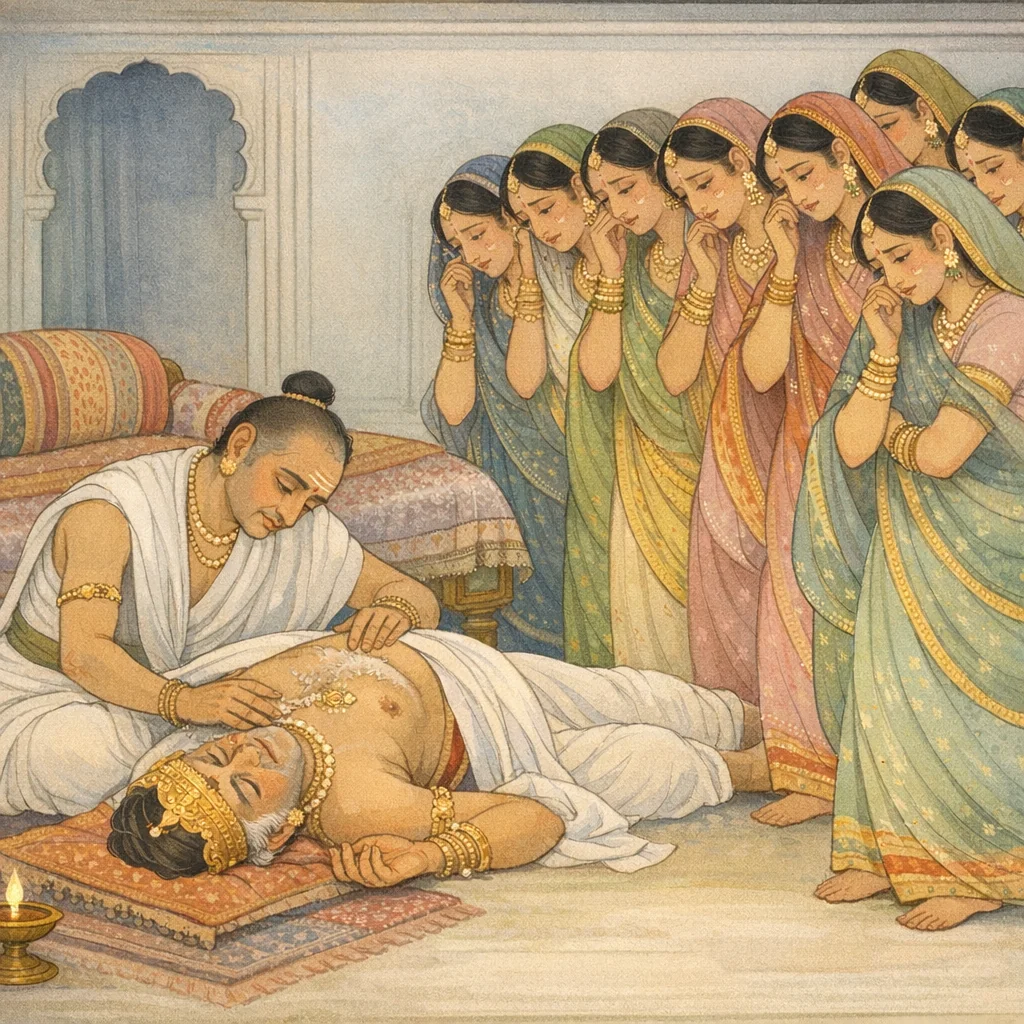
तस्मिन् निपतिते भूमौ विह्नलले राजसत्तमे
When he had fallen upon the ground, O best of kings, he lay there overwhelmed and disoriented—an image that shows how swiftly the pride of warriors is brought low amid the moral weight and chaos of war.
Verse 3
इस प्रकार श्रीमह्याभारत कर्णपर्वमें संजयवाक्य नामक तीसरा अध्याय पूरा हुआ,स शब्द: पृथिवीं कृत्स्नां पूरयामास सर्वश: रोदनका वह शब्द वहाँके समूचे भूमण्डलमें व्याप्त हो गया। भरतकुलकी स्त्रियाँ अत्यन्त घोर शोक-समुद्रमें डूब गयीं, उनका चित्त अत्यन्त उद्विग्न हो गया और वे दुःख- शोकसे कातर हो फूट-फूटकर रोने लगीं
Thus ends the third chapter of the Karṇa Parva of the Śrī Mahābhārata, called “Sañjaya’s Speech.” That sound—wailing and lamentation—filled the entire earth in every direction, spreading across the whole world. The women of the Bharata lineage sank into a dreadful ocean of grief; their minds were violently shaken, and, overwhelmed by sorrow and pain, they broke down and wept aloud.
Verse 4
शोकार्णवे महाघोरे निमग्ना भरतस्त्रिय: । रुरुदुर्दु:खशोकार्ता भृशमुद्विग्नचेतस:,रोदनका वह शब्द वहाँके समूचे भूमण्डलमें व्याप्त हो गया। भरतकुलकी स्त्रियाँ अत्यन्त घोर शोक-समुद्रमें डूब गयीं, उनका चित्त अत्यन्त उद्विग्न हो गया और वे दुःख- शोकसे कातर हो फूट-फूटकर रोने लगीं इति श्रीमहा भारते कर्णपर्वणि धृतराष्ट्रशोको नाम चतुर्थोडध्याय:
Vaiśampāyana said: The women of the Bharata line sank into a dreadful ocean of grief. Their minds, violently shaken, were overwhelmed by sorrow and suffering, and they broke into bitter, uncontrollable weeping—so loud that the sound of lamentation spread across the whole earth.
Verse 5
राजानं च समासाद्य गान्धारी भरतर्षभ । निःसंज्ञा पतिता भूमौ सर्वाण्यन्त:पुराणि च,भरतभूषण! गान्धारी देवी राजा धृतराष्ट्रके समीप आकर बेहोश हो भूमिपर गिर गयीं। अन्तःपुरकी सारी स्त्रियोंकी यही दशा हुई
Vaiśampāyana said: O bull among the Bharatas, when Gāndhārī approached the king, she fell to the ground unconscious; and so too did all the women of the inner palace. The verse underscores how the shock of war’s consequences overwhelms even the royal household, revealing the human cost that follows adharma and fratricidal conflict.
Verse 6
ततस्ता: संजयो राजन् समाश्चवासयदातुरा: । मुहामाना: सुबहुशो मुञ्चन्त्यो वारि नेत्रजम्,राजन! तब संजयने नेत्रोंसे आँसूओंकी धारा बहाती हुई राजमहलकी उन बहुसंख्यक महिलाओंको, जो आतुर एवं मूर्च्छित हो रही थीं, धीरे-धीरे धीरज बँधाया
Then, O King, Sañjaya gradually consoled those distressed women of the royal household—again and again fainting and overwhelmed—while tears streamed from their eyes. In the midst of war’s calamity, his act is one of humane restraint: steadying the afflicted and restoring composure when grief threatens to undo duty and order.
Verse 7
समाश्चस्ताः स्त्रियस्तास्तु वेपमाना मुहुर्मुहुः | कदल्य इव वातेन धूयमाना: समन्ततः,आश्वासन पाकर भी वे स्त्रियाँ चारों ओरसे वायु-द्वारा हिलाये जाते हुए केलेके वृक्षोंकी भाँति बारंबार काँप रही थीं
Vaiśampāyana said: Those women, gathered together, kept trembling again and again—shaken on every side by the wind, like banana trees swaying under a gust. The image underscores the helpless vulnerability of non-combatants amid the turmoil and fear generated by war.
Verse 8
राजानं विदुरश्नापि प्रज्ञाचक्षुषमी श्वरम् । आश्वासयामास तदा सिज्चंस्तोयेन कौरवम्,तत्पश्चात् विदुरने भी ऐश्वर्यशाली कुरुवंशी प्रज्ञाचक्षु राजा धृतराष्ट्रकरे ऊपर जल छिड़ककर उन्हें होशमें लानेकी चेष्टा की
Vaiśampāyana said: Then Vidura, too, sought to console the king—Dhṛtarāṣṭra, the lordly Kaurava who, though blind in body, was endowed with inner discernment—sprinkling him with water in an effort to revive and steady him. The scene underscores Vidura’s compassionate duty: even amid the moral collapse brought on by war, he acts to restore composure and guide the ruler back toward clarity and restraint.
Verse 9
स लब्ध्वा शनकै: संज्ञां ताश्च दृष्टवा स्त्रियो नृप: । उन्मत्त इव राजेन्द्र स्थितस्तूष्णीं विशाम्पते,राजेन्द्र! प्रजानाथ! धीरे-धीरे होशमें आनेपर धृतराष्ट्र अपने घरकी स्त्रियोंको वहाँ उपस्थित जान पागलके समान चुपचाप बैठे रह गये
Vaiśampāyana said: When the king gradually regained consciousness and then saw the women of his household standing there, he remained silent—like one deranged—overwhelmed by grief and shock, O lord of kings, O ruler of the people.
Verse 10
ततो ध्यात्वा चिरं काल॑ नि:श्वस्य च पुन: पुन: । स्वान् पुत्रान् गर्हयामास बहु मेने च पाण्डवान्,तदनन्तर दीर्घकालतक चिन्ता करनेके पश्चात् वे बारंबार लंबी साँस खींचते हुए अपने पुत्रोंकी निन्दा और पाण्डवोंकी अधिक प्रशंसा करने लगे
Then, after pondering for a long time and repeatedly heaving deep sighs, he began to censure his own sons and to esteem the Pāṇḍavas highly—an inward moral reckoning surfacing amid the pressures of war and consequence.
Verse 11
गर्हयंश्चात्मनो बुद्धि शकुने: सौबलस्य च । ध्यात्वा तु सुचिरं काल॑ वेपमानो मुहुर्मुहु:,उन्होंने अपनी और सुबलपुत्र शकुनिकी बुद्धिको भी कोसा। फिर बहुत देरतक चिन्तामग्न रहनेके पश्चात् वे बारंबार काँपने लगे
Vaiśampāyana said: Condemning his own judgment as well as that of Śakuni, the son of Subala, he remained absorbed in thought for a long time; and then, again and again, he began to tremble—an outward sign of inner remorse and foreboding amid the moral collapse that has led to war.
Verse 12
संस्तभ्य च मनो भूयो राजा धैर्यसमन्वित: । पुनर्गावल्गर्णिं सूतं पर्यपृच्छत संजयम्,फिर मनको किसी तरह स्थिर करके राजाने धैर्य धारण किया और गवल्गणके पुत्र सारथि संजयसे इस प्रकार पूछा--
Then the king, steadying his mind once again and gathering his courage, questioned Sañjaya anew—the charioteer, son of Gāvalgaṇa—seeking to hear further of the unfolding events.
Verse 13
यत् त्वया कथितं वाक््यं श्रुतं संजय तन््मया । कच्चिद् दुर्योधन: सूत न गतो वै यमक्षयम्,“संजय! तुमने जो बात कही है, वह तो मैंने सुन ली, किंतु एक बात बताओ। निरन्तर विजयकी इच्छा रखनेवाला मेरा पुत्र दुर्योधन अपनी विजयसे निराश हो कहीं यमराजके लोकमें तो नहीं चला गया? संजय! तुम इस कही हुई बातको भी फिर यथार्थरूपसे कह सुनाओ'
Vaiśaṃpāyana said: “Sañjaya, I have heard the words you spoke. But tell me this: has Duryodhana—ever intent on victory—fallen into despair and gone to Yama’s imperishable realm (that is, met death)? Sañjaya, recount again, truthfully and in full, what you have said.”
Verse 14
जये निराश: पुत्रो मे सततं जयकामुक: । ब्रूहि संजय तत्त्वेन पुनरुक्तां कथामिमाम्,“संजय! तुमने जो बात कही है, वह तो मैंने सुन ली, किंतु एक बात बताओ। निरन्तर विजयकी इच्छा रखनेवाला मेरा पुत्र दुर्योधन अपनी विजयसे निराश हो कहीं यमराजके लोकमें तो नहीं चला गया? संजय! तुम इस कही हुई बातको भी फिर यथार्थरूपसे कह सुनाओ'
Vaiśampāyana said: “Sañjaya, I have heard what you said; yet tell me truly once more. Has my son—ever hungry for victory—lost hope of triumph and gone to Yama’s realm? Repeat this account again, exactly as it happened.”
Verse 15
एवमुक्तो5ब्रवीत् सूतो राजानं जनमेजय । हतो वैकर्तनो राजन् सह पुत्रर्महारथ:
Thus addressed, the charioteer replied to King Janamejaya: “O King, Vaikartana (Karna), that great warrior, has been slain—along with his sons.”
Verse 16
विह्वल: पतितो भूमौ नष्टचेता इव द्विप: । वैशम्पायनजी कहते हैं--महाराज! यह सुनकर अम्बिकानन्दन धृतराष्ट्रने यह मान लिया कि अब दुर्योधन भी मारा ही गया। उन्हें अपने शोकका कहीं अन्त नहीं दिखायी देता था। वे अचेत हुए हाथीके समान व्याकुल होकर पृथ्वीपर गिर पड़े,भ्रातृभिश्न महेष्वासै: सूतपुत्रैस्तनुत्यजै: । जनमेजय! उनके ऐसा कहनेपर सारथि संजय राजासे इस प्रकार बोला--'राजन्! महारथी वैकर्तन कर्ण अपने पुत्रों तथा शरीरका मोह छोड़कर युद्ध करनेवाले महाधनुर्धर सूतजातीय भाइयोंके साथ मार डाला गया ।। दुःशासनश्व निहतः पाण्डवेन यशस्विना । पीतं च रुधिरं कोपाद् भीमसेनेन संयुगे “साथ ही यशस्वी पाण्डुपुत्र भीमसेनने रणभूमिमें दःशासनको मार दिया और क्रोधपूर्वक उसका खून भी पी लिया”
Vaiśampāyana said: Overwhelmed and unsteady, he fell to the ground—like an elephant that has lost its senses.
Verse 26
आर्तनादो महानासीत् स्त्रीणां भरतसत्तम । भरतश्रेष्ठ जनमेजय! राजाओंमें सर्वश्रेष्ठ धृतराष्ट्रके व्याकुल होकर पृथ्वीपर गिर जानेसे महलमें स्त्रियोंका महान् आर्तनाद गूँज उठा
Vaiśampāyana said: O best of the Bharatas, O foremost Bharata Janamejaya—when Dhṛtarāṣṭra, greatest among kings, was overcome and fell upon the earth, a mighty wail of anguish rose from the women within the palace. Thus is it seen that war’s calamities do not remain upon the battlefield alone: they shatter the household’s inner world, laying bare the human cost of attachment, grief, and the collapse of royal composure.
Frequently Asked Questions
The dilemma is governance under consequence: Dhṛtarāṣṭra confronts the ethical burden of having enabled policies that produced large-scale loss, while still seeking reassurance through selective accounting of survivors and enemy casualties.
The chapter models a forensic ethic of narration: outcomes must be faced in full scope—named heroes and collective losses—so that responsibility is not displaced by grief, blame-shifting, or partial information.
Yes. Through analogical comparisons to earlier mythic defeats and through the structured casualty catalogue, the text frames Karṇa’s fall and the war’s attrition as part of a larger moral-causal order, reinforcing the epic’s interpretive lens of karma and political accountability.