Adhyaya 71
अध्याय ७१ — द्रोणव्यूहरक्षा तथा समकालीन द्वन्द्वयुद्धानि (Protection of Droṇa’s formation and parallel duels)
Upa-parva: Droṇa-parva — Adhyāya 71 (Tactical engagements and parallel duels)
Sañjaya reports to Dhṛtarāṣṭra an “astonishing” phase of combat as the Kuru and Pāṇḍava forces engage. The Pāṇḍavas press toward Bhāradvāja Droṇa positioned at the head of the formation, while Kaurava soldiers defend their vyūha and seek distinction. The chapter then catalogs simultaneous contests: Vindā and Anuvindā strike Virāṭa, who responds forcefully; Yājñaseni (Dhr̥ṣṭadyumna) exchanges severe missile volleys with Bāhlīka; Śaibya Govāsana confronts a Kāśyapa-line mahāratha; Bāhlīka engages the Draupadeyas amid dense arrow-fire likened to the mind among senses. Duḥśāsana’s son wounds Sātyaki, who recovers and retaliates, both appearing like flowering kiṃśuka trees from arrow-wounds. Alambusa, afflicted by Kuntibhoja’s shafts, roars and continues; Nakula and Sahadeva drive Śakuni into disarray, forcing his withdrawal toward Droṇa’s lines. Ghaṭotkaca advances to meet the rākṣasa Alāyudha in a duel compared to mythic archetypes; Yudhiṣṭhira challenges the king of Madra; and Kaurava princes (including Vikarna) engage Bhīmasena with supporting troops—presenting the war as coordinated, multi-node pressure rather than a single narrative thread.
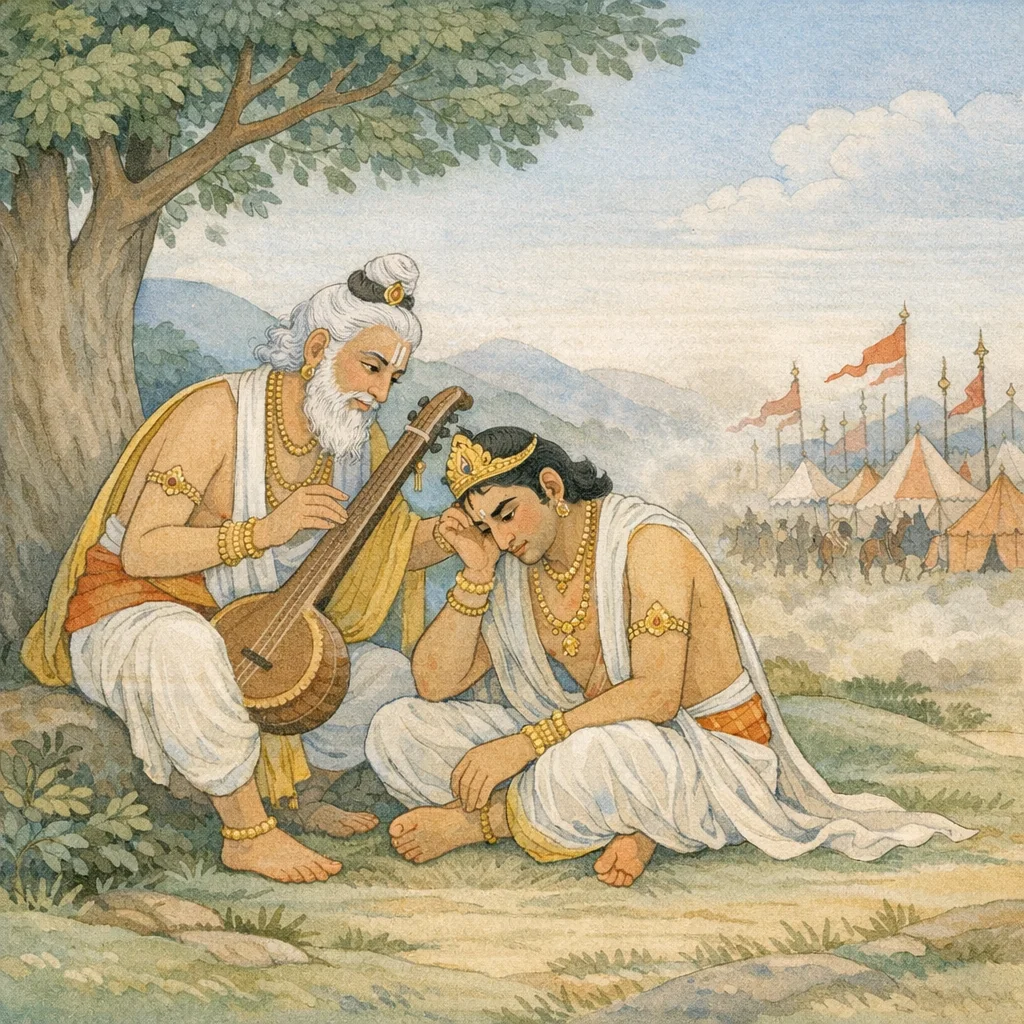
Chapter Arc: युद्ध-धूलि और शोक के बीच सृंजय मौन बैठा है; उसी मौन में नारद का आगमन होता है—मानो देववाणी स्वयं दुःख का कारण पूछने आई हो। → नारद सृंजय से पूछते हैं कि क्या कोई अपमान, कुल-कलंक या पुत्र-हानि ने उसे भीतर से तोड़ दिया है। सृंजय हाथ जोड़कर अपने शोक का कारण बताता है—पुत्र के भाग्य और मृत्यु की आशंका/स्मृति उसे जला रही है। → नारद आश्वासन देते हैं कि सृंजय का पुत्र युद्ध में ‘अकृतार्थ’ अवस्था में नहीं मरा; वह जीवित है और पुनः प्राप्त होगा—और साथ ही अभिमन्यु के विषय में कठोर सत्य रखते हैं: वह कृतार्थ होकर वीरगति को प्राप्त हुआ, स्वर्ग गया, इसलिए उसके लिए शोक नहीं, गौरव उचित है। → नारद धैर्य, स्थैर्य और विवेक का उपदेश देते हैं—जीवितों के लिए चिंता सार्थक है, स्वर्गगत के लिए शोक व्यर्थ। शोक से दुःख बढ़ता है; बुद्धिमान पुरुष हर्ष, सम्मान और धर्म-स्थित सुख का वरण करे। → व्यास का युधिष्ठिर को समझाकर अंतर्धान होने का संकेत अगले प्रसंग की ओर ले जाता है—शोक-शमन के बाद भी युद्ध का अनिवार्य प्रवाह रुकेगा नहीं।
Shlokas
Verse 1
अपना बछ। है २ >> एकसप्ततितमो<्ध्याय: नारदजीका सृंजयके पुत्रको जीवित करना और व्यासजीका युधिष्ठदिरको समझाकर अनन््तर्धान होना व्यास उवाच पुण्यमाख्यानमायुष्यं श्रुत्वा षोडशराजकम् । अव्याहरन्नरपतिस्तूष्णीमासीत् स सृज्जय:,व्यासजी कहते हैं--राजन्! इन सोलह राजाओंका पवित्र एवं आयुकी वृद्धि करनेवाला उपाख्यान सुनकर राजा सूंजय कुछ भी नहीं बोलते हुए मौन रह गये
Vyāsa said: “O king! Having heard this sacred narrative—one that promotes longevity—concerning the sixteen kings, King Sṛñjaya spoke not a word; he remained silent.”
Verse 2
तमब्रवीत् तथा55सीन॑ नारदो भगवानृषि: । श्रुतं कीर्तयतो महां गृहीतं ते महाद्युते,उन्हें इस प्रकार चुपचाप बैठे देख भगवान् नारदमुनिने उनसे पूछा--“महातेजस्वी नरेश! मैंने जो कुछ कहा है, उसे तुमने सुना और समझा है न?”
Seeing him sitting silently in that manner, the venerable sage Nārada addressed him: “O mighty and radiant king, have you truly heard and grasped what I have been declaring?”
Verse 3
आहोस्विदन्ततो नष्ट श्राद्ध शूद्रीपताविव । स एवमुक्तः प्रत्याह प्राउजलि: सृज्जयस्तदा,“अथवा ऐसा तो नहीं हुआ कि जैसे शूद्रजातिकी स्त्रीसे सम्बन्ध रखनेवाले ब्राह्मणको दिया हुआ श्राद्धका दान नष्ट (निष्फल) हो जाता है, उसी प्रकार मेरा यह सारा कहना अन्ततोगत्वा व्यर्थ हो गया हो।” उनके इस प्रकार पूछनेपर उस समय सूंजयने हाथ जोड़कर उत्तर दिया--
Nārada said: “Could it be that, in the end, my words have proved fruitless—like a śrāddha offering that becomes ineffective when a brāhmaṇa has entered into a forbidden liaison with a woman of the śūdra class?” When he spoke thus, Sṛñjaya at that time replied with folded hands.
Verse 4
238 48 त्वा महाबाहो धन्यमाख्यानमुत्तमम् | | पुराणानां यज्वनां दक्षिणावताम्,“महाबाहु महर्षे! यज्ञ करने और दक्षिणा देनेवाले प्राचीन राजर्षियोंका यह परम उत्तम सराहनीय उपाख्यान सुनकर मुझे ऐसा विस्मय हुआ है कि उसने मेरा सारा शोक हर लिया है। ठीक उसी तरह, जैसे सूर्यका तेज सारा अन्धकार हर लेता है। अब मैं पाप (दुःख) और व्यथासे शून्य हो गया हूँ। बताइये, आपकी किस आज्ञाका पालन करूँ”
Sṛñjaya said: “O mighty-armed sage, having heard this supremely excellent and praiseworthy account concerning the ancient royal seers—men devoted to sacrifice and generous in gifts—I am struck with wonder, and my grief has been wholly dispelled. Just as the sun’s radiance removes all darkness, so has this narrative removed my sorrow. Now I am free from sin-born anguish and distress. Tell me: what command of yours shall I carry out?”
Verse 5
विस्मयेन हते शोके तमसीवार्कतेजसा । विपाप्मास्म्यव्यथोपेतो ब्रूहि कि करवाण्यहम्,“महाबाहु महर्षे! यज्ञ करने और दक्षिणा देनेवाले प्राचीन राजर्षियोंका यह परम उत्तम सराहनीय उपाख्यान सुनकर मुझे ऐसा विस्मय हुआ है कि उसने मेरा सारा शोक हर लिया है। ठीक उसी तरह, जैसे सूर्यका तेज सारा अन्धकार हर लेता है। अब मैं पाप (दुःख) और व्यथासे शून्य हो गया हूँ। बताइये, आपकी किस आज्ञाका पालन करूँ”
“Overcome with wonder, my grief has been destroyed—just as darkness is dispelled by the sun’s radiance. I am now free from sin and inner distress. Tell me: what shall I do? What command of yours should I carry out?”
Verse 6
नारद उवाच दिष्टयापह्वतशोक स्त्वं वृणीष्वेह यदिच्छसि । तत् तत् प्रपत्स्यसे सर्व न मृषावादिनो वयम्,नारदजीने कहा--राजन्! बड़े सौभाग्यकी बात है कि तुम्हारा शोक दूर हो गया। अब तुम्हारी जो इच्छा हो, यहाँ मुझसे माँग लो। तुम्हारी वह सारी अभिलषित वस्तु तुम्हें प्राप्त हो जायगी। हमलोग झूठ नहीं बोलते हैं
Nārada said: “By good fortune your grief has been removed. Now, O king, choose here whatever you desire and ask it of me. Whatever you wish for—you shall obtain it all. We do not speak falsehood.”
Verse 7
यसुञ्जय उवाच एतेनैव प्रतीतो<हं प्रसन्नो यद्भवान् मम । प्रसन्नो यस्य भगवान् न तस्यास्तीह दुर्लभम्,सृंजयने कहा--मुने! आप मुझपर प्रसन्न हैं, इतनेसे ही मैं पूर्ण संतुष्ट हूँ। जिसपर आप प्रसन्न हों, उसे इस जगत्में कुछ भी दुर्लभ नहीं है
Sṛñjaya said: “By this alone I am assured and fully content—that you are pleased with me. For the one upon whom the venerable lordly sage is pleased, nothing in this world remains hard to obtain.”
Verse 8
नारद उवाच मृतं ददानि ते पुत्र दस्युभिर्निहतं वृथा । उद्धृत्य नरकात् कष्टात् पशुवत् प्रोक्षितं यथा,नारदजीने कहा--राजन्! लुटेरोंने तुम्हारे पुत्रको प्रोक्षित पशुकी भाँति व्यर्थ ही मार डाला है। तुम्हारे उस मरे हुए पुत्रको मैं कष्टप्रद नरकसे निकालकर तुम्हें पुन: वापस दे रहा हूँ
Nārada said: “I return to you your son—though he has been slain in vain by bandits. Having lifted him out of a grievous hell, I give him back to you, like a sacrificial animal that has been sprinkled (in the rite).”
Verse 9
व्यास उवाच प्रादुरासीत् ततः पुत्र: सृज्जयस्याद्भुतप्रभ: । प्रसन्नेनर्षिणा दत्त: कुबेरतनयोपम:,व्यासजी कहते हैं--युधिष्ठि!! नारदजीके इतना कहते ही सूंजयका अदभुत कान्तिमान् पुत्र वहाँ प्रकट हो गया। उसे ऋषिने प्रसन्न होकर राजाको दिया था। वह देखनेमें कुबेरके पुत्रके समान जान पड़ता था
Vyāsa said: Then there appeared the wondrously radiant son of Sṛñjaya. Bestowed by a pleased sage, he had been given to the king; in appearance he seemed like the son of Kubera.
Verse 10
ततः संगम्य पुत्रेण प्रीतिमानभवन्नूप: । ईजे च क्रतुभि: पुण्यै: समाप्तवरदक्षिणै:,अपने उस पुत्रसे मिलकर राजा सूंजयको बड़ी प्रसन्नता हुई। उन्होंने उत्तम दक्षिणाओंसे युक्त पुण्यमय यज्ञोंद्वारा भगवानका यजन किया
Then, having met with his son, the king was filled with joy. He worshipped the Lord by performing meritorious sacrificial rites, duly completed with excellent gifts and fees to the officiants.
Verse 11
अकृतार्थश्न भीतश्न न च सान्नाहिको हतः । अयज्वा त्वनपत्यश्व ततोडसौ जीवित: पुन:,सूंजयका पुत्र कवच बाँधकर युद्धमें लड़ता हुआ नहीं मारा गया था। उसे अकृतार्थ और भयभीत अवस्थामें अपने प्राणोंका त्याग करना पड़ा था। वह यज्ञकर्मसे रहित और संतानहीन भी था। इसलिये नारदजीने पुनः उसे जीवित कर दिया था
Vyāsa said: “He did not fall in battle while properly armed and engaged; rather, he met his end in a state of failure and fear. He had also not performed sacrificial rites and was without offspring. Therefore, Nārada restored him to life again.”
Verse 12
शूरो वीर: कृतार्थश्न प्रताप्पारीन्ू सहस्रश: । अभिमन्युर्गतो वीर: पृतनाभिमुखो हत:
Vyāsa said: “The heroic warrior—accomplished in his purpose and radiant with prowess—had struck down foes in their thousands. Yet that valiant Abhimanyu, facing the enemy host in the thick of battle, went to his death, slain before the army.”
Verse 13
परंतु शूरवीर अभिमन्यु तो कृतार्थ हो चुका है। वह वीर शत्रुसेनाके सम्मुख युद्धतत्पर हो सहस्रों वैरियोंको संतप्त करके मारा गया और स्वर्गलोकमें जा पहुँचा है ।। ब्रह्मचर्येण यान् कांक्षित् प्रज्ञया च श्रुतेन च । इष्टैश्न क्रतुभिययान्ति तांस्ते पुत्रो5क्षयान् गत:,पुण्यात्मा पुरुष ब्रह्मचर्यपालन, उत्तम ज्ञान, वेदशास्त्रोंके स्वाध्याय तथा यज्ञोंके अनुष्ठानसे जिन किन्हीं लोकोंमें जाते हैं, उन्हीं अक्षय लोकोंमें तुम्हारा पुत्र अभिमन्यु भी गया है
Vyāsa said: “Abhimanyu, that heroic warrior, has fulfilled his purpose. Eager for battle, he faced the enemy host, tormented and slew thousands of foes, and then attained the heavenly world. The imperishable realms reached by men of pure merit through steadfast brahmacarya, through discerning wisdom, through study of the Veda and sacred learning, and through the performance of sacrifices—those very undecaying worlds have been attained by your son Abhimanyu.”
Verse 14
विद्वांस: कर्मभि: पुण्यै: स्वर्गमीहन्ति नित्यश: । नतु स्वर्गादयं लोक: काम्यते स्वर्गवासिभि:,विद्वान् पुरुष पुण्यकर्मोद्वारा सदा स्वर्गलोकमें जानेकी इच्छा करते हैं; परंतु स्वर्गवासी पुरुष स्वर्गसे इस लोकमें आनेकी कामना नहीं करते हैं
Vyāsa said: “The wise, through meritorious deeds, ever desire to attain heaven; but those who dwell in heaven do not wish to return from heaven to this world.”
Verse 15
तस्मात् स्वर्गगतं पुत्रमर्जुनस्य हतं रणे | न चेहानयितुं शक््यं किंचिदप्राप्पमीहितम्,अर्जुनका पुत्र युद्धमें मारे जानेके कारण स्वर्गलोकमें गया हुआ है। अतः उसे यहाँ नहीं लाया जा सकता। कोई अप्राप्य वस्तु केवल इच्छा करनेमात्रसे नहीं सुलभ हो सकती
Vyāsa said: “Therefore, Arjuna’s son, slain in battle, has gone to heaven. Thus he cannot be brought back here. What is unattainable does not become easy to obtain by mere wishing.”
Verse 16
यां योगिनो ध्यानविविक्तदर्शना: प्रयान्ति यां चोत्तमयज्विनो जना: । तपोभिरिद्धैरनुयान्ति यां तथा तामक्षयां ते तनयो गतो गतिम्,जिन्होंने ध्यानके द्वारा पवित्र ज्ञानमयी दृष्टि प्राप्त कर ली है, वे योगी निष्कामभावसे उत्तम यज्ञ करनेवाले पुरुष तथा अपनी उज्ज्वल तपस्याओंद्वारा तपस्वी मुनि जिस अक्षय गतिको पाते हैं, तुम्हारे पुत्रने भी वही गति प्राप्त की है
Vyāsa said: “The imperishable state that contemplative yogins reach through meditation and purified insight, that the foremost performers of selfless sacrifice attain, and that ascetics follow by the radiance of their austerities—your son has gone to that very deathless goal.”
Verse 17
अन्तात् पुनर्भावगतो विराजते राजेव वीरो हामृतात्मरश्मिभि: । तामैन्दवीमात्मतनु द्विजोचितां गतो5भिमन्युर्न स शोकमर्हति,वीर अभिमन्यु मृत्युके पश्चात् पुनः पूर्वढभावको प्राप्त होकर चन्द्रमासे उत्पन्न अपने द्विजोचित शरीरमें प्रतेष्ठित हो अपनी अमृतमयी किरणोंसे राजा सोमके समान प्रकाशित हो रहा है। अत: उसके लिये तुम्हें शोक नहीं करना चाहिये
Vyāsa said: “Having passed beyond the end of mortal life and attained rebirth, the hero Abhimanyu now shines again—like King Soma (the Moon)—with rays that are of the nature of immortality. Having reached that lunar, self-formed body befitting the twice-born, he is established there; therefore he does not deserve grief.”
Verse 18
एवं ज्ञात्वा स्थिरो भूत्वा जहारीन् धैर्यमाप्रुहि । जीवन्त एव न: शोच्या न तु स्वर्गगतो5नघ,राजन! ऐसा जानकर सुस्थिर हो धैर्यका आश्रय लो और उत्साहपूर्वक शत्रुओंका वध करो। अनघ! हमें इस संसारमें जीवित पुरुषोंके लिये ही शोक करना चाहिये। जो स्वर्गमें चला गया है, उसके लिये शोक करना उचित नहीं है
Knowing this, become steady and take refuge in courage; with renewed resolve, strike down the foes. O blameless one, our grief is rightly for those who still live in this world; for one who has gone to heaven, lamentation is not fitting.
Verse 19
शोचतो हि महाराज अघमेवाभिवर्धते । तस्माच्छोकं परित्यज्य श्रेयसे प्रयतेद् बुध:
For one who grieves, O great king, misfortune alone increases. Therefore, casting off sorrow, a wise person should strive for what leads to true welfare and the higher good.
Verse 20
एतद् बुद्ध्वा बुधा: शोक॑ न शोक: शोक उच्यते,यही सब सोच-समझकर ज्ञानवान् पुरुष शोक नहीं करते हैं। शोकको शोक नहीं कहते हैं (उसका अनुभव करनेवाला मन ही शोकरूप होता है)
Understanding this truth, the wise do not fall into grief. For what is called “grief” is not truly grief in itself; it is the mind’s own deluded experience that takes the form of sorrow. Thus, one who sees clearly does not let the heart be conquered by lamentation.
Verse 21
एवं विद्वान् समुन्तिष्ठ प्रयतो भव मा शुच: । श्रुतस्ते सम्भवो मृत्योस्तपांस्यनुपमानि च,राजन्! ऐसा जानकर तुम युद्धके लिये उठो। मन और इन्द्रियोंको संयममें रखो तथा शोक न करो। तुमने मृत्युकी उत्पत्ति और उसकी अनुपम तपस्याका वृत्तान्त सुन लिया है
“Knowing this, rise up for battle. Be disciplined and self-controlled, and do not grieve. O king, you have heard the account of Death’s origin and of the incomparable austerities associated with it.”
Verse 22
सर्वभूतसमत्वं च चज्चलाश्व विभूतय: । सृञ्जयस्य तु त॑ पुत्र मृतं संजीवितं पुन:,मृत्यु सम्पूर्ण प्राणियोंको समभावसे प्राप्त होती है और धन-ऐश्वर्य चंचल है--यह बात भी जान ली है। सूंजयका पुत्र मरा और पुनः जीवित हुआ, यह कथा भी तुमने सुन ही ली है
Vyāsa said: “You have understood that death comes to all beings with impartial equality, and that prosperity and lordly fortune are unstable and ever-shifting. You have also heard the account of Sṛñjaya’s son—how he died and yet was restored to life again.”
Verse 23
एवं विद्वान् महाराज मा शुच: साधयाम्यहम् । एतावदुक्त्वा भगवांस्तत्रैवान्तरधीयत,महाराज! यह सब तुम जानते हो। अत: शोक न करो। अब मैं अपनी साधनामें लग रहा हूँ। ऐसा कहकर भगवान् व्यास वहीं अन्तर्धान हो गये
“O great king, you already know all this; therefore do not grieve. I shall now devote myself to my spiritual practice.” Having said only this much, the revered Vyāsa vanished from that very place.
Verse 24
वागीशाने भगवति व्यासे व्यभ्रनभ:प्रभे । गते मतिमतां श्रेष्ठे समाश्वास्य युधिछ्चिरम्,बिना बादलके आकाशकी-सी कान्तिवाले, बुद्धिमानोंमें श्रेष्ठ वागीश्वर भगवान् व्यास जब युधिष्ठिरको आश्वासन देकर चले गये, तब देवराज इन्द्रके समान पराक्रमी और न्यायसे धन प्राप्त करनेवाले प्राचीन राजाओंके उस यज्ञ-वैभवकी कथा सुनकर दिद्दान् युधिष्ठिर मन-ही-मन उनके प्रति आदरकी भावना करते हुए शोकसे रहित हो गये। तदनन्तर फिर दीनभावसे यह सोचने लगे कि अर्जुनसे मैं क्या कहूँगा
Vyāsa said: When the blessed Vyāsa—lord of speech, radiant like a cloudless sky, and foremost among the wise—had long consoled Yudhiṣṭhira and then departed, Yudhiṣṭhira, having heard the account of the ancient kings’ sacrificial splendor and their Indra-like valor joined with wealth gained through justice, became inwardly reverent toward them and was freed from grief. Yet soon after, a humble anxiety returned: “What shall I say to Arjuna?”
Verse 25
पूर्वेषां पार्थिवेन्द्राणां महेन्द्रप्रतिमौजसाम् । न्यायाधिगतवित्तानां तां श्र॒ुत्वा यज्ञसम्पदम्,बिना बादलके आकाशकी-सी कान्तिवाले, बुद्धिमानोंमें श्रेष्ठ वागीश्वर भगवान् व्यास जब युधिष्ठिरको आश्वासन देकर चले गये, तब देवराज इन्द्रके समान पराक्रमी और न्यायसे धन प्राप्त करनेवाले प्राचीन राजाओंके उस यज्ञ-वैभवकी कथा सुनकर दिद्दान् युधिष्ठिर मन-ही-मन उनके प्रति आदरकी भावना करते हुए शोकसे रहित हो गये। तदनन्तर फिर दीनभावसे यह सोचने लगे कि अर्जुनसे मैं क्या कहूँगा
Vyāsa said: Hearing of that sacrificial prosperity and splendor belonging to the ancient lords of the earth—men whose might was like Indra’s and whose wealth had been acquired through justice—Yudhiṣṭhira’s mind was steadied with reverence for the righteous of old. Yet, even after being consoled, he again sank into humility and anxious reflection, wondering what he could say to Arjuna.
Verse 26
सम्पूज्य मनसा विद्वान् विशोको5भूद् युधिष्ठिर: । पुनश्चाचिन्तयद् दीन: किंस्विद् वक्ष्ये धनंजयम्,बिना बादलके आकाशकी-सी कान्तिवाले, बुद्धिमानोंमें श्रेष्ठ वागीश्वर भगवान् व्यास जब युधिष्ठिरको आश्वासन देकर चले गये, तब देवराज इन्द्रके समान पराक्रमी और न्यायसे धन प्राप्त करनेवाले प्राचीन राजाओंके उस यज्ञ-वैभवकी कथा सुनकर दिद्दान् युधिष्ठिर मन-ही-मन उनके प्रति आदरकी भावना करते हुए शोकसे रहित हो गये। तदनन्तर फिर दीनभावसे यह सोचने लगे कि अर्जुनसे मैं क्या कहूँगा
Yudhiṣṭhira, wise at heart, inwardly honored those noble exemplars and became free from grief. Yet again, sinking into dejection, he reflected: “What indeed shall I say to Dhanañjaya (Arjuna)?”
Verse 70
इस प्रकार श्रीमह्ाभारत द्रोणपर्वके अन्तर्गत अभिमनन््युवधपर्वमें षोडशराजकीयो- पाख्यानविषयक सत्तरवाँ अध्याय पूरा हुआ
Thus ends the seventieth chapter of the Śrī Mahābhārata’s Droṇa Parva, within the Abhimanyu-vadha section, dealing with the episode concerning the sixteen kings. The colophon signals the close of this narrative unit, marking a transition in the war-chronicle where the consequences of Abhimanyu’s death and the surrounding accounts are formally concluded for this chapter.
Verse 73
इति श्रीमहा भारते द्रोणपर्वणि अभिमन्युवधपर्वणि षोडशराजकीये एकसप्ततितमो<ध्याय:
Thus, in the revered Mahābhārata, within the Droṇa Parva—specifically in the section concerning the slaying of Abhimanyu—ends the seventy-first chapter, belonging to the unit known as the “Sixteen Kings.”
Verse 193
प्रहर्षमभिमानं च सुखप्राप्तिंच चिन्तयन् | महाराज! शोक करनेसे केवल दुःख ही बढ़ता है। अतः दिद्दान् पुरुष उत्कृष्ट हर्ष, अतिशय सम्मान और सुख-प्राप्तिका चिन्तन करते हुए शोकका परित्याग करके अपने कल्याणके लिये ही प्रयत्न करे
Vyāsa said: “O great king, by indulging in grief, sorrow alone increases. Therefore a wise man should abandon grief and, keeping in mind noble joy, true honor, and the attainment of well-being, strive only for his own welfare.”
Frequently Asked Questions
The implicit dilemma is the tension between individual heroics (seeking yaśas through duels) and collective duty (maintaining formation integrity to protect the commander), requiring fighters to prioritize strategic cohesion over personal rivalry.
The chapter frames conflict as a system of interdependent actions: outcomes arise from coordination, resilience after setbacks, and disciplined adherence to role-based duty rather than from isolated feats alone.
No explicit phalaśruti appears in the provided verses; the meta-level function is Sañjaya’s analytical witnessing—documenting how tactical choices, morale, and command structure shape events within the broader dharma narrative.