Adhyaya 51
जयद्रथवध-प्रतिज्ञा (Arjuna’s Vow to Neutralize Jayadratha)
Upa-parva: Abhimanyu-vadha-anantara-pratijñā (The Vow after Abhimanyu’s Fall)
Yudhiṣṭhira reports to Arjuna that, while Arjuna was engaged elsewhere against the Saṃśaptakas, Droṇa pressed an intense effort to seize Yudhiṣṭhira. The Pāṇḍavas attempted to counter Droṇa’s array but were unable to break or even adequately confront the Droṇa-formation under pressure. They urged Abhimanyu, exceptional in valor and trained in weapons, to penetrate the opposing host; he entered decisively, and the Pāṇḍavas attempted to follow. Jayadratha, empowered by a boon attributed to Rudra, blocked their entry and separated support from Abhimanyu. A group of leading chariot-warriors (including Droṇa, Kṛpa, Karṇa, Aśvatthāman, Kṛtavarman, and Bṛhadbala) surrounded Abhimanyu; after extensive resistance and heavy losses inflicted by Abhimanyu, he was rendered vulnerable and fell, intensifying the Pāṇḍavas’ grief. Hearing this, Arjuna collapses in anguish, then rises in controlled fury and makes a public, time-bound vow to neutralize Jayadratha by the next day, invoking severe self-imprecations should he fail, and declaring that no being can protect Jayadratha from his pursuit. Kṛṣṇa and Arjuna sound their conches; war instruments and lion-roars arise in the Pāṇḍava host, marking a strategic and psychological pivot toward the next day’s objective.
Chapter Arc: Sanjaya reports the shattering news: the mighty Abhimanyu, Subhadra’s son and a leader among chariot-warriors, has fallen; the Pandava host sits disarmed, armor loosened, bows cast aside, minds fixed only on him. → Encircled by his brothers and allies, Yudhishthira collapses into grief and self-reproach—seeing ahead the unbearable moment of facing Arjuna and Subhadra, and recognizing how delusion and greed for victory can blind one to impending ruin. → Yudhishthira’s lament peaks as he exalts Abhimanyu’s unmatched valor and lineage, then declares that no triumph—kingdom, glory, even heaven—can please him when such a peerless hero lies slain. → The lament turns into grim foresight: Arjuna’s wrath, ignited by his son’s death, will become a consuming fire for the Kauravas; the camp’s sorrow hardens into a vow-like readiness for retribution. → The chapter ends with the dread anticipation of Arjuna’s return and the inevitable storm of vengeance that will reshape the next day’s battle.
Shlokas
Verse 1
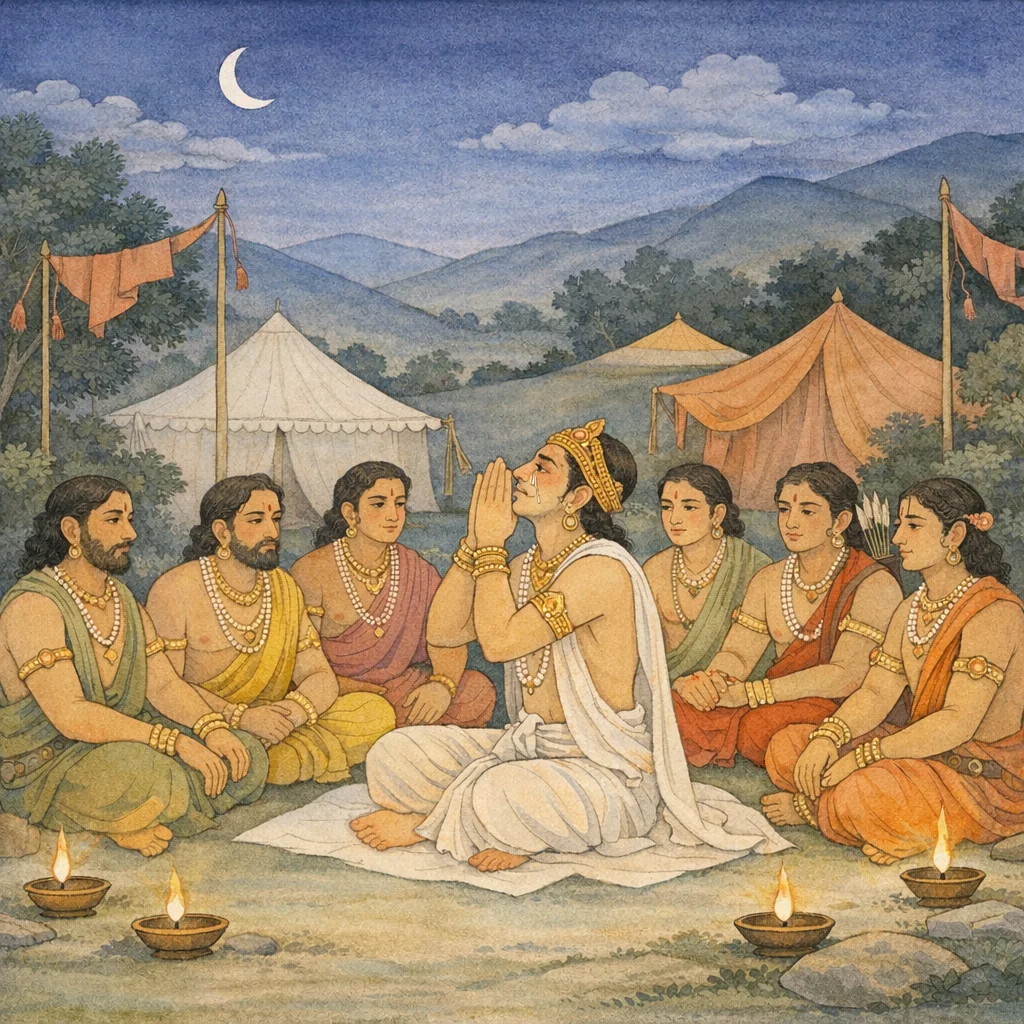
/ अपना बछ। है २ >> एकपज्चाशत्तमो< ध्याय: युधिष्ठिरका विलाप संजय उवाच हते तस्मिन् महावीर्ये सौभद्रे रथयूथपे । विमुक्तरथसंनाहा: सर्वे निक्षिप्तकार्मुका:,संजय कहते हैं--राजन्! महापराक्रमी रथयूथपति सुभद्राकुमार अभिमन्युके मारे जानेपर समस्त पाण्डव महारथी रथ और कवचका त्याग कर और धनुषको नीचे डालकर राजा युधिष्ठिरको चारों ओरसे घेरकर उनके पास बैठ गये। उन सबका मन सुभद्राकुमार अभिमन्युमें ही लगा था और वे उसी युद्धका चिन्तन कर रहे थे
Sañjaya said: O King, when that mighty hero Abhimanyu—the son of Subhadrā and a leader of chariot-warriors—was slain, all the Pāṇḍava great chariot-fighters, casting off their chariots and armor and laying down their bows, gathered around King Yudhiṣṭhira and sat near him. Their minds were fixed on Abhimanyu alone, and they kept reflecting on that very battle.
Verse 2
उपोपविष्टा राजानं परिवार्य युधिष्ठिरम् । तदेव युद्ध ध्यायन्त: सौभद्रगतमानसा:,संजय कहते हैं--राजन्! महापराक्रमी रथयूथपति सुभद्राकुमार अभिमन्युके मारे जानेपर समस्त पाण्डव महारथी रथ और कवचका त्याग कर और धनुषको नीचे डालकर राजा युधिष्ठिरको चारों ओरसे घेरकर उनके पास बैठ गये। उन सबका मन सुभद्राकुमार अभिमन्युमें ही लगा था और वे उसी युद्धका चिन्तन कर रहे थे
Sañjaya said: Having gathered around King Yudhiṣṭhira, they sat down close by him. Their minds were fixed on Saubhadra (Abhimanyu), and they kept reflecting on that very battle.
Verse 3
ततो युधिष्ठिरो राजा विललाप सुदुःखित: । अभिमन्यौ हते वीरे भ्रातुः पुत्रे महारथे,उस समय राजा युधिष्ठिर अपने भाईके वीर पुत्र महारथी अभिमन्युके मारे जानेके कारण अत्यन्त दुःखी हो विलाप करने लगे--
Then King Yudhiṣṭhira, overwhelmed with intense sorrow, broke into lamentation, for Abhimanyu—the heroic great chariot-warrior, the son of his brother—had been slain.
Verse 4
(एष जित्वा कृपं शल्यं राजानं च सुयोधनम् | द्रोणं द्रौर्णिं महेष्वासं तथैवान्यान् महारथान् ।।) द्रोणानीकमसम्बाधं मम प्रियचिकीर्षया । (हत्वा शत्रुगणान् वीरानेष शेते निपातित:ः । कृतास्त्रान् युद्धकुशलान् महेष्वासान् महारथान् ।। कुलशीलगुणैर्युक्ताछ्छूरान् विख्यातपौरुषान् । द्रोणेन विहितं व्यूहमभेद्यममरैरपि ।। अदृष्टपूर्वमस्माभि: चक्र चक्रायुधप्रिय: ।) भित्त्वा व्यूहं प्रविष्टोडढसौ गोमध्यमिव केसरी,“अहो! कृपाचार्य, शल्य, राजा दुर्योधन, द्रोणाचार्य, महाधनुर्धर अश्वत्थामा तथा अन्य महारथियोंको जीतकर, मेरा प्रिय करनेकी इच्छासे द्रोणाचार्यके निर्बाध सैन्यव्यूहको विनष्ट करके वीर शत्रुसमूहोंका संहार करनेके पश्चात् यह पुत्र अभिमन्यु मार गिराया गया और अब रणक्षेत्रमें सो रहा है! जो अस्त्रविद्याके विद्वान, युद्धकुशल, कुल-शील और गुणोंसे युक्त, शूरवीर तथा अपने पराक्रमके लिये प्रसिद्ध थे, उन महाधनुर्धर महारथियोंको परास्त करके देवताओंके लिये भी जिसका भेदन करना असम्भव है तथा हमने जिसे पहले कभी देखातक नहीं था, उस द्रोणनिर्मित चक्रव्यूहका भेदन करके चक्रधारी श्रीकृष्णका प्यारा भानजा वह अभिमन्यु उसके भीतर उसी प्रकार प्रवेश कर गया, जैसे सिंह गौओंके झुंडमें घुस जाता है
Sanjaya said: “He—Abhimanyu—after overcoming Kripa, Shalya, King Suyodhana (Duryodhana), Drona, the son of Drona (Ashvatthama), and other great chariot-warriors, and out of a desire to do what was dear to me, broke into Drona’s dense and unbroken battle-array. Having slain hosts of heroic enemies, he now lies fallen on the field. He had defeated mighty bowmen and great chariot-fighters—masters of weapons, skilled in war, men of noble lineage, conduct, and virtues, renowned for valor. He pierced the formation devised by Drona—an array said to be unbreakable even for the gods—something we had never seen before. Beloved of Krishna, the wielder of the discus, he entered it like a lion plunging into the midst of a herd of cattle.”
Verse 5
(विक्रीडितं रणे तेन निघ्नता वै परान् वरान् ।) यस्य शूरा महेष्वासा: प्रत्यनीकगता रणे । प्रभग्ना विनिवर्तन्ते कृतास्त्रा युद्धदुर्मदा:,“उसने रणक्षेत्रमें प्रमुख-प्रमुख शत्रुवीरोंका वध करते हुए अद्भुत रणक्रीडा की थी। युद्धमें उसके सामने जानेपर शत्रुपक्षके अस्त्रविद्याविशारद युद्धदुर्मद और महान धनुर्धर शूरवीर भी हतोत्साह हो भाग खड़े होते थे
Sañjaya said: Even those heroes who were great bowmen—masters of weapons and swollen with the pride of battle—when they advanced to face him in the fight, were shattered and turned back in retreat.
Verse 6
अत्यन्तशत्रुरस्माकं येन दुःशासन: शरै: | क्षिप्रं हभिमुख: संख्ये विसंज्ञो विमुखीकृत:,“जिस वीर अर्जुनकुमारने युद्धस्थलमें हमारे अत्यन्त शत्रु द:ःशासनको सामने आनेपर शीघ्र ही अपने बाणोंसे अचेत करके भगा दिया, वही महासागरके समान दुस्तर द्रोणसेनाको पार करके भी दुःशासनपुत्रके पास जाकर यमलोकमें पहुँच गया
Sañjaya said: “That warrior—our most implacable enemy—who, when Duḥśāsana faced him in battle, swiftly struck him with arrows, rendered him senseless, and drove him back… (now) having crossed the ocean-like, hard-to-pass army of Droṇa, he reached Duḥśāsana’s son and sent him to Yama’s realm.”
Verse 7
स तीर्त्वा दुस्तरं वीरो द्रोणानीकमहार्णवम् । प्राप्प दौ:शासनिं कार्ष्णि: प्राप्तो वैवस्वतक्षयम्,“जिस वीर अर्जुनकुमारने युद्धस्थलमें हमारे अत्यन्त शत्रु द:ःशासनको सामने आनेपर शीघ्र ही अपने बाणोंसे अचेत करके भगा दिया, वही महासागरके समान दुस्तर द्रोणसेनाको पार करके भी दुःशासनपुत्रके पास जाकर यमलोकमें पहुँच गया
Sañjaya said: Having crossed that hard-to-cross ocean-like battle-array of Droṇa, the heroic Kārṣṇi (Abhimanyu) reached the son of Duḥśāsana—and, in doing so, met his end in the realm of Vaivasvata (Yama).
Verse 8
कथं द्रक्ष्यामि कौन्तेयं सौभद्रे निहते$र्जुनम् सुभद्रां वा महाभागां प्रियं पुत्रमपश्यतीम्,“सुभद्राकुमार अभिमन्युके मार दिये जानेपर अब मैं कुन्तीकुमार अर्जुनकी ओर आँख उठाकर कैसे देखूँगा? अथवा अपने प्रियपुत्रको अब नहीं देख पानेवाली महाभागा सुभद्राके सामने कैसे जाऊँगा?
Sañjaya said: “Now that Saubhadra (Abhimanyu) has been slain, how shall I raise my eyes to look upon Arjuna, the son of Kuntī? Or how shall I go before the noble Subhadrā, who will no longer behold her beloved son?”
Verse 9
किंस्विद् वयमपेतार्थमश्लिष्टमसमञ्जसम् । तावुभौ प्रतिवक्ष्यामो हृषीकेशधनंजयौ,“हाय! हमलोग भगवान् श्रीकृष्ण और अर्जुन दोनोंके सामने किस प्रकार यह अनर्थपूर्ण, असंगत और अनुचित वृत्तान्त कह सकेंगे
Sañjaya said: “How indeed shall we speak before those two—Hṛṣīkeśa (Kṛṣṇa) and Dhanaṃjaya (Arjuna)—this account that is devoid of true purpose, incoherent, and improper? How can we report such a ruinous, ethically unsound narrative to them?”
Verse 10
अहमेव सुभद्राया: केशवार्जुनयोरपि । प्रियकामो जयाकाडुक्षी कृतवानिदमप्रियम्,“मैंने ही अपने प्रिय कार्यकी इच्छा, विजयकी अभिलाषा रखकर सुभद्रा, श्रीकृष्ण और अर्जुनका यह अप्रिय कार्य किया है
Sañjaya said: “It was I alone who, driven by the desire to accomplish what I considered dear and by the longing for victory, brought about this unwelcome act against Subhadrā—and even against Keśava (Kṛṣṇa) and Arjuna.”
Verse 11
न लुब्धो बुध्यते दोषॉल्लोभान्मोहात् प्रवर्तते । मधुलिप्सुर्हि नापश्यं प्रपातमहमीदृशम्,“लोभी मनुष्य किसी कार्यके दोषको नहीं समझता।' वह लोभ और मोहके वशीभूत होकर उसमें प्रवृत्त हो जाता है। मैंने मधुके समान मधुर लगनेवाले राज्यको पानेकी लालसा रखकर यह नहीं देखा कि इसमें ऐसे भयंकर पतनका भय है
Sañjaya said: A man driven by greed does not discern the fault in an undertaking; overpowered by craving and delusion, he plunges into it. Longing for a kingdom that seemed sweet as honey, I failed to see that it concealed a fall so dreadful.
Verse 12
यो हि भोज्ये पुरस्कार्यो यानेषु शयनेषु च । भूषणेषु च सो<स्माभिर्बालो युधि पुरस्कृत:
Sañjaya said: “He who ought to be honored in matters of food, in conveyances, and in beds—and likewise with ornaments—has been honored by us even as a mere boy upon the battlefield.”
Verse 13
“हाय! जिस सुकुमार बालकको भोजन और शयन करने, सवारीपर चलने तथा भूषण, वस्त्र पहननेमें आगे रखना चाहिये था, उसे हमलोगोंने युद्धमें आगे कर दिया ।। कथं हि बालस्तरुणो युद्धानामविशारद: । सदश्च इव सम्बाधे विषमे क्षेममर्हति,“वह तरुणकुमार अभी बालक था। युद्धकी कलामें पूरा प्रवीण नहीं हुआ था। फिर गहन वनमें फँसे हुए सुन्दर अश्वकी भाँति वह उस विषम संग्राममें कैसे सकुशल रह सकता था?
Sanjaya said: “Alas! The tender boy who ought to have been placed first in matters of food and rest, riding, and the wearing of ornaments and garments—we have instead put him in the forefront of battle. For how can a youthful child, unskilled in the arts of war, deserve safety in that harsh and perilous fight—like a fine horse trapped in a dense and difficult forest?”
Verse 14
नो चेद्धि वयमप्येनं महीमनु शयीमहि । बीभत्सो: कोपदीप्तस्य दग्धा: कृपणचक्षुषा,“यदि हमलोग अभिमन्युके साथ ही उस रणदक्षेत्रमें शयन न कर सके तो अब क्रोधसे उत्तेजित हुए अर्जुनके शोकाकुल नेत्रोंसे हमें अवश्य दग्ध होना पड़ेगा
Sañjaya said: If we cannot at least lie upon the earth beside him (fallen in battle), then we shall surely be consumed—burned down—by Arjuna, the Terrible, when his wrath is kindled, as he looks on with eyes made pitiable by grief.
Verse 15
अलुब्धो मतिमान् ह्वीमान् क्षमावान् रूपवान् बली । वपुष्मान् मानकृद् वीर: प्रिय: सत्यपराक्रम:,“जो लोभरहित, बुद्धिमान, लज्जाशील, क्षमावान्, रूपवान, बलवान, सुन्दर शरीरधारी, दूसरोंको मान देनेवाले, प्रीतिपात्र, वीर तथा सत्यपराक्रमी हैं, जिनके कर्मोकी देवतालोग भी प्रशंसा करते हैं, जिनके कर्म सबल एवं महान् हैं, जिन पराक्रमी वीरने निवातकवचों तथा कालकेय नामक दैत्योंका विनाश किया था, जिन्होंने आँखोंकी पलक मारते-मारते हिरण्यपुरनिवासी इन्द्रशत्रु पौलोम नामक दानवोंका उनके गणोंसहित संहार कर डाला था तथा जो सामर्थ्यशाली अर्जुन अभयकी इच्छा रखनेवाले शत्रुओंको भी अभयदान देते हैं, उन्हींके बलवान् पुत्रकी भी हमलोग रक्षा नहीं कर सके
Sañjaya said: He is free from greed, intelligent, modest, forbearing, handsome, and strong; endowed with a noble physique; one who honors others; beloved; a hero whose valor is true to his word. Yet even we could not protect the mighty son of such a man—Arjuna—whose deeds are praised even by the gods, who destroyed the Nivātakavaca and Kālakeya demons, who in the blink of an eye slew the Indra-foe Pauloma of Hiraṇyapura along with his hosts, and who grants fearlessness even to enemies that seek safety.
Verse 16
यस्य श्लाघन्ति विबुधा: कर्माण्यूजितकर्मण: | निवातकवचाज्जघ्ने कालकेयांश्व वीर्यवान्,“जो लोभरहित, बुद्धिमान, लज्जाशील, क्षमावान्, रूपवान, बलवान, सुन्दर शरीरधारी, दूसरोंको मान देनेवाले, प्रीतिपात्र, वीर तथा सत्यपराक्रमी हैं, जिनके कर्मोकी देवतालोग भी प्रशंसा करते हैं, जिनके कर्म सबल एवं महान् हैं, जिन पराक्रमी वीरने निवातकवचों तथा कालकेय नामक दैत्योंका विनाश किया था, जिन्होंने आँखोंकी पलक मारते-मारते हिरण्यपुरनिवासी इन्द्रशत्रु पौलोम नामक दानवोंका उनके गणोंसहित संहार कर डाला था तथा जो सामर्थ्यशाली अर्जुन अभयकी इच्छा रखनेवाले शत्रुओंको भी अभयदान देते हैं, उन्हींके बलवान् पुत्रकी भी हमलोग रक्षा नहीं कर सके
Sanjaya said: “Even the gods praise the deeds of that mighty doer of great acts. That valorous hero once slew the Nivātakavacas and the Kālakeyas. Yet we were unable to protect even the powerful son of such a man.”
Verse 17
महेन्द्रशत्रवो येन हिरण्यपुरवासिन: । अक्ष्णोनिमिषमात्रेण पौलोमा: सगणा हता:,“जो लोभरहित, बुद्धिमान, लज्जाशील, क्षमावान्, रूपवान, बलवान, सुन्दर शरीरधारी, दूसरोंको मान देनेवाले, प्रीतिपात्र, वीर तथा सत्यपराक्रमी हैं, जिनके कर्मोकी देवतालोग भी प्रशंसा करते हैं, जिनके कर्म सबल एवं महान् हैं, जिन पराक्रमी वीरने निवातकवचों तथा कालकेय नामक दैत्योंका विनाश किया था, जिन्होंने आँखोंकी पलक मारते-मारते हिरण्यपुरनिवासी इन्द्रशत्रु पौलोम नामक दानवोंका उनके गणोंसहित संहार कर डाला था तथा जो सामर्थ्यशाली अर्जुन अभयकी इच्छा रखनेवाले शत्रुओंको भी अभयदान देते हैं, उन्हींके बलवान् पुत्रकी भी हमलोग रक्षा नहीं कर सके
Sanjaya said: By him, the Paulomas—Indra’s foes dwelling in Hiraṇyapura—were slain together with their hosts in the mere time of a blink.
Verse 18
परेभ्यो5प्यभयार्थिभ्यो यो ददात्यभयं विभु: । तस्यास्माभिन शकितत्त्रातुमप्यात्मजो बली,“जो लोभरहित, बुद्धिमान, लज्जाशील, क्षमावान्, रूपवान, बलवान, सुन्दर शरीरधारी, दूसरोंको मान देनेवाले, प्रीतिपात्र, वीर तथा सत्यपराक्रमी हैं, जिनके कर्मोकी देवतालोग भी प्रशंसा करते हैं, जिनके कर्म सबल एवं महान् हैं, जिन पराक्रमी वीरने निवातकवचों तथा कालकेय नामक दैत्योंका विनाश किया था, जिन्होंने आँखोंकी पलक मारते-मारते हिरण्यपुरनिवासी इन्द्रशत्रु पौलोम नामक दानवोंका उनके गणोंसहित संहार कर डाला था तथा जो सामर्थ्यशाली अर्जुन अभयकी इच्छा रखनेवाले शत्रुओंको भी अभयदान देते हैं, उन्हींके बलवान् पुत्रकी भी हमलोग रक्षा नहीं कर सके
Sañjaya said: Even to enemies who seek safety, that mighty lord grants fearlessness. Yet we were not able to protect even his powerful son.
Verse 19
भयं तु सुमहत् प्राप्तं धार्तराष्ट्रानू महाबलान् | पार्थ: पुत्रवधात् क्रुद्ध/ कौरवाज्शोषयिष्यति,“अहो! महाबली धूृतराष्ट्रपुत्रोपर बड़ा भारी भय आ पहुँचा है; क्योंकि अपने पुत्रके वधसे कुपित हुए कुन्तीकुमार अर्जुन कौरवोंको सोख लेंगे--उनका मूलोच्छेद कर डालेंगे
Sañjaya said: A very great fear has come upon the mighty sons of Dhṛtarāṣṭra, for Pārtha—Arjuna—enraged by the slaying of his son, will drain the Kauravas dry and uproot them utterly.
Verse 20
क्षुद्र: क्षुद्रसहायश्न स्वपक्षक्षयमातुर: । व्यक्त दुर्योधनो दृष्टयवा शोचन् हास्यति जीवितम्,“दुर्योधन नीच है। उसके सहायक भी ओछे स्वभावके हैं, अतः वह निश्चय ही (अर्जुनके हाथों) अपने पक्षका विनाश देखकर शोकसे व्याकुल हो जीवनका परित्याग कर देगा
Sañjaya said: “Petty in spirit, and supported by petty companions, Duryodhana—tormented at heart—will, on clearly seeing the destruction of his own side, sink into grief and abandon his hold on life.”
Verse 21
न मे जय: प्रीतिकरो न राज्यं न चामरत्वं न सुरैः: सलोकता । इमं समीक्ष्याप्रतिवीर्यपौरुषं निपातितं देववरात्मजात्मजम्,“जिसके बल और पुरुषार्थकी कहीं तुलना नहीं थी, देवेन्द्रकुमार अर्जुनके पुत्र इस अभिमन्युको रणक्षेत्रमें मारा गया देख अब मुझे विजय, राज्य, अमरत्व तथा देवलोककी प्राप्ति भी प्रसन्न नहीं कर सकती'
Sañjaya said: “Victory brings me no joy—nor does kingship, nor immortality, nor even residence in the same world as the gods—when I behold Abhimanyu, the son of Arjuna and grandson of Indra, fallen on the battlefield, whose valor and manly effort had no equal.”
Verse 50
इस प्रकार श्रीमह्ाभारत द्रोणपर्वके अन्तर्गत अभिमन्युवधपर्वरमें तीसरे दिनके युद्धें सेनाके शिविरमें प्रस्थान करते समय समरभूमिका वर्णनविषयक पचासवाँ अध्याय पूरा हुआ
Sañjaya said: Thus, in the Śrī Mahābhārata, within the Droṇa Parva—specifically in the section concerning the slaying of Abhimanyu—the fiftieth chapter has concluded. It described the battlefield as the army set out toward its camp on the third day of the war.
Verse 51
इति श्रीमहाभारते द्रोणपर्वणि अभिमन्युवधपर्वणि युधिष्ठिरप्रलापे एकपज्चाशत्तमो5ध्याय:
Thus, in the Śrī Mahābhārata, within the Droṇa Parva—specifically in the section on the slaying of Abhimanyu—ends the fifty-first chapter, describing Yudhiṣṭhira’s lament as narrated by Sañjaya. This colophon frames the episode as a moral and emotional crisis amid war, where grief and responsibility weigh upon the righteous king even as the conflict’s harsh necessities continue.
Frequently Asked Questions
The chapter presents the dilemma of responding to catastrophic loss: whether to maintain strategic restraint and collective protection duties or to bind oneself to a retaliatory, time-bound vow that may endanger broader objectives if unmet.
It illustrates that vows (pratijñā) can stabilize purpose amid grief, but they also intensify accountability; disciplined resolve must be paired with strategic clarity to prevent emotion from dissolving duty into impulsive action.
No explicit phalaśruti appears here; the chapter’s meta-function is narrative and ethical—establishing a binding vow that reorganizes subsequent action and frames later events as tests of resolve, capability, and dharmic responsibility.