Adhyaya 41
Jayadrathasya varaprāptiḥ (जयद्रथस्य वरप्राप्तिः) — Jayadratha’s boon and the restraint of the Pāṇḍava advance
Upa-parva: Jayadratha-vara-prasaṅga (Episode on Jayadratha’s boon and battlefield interdiction)
Dhṛtarāṣṭra begins by asking whether any chariot-warrior pursued and checked the youthful, confident, battle-skilled hero advancing into formations. Saṃjaya reports that leading Pāṇḍava-aligned figures—Yudhiṣṭhira, Bhīma, Śikhaṇḍin, Sātyaki, the twins, Dhṛṣṭadyumna, Virāṭa, Drupada, Kekaya forces, Dhṛṣṭaketu, and Matsya troops—pressed forward in ordered arrays; seeing them charge, Kaurava troops recoil. Jayadratha (Saindhava), described as acting to stabilize the situation, moves to obstruct the Pāṇḍavas with his forces and weaponry. Dhṛtarāṣṭra expresses astonishment that one leader could restrain multiple enraged Pāṇḍavas and asks for the source of this extraordinary power. Saṃjaya explains that after being defeated by Bhīma in the context of the Draupadī-abduction episode, Jayadratha undertook severe austerities, restraining the senses and enduring hunger, thirst, and heat, worshipping Śiva with hymns. Śiva appears (even in a dream-vision) and offers a boon; Jayadratha requests the ability to withstand the Pāṇḍavas in battle. Śiva grants a conditional boon: Jayadratha can restrain four Pāṇḍava brothers, excluding Arjuna. Empowered by this boon and divine weapon-force, Jayadratha holds back the Pāṇḍava host; his bow-sound spreads fear among opponents and elation among Kaurava ranks, prompting renewed engagement.
Chapter Arc: रणभूमि में सौभद्र अभिमन्यु का रथ बिजली-सा चमकता है; कौरव-पक्ष के योद्धा उसे दुर्जय जानकर भी उस पर बाण-वर्षा करते हैं—और वह मानो मुसकराकर ही चुनौती स्वीकार करता है। → कर्ण-पक्ष से तीव्र प्रहार होते हैं—अभिमन्यु के छत्र, ध्वजा, सारथि और अश्वों पर निशाना साधकर उसे असहाय करने का प्रयास; पर अभिमन्यु पितृ-पैतामह परम्परा के अनुरूप अतिमानुष कर्म दिखाता हुआ प्रत्युत्तर में आकाश को शरों से ढँक देता है। → अभिमन्यु एक ही पंखयुक्त बाण से शत्रु का शिर रथ से उड़ा देता है; उसी क्षण उसकी शर-वृष्टि से युद्धभूमि ‘धाराओं’ और ‘शलभों’ से भरे आकाश-सी आच्छादित हो जाती है और कौरव-सेना में क्षणिक अराजकता फैलती है। → शंखनाद कर अभिमन्यु कौरव-सेना में घुस पड़ता है; रथ, नाग (हाथी), अश्व और अनुजों को विदीर्ण कर भूमि को कबन्ध-समूहों से भर देता है—और सेना-मध्य में वासव-तुल्य तेज से विराजमान होता है। → अभिमन्यु का यह उन्मत्त पराक्रम कौरवों को उसे घेरने और नियम-भंग की ओर धकेलता है—अगले प्रसंग में उसके विरुद्ध संगठित चक्रव्यूह-घात की छाया गहराती है।
Shlokas
Verse 1
(दाक्षिणात्य अधिक पाठके २ श्लोक मिलाकर कुल ३९ श्लोक हैं।) ऑपन--#ह< बक। ] अत्शफाय: एकचत्वारिशो< ध्याय: अभिमन्युके द्वारा कर्णके भाईका वध तथा कौरव-सेनाका संहार और पलायन संजय उवाच सो5तिगर्जन् धनुष्पाणिज्यां विकर्षन् पुनः पुन: । तयोर्महात्मनोस्तूर्ण रथान्तरमवापतत्,संजय कहते हैं--राजन्! कर्णका वह भाई हाथमें धनुष ले अत्यन्त गरजता और प्रत्यंचाको बार-बार खींचता हुआ तुरंत ही उन दोनों महामनस्वी वीरोंके रथोंके बीचमें आ पहुँचा
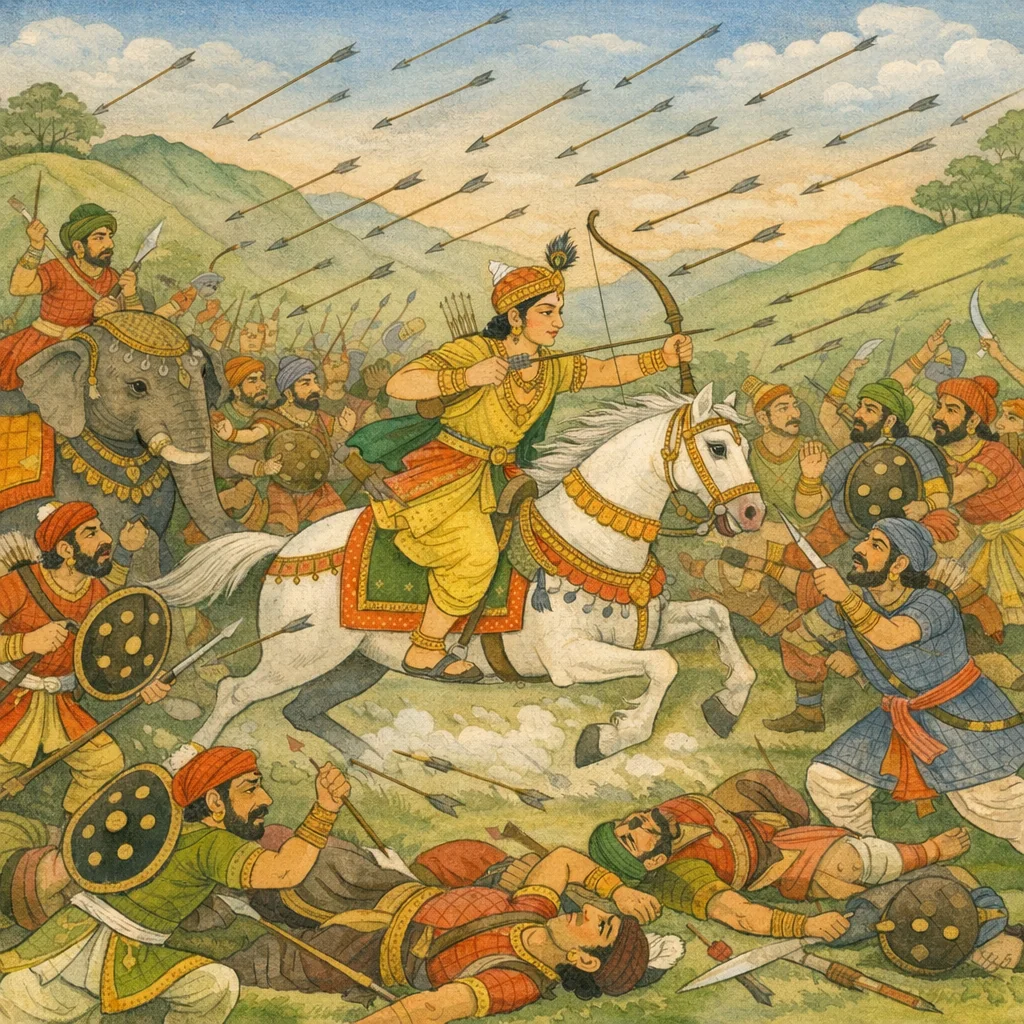
Sanjaya said: O King, Karna’s brother—bow in hand—roared fiercely, drawing back the bowstring again and again, and swiftly drove his chariot into the space between those two great-souled warriors.
Verse 2
सो<विध्यद् दशभिर्बाणैरभिमन्युं दुरासदम् । सच्छत्रध्वजयन्तारं साश्वमाशु स्मयन्निव,उसने मुसकराते हुए-से दस बाण मारकर दुर्जय वीर अभिमन्युको छत्र, ध्वजा, सारथि और घोड़ोंसहित शीघ्र ही घायल कर दिया
Sanjaya said: Smiling as if in contempt, he swiftly pierced the hard-to-overcome Abhimanyu with ten arrows, wounding him along with his parasol and banner, his charioteer, and his horses.
Verse 3
पितृपैतामहं कर्म कुर्वाणमतिमानुषम् । दृष्टवार्दितं शरै: कार्ष्णि त्वदीया हृषिता5भवन्,अपने पिता-पितामहोंके अनुसार मानवीय शक्तिसे बढ़कर पराक्रम प्रकट करनेवाले अर्जुनकुमार अभिमन्युको उस समय बाणोंसे पीड़ित देखकर आपके सैनिक हर्षसे खिल उठे
Sanjaya said: Seeing Kārṣṇi—Abhimanyu, who was performing the ancestral heroic duty of his fathers and grandfathers with prowess beyond ordinary human measure—wounded and harassed by arrows, your warriors were filled with joy.
Verse 4
तस्याभिमन्युरायम्य स्मयन्नेकेन पत्रिणा । शिर: प्रच्यावयामास तद्रथात् प्रापतद् भुवि
Sanjaya said: Then Abhimanyu, drawing his bow and smiling, with a single feathered arrow struck so as to dislodge his opponent’s head; it fell from that chariot onto the earth.
Verse 5
कर्णिकारमिवाधूतं वातेनापतितं नगात् | तब अभिमन्युने मुसकराते हुए-से अपने धनुषको खींचकर एक ही बाणसे कर्णके भाईका मस्तक धड़से अलग कर दिया। उसका वह सिर रथसे नीचे पृथ्वीपर गिर पड़ा, मानो वायुके वेगसे हिलकर उखड़ा हुआ कनेरका वृक्ष पर्ववशिखरसे नीचे गिर गया हो ।। ४ ५ * चल हे ७ चर * >> ॥ 225..+ ड्ू | गज 4 ./ #&#& 4 - - #--4 7: ै ७०३५०००नकु 724 5६ है. केला 0६०२ - हि फीस 2 जय 4 २८ तय... 4 (82 " 442 भ्रातरं निहतं दृष्टवा राजन् कर्णो व्यथां ययौ,राजन्! अपने भाईको मारा गया देख कर्णको बड़ी व्यथा हुई। इधर सुभद्राकुमार अभिमन्युने गीधकी पाँखवाले बाणोंद्वारा कर्णको युद्धसे भगाकर दूसरे-दूसरे महाधनुर्धर वीरोंपर भी तुरंत ही धावा किया
Sañjaya said: Like a karṇikāra tree shaken by the wind and torn from a mountain slope, Abhimanyu—drawing his bow with a grim, almost smiling composure—severed with a single arrow the head of Karṇa’s brother from his body. The severed head fell from the chariot onto the earth, as though a wind-tossed tree, uprooted, had plunged down from a peak. Seeing his brother slain, Karṇa was struck with sharp anguish; yet Abhimanyu, driving Karṇa back with arrows fletched like vulture-wings, immediately turned his assault upon other great bowmen as well.
Verse 6
विमुखीकृत्य कर्ण तु सौभद्र: कड़कपत्रिभि: | अन्यानपि महेष्वासांस्तूर्णमेवाभिदुद्रुवे,राजन्! अपने भाईको मारा गया देख कर्णको बड़ी व्यथा हुई। इधर सुभद्राकुमार अभिमन्युने गीधकी पाँखवाले बाणोंद्वारा कर्णको युद्धसे भगाकर दूसरे-दूसरे महाधनुर्धर वीरोंपर भी तुरंत ही धावा किया
Sañjaya said: Having turned Karṇa away from the fight—driving him back with arrows feathered like a vulture’s wings—the son of Subhadrā (Abhimanyu) swiftly rushed upon the other great bowmen as well, O King. The scene underscores the relentless momentum of battle: grief and anger rise on one side, while on the other a young warrior presses his advantage without pause, embodying the harsh ethic of kṣatriya warfare where hesitation can cost lives.
Verse 7
ततस्तद्ू विततं सैन्यं हस्त्यश्वरथपत्तिमत् । क्रुद्धोडभिमन्युरभिनत् तिग्मतेजा महारथ:,उस समय क्रोधमें भरे हुए प्रचण्ड तेजस्वी महारथी अभिमन्युने हाथी, घोड़े, रथ और पैदलोंसे युक्त उस विशाल चतुरंगिणी सेनाको विदीर्ण कर डाला
Sañjaya said: Then Abhimanyu—his wrath kindled, blazing with keen splendour, a foremost chariot-warrior—charged and tore through that widely spread host, complete with elephants, horses, chariots, and infantry. The scene underscores how martial prowess, when driven by fierce resolve, can shatter even a well-formed army, while also hinting at the peril of battle-fury that consumes both sides in the unraveling of dharma on the battlefield.
Verse 8
कर्णस्तु बहुभिर्बाणैर््यमानो5$भिमन्युना । अपायाज्जवनैरश्वैस्ततो $नीकम भज्यत,अभिमन्युके चलाये हुए बहुसंख्यक बाणोंसे पीड़ित हुआ कर्ण अपने वेगशाली घोड़ोंकी सहायतासे शीघ्र ही रणभूमिसे भाग गया। इससे सारी सेनामें भगदड़ मच गयी
Sañjaya said: Struck and harassed by Abhimanyu’s many arrows, Karṇa withdrew swiftly with his fast horses. Seeing him turn away, the battle-formation broke and confusion spread through the host—showing how, in war, the wavering of a prominent warrior can unsettle an entire army and intensify the moral chaos of the field.
Verse 9
शलभैरिव चाकाशे धाराभिरिव चावृते । अभिमन्यो: शरै राजन न प्राज्ञायत किंचन,राजन्! उस दिन अभिमन्युके बाणोंसे सारा आकाशमण्डल इस प्रकार आच्छादित हो गया था, मानो टिड्डीदलोंसे अथवा वर्षाकी धाराओंसे व्याप्त हो गया हो। उस आकाशमें कुछ भी सूझता नहीं था
Sañjaya said: O King, the sky was so completely veiled by Abhimanyu’s arrows that it looked as though it were filled with swarms of locusts or covered by sheets of pouring rain; in that sky nothing at all could be discerned. The image underscores the overwhelming force of a single warrior’s resolve in battle, where skill and courage can momentarily eclipse all clarity and order.
Verse 10
तावकानां तु योधानां वध्यतां निशितै: शरैः । अन्यत्र सैन्धवाद् राजन् न सम कश्चिदतिष्ठत,महाराज! पैने बाणोंद्वारा मारे जाते हुए आपके योद्धाओंमेंसे सिंधुराज जयद्रथको छोड़कर दूसरा कोई वहाँ ठहर न सका
Sanjaya said: “As your warriors were being cut down by sharp arrows, O King—except for the Sindhu prince Jayadratha—no one among them could stand firm there, O great monarch.”
Verse 11
सौभद्रस्तु तत: शड्खं प्रध्माप्य पुरुषर्षभ: । शीघ्रमभ्यपतत् सेनां भारतीं भरतर्षभ
Sañjaya said: Then Saubhadra—foremost among men—having blown his conch, swiftly charged upon the Bhārata host.
Verse 12
भरतश्रेष्ठ] तब पुरुषप्रवर सुभद्राकुमार अभिमन्युने शंख बजाकर पुनः शीघ्र ही भारतीय सेनापर धावा किया ।। स कक्षेडग्निरिवोत्सृष्टो निर्दहंस्तरसा रिपून् | मध्ये भारतसैन्यानामार्जुनि: पर्यवर्तत,सूखे जंगलमें छोड़ी हुई आगके समान वेगसे शत्रुओंको दग्ध करता हुआ अभिमन्यु कौरव-सेनाके बीचमें विचरने लगा
Sanjaya said: Like a fire released into a dry thicket, Abhimanyu—Arjuna’s son—moved about in the midst of the Bharata host, swiftly scorching the enemy ranks with irresistible force.
Verse 13
रथनागाश्वमनुजानर्दयन् निशितै: शरै: । सम्प्रविश्याकरोद् भूमिं कबन्धगणसंकुलाम्,उस सेनामें प्रवेश करके उसने अपने तीखे बाणोंद्वारा रथों, हाथियों, घोड़ों और पैदल मनुष्योंको पीड़ित करते हुए सारी रणभूमिको बिना मस्तकके शरीरोंसे पाट दिया
Sañjaya said: Entering into that army, he tormented chariots, elephants, horses, and foot-soldiers with his sharp arrows, and he made the whole battlefield a mass of headless trunks.
Verse 14
सौभद्रचापप्रभवैर्निकृत्ता: परमेषुभि: । स्वानेवाभिमुखान् घ्नन्तः प्राद्रवन् जीवितार्थिन:,सुभद्राकुमारके धनुषसे छूटे हुए उत्तम बाणोंसे क्षत-विक्षत हो आपके सैनिक अपने जीवनकी रक्षाके लिये सामने आये हुए अपने ही पक्षके योद्धाओंको मारते हुए भाग चले
Sañjaya said: Cut down and mangled by the supreme arrows released from Abhimanyu’s bow, your soldiers—desperate to save their lives—fled in panic, even striking down their own comrades who stood before them.
Verse 15
ते घोरा रौद्रकर्माणो विपाठा बहव: शिता: । निघ्नन्तो रथनागाश्चान् जग्मुराशु वसुंधराम्,अभिमन्युके वे भयंकर कर्म करनेवाले, घोर, तीक्ष्ण और बहुसंख्यक विपाठ नामक बाण आपके रथों, हाथियों और घोड़ोंको नष्ट करते हुए शीघ्र ही धरतीमें समा जाते थे
Sañjaya said: Those dreadful, sharp, and numerous arrows called Vipāṭhas—wielded by men of fierce and cruel action—kept striking down your chariots, elephants, and horses, and then swiftly sank into the earth. The scene reveals the pitiless momentum of battle, where skill and weaponry overwhelm even the mightiest war-assets and destruction follows in rapid succession.
Verse 16
सायुधा: साड्गुलित्राणा: सगदा: साड्दा रणे । दृश्यन्ते बाहवश्छिन्ना हेमाभरणभूषिता:,उस युद्धमें आयुध, दस्ताने, गदा और बाजूबंदसहित वीरोंकी सुवर्णभूषण-भूषित भुजाएँ कटकर गिरी दिखायी देती थीं
Sañjaya said: In that battle, severed arms could be seen strewn about—still bearing weapons, still protected by finger-guards, still gripping maces, still adorned with armlets—glittering with golden ornaments. The scene underscores the terrible cost of war: valor and splendor remain outwardly visible even as life is cut down, reminding the listener that martial glory is inseparable from suffering and moral consequence.
Verse 17
शराक्षापानि खड्गाश्न शरीराणि शिरांसि च | सकुण्डलानि स्रग्वीणि भूमावासन् सहस्रशः,उस युद्धभूमिमें धनुष, बाण, खड्ग, शरीर तथा हार और कुण्डलोंसे विभूषित मस्तक सहस्रोंकी संख्यामें छिन्न-भिन्न होकर पड़े थे
Sañjaya said: On that battlefield, thousands lay scattered upon the ground—bows and arrows, swords, severed bodies, and heads still adorned with earrings and garlands. The sight underscores the terrible cost of wrath and ambition: even those once honored with ornaments are reduced to lifeless fragments when dharma is eclipsed by the frenzy of war.
Verse 18
सोपस्करैरधिष्ठानैरीषादण्डैश्व बन्धुरै: । अक्षविमिथितैश्नक्रैर्बहुधा पतितैर्युगै:,आवश्यक सामग्री, बैठक, ईषादण्ड, बन्धुर, अक्ष, पहिए और जूए चूर-चूर और टुकड़े- टुकड़े होकर गिरे थे। शक्ति, धनुष, खड़्ग, गिरे हुए विशाल ध्वज, ढाल और बाण भी छिज्न- भिन्न होकर सब ओर बिखरे पड़े थे। प्रजानाथ! बहुत-से क्षत्रिय, घोड़े और हाथी भी मारे गये थे। इन सबके कारण वहाँकी भूमि क्षणभरमें अत्यन्त भयंकर और अगम्य हो गयी थी
Sañjaya said: “There lay scattered the chariot-gear and fittings—its platform and equipment, the pole and shafts, the yokes and fastenings—along with axles and wheels shattered and wrenched apart, and yokes fallen in many pieces. Weapons too—spears, bows, swords—together with great fallen standards, shields, and arrows, were broken and strewn in every direction. O lord of men, many kṣatriyas, horses, and elephants had been slain; and because of all this, the ground there became in an instant exceedingly dreadful and impassable.”
Verse 19
शक्तिचापासिभिश्रैव पतितैश्न महाध्वजै: । चर्मचापशरैश्लैव व्यवकीर्ण: समन्तत:,आवश्यक सामग्री, बैठक, ईषादण्ड, बन्धुर, अक्ष, पहिए और जूए चूर-चूर और टुकड़े- टुकड़े होकर गिरे थे। शक्ति, धनुष, खड़्ग, गिरे हुए विशाल ध्वज, ढाल और बाण भी छिज्न- भिन्न होकर सब ओर बिखरे पड़े थे। प्रजानाथ! बहुत-से क्षत्रिय, घोड़े और हाथी भी मारे गये थे। इन सबके कारण वहाँकी भूमि क्षणभरमें अत्यन्त भयंकर और अगम्य हो गयी थी
Sañjaya said: The ground was strewn on every side with fallen spears, bows, and swords, with great banners brought down, and with shields, bows, and arrows scattered everywhere. The scene conveys the crushing cost of battle—where instruments of power and protection alike lie broken, and the field itself becomes a testimony to the violence unleashed when kṣatriya duty is pursued through relentless slaughter.
Verse 20
निहतै: क्षत्रियैरश्वेर्वरिणैश्व विशाम्पते । अगम्यरूपा पृथिवी क्षणेनासीत् सुदारुणा,आवश्यक सामग्री, बैठक, ईषादण्ड, बन्धुर, अक्ष, पहिए और जूए चूर-चूर और टुकड़े- टुकड़े होकर गिरे थे। शक्ति, धनुष, खड़्ग, गिरे हुए विशाल ध्वज, ढाल और बाण भी छिज्न- भिन्न होकर सब ओर बिखरे पड़े थे। प्रजानाथ! बहुत-से क्षत्रिय, घोड़े और हाथी भी मारे गये थे। इन सबके कारण वहाँकी भूमि क्षणभरमें अत्यन्त भयंकर और अगम्य हो गयी थी
Sañjaya said: “O lord of the people, when kṣatriya warriors were slain and horses and mighty elephants fell, the earth in an instant became dreadful—its very form turned impassable. The battlefield lay strewn with shattered chariot-gear—seats, poles, axles, wheels, and yokes—fallen in splinters and fragments. Spears, bows, swords, great banners cast down, shields, and arrows too were broken and scattered on every side. O ruler of men, many kṣatriyas, horses, and elephants were killed; and for this the ground there became, in a moment, exceedingly terrible and hard to traverse.”
Verse 21
वध्यतां राजपुत्राणां क्रन्दतामितरेतरम् । प्रादुरासीन्महाशब्दो भीरूणां भयवर्धन:,बाणोंकी चोट खाकर परस्पर क्रन्दन करते हुए राजकुमारोंका महान् शब्द सुनायी पड़ता था, जो कायरोंका भय बढ़ानेवाला था
Sañjaya said: “As the princes were being cut down and cried out to one another in distress, a tremendous uproar arose—one that only swelled the fear of the faint-hearted.”
Verse 22
स शब्दो भरतश्रेष्ठ दिश: सर्वा व्यनादयत् । सौभद्रश्नाद्रवत् सेनां घ्नन् वराश्वरथद्विपान्,भरतश्रेष्ठ। वह शब्द सम्पूर्ण दिशाओंको प्रतिध्वनित कर रहा था। सुभद्राकुमार श्रेष्ठ घोड़ों, रथों और हाथियोंका संहार करता हुआ कौरव-सेनापर टूट पड़ा था
Sañjaya said: “O best of the Bharatas, that roar resounded through all directions. The son of Subhadrā rushed swiftly upon the Kaurava host, cutting down their finest horses, chariots, and elephants.”
Verse 23
कक्षमग्निरिवोत्सृष्टो निर्दहंस्तरसा रिपून् | मध्ये भारतसैन्यानामार्जुनि: प्रत्यदृश्यत,सूखे जंगलमें छोड़ी हुई आगकी भाँति अर्जुनकुमार अभिमन्यु वेगसे शत्रुओंको दग्ध करता हुआ कौरव-सेनाओंके बीचमें दृष्टिगोचर हो रहा था
Sañjaya said: “Like a fire released into a dry thicket, Arjuna’s son Abhimanyu was seen in the midst of the Bharata armies, swiftly burning down his foes.”
Verse 24
विचरन्तं दिश: सर्वा: प्रदिशश्चापि भारत । तं॑ तदा नानुपश्याम: सैन्ये च रजसा5<वृते,भारत! धूलसे आच्छादित हुई सेनाके भीतर सम्पूर्ण दिशाओं और विदिशाओंमें विचरते हुए अभिमन्युको उस समय हमलोग देख नहीं पाते थे
Sañjaya said: “O Bhārata, as he moved about in all directions and even the intermediate quarters, at that time we could not catch sight of him, for the army was shrouded in dust.”
Verse 25
आददानं गजाश्चानां नृणां चायूंषि भारत । क्षणेन भूय: पश्याम: सूर्य मध्यंदिने यथा,(यथा पुरा वल्लिसुतो5सुरसैन्येषु वीर्यवान् ।) भरतनन्दन! हाथियों, घोड़ों और पैदलसैनिकोंकी आयुको छीनते हुए अभिमन्युको हमने क्षणभरमें दोपहरके सूर्यकी भाँति शत्रुसेनाको पुनः तपाते देखा था। महाराज! इन्द्रकुमार अर्जुनका वह पुत्र युद्धमें इन्द्रके समान पराक्रमी जान पड़ता था। जैसे पूर्वकालमें पराक्रमी कुमार कार्तिकेय असुरोंकी सेनामें उसका संहार करते हुए सुशोभित होते थे, उसी प्रकार अभिमन्यु कौरव-सेनामें विचरता हुआ शोभा पा रहा था
Sañjaya said: “O Bhārata, we saw Abhimanyu in a moment once again blazing against the enemy host like the sun at midday—snatching away the very life-spans of elephants, horses, and men. Just as in ancient times the valiant son of Vallī (Kārttikeya) shone while destroying the armies of the Asuras, so too did Abhimanyu move through the Kaurava forces, radiant in battle.”
Verse 26
अभिमन्युं महाराज प्रतपन्तं द्विषद्गणान् । स वासवसम: संख्ये वासवस्यात्मजात्मज: । अभिमन्युर्महाराज सैन्यमध्ये व्यरोचत,(यथा पुरा वल्लिसुतो5सुरसैन्येषु वीर्यवान् ।) भरतनन्दन! हाथियों, घोड़ों और पैदलसैनिकोंकी आयुको छीनते हुए अभिमन्युको हमने क्षणभरमें दोपहरके सूर्यकी भाँति शत्रुसेनाको पुनः तपाते देखा था। महाराज! इन्द्रकुमार अर्जुनका वह पुत्र युद्धमें इन्द्रके समान पराक्रमी जान पड़ता था। जैसे पूर्वकालमें पराक्रमी कुमार कार्तिकेय असुरोंकी सेनामें उसका संहार करते हुए सुशोभित होते थे, उसी प्रकार अभिमन्यु कौरव-सेनामें विचरता हुआ शोभा पा रहा था
Sañjaya said: “O King, we saw Abhimanyu scorching the host of enemies. In the press of battle that grandson of Indra shone like Indra himself. O Mahārāja, Abhimanyu moved within the army’s midst with radiant prowess—just as in ancient times the valiant son of Vallī (Kārttikeya) blazed amid the armies of the Asuras while destroying them.”
Verse 40
इस प्रकार श्रीमहाभारत द्रोणपर्वके अन्तर्गत अभिमन्युवधपर्वमें कर्ण तथा दुःशायनकी पराजयविषयक चालीसवाँ अध्याय पूरा हुआ
Thus ends the fortieth chapter of the Abhimanyu-vadha section within the Droṇa Parva of the Śrī Mahābhārata, dealing with the defeat of Karṇa and Duḥśāyana.
Verse 41
इति श्रीमहा भारते द्रोणपर्वणि अभिमन्युवधपर्वणि अभिमन्युपराक्रमे एकचत्वारिंशो5ध्याय:
Thus ends the forty-first chapter in the Droṇa Parva of the Śrī Mahābhārata, within the section on the slaying of Abhimanyu, describing Abhimanyu’s valor.
Frequently Asked Questions
The chapter foregrounds the tension between personal honor-driven motives (responding to humiliation through tapas and seeking power) and the ethical risk of using extraordinary, boon-derived capacity to obstruct opponents in a wider political conflict.
Power in itihāsa is frequently portrayed as conditioned: austerity and devotion may yield boons, but boons operate within explicit limits, implying that agency is real yet bounded by prior causes, vows, and stated constraints.
No explicit phalaśruti appears in this passage; the meta-level function is explanatory—providing causal justification for an otherwise improbable battlefield outcome within the epic’s logic of tapas, divine response, and conditional grants.