Adhyaya 34
Droṇa’s Defensive Stand and Abhimanyu Commissioned to Breach the Cakravyūha (द्रोणानीक-प्रतिरोधः; सौभद्र-नियोजनम्)
Upa-parva: Cakravyūha-praveśa (Abhimanyu’s Entry into the Cakravyūha) — Episode Context within Droṇa Parva
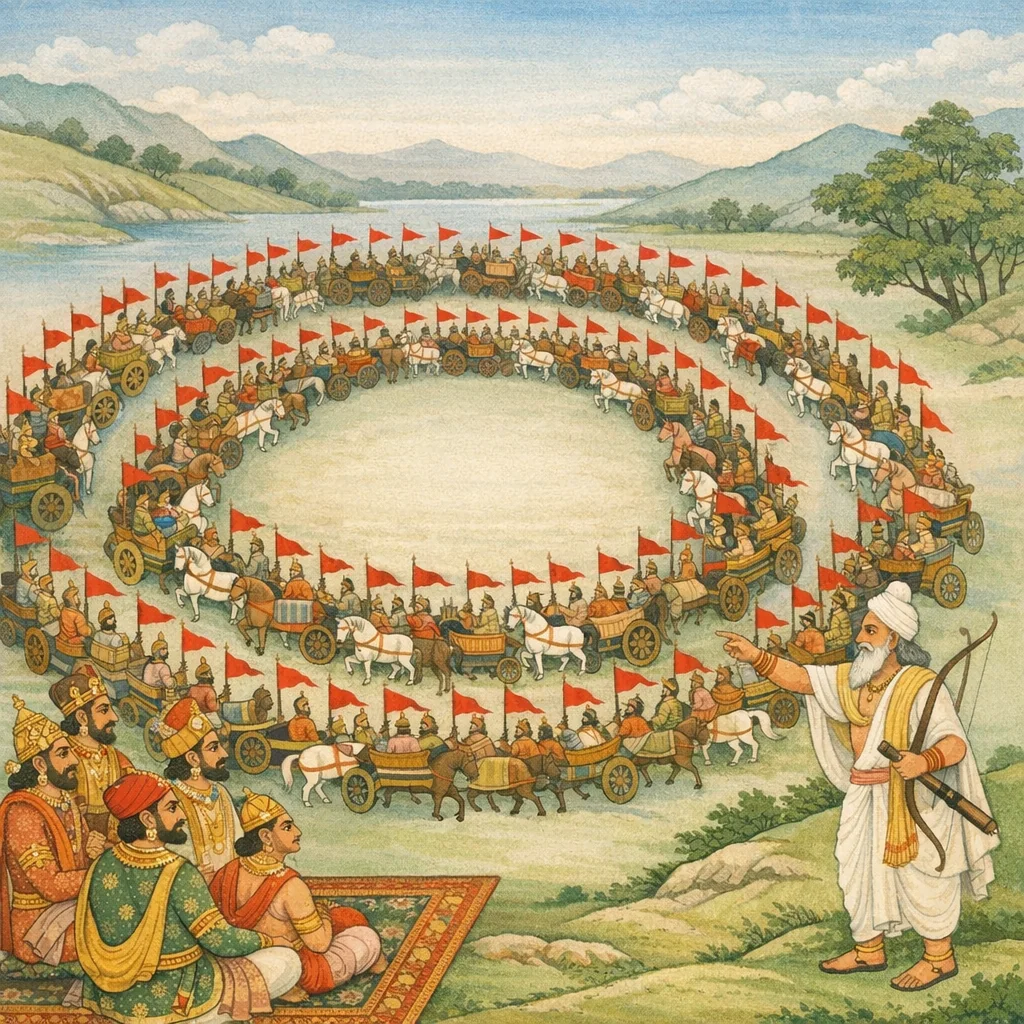
Saṃjaya reports that the Pāṇḍava-led coalition—featuring Bhīma at the fore and numerous allied mahārathas—advances toward Droṇa’s well-guarded formation. Droṇa (Bhāradvāja) calmly repels them with dense volleys, likened to a shoreline halting a flood, preventing the attackers from holding position at the front. Observing the difficulty of countering Droṇa directly, Yudhiṣṭhira deliberates and then assigns the critical burden to Abhimanyu (Saubhadra), stating that the coalition does not know the method of breaking the cakravyūha except through a very limited set of warriors. Abhimanyu accepts, affirming he was instructed by his father in the technique of entry, while acknowledging uncertainty about exit under adverse conditions. Yudhiṣṭhira and Bhīma pledge support: Abhimanyu is to create an opening, and the others will follow, protect, and repeatedly widen any breach. The chapter closes with Abhimanyu directing his charioteer to drive swiftly toward Droṇa’s array, marking the transition from deliberation to execution.
Chapter Arc: संजय धृतराष्ट्र को युद्धभूमि का दृश्य सुनाते हुए पहले पाण्डव-पक्ष के तेजस्वी गुणों की प्रशंसा करता है—विशेषतः युधिष्ठिर की सत्य-धर्मनिष्ठा और भाइयों के स्वभाव-पराक्रम का स्मरण कराकर कथा को ऊँचे नैतिक धरातल पर रख देता है। → इसी पृष्ठभूमि पर द्रोणाचार्य एक निर्णायक रणनीति रचते हैं—चक्रव्यूह का निर्माण। राजाओं और महारथियों को इन्द्र-सम तुल्य क्रम से व्यूह में विन्यस्त किया जाता है; रथों पर रक्त-ध्वज, स्वर्ण-मालाएँ, चन्दन-अगरु की सुगन्ध और सूक्ष्म वस्त्रों का वैभव युद्ध को उत्सव-सा और मृत्यु को निकट-सा बना देता है। → चक्रव्यूह का ‘स्थापन’ ही इस अध्याय का शिखर है—द्रोण द्वारा रचित अभेद्य घेरा, जिसमें कौरव-महारथी देवताओं-से दीप्त होकर खड़े हैं और दोनों पक्ष ‘मृत्यु को ही निवृत्ति’ मानकर उग्र प्रतिज्ञा से भर उठते हैं। → व्यूह पूर्ण रूप से तैयार हो जाता है; सेनाएँ अपने-अपने स्थानों पर जम जाती हैं और युद्ध का स्वरूप साधारण रण से बदलकर एक योजनाबद्ध वध-यंत्र जैसा हो जाता है। → अब प्रश्न यह रह जाता है—इस चक्रव्यूह को कौन भेदेगा, और भीतर प्रवेश करने वाला क्या बाहर निकल पाएगा?
Shlokas
Verse 1
भीकम (2 अमान चतुस्त्रिंशो 5 ध्याय: संजयके द्वारा अभिमन्युकी प्रशंसा, द्रोणाचार्यद्वारा चक्रव्यूहका निर्माण संजय उवाच समरे>्त्युग्रकर्माण: कर्मभिव्यज्जितश्रमा: । सकृष्णा: पाण्डवा: पञ्च देवैरपि दुरासदा:,संजय कहते हैं--राजन्! श्रीकृष्णसहित पाँचों पाण्डव देवताओंके लिये भी दुर्जय हैं। वे समरभूमिमें अत्यन्त भयंकर कर्म करनेवाले हैं। उनके कर्मोद्वारा ही उनका परिश्रम अभिव्यक्त होता है
Sañjaya said: O King, the five Pāṇḍavas—together with Kṛṣṇa—are unconquerable even for the gods. On the battlefield they perform deeds of terrible intensity; and through those very deeds their exertion becomes manifest.
Verse 2
सत्त्वकर्मान्वयैर्बुद्धा कीर्त्या च यशसा श्रिया । नैव भूतो न भविता नैव तुल्यगुण: पुमान्,सत्त्वगुण, कर्म, कुल, बुद्धि, कीर्ति, यश और श्रीके द्वारा युधिष्ठिरके समान पुरुष दूसरा कोई न तो हुआ है और न होनेवाला ही है
Sañjaya said: Endowed with excellence of character, noble conduct, and illustrious lineage—together with discerning intellect, fame, renown, and prosperity—there has never been, nor will there ever be, any man equal in qualities to Yudhiṣṭhira.
Verse 3
सत्यधर्मरतो दान्तो विप्रपूजादिभिग्गुणै: । सदैव त्रिदिवं प्राप्तो राजा किल युधिषछिर:,कहते हैं, राजा युधिष्ठिर सत्यधर्मपरायण और जितेन्द्रिय होनेके साथ ही ब्राह्मण-पूजन आदि सदगुणोंके द्वारा सदा ही स्वर्गलोकको प्राप्त हैं
Sañjaya said: King Yudhiṣṭhira—devoted to truth and dharma, self-controlled, and endowed with virtues such as honoring the brāhmaṇas—is, as it were, ever assured of the heavenly world (svarga).
Verse 4
युगान्ते चान्तको राजन् जामदम्न्यश्न वीर्यवान् रथस्थो भीमसेनश्व कथ्यन्ते सदृशास्त्रय:,राजन! प्रलयकालके यमराज, पराक्रमी परशुराम और रथपर बैठे हुए भीमसेन--ये तीनों एक समान कहे जाते हैं
Sañjaya said: O King, at the end of the age, Antaka (Death) himself; the mighty Jāmadagnya (Paraśurāma); and Bhīmasena standing upon his chariot—these three are spoken of as alike.
Verse 5
प्रतिज्ञाकर्मदक्षस्य रणे गाण्डीवधन्चन: । उपमां नाधिगच्छामि पार्थस्य सदृशीं क्षिती,रणभूमिमें प्रतिज्ञापूर्वक कर्म करनेमें कुशल, गाण्डीवधारी कुन्तीकुमार अर्जुनके लिये तो मुझे इस पृथ्वीपर कोई उनके योग्य उपमा ही नहीं मिलती है
Sañjaya said: In this battlefield, for Pārtha—Arjuna, the bearer of the Gāṇḍīva—who is supremely skilled in carrying out deeds undertaken as solemn vows, I find no comparison on this earth that truly matches him.
Verse 6
गुरुवात्सल्यमत्यन्तं नैभृत्यं विनयो दम: । नकुले<प्रातिरूप्यं च शौर्य च नियतानि षट्,बड़े भाईके प्रति अत्यन्त भक्ति, अपने पराक्रमको प्रकाशित न करना, विनयशीलता, इन्द्रिय-संयम, उपमा-रहित रूप तथा शौर्य--ये नकुलमें छः: गुण निश्चितरूपसे निवास करते हैं
Sañjaya said: In Nakula there dwell, firmly and unmistakably, six settled virtues—deep affection and loyalty toward his elders and teachers, the habit of keeping his prowess unadvertised, humility, self-restraint, incomparable comeliness, and valor.
Verse 7
श्रुतगाम्भीर्यमाधुर्यसत्यरूपपराक्रमै: । सदृशो देवयोरवीर: सहदेव: किलाब्विनो:,वेदाध्ययन, गम्भीरता, मधुरता, सत्य, रूप और पराक्रमकी दृष्टिसे वीर सहदेव सर्वथा अश्विनीकुमारोंके समान हैं, यह बात सर्वत्र प्रसिद्ध है
Sañjaya said: “In learning, depth of character, sweetness of speech, truthfulness, beauty of form, and heroic prowess, the valiant Sahadeva is said to be fully comparable to the divine Aśvin twins; this is widely known.”
Verse 8
ये च कृष्णे गुणा: स्फीता: पाण्डवेषु च ये गुणा: । अभिमन्यौ किलैकस्था दृश्यन्ते गुणसंचया:,भगवान् श्रीकृष्णमें जो उज्ज्वल गुण हैं तथा पाण्डवोंमें जो उज्ज्वल गुण विद्यमान हैं, वे समस्त गुणसमुदाय अभिमन्युमें निश्चय ही एकत्र हुए दिखायी देते थे
Sañjaya said: “All the splendid virtues that shine in Kṛṣṇa, and all the splendid virtues found among the Pāṇḍavas—those very accumulations of excellence were seen, as it were, gathered together in one place in Abhimanyu.”
Verse 9
युधिष्ठिरस्य वीर्येण कृष्णस्य चरितेन च । कर्मभिर्भीमसेनस्य सदृशो भीमकर्मण:,युधिष्ठिरके पराक्रम, श्रीकृष्णके उत्तम चरित्र एवं भयंकर कर्म करनेवाले भीमसेनके वीरोचित कर्मोके समान ही अभिमन्युके भी पराक्रम, चरित्र और कर्म थे
Sañjaya said: In valor like Yudhiṣṭhira, in noble conduct like Kṛṣṇa, and in deeds like Bhīmasena, the mighty warrior was his equal—matching them in courage, character, and formidable action.
Verse 10
धनंजयस्य रूपेण विक्रमेण श्रुतेन च । विनयात् सहदेवस्य सदृशो नकुलस्य च,वह रूप, पराक्रम और शास्त्रज्ञानमें अर्जुनके समान तथा विनयशीलतामें नकुल और सहदेवके तुल्य था
Sañjaya said: In appearance, in prowess, and in learning, he was like Dhanañjaya (Arjuna); and in humility and courteous conduct, he was comparable to Sahadeva and also to Nakula.
Verse 11
धृतराष्ट उवाच अभिमन्युमहं सूत सौभद्रमपराजितम् । श्रोतुमिच्छामि कार्त्स्येन कथमायोधने हत:,धृतराष्ट्र बोले--सूत! मैं किसीसे भी पराजित न होनेवाले सुभद्राकुमार अभिमन्युके विषयमें सारा वृत्तान्त सुनना चाहता हूँ। वह युद्धमें कैसे मारा गया?
Dhṛtarāṣṭra said: “O Sūta, I wish to hear in full the entire account concerning Abhimanyu, the son of Subhadrā—unconquered by any. How was he slain in battle?”
Verse 12
संजय उवाच स्थिरो भव महाराज शोकं धारय दुर्धरम् महान्तं बन्धुनाशं ते कथयिष्यामि तच्छुणु,संजयने कहा--महाराज! स्थिर हो जाइये और जिसे धारण करना कठिन है, उस शोकको अपने हृदयमें ही रोके रखिये। मैं आपसे बन्धु-बान्धवोंके महान् विनाशका वर्णन करूँगा, उसे सुनिये
Sañjaya said: “Be steady, O great king. Restrain within yourself this grief that is so hard to bear. I shall recount to you the vast destruction of your kinsmen—listen to it.”
Verse 13
चक्रव्यूह़ो महाराज आचार्येणाभिकल्पित: । तत्र शक्रोपमा: सर्वे राजानो विनिवेशिता:,राजन! आचार्य द्रोणने जिस चक्रव्यूहका निर्माण किया था, उसमें इन्द्रके समान पराक्रम प्रकट करनेवाले समस्त राजाओंका समावेश कर रखा था
Sañjaya said: O great king, the circular battle-formation (cakravyūha) was devised by the preceptor. Within it were stationed all the kings—warriors whose prowess was likened to Indra’s—arrayed so as to make the formation formidable and difficult to penetrate.
Verse 14
आरास्थानेषु विन्यस्ता: कुमारा: सूर्यवर्चस: । संघातो राजपुत्राणां सर्वेषामभवत् तदा,उसमें आरोंके स्थानमें सूर्यके समान तेजस्वी राजकुमार खड़े किये गये थे। उस समय वहाँ समस्त राजकुमारोंका समुदाय उपस्थित हो गया था
Sañjaya said: “At the designated stations for the chariots, princes radiant like the sun were positioned. At that time, the entire assembly of royal sons gathered there.”
Verse 15
कृताभिसमया: सर्वे सुवर्णविकृतध्वजा: । रक्ताम्बर धरा: सर्वे सर्वे रक्तविभूषणा:,उन सबने प्राणोंके रहते युद्धसे विमुख न होनेकी प्रतिज्ञा कर ली थी। उन सबकी ध्वजाएँ सुवर्णमयी थीं, सबने लाल वस्त्र धारण कर रखे थे और सबके आभूषण भी लाल रंगके ही थे
Sañjaya said: All of them had made a firm resolve (a pledged understanding) not to turn away from battle while life remained. Their standards were fashioned with gold; all wore red garments, and all were adorned with red ornaments—signs of a vowed, unflinching readiness for war.
Verse 16
सर्वे रक्तपताकाश्ष सर्वे वै हेममालिन: । चन्दनागुरुदिग्धाड़ा ख्रग्विण: सूक्ष्मवासस:,सबके रथोंपर लाल रंगकी पताकाएँ फहरा रही थीं, सबने सोनेकी मालाएँ पहन रखी थीं, सबके अंगोंमें चच्द्रद और अगुरुका लेप किया गया था और सभी फूलोंके गजरों तथा महीन वस्त्रोंसे सुशोभित थे
On every chariot red banners streamed; all wore garlands of gold; their limbs were anointed with sandal and aguru; and all were adorned with flower-wreaths and fine, delicate garments.
Verse 17
सहिता: पर्यधावन्त कार्ष्णि प्रति युयुत्सव: । तेषां दश सहस्राणि बभूवुर्दृडधन्विनाम्,वे सब एक साथ युद्धके लिये उत्सुक होकर अर्जुनपुत्र अभिमन्युकी ओर दौड़े। सुदृढ़ धनुष धारण करनेवाले उन आक्रमणकारी वीरोंकी संख्या दस हजार थी
Sañjaya said: United together and eager for battle, they rushed toward Kārṣṇi (Abhimanyu). The number of those assailants—mighty warriors bearing firm, well-strung bows—was ten thousand.
Verse 18
पौत्रं तव पुरस्कृत्य लक्ष्मणं प्रियदर्शनम् । अन्योन्यसमदु:खास्ते अन्योन्यसमसाहसा:,उन्होंने आपके प्रियदर्शन पौत्र लक्ष्मणको आगे करके धावा किया था। उन सबने एक- दूसरेके दुःखको समान समझा था और वे परस्पर समानभावसे साहसी थे
Sañjaya said: Placing your grandson Lakṣmaṇa—pleasing to behold—at their forefront, they charged ahead. Bound together in fellowship, they regarded one another’s sorrow as their own and displayed equal courage in mutual support.
Verse 19
अन्योनयं स्पर्थमानाश्न अन्योन्यस्य हिते रता: । दुर्योधनस्तु राजेन्द्र सैन्यमध्ये व्यवस्थित:,वे एक-दूसरेसे होड़ लगाये रखते थे और आपसमें एक-दूसरेके हित-साधनमें तत्पर रहते थे। राजेन्द्र! राजा दुर्योधन सेनाके मध्यभागमें विराजमान था
They vied with one another, yet were devoted to one another’s welfare. But King Duryodhana, O lord of kings, stood stationed in the very midst of the army.
Verse 20
कर्णदु:शासनकृपैर्वृतो राजा महारथै: । देवराजोपम: श्रीमाञ्छवेतच्छत्राभिसंवृत:,उसके ऊपर श्वेतच्छत्र तना हुआ था। वह कर्ण, दुःशासन तथा कृपाचार्य आदि महारथियोंसे घिरकर देवराज इन्द्रके समान शोभा पा रहा था
Sañjaya said: The king, surrounded by the great chariot-warriors Karṇa, Duḥśāsana, and Kṛpa, appeared resplendent—like Indra, lord of the gods—while a white royal parasol was held aloft above him.
Verse 21
चामरव्यजनाक्षेपैरुदयन्निव भास्कर: । प्रमुखे तस्य सैन्यस्य द्रोणो5वस्थितनायक:
Sañjaya said: Amid the sweeping motions of yak-tail fans and fly-whisks, Droṇa looked like the rising sun. Stationed at the very forefront of that army as its leading commander, he stood as the visible center of authority and resolve—an image of martial splendor that heartened his own side and daunted the foe, even as the war’s righteousness remained contested.
Verse 22
उसके दोनों ओर चँवर और व्यजन डुलाये जा रहे थे। वह उदयकालके सूर्यकी भाँति प्रकाशित हो रहा था। उस सेनाके अग्रभागमें सेनापति द्रोणाचार्य खड़े थे ।। सिन्धुराजस्तथातिष्ठ च्छीमान् मेरुरिवाचल: । सिन्धुराजस्य पार्श्वस्था अश्वत्थामपुरोगमा:,वहीं सिंधुराज श्रीमान् राजा जयद्रथ भी मेरु पर्वतकी भाँति खड़ा था। उसके पार्श्च भागमें अश्वत्थामा आदि महारथी विद्यमान थे
On both sides of him, chowries and fans were being waved. He shone like the sun at dawn. At the very front of that army stood its commander, Droṇācārya. Likewise the Sindhu-king, the illustrious Jayadratha, stood firm like the immovable Mount Meru; and near him were great chariot-warriors led by Aśvatthāmā. The scene underscores how royal splendor and martial display are used to steady morale and project legitimacy in war, even as the conflict advances toward grievous, ethically fraught outcomes.
Verse 23
सुतास्तव महाराज त्रिंशत्त्रिदशसंनिभा: । गान्धारराज: कितव: शल्यो भूरिश्रवास्तथा,पार्श्वत: सिन्धुराजस्य व्यराजन्त महारथा: । महाराज! देवताओंके समान शोभा पानेवाले आपके तीस पुत्र, जुआरी गान्धारराज शकुनि, शल्य तथा भूरिश्रवा--ये महारथी वीर सिंधुराज जयद्रथके पार्श्रभागमें सुशोभित हो रहे थे
Sañjaya said: O great king, your thirty sons, radiant like the gods, along with the Gandhāra king Śakuni—skilled in deceitful play—Śalya, and Bhūriśravas, stood as mighty chariot-warriors, shining at the flank of the Sindhu king Jayadratha. The verse underscores how outward splendor and formidable alliances can mask ethically compromised counsel, as the Kaurava host gathers around a key ally in the war.
Verse 24
ततः प्रववृते युद्ध तुमुलं लोमहर्षणम्,तदनन्तर “मरनेपर ही युद्धसे निवृत्त होंगे” ऐसा निश्चय करके आपके और शशत्रुपक्षके योद्धाओंमें अत्यन्त भयंकर युद्ध आरम्भ हुआ, जो रोंगटे खड़े कर देनेवाला था
Sañjaya said: Then the battle surged forth—deafening and hair-raising. After that, having resolved, “Only upon death will we withdraw from the fight,” the warriors on your side and those of the enemy began an exceedingly dreadful combat, one that made the body bristle with terror.
Verse 25
तावकानां परेषां च मृत्युं कृत्वा निवर्तनम्,तदनन्तर “मरनेपर ही युद्धसे निवृत्त होंगे” ऐसा निश्चय करके आपके और शशत्रुपक्षके योद्धाओंमें अत्यन्त भयंकर युद्ध आरम्भ हुआ, जो रोंगटे खड़े कर देनेवाला था
Sañjaya said: Having resolved that withdrawal would come only after making death the price for both your men and the enemy, they fixed their minds on the thought, “Only after dying will we cease from battle.” Thereupon a most dreadful fight erupted among your warriors and those of the opposing host—so terrifying that it made the hair stand on end, revealing the grim ethic of total commitment that war can demand when pride and vengeance eclipse restraint.
Verse 33
इस प्रकार श्रीमहाभारत द्रोणपर्वके अन्तर्गत अभिमन्युवधपर्वमें अभिमन्युवधका संक्षेपसे वर्णनविषयक तैंतीसवाँ अध्याय पूरा हुआ
Sañjaya concludes: Thus, in the Śrī Mahābhārata, within the Droṇa Parva—specifically in the section on the slaying of Abhimanyu—the thirty-third chapter, giving a concise account of Abhimanyu’s death, is completed. This closing formula bears the epic’s moral weight: the fall of a young warrior in war becomes a point for reflecting on duty, the limits of righteous conduct in battle, and the tragic cost of strategic violence.
Verse 34
इति श्रीमहाभारते द्रोणपर्वणि अभिमन्युवधपर्वणि चक्रव्यूहनिर्माणे चतुस्त्रिंशो 5 ध्याय:,इस प्रकार श्रीमहाभारत द्रोणपर्वके अन्तर्गत अभिमन्युवधपर्वमें चक्रव्यूहका निर्माणविषयक चौंतीसवाँ अध्याय पूरा हुआ
Sañjaya said: Thus, in the Mahābhārata, within the Droṇa Parva—specifically in the section on the slaying of Abhimanyu—ends the thirty-fourth chapter, describing the formation of the Cakra (Cakravyūha) battle-array. This colophon closes an episode that frames a decisive ethical crisis of war: strategy and prowess are set against the vulnerability of a lone hero and the larger demands of dharma in battle.
Frequently Asked Questions
Leadership must assign a high-risk task to a capable but younger ally when the coalition lacks complete procedural knowledge (entry versus exit), raising questions about proportional risk, duty to protect, and necessity under strategic pressure.
Effective action in crisis requires frank recognition of constraints, clear delegation aligned with competence, and explicit support commitments—while acknowledging that specialized knowledge can be partial and must be operationalized with contingency planning.
No explicit phalaśruti appears here; the chapter’s meta-function is structural—positioning the breach plan as a narrative and ethical pivot within Droṇa-parva’s escalation.