Adhyaya 31
अध्याय ३१ — द्रोणानीके तुमुलसंग्रामः (The Tumultuous Battle around Droṇa’s Formation)
Upa-parva: Droṇācārya-yuddha (Battle against Droṇa) — Bhīma–Droṇa–Karṇa engagement sequence
Saṃjaya reports that Bhīma (Vṛkodara), refusing to tolerate a reverse, strikes Bāhlika and Karṇa with volleys; Droṇa responds with sharp, life-threatening arrows aimed at vital points. Karṇa, Aśvatthāman, and Duryodhana collectively shower Bhīma, who counter-pierces Droṇa, Karṇa, Duryodhana, and Aśvatthāman and advances with a great roar. Seeing Bhīma endangered amid generalized mortality, Yudhiṣṭhira (Ajātaśatru) orders allied warriors—Sātyaki (Yuyudhāna) and the Mādrī-sons (Nakula, Sahadeva) among others—to protect him and to strike at the well-guarded droṇānīka. The battle devolves into mixed-arms chaos: cavalry and chariots collide; elephant charges crush fallen combatants; close-quarters fighting (sword, fist, grappling) appears; dust and blood obscure recognition, producing panic in the fearful. Droṇa rallies and intensifies his assault, while Kṛpa, Karṇa, Aśvatthāman, Jayadratha, Śalya, and others attempt to check the Pandava advance. Arjuna (Phalguna), having defeated the Saṃśaptakas, arrives like a blazing standard and pressures the Kauravas with dense arrow-streams, while observing a restraint toward fleeing or turned-away opponents. Karṇa answers with the Āgneya weapon; Arjuna counters by weapon-to-weapon containment. Dhṛṣṭadyumna, Bhīma, and Sātyaki strike Karṇa; Karṇa cuts their bows; they throw spear-like weapons which he severs. Arjuna kills Karṇa’s brothers (including Śatruṃjaya and Vipāṭa), and Bhīma attacks Karṇa’s ‘wings’ (supporters). Duryodhana, Droṇa, and Jayadratha then extract Karṇa from immediate peril, while the Pandavas continue protective coordination around Sātyaki. The chapter closes with a panoramic, clinical register of casualties across arms and the gradual withdrawal of both sides to camp at sunset.
Chapter Arc: धृतराष्ट्र संजय से पूछते हैं—जब अनीक टूटकर भाग रहे हों और कहीं टिकने का ठिकाना न दिखे, तब उस भगदड़ में द्रोण की सेना कैसे संभली? → संजय बताता है कि भग्न पंक्तियों के बीच भी कौरव-वीर द्रोण की कीर्ति और सुरक्षा के लिए लौट-लौटकर भिड़ते हैं; उधर द्रोण और धृष्टद्युम्न का अद्भुत संग्राम छिड़ता है, जिसकी उपमा कहीं नहीं। → आचार्यपुत्र अश्वत्थामा ज्वलित तेज वाले राजा नील को बाणों से विद्ध कर गिरा देता है—कमल-नेत्र, कमल-सा मुख वाला नील रण में ढह पड़ता है और पाण्डव-सेना में हाहाकार मचता है। → नील-वध से पाण्डव पक्ष विचलित होकर अर्जुन की ओर आश्रय-चिन्ता करता है; अर्जुन दक्षिण भाग में बचे संशप्तकों और नारायणी सेना का कदन करता हुआ मोर्चा संभालता है। → नील के गिरते ही पाण्डव महारथी सोचते हैं—शत्रुओं से रक्षा अब कैसे हो; अर्जुन के दक्षिण मोर्चे पर बढ़ते संहार के बीच अगले टकराव की भूमिका बनती है।
Shlokas
Verse 1
अपन बछ। है २ >> एकत्रिशो< ध्याय: कौरव-पाण्डव-सेनाओंका घमासान युद्ध तथा अभश्रत्थामाके द्वारा राजा नीलका वध धृतराष्ट्र रवाच तेष्वनीकेषु भग्नेषु पाण्डुपुत्रेण संजय | चलितानां द्रुतानां च कथमासीन्मनो हि व:,धृतराष्ट्रने पूछा--संजय! पाण्डुपुत्र अर्जुनके द्वारा पराजित हो जब सारी सेनाएँ भाग खड़ी हुईं, उस समय विचलित हो पलायन करते हुए तुमलोगोंके मनकी कैसी अवस्था हो रही थी?
Dhṛtarāṣṭra said: “Sañjaya, when those battle-formations were shattered by the son of Pāṇḍu (Arjuna), and the troops—shaken and fleeing in haste—broke ranks, what was the state of your minds then?”
Verse 2
अनीकानां प्रभग्नानामवस्थानमपश्यताम् । दुष्करं प्रतिसंधानं तन्ममाचक्ष्व संजय,भागती हुई सेनाओंको जब अपने ठहरनेके लिये कोई स्थान नहीं दिखायी देता हो, उस समय उन सबको संगठित करके एक स्थानपर ले आना बड़ा कठिन काम होता है। अतः संजय! तुम मुझे वह सब समाचार ठीक-ठीक बताओ
“When routed troops are fleeing and can see no place to halt and stand, it is exceedingly hard to gather them and bring them back to one spot. Therefore, Sañjaya, tell me all those tidings exactly as they happened.”
Verse 3
संजय उवाच तथापि तव पुत्रस्य प्रियकामा विशाम्पते । यश: प्रवीरा लोकेषु रक्षन्तो द्रोणमन्वयु:,संजयने कहा--प्रजानाथ! यद्यपि सेनाओंमें भगदड़ पड़ गयी थी, तथापि बहुत-से विश्वविख्यात वीरोंने आपके पुत्रका प्रिय करनेकी इच्छा रखकर अपने यशकी रक्षा करते हुए उस समय द्रोणाचार्यका साथ दिया
Sañjaya said: “Even so, O lord of the people, though panic had broken out in the army, many renowned heroes—desiring to do what was pleasing to your son, and guarding their own fame before the worlds—followed Droṇa and stood by him.”
Verse 4
समुद्यतेषु चास्त्रेषु सम्प्राप्ते च युधिष्ठिरे । अकुर्वन्नार्यकर्माणि भैरवे सत्यभीतवत्,प्रभो! वह भयंकर संग्राम छिड़ जानेपर समस्त योद्धा निर्भय-से होकर आर्यजनोचित्त पुरुषार्थ प्रकट करने लगे। जब सब ओरसे हथियार उठे हुए थे और राजा युधिष्ठिर सामने आ पहुँचे थे, उस दशामें भीमसेन, सात्यकि अथवा वीर धृष्टद्युम्मकी असावधानीका लाभ उठाकर अमिततेजस्वी कौरवयोद्धा पाण्डव-सेनापर टूट पड़े
Sañjaya said: When weapons were raised on every side and King Yudhiṣṭhira had entered the fray, even amid that dreadful tumult the warriors displayed the manly exertion befitting the noble (ārya) code, acting as though fear had no place in them. The scene proclaims the Kṣatriya ethic: once battle is joined, courage and disciplined effort are demanded, even when the hour is terrifying.
Verse 5
अन्तरं भीमसेनस्य प्रापतन्नमितौजस: । सात्यकेश्वचैव वीरस्य धृष्टद्युम्नस्य वा विभो,प्रभो! वह भयंकर संग्राम छिड़ जानेपर समस्त योद्धा निर्भय-से होकर आर्यजनोचित्त पुरुषार्थ प्रकट करने लगे। जब सब ओरसे हथियार उठे हुए थे और राजा युधिष्ठिर सामने आ पहुँचे थे, उस दशामें भीमसेन, सात्यकि अथवा वीर धृष्टद्युम्मकी असावधानीका लाभ उठाकर अमिततेजस्वी कौरवयोद्धा पाण्डव-सेनापर टूट पड़े
Sañjaya said: O mighty lord, the Kaurava warriors of immeasurable prowess rushed in, seeking an opening—ready to seize upon any lapse by Bhīmasena, or Sātyaki, or the heroic Dhṛṣṭadyumna. As the dreadful battle flared and weapons rose on every side, the fighters, fearless, displayed the manly valor prized among the noble (ārya); yet in that very crush of war the Kauravas strove to break the Pāṇḍava host by exploiting a moment’s inattention.
Verse 6
द्रोणं द्रोणमिति क्रूरा: पडचाला: समचोदयन् । मा द्रोणमिति पुत्रास्ते कुरून् सर्वानचोदयन्,क्रूर स्वभाववाले पांचालसैनिक एक-दूसरेको प्रेरित करने लगे, अरे! द्रोणाचार्यको पकड़ लो, द्रोणाचार्यको बंदी बना लो और आपके पुत्र समस्त कौरवोंको आदेश दे रहे थे कि देखना, द्रोणाचार्यको शत्रु पकड़ न पावें
Sañjaya said: The fierce Pāñcālas kept urging one another, crying, “Droṇa! Droṇa!”—meaning, “Seize Droṇācārya, take him captive.” At the same time, your sons were exhorting all the Kurus, “Do not let Droṇa be taken by the enemy.” Thus, on both sides, the battle’s urgency sharpened around the teacher himself, whose capture or protection was treated as a decisive stake in both dharma and strategy.
Verse 7
द्रोणं द्रोणमिति होके मा द्रोणमिति चापरे । कुरूणां पाण्डवानां च द्रोणद्यूतमवर्तत,एक ओरसे आवाज आती थी “द्रोणको पकड़ो, द्रोणको पकड़ो।” दूसरी ओरसे उत्तर मिलता, “द्रोणाचार्यको कोई नहीं पकड़ सकता।” इस प्रकार द्रोणाचार्यको दाँवपर रखकर कौरव और पाण्डवोंमें युद्धका जूआ आरम्भ हो गया था
Sañjaya said: On one side there rose the cry, “Droṇa! Droṇa!” while on the other some replied, “Not Droṇa!” Thus, with Droṇācārya as the stake, the Kurus and the Pāṇḍavas set in motion a grim “game of war”—a contest in which the frenzy of capture and the claim of invincibility eclipsed restraint and right conduct.
Verse 8
यं यं प्रमथते द्रोण: पञ्चालानां रथव्रजम् | तत्र तत्र तु पाज्चाल्यो धृष्टद्युम्नो5भ्यवर्तत,पांचालोंके जिस-जिस रथसमुदायको द्रोणाचार्य मथ डालनेका प्रयत्न करते, वहाँ-वहाँ पांचालराजकुमार धृष्टद्युम्न उनका सामना करनेके लिये आ जाता था
Sañjaya said: Wherever Droṇa sought to crush the gathered chariot-formations of the Pāñcālas, there the Pāñcāla prince Dhṛṣṭadyumna repeatedly moved forward to confront him. The scene shows force answered by force—each assault met by a deliberate stand—amid the grim duties and rivalries of the battlefield.
Verse 9
तथा भागविपर्यसे: संग्रामे भैरवे सति । वीरा: समासदन् वीरान् कुर्वन्तो भैरवं रवम्,इस प्रकार भागविपर्ययद्वारा भयंकर संग्राम आरम्भ होनेपर भैरव-गर्जना करते हुए उभय पक्षके वीरोंने विपक्षी वीरोंपर आक्रमण किया
Sañjaya said: Thus, when the dreadful battle began amid confusion and an adverse turning of the divisions, the warriors of both sides, raising terrifying roars, closed in and assailed the opposing heroes.
Verse 10
अकम्पनीया: शत्रूणां बभूवुस्तत्र पाण्डवा: | अकम्पयन्ननीकानि स्मरन्त: क्लेशमात्मन:,उस समय पाण्डवोंको शत्रुदलके लोग विचलित न कर सके। वे अपनेको दिये गये क्लेशोंको याद करके आपके सैनिकोंको कँपा रहे थे
Sañjaya said: There the Pāṇḍavas proved unshakable to their foes; remembering the hardships inflicted upon them, they in turn made your battle-formations tremble.
Verse 11
ते त्वमर्षवशं प्राप्ता हवीमन्त: सत्त्वचोदिता: । त्यक्त्वा प्राणान् न्यवर्तन्त घ्नन्तो द्रोणं महाहवे,पाण्डव लज्जाशील, सत्त्वगुणसे प्रेरित और अमर्षके अधीन हो रहे थे। वे प्राणोंकी परवा न करके उस महान् समरमें द्रोणाचार्यका वध करनेके लिये लौट रहे थे
Sañjaya said: Driven by the impulse of sattva and carried away by fierce indignation, they turned back—reckoning their lives as already forsaken—to strike down Droṇa in that great battle.
Verse 12
अयसामिव सम्पात: शिलानामिव चाभवत् | दीव्यतां तुमुले युद्धे प्राणेमिततेजसाम्,उस भयंकर युद्धमें प्राणोंकी बाजी लगाकर खेलनेवाले अमिततेजस्वी वीरोंका संघर्ष लोहों तथा पत्थरोंके परस्पर टकरानेके समान भयंकर शब्द करता था
Sañjaya said: In that tumultuous battle, the clash of those mighty warriors—who were, as it were, gambling with their very lives—rose like the dreadful impact of iron upon iron, like stones striking against stones.
Verse 13
नतु स््मरन्ति संग्राममपि वृद्धास्तथाविधम् । दृष्टपूर्व महाराज श्रुतपूर्वमथापि वा,महाराज! बड़े-बूढ़े लोग भी पहलेके देखे अथवा सुने हुए किसी भी वैसे संग्रामका स्मरण नहीं करते हैं
Sañjaya said: “O great king, even the elders do not recall any battle of such a kind—whether witnessed before or even heard of in tradition.”
Verse 14
प्राकम्पतेव पृथिवी तस्मिन् वीरावसादने । निवर्तता बलौघेन महता भारपीडिता,वीरोंका विनाश करनेवाले उस युद्धमें लौटते हुए विशाल सैनिकसमूहके महान् भारसे पीड़ित हो यह पृथ्वी काँपने-सी लगी
Sañjaya said: In that battle which brought about the downfall of heroes, the earth seemed to tremble—crushed under the immense weight of the vast mass of troops as they turned back.
Verse 15
घूर्णतो5पि बलौघस्य दिवं स्तब्ध्वेव नि:स्वन: । अजाततशधत्रोस्तत्सैन्यमाविवेश सुभैरव:,वहाँ सब ओर चक्कर काटते हुए सैन्यसमूहका अत्यन्त भयंकर कोलाहल आकाशको स्तब्ध-सा करके अजातशत्रु युधिष्ठिरकी सेनामें व्याप्त हो गया
Sañjaya said: Even as the massed troops wheeled about, their roar—so dreadful—seemed to stun the very sky; that terrifying din spread through the army of Ajātaśatru (Yudhiṣṭhira).
Verse 16
समासाद्य तु पाण्डूनामनीकानि सहस्रश: । द्रोणेन चरता संख्ये प्रभग्नानि शितै: शरै:,रणभूमिमें विचरते हुए द्रोणाचार्यने पाण्डव-सेनामें प्रवेश करके अपने तीखे बाणोंद्वारा सहस्रों सैनिकोंके पाँव उखाड़ दिये
Sañjaya said: Roaming across the battlefield, Droṇa pressed into the Pāṇḍavas’ battle-formations and, with his razor-sharp arrows, shattered them—breaking apart thousands of their ranks.
Verse 17
तेषु प्रमथ्यमानेषु द्रोणेनाद्भुतकर्मणा । पर्यवारयदासाद्य द्रोणं सेनापति: स्वयम्,अद्भुत पराक्रम करनेवाले द्रोणाचार्यके द्वारा जब उन सेनाओंका मन्थन होने लगा, उस समय स्वयं सेनापति धृष्टद्युम्नने द्रोणके पास पहुँचकर उन्हें रोका
Sañjaya said: As those forces were being violently churned and shattered by Droṇa, whose deeds were wondrous in battle, the commander himself—Dhṛṣṭadyumna—advanced straight up to Droṇa and checked his onslaught.
Verse 18
तदद्भुतम भूद् युद्ध द्रोणपाउचालयोस्तथा । नैव तस्योपमा काचिदिति मे निश्चिता मति:,वहाँ द्रोणाचार्य और धृष्टद्युम्नमें अद्भुत युद्ध होने लगा, जिसकी कहीं कोई तुलना नहीं थी, यह मेरा निश्चित मत है
Sañjaya said: Then there arose a truly wondrous battle between Droṇa and the Pāñcāla warrior; in my settled judgment, there was no comparison anywhere for that combat.
Verse 19
ततो नीलो5नलप्रख्यो ददाह कुरुवाहिनीम् । शरस्फुलिड्जश्चापार्चिर्दहन् कक्षमिवानल:,तदनन्तर अग्निके समान कान्तिमान् नील बाणरूपी चिनगारियों तथा धनुषरूपी लपटोंका विस्तार करते हुए कौरव-सेनाको दग्ध करने लगे, मानो आग घास-फूसके ढेरको जला रही हो
Sañjaya said: Then Nīla, blazing like fire itself, began to burn the Kuru host—his arrows like flying sparks and his bow like a spreading flame—consuming the army as a wildfire devours dry grass. The scene shows how, in war’s frenzy, a single warrior’s wrath and prowess can turn the battlefield into an indiscriminate conflagration, overwhelming friend and foe alike and deepening the moral darkness of slaughter.
Verse 20
त॑ दहन्तमनीकानि द्रोणपुत्र: प्रतापवान् । पूर्वाभिभाषी सुश्लक्ष्णं स्मयमानो5भ्यभाषत,राजा नीलको कौरव-सेनाका दहन करते देख प्रतापी द्रोणपुत्र अश्वत्थामाने, जो पहले स्वयं ही वार्तालाप आरम्भ करनेवाला था, मुसकराते हुए मधुर वचनोंमें कहा--
Sañjaya said: Seeing him burning through the battle-formations, the mighty son of Droṇa—Aśvatthāmā, quick to speak first—addressed him with gentle, well-chosen words, smiling. The scene shows how, amid war’s violence, speech itself becomes a weapon: courtesy and composure are used to frame, justify, or redirect action in accordance with one’s perceived duty.
Verse 21
नील किं बहुभिर्दग्वैस्तव योधे: शरार्चिषा । मयैकेन हि युध्यस्व क्रुद्ध: प्रहर चाशु माम्,“नील! तुमको बाणोंकी ज्वालासे इन बहुत-से योद्धाओंको दग्ध करनेसे क्या लाभ? तुम अकेले मुझसे ही युद्ध करो और कुपित होकर मेरे ऊपर शीघ्र प्रहार करो”
Sañjaya said: “O Nīla, what is the use of scorching these many warriors with the flame of arrows? Fight with me alone. In anger, strike me quickly.” In the heat of battle, the challenge redirects violence from the many to a single, willing opponent—an appeal to martial propriety and focused combat rather than indiscriminate slaughter.
Verse 22
तं पद्मनिकराकारं पद्मपत्रनिभेक्षणम् | व्याकोशपदञ्माभमुखो नीलो विव्याध सायकै:,नीलका मुख विकसित कमलके समान कान्तिमान् था। उन्होंने पद्मसमूहकी-सी आकृति तथा कमल-दलके सदृश नेत्रोंवाले अश्वत्थामाको अपने बाणोंसे बींध डाला
Sañjaya said: Nīla pierced Aśvatthāmā with his arrows—Aśvatthāmā whose form seemed like a cluster of lotuses, whose eyes were like lotus-petals, and whose face was like a fully opened lotus. The narration shows that even a warrior cast in serene, auspicious imagery remains subject to war’s harsh, impersonal law: beauty and valor do not shield one from injury.
Verse 23
तेनापि विद्ध:ः सहसा दौणिर्भल्लै: शितैस्त्रिभि: । धनुर्ध्वजं च छत्र॑ं च द्विषतः स न्यकृन्तत,उनके द्वारा घायल होकर अभश्वत्थामाने सहसा तीन तीखे भल्लोंद्वारा अपने शत्रु नीलके धनुष, ध्वज तथा छत्रको काट डाला
Sañjaya said: Though himself struck by the enemy, Aśvatthāman (the son of Droṇa) instantly retaliated: with three razor-sharp bhalla arrows he cut down his foe Nīla’s bow, his banner, and his parasol—stripping him of both fighting capacity and the visible emblems of royal command amid the chaos of war.
Verse 24
स प्लुतः स्यन्दनात्तस्मान्नीलश्चर्मवरासि भृत् । द्रौणायने: शिर: कायाद्धतुमैच्छत् पतत्रिवत्,तब नील ढाल और सुन्दर तलवार हाथमें लेकर उस रथसे कूद पड़े। जैसे पक्षी किसी मनचाही वस्तुको लेनेके लिये झपट्टा मारता है, उसी प्रकार नीलने भी अश्व॒त्थामाके धड़से उसका सिर उतार लेनेका विचार किया
Sañjaya said: Then Nīla, bearing a blue shield and a fine sword, leapt down from that chariot. Like a bird swooping to seize its desired prey, he sought to strike off Aśvatthāman’s head from his body—driven by the ruthless urgency of battle, where valor and violence press against the boundaries of dharma.
Verse 25
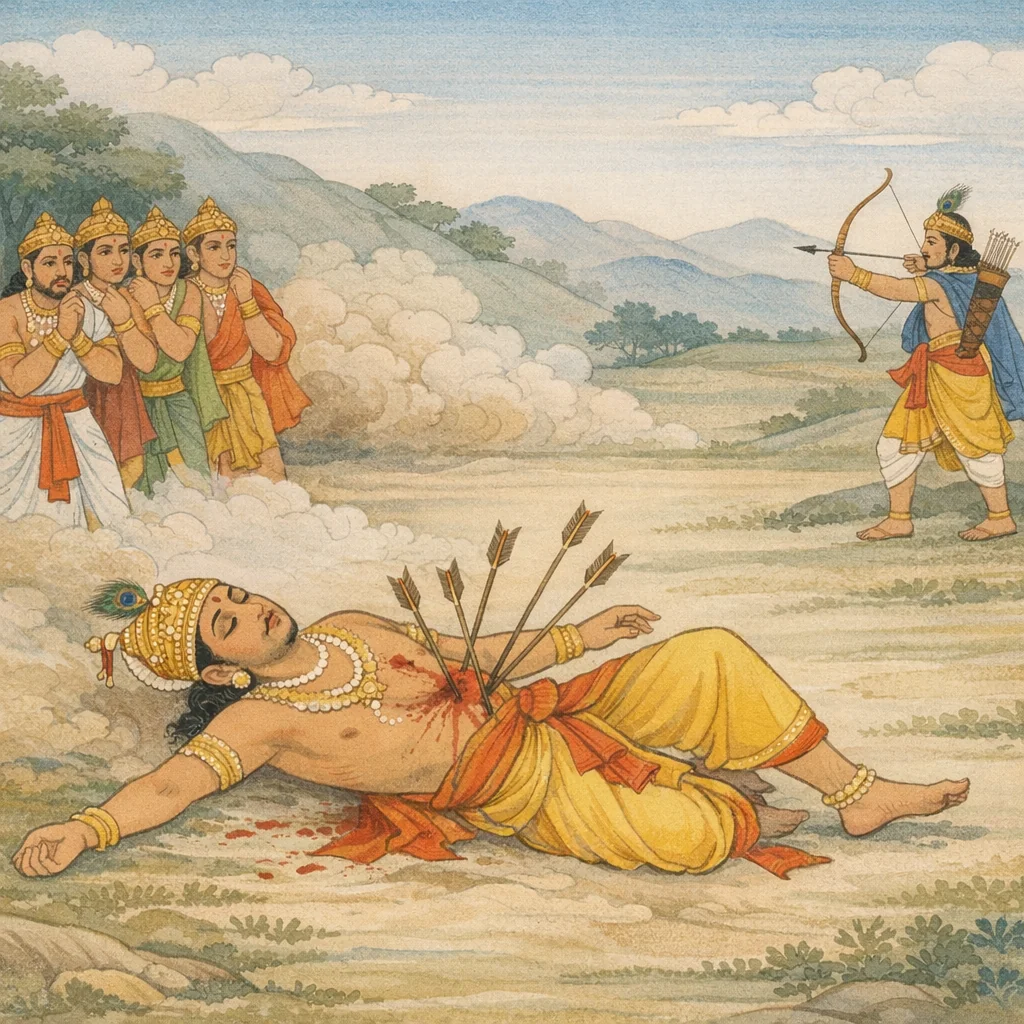
तस्योन्नतांसं सुनसं शिर: कायात् सकुण्डलम् | भल्लेनापाहरद् द्रौणि: स्मयमान इवानघ,निष्पाप नरेश! उस समय अभश्व॒त्थामाने मुसकराते हुए-से भलल मारकर उसके द्वारा नीलके ऊँचे कंधों, सुन्दर नासिकाओं तथा कुण्डलोंसहित मस्तकको धड़से काट गिराया
Sañjaya said: O blameless king, at that moment Droṇa’s son (Aśvatthāman), as though smiling, struck with a bhalla-arrow and severed from the body the head—adorned with earrings—of that warrior who had lofty shoulders and a handsome nose. The narration underscores the grim efficiency of battlefield skill, where personal beauty and royal insignia offer no protection against the consequences of war.
Verse 26
सम्पूर्णचन्द्राभमुख: पद्मपत्रनिभेक्षण: । प्रांशुरुत्पलपत्राभो निहतो न्यपतद् भुवि,पूर्णचन्द्रमाके समान कान्तिमान् मुख और कमलदलके समान सुन्दर नेत्रवाले राजा नील बड़े ऊँचे कदके थे। उनकी अंगकान्ति नीलकमल-दलके समान श्याम थी। वे अश्वत्थामाद्वारा मारे जाकर पृथ्वीपर गिर पड़े
Sañjaya said: King Nīla—his face radiant like the full moon, his eyes lovely like lotus-petals, tall in stature, and dark-hued like the petal of a blue lotus—was struck down and fell upon the earth. The verse underscores the tragic impartiality of war: even those marked by beauty and royal dignity are not spared when adharma-driven violence and martial fate prevail.
Verse 27
ततः प्रविव्यथे सेना पाण्डवी भूशमाकुला । आचार्यपुत्रेण हते नीले ज्वलिततेजसि,आचार्यपुत्रके द्वारा प्रजजलित तेजवाले राजा नीलके मारे जानेपर पाण्डव-सेना अत्यन्त व्याकुल और व्यथित हो उठी
Sañjaya said: Then the Pāṇḍava host, thrown into utter turmoil and distress, reeled in shock when King Nīla—blazing with fiery prowess—was slain by the son of the preceptor. The fall of a radiant champion unsettled the army’s morale and intensified the ethical weight of the day’s slaughter.
Verse 28
अचिन्तयंश्न ते सर्वे पाण्डवानां महारथा: । कथं नो वासविस्त्रायाच्छत्रुभ्य इति मारिष,आर्य! उस समय समस्त पाण्डव महारथी यह सोचने लगे कि इन्द्रकुमार अर्जुन शत्रुओंके हाथसे हमारी रक्षा कैसे कर सकते हैं?
Sañjaya said: Then all those great chariot-warriors on the Pāṇḍavas’ side fell into anxious reflection: “How can Vāsavi’s son—Arjuna, the son of Indra—protect us from the enemies?” The line conveys a moment of moral and strategic dependence in war, where the righteous party’s confidence rests upon the prowess and responsibility of a single champion.
Verse 29
दक्षिणेन तु सेनाया: कुरुते कदनं बली । संशप्तकावशेषस्यथ नारायणबलस्य च,वे बलवान् अर्जुन तो इस सेनाके दक्षिण भागमें बचे-खुचे संशप्तकों और नारायणी सेनाके सैनिकोंका संहार कर रहे हैं
Sañjaya said: The mighty Arjuna was wreaking slaughter on the southern wing of the army, cutting down the remaining Saṁśaptakas as well as the warriors of the Nārāyaṇī force.
Verse 31
इति श्रीमहाभारते द्रोणपर्वणि संशप्तकवधपर्वणि नीलवधे एकत्रिंशो5ध्याय: ।। ३३ |। इस प्रकार श्रीमह्ा भारत द्रोणपर्वके अन्तर्गत संशप्तकवधपर्वमें नीलवधविषयक इकतीसवाँ अध्याय पूरा हुआ
Sañjaya said: “Thus, in the Śrī Mahābhārata, within the Droṇa Parva, in the section concerning the slaying of the Saṁśaptakas, the chapter on the killing of Nīla—this thirty-first chapter is concluded.”
Frequently Asked Questions
The chapter juxtaposes relentless tactical pressure with norms of restraint: Arjuna’s choice not to strike certain fleeing/turned-away opponents is explicitly framed as adherence to yodha-vrata even as the larger battle becomes increasingly indiscriminate and confused.
Leadership is shown as both protective and strategic: Yudhiṣṭhira’s directive to reinforce Bhīma demonstrates duty of care within alliance warfare, while the repeated astra-countering emphasizes disciplined containment over uncontrolled escalation.
No explicit phalaśruti appears in this passage; its meta-function is achieved through Saṃjaya’s panoramic reportage, using battlefield imagery to underscore impermanence, the cost of policy decisions, and the fragility of order under extreme conditions.