Adhyaya 79
धृतराष्ट्र-संजय-संवादः — इरावान्-आवन्त्ययोः युद्धम्, घटोत्कच-भगदत्त-संघर्षः, मद्रेश्वर-विक्षेपः (Dhṛtarāṣṭra–Sañjaya Dialogue: Irāvān vs the Avanti princes; Ghaṭotkaca vs Bhagadatta; Śalya checked by the Mādrī twins)
Upa-parva: Bhīṣma-vadha (War Narration under Bhīṣma’s Command) — Irāvān, Ghaṭotkaca, and allied engagements
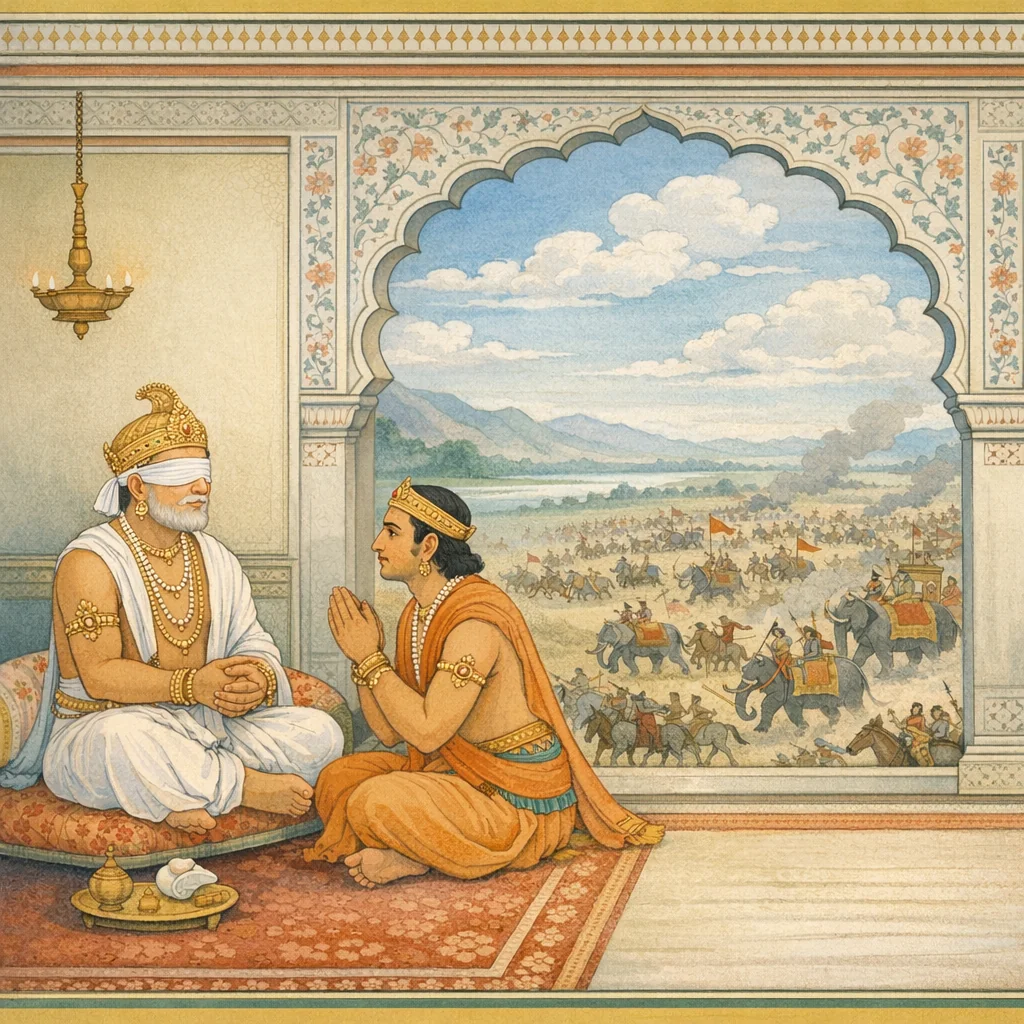
Dhṛtarāṣṭra challenges Sañjaya’s reports, claiming they consistently depict the Pāṇḍavas as confident and unbroken while portraying the Kauravas as dispirited. Sañjaya responds with a calibrated defense: the Kauravas act with effort and courage, yet their effectiveness diminishes when facing the Pāṇḍava heroes—illustrated through a simile of sweet river-water becoming saline by association with the ocean—implying situational overpowering rather than intrinsic deficiency. Sañjaya further redirects blame to Dhṛtarāṣṭra’s earlier fault, presenting the war’s devastation as an outgrowth of governance failure and personal complicity, and notes rulers’ pursuit of merit and heaven through battle. The report then turns to morning’s escalation: Irāvān engages the Avanti brothers Anuvinda and Vinda in a close contest, disables horses and cuts bow and standard, kills the charioteer, and routs elements of the Kaurava host. Next, Ghaṭotkaca (Haiḍimba) charges Bhagadatta; Bhagadatta’s elephant-driven assault causes widespread Pāṇḍava disarray, and Ghaṭotkaca’s weapons are neutralized, prompting his retreat; Bhagadatta then presses into the Pāṇḍava formation. Finally, Śalya confronts Nakula and Sahadeva; despite resisting their arrow-storm, he is struck decisively by Sahadeva, loses consciousness, and is withdrawn by his charioteer. The Mādrī twins sound conches and advance, marking a localized morale shift.
Chapter Arc: संजय के वचन से धृतराष्ट्र के सामने कौरव-सेना का विराट, रत्नध्वजों से भरा, समुद्र-गर्जना-सा दृश्य उभरता है—मानो युद्धभूमि स्वयं एक चलायमान महासागर बन गई हो। → धृतराष्ट्र अपने पक्ष की शक्ति पर मुग्ध होकर पूछता-सा प्रतीत होता है कि यह सेना कैसे इतनी अनुरक्त, प्रसन्न और अनुशासित है; संजय कौरव-व्यवस्था, सारथियों-योद्धाओं की चुस्ती, और चयन की कठोरता का संकेत देता है—यहाँ मित्रता, उपकार, बन्धुता या कुल-गौरव नहीं, केवल युद्ध-योग्यता निर्णायक है। → कौरव-पक्ष के महावीरों की सूची और उनकी ‘गुप्त’ रचना-व्यवस्था का उद्घोष होता है—कृप, दुःशासन, जयद्रथ, भगदत्त, विकर्ण, द्रोणि, शौबल, बाह्लिक आदि नामों के साथ सेना का ‘महोदधि’ जैसा पूर्ण विस्तार; उसी क्षण संजय का वाक्य चुभता है कि जो घट रहा है वह विधाता की पूर्व-रचना के अनुसार ही अवश्यंभावी है। → अध्याय कौरव-सेना के वैभव, अनुशासन और महात्मा-वीरों द्वारा संरक्षित विन्यास का चित्र पूरा करता है, पर साथ ही ‘दैव-नियत’ की छाया धृतराष्ट्र की आशा पर पड़ती है—शक्ति का गर्व भी नियति के आगे सीमित है। → छठे दिन के युद्ध का आरम्भ निकट है; यह महासेन्य-समुद्र जब टकराएगा, तो किसका पराक्रम किसे डुबोएगा—यह प्रश्न अगले प्रसंग पर छोड़ दिया जाता है।
Shlokas
Verse 1
इस प्रकार श्रीमह्याभारत भीष्मपर्वके अन्तर्गत भीष्मवधपर्वमें छठे दिनके युद्धका आरम्भविषयक पचद्तत्तरवाँ अध्याय पूरा हुआ ॥/ ७५ ॥ अपना छा | अप्-#-#र+ षट्सप्ततितमो<ध्याय: धृतराष्ट्रकी चिन्ता धृतराष्ट्र रवाच एवं बहुगुणं सैन्यमेवं बहुविध॑ पुरा । व्यूढमेवं यथाशास्त्रममोघं चैव संजय,धृतराष्ट्र बोले--संजय! इस प्रकार हमारी सेना अनेक गुणोंसे सम्पन्न है। अनेक अंगोंसे युक्त और अनेक प्रकारसे संगठित है तथा शास्त्रीय विधिसे उसकी व्यूहरचना की गयी है। अत: वह अमोघ (विजय पानेमें विफल न होनेवाली) है
Dhṛtarāṣṭra said: “Sañjaya, thus our army is endowed with many strengths—manifold in its components and arranged in many ways. It has been arrayed according to the prescriptions of the treatises; therefore it should not prove futile in securing victory.”
Verse 2
हृष्टमस्माकमत्यन्तमभिकामं च न: सदा । प्रह्चमव्यसनोपेतं पुरस्ताद् दृष्टविक्रमम्,हमारी यह सेना हमलोगोंपर सदा प्रसन्न और अनुरक्त रहनेवाली है। हमारे प्रति सर्वदा विनीतभाव रखती आयी है। यह किसी भी व्यसनमें नहीं फँसी है। पूर्वकालमें इसका पराक्रम देखा जा चुका है
Our army is exceedingly glad and ever devoted to us. Toward us it has always borne itself with humility and respect. It has not fallen into any vice. In former times its prowess has already been seen upon the field.
Verse 3
नातिवृद्धमबालं च न कृशं न च पीवरम् । लघुवृत्तायतप्रायं सारयोधमनामयम्
Sañjaya said: “He was neither over-aged nor a mere child; neither emaciated nor corpulent. His habits were light and disciplined, his frame generally tall and well-proportioned; he was a capable charioteer and a man free from illness.”
Verse 4
इसमें न कोई अत्यन्त बूढ़ा है, न बालक है, न अत्यन्त दुबला है और न अत्यन्त मोटा ही है। इसमें शीघ्र कार्य करनेवाले, प्राय: ऊँचे कदके लोग हैं। इस सेनाका प्रत्येक सैनिक सारखान् योद्धा और नीरोग है ।। आत्तसंनाहशस्त्रं च बहुशस्त्रपरिग्रहम् । असियुद्धे नियुद्धे च गदायुद्धे च कोविदम्,यहाँ सबने कवच एवं अस्त्र-शस्त्र धारण कर रखा है। अनेक प्रकारके बहुसंख्यक शस्त्रोंका संग्रह किया गया है। यहाँका एक-एक योद्धा खड्गयुद्ध, मल्लयुद्ध और गदायुद्धमें कुशल है
Sañjaya said: “In this host there is no one extremely aged, no child, no one excessively lean, and none overly corpulent. Most are tall men, swift in execution. Every soldier in this army is a seasoned, battle-hardened warrior and in sound health. All are fully equipped with armor and weapons, and they possess a great store of many kinds of arms. Each fighter is skilled in sword-combat, in close wrestling, and in fighting with the mace.”
Verse 5
प्रासर्ड्ितोमरेष्वाजौ परिघेष्वायसेषु च । भिन्दिपालेषु शक्तीषु मुसलेषु च सर्वश:,ये सैनिक प्रास, ऋष्टि, तोमर, लोहमय परिघ, भिन्दिपाल, शक्ति, मुसल, कम्पन, चाप तथा कणप आदि दूसरोंपर चलानेयोग्य विचित्र अस्त्रोंका युद्धमें प्रयोग करनेकी कलामें कुशल तथा मुष्टियुद्धमें भी सब प्रकारसे समर्थ हैं
Sañjaya said: “In that battle, they were thoroughly skilled in the use of missiles and heavy weapons—spears, lances, javelins, iron clubs, bhindipālas, śaktis, and maces—deploying them in every way.”
Verse 6
कम्पनेषु च चापेषु कणपेषु च सर्वश: । क्षेपणीयेषु चित्रेषु मुष्टियुद्धेषु च क्षमम्,ये सैनिक प्रास, ऋष्टि, तोमर, लोहमय परिघ, भिन्दिपाल, शक्ति, मुसल, कम्पन, चाप तथा कणप आदि दूसरोंपर चलानेयोग्य विचित्र अस्त्रोंका युद्धमें प्रयोग करनेकी कलामें कुशल तथा मुष्टियुद्धमें भी सब प्रकारसे समर्थ हैं
Sañjaya said: “They are fully proficient in the use of whirled weapons, bows, and kaṇapa-type missiles; skilled in deploying every kind of varied throwable weapon; and they are also thoroughly capable in hand-to-hand combat.”
Verse 7
अपरोक्षं च विद्यासु व्यायामे च कृतश्रमम् शस्त्रग्रहणविद्यासु सर्वासु परिनिष्ठितम्,हमारी इस सेनाको थधरनुर्वेदका प्रत्यक्ष अनुभव प्राप्त है। इसके सैनिकोंने व्यायाम (अस्त्र-शस्त्रोंके अभ्यास)-में भी अधिक परिश्रम किया है। ये शस्त्रग्रहणसे सम्बन्ध रखनेवाली सभी विद्याओंमें पारंगत हैं
Sañjaya said: “Our army has direct, first-hand mastery of the sciences of warfare; it has also labored hard in disciplined training and exercise. In every branch of knowledge connected with the handling and use of weapons, these warriors are fully accomplished.”
Verse 8
आरोहे पर्यवस्कन्दे सरणे सान्तप्लुते | सम्यक् प्रहरणे याने व्यपयाने च कोविदम्
Sañjaya said: “He was skilled in mounting and leaping upon the chariot, in swift retreat and sudden advance, and in the proper handling of weapons—expert alike in driving forward and in withdrawing in battle.”
Verse 9
ये हाथी, घोड़े आदि सवारियोंपर चढ़ने, उतरने, आगे बढ़ने, बीचमें ही कूद पड़ने, अच्छी तरह प्रहार करने, चढ़ाई करने और पीछे हटनेमें भी प्रवीण हैं ।। नागाश्वरथयानेषु बहुश: सुपरीक्षितम् | परीक्ष्य च यथान्यायं वेतनेनोपपादितम्,हाथी, घोड़े, रथ आदिकी सवारियोंद्वारा रणयात्रा करनेमें इस सेनाकी अनेक प्रकार परीक्षा की जा चुकी है। परीक्षा करके प्रत्येक सैनिकको उसकी योग्यताके अनुकूल यथोचित वेतन दे दिया गया है
Sañjaya said: “Those warriors are skilled in every maneuver connected with mounts—mounting and dismounting elephants and horses, advancing, leaping into action at the critical moment, striking effectively, pressing an ascent, and withdrawing in good order. Their competence with elephants, horses, and chariots has been tested many times; and after due examination, each has been duly provided with pay in accordance with what is just.”
Verse 10
न गोष्ठ्या नोपकारेण न च बन्धुनिमित्तत: । न सौहृदबलैर्वापि नाकुलीनपरिग्रहै:,इनमेंसे किसीको मित्रोंकी गोष्ठीसे लाकर, सामान्य उपकार करके, भाई-बन्धु होनेके कारण, सौहार्दवश अथवा बलप्रयोग करके सेनामें सम्मिलित नहीं किया गया है। जो कुलीन नहीं हैं, ऐसे लोगोंका भी इस सेनामें संग्रह नहीं हुआ है
Sañjaya said: “None have been brought into this army through friendly gatherings, nor by ordinary favors, nor merely on the pretext of kinship. Nor have they been enlisted through bonds of affection or by coercive force; and no recruitment has been made of those who are not of noble lineage.”
Verse 11
समृद्धजनमार्य च तुष्टसम्बन्धिबान्धवम् | कृतोपकारभूयिष्ठं यशस्वि च मनस्वि च,हमारी सेनामें जो लोग हैं, वे सब समृद्धिशाली और श्रेष्ठ हैं। उनके सगे-सम्बन्धी, भाई- बन्धु भी संतुष्ट हैं। इन सबपर हमारी ओरसे विशेष उपकार किया गया है। ये सभी यशस्वी और मनस्वी हैं
Sañjaya said: “O noble one, the men in our army are prosperous and of good lineage. Their relatives and kinsmen are contented, for many favors have been bestowed upon them by our side. They are renowned and high-minded—men of resolve.”
Verse 12
स्वजनैस्तु नरैर्मुख्यैर्बहुशो दृष्टकर्मभि: । लोकपालोपमैस्तात पालितं लोकविश्रुतम्,तात! जिनके कार्य और व्यवहारको कई बार देखा गया है, ऐसे मुख्य-मुख्य स्वजनोंद्वारा, जो लोकपालके समान पराक्रमी हैं, इस सेनाका पालन-पोषण होता है। यह सम्पूर्ण जगतमें विख्यात है
My son, this host is maintained and guarded by many of our foremost kinsmen—men whose deeds and conduct have been witnessed time and again—mighty as the Lokapālas, the world-guardians. This is renowned throughout the whole world.
Verse 13
बहुभि: क्षत्रियैर्गुप्त पृथिव्यां लोकसम्मतै: । अस्मानभिगतै: कामात् सबलै: सपदानुगै:,जो अपने वीरताके लिये भूमण्डलमें विख्यात तथा लोकमें सम्मानित हैं, ऐसे बहुत-से क्षत्रिय अपनी इच्छासे ही सेना और सेवकोंके साथ हमारे पास आये हैं, उनके द्वारा यह कौरव-सेना सुरक्षित है
This Kaurava army is protected by many kṣatriyas, famed across the earth for their valor and honored among men. Of their own desire they have come to us with their forces and attendants; by them the Kaurava host is made secure.
Verse 14
महोदधिमिवापूर्णमापगाभि: समन्ततः । अपक्षै: पक्षिसंकाशै रथैनगिश्व संवृतम्
Sañjaya said: “It looked like a vast ocean filled to the brim, fed on every side by great rivers—encircled by chariots and elephants, and by wingless creatures that resembled birds.”
Verse 15
हमारी यह सेना महासागरके समान सब ओरसे परिपूर्ण है। इसमें बिना पंखके ही पक्षियोंके समान तीव्र गतिसे चलनेवाले रथ और हाथी इस प्रकार आकर मिलते हैं, जैसे समुद्रमें सब ओरसे नदियाँ आकर गिरती हैं ।। नानायोधजल भीम॑ वाहनोर्मितरज्धिणम् । क्षेपण्यसिगदाशक्तिशरप्राससमाकुलम्,नाना प्रकारके योद्धा ही इस सैन्यसागरके जल हैं, वाहन ही उसमें उठती हुई छोटी- बड़ी तरंगें हैं। इसमें क्षेपणी, खड्ग, गदा, शक्ति, बाण और प्रास आदि अस्त्र-शस्त्र जल- जन्तुओंके समान भरे पड़े हैं
Sañjaya said: “Our army is like a vast ocean, filled on every side. Chariots and elephants—swift as birds though wingless—stream into it from all directions, just as rivers pour into the sea. In that ocean of troops, the many kinds of warriors are its waters, the vehicles are its rising waves, and it teems with weapons—missiles, swords, maces, spears, arrows, and lances—like sea-creatures crowding the deep.”
Verse 16
ध्वजभूषणसम्बाधं रत्नपट्टसुसंचितम् । परिधावद्धिरश्रैश्न वायुवेगविकम्पितम्
Sañjaya said: “The chariot-banner, crowded with ornaments and richly inlaid with jeweled bands, was shaken by the force of the wind as swift horses ran around it.”
Verse 17
द्रोणभीष्माभिसंगुप्तं गुप्त च कृतवर्मणा,द्रोणाचार्य, भीष्म, कृतवर्मा, कृपाचार्य, दुःशासन, जयद्रथ, भगदत्त, विकर्ण, अश्वत्थामा, शकुनि तथा बाह्लिक आदि प्रमुख वीरों तथा अन्य शक्तिशाली महामनस्वी लोगोंद्वारा मेरी सेना सदा सुरक्षित रहती है। ऐसी सेना भी यदि संग्राममें मारी गयी तो इसमें हमलोगोंका पुरातन प्रारब्ध ही कारण है
Sañjaya said: “My army is always well protected—screened by Droṇa and Bhīṣma, guarded also by Kṛtavarman, and defended by leading heroes such as Kṛpa, Duḥśāsana, Jayadratha, Bhagadatta, Vikarṇa, Aśvatthāman, Śakuni, Bāhlika, and other powerful, high-minded men. Even so, if such an army is slain in battle, the cause is none other than our ancient, already-begun destiny (prārabdha).”
Verse 18
कृपदु:शासनाभ्यां च जयद्रथमुखैस्तथा । भगदत्तविकर्णाभ्यां द्रौणिसौबलबाह्विकैः,द्रोणाचार्य, भीष्म, कृतवर्मा, कृपाचार्य, दुःशासन, जयद्रथ, भगदत्त, विकर्ण, अश्वत्थामा, शकुनि तथा बाह्लिक आदि प्रमुख वीरों तथा अन्य शक्तिशाली महामनस्वी लोगोंद्वारा मेरी सेना सदा सुरक्षित रहती है। ऐसी सेना भी यदि संग्राममें मारी गयी तो इसमें हमलोगोंका पुरातन प्रारब्ध ही कारण है
Sañjaya said: “My army is continually kept protected by mighty champions—Kṛpa and Duryodhana, and also by Jayadratha and the others; by Bhagadatta and Vikarṇa; and by Aśvatthāmā, Śakuni, and Bāhlika. Yet if even such a guarded host is being cut down in battle, the cause must be our ancient, already-ripened destiny.”
Verse 19
गुप्तं प्रवीरैलोकिश्व॒ सारवद्धिर्महात्मभि: । यदहन्यत संग्रामे देवमत्र पुरातनम्,द्रोणाचार्य, भीष्म, कृतवर्मा, कृपाचार्य, दुःशासन, जयद्रथ, भगदत्त, विकर्ण, अश्वत्थामा, शकुनि तथा बाह्लिक आदि प्रमुख वीरों तथा अन्य शक्तिशाली महामनस्वी लोगोंद्वारा मेरी सेना सदा सुरक्षित रहती है। ऐसी सेना भी यदि संग्राममें मारी गयी तो इसमें हमलोगोंका पुरातन प्रारब्ध ही कारण है
Sañjaya said: “Though my army was always well-protected by mighty heroes—lords among men, seasoned in the essence of warfare, and high-souled—yet it was struck down in battle. In this, the cause is our ancient destiny (daiva), long ordained.”
Verse 20
नैतादृशं समुद्योगं दृष्टवन्तो हि मानुषा: । ऋषयो वा महाभागा: पुराणा भुवि संजय,संजय! इस भूतलपर इतनी बड़ी सेनाका जमाव मनुष्योंने कभी नहीं देखा होगा अथवा प्राचीन महाभाग ऋषियोंने भी नहीं देखा होगा
Sañjaya said: “Never before have men witnessed such a vast mobilization for war. Nor, O Sañjaya, have the ancient, greatly fortunate seers upon this earth ever beheld an assembly of forces like this.”
Verse 21
ईदृशो5पि बलौघस्तु संयुक्त: शस्त्रसम्पदा । वध्यते यत्र संग्रामे किमन्यद् भागधेयत:,इतना बड़ा सैन्यसमुदाय शस्त्रसम्पत्तिसे संयुक्त होनेपर भी यदि संग्राममें विनष्ट हो रहा है, तो इसमें भाग्यके सिवा और क्या कारण हो सकता है?
Sañjaya said: Even such a vast mass of troops, though fully furnished with weapons and martial resources, is being cut down in battle. What other cause can there be for this, except destiny—one’s allotted fate?
Verse 22
विपरीतमिदं सर्व प्रतिभाति हि संजय । यत्रेदृशं॑ बल॑ घोरं पाण्डवान्नातरद् रणे,संजय! यह सब कुछ मुझे विपरीत जान पड़ता है कि ऐसा भयंकर सैन्यसमूह भी वहाँ युद्धमें पाण्डवोंसे पार नहीं पा सका
Sañjaya said: “All this appears utterly contrary to expectation to me, O Sañjaya—how could such a dreadful mass of strength, there on the battlefield, fail to overcome the Pāṇḍavas?”
Verse 23
पाण्डवार्थाय नियतं देवास्तत्र समागता: । युध्यन्ते मामकं सैन्यं यथावध्यत संजय,संजय! निश्चय ही पाण्डवोंके लिये देवता आकर मेरी सेनाके साथ युद्ध करते हैं, तभी तो वह प्रतिदिन मारी जा रही है
Sañjaya said: “For the sake of the Pāṇḍavas, the gods have certainly gathered there. They fight against my army—this is why it is being cut down day after day, O Sañjaya!”
Verse 24
उक्तो हि विदुरेणाहं हितं पथ्यं च नित्यश: । न च जग्राह तन्मन्द: पुत्रो दुर्योधनो मम,विदुरने नित्य ही हित और लाभकी बातें बतायीं; परंतु मेरे मूर्ख पुत्र दुर्योधनने नहीं माना। तात! मैं समझता हूँ, महात्मा विदुर सर्वज्ञ हैं। इसीलिये पहले ही उनकी बुद्धिमें ये सब बातें आ गयी थीं। आज जो कुछ प्राप्त हुआ है, यह पहले ही उनकी दृष्टिमें आ गया था
Sañjaya said: “Vidura has repeatedly spoken to me what is beneficial and wholesome. Yet my dull-witted son Duryodhana did not accept that counsel. I understand that the great-souled Vidura is all-knowing; therefore these outcomes had already arisen in his mind and were already within his vision.”
Verse 25
तस्य मन्ये मति: पूर्व सर्वज्ञस्य महात्मन: । आसीद् यथागतं तात येन दृष्टमिदं पुरा,विदुरने नित्य ही हित और लाभकी बातें बतायीं; परंतु मेरे मूर्ख पुत्र दुर्योधनने नहीं माना। तात! मैं समझता हूँ, महात्मा विदुर सर्वज्ञ हैं। इसीलिये पहले ही उनकी बुद्धिमें ये सब बातें आ गयी थीं। आज जो कुछ प्राप्त हुआ है, यह पहले ही उनकी दृष्टिमें आ गया था
Sañjaya said: “I believe that the understanding of that great-souled Vidura—who is as though all-knowing—had already grasped this beforehand, dear sir. For what has come to pass today had been seen by him long ago.”
Verse 26
अथवा भाव्यमेवं हि संजयैतेन सर्वथा । पुरा धात्रा यथा सूष्टं तत् तथा नैतदन््यथा,संजय! अथवा यह सब प्रकारसे ऐसा ही होनेवाला था। विधाताने जो पहलेसे रच रखा है, वह उसी रूपमें होता है, उसे कोई बदल नहीं सकता
Or else, O Sañjaya, this was destined to happen in precisely this way. Whatever the Ordainer had fashioned long ago comes to pass in that very form; it cannot be otherwise.
Verse 76
इति श्रीमहाभारते भीष्मपर्वणि भीष्मवधपर्वणि धृतराष्ट्रचिन्तायां षट्सप्ततितमो<्ध्याय:
Thus, in the Śrī Mahābhārata, within the Bhīṣma Parva—specifically in the section concerning the fall of Bhīṣma—here ends the seventy-sixth chapter, centered on Dhṛtarāṣṭra’s anxious reflections. This colophon marks a pause in the narration, showing that the war’s turning point (Bhīṣma’s fall) is framed not only as a battlefield event, but also as a moral and emotional crisis for the blind king, whose attachment and partiality now ripen into dread and foreboding.
Verse 166
अपारमिव गर्जन्तं सागरप्रतिमं महत् । ध्वज और आभूषणोंसे भरी हुई यह सेना रत्नजटित पताकाओंसे व्याप्त है। दौड़ते हुए घोड़ोंसे जो इस सेनाका चंचल होना है, वही वायुवेगसे इस समुद्रका कम्पन है। सागरसदूश यह विशाल सेना देखनेमें अपार है और निरन्तर गर्जन करती रहती है
Sanjaya said: “It roared as though boundless—vast and mighty, like the ocean itself. The army, crowded with banners and ornaments and spread with jewel-studded standards, seemed like a sea in motion; the restless surge caused by the charging horses was like the ocean’s trembling under the force of the wind. To behold, it appeared immeasurable, and its thunderous din did not cease.”
Frequently Asked Questions
The tension is between narrative partiality and moral accountability: Dhṛtarāṣṭra interprets repeated Kaurava setbacks as biased reporting, while Sañjaya reframes the issue as consequence—valor may be present, but leadership failures and accumulated causes make defeat predictable.
Sañjaya’s counsel emphasizes that outcomes in statecraft and conflict cannot be separated from antecedent choices; lament is unproductive when the crisis is self-generated, and rulers must recognize how policy errors propagate into collective catastrophe.
No explicit phalaśruti is presented here; the chapter’s meta-level function is archival and diagnostic—linking battlefield events to responsibility and causation within the epic’s broader ethical framework.