Adhyaya 72
भीष्मपर्व — अध्याय ७२: सैन्यगुणवर्णनम्, व्यूहरक्षा, दैव-पुरुषकारचिन्ता
Upa-parva: Sainyavinyāsa (Vyūha–Bala–Saṃkhyā) Context Unit
Dhṛtarāṣṭra addresses Saṃjaya, assessing the Kaurava force as properly arrayed according to śāstra and seemingly “unfailing.” He enumerates criteria of an ideal fighting body—balanced age and physique, health, disciplined conduct, and comprehensive proficiency across weapons and combat modes (sword, mace, missiles, wrestling), as well as skilled maneuvering in mounts and vehicles (elephants, horses, chariots). The account stresses practical training, verified competence, and structured compensation rather than recruitment through social favoritism or kin-pressure. Dhṛtarāṣṭra then depicts the army as oceanic in scale, crowded with banners and ornaments, protected by renowned commanders (Bhīṣma, Droṇa, Kṛtavarman, and others), and unprecedented in human memory. A sharp interpretive turn follows: despite such preparation, the Kauravas fail to overpower the Pāṇḍavas, prompting Dhṛtarāṣṭra to infer either divine alignment with the Pāṇḍavas or the operation of ancient destiny. He recalls Vidura’s beneficial advice, notes Duryodhana’s disregard, and concludes with a deterministic formulation—events unfold as created by the Ordainer, not otherwise.
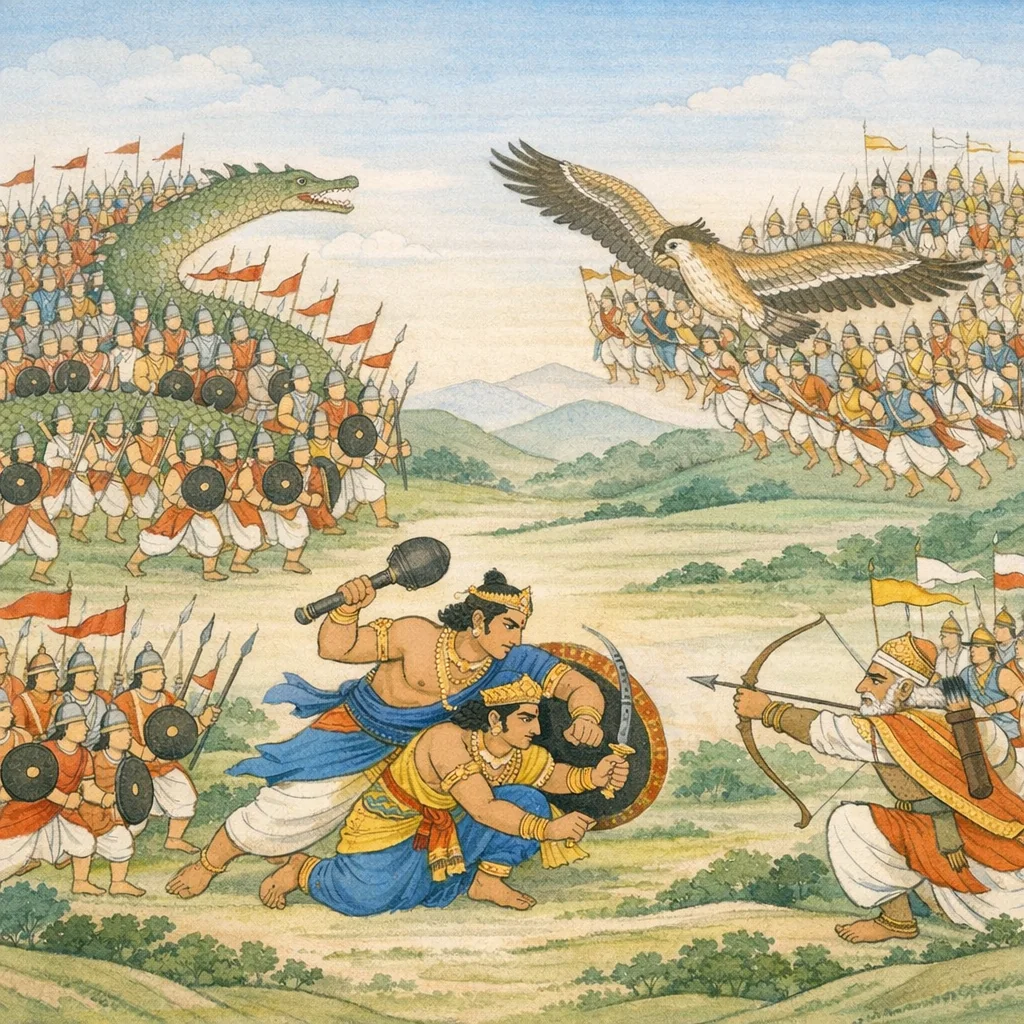
Chapter Arc: पाँचवें दिन का प्रभात—कौरवों की सेना मकरव्यूह में सिमटकर भीष्म के संरक्षण में खड़ी होती है, और पाण्डव श्येनव्यूह रचकर उसी क्षण उत्तर देते हैं। → दोनों पक्ष ‘परस्परजिगीषवः’—जीत की तीव्र इच्छा और क्रोध से भरे—अपने-अपने विभागों में रथी, पत्ति, गज, अश्व को क्रमबद्ध कर एक-दूसरे का अनुसरण करते हुए टकराते हैं; व्यूह-रक्षा ही युद्ध का मुख्य लक्ष्य बन जाती है। → भीमसेन सात्यकि की रक्षा करते हुए द्रोण पर प्रहार करता है—व्यूह के भीतर ‘रक्षक’ और ‘भेदक’ की भूमिकाएँ एक साथ उभरती हैं, और युद्ध देव-दानव संग्राम-सा घोर हो उठता है। → दुर्योधन यश-लालसा में अपनी विशाल सेना सहित भीष्म के निकट पहुँचकर उनकी रक्षा में लग जाता है; दोनों सेनाएँ अपने-अपने व्यूहों को थामे रखती हैं और दिन का संग्राम पूर्ण वेग से चल पड़ता है। → मकरव्यूह की अभेद्यता बनाम श्येनव्यूह की चपलता—अगला क्षण किसका व्यूह टूटेगा और किसका रक्षक डगमगाएगा?
Shlokas
Verse 1
शच्प््ज्िल्ञस> ह्य #जज्स्ज्न्प्त्ल एकोनसप्ततितमो<ध्याय: कौरवोंद्वारा मकरव्यूह तथा पाण्डवोंद्वारा श्येनव्यूहका निर्माण एवं पाँचवें दिनके युद्धका आरम्भ संजय उवाच व्युषितायां तु शर्वर्यामुदिते च दिवाकरे । उभे सेने महाराज युद्धायैव समीयतु:,संजय कहते हैं--महाराज! वह रात बीतनेपर जब सूर्योदय हुआ, तब दोनों ओरकी सेनाएँ आमने-सामने आकर युद्धके लिये डट गयीं
Sañjaya said: “O King, when the night had passed and the sun had risen, the two armies on both sides advanced and stood facing one another, firmly resolved upon battle.”
Verse 2
अभ्यधावन्त संक्रुद्धा: परस्परजिगीषव: । ते सर्वे सहिता युद्धे समालोक्य परस्परम्,सबने एक-दूसरेको जीतनेकी इच्छासे अत्यन्त क्रोधमें भरकर विपक्षी सेनापर आक्रमण किया। राजन्! आपकी कुमन्त्रणाके फलस्वरूप आपके पुत्र और पाण्डव एक- दूसरेको देखकर कुपित हो सब-के-सब अपने सहायकोंके साथ आकर सेनाकी व्यूह-रचना करके हर्ष और उत्साहमें भरकर परस्पर प्रहार करनेको उद्यत हो गये
Sañjaya said: Inflamed with anger and eager to conquer one another, they charged forward. All of them, gathered together for battle, looked upon each other face to face—each side’s resolve hardening into readiness for mutual assault.
Verse 3
पाण्डवा धारराष्ट्राश्न॒ राजन दुर्मन्त्रिते तव । व्यूही च व्यूह[ु संरब्धा: सम्प्रहृष्टा: प्रहारिण:,सबने एक-दूसरेको जीतनेकी इच्छासे अत्यन्त क्रोधमें भरकर विपक्षी सेनापर आक्रमण किया। राजन्! आपकी कुमन्त्रणाके फलस्वरूप आपके पुत्र और पाण्डव एक- दूसरेको देखकर कुपित हो सब-के-सब अपने सहायकोंके साथ आकर सेनाकी व्यूह-रचना करके हर्ष और उत्साहमें भरकर परस्पर प्रहार करनेको उद्यत हो गये
Sañjaya said: O King, because of your ill counsel, both the Pāṇḍavas and the sons of Dhṛtarāṣṭra, having drawn up their battle-formations and counter-formations, became fiercely intent, exhilarated and eager to strike—each side rushing to attack the opposing army, driven by anger and the desire to overcome the other.
Verse 4
अरक्षन्मकरव्यूहं भीष्मो राजन् समन्ततः । तथैव पाण्डवा राजन्नरक्षन् व्यूहमात्मन:,राजन! भीष्म सेनाका मकरव्यूह बनाकर सब ओरसे उसकी रक्षा करने लगे। इसी प्रकार पाण्डवोंने भी अपने व्यूहकी रक्षा की
Sañjaya said: O King, Bhishma arranged the ‘makara’ battle-formation and guarded it on every side. In the same way, O King, the Pandavas also protected their own formation.
Verse 5
(अजातशत्रुः शत्रूणां मनांसि समकम्पयत् । श्येनवद् व्यूहय तं व्यूहं धौम्यस्य वचनात् स्वयम् ।। स हि तस्य सुविज्ञात अग्निचित्येषु भारत । मकरस्तु महाव्यूहस्तव पुत्रस्य धीमत: ।। स्वयं सर्वेण सैन्येन द्रोणेनानुमतस्तदा । यथाव्यूहं शान्तनव: सो<न्ववर्तत तत् पुनः ।।) स निर्ययौ महाराज पिता देवब्रतस्तव । महता रथवंशेन संवृतो रथिनां वर:,स्वयं अजातशत्रु युधिष्ठिरने धौम्य मुनिकी आज्ञासे श्येनव्यूहकी रचना करके शत्रुओंके हृदयमें कँपकँपी पैदा कर दी। भारत! अग्निचयनसम्बन्धी कर्मोमें रहते हुए उन्हें श्येनव्यूहका विशेष परिचय था। आपके बुद्धिमान् पुत्रकी सेनाका मकर नामक महाव्यूह निर्मित हुआ था। द्रोणाचार्यकी अनुमति लेकर उसने स्वयं सारी सेनाके द्वारा उस व्यूहकी रचना की थी। फिर शान्तनुनन्दन भीष्मने व्यूहकी विधिके अनुसार निर्मित हुए उस महाव्यूहका स्वयं भी अनुसरण किया था। महाराज! रथियोंमें श्रेष्ठ आपके ताऊ भीष्म विशाल रथसेनासे घिरे हुए युद्धके लिये निकले
Sañjaya said: O King, your father Devavrata (Bhīṣma)—the foremost among chariot-warriors—then rode forth for battle, surrounded by a vast array of chariots. The scene underscores how the war’s order and momentum are carried not merely by numbers, but by the presence of a revered elder whose personal discipline and adherence to martial rule shape the conduct of the host.
Verse 6
इतरेतरमन्वीयुर्यथाभागमवस्थिता: । रथिनः पत्तयश्चैव दन्तिन: सादिनस्तथा,फिर यथाभाग खड़े हुए रथी, पैदल, हाथीसवार और घुड़सवार सब एक-दूसरेका अनुसरण करते हुए चल दिये
Sañjaya said: Arrayed in their respective divisions, the chariot-warriors, the foot-soldiers, the elephant-riders, and the horsemen advanced—each following the other in ordered succession. The movement reflects disciplined coordination in war, where duty is carried out through structure and obedience rather than impulsive violence.
Verse 7
तान् दृष्टवाभ्युद्यतान् संख्ये पाण्डवा हि यशस्विन: । श्येनेन व्यूहराजेन तेनाजस्येन संयुगे,शत्रुओंको युद्धके लिये उद्यत हुए देख यशस्वी पाण्डव युद्धमें अजेय व्यूहराज श्येनके रूपमें संगठित हो शोभा पाने लगे। उस व्यूहके मुखभागमें महाबली भीमसेन शोभा पा रहे थे। नेत्रोंके स्थानमें दुर्धर्ष वीर शिखण्डी तथा द्रुपदकुमार धृष्टद्युम्न खड़े थे
Sañjaya said: Seeing the foes drawn up and ready for battle, the illustrious Pāṇḍavas, amid the war, assumed the invincible ‘Śyena’ (hawk) formation—the king of battle-arrays—so that they appeared resplendent, steadfast, and disciplined.
Verse 8
अशोभत मुखे तस्य भीमसेनो महाबल: । नेत्रे शिखण्डी दुर्धर्षो धृष्टद्युम्नश्व॒ पार्षत:,शत्रुओंको युद्धके लिये उद्यत हुए देख यशस्वी पाण्डव युद्धमें अजेय व्यूहराज श्येनके रूपमें संगठित हो शोभा पाने लगे। उस व्यूहके मुखभागमें महाबली भीमसेन शोभा पा रहे थे। नेत्रोंके स्थानमें दुर्धर्ष वीर शिखण्डी तथा द्रुपदकुमार धृष्टद्युम्न खड़े थे
Sañjaya said: In that formation, mighty Bhīmasena shone at its very front. In the place of its ‘eyes’ stood the unassailable Śikhaṇḍin and Dhṛṣṭadyumna, the son of Pṛṣata.
Verse 9
शीर्षे तस्याभवद् वीर: सात्यकि: सत्यविक्रम: । विधुन्वन् गाण्डिवं पार्थों ग्रीवायामभवत् तदा,शिरोभागमें सत्यपराक्रमी वीर सात्यकि और ग्रीवाभागमें गाण्डीवधनुषकी टंकार करते हुए कुन्तीकुमार अर्जुन खड़े हुए
Sañjaya said: At the head of that formation stood the hero Sātyaki, whose valor never fails. And at its neck stood Pārtha (Arjuna), shaking the Gāṇḍīva bow until it resounded, proclaiming readiness and resolve.
Verse 10
अक्षौहिण्या सम॑ तत्र वामपक्षो5भवत् तदा | महात्मा द्रुपद: श्रीमान् सह पुत्रेण संयुगे,पुत्रसहित श्रीमान् महात्मा ट्रपद एक अक्षौहिणी सेनाके साथ युद्धमें बायें पंखके स्थानमें खड़े थे
Sañjaya said: Then the left wing was formed with a full akṣauhiṇī. The illustrious, great-souled King Drupada, together with his son, stood there in battle as part of that array.
Verse 11
दक्षिणश्वाभवत् पक्ष: कैकेयो5क्षौहिणीपति: । पृष्ठतो द्रौपदेयाश्व सौभद्रश्नापि वीर्यवान्,एक अक्षौहिणी सेनाके अधिपति केकय दाहिने पंखमें स्थित हुए। द्रौपदीके पाँचों पुत्र और पराक्रमी सुभद्राकुमार अभिमन्यु--ये पृष्ठभागमें खड़े हुए
Sañjaya said: On the right wing stood the Kekaya commander, lord of an akṣauhiṇī. In the rear were stationed the five sons of Draupadī, and also the valiant son of Subhadrā (Abhimanyu), as steadfast support.
Verse 12
पृष्ठे समभवच्छीमान् स्वयं राजा युधिष्ठिर: । भ्रातृभ्यां सहितो वीरो यमाभ्यां चारुविक्रम:,उत्तम पराक्रमसे सम्पन्न स्वयं श्रीमान् वीर राजा युधिष्ठिर भी अपने दो भाई नकुल और सहदेवके साथ पृष्ठभागमें ही सुशोभित हुए
Sañjaya said: On the rear of the formation, the illustrious king Yudhiṣṭhira himself took his station—the heroic one of pleasing prowess—accompanied by the two Yama-twins, Nakula and Sahadeva.
Verse 13
प्रविश्य तु रणे भीमो मकरं मुखतस्तदा । भीष्ममासाद्य संग्रामे छादयामास सायकै:,तदनन्तर भीमसेनने रणक्षेत्रमें प्रवेश करके मकर-व्यूहके मुखभागमें खड़े हुए भीष्मको अपने सायकोंसे आच्छादित कर दिया
Sañjaya said: Then Bhīma entered the battle and, reaching Bhīṣma who stood at the very front of the Makara formation, covered him in the fight with a dense shower of arrows.
Verse 14
ततो भीष्मो महास्त्राणि पातयामास भारत । मोहयन् पाण्दुपुत्राणां व्यूढं सैन्यं महाहवे,भारत! तब उस महासमरमें पाण्डवोंकी उस व्यूहबद्ध सेनाको मोहित करते हुए भीष्म उसपर बड़े-बड़े अस्त्रोंका प्रयोग करने लगे
Sañjaya said: Then Bhīṣma, O descendant of Bharata, began to rain down mighty weapons; in that great battle he bewildered the sons of Pāṇḍu and struck their army even as it stood arrayed in formation.
Verse 15
सम्मुहृति तदा सैन्ये त्वरमाणो धनंजय: । भीष्मं शरसहस्त्रेण विव्याध रणमूर्थनि,उस समय अपनी सेनाको मोहित होती देख अर्जुनने बड़ी उतावलीके साथ युद्धके मुहानेपर एक हजार बाणोंकी वर्षा करके भीष्मको घायल कर दिया
Sañjaya said: Then, seeing his own army thrown into confusion, Dhanañjaya (Arjuna), acting with urgent resolve, struck Bhīṣma at the very forefront of the battle, piercing him with a thousand arrows.
Verse 16
प्रतिसंवार्य चास्त्राणि भीष्ममुक्तानि संयुगे | स्वेनानीकेन हृष्टेन युद्धाय समुपस्थित:,संग्राममें भीष्मके छोड़े हुए सम्पूर्ण अस्त्रोंका निवारण करके हर्षमें भरी हुई अपनी सेनाके साथ वे युद्धके लिये उपस्थित हुए
Sañjaya said: Having checked and neutralized the weapons released by Bhīṣma in the thick of battle, he stood ready for combat, accompanied by his own army, now filled with renewed confidence and exhilaration.
Verse 17
ततो दुर्योधनो राजा भारद्वाजमभाषत । पूर्व दृष्टवा वर्धं घोरं बलस्य बलिनां वर:,तब बलवानोंमें श्रेष्ठ महारथी राजा दुर्योधनने पहले जो अपनी सेनाका घोर संहार हुआ था, उसको दृष्टिमें रखते हुए और युद्धमें भाइयोंके वधका स्मरण करते हुए भरद्वाजनन्दन द्रोणाचार्यसे कहा--“निष्पाप आचार्य! आप सदा ही मेरा हित चाहनेवाले हैं
Then King Duryodhana addressed Bhāradvāja’s son, Droṇa. Having already witnessed the dreadful slaughter of his forces, that foremost among the mighty spoke—his words shaped by the grim reality of war and the urgent need to secure advantage through counsel and command.
Verse 18
भ्रातृणां च वध युद्धे स्मरमाणो महारथ: । आचार्य सततं हि त्वं हितकामो ममानघ,तब बलवानोंमें श्रेष्ठ महारथी राजा दुर्योधनने पहले जो अपनी सेनाका घोर संहार हुआ था, उसको दृष्टिमें रखते हुए और युद्धमें भाइयोंके वधका स्मरण करते हुए भरद्वाजनन्दन द्रोणाचार्यसे कहा--“निष्पाप आचार्य! आप सदा ही मेरा हित चाहनेवाले हैं
Sañjaya said: The great chariot-warrior Duryodhana, mindful of the slaughter of his kinsmen in battle and recalling the death of his brothers, addressed Droṇācārya, the son of Bharadvāja: “O blameless teacher, you are ever one who seeks my welfare.”
Verse 19
वयं हि त्वां समाश्रित्य भीष्म॑ं चैव पितामहम् । देवानपि रणे जेतु प्रार्थयामो न संशय:,“हमलोग आप तथा पितामह भीष्मकी शरण लेकर देवताओंको भी समरभूमिमें जीतनेकी अभिलाषा रखते हैं, इसमें संशय नहीं है। फिर जो बल और पराक्रममें हीन हैं, उन पाण्डवोंको जीतना कौन बड़ी बात है। आपका कल्याण हो। आप ऐसा प्रयत्न करें जिससे पाण्डव मारे जायँ
Sañjaya said: “Relying on you, and on Bhīṣma the grandsire, we confidently aspire to conquer even the gods in battle—of this there is no doubt. How then could it be any great feat to defeat the Pāṇḍavas, who are inferior in strength and prowess? May you be well; strive in such a way that the Pāṇḍavas are slain.”
Verse 20
किमु पाण्डुसुतान् युद्धे हीनवीर्यपराक्रमान् । स तथा कुरु भद्रें ते यथा वध्यन्ति पाण्डवा:,“हमलोग आप तथा पितामह भीष्मकी शरण लेकर देवताओंको भी समरभूमिमें जीतनेकी अभिलाषा रखते हैं, इसमें संशय नहीं है। फिर जो बल और पराक्रममें हीन हैं, उन पाण्डवोंको जीतना कौन बड़ी बात है। आपका कल्याण हो। आप ऐसा प्रयत्न करें जिससे पाण्डव मारे जायँ
Sañjaya said: “How much more so is victory assured in battle against the sons of Pāṇḍu, who are inferior in strength and valor? Therefore, for your welfare, act in such a way that the Pāṇḍavas may be slain.”
Verse 21
एवमुक्तस्ततो द्रोणस्तव पुत्रेण मारिष । (उवाच तत्र राजानं संक्रुद्ध इव नि:श्वसन् । आर्य! आपके पुत्र दुर्योधनके ऐसा कहनेपर द्रोणाचार्य कुछ कुपित-से हो उठे और लंबी साँस खींचते हुए राजा दुर्योधनसे बोले। द्रोण उवाच बालिशस्त्वं न जानीषे पाण्डवानां पराक्रमम् | न शक््या हि यथा जेतुं पाण्डवा हि महाबला: ।। यथाबलं यथावीर्य कर्म कुर्यामहं हि ते । द्रोणाचार्यने कहा--तुम नादान हो। पाण्डवोंका पराक्रम कैसा है, यह नहीं जानते। महाबली पाण्डवोंको युद्धमें जीतना असम्भव है, तथापि मैं अपने बल और पराक्रमके अनुसार तुम्हारा कार्य कर सकता हूँ। संजय उवाच इत्युक्त्वा ते सुतं राजन्नभ्यपद्यत वाहिनीम् ।) अभिनत् पाण्डवानीकं प्रेक्षमाणस्य सात्यके:,संजय कहते हैं--राजन्! आपके पुत्रसे ऐसा कहकर द्रोणाचार्य पाण्डवोंकी सेनाका सामना करनेके लिये गये। वे सात्यकिके देखते-देखते पाण्डवसेनाको विदीर्ण करने लगे
Sanjaya said: Thus addressed by your son, O venerable king, Drona—breathing hard as if in anger—spoke there to King Duryodhana. Drona said: “You are foolish; you do not understand the prowess of the Pandavas. The mighty Pandavas cannot truly be conquered in battle. Still, I will carry out your task according to my strength and valor.” Sanjaya said: Having spoken thus to your son, O king, Drona advanced against the army and, before Satyaki’s very eyes, began to break and split the Pandava battle-formation.
Verse 22
सात्यकिस्तु ततो द्रोणं वारयामास भारत | तयो: प्रववृते युद्ध घोररूपं भयावहम्,भारत! उस समय सात्यकिने आगे बढ़कर द्रोणाचार्यको रोका। फिर तो उन दोनोंमें अत्यन्त भयंकर युद्ध आरम्भ हो गया
Sañjaya said: Then Sātyaki stepped forward and checked Droṇa, O Bhārata. Between those two a battle began—terrible in form and fraught with fear.
Verse 23
शैनेयं तु रणे क्रुद्धों भारद्वाज: प्रतापवान् | अविध्यन्निशितैर्बाणिर्जत्रुदेशे हसन्निव,प्रतापी द्रोणाचार्यने युद्धमें कुपित होकर सात्यकिके गलेकी हँसलीमें हँसते हुए-से पैने बाणोंद्वारा प्रहार किया
Sañjaya said: In the thick of battle, the mighty Bhāradvāja (Droṇācārya), inflamed with wrath, struck Śaineya (Sātyaki) with sharp arrows at the region of the collarbone and neck-joint, as though laughing.
Verse 24
भीमसेनस्तत: क्रुद्धों भारद्वाजमविध्यत । संरक्षन् सात्यकिं राजन् द्रोणाच्छस्त्रभृतां वरात्,राजन्! तब भीमसेनने कुपित होकर शस्त्रधारियोंमें श्रेष्ठ द्रोणाचार्यसे सात्यकिकी रक्षा करते हुए आचार्यको अपने बाणोंसे बींध डाला
Sañjaya said: Then Bhīmasena, inflamed with anger, struck Bhāradvāja (Droṇa) with his arrows. O King, while shielding Sātyaki from Droṇa—the foremost among weapon-bearers—Bhīma pierced the preceptor.
Verse 25
ततो द्रोणश्र भीष्मश्ष तथा शल्यश्ल मारिष | भीमसेन रणे क्रुद्धाश्छादयांचक्रिरे शरै:,आर्य! तदनन्तर द्रोणाचार्य, भीष्म तथा शल्य तीनोंने कुपित होकर भीमसेनको युद्धस्थलमें अपने बाणोंसे ढक दिया
Sañjaya said: Then, O noble one, Droṇa, Bhīṣma, and Śalya—angered in the thick of battle—covered Bhīmasena with a shower of arrows.
Verse 26
तत्राभिमन्यु: संक्रुद्धो द्रौपदेयाश्न मारिष । विव्यधुर्निशितैर्बाणै: सर्वास्तानुद्यतायुधान्,महाराज! तब वहाँ क्रोधमें भरे हुए अभिमन्यु और द्रौपदीके पुत्रोंने आयुध लेकर खड़े हुए उन सब कौरव महारथियोंको तीखे बाणोंसे घायल कर दिया
Sañjaya said: There, Abhimanyu—angered—and the sons of Draupadī, O venerable one, struck all those Kaurava great warriors who stood with weapons raised, piercing them with sharp arrows.
Verse 27
द्रोणभीष्मौ तु संक़्रुद्धावापतन्ती महाबलौ | प्रत्युद्ययौ शिखण्डी तु महेष्वासो महाहवे
Sañjaya said: Enraged, the mighty warriors Droṇa and Bhīṣma charged forward. In that great battle, Śikhaṇḍī—an eminent archer—advanced to meet them in counter-attack.
Verse 28
उस समय कुपित होकर आक्रमण करते हुए महा-बली द्रोणाचार्य और भीष्मका उस महासमरमें सामना करनेके लिये महाधनुर्धर शिखण्डी आगे बढ़ा ।। प्रगृह्दा बलवद् वीरो धनुर्जलदनि:स्वनम् | अभ्यवर्षच्छरैस्तूर्ण छादयानो दिवाकरम्,उस वीरने मेघके समान गम्भीर घोष करनेवाले अपने धनुषको बलपूर्वक खींचकर बड़ी शीघ्रताके साथ इतने बाणोंकी वर्षा की कि सूर्य भी आच्छादित हो गये
Sañjaya said: Then, enraged and advancing to attack, the mighty archer Śikhaṇḍī moved forward in that great battle to confront Droṇācārya and Bhīṣma. Grasping his bow that roared like a thundercloud, the hero drew it with force and swiftly showered arrows in such abundance that the very sun seemed veiled.
Verse 29
शिखण्डिनं समासाद्य भरतानां पितामह: । अवर्जयत संग्राम॑ स्त्रीत्वं तस्यानुसंस्मरन्,भरतकुलके पितामह भीष्मने शिखण्डीके सामने पहुँचकर उसके स्त्रीत्वका बारंबार स्मरण करते हुए युद्ध बंद कर दिया
Sañjaya said: When the grandsire of the Bharatas (Bhīṣma) came face to face with Śikhaṇḍin, he refrained from fighting, repeatedly recalling that Śikhaṇḍin was born as a woman.
Verse 30
ततो द्रोणो महाराज अभ्यद्रवत तं रणे । रक्षमाणस्तदा भीष्मं तव पुत्रेण चोदित:,महाराज! यह देखकर द्रोणाचार्य युद्धमें आपके पुत्रके कहनेसे भीष्मकी रक्षाके लिये शिखण्डीकी ओर दौड़े
Sañjaya said: Then Droṇa, O King, charged toward him in the battle—urged on by your son—seeking at that moment to protect Bhīṣma.
Verse 31
शिखण्डी तु समासाद्य द्रोणं शस्त्रभूृतां वरम् । अवर्जयत संत्रस्तो युगान्ताग्निमिवोल्बणम्,शिखण्डी प्रलयकालकी प्रचण्ड अग्निके समान शस्त्रधारियोंमें श्रेष्ठ द्रोणका सामना पड़नेपर भयभीत हो युद्ध छोड़कर चल दिया
Sañjaya said: When Śikhaṇḍī came face to face with Droṇa—the foremost among weapon-bearers—he, struck with fear, turned away from him, as one would recoil from a blazing fire at the end of an age.
Verse 32
ततो बलेन महता पुत्रस्तव विशाम्पते । जुगोप भीष्ममासाद्य प्रार्थयानो महद् यश:
Sanjaya said: Thereafter, O lord of the people, your son—supported by great force—approached Bhishma and placed himself under his protection, seeking mighty renown.
Verse 33
प्रजानाथ! तदनन्तर आपका पुत्र दुर्योधन महान् यश पानेकी इच्छा रखता हुआ अपनी विशाल सेनाके साथ भीष्मके पास पहुँचकर उनकी रक्षा करने लगा ।। तथैव पाण्डवा राजन् पुरस्कृत्य धनंजयम् | भीष्ममेवाभ्यवर्तन्त जये कृत्वा दृढ़ां मतिम्,राजन! इसी प्रकार पाण्डव भी विजय-प्राप्तिके लिये दृढ़ निश्चय करके अर्जुनको आगे कर भीष्मपर ही टूट पड़े
O lord of the people! Thereafter your son Duryodhana, longing to win great renown, approached Bhishma with his vast army and set himself to protect him. In the same way, O king, the Pandavas—having placed Dhananjaya (Arjuna) in the forefront—rushed straight at Bhishma, firmly resolved to secure victory.
Verse 34
तद् युद्धमभवद् घोर देवानां दानवैरिव । जयमाकाडुक्षतां संख्ये यशश्व सुमहाद्भुतम्,उस युद्धमें विजय तथा अत्यन्त अद्भुत यशकी अभिलाषा रखनेवाले पाण्डवोंका कौरवोंके साथ उसी प्रकार भयंकर युद्ध हुआ, जैसे देवताओंका दानवोंके साथ हुआ था
Sanjaya said: Then there arose a dreadful battle between the Pandavas and the Kauravas—like the war of the gods against the Danavas. In that clash, the Pandavas, longing for victory and for a wondrous, far-reaching fame, pressed into the fight with fierce resolve.
Verse 69
इति श्रीमहाभारते भीष्मपर्वणि भीष्मवधपर्वणि पञ्चम दिवसयुद्धारम्भे एकोनसप्ततितमो<5ध्याय:
Thus, in the Śrī Mahābhārata, within the Bhīṣma Parva—specifically in the section concerning the slaying of Bhīṣma—begins the battle of the fifth day; this is the sixty-ninth chapter.
Frequently Asked Questions
The dilemma is interpretive and ethical: how to explain failure despite extensive merit-based preparation—whether as the consequence of flawed judgment (rejecting counsel and justice) or as the operation of daiva beyond human control.
Competence, resources, and procedure do not guarantee outcomes if governance is ethically compromised; the chapter juxtaposes disciplined human effort with the epic’s doctrine that results may still be constrained by larger causal orders.
No explicit phalaśruti appears; the meta-commentary functions implicitly through Dhṛtarāṣṭra’s concluding determinism, positioning the episode as a lesson on counsel, causality, and the limits of strategic control.