Adhyaya 48
Arjuna–Bhīṣma Strategic Engagement and Mutual Arrow-Interdiction (भीष्मार्जुनसमागमः)
Upa-parva: Bhīṣma-vadha-prastāva (Arjuna–Bhīṣma Saṃyoga) — Prelude to the decisive engagement
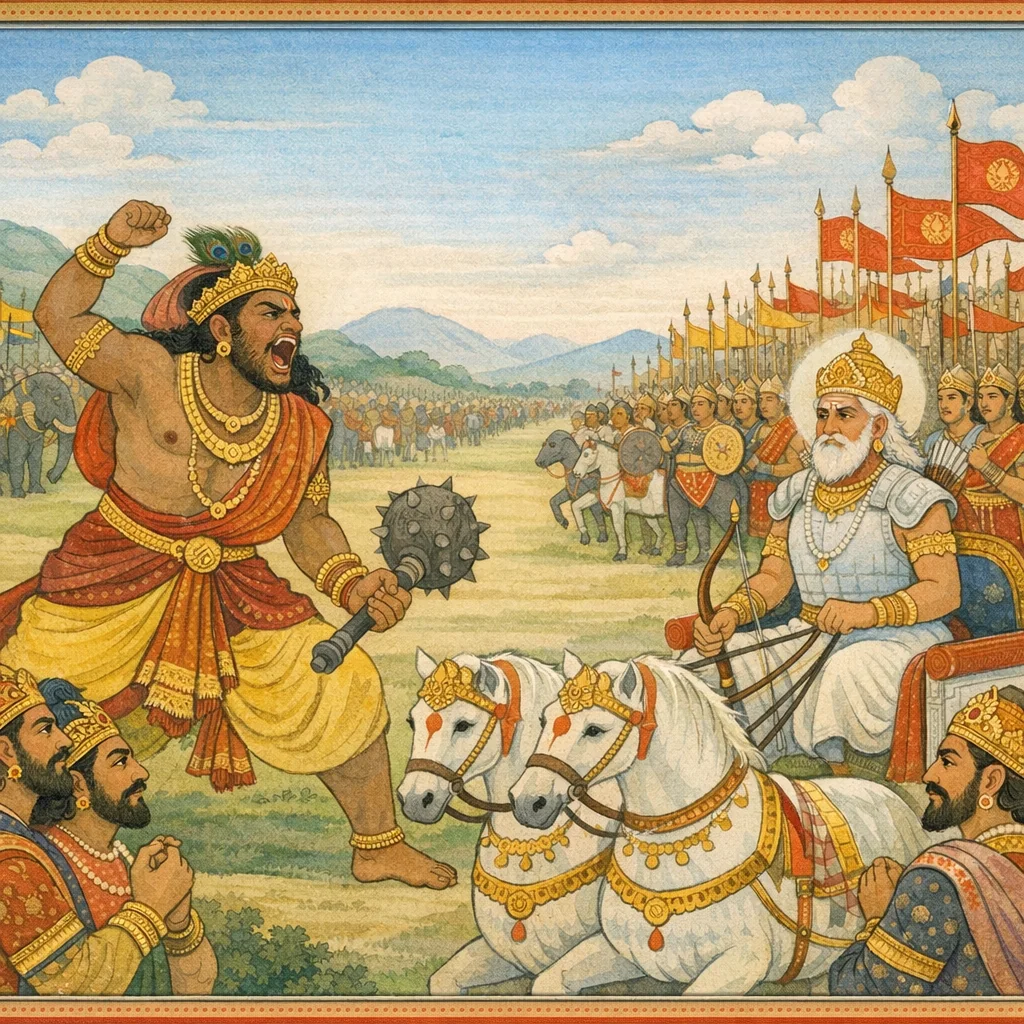
Dhṛtarāṣṭra asks how, once both sides were arrayed, the elite combatants initiated the engagement. Saṃjaya describes symmetrical formations and the sudden intensification into a tumultuous, interlocked battle of chariots and elephants. Bhīṣma advances with high force projection, showering arrows upon key Pāṇḍava-aligned champions (including Abhimanyu, Bhīmasena, Sātyaki, Virāṭa, and Dhṛṣṭadyumna), producing disruption in the Pāṇḍava ranks. Arjuna, observing Bhīṣma’s momentum, instructs Vāsudeva to drive toward the grandsire, anticipating strategic collapse if Bhīṣma continues unchecked. A concentrated exchange follows: Bhīṣma, supported by allied archers, saturates Arjuna with volleys; Arjuna responds with calibrated counter-fire, while both sides’ protectors cluster around their principal fighters. Duryodhana, seeing pressure on his army, presses Bhīṣma to act decisively; Bhīṣma advances while registering the moral strain of kṣatra-duty. The chapter culminates in a near-parity duel: both are intermittently obscured by arrow-nets, recognized chiefly by insignia, and regarded by observers (including celestial witnesses) as effectively unmatched; meanwhile, broader fighting continues, including a notable moment where Bhīṣma’s arrows strike Vāsudeva, prompting Arjuna’s retaliatory precision against Bhīṣma’s charioteer.
Chapter Arc: Sanjaya sets the field: Duryodhana advances with his brothers, placing Bhishma at the fore, while the Pandavas—Bhima leading—move out with fixed intent to meet the grandsire in battle. → The two vast hosts of Pandavas and Dhartarashtras surge into proximity; conches, drums, and war-cries swell into a tumbling, hair-raising roar, as if forests themselves tremble under a storm-wind. → Bhima, bull-like in fury, unleashes a thunderous bellow; its Indra-thunder quality shakes the Kaurava ranks, and even other kings look on as spectators to a dreadful, kin-against-kin spectacle. → In the thick of the tumul, Bhishma shines forth above all formations—an elder luminary amid terror—signaling that the war’s first great weight will fall under his command and presence. → The armies are fully engaged, and the narrative poises on what Bhishma’s dominance will mean once the opening collisions harden into named duels and irreversible losses.
Shlokas
Verse 1
[दाक्षिणात्य अधिक पाठके तीन श्लोक मिलाकर कुल ११२ श्लोक हैं।] अपन बक। ] अति्ऑशाएड< - उपर्युक्त पाँच श्लोक कितनी ही प्रतियोंमें नहीं हैं और कितनी ही प्रतियोंमें हैं। चतुश्नत्वारिशो< ध्याय: कौरव-पाण्डवोंके प्रथम दिनके युद्धका आरम्भ धृतराष्ट्र रवाच एवं व्यूढेष्वनीकेषु मामकेष्वितरेषु च । के पूर्व प्राहरंस्तत्र कुरव: पाण्डवा नु किम्,धृतराष्ट्रने पूछा--संजय! इस प्रकार जब मेरे पुत्रों और पाण्डवोंने अपनी-अपनी सेनाओंका व्यूह लगा लिया, तब वहाँ उनमेंसे पहले किन्होंने प्रहार किया, कौरवोंने या पाण्डवोंने?
Dhṛtarāṣṭra said: “Sañjaya, when my sons’ forces and the Pāṇḍavas’ forces had been arrayed in their respective battle-formations, who struck first there—were it the Kurus, or the Pāṇḍavas?”
Verse 2
संजय उवाच भ्रातृभि: सहितो राजन पुत्रो दुर्योधनस्तव । भीष्म॑ प्रमुखत: कृत्वा प्रययौ सह सेनया,संजयने कहा--राजन्! भाइयोंसहित आपका पुत्र दुर्योधन भीष्मको आगे करके सेनासहित आगे बढ़ा
Sañjaya said: O King, your son Duryodhana, accompanied by his brothers, advanced with the army, placing Bhīṣma at the forefront.
Verse 3
तथैव पाण्डवा: सर्वे भीमसेनपुरोगमा: । भीष्मेण युद्धमिच्छन्त: प्रययुरह्ष्टमानसा:,इसी प्रकार समस्त पाण्डव भी भीमसेनको आगे करके भीष्मसे युद्ध करनेकी इच्छा रखकर प्रसन्न मनसे आगे बढ़े
Sañjaya said: In the same manner, all the Pāṇḍavas—led in the forefront by Bhīmasena—advanced with uplifted hearts, eager to engage Bhīṣma in battle.
Verse 4
क्षेेडा: किलकिलाशब्दा: क्रकचा गोविषाणिका: । भेरीमृदड़मुरजा हयकुञ्जरनि:स्वना:,फिर तो दोनों सेनाओंमें सिंहनाद, किलकारियोंके शब्द, क्रकच, नरसिंहे, भेरी, मृदंग और ढोल आदि वाद्योंकी ध्वनि तथा घोड़ों और हाथियोंके गर्जनेके शब्द गूँजने लगे। पाण्डव सैनिक हमलोगोंपर टूट पड़े और हमलोगोंने भी विकट गर्जना करते हुए उनपर धावा बोल दिया। इस प्रकार अत्यन्त घोर युद्ध होने लगा
Sañjaya said: Then there arose a tumult of sounds—shouts and shrill cries, the harsh blare of instruments like the krakaca and the cow-horn trumpet, and the booming of kettledrums, mṛdaṅgas, and murajas—along with the thunderous neighing of horses and the roaring of elephants.
Verse 5
उभयो: सेनयोहासंस्ततस्ते5स्मान् समाद्रवन् | वयं तान् प्रतिनर्दन्तस्तदासीत् तुमुलं महत्,फिर तो दोनों सेनाओंमें सिंहनाद, किलकारियोंके शब्द, क्रकच, नरसिंहे, भेरी, मृदंग और ढोल आदि वाद्योंकी ध्वनि तथा घोड़ों और हाथियोंके गर्जनेके शब्द गूँजने लगे। पाण्डव सैनिक हमलोगोंपर टूट पड़े और हमलोगोंने भी विकट गर्जना करते हुए उनपर धावा बोल दिया। इस प्रकार अत्यन्त घोर युद्ध होने लगा
Sañjaya said: Then, amid the tumult of both armies, they rushed upon us. We roared back at them in reply, and at that moment a vast and overwhelming uproar arose—signaling the full onset of battle.
Verse 6
महान्त्यनीकानि महासमुच्छूये समागमे पाण्डवधार्तराष्ट्रयो: | चकम्पिरे शड्खमृदड़नि:ःस्वनै: प्रकम्पितानीव वनानि वायुना,भीषण मारकाटसे युक्त उन महान संग्राममें आपके पुत्रों तथा पाण्डवोंकी विशाल सेनाएँ प्रचण्ड वायुसे विकम्पित हुए वनोंकी भाँति शंख और मृदंगके शब्दोंसे काँपने लगीं
Sañjaya said: In that vast, tightly packed mustering of forces, when the Pāṇḍavas and the Dhārtarāṣṭras came face to face, the great battle-formations began to tremble at the blare of conches and the booming of drums—like forests shaken by a fierce wind. The verse shows how the instruments of war stir not only sound, but fear, resolve, and the moral weight of impending slaughter.
Verse 7
नरेन्द्रनागाश्वरथाकुलाना- मभ्यागतानामशिवे मुहूर्ते । बभूव घोषस्तुमुल श्चमूनां वातोद्भुतानामिव सागराणाम्,राजाओं, हाथियों, घोड़ों तथा रथोंसे भरी हुई उभय पक्षकी सेनाएँ उस अमंगलमय मुहूर्तमें जब एक-दूसरेके सम्मुख और समीप आयीं, उस समय वायुसे उद्वेलित समुद्रोंकी भाँति उनका भयंकर कोलाहल सब ओर गूँजने लगा
Sañjaya said: When the armies of both sides—crowded with kings, elephants, horses, and chariots—had come face to face and drawn near at that inauspicious moment, a dreadful, swelling roar arose from the hosts, like the oceans heaved up by the wind. The verse frames the clash not as glory but as an ominous surge of collective force, hinting at the ethical darkness that accompanies fratricidal war.
Verse 8
तस्मिन् समुत्थिते शब्दे तुमुले लोमहर्षणे । भीमसेनो महाबाहु: प्राणदद् गोवृषो यथा,उस रोमांचकारी भयंकर शब्दके प्रकट होते ही महाबाहु भीमसेन साँड़की भाँति गर्जने लगे
Sañjaya said: When that tumultuous, hair-raising roar arose, mighty-armed Bhīmasena bellowed like a bull among cattle—answering the terror of the battlefield with fearless force and resolve.
Verse 9
शड्खदुन्दुभिनिर्घोषं वारणानां च बृंहितम् । सिंहनादं च सैन्यानां भीमसेनरवो<भ्य भूत्,भीमसेनकी वह गर्जना शंख और दुन्दुभियोंके गम्भीर घोष, गजराजोंके चिग्घाड़नेकी आवाज तथा सैनिकोंके सिंहनादको भी दबाकर सब ओर सुनायी देने लगी
Sañjaya said: The roar of Bhīmasena rose and spread in every direction, overpowering the deep blare of conches and kettledrums, the trumpeting of the war-elephants, and even the lion-like shouts of the assembled troops—an omen of fierce resolve as the battle’s violence gathers force.
Verse 10
हयानां ह्ेषमाणानामनीकेषु सहस्रश: । सर्वानिभ्यभवच्छब्दान् भीमस्य नदत: स्वन:,उन सेनाओंमें हजारों घोड़े जोर-जोरसे हिनहिना रहे थे; परंतु गर्जना करते हुए भीमसेनका शब्द उन सब शब्दोंको दबाकर ऊपर उठ गया था
Sañjaya said: Amid the battle-formations, thousands of horses were neighing loudly; yet the thunderous roar of Bhīmasena, as he bellowed, rose above and overwhelmed every other sound. The verse underscores how a single warrior’s fearless resolve can dominate the chaos of war, signaling morale, intimidation, and the ethical weight of power when unleashed on the battlefield.
Verse 11
त॑ श्रुत्वा निनदं तस्य सैन्यास्तव वितत्रसु: । जीमूतस्थेव नदत: शक्राशनिसमस्वनम्,वे मेघके समान गम्भीर स्वरमें गर्जन-तर्जन कर रहे थे। उनका शब्द इन्द्रके वज्की गड़गड़ाहटके समान भयानक था। उस सिंहनादको सुनकर आपके समस्त सैनिक संत्रस्त हो उठे थे
Sañjaya said: Hearing that roar, your troops were seized by panic. It was like the thunder of rain-clouds in full cry—dreadful in sound, like Indra’s thunderbolt.
Verse 12
वाहनानि च सर्वाणि शकृन्मूत्र॑ प्रसुखुवु: । शब्देन तस्य वीरस्य सिंहस्येवेतरे मृगा:,जैसे सिंहकी आवाज सुनकर दूसरे वन्य पशु भयभीत हो जाते हैं, उसी प्रकार वीर भीमसेनकी गर्जनासे भयभीत हो कौरव-सेनाके समस्त वाहन मल-मूत्र करने लगे
Sañjaya said: At the sound of that hero’s roar, all the vehicles of the Kaurava host voided dung and urine—just as other beasts in the forest are struck with fear on hearing the cry of a lion.
Verse 13
दर्शयन् घोरमात्मानं महाभ्रमिव नादयन् । बिभीषयंस्तव सुतान् भीमसेन: समभ्ययात्,महान् मेघके समान अपने भयंकर रूपको प्रकट करते, गर्जते तथा आपके पुत्रोंको डराते हुए भीमसेन कौरव-सेनापर चढ़ आये
Sañjaya said: Revealing his own terrifying form, roaring like a great thundercloud, and striking fear into your sons, Bhīmasena advanced straight upon the Kaurava host.
Verse 14
तमायान्तं महेष्वासं सोदर्या: पर्यवारयन् । छादयन्त: शरव्रातैरमेंघा इव दिवाकरम्,महान् धनुर्धर भीमसेनको आते देख दुर्योधनके भाइयों (तथा अन्य वीरों)-ने जैसे बादल सूर्यको ढक लेते हैं, उसी प्रकार बाणसमूहोंसे उन्हें आच्छादित करते हुए सब ओरसे घेर लिया
Sañjaya said: As the mighty archer Bhīmasena advanced, Duryodhana’s brothers and other warriors surrounded him on every side, covering him with volleys of arrows—just as clouds veil the sun.
Verse 15
दुर्योधनश्च पुत्रस्ते दुर्मुखो दःशल: शल: । दुःशासनश्वातिरथस्तथा दुर्मर्षणो नूप,(अग्रतः पाण्डुसेनाया हाृतिष्ठन् पृथिवीक्षित: ।।) नरेश्वरर आपके पुत्र दुर्योधन, दुर्मुख, दुःशल, शल, अतिरथी दुःशासन, दुर्मर्षण, विविंशति, चित्रसेन, महारथी विकर्ण, पुरुमित्र, जय, भोज तथा पराक्रमी भूरिश्रवा--ये सभी वीर अपने बड़े-बड़े धनुषोंको कँपाते और छूटनेपर विषधर सर्पके समान प्रतीत होनेवाले बाणोंको हाथमें लेते हुए बिजलियोंसहित मेघोंके समान जान पड़ते थे। ये सभी भूपाल पाण्डव-सेनाके सम्मुख (भीमसेनको घेरकर) खड़े हो गये
Sañjaya said: Your son Duryodhana—along with Durmukha, Duḥśalā, Śala, the great chariot-warrior Duḥśāsana, and also Durmarṣaṇa, O king—stood exultantly at the very front of the Pāṇḍava army.
Verse 16
विविंशतिकश्षित्रसेनो विकर्णश्र महारथ: । पुरुमित्रो जयो भोज: सौमदत्तिश्न वीर्यवान्,(अग्रतः पाण्डुसेनाया हाृतिष्ठन् पृथिवीक्षित: ।।) नरेश्वरर आपके पुत्र दुर्योधन, दुर्मुख, दुःशल, शल, अतिरथी दुःशासन, दुर्मर्षण, विविंशति, चित्रसेन, महारथी विकर्ण, पुरुमित्र, जय, भोज तथा पराक्रमी भूरिश्रवा--ये सभी वीर अपने बड़े-बड़े धनुषोंको कँपाते और छूटनेपर विषधर सर्पके समान प्रतीत होनेवाले बाणोंको हाथमें लेते हुए बिजलियोंसहित मेघोंके समान जान पड़ते थे। ये सभी भूपाल पाण्डव-सेनाके सम्मुख (भीमसेनको घेरकर) खड़े हो गये
Sañjaya said: Viviṁśati, Citrasena, and Vikarṇa the great chariot-warrior; Purumitra, Jaya, Bhoja, and the valiant son of Somadatta (Bhūriśravas)—these kings took their stand at the front of the Pāṇḍava host. Brandishing their mighty bows and grasping arrows that seemed like venomous serpents when released, they appeared like thunderclouds streaked with lightning, confronting the enemy line and forming a formidable screen before the Pāṇḍavas.
Verse 17
महाचापानि धुन्वन्तो मेघा इव सविद्युत: । आददानाश्ष नाराचान् निर्मुक्ताशीविषोपमान्,(अग्रतः पाण्डुसेनाया हाृतिष्ठन् पृथिवीक्षित: ।।) नरेश्वरर आपके पुत्र दुर्योधन, दुर्मुख, दुःशल, शल, अतिरथी दुःशासन, दुर्मर्षण, विविंशति, चित्रसेन, महारथी विकर्ण, पुरुमित्र, जय, भोज तथा पराक्रमी भूरिश्रवा--ये सभी वीर अपने बड़े-बड़े धनुषोंको कँपाते और छूटनेपर विषधर सर्पके समान प्रतीत होनेवाले बाणोंको हाथमें लेते हुए बिजलियोंसहित मेघोंके समान जान पड़ते थे। ये सभी भूपाल पाण्डव-सेनाके सम्मुख (भीमसेनको घेरकर) खड़े हो गये
Sañjaya said: “Shaking their mighty bows, like thunderclouds streaked with lightning, and taking up long iron arrows that, once released, would seem like unchained venomous serpents, those kings took their stand in front of the Pāṇḍava army.”
Verse 18
अथ ते द्रौपदीपुत्रा: सौभद्रश्न महारथ: । नकुल: सहदेवश्व धृष्टद्युम्नश्व॒ पार्षत:,तदनन्तर द्रौपदीके पाँचों पुत्र, महारथी अभिमन्यु, नकुल, सहदेव तथा ट्रुपदपुत्र धृष्टद्युम्न--ये सभी योद्धा वज्जके समान महान् वेगशाली तीक्ष्ण बाणोंद्वारा पर्वत-शिखरोंकी भाँति धृतराष्ट्रपुत्रोंको पीड़ा देते हुए उनपर चढ़ आये
Sañjaya said: Then Draupadī’s sons, and the great chariot-warrior Saubhadra (Abhimanyu), along with Nakula, Sahadeva, and Dhṛṣṭadyumna the son of Pārṣata (Drupada), all surged forward. Like thunderbolts in force, they pressed upon the sons of Dhṛtarāṣṭra, tormenting them with sharp, swift arrows, and advancing upon them as mountain-peaks seem to loom and bear down.
Verse 19
धार्तराष्ट्रान् प्रतिययुरर्दयन्त: शितै: शरै: । वजैरिव महावेगै: शिखराणि धराभूताम्,तदनन्तर द्रौपदीके पाँचों पुत्र, महारथी अभिमन्यु, नकुल, सहदेव तथा ट्रुपदपुत्र धृष्टद्युम्न--ये सभी योद्धा वज्जके समान महान् वेगशाली तीक्ष्ण बाणोंद्वारा पर्वत-शिखरोंकी भाँति धृतराष्ट्रपुत्रोंको पीड़ा देते हुए उनपर चढ़ आये
Sañjaya said: Then they surged against the sons of Dhṛtarāṣṭra, tormenting them with sharp arrows—like swift thunderbolts striking mountain-peaks.
Verse 20
तस्मिन् प्रथमसंग्रामे भीमज्यातलनिःस्वने । तावकानां परेषां च नासीत् कश्चित् पराड्मुख:,उस प्रथम संग्राममें जब भयानक धनुषोंकी टंकार तथा ताल ठोंकनेकी आवाज हो रही थी, आपके तथा पाण्डवोंके दलमें भी कोई युद्धसे विमुख नहीं हुआ
Sañjaya said: In that first clash of arms, amid the terrifying reverberation of bowstrings and the resounding blows of warriors striking their arms in challenge, not a single man—neither among your sons nor among the opposing host—turned his face away from battle.
Verse 21
लाघवं द्रोणशिष्याणामपश्यं भरतर्षभ । निमित्तवेधिनां चैव शरानुत्सृूजतां भूशम्,भरतश्रेष्ठ) उस समय मैंने द्रोणाचार्यके उन शिष्योंकी फुर्ती देखी। वे बड़ी तीव्र गतिसे बाण छोड़ते और लक्ष्यको बींध डालते थे
Sañjaya said: O bull among the Bharatas, I beheld the agility of Droṇa’s disciples. They were releasing arrows with great speed, and, being true marksmen, they were piercing their targets with precision—an impressive display of trained martial skill amid the unfolding war.
Verse 22
नोपशाम्यति निर्घोषो धनुषां कूजतां तथा । विनिश्चेरु: शरा दीप्ता ज्योततीषीव नभस्तलात्,वहाँ टंकार करते हुए धनुषोंके शब्द कभी शान्त नहीं होते थे। आकाशसे नक्षत्रोंके समान उन धनुषोंसे चमकीले बाण प्रकट हो रहे थे
Sañjaya said: The thunderous din of the twanging bows did not subside at all. From the sky’s expanse, blazing arrows shot forth, appearing like stars flashing into view—an image of war’s relentless momentum and the fearful splendor of martial power.
Verse 23
सर्वे त्वन्ये महीपाला: प्रेक्षका इव भारत । ददृशुर्दर्शनीयं त॑ भीम॑ ज्ञातिसमागमम्,भरतनन्दन! दूसरे सब राजालोग उस कुट॒म्बीजनोंके भयंकर दर्शनीय संग्रामको दर्शककी भाँति देखने लगे
Sañjaya said: “All the other kings, O Bhārata, looked on like mere spectators, beholding that awe-inspiring and terrible clash among kinsmen—Bhīma’s fierce encounter within the family’s own ranks.”
Verse 24
ततस्ते जातसंरम्भा: परस्परकृतागस: । अन्योन्यस्यर्धया राजन् व्यायच्छन्त महारथा:,राजन! बाल्यावस्थामें वे सभी एक-दूसरेका अपराध कर चुके थे। सबका स्मरण हो आनेसे वे सभी महारथी रोषमें भर गये और एक-दूसरेके प्रति स्पर्धा रखनेके कारण युद्धमें विजयी होनेके लिये विशेष परिश्रम करने लगे
Sañjaya said: Then those great chariot-warriors, their fury newly kindled, recalled the wrongs they had done to one another. O King, driven by rivalry with each other, they strove with special exertion, each seeking victory in the battle.
Verse 25
कुरुपाण्डवसेने ते हस्त्यश्वरथसंकुले । शुशुभाते रणे5तीव पटे चित्रार्पिते इव,हाथी, घोड़े और रथोंसे भरी हुई कौरव-पाण्डवोंकी वे सेनाएँ पटपर अंकित हुई चित्रमयी सेनाओंकी भाँति उस रणभूमिमें विशेष शोभा पा रही थीं
Sañjaya said: Those armies of the Kurus and the Pāṇḍavas, crowded with elephants, horses, and chariots, shone brilliantly on the battlefield—like vivid figures painted upon a cloth. The verse highlights the striking spectacle of war: outward beauty and order masking the grave moral weight of impending destruction.
Verse 26
ततस्ते पार्थिवा: सर्वे प्रगुहीतशरासना: । सहसैन्या: समापेतु: पुत्रस्य तव शासनात्,तदनन्तर आपके पुत्र दुर्योधनकी आज्ञासे अन्य सब राजा भी हाथमें धनुष-बाण लिये सेनाओंसहित वहाँ आ पहुँचे
Sañjaya said: Then, at your son’s command, all those kings—bows in hand and weapons readied—arrived there together, each accompanied by his own troops.
Verse 27
युधिष्ठिरेण चादिष्टा: पार्थिवास्ते सहस्रश: | विनदन्त: समापेतु: पुत्रस्य तव वाहिनीम्,इसी प्रकार युधिष्ठिरकी आज्ञा पाकर सहस्रों नरेश गर्जना करते हुए आपके पुत्रकी सेनापर टूट पड़े
Sañjaya said: At Yudhiṣṭhira’s command, those kings—numbering in the thousands—raised a thunderous roar and surged together to strike at your son’s army.
Verse 28
उभयो: सेनयोस्तीव्र: सैन्यानां स समागम: । अन्तर्धीयत चादित्य: सैन्येन रजसा55वृत:,उन दोनों सेनाओंका वह संघर्ष अत्यन्त दुःसह था। सेनाकी धूलसे आच्छादित हो सूर्यदेव अदृश्य हो गये
Sañjaya said: The clash of the troops of both armies became fiercely intense and almost unbearable. Covered by the dust raised by the host, the sun itself seemed to vanish from sight.
Verse 29
प्रयुद्धानां प्रभग्नानां पुनरावर्तिनामपि | नात्र स्वेषां परेषां वा विशेष: समदृश्यत,कुछ लोग युद्ध करते, कुछ भागते और कुछ भागकर फिर लौट आते थे। इस बातमें अपने और शत्रुपक्षके सैनिकोंमें कोई अन्तर नहीं दिखायी देता था
Sañjaya said: Among those who were fighting, those who had been routed, and even those who fled only to return again, no distinction could be seen there between one’s own troops and the enemy’s.
Verse 30
तस्मिंस्तु तुमुले युद्धे वर्तमाने महाभये । अतिसर्वाण्यनीकानि पिता तेडभिव्यरोचत,जिस समय वह अत्यन्त भयानक तुमुल युद्ध छिड़ा हुआ था, उस समय आपके ताऊ भीष्मजी उन समस्त सेनाओंसे ऊपर उठकर अपने तेजसे प्रकाशित हो रहे थे
Sañjaya said: While that tumultuous battle—so exceedingly dreadful—was raging, your grandsire Bhīṣma shone forth, rising above all the battle-formations, radiant with his own splendor.
Verse 43
इस प्रकार श्रीमह्याभारत भीष्मपर्वके अन्तर्गत भीष्मवधपर्वमें भीष्म आदिका समादरविषयक तैतालीसवाँ अध्याय पूरा हुआ
Sañjaya said: Thus, within the Bhīṣma Parva of the sacred Mahābhārata, the forty-third chapter—concerning the reverent honoring of Bhīṣma and others—comes to its close, as part of the section dealing with Bhīṣma’s fall. This colophon pauses the war’s tale to underscore the moral weight of reverence toward elders and revered warriors, even amid violent conflict.
Verse 44
इति श्रीमहाभारते भीष्मपर्वणि भीष्मवधपर्वणि युद्धारम्भे चतुश्नत्वारिंशो 5ध्याय: ।। ४४ ।। इस प्रकार श्रीमह्याभारत भीष्मपर्वके अन्तर्गत भीष्मवधपर्वमें युद्धका आरम्भविषयक चौवालीसवाँ अध्याय पूरा हुआ
Sañjaya said: “Thus, in the Śrī Mahābhārata, within the Bhīṣma Parva, in the section concerning the slaying of Bhīṣma, the forty-fourth chapter—on the commencement of the war—comes to an end.”
Frequently Asked Questions
The dilemma centers on fighting an elder revered as Kurupitāmaha: Arjuna must counter Bhīṣma’s battlefield dominance to protect his forces while confronting the ethical weight of opposing a patriarch who embodies vows, lineage duty, and institutional authority.
The chapter presents a pragmatic ethic: when collective harm escalates, responsible agents may need to prioritize protection of the many through disciplined action, while maintaining restraint and clarity amid personal reverence and emotional provocation.
No explicit phalaśruti is stated in the provided passage; the meta-commentary functions indirectly through witness-perspective (including celestial observers) emphasizing the exemplary, near-unwinnable parity of the duel and the narrative significance of recognizing limits within dharma-governed action.