Adhyaya 65
Parīkṣit-janma-saṃkaṭa and Kuntī’s petition to Vāsudeva (परिक्षिज्जन्मसंकटं कुन्त्याः प्रार्थना च)
Upa-parva: Vārāṇasī-praveśa and Parīkṣit-janma-saṃkaṭa (episode within Āśvamedhika-parva)
Vaiśaṃpāyana reports that Kṛṣṇa, informed of the Aśvamedha timing, travels with prominent Vṛṣṇis (including Balarāma, Sātyaki/Yuyudhāna, Pradyumna/Raukmiṇeya, Sāmba, Gada, Kṛtavarman, and others) to Vārāṇasī. Dhṛtarāṣṭra and Vidura receive them according to protocol, and Kṛṣṇa resides there honored by Vidura and Yuyutsu. During their stay, Parīkṣit—Janamejaya’s father—is born, but lies motionless, afflicted by the Brahmāstra deployed by Aśvatthāman, intensifying both relief and sorrow among the populace. Kṛṣṇa hastens into the inner quarters, where Kuntī approaches in tears, joined by Draupadī, Subhadrā, and other women. Kuntī addresses Kṛṣṇa as the family’s refuge and invokes his earlier pledge to revive the child born dead. She frames the infant as the remaining support of the Pāṇḍavas, the ancestral offerings of Pāṇḍu, and the continuity of Abhimanyu’s line; she recalls Abhimanyu’s affectionate plans for the child’s future training among the Vṛṣṇis. The women collectively bow and petition Kṛṣṇa to secure the welfare of the lineage. The chapter closes with Kṛṣṇa lifting and consoling Kuntī, signaling imminent intervention.
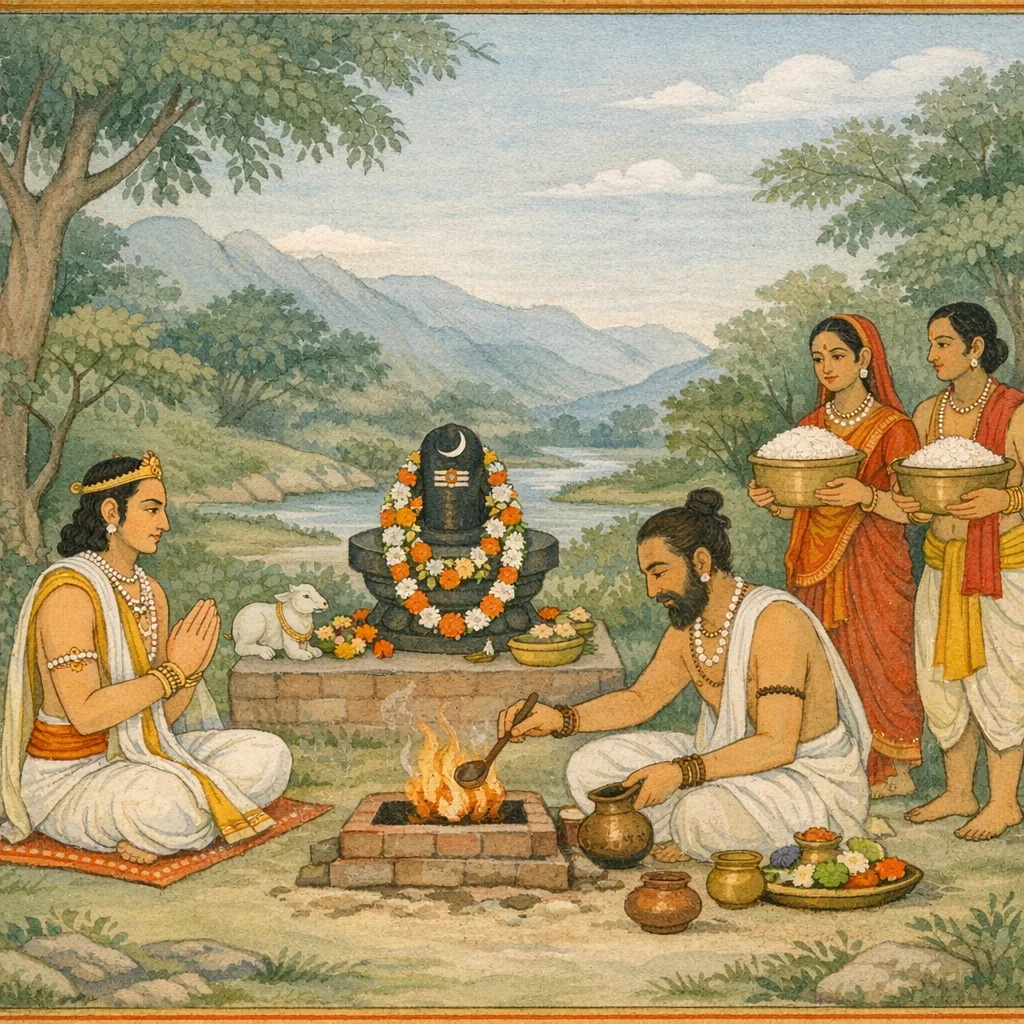
Chapter Arc: ज्योतिष-शास्त्र के ध्रुव नक्षत्रों (उत्तरा-त्रय, रोहिणी) और ध्रुव-वार (रविवार) का संकेत देकर ब्राह्मण युधिष्ठिर को बताते हैं कि यह समय देव-पूजन और सिद्धि के लिए अत्यन्त अनुकूल है। → राजा युधिष्ठिर ब्राह्मणों की आज्ञा मानकर गिरीश (महादेव) के लिए विधिपूर्वक उपहार-बलि की व्यवस्था करते हैं; पुरोहित अग्नि को आज्य से तर्पित कर मन्त्र-सिद्ध चरु बनाता है, और क्रमशः पुष्प, मोदक, पायस, मांस, फल-गूदा, लावा आदि विविध नैवेद्य जुटाए जाते हैं। साथ ही यक्षों-भूतों के अधिपतियों (कुबेर, मणिभद्र आदि) के लिए भी निवाप, तिलयुक्त अन्न, कृसर (खिचड़ी) और मांस से बलि-क्रम निर्धारित होता है—अनुष्ठान की व्यापकता और सूक्ष्म विधि ही तनाव का स्रोत बनती है। → पुरोहित द्वारा रात्रिचर भूतों के लिए घड़ों में भात भरकर बलि अर्पित की जाती है; युधिष्ठिर सहस्रों गौएँ ब्राह्मणों को दान देते हैं, और धूप-सुगन्ध व पुष्पालंकार से महादेव का स्थान अत्यन्त शोभायमान हो उठता है—यही अनुष्ठान का चरम, जहाँ लोक-देव-यक्ष-भूत सभी को विधि से तृप्त किया जाता है। → कुबेर (धनपति) की भी विचित्र पुष्प, मालपूआ, खिचड़ी आदि से प्रसन्नतापूर्वक पूजा होती है; विधि-पालन, दान और संतोष के साथ युधिष्ठिर का यज्ञ-परिसर शान्त, पवित्र और समृद्धि-संकेत से भर जाता है। → अनुष्ठान से प्रसन्न देव-यक्ष शक्तियाँ आगे किस प्रकार फल प्रदान करेंगी—यह संकेत अगले प्रसंग के लिए छोड़ा जाता है।
Shlokas
Verse 1
>>: बछ। अर: - ज्योतिष शास्त्रके अनुसार तीनों उत्तरा तथा रोहिणी--ये ध्रुवसंज्ञक नक्षत्र हैं। दिनोंमें रविवारको ध्रुव बताया गया है। उत्तरा और रविवारका संयोग होनेपर अमृतसिद्धि नामक योग होता है; अतः इसी योगमें पाण्डवोंके प्रस्थान करनेका अनुमान किया जा सकता है। पजञज्चषष्टितमो< ध्याय: ब्राह्मणोंकी आज्ञासे भगवान् शिव और उनके पार्षद आदिकी पूजा करके युधिष्ठटिरका उस धनराशिको खुदवाकर अपने साथ ले जाना ब्राह्मणा ऊचु क्रियतामुपहारोउद्य त्यम्बकस्य महात्मन: । दत्त्वोपहारं नूपते ततः स्वार्थ यतामहे,ब्राह्मण बोले--नरेश्वरर अब आप परमात्मा भगवान् शंकरको पूजा चढ़ाइये। पूजा चढ़ानेके बाद हमें अपने अभीष्ट कार्यकी सिद्धिके लिये प्रयत्न करना चाहिये
The Brahmins said: “O king, today let an offering be made to the great-souled Tryambaka (Śiva). Having presented the offering, we should then strive to accomplish our intended purpose.”
Verse 2
श्रुत्वा तु वचन तेषां ब्राह्मणानां युधिष्ठिर: । गिरीशस्य यथान्यायमुपहारमुपाहरत्,उन ब्राह्मणोंकी बात सुनकर राजा युधिष्ठिरने भगवान् शंकरको विधिपूर्वक नैवेद्य अर्पण किया
Hearing the words of those brāhmaṇas, King Yudhiṣṭhira duly presented an offering to Girīśa (Śiva), in accordance with proper ritual procedure.
Verse 3
आज्येन तर्पयित्वाग्निं विधिवत् संस्कृतेन च । मन्त्रसिद्धं चरुं कृत्वा पुरोधा: स ययौ तदा,तत्पश्चात् उनके पुरोहितने विधिपूर्वक संस्कार किये हुए घृतके द्वारा अग्निदेवको तृप्त करके मन्त्रसिद्ध चरु तैयार किया और भेंट अर्पित करनेके लिये वे देवताके समीप गये
Thereafter, their priest, having duly satisfied Agni with ritually purified ghee, prepared the mantra-perfected charu and went near the deity to present the offering.
Verse 4
स गृहीत्वा सुमनसो मन्त्रपूता जनाधिप । मोदकै: पायसेनाथ मांसैश्नोपाहरद् बलिम्
Vaiśampāyana said: Having taken auspicious offerings purified by mantras, the king then presented the sacrificial tribute according to the prescribed rite—sweet cakes (modaka), rice-pudding (payasa), and also meats.
Verse 5
सर्व स्विष्टतमं कृत्वा विधिवद् वेदपारग:
Vaiśampāyana said: Having duly performed, according to the prescribed rite, the most pleasing and fully acceptable offering in every respect, the knower who had crossed to the far shore of the Vedas proceeded in accordance with sacred law.
Verse 6
यक्षेन्द्राय कुबेराय मणिभद्राय चैव ह,तथान्येषां च यक्षाणां भूतानां पतयश्न ये । कृसरेण च मांसेन निवापैस्तिलसंयुतै: ७ ।। इसके बाद यक्षराज कुबेरको, मणिभद्रको, अन्यान्य यक्षोंकी और भूतोंके अधिपतियोंको खिचड़ी, फलके गूदे तथा तिलमिश्रित जलकी अंजलियाँ निवेदन करके उनकी पूजा सम्पन्न की
Vaiśampāyana said: Then he duly offered ritual portions—kṛsara (a cooked mixture), meat, and oblations mixed with sesame—to Kubera, lord of the Yakṣas, to Maṇibhadra, and likewise to the other Yakṣas and to those regarded as lords of the bhūtas. In this way he completed their worship, honoring each class of beings with the offerings prescribed for them.
Verse 7
तथान्येषां च यक्षाणां भूतानां पतयश्न ये । कृसरेण च मांसेन निवापैस्तिलसंयुतै: ७ ।। इसके बाद यक्षराज कुबेरको, मणिभद्रको, अन्यान्य यक्षोंकी और भूतोंके अधिपतियोंको खिचड़ी, फलके गूदे तथा तिलमिश्रित जलकी अंजलियाँ निवेदन करके उनकी पूजा सम्पन्न की
Vaiśaṃpāyana said: “In the same manner, he also honored the lords of the Yakṣas and the chiefs of various spirits, presenting them offerings of kṛsara (a cooked mixture), meat, and oblations mixed with sesame.” The passage underscores the ritual ethic of completeness, so the rite proceeds without neglect or offense.
Verse 8
ओदनं कुम्भश: कृत्वा पुरोधा: समुपाहरत् । ब्राह्मणेभ्य: सहस्राणि गवां दत्त्वा तु भूमिप:
Vaiśampāyana said: Having prepared cooked rice (odana) in pots, the royal priest brought it forth; and the king, having bestowed thousands of cows upon the Brahmins, proceeded in accordance with the rites, affirming generosity and the support of sacred learning through rightful giving.
Verse 9
धूपगन्धनिरुद्धं तत् सुमनोभिश्च संवृतम्
Vaiśaṃpāyana said: That place was filled and enclosed by the fragrance of incense and covered with clusters of fresh blossoms, creating an atmosphere of reverent auspiciousness around the rite.
Verse 10
कृत्वा पूजां तु रुद्रस्य गणानां चैव सर्वश:
Vaiśampāyana said: Having duly performed worship of Rudra, he also paid reverence to all of Rudra’s attendant hosts in every way, honoring the divine retinue as part of right devotion and proper ritual conduct.
Verse 11
ययौ व्यासं पुरस्कृत्य नृपो रत्ननिर्धि प्रति । भगवान् शिव और उनके पार्षदोंकी सब प्रकारसे पूजा करके महर्षि व्यासको आगे किये राजा युधिष्ठिर उस स्थानको गये, जहाँ वह रत्न एवं सुवर्णकी राशि संचित थी ।। १० न््।! पूजयित्वा धनाध्यक्षं प्रणिपत्याभिवाद्य च,प्रीतिमान् स कुरुश्रेष्ठ खानयामास तद् धनम् | वहाँ उन्होंने नाना प्रकारके विचित्र फूल, मालपूआ तथा खिचड़ी आदिके द्वारा धनपति कुबेरकी पूजा करके उन्हें प्रणाम--अभिवादन किया। तत्पश्चात् उन्हीं सामग्रियोंसे शंख आदि निधियों तथा समस्त निधिपालोंका पूजन करके श्रेष्ठ ब्राह्मणोंकी पूजा की। फिर उनसे स्वस्तिवाचन कराकर जन ब्राह्मणोंके पुण्याहघोषसे तेजस्वी हुए शक्तिशाली कुरुश्रेष्ठ राजा युधिष्ठिर बड़ी प्रसन्नताके साथ उस धनको खुदवाने लगे
Vaiśampāyana said: Having duly worshipped the lord of wealth, and then bowing down and offering respectful salutations, that foremost of the Kurus—his heart filled with gladness—caused that treasure to be excavated. The act is framed not as mere acquisition but as wealth approached through reverence, propriety, and the sanction of sacred rites, so that prosperity may serve dharma rather than greed.
Verse 12
सुमनोभिर्विचित्राभिरपूपै: कूसरेण च । शड्खादींश्व निधीन् सर्वान् निधिपालांश्व सर्वशः
Vaiśaṃpāyana said: “With many kinds of beautiful flowers, with ritual cakes (apūpa), and with other offerings as well, they honored all the treasures—beginning with the conch and the rest—and, in every way, the guardians of those treasures.”
Verse 13
अर्चयित्वा द्विजाग्रयान् स स्वस्ति वाच्य च वीर्यवान् | तेषां पुण्याहघोषेण तेजसा समवस्थित:
Vaiśampāyana said: Having duly honored the foremost of the twice-born, the valiant one had auspicious blessings pronounced. With their proclamation of sacred benedictions, he stood composed and radiant with spiritual and moral splendor—his strength now sanctioned by rite and righteousness rather than mere force.
Verse 14
ततः पात्री: सकरका बहुरूपा मनोरमा:,कुछ ही देरमें अनेक प्रकारके विचित्र, मनोरम एवं बहुसंख्यक सहस्रों सुवर्णमय पात्र निकल आये। कठौते, सुराही, गडुआ, कड़ाह, कलश तथा कटोरे--सभी तरहके बर्तन उपलब्ध हुए
Then, delightful vessels of many shapes—some set with small ornaments—appeared in great numbers. In the unfolding of the Aśvamedha rites, the sudden abundance of golden utensils signifies the king’s readiness to give without stint, supporting sacrificial hospitality and the ethical duty of generous distribution to priests and guests.
Verse 15
भृूज़ाराणि कटाहानि कलशान् वर्धमानकान् | बहूनि च विचित्राणि भाजनानि सहस्रश:,कुछ ही देरमें अनेक प्रकारके विचित्र, मनोरम एवं बहुसंख्यक सहस्रों सुवर्णमय पात्र निकल आये। कठौते, सुराही, गडुआ, कड़ाह, कलश तथा कटोरे--सभी तरहके बर्तन उपलब्ध हुए
Vaiśampāyana said: “Cauldrons, kettles, jars, and swelling heaps of pots—indeed, thousands upon thousands of vessels of many kinds and wondrous workmanship—appeared in abundance.” In the context of the Aśvamedha rites, this imagery underscores royal responsibility: wealth is to be made manifest as orderly provision for sacrifice, hospitality, and generous giving, not for private hoarding.
Verse 16
उद्धारयामास तदा धर्मराजो युधिष्ठिर: । तेषां रक्षणमप्यासीन्महान् करपुटस्तथा,धर्मराज युधिष्ठिरने उस समय उन सब बर्तनोंको भूमि खोदकर निकलवाया। उन्हें रखनेके लिये बड़ी-बड़ी संदूर्कें लायी गयी थीं
Then Dharmarāja Yudhiṣṭhira had those items dug out and brought up from the earth. He also arranged for their protection, providing large storage-chests for safekeeping—showing a king’s duty to preserve entrusted goods and maintain orderly stewardship.
Verse 17
नद्धं च भाजनं राजंस्तुलार्थमभवन्नूप । वाहन पाण्डुपुत्रस्य तत्रासीत् तु विशाम्पते,राजन्! एक-एक संदूकमें बंद किये हुए बर्तनोंका बोझ आधा-आधा भार होता था। प्रजानाथ! उन सबको ढोनेके लिये पाण्डुपुत्र युधिष्ठिके वाहन भी वहाँ उपस्थित थे
Vaiśampāyana said: “O king, the utensils were securely packed, and, O ruler, their loads had been arranged in equal measure, balanced by weight. And there, O lord of the people, the transport-vehicles belonging to the son of Pāṇḍu (Yudhiṣṭhira) were also present to carry them.”
Verse 18
षष्टिरुष्टसहस्राणि शतानि द्विगुणा हया: । वारणाश्न महाराज सहस्रशतसम्मिता:,महाराज! साठ हजार ऊँट, एक करोड़ बीस लाख घोड़े, एक लाख हाथी, एक लाख रथ, एक लाख छकड़े और उतनी ही हथिनियाँ थीं। गधों और मनुष्योंकी तो गिनती ही नहीं थी
Vaiśampāyana said: “O great king, there were sixty thousand camels; horses in twice a hundredfold measure; and elephants amounting to one hundred thousand.” The verse underscores the immense scale of royal resources being marshalled—an image of worldly power that, in the Mahābhārata’s ethical frame, invites reflection on how such abundance should be governed by dharma rather than pride or excess.
Verse 19
शकटानि रथाश्रैव तावदेव करेणव: । खराणां पुरुषाणां च परिसंख्या न विद्यते,महाराज! साठ हजार ऊँट, एक करोड़ बीस लाख घोड़े, एक लाख हाथी, एक लाख रथ, एक लाख छकड़े और उतनी ही हथिनियाँ थीं। गधों और मनुष्योंकी तो गिनती ही नहीं थी
Vaiśampāyana said: “There were just as many carts and chariots, and the same number of female elephants as well. But, O great king, the donkeys and the men were beyond counting.” The verse underscores the immense scale of the preparations and resources being marshalled—so vast that even enumeration fails—hinting at the burdens and human labor that accompany royal enterprises.
Verse 20
एतद् वित्तं तदभवद् यदुद्धप्रे युधिष्ठिर: । षोडशाष्टौ चतुर्विशत्सहस्रं भारलक्षणम्,द्वैपायनाभ्यनुज्ञात: पुरस्कृत्य पुरोहितम् । युधिष्ठिरने वहाँ जितना धन खुदवाया था, वह सोलह करोड़ आठ लाख और चौबीस हजार भार सुवर्ण था। उन्होंने उपर्युक्त सब वाहनोंपर धन लद॒वाकर पाण्डुनन्दन युधिष्ठिरने पुनः महादेवजीका पूजन किया और व्यासजीकी आज्ञा लेकर पुरोहित धौम्य मुनिको आगे करके हस्तिनापुरको प्रस्थान किया
Vaiśampāyana said: The wealth that Yudhiṣṭhira had caused to be brought forth amounted to sixteen crores, eight lakhs, and twenty-four thousand bhāras of gold. Having obtained the permission of Dvaipāyana (Vyāsa) and placing his family priest at the forefront, Yudhiṣṭhira proceeded onward—an act that frames royal prosperity as legitimate only when gathered and deployed under sacred counsel and priestly guidance.
Verse 21
एतेष्वादाय तद् द्रव्यं पुनरभ्यर्च्य पाण्डव: । महादेवं प्रति ययौ पुरं नागाह्दयं प्रति,द्वैपायनाभ्यनुज्ञात: पुरस्कृत्य पुरोहितम् । युधिष्ठिरने वहाँ जितना धन खुदवाया था, वह सोलह करोड़ आठ लाख और चौबीस हजार भार सुवर्ण था। उन्होंने उपर्युक्त सब वाहनोंपर धन लद॒वाकर पाण्डुनन्दन युधिष्ठिरने पुनः महादेवजीका पूजन किया और व्यासजीकी आज्ञा लेकर पुरोहित धौम्य मुनिको आगे करके हस्तिनापुरको प्रस्थान किया
Having loaded that wealth upon those conveyances, the Pāṇḍava (Yudhiṣṭhira) again performed worship and reverence. With the permission of Dvaipāyana (Vyāsa), and placing his family priest at the forefront, he set out toward the city of Nāgāhṛdaya, proceeding in devotion to Mahādeva. The passage underscores a king’s ethical duty to sanctify great acts of giving and statecraft through humility, ritual propriety, and deference to spiritual authority.
Verse 22
000४7 222६ चर ॥ > कु कं |! २0०४० १॥७ ( / हि आ. बा हि गोयुते गोयुते चैव न्यवसत् पुरुषर्षभ:,राजन! वे वाहनोंपर बोझ अधिक होनेके कारण दो-दो कोसपर मुकाम देते जाते थे। द्रव्यके भारसे कष्ट पाती हुई वह विशाल सेना उन कुरुश्रेष्ठ वीरोंका हर्ष बढ़ाती हुई बड़ी कठिनाईसे नगरकी ओर उस धनको ले जा रही थी
Vaiśampāyana said: O King, because the load upon the vehicles was excessive, they halted at intervals of two krośas. That vast army, strained by the weight of the goods, yet increasing the joy and confidence of the foremost Kuru heroes, carried that wealth toward the city only with great difficulty. The passage underscores how material gain, even when rightful, demands discipline, endurance, and orderly conduct from those who bear it.
Verse 23
सा पुराभिमुखा राजन्नुवाह महती चमू: । कृच्छाद् द्रविणभारार्ता हर्षयन्ती कुरूद्वहान्,राजन! वे वाहनोंपर बोझ अधिक होनेके कारण दो-दो कोसपर मुकाम देते जाते थे। द्रव्यके भारसे कष्ट पाती हुई वह विशाल सेना उन कुरुश्रेष्ठ वीरोंका हर्ष बढ़ाती हुई बड़ी कठिनाईसे नगरकी ओर उस धनको ले जा रही थी
Vaiśampāyana said: “O King, that vast army moved forward toward the city. Struggling under the heavy burden of wealth, it advanced only with great difficulty, yet it heightened the joy and pride of the foremost heroes of the Kurus as it carried the treasure onward.”
Verse 43
सुमनोभिश्न चित्राभिलजिरुच्चावचैरपि | जनेश्वर! उन्होंने मन्त्रपूत पुष्प लेकर मिठाई, खीर, फलके गूदे, विचित्र पुष्प, लावा (खील) तथा अन्य नाना प्रकारकी वस्तुओंद्वारा उपहार समर्पित किया
Vaiśampāyana said: “O lord of the people, they presented offerings—flowers sanctified by mantra, sweets and rice-pudding, fruit-pulp, many-colored blossoms, parched grains, and various other items. The scene underscores a dharmic mode of honoring authority and sacred rites: gifts are purified, offered with reverence, and meant to support auspicious ritual order rather than personal display.”
Verse 56
किंकराणां तत: पश्चाच्चकार बलिमुत्तमम् | वेदोंके पारंगत विद्वान् पुरोहितने विधिपूर्वक देवताको अत्यन्त प्रिय लगनेवाले समस्त कर्म करके फिर भगवान् शिवके पार्षदोंको उत्तम बलि (भेंट-पूजा) चढ़ायी
Vaiśaṃpāyana said: Thereafter, he offered an excellent bali—an oblation of reverent offering—first to the attendants and then, with a learned priest well-versed in the Vedas and their auxiliaries, he duly performed all rites that are most pleasing to the deities. Having completed those acts according to rule, he again presented a superior offering of worship-gifts to the retinue of Lord Śiva. The passage underscores that power and success are to be grounded in disciplined ritual order, respect for divine hierarchy, and faithful completion of prescribed duties.
Verse 64
इस प्रकार श्रीमहाभारत आश्वमेधिकपरव्वके अन्तर्गत अनुगीतापर्वमें द्रव्य लानेका उपक्रमविषयक चौंयठवाँ अध्याय पूरा हुआ
Thus ends the sixty-fourth chapter, concerning the undertaking of bringing the required materials, in the Anugītā section contained within the Aśvamedhika Parva of the revered Mahābhārata. This closing colophon marks the passage from instruction to practical preparation, affirming that righteous aims must be upheld by orderly effort and proper means.
Verse 65
इति श्रीमहाभारते आश्वमेधिके पर्वणि अनुगीतापर्वणि द्रव्यानयने पज्चषष्टितमो5 ध्याय:,इस प्रकार श्रीमहाभारत आश्वमेधिकपर्वके अन्तर्गत अनुगीतापर्वमें द्रव्यका आनयनविषयक पैंसठवाँ अध्याय पूरा हुआ
Thus, in the Śrī Mahābhārata, within the Āśvamedhika Parva, in the Anugītā section, the sixty-fifth chapter—concerning the bringing or collection of materials (resources)—is concluded. (This is a colophon marking the end of the chapter, not a narrative verse.)
Verse 83
नक्तंचराणां भूतानां व्यादिदेश बलिं तदा | तदनन्तर पुरोहितने घड़ोंमें भात भरकर बलि अर्पित की। इसके बाद भूपालने ब्राह्मणोंको सहस्रों गौएँ देकर निशाचारी भूतोंको भी बलि भेंट की
Vaiśampāyana said: At that time the king ordered that an offering (bali) be presented even to the nocturnal spirits. In keeping with the ritual’s comprehensive duty of hospitality, cooked rice was set out as an oblation; thereafter the ruler honored the brāhmaṇas with thousands of cows, thus completing the prescribed offerings, including those meant for night-roaming beings, without neglecting any class of recipient.
Verse 96
शुशुभे स्थानमत्यर्थ देवदेवस्य पार्थिव । पृथ्वीनाथ! देवाधिदेव महादेवजीका वह स्थान धूपोंकी सुगन्धसे व्याप्त और फूलोंसे अलंकृत होनेके कारण बड़ी शोभा पा रहा था
Vaiśampāyana said: “O king, lord of the earth, the sacred place of Mahādeva—the God of gods, the supreme deity among the gods—shone exceedingly. Pervaded by the fragrance of incense and adorned with flowers, it attained great splendor.”
Verse 133
प्रीतिमान् स कुरुश्रेष्ठ खानयामास तद् धनम् | वहाँ उन्होंने नाना प्रकारके विचित्र फूल, मालपूआ तथा खिचड़ी आदिके द्वारा धनपति कुबेरकी पूजा करके उन्हें प्रणाम--अभिवादन किया। तत्पश्चात् उन्हीं सामग्रियोंसे शंख आदि निधियों तथा समस्त निधिपालोंका पूजन करके श्रेष्ठ ब्राह्मणोंकी पूजा की। फिर उनसे स्वस्तिवाचन कराकर जन ब्राह्मणोंके पुण्याहघोषसे तेजस्वी हुए शक्तिशाली कुरुश्रेष्ठ राजा युधिष्ठिर बड़ी प्रसन्नताके साथ उस धनको खुदवाने लगे
Vaiśampāyana said: Pleased at heart, that best of the Kurus had that treasure excavated. Yet Yudhiṣṭhira approached wealth not with greed but with reverence: he worshiped Kubera, lord of riches, with wondrous flowers, malpūā and khichṛī and other offerings, and bowed in salutation. Then, with those same materials, he honored the treasures (nidhi) such as Śaṅkha and the rest, and all the guardians of the hoards, and he paid due worship to the foremost brāhmaṇas. Afterward he had them recite auspicious blessings (svasti-vācana); and amid the brāhmaṇas’ proclamation of puṇyāha, the mighty king Yudhiṣṭhira, radiant among the Kurus, began with great joy to have that wealth dug forth.
Frequently Asked Questions
A conflict between irreversible wartime consequences (Brahmāstra’s lingering harm) and the ethical necessity of safeguarding an innocent heir, framed through the family’s appeal to Kṛṣṇa’s responsibility and prior assurance.
The chapter stresses pratijñā-pālana (fidelity to one’s promise) and the dharmic priority of protecting vulnerable life as essential to restoring social order after systemic violence.
No explicit phalaśruti appears in this excerpt; the meta-significance is narrative: Parīkṣit’s survival is positioned as the linchpin for the epic’s dynastic continuation and Janamejaya’s later listening context.