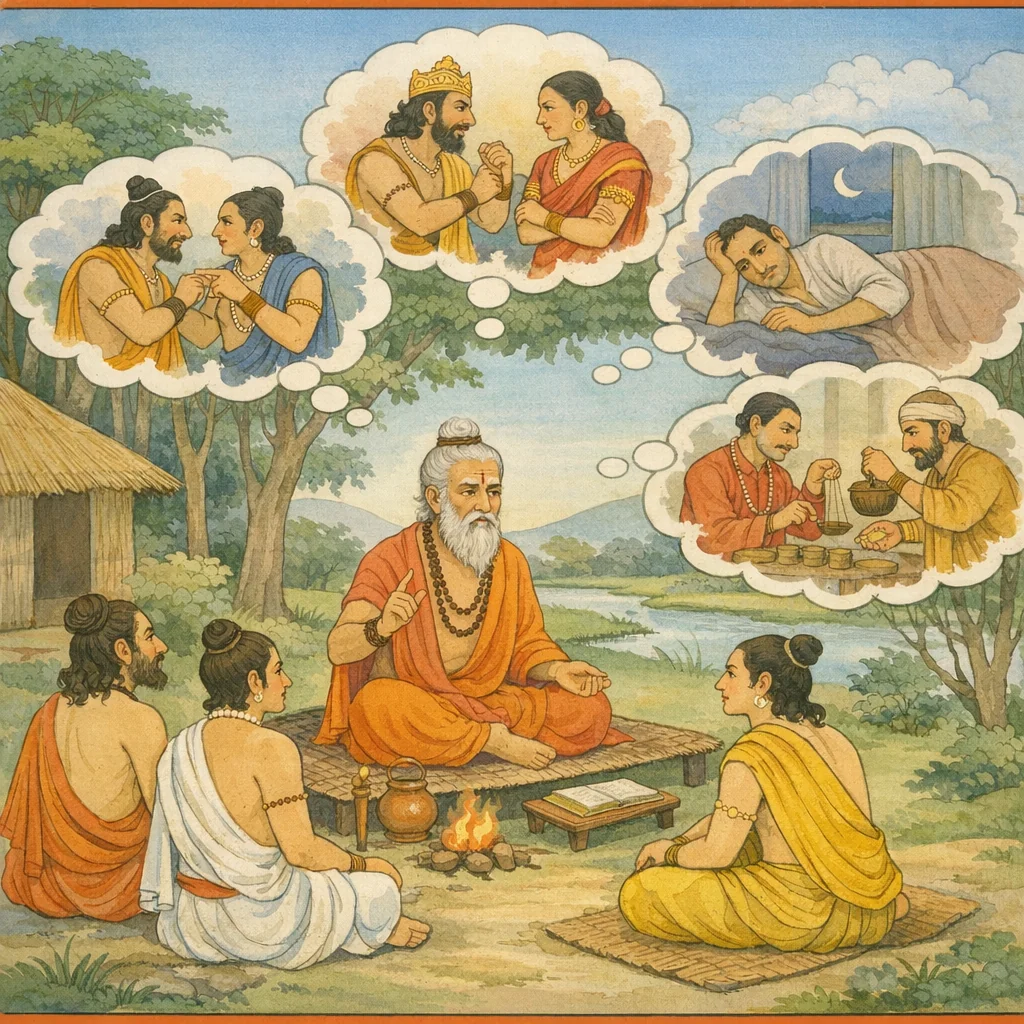
Adhyaya 37
Rajo-guṇa-nirdeśa — Brahmā’s Enumeration of Rajasic Dispositions
Upa-parva: Guṇa-vṛtta-kathana (Rajo-guṇa-nirdeśa) — Discourse on the Operations of the Guṇas
Brahmā announces an orderly account of rajas “as it is,” then enumerates rajasic operations (guṇa-vṛtta) across affect, cognition, and social practice. The chapter catalogs markers such as aggregation and exertion, oscillation between pleasure and pain, ambition and domination, anger and rivalry, conflict-making and bargaining, harsh speech and envy, deceit and misinformation, praise/blame dynamics, dependency and acquisitive grasping, and performative social-cultural activities. It also includes ritual and transactional behaviors (giving/receiving, mantra-recitation, offerings; formulae like svadhā/svāhā/vaṣaṭ) presented as potentially rajasic when driven by desire for outcomes. The conclusion states a pragmatic soteriology: one who consistently knows these guṇas becomes freed from rajasic qualities, implying that discernment weakens compulsion and clarifies agency.
Chapter Arc: शिष्य-समूह के समक्ष ब्रह्मा (गुरु-स्वर) रजोगुण का ‘यथातथ्य’ वर्णन आरम्भ करते हैं—यह बताने के लिए कि मनुष्य के भीतर कौन-सी प्रवृत्तियाँ उसे कर्म-चक्र में बाँधती हैं। → रजोगुण के लक्षण एक-एक कर उभरते हैं: संताप, आयास, सुख-दुःख का द्वंद्व, हिम-आतप, ऐश्वर्य-लालसा, विग्रह, वाद-विवाद, असहिष्णुता; फिर बल-शौर्य के साथ मद-रोष, व्यायाम-कलह, ईर्ष्या-इच्छा, पिशुनता, युद्ध-प्रवृत्ति, ममत्व और ‘परिपालन’ के नाम पर आसक्ति। → गुरु रजस के अंधेरे पक्ष को तीक्ष्णता से उद्घाटित करते हैं—अभिद्रोह, माया, निकृति/शठता, मान, स्तैन्य, हिंसा, जुगुप्सा, परिताप, प्रजागर (अशांत जागरण) आदि—और दिखाते हैं कि रजस कैसे मन को निरंतर उद्विग्न रखकर कर्म-बंधन को पुष्ट करता है। → रजोगुण में रत लोग भूत-भव्य-भविष्य की चिंता में डूबे त्रिवर्ग (धर्म-अर्थ-काम) की दौड़ में लगे रहते हैं; वे बार-बार जन्म लेकर इसी लोक के प्रमोद में रमे रहते और परलोक/आगामी फल की भी कामना करते हैं—देना-लेना, तर्पण, यज्ञादि सब भी रजस-प्रेरित आसक्ति के साथ। अंत में गुरु कहते हैं: जिसने इन गुणों को ठीक-ठीक जान लिया, वह रजस के अनेक रूपों को पहचानकर उनसे अविमुक्त (अर्थात उनके प्रभाव से घिरा) होने की स्थिति को समझता है—यही ज्ञान का फल है: विवेक-जागरण।
Shlokas
Verse 1
अपना बछ। हर: सप्तत्रिशो5ध्याय: रजोगुणके कार्यका वर्णन और उसके जाननेका फल ब्रह्मोवाच रजोऊ5हं व: प्रवक्ष्यामि याथातथ्येन सत्तमा: । निबोधत महाभागा गुणवृत्तं च राजसम्,ब्रह्माजीने कहा--महाभाग्यशाली श्रेष्ठ महर्षियो! अब मैं तुम लोगोंसे रजोगुणके स्वरूप और उसके कार्यभूत गुणोंका यथार्थ वर्णन करूँगा। ध्यान देकर सुनो
Brahmā said: “O best of the virtuous sages, I shall now explain to you, in accordance with reality, the nature of rajas and the qualities that arise from it. Listen attentively, O greatly fortunate ones, to the conduct and workings that belong to the rājasa disposition.”
Verse 2
सनन््तापो रूपमायास: सुखदु:खे हिमातपौ । ऐश्वर्य विग्रह: संधिहेतुवादो5रति: क्षमा
Vāyu-deva said: “Perpetual anguish, bodily form, exertion, pleasure and pain, cold and heat; contention over power and possessions, arguments about the causes of peace and reconciliation; discontent, and also forbearance—these are among the conditions and dispositions that shape embodied life.”
Verse 3
बल॑ शौर्य मदो रोषो व्यायामकलहावपि । ईष्येप्सा पिशुनं युद्ध ममत्वं परिपालनम्
Vāyu said: “Strength; the intoxication of valor; anger; exertion, and even quarrelling; jealousy and grasping desire; slander; warfare; possessiveness; and the impulse to guard and maintain what one calls ‘mine’—these are the forces that arise and drive beings.”
Verse 4
वधबन्धपरिक्लेशा: क्रयो विक्रय एव च । निकृन्त छिन्धि भिन्धीति परमर्मावकर्तनम्
Vāyu-deva said: “Killing and captivity with their attendant torments, buying and selling of persons, and the brutal cries—‘cut him down, sever him, split him!’—all this is the hacking at the very vital core of living beings.”
Verse 5
उग्र॑ं दारुणमाक्रोश: परच्छिद्रानुशासनम् । लोकचिन्तानुचिन्ता च मत्सर: परिभावन:
Vāyu said: “Harsh and cruel abuse, the habit of policing others’ faults, anxious brooding over worldly concerns, jealousy, and the tendency to belittle—these are the dispositions that corrode a person’s character and undermine righteous conduct.”
Verse 6
मृषा वादो मृषा दानं विकल्प: परिभाषणम् | निन्दा स्तुति: प्रशंसा च प्रस्ताव: पारधर्षणम्
Vāyu-deva said: “False speech, and even charity given with falsity; captious disputation and wrangling talk; blame, flattery, and praise; and the raising of topics meant to harass or browbeat another—these are to be recognized as forms of wrongdoing that corrode dharma and right conduct.”
Verse 7
परिचर्यानुशुश्रूषा सेवा तृष्णा व्यपाश्रय: । व्यूह़ो नयः प्रमादश्न॒ परिवाद: परिग्रह:
Vāyu said: “Attendance and dutiful listening, service, craving, dependence on others, strategic arrangement, political expediency, negligence, slander, and acquisitiveness—these are the tendencies that bind a person and lead one away from steadiness in dharma.”
Verse 8
संताप, रूप, आयास, सुख-दु:ख, सर्दी, गर्मी, ऐश्वर्य, विग्रह, सन्धि, हेतुवाद, मनका प्रसन्न न रहना, सहनशक्ति, बल, शूरता, मद, रोष, व्यायाम, कलह, ईर्ष्या, इच्छा, चुगली खाना, युद्ध करना, ममता, कुटुम्बका पालन, वध, बन्धन, क्लेश, क्रय-विक्रय, छेदन, भेदन और विदारणका प्रयत्न, दूसरोंके मर्मको विदीर्ण कर डालनेकी चेष्टा, उग्रता, निष्ठुरता, चिल्लाना, दूसरोंके छिद्र बताना, लौकिक बातोंकी चिन्ता करना, पश्चात्ताप, मत्सरता, नाना प्रकारके सांसारिक भावोंसे भावित होना, असत्य भाषण, मिथ्या दान, संशयपूर्ण विचार, तिरस्कारपूर्वक बोलना, निन्दा, स्तुति, प्रशंसा, प्रताप, बलात्कार, स्वार्थबुद्धिसे रोगीकी परिचर्या और बड़ोंकी शुश्रूषा एवं सेवावृत्ति, तृष्णा, दूसरोंके आश्रित रहना, व्यवहार- कुशलता, नीति, प्रमाद (अपव्यय), परिवाद और परिग्रह--ये सभी रजोगुणके कार्य हैं ।। २ --७ || संस्कारा ये च लोकेषु प्रवर्तन्ते पृथक्पृथक् । नृषु नारीषु भूतेषु द्रव्येषु शरणेषु च,संसारमें जो स्त्री, पुरुष, भूत, द्रव्य और गृह आदिमें पृथक्-पृथक् संस्कार होते हैं, वे भी रजोगुणकी ही प्रेरणाके फल हैं
Vāyu said: ‘Heat and distress, outward show, exertion, pleasure and pain, cold and heat, lordship, conflict and reconciliation, contentious reasoning, a mind that cannot remain content, endurance, strength, heroism, intoxication with power, anger, physical training, quarrel, jealousy, desire, backbiting, waging war, possessiveness, maintaining one’s family, killing, imprisonment, affliction, buying and selling, cutting, splitting, and the urge to tear apart—indeed, the attempt to pierce another’s vulnerable points—harshness, cruelty, shouting, exposing others’ faults, anxiety over worldly matters, remorse, envy, being driven by many kinds of worldly emotions, speaking falsehood, giving in a deceptive way, doubtful and wavering thought, speaking with contempt, blame, praise and flattery, display of might, coercion, even nursing the sick and serving elders when done from self-interested motives, thirsting craving, dependence on others, worldly cleverness, policy, negligence and waste, slander, and acquisitiveness: all these are functions of the rajas-guṇa. And the various ‘conditioning impressions’ (saṁskāras) that operate differently in the world—among men and women, among beings, in possessions, and in dwellings and refuges—these too arise from the prompting of rajas.’
Verse 9
संतापो5प्रत्ययश्चैव व्रतानि नियमाश्न ये । आशीर्युक्तानि कर्माणि पौर्तानि विविधानि च
Vāyu said: “Austerity (that burns away impurity), steadfastness without doubt, the observances and restraints—together with acts performed while invoking blessings—and the many kinds of public and civic works: all these are to be understood as meritorious disciplines that uphold dharma and benefit both the doer and the wider community.”
Verse 10
स्वाहाकारो नमस्कार: स्वधाकारो वषट्क्रिया । याजनाध्यापने चोभे यजनाध्ययने अपि
Vāyu said: “The utterance ‘svāhā’ is an act of reverent salutation; the utterance ‘svadhā’ is likewise a ritual act, as is the vaṣaṭ-call. Both the officiating of sacrifices and the teaching of sacred lore—and likewise the performing of sacrifice and the study of the Veda—are to be understood as sacred duties.”
Verse 11
दानं प्रतिग्रहश्वैव प्रायश्षित्तानि मड्जलम् | संताप, अविश्वास, सकाम भावसे व्रत-नियमोंका पालन, काम्य कर्म, नाना प्रकारके पूर्त (वापी, कूप-तडाग आदि पुण्य) कर्म, स्वाहाकार, नमस्कार, स्वधाकार, वषट्कार, याजन, अध्यापन, यजन, अध्ययन, दान, प्रतिग्रह, प्रायश्चवित्त और मंगलजनक कर्म भी राजस माने गये हैं ।। ९-१० $ ।। इदं मे स्यादिदं मे स्यात्स्नेहो गुणसमुद्धव:,“मुझे यह वस्तु मिल जाय, वह मिल जाय” इस प्रकार जो विषयोंको पानेके लिये आसक्तिमूलक उत्कण्ठा होती है, उसका कारण रजोगुण ही है
Vāyu said: “Gifts, accepting gifts, acts of expiation, and even auspicious rites—when performed with a view to personal gain—are counted as ‘rajasika’. The longing that thinks, ‘May this be mine; may that be mine,’ the clinging desire that arises toward objects in order to obtain them, is born of the quality of rajas.”
Verse 12
अभिद्रोहस्तथा माया निकृतिर्मान एव च । स्तैन्यं हिंसा जुगुप्सा च परिताप: प्रजागर:,विप्रगण! द्रोह, माया, शठता, मान, चोरी, हिंसा, घृणा, परिताप, जागरण, दम्भ, दर्प, राग, सकाम भक्ति, विषय-प्रेम, प्रमोद, द्यूतक्रीड़ा, लोगोंके साथ विवाद करना, स्त्रियोंके लिये सम्बन्ध बढ़ाना, नाच-बाजे और गानमें आसक्त होना--से सब राजस गुण कहे गये हैं
Vāyu-deva said: “Hostility and treacherous aggression, deceit, crookedness, and pride; theft, violence, revulsion, torment, and sleepless wakefulness—these are named as rājasa dispositions.” In this ethical teaching, Vāyu identifies the inner impulses that agitate the mind, drive one toward harm and conflict, and keep a person restless; they are presented as qualities to be recognized and restrained on the path of dharma.
Verse 13
दम्भो दर्पो5थ रागश्न भक्ति: प्रीति: प्रमोदनम् । द्यूतं च जनवादश्न सम्बन्धा: स्त्रीकृताश्न ये,विप्रगण! द्रोह, माया, शठता, मान, चोरी, हिंसा, घृणा, परिताप, जागरण, दम्भ, दर्प, राग, सकाम भक्ति, विषय-प्रेम, प्रमोद, द्यूतक्रीड़ा, लोगोंके साथ विवाद करना, स्त्रियोंके लिये सम्बन्ध बढ़ाना, नाच-बाजे और गानमें आसक्त होना--से सब राजस गुण कहे गये हैं
Vāyudeva said: “Hypocrisy, arrogance, and passion; devotion driven by desire, attachment to sense-objects, and self-indulgent delight; gambling; quarrelsome talk among people; and cultivating relationships for the sake of women—O assembly of brāhmaṇas—these are counted among the qualities of rajas.”
Verse 14
नृत्यवादित्रगीतानां प्रसज्रा ये च केचन । सर्व एते गुणा विप्रा राजसा: सम्प्रकीर्तिता:,विप्रगण! द्रोह, माया, शठता, मान, चोरी, हिंसा, घृणा, परिताप, जागरण, दम्भ, दर्प, राग, सकाम भक्ति, विषय-प्रेम, प्रमोद, द्यूतक्रीड़ा, लोगोंके साथ विवाद करना, स्त्रियोंके लिये सम्बन्ध बढ़ाना, नाच-बाजे और गानमें आसक्त होना--से सब राजस गुण कहे गये हैं
Vāyudeva said: “O brāhmaṇas, those who become attached to dancing, instrumental music, and singing—and any others of that sort—are all proclaimed to be qualities of rajas.”
Verse 15
भूतभव्यभविष्याणां भावानां भुवि भावना: । त्रिवर्गनिरता नित्यं धर्मोडर्थ: काम इत्यपि,जो इस पृथ्वीपर भूत, वर्तमान और भविष्य पदार्थोकी चिन्ता करते हैं, धर्म, अर्थ और कामरूप त्रिवर्गके सेवनमें लगे रहते हैं, मनमाना बर्ताव करते हैं और सब प्रकारके भोगोंकी समृद्धिसे आनन्द मानते हैं, वे मनुष्य रजोगुणसे आवृत हैं, उन्हें अर्वाकृख्रोता कहते हैं
Vāyu said: “Those who, on this earth, keep their minds occupied with things of the past, the present, and the future, and who are ever devoted to the three aims—dharma, wealth, and pleasure—are driven by worldly calculation. Covered by the quality of rajas, they are described as ‘arvāk-srotas’, their current of consciousness flowing downward toward sense-objects.”
Verse 16
कामतृत्ता: प्रमोदन्ते सर्वकामसमृद्धिभि: । अर्वाक्स्रोतस इत्येते मनुष्या रजसा वृता:,जो इस पृथ्वीपर भूत, वर्तमान और भविष्य पदार्थोकी चिन्ता करते हैं, धर्म, अर्थ और कामरूप त्रिवर्गके सेवनमें लगे रहते हैं, मनमाना बर्ताव करते हैं और सब प्रकारके भोगोंकी समृद्धिसे आनन्द मानते हैं, वे मनुष्य रजोगुणसे आवृत हैं, उन्हें अर्वाकृख्रोता कहते हैं
Vāyu said: “Those who are satisfied only by desire rejoice in the abundance of every kind of enjoyment. Such people, wrapped in the quality of rajas, are called ‘arvāksrotas’—their current flows downward, toward worldly objects and pleasures rather than toward higher discernment and liberation.”
Verse 17
अस्मिल्लोके प्रमोदन््ते जायमाना: पुनः पुन: । प्रेत्य भाविकमीहन्ते ऐहलौकिकमेव च । ददति प्रतिगृह्नन्ति तर्पयन्त्यथ जुह्गमति,ऐसे लोग इस लोकमें बार-बार जन्म लेकर विषयजनित आनन्दमें मग्न रहते हैं और इहलोक तथा परलोकमें सुख पानेका प्रयत्न किया करते हैं। अतः वे सकाम भावसे दान देते हैं, प्रतिग्रह लेते हैं तथा तर्पण और यज्ञ करते हैं
Vāyudeva said: “In this world, such people rejoice again and again as they are repeatedly born, absorbed in pleasures born of sense-objects. After death too, they strive for what they imagine will come to pass, and they also pursue only worldly gain. Therefore, with desire as their motive, they give gifts, accept gifts, and perform rites of satisfaction (tarpana) and sacrificial offerings (yajña).”
Verse 18
रजोगुणा वो बहुधानुकीर्तिता यथाददुक्तं गुणवृत्तमेव च । नरो5पि यो वेद गुणानिमान् सदा स राजसै: सर्वगुणैरविमुच्यते,मुनिवरो! इस प्रकार मैंने तुमलोगोंसे नाना प्रकारके राजस गुणों और तदनुकूल बर्तावोंका यथावत् वर्णन किया। जो मनुष्य इन गुणोंको जानता है, वह सदा इन समस्त राजस गुणोंके बन्धनोंसे दूर रहता है
Vāyu said: “I have described to you in many ways the qualities born of rajas, and the conduct that follows from those qualities, just as it truly is. But the person who understands these qualities clearly and keeps this knowledge present—O best of sages—is not ensnared by the entire web of rajasic traits; he remains free from their binding power.”
Verse 36
इस प्रकार श्रीमह्ााभारत आश्वमेधिकपर्वके अन्तर्गत अनुगीतापर्वमें गुरु-शिष्य- संवादविषयक छत्तीसवाँ अध्याय पूरा हुआ
Thus ends the thirty-sixth chapter of the Guru–Disciple dialogue section within the Anugītā sub-parvan, contained in the Aśvamedhika Parvan of the sacred Mahābhārata. This closing colophon marks the completion of the chapter’s instructional exchange, framing its teachings as part of the larger post-war ethical and spiritual reflection that follows the Aśvamedha context.
Verse 37
इति श्रीमहाभारते आश्वमेधिके पर्वणि अनुगीतापर्वणि गुरुशिष्यसंवादे सप्तत्रिंशोडध्याय:
Thus, in the Śrī Mahābhārata, within the Aśvamedhika Parva—specifically in the Anugītā section—this concludes the thirty-seventh chapter of the dialogue between teacher and disciple. The colophon frames the teaching as a disciplined transmission of dharma and self-knowledge, emphasizing that wisdom is preserved through structured instruction and attentive listening.
Frequently Asked Questions
The implicit dilemma is how to act in society—governing, trading, speaking, and even performing ritual—without becoming governed by rajas (desire-driven agitation) that converts action into rivalry, domination, and possessive attachment.
Rajo-guṇa is identifiable through recurrent patterns (restlessness, acquisitiveness, conflict, performativity); sustained recognition (guṇa-jñāna) is presented as the method to reduce its force and restore deliberative agency.
Yes. The closing statement asserts that a person who continually knows these guṇas becomes released from rajasic qualities, framing understanding itself as a liberative practice within the broader mokṣa-oriented arc.