Adhyaya 23
Kuntī’s Retrospective Uddharṣaṇa and Renunciatory Resolve (कुन्त्युद्धर्षण-प्रत्याख्यानम्)
Upa-parva: Kuntī–Yudhiṣṭhira Saṃvāda (Forest-withdrawal counsel episode)
Kuntī speaks to the Pāṇḍavas—addressing Yudhiṣṭhira as the primary listener—and affirms that his interpretation is correct: she previously engaged in deliberate “uddharṣaṇa” (arousing/strengthening exhortation) when they were dispossessed by dice, socially humiliated, and vulnerable to despair. She explains her motive as protective rather than self-serving: to ensure Pāṇḍu’s lineage would not perish, to preserve the brothers’ fame and resolve, and to prevent them from becoming dependent on adversaries. She enumerates each brother’s condition—Yudhiṣṭhira’s return to forest suffering, Bhīma’s danger, Arjuna’s prospects of victory, and Nakula–Sahadeva’s hardships—showing how her encouragement targeted their specific risks. She recalls the sabhā humiliation of Draupadī, describing Duḥśāsana’s coercive treatment and the Kuru elders’ distress, marking that moment as a recognition of dynastic disgrace. Kuntī then rejects the pursuit of kingdom-fruits won by sons, stating she seeks instead the meritorious worlds of her husband through tapas. She resolves to serve her father-in-law and mother-in-law in forest-dwelling austerity, and instructs Yudhiṣṭhira to return with his brothers, grounding his mind in dharma and steadiness.
Chapter Arc: कुरुक्षेत्र के धुएँ और राजसभा के शोर से दूर, पाण्डव और नगरवासी वन-आश्रम की ओर उतरते हैं—जहाँ धृतराष्ट्र, गान्धारी और कुन्ती अब राजचिह्न नहीं, तप का वसन धारण किए हुए हैं। → आश्रम का दृश्य मनुष्यों से सूना, मृगों से भरा और कदलीवन से शोभित है; पूछने पर ज्ञात होता है कि वृद्ध दम्पति और कुन्ती यमुना-स्नान, पुष्प-संग्रह और जल-भरने गए हैं—प्रतीक्षा में पाण्डवों की उतावली और अपराध-बोध गहराता जाता है। → कुन्ती आगे-आगे चलती हुई, पुत्रहीन धृतराष्ट्र-गान्धारी को मानो अपने साथ खींचती हुई दिखाई देती है; यह दृश्य देखते ही पाण्डव भूमि पर गिर पड़ते हैं, आँसू फूटते हैं, और सहदेव माता के चरण स्पर्श करते हुए सुस्वर रोदन करता है—राजवंश का गर्व नहीं, शोक का सत्य सामने खड़ा है। → पाण्डव विधिपूर्वक गान्धारी सहित धृतराष्ट्र और अपनी माता कुन्ती की उपासना करते हैं; युधिष्ठिर उपस्थित जनों का नाम-गोत्र निवेदन कर परिचय कराते हैं और वृद्ध राजा उनका यथोचित सत्कार करता है—वन-आश्रम में एक क्षण के लिए टूटे संबंधों की गाँठ फिर बँधती है। → सब सिद्ध-चारण-सेवित आश्रम की ओर बढ़ते हैं—अब राजधर्म नहीं, तपोवन का कठोर अनुशासन और पश्चात्ताप का दीर्घ संवाद आगे प्रतीक्षा करता है।
Shlokas
Verse 1
ऑपन-माज बक। डिश चतुर्विशो$ध्याय: पाण्डवों तथा पुरवासियोंका कुन्ती, गान्धारी और धृतराष्ट्रके दर्शन करना वैशम्पायन उवाच ततस्ते पाण्डवा दूरादवतीर्य पदातय: । अभिजममुर्नरपतेराश्रमं विनयानता:,वैशम्पायनजी कहते हैं-जनमेजय! तदनन्तर वे समस्त पाण्डव दूरसे ही अपनी सवारियोंसे उतर पड़े और पैदल चलकर बड़ी विनयके साथ राजाके आश्रमपर आये
Vaiśampāyana said: Then the Pāṇḍavas, dismounting from their conveyances while still at a distance, proceeded on foot and approached the king’s hermitage with humility. The scene underscores the ethic of reverence: even victorious rulers restrain pride and honor elders and ascetics through modest conduct.
Verse 2
स च योधजन: सर्वो ये च राष्ट्रनिवासिन: । स्त्रियश्व कुरुमुख्यानां पद्धिरेवान्वयुस्तदा,साथ आये हुए समस्त सैनिक, राज्यके निवासी मनुष्य तथा कुरुवंशके प्रधान पुरुषोंकी स्त्रियाँ भी पैदल ही आश्रमतक गयीं
Vaiśampāyana said: Then all the soldiers, the people dwelling in the kingdom, and even the women of the foremost among the Kurus followed on foot, proceeding to the hermitage. The scene underscores a collective turning from royal comfort toward austere duty and reverent accompaniment in a time of withdrawal and moral reckoning after war.
Verse 3
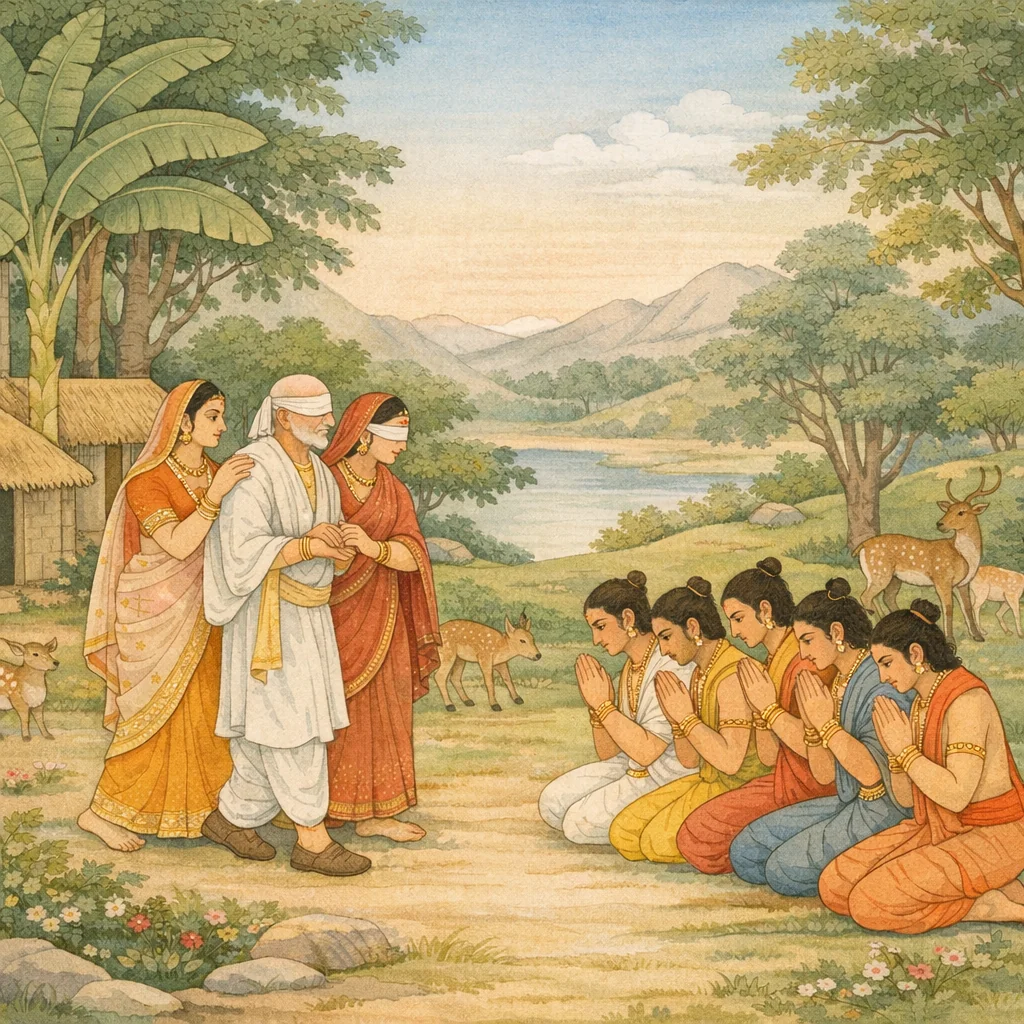
आश्रमं ते ततो जम्मुर्धुतराष्ट्रस्य पाण्डवा: । शून्यं मृगगणाकीर्ण कदलीवनशोभितम्,धृतराष्ट्रका वह पवित्र आश्रम मनुष्योंसे सूना था। उसमें सब ओर मृगोंके झुंड विचर रहे थे और केलेका सुन्दर उद्यान उस आश्रमकी शोभा बढ़ाता था। पाण्डव लोग ज्यों ही उस आश्रममें पहुँचे त्यों ही वहाँ नियमपूर्वक व्रतोंका पालन करनेवाले बहुत-से तपस्वी कौतूहलवश वहाँ पधारे हुए पाण्डवोंको देखनेके लिये आ गये
Vaiśaṃpāyana said: Then the Pāṇḍavas went to Dhṛtarāṣṭra’s hermitage. It was deserted of human presence, filled all around with herds of deer, and beautified by a grove of plantain trees. As soon as the Pāṇḍavas arrived there, many ascetics—strict observers of vows and disciplines—came out of curiosity to see them. The scene underscores a moral contrast: after the violence and politics of the court, the forest āśrama embodies restraint, purity, and the quiet authority of dharma lived through tapas.
Verse 4
ततस्तत्र समाजग्मुस्तापसा नियतव्रता: । पाण्डवानागतान द्रष्टं कौतूहलसमन्विता:,धृतराष्ट्रका वह पवित्र आश्रम मनुष्योंसे सूना था। उसमें सब ओर मृगोंके झुंड विचर रहे थे और केलेका सुन्दर उद्यान उस आश्रमकी शोभा बढ़ाता था। पाण्डव लोग ज्यों ही उस आश्रममें पहुँचे त्यों ही वहाँ नियमपूर्वक व्रतोंका पालन करनेवाले बहुत-से तपस्वी कौतूहलवश वहाँ पधारे हुए पाण्डवोंको देखनेके लिये आ गये
Vaiśampāyana said: Then, in that hermitage, ascetics of disciplined vows gathered together, filled with curiosity, to see the Pāṇḍavas who had arrived. The scene underscores the moral gravity of the Pāṇḍavas’ post-war journey: their presence draws those devoted to austerity and restraint, as if to witness how royal duty and suffering have ripened into humility and dharmic reflection.
Verse 5
तानपृच्छत् ततो राजा क्वासौ कौरववंशभूत् । पिता ज्येष्ठटो गतो5स्माकमिति बाष्पपरिप्लुत:,उस समय राजा युधिष्छठिरने उन सबको प्रणाम करके नेत्रोंमें आँसू भरकर उन सबसे पूछा--“मुनिवरो! कौरववंशका पालन करनेवाले हमारे ज्येष्ठ पिता इस समय कहाँ गये हैं?
Vaiśampāyana said: Then the king (Yudhiṣṭhira), his eyes flooded with tears, questioned them: “Where has our eldest father gone—he who sustained the Kuru lineage?” The query is not merely about location; it reveals the king’s filial duty and grief, and his concern for the continuity of righteous order embodied in the elder’s guardianship of the dynasty.
Verse 6
ते तमूचुस्ततो वाक्यं यमुनामवगाहितुम् । पुष्पाणामुदकुम्भस्य चार्थे गत इति प्रभो
Then they addressed him with these words: “O lord, he has gone down to the Yamunā—to bathe, to gather flowers, and to fill a water-pot.”
Verse 7
उन्होंने उत्तर दिया--'प्रभो! वे यमुनामें स्नान करने, फूल लाने और पानीका घड़ा भरनेके लिये गये हुए हैं' ।। तैराख्यातेन मार्गेण ततस्ते जग्मुरञज्जसा । ददृशुश्चाविदूरे तान् सर्वानथ पदातय:,यह सुनकर उन्हींके बताये हुए मार्गसे वे सब-के-सब पैदल ही यमुनातटकी ओर चल दिये। कुछ ही दूर जानेपर उन्होंने उन सब लोगोंको वहाँसे आते देखा
Vaiśampāyana said: Guided by the route that had been pointed out to them, they proceeded swiftly on foot. After going only a short distance, they saw all those people approaching from nearby.
Verse 8
ततस्ते सत्वरा जग्मु: पितुर्दर्शनकाड्क्षिण: । सहदेवस्तु वेगेन प्राधावद् यत्र सा पृथा
Then they hurried away, eager to behold their father. Sahadeva, however, ran swiftly to the place where Pṛthā (Kuntī) was.
Verse 9
सा च बाष्पाकुलमुखी ददर्श दयितं सुतम्,कुन्तीने भी जब अपने प्यारे पुत्र सहदेवको देखा तो उनके मुखपर आँसुओंकी धारा बह चली। उन्होंने दोनों हाथोंसे पुत्रको उठाकर छातीसे लगा लिया और गान्धारीसे कहा --' दीदी! सहदेव आपकी सेवामें उपस्थित है'। तदनन्तर राजा युधिष्ठिर, भीमसेन, अर्जुन तथा नकुलको देखकर कुन्तीदेवी बड़ी उतावलीके साथ उनकी ओर चलीं
Overcome with tears, Kuntī beheld her beloved son Sahadeva. As she saw him, a stream of tears flowed down her face. Lifting him with both hands, she drew him to her breast and said to Gāndhārī, “Sister, Sahadeva is here, ready to serve you.” Then, seeing King Yudhiṣṭhira, Bhīmasena, Arjuna, and Nakula, Queen Kuntī hurried toward them with eager longing.
Verse 10
बाहुभ्यां सम्परिष्वज्य समुन्नाम्य च पुत्रकम् । गान्धार्या: कथयामास सहदेवमुपस्थितम्,कुन्तीने भी जब अपने प्यारे पुत्र सहदेवको देखा तो उनके मुखपर आँसुओंकी धारा बह चली। उन्होंने दोनों हाथोंसे पुत्रको उठाकर छातीसे लगा लिया और गान्धारीसे कहा --' दीदी! सहदेव आपकी सेवामें उपस्थित है'। तदनन्तर राजा युधिष्ठिर, भीमसेन, अर्जुन तथा नकुलको देखकर कुन्तीदेवी बड़ी उतावलीके साथ उनकी ओर चलीं
Vaiśampāyana said: Kuntī embraced her son with both arms, lifted him up, and drew him close to her breast. Then she informed Gāndhārī, “Elder sister, Sahadeva is here, standing ready in your service.” After this, seeing King Yudhiṣṭhira, Bhīmasena, Arjuna, and Nakula, Queen Kuntī moved toward them with urgent longing.
Verse 11
अनन्तरं च राजानं भीमसेनमथार्जुनम् । नकुलं च पृथा दृष्टवा त्वरमाणोपचक्रमे,कुन्तीने भी जब अपने प्यारे पुत्र सहदेवको देखा तो उनके मुखपर आँसुओंकी धारा बह चली। उन्होंने दोनों हाथोंसे पुत्रको उठाकर छातीसे लगा लिया और गान्धारीसे कहा --' दीदी! सहदेव आपकी सेवामें उपस्थित है'। तदनन्तर राजा युधिष्ठिर, भीमसेन, अर्जुन तथा नकुलको देखकर कुन्तीदेवी बड़ी उतावलीके साथ उनकी ओर चलीं
Then Pṛthā (Kuntī), seeing King Yudhiṣṭhira, Bhīmasena, Arjuna, and Nakula, hurried forward toward them. The scene reveals a mother’s urgent affection and the family’s reunion after suffering, where love and duty rise amid the austerity of later life.
Verse 12
सा हाग्रेगच्छति तयोर्दम्पत्योर्हतपुत्रयो: । कर्षन्ती तौ ततस्ते तां दृष्टवा संन्यपतन् भुवि,वे आगे-आगे चलती थीं और उन पुत्रहीन दम्पतिको अपने साथ खींचे लाती थीं। उन्हें देखते ही पाण्डव उनके चरणोंमें पृथ्वीपर गिर पड़े
Vaiśampāyana said: She walked in front, drawing along with her that childless royal couple whose sons had been slain. When the Pāṇḍavas saw her approaching in that way, they at once fell to the ground at her feet—an act of reverence and remorse in the wake of the war’s devastation.
Verse 13
राजा तान् स्वरयोगेन स्पर्शन च महामना: | प्रत्यभिज्ञाय मेधावी समाश्वासयत प्रभु:,महामना बुद्धिमान् राजा धृतराष्ट्रने बोलनेके स्वरसे और स्पर्शसे पाण्डवोंको पहचानकर उन सबको आश्वासन दिया
Vaiśampāyana said: The great-souled king, discerning and authoritative, recognized the Pāṇḍavas by the familiar tone of their voices and by touch; having thus identified them, he reassured them. The scene shows how, even amid loss and withdrawal, kinship is affirmed through intimate signs, and the king responds with steadiness and consolation rather than suspicion or harshness.
Verse 14
ततस्ते बाष्पमुत्सृज्य गान्धारीसहितं नृपम् । उपतस्थुर्महात्मानो मातरं च यथाविधि,तत्पश्चात् अपने नेत्रोंके आँसू पोंछकर महात्मा पाण्डवोंने गान्धारीसहित राजा धृतराष्ट्र तथा माता कुन्तीको विधिपूर्वक प्रणाम किया
Then, casting off their tears, the noble Pāṇḍavas approached and, in due form, paid respectful homage to King Dhṛtarāṣṭra together with Gāndhārī, and also to their mother Kuntī. The scene underscores disciplined grief: sorrow is acknowledged, yet duty and reverence toward elders are upheld through proper conduct.
Verse 15
सर्वेषां तोयकलशान् जगहुस्ते स्वयं तदा । पाण्डवा लब्धसंज्ञास्ते मात्रा चाश्वासिता: पुन:,इसके बाद मातासे बार-बार सान्त्वना पाकर जब पाण्डव कुछ स्वस्थ एवं सचेत हुए तब उन्होंने उन सबके हाथसे जलके भरे हुए कलश स्वयं ले लिये
Vaiśampāyana said: Then the Pāṇḍavas, having regained consciousness and being repeatedly comforted by their mother, themselves took into their own hands all the water-filled pitchers that others had been holding. The scene underscores filial duty and composure in grief: after receiving a mother’s reassurance, they resume the necessary rites and responsibilities with steadiness.
Verse 16
तथा नार्यों नुसिंहानां सोडवरोधजनस्तदा । पौरजानपदाश्रैव ददृशुस्तं जनाधिपम्,तदनन्तर उन पुरुषसिंहोंकी स्त्रियों तथा अन्तः:पुरकी दूसरी स्त्रियोंने और नगर एवं जनपदके लोगोंने भी क्रमश: राजा धृतराष्ट्रका दर्शन किया
Vaiśampāyana said: Then the women of those lion-like men, together with the women of the inner apartments and the women of the royal household, and likewise the townsfolk and the people of the countryside, came one after another to behold that lord of men—King Dhṛtarāṣṭra.
Verse 17
निवेदयामास तदा जन तन्नामगोत्रत: । युधिष्ठिरो नरपति: स चैन प्रत्यपूजयत्,उस समय स्वयं राजा युधिष्ठिरने एक-एक व्यक्तिका नाम और गोत्र बताकर परिचय दिया और परिचय पाकर धृतराष्ट्रने उन सबका वाणीद्वारा सत्कार किया
Then King Yudhiṣṭhira introduced the people one by one, stating each person’s name and lineage. Having learned who they were, Dhṛtarāṣṭra received them with courteous words, honoring them in accordance with propriety.
Verse 18
स तै: परिवृतो मेने हर्षबाष्पाविलेक्षण: । राजा55त्मानं गृहगतं पुरेव गजसाह्नये,उन सबसे घिरे हुए राजा धृतराष्ट्र अपने नेत्रोंसे हर्षके आँसू बहाने लगे। उस समय उन्हें ऐसा जान पड़ा मानो मैं पहलेकी ही भाँति हस्तिनापुरके राजमहलमें बैठा हूँ
Vaiśampāyana said: Surrounded by them, King Dhṛtarāṣṭra—his eyes clouded with tears of joy—imagined himself as though he had returned home, as in former days, seated again in the royal palace at Hastināpura.
Verse 19
अभिवादितो वधूभिश्न कृष्णद्याभि: स पार्थिव: । गान्धार्या सहितो धीमान् कुन्त्या च प्रत्यनन्दत,तत्पश्चात् द्रौयदी आदि बहुओंने गान्धारी और कुन्तीसहित बुद्धिमान् राजा धृतराष्ट्रको प्रणाम किया और उन्होंने भी उन सबको आशीर्वाद देकर प्रसन्न किया
Vaiśampāyana said: Then the king, the wise Dhṛtarāṣṭra, accompanied by Gāndhārī and Kuntī, was respectfully greeted by the daughters-in-law—beginning with Kṛṣṇā (Draupadī). He, in turn, received them with gladness and bestowed his blessing.
Verse 20
ततश्लाश्रममागच्छत् सिद्धचारणसेवितम् । दिदृक्षुभि: समाकीर्ण नभस्तारागणैरिव,इसके बाद वे सबके साथ सिद्ध और चारणोंसे सेवित अपने आश्रमपर आये। उस समय उनका आश्रम तारोंसे व्याप्त हुए आकाशकी भाँति दर्शकोंसे भरा था
Vaiśampāyana said: Then he came to the hermitage, attended by Siddhas and Cāraṇas. The āśrama was crowded with onlookers, like the sky filled with clusters of stars.
Verse 24
इति श्रीमहाभारते आश्रमवासिके पर्वणि आश्रमवासपर्वणि युधिष्ठिरादिधृतराष्ट्रसमागमे चतुर्विशो5ध्याय:
Thus, in the Śrī Mahābhārata, within the Āśramavāsika Parva—specifically the section on dwelling in the forest hermitage—ends the twenty-fourth chapter, concerning the meeting of Yudhiṣṭhira and the others with Dhṛtarāṣṭra. This closing colophon marks the passage from royal life to ascetic retirement, highlighting reconciliation, restraint, and the ethical weight of kinship after war.
Verse 836
सुस्वरं रुरुदे धीमान् मातु: पादावुपस्पृशन् । फिर तो समस्त पाण्डव अपने ताऊके दर्शनकी इच्छासे बड़ी उतावलीके साथ आगे बढ़े। बुद्धिमान् सहदेव तो बड़े वेगसे दौड़े और जहाँ कुन्ती थी, वहाँ पहुँचकर माताके दोनों चरण पकड़कर फूट-फूटकर रोने लगे
Vaiśampāyana said: The wise Sahadeva, touching his mother’s feet, wept aloud in a clear, resonant voice. Longing to behold their elder (Dhṛtarāṣṭra), all the Pāṇḍavas hurried forward; but Sahadeva, rushing ahead to where Kuntī was, clasped her feet and broke into uncontrollable tears—an act that underscores filial duty, reverence to elders, and the moral weight of reunion after suffering.
Frequently Asked Questions
The dilemma is whether forceful encouragement and provocation—used to prevent despair and protect lineage—can be ethically justified despite contributing to escalation; Kuntī frames it as duty-driven preservation rather than personal ambition.
Worldly outcomes (like rājya-phala) are not the final measure of dharma; sustained responsibility includes retrospective accountability, service to elders, and disciplined renunciation as a means to restore inner order after public catastrophe.
No explicit phalāśruti formula appears in this passage; the meta-significance lies in how the chapter reclassifies earlier political speech as morale-preserving strategy and redirects the narrative toward tapas, reconciliation, and the epic’s renunciatory conclusion.