Adhyaya 21
धृतराष्ट्रस्य वनप्रस्थानम् — Dhṛtarāṣṭra’s Departure for Forest Life
Upa-parva: Āśramavāsa (Forest-Residence Episode)
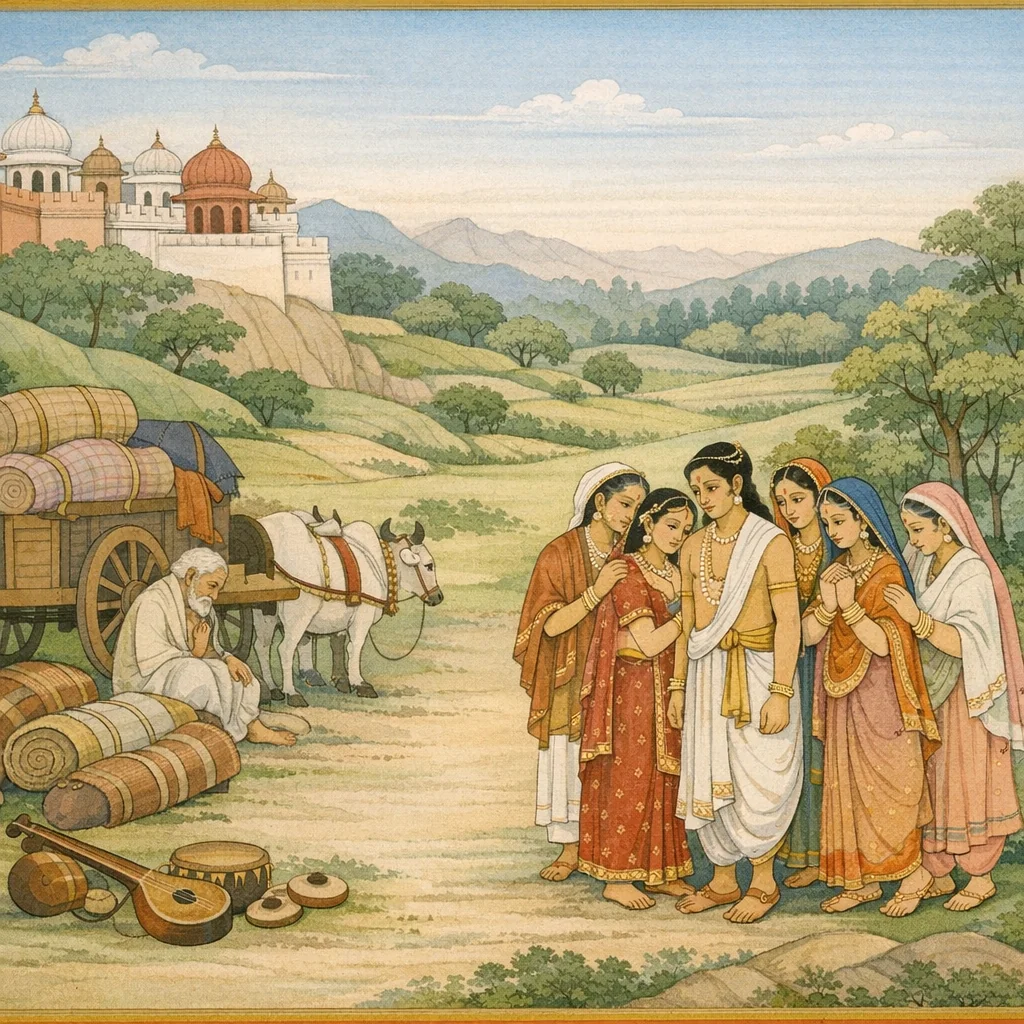
Vaiśaṃpāyana reports that at dawn Dhṛtarāṣṭra (Ambikā’s son), having resolved upon forest residence, summons the Pāṇḍava heroes. With Gāndhārī, he is duly honored and arranges an iṣṭi in the Kārttikī season through Veda-versed brāhmaṇas, placing agnihotra at the ritual forefront. Clad in bark garments and antelope-skin, he exits the palace, accompanied by women of the Kuru-Pāṇḍava houses; the departure triggers a rising public outcry. He worships the household with offerings (lāja and flowers), settles and provides for servants and dependents, and then releases them, formalizing renunciation through redistribution and detachment. Yudhiṣṭhira, trembling and tear-choked, collapses in grief, while Arjuna restrains him amid intense sorrow. Bhīma, the twins, Vidura, Saṃjaya, Dhaumya, and other brāhmaṇas follow, also tearful. Kuntī supports the blindfolded Gāndhārī, who holds Dhṛtarāṣṭra’s hand; Draupadī, other royal women (including Uttara and Citrāṅgadā), and attendants proceed. The women’s lament is compared to the cry of kurarī birds; the city of Gajāhvaya (Hāstinapura) becomes deeply distressed, recalling earlier moments of collective trauma, as the king advances toward the great forest.
Chapter Arc: वैशम्पायन जनमेजय से कहते हैं—माता कुन्ती की स्मृति में वे पुरुषसिंह पाण्डव अचानक भीतर से टूट जाते हैं; जो राज्य-धर्म के अभ्यस्त थे, वही अब शोक में डूबकर किसी कार्य में मन नहीं लगा पाते। → राजकार्य में उनकी उदासीनता बढ़ती जाती है—वे न किसी बात में आनंद लेते हैं, न किसी के अभिवादन का उत्तर देते हैं। मन-ही-मन वे सोचते हैं कि अत्यन्त कृशा कुन्ती वृद्ध धृतराष्ट्र के साथ वन में कैसे कष्ट सह रही होगी, और बन्धु-विहीना गान्धारी अन्धे पति का सहारा बनकर निर्जन वन में कैसे चलती होगी। → युधिष्ठिर का निर्णय—वन-गमन की तैयारी: अन्तःपुर की वधुएँ भी साथ चलेंगी; रसोइये, पाकशाला के अध्यक्ष, भोजन-सामग्री, भक्ष्य-भोज्य, शकट—सब जुटाए जाएँ; नगर में घोषणा हो कि ‘कल सबेरे प्रस्थान’ होगा और मार्ग में पड़ाव-गृह तैयार किए जाएँ। → आज्ञाएँ देकर पाण्डव भ्राताओं सहित, स्त्रियों और वृद्धों के साथ प्रातःकाल निकल पड़ते हैं। नगर-जन की भीड़ को संभालते हुए वे कुछ दिनों तक नगर के बाहर ठहरकर व्यवस्था करते हैं, फिर वन की ओर प्रस्थान करते हैं। → वन की ओर बढ़ते इस विशाल काफ़िले के आगे—क्या वे कुन्ती, गान्धारी और धृतराष्ट्र को जीवित, सुरक्षित और शांत पाएँगे, या वन का सत्य उन्हें किसी और ही रूप में मिलेगा?
Shlokas
Verse 1
वैशम्पायनजी कहते हैं--जनमेजय! अपनी माताको आनन्द प्रदान करनेवाले वे पुरुषसिंह वीर पाण्डव इस प्रकार माताकी याद करते हुए अत्यन्त दुखी हो गये थे
Vaiśampāyana said: “O Janamejaya, those heroic Pāṇḍavas—lion-like among men, who had been a source of joy to their mother—became deeply distressed as they thus kept remembering her.”
Verse 2
ये राजकार्येषु पुरा व्यासक्ता नित्यशो5भवन् । ते राजकार्याणि तदा नाकार्षु: सर्वतः पुरे,जो पहले प्रतिदिन राजकीय कार्योंमें निरन्तर आसक्त रहते थे, वे ही उन दिनों नगरमें कहीं कोई राजकाज नहीं करते थे। मानो उनके हृदयमें शोकने घर बना लिया था। वे किसी भी वस्तुको पाकर प्रसन्न नहीं होते थे। किसीके बातचीत करनेपर भी वे उस बातकी ओर न तो ध्यान देते और न उसकी सराहना करते थे
Vaiśampāyana said: Those who had formerly been constantly absorbed, day after day, in the duties of kingship—those very men, in those days, performed no royal business anywhere in the city. Grief had, as it were, made its home within their hearts; nothing they obtained brought them joy, and even when others spoke to them, they neither attended to the words nor found any relish in them.
Verse 3
प्रविष्टा इव शोकेन नाभ्यनन्दन्त किंचन । सम्भाष्यमाणा अपि ते न किंचित् प्रत्यपूजयन्,जो पहले प्रतिदिन राजकीय कार्योंमें निरन्तर आसक्त रहते थे, वे ही उन दिनों नगरमें कहीं कोई राजकाज नहीं करते थे। मानो उनके हृदयमें शोकने घर बना लिया था। वे किसी भी वस्तुको पाकर प्रसन्न नहीं होते थे। किसीके बातचीत करनेपर भी वे उस बातकी ओर न तो ध्यान देते और न उसकी सराहना करते थे
Vaiśampāyana said: Overwhelmed as though grief had entered into them, they took delight in nothing at all. Even when others spoke to them, they offered no response of appreciation.
Verse 4
ते सम वीरा दुराधर्षा गाम्भीय्यें सागरोपमा: । शोकोपहतविज्ञाना नष्टसंज्ञा इवाभवन्,समुद्रके समान गाम्भीर्यशाली दुर्धर्ष वीर पाण्डव उन दिनों शोकसे सुध-बुध खो जानेके कारण अचेत-से हो गये थे
Vaiśampāyana said: Those heroes—unyielding and equal in valor, deep as the ocean—had their discernment struck down by grief, and they became as if they had lost consciousness.
Verse 5
अचिन्तयंश्व जननीं ततस्ते पाण्डुनन्दना: । कथं नु वृद्धमिथुनं वहत्यतिकृशा पृथा
Vaiśampāyana said: Then the sons of Pāṇḍu, thinking anxiously of their mother, wondered, “How can Pṛthā (Kuntī)—so exceedingly frail—support and accompany that aged pair?”
Verse 6
तदनन्तर एक दिन पाण्डव अपनी माताके लिये इस प्रकार चिन्ता करने लगे--“हाय! मेरी माता कुन्ती अत्यन्त दुबली हो गयी होंगी। वे उन बूढ़े पति-पत्नी गान्धारी और धृतराष्ट्रकी सेवा कैसे निभाती होंगी? ।। कथं च स महीपालो हततपुत्रो निराश्रय: । पत्न्या सह वसत्येको वने श्वापदसेविते,'शिकारी जन्तुओंसे भरे हुए उस जंगलमें आश्रयहीन एवं पुत्ररहित राजा धुृतराष्ट्र अपनी पत्नीके साथ अकेले कैसे रहते होंगे?
Then, on a certain day, the Pāṇḍavas began to worry about their mother: “Alas! Our mother Kuntī must have grown exceedingly thin. How can she render service to that aged couple—Gāndhārī and Dhṛtarāṣṭra? And how does that king, bereft of sons and without refuge, live alone with his wife in a forest haunted by wild beasts?”
Verse 7
सा च देवी महाभागा गान्धारी हतबान्धवा । पतिमन्धं कथं वृद्धमन्वेति विजने वने,“जिनके बन्धु-बान्धव मारे गये हैं, वे महाभागा गान्धारी देवी, उस निर्जन वनमें अपने अन्धे और बूढ़े पतिका अनुसरण कैसे करती होंगी?
And how could that illustrious queen Gāndhārī—bereft of her kinsmen—follow her husband, blind and aged, into a lonely forest?
Verse 8
एवं तेषां कथयतामौत्सुक्यमभवत् तदा । गमने चाभवद् बुद्धिर्धतराष्ट्रदिदृक्षया,इस प्रकार बात करते-करते उनके मनमें बड़ी उत्कण्ठा हो गयी और उन्होंने धृतराष्ट्रके दर्शनकी इच्छासे वनमें जानेका विचार कर लिया
As they continued conversing, a keen longing arose in them; and, wishing to see Dhṛtarāṣṭra, they resolved to go to the forest.
Verse 9
सहदेवस्तु राजानं प्रणिपत्येदमब्रवीत् । अहो मे भवतो दृष्ट॑ हृदयं गमनं प्रति,उस समय सहदेवने राजा युधिष्ठिरको प्रणाम करके कहा--'भैया, मुझे ऐसा दिखायी देता है कि आपका हृदय तपोवनमें जानेके लिये उत्सुक है--यह बड़े हर्षकी बात है
Then Sahadeva bowed to King Yudhiṣṭhira and said: “Ah, brother! It is plain to me that your heart is eager to depart for the forest of austerities; this is a cause for joy.”
Verse 10
न हि त्वां गौरवेणाहमशकं वक्तुमञण्जसा । गमन॑ प्रति राजेन्द्र तदिदं समुपस्थितम्
“Out of respect for you, I could not speak to you plainly. But now, O best of kings, the matter of departure has come directly upon us.”
Verse 11
“मेरा अहोभाग्य कि मैं तपस्यामें लगी हुई माता कुन्तीका दर्शन करूँगा। उनके सिरके बाल जटारूपमें परिणत हो गये होंगे! वे तपस्विनी बूढ़ी माता कुश और काशके आसनोंपर शयन करनेके कारण क्षत-विक्षत हो रही होंगी
“How fortunate I am that I shall behold Mother Kuntī, absorbed in austerity. The hair upon her head will have grown into matted locks. That aged, ascetic mother—sleeping on seats of kuśa and kāśa grass—will be bruised and torn by the harshness of her vow.”
Verse 12
प्रासादहर्म्यसंवृद्धामत्यन्तसुखभागिनीम् । कदा तु जननीं श्रान्तां द्रक्ष्यामि भूशदु:खिताम्,“जो महलों और अट्ठटालिकाओंमें पलकर बड़ी हुई हैं, अत्यन्त सुखकी भागिनी रही हैं, वे ही माता कुन्ती अब थककर अत्यन्त दुःख उठाती होंगी! मुझे कब उनके दर्शन होंगे?
“She who was reared amid palaces and lofty mansions, once a sharer in the highest comforts—Mother Kuntī herself must now be weary, suffering grievously upon the bare earth. When shall I behold her?”
Verse 13
'राजेन्द्र! मैं आपके गौरवका खयाल करके संकोचवश वहाँ जानेकी बात स्पष्टरूपसे कह नहीं पाता था। आज सौभाग्यवश वह अवसर अपने-आप उपस्थित हो गया ।। दिष्ट्या द्रक्ष्यामि तां कुन्तीं वर्तयन्तीं तपस्विनीम् । जटिलां तापसी वृद्धां कुशकाशपरिक्षताम्,अनित्या: खलूु मर्त्यानां गतयो भरतर्षभ । कुन्ती राजसुता यत्र वसत्यसुखिता वने “भरतश्रेष्ठ! मनुष्योंकी गतियाँ निश्चय ही अनित्य होती हैं, जिनमें पड़कर राजकुमारी कुन्ती सुखोंसे वज्चित हो वनमें निवास करती हैं”
Vaiśampāyana said: “O king, out of deference to your dignity I had, from hesitation, been unable to state plainly the matter of going there. Today, by good fortune, that very opportunity has arisen of itself. Blessed indeed—now I shall behold Kuntī, living the life of an ascetic: her hair matted, an aged forest-dweller, her body scratched by kuśa and kāśa grasses. Truly, O bull among the Bharatas, the courses of mortal beings are impermanent; thus it is that Kuntī, a princess by birth, dwells in the forest, deprived of comforts.”
Verse 14
सहदेववच: श्रुत्वा द्रौपदी योषितां वरा । उवाच देवी राजानमभिपूज्याभिनन्द्य च
Vaiśampāyana said: Hearing Sahadeva’s words, Draupadī—foremost among women—addressed the king. The noble lady spoke after first showing him due honor and offering respectful assent.
Verse 15
सहदेवकी बात सुनकर नारियोंमें श्रेष्ठ महारानी द्रौपदी राजाका सत्कार करके उन्हें प्रसन्न करती हुई बोली-- ।। कदा द्रक्ष्यामि तां देवीं यदि जीवति सा पृथा । जीवन्त्या ह्ाद्य मे प्रीतिर्भविष्यति जनाधिप
Draupadī, the foremost among women, having duly honored the king and seeking to please him, said: “When shall I behold that noble lady Pṛthā (Kuntī), if she is still alive? If she lives, then today my heart’s joy will be fulfilled, O lord of men.”
Verse 16
“नरेश्वर! मैं अपनी सास कुन्तीदेवीका दर्शन कब करूँगी? क्या वे अबतक जीवित होंगी? यदि वे जीवित हों तो आज उनका दर्शन पाकर मुझे असीम प्रसन्नता होगी ।। एषा तेअस्तु मतिर्नित्यं धर्मे ते रमतां मनः । योअज्द्यत्वमस्मान् राजेन्द्र श्रेयसा योजयिष्यसि,'राजेन्द्र! आपकी बुद्धि सदा ऐसी ही बनी रहे। आपका मन धर्ममें ही रमता रहे; क्योंकि आज आप हमलोगोंको माता कुन्तीका दर्शन कराकर परम कल्याणकी भागिनी बनायेंगे
“O king! When shall I behold my mother-in-law, Queen Kuntī? Is she still alive? If she lives, then seeing her today would fill me with boundless joy. May this resolve ever remain yours; may your mind delight in dharma. For today, O best of kings, you will bring us to the highest good by granting us the sight of Mother Kuntī.”
Verse 17
अग्रपादस्थितं चेम॑ विद्धि राजन् वधूजनम् । काडुशक्षन्तं दर्शन कुन्त्या गान्धार्या: श्वशुरस्य च,“राजन! आपको विदित हो कि अन्तःपुरकी सभी बहुएँ वनमें जानेके लिये पैर आगे बढ़ाये खड़ी हैं। वे सब-की-सब कुन्ती, गान्धारी तथा ससुरजीके दर्शन करना चाहती हैं
Vaiśampāyana said: “Know this too, O King: the women of the inner apartments—our daughters-in-law—stand with their feet set forward, ready to depart for the forest. All of them long to behold Kuntī, Gāndhārī, and their venerable father-in-law.”
Verse 18
इत्युक्त: स नृपो देव्या द्रौपद्या भरतर्षभ । सेनाध्यक्षान् समानाय्य सर्वानिदमुवाच ह,'भरतभूषण! द्रौपदीदेवीके ऐसा कहनेपर राजा युधिष्ठिरने समस्त सेनापतियोंको बुलाकर कहा--
Vaiśampāyana said: Thus addressed by Queen Draupadī, that king—O bull among the Bharatas—summoned all the commanders of the army and then spoke these words to them.
Verse 19
निर्यातयत मे सेनां प्रभूतरथकुञ्जराम् | द्रक्ष्यामि वनसंस्थं च धृतराष्ट्र महीपतिम्,“तुमलोग बहुत-से रथ और हाथी-घोड़ोंसे सुसज्जित सेनाको कूच करनेकी आज्ञा दो। मैं वनवासी महाराज धृतराष्ट्रके दर्शन करनेके लिये चलूँगा”
Vaiśampāyana said: “Dispatch my army, well furnished with many chariots and war-elephants. I shall go to see King Dhṛtarāṣṭra, now dwelling in the forest.”
Verse 20
स्त्र्यध्यक्षांक्षाब्रवीद् राजा यानानि विविधानि मे | सज्जीक्रियन्तां सर्वाणि शिबिकाशक्ष सहस्रश:,इसके बाद राजाने रनिवासके अध्यक्षोंको आज्ञा दी--'तुम सब लोग हमारे लिये भाँति- भाँतिके वाहन और पालकियोंको हजारोंकी संख्यामें तैयार करो
Vaiśampāyana said: The king then addressed the superintendents of the women’s quarters and commanded, “Let all manner of conveyances for me be made ready—vehicles of various kinds, and palanquins in their thousands.”
Verse 21
शकटापणवेशाक्ष कोश: शिल्पिन एव च | निर्यान्तु कोषपालाश्व कुरुक्षेत्रा श्रमं प्रति,“आवश्यक सामानोंसे लदे हुए छकड़े, बाजार, दुकानें, खजाना, कारीगर और कोषाध्यक्ष--ये सब कुरुक्षेत्रके आश्रमकी ओर रवाना हो जायूँ
Vaiśampāyana said: “Let the carts laden with necessary supplies—together with the market-stalls and shops, the treasury, and the artisans as well—along with the treasurer and the horses, set out toward the hermitage at Kurukṣetra.”
Verse 22
यश्न पौरजन: वक्रिद् द्रष्टमिच्छति पार्थिवम् | अनावृत: सुविहितः स च यातु सुरक्षित:,“नगरवासियोंमेंसे जो कोई भी महाराजका दर्शन करना चाहता हो, उसे बेरोक-टोक सुविधापूर्वक सुरक्षितरूपसे चलने दिया जाय इति श्रीमहाभारते आश्रमवासिके पर्वणि आश्रमवासपर्वणि युधिष्िरयात्रायां द्वाविंशोडध्याय:
Vaiśampāyana said: “Let any townsman who wishes to see the king be allowed to go—without being turned back, with proper arrangements made, and in full safety.”
Verse 23
सूदा: पौरोगवाश्नैव सर्व चैव महानसम् | विविध॑ भक्ष्यभोज्यं च शकटैरुह्मुतां मम,'पाकशालाके अध्यक्ष और रसोइये भोजन बनानेके सब सामानों तथा भाँति-भाँतिके भक्ष्य-भोज्य पदार्थोंको मेरे छकड़ोंपर लादकर ले चलें
Vaiśampāyana said: “Let the cooks and the attendants of the royal kitchen, together with everyone belonging to the great kitchen establishment, load onto my carts the full range of provisions—ingredients and all kinds of foods fit to be eaten and enjoyed—and carry them along.”
Verse 24
प्रयाणं घुष्यतां चैव श्वोभूत इति मा चिरम् । क्रियतां पथि चाप्यद्य वेश्मानि विविधानि च,“नगरमें यह घोषणा करा दी जाय कि “कल खबेरे यात्रा की जायगी; इसलिये चलनेवालोंको विलम्ब नहीं करना चाहिये।” मार्गमें हमलोगोंके ठहरनेके लिये आज ही कई तरहके डेरे तैयार कर दिये जायूँ
Vaiśampāyana said: “Let the departure be proclaimed in the city at once: ‘Tomorrow at daybreak we set out—so let none delay.’ And let various lodgings and resting-places be arranged today itself along the route.”
Verse 25
एवमाज्ञाप्य राजा स भ्रातृभि: सहपाण्डव: । श्वोभूते निर्यया राजन् सस्त्रीवृद्धपुर:सर:,राजन्! इस प्रकार आज्ञा देकर सबेरा होते ही अपने भाई पाण्डवोंसहित राजा युधिष्ठिरने स्त्री और बूढ़ोंको आगे करके नगरसे प्रस्थान किया
Vaiśampāyana said: Having thus issued his commands, that Pāṇḍava king set out at daybreak, O King, together with his brothers—placing the women and the aged in the forefront—departing from the city in a manner befitting duty and care for the vulnerable.
Verse 26
स बहिर्दिवसानेव जनौघं परिपालयन् । न्यवसन्नूपति: पठच ततो5गच्छद् वन॑ प्रति,बाहर जाकर पुरवासी मनुष्योंकी प्रतीक्षा करते हुए वे पाँच दिनोंतक एक ही स्थानपर टिके रहे। फिर सबको साथ लेकर वनमें गये
Vaiśampāyana said: Having gone outside, the king waited for the gathered townspeople, watching over the crowd. He remained in one place for five days; then, taking everyone along, he proceeded toward the forest—signaling a deliberate, duty-bound withdrawal rather than a hasty abandonment of those dependent on him.
Frequently Asked Questions
The chapter stages the conflict between attachment and duty: Yudhiṣṭhira’s filial and political responsibility confronts the ethical necessity (for Dhṛtarāṣṭra) of renouncing courtly life after irreversible harm, testing whether grief should impede or accompany rightful transition.
Renunciation is shown as procedural and accountable: rites, provision for dependents, and deliberate detachment indicate that withdrawal from power is ethically structured, not merely emotional retreat, aligning personal conduct with post-war dharma.
No explicit phalaśruti appears in the provided verses; the chapter functions narratively as a transition unit, using public lament and ritual detail as implicit commentary on impermanence and the disciplined closure of worldly roles.