Adhyaya 16
Adhyāya 16 — Daiva, Kṣatriya-dharma, and Public Reassurance to Dhṛtarāṣṭra
Upa-parva: Āśramavāsa (Forest-Retirement Episode) — Dhṛtarāṣṭra’s consolation and transition
A Brahmin speaker addresses Dhṛtarāṣṭra, arguing that the destruction of the Kurus cannot be assigned solely to Duryodhana, Dhṛtarāṣṭra, Karṇa, or Śakuni; it is characterized as daiva—an overriding causal order not fully preventable by human exertion. The speaker notes the scale of mobilization (eighteen akṣauhiṇīs) and the rapid devastation within eighteen days, naming principal warriors across both sides to emphasize that the collapse was produced by exceptional agents operating under daiva’s force. The discourse then reframes death in battle as an expected endpoint within kṣatriya-dharma, thereby reducing personal blame and moral paralysis. The speaker pivots to political reassurance: Dhṛtarāṣṭra is treated as a respected elder and “guru,” and the deceased are envisioned as attaining heroic realms with Brahmin approval. Yudhiṣṭhira and the Pāṇḍavas are described as capable, disciplined, and protective—even toward adversaries—promising stable rule, continuity of prior exemptions and grants, and non-hostility from key royal women (Kuntī, Pāñcālī, Ulūpī, Sātvatī). Vaiśaṃpāyana concludes that the assembly accepts this dharmic counsel, after which Dhṛtarāṣṭra respectfully dismisses the gathered constituents and withdraws with Gāndhārī, setting up the next day’s actions.
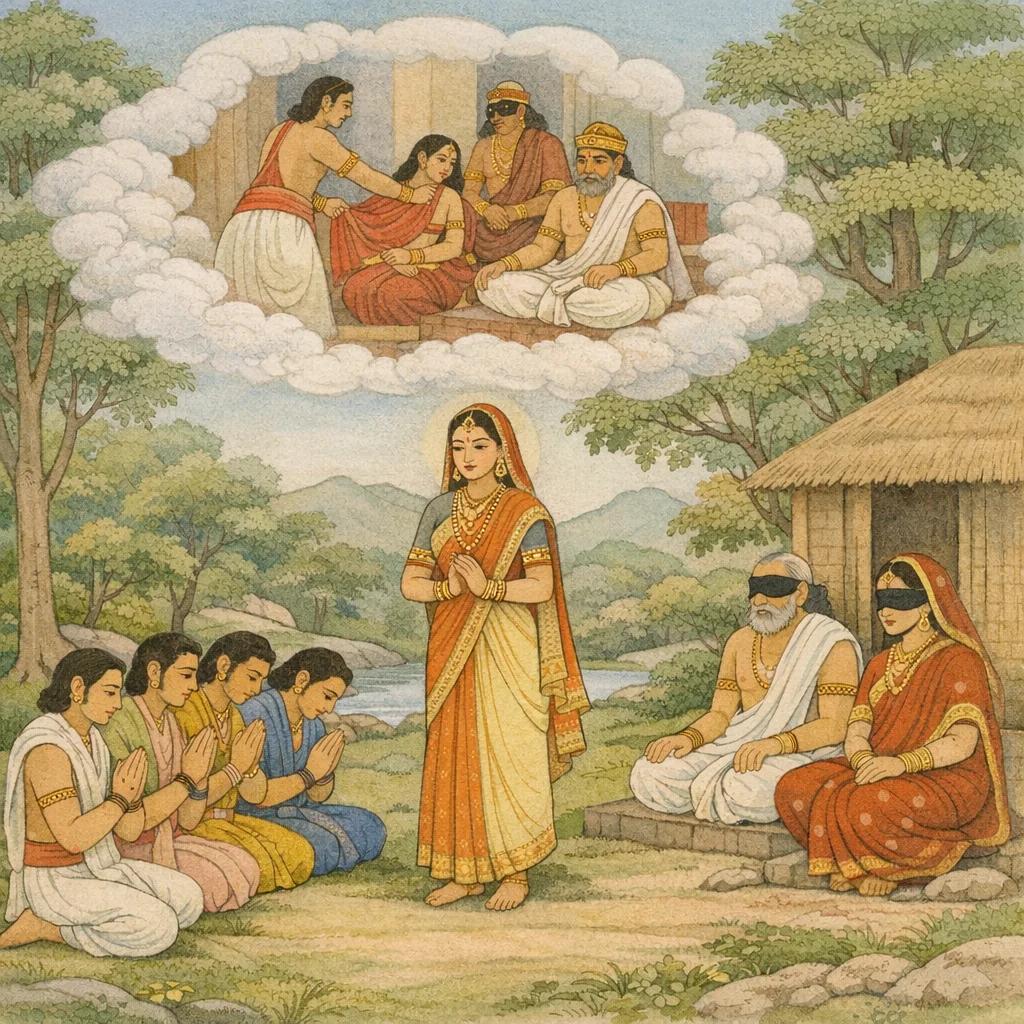
Chapter Arc: पाण्डव वनाश्रम में कुन्ती से विनय करते हैं—माता, अब तो हमारे साथ चलो; इतने दुःखों के बाद तुम्हें अलग क्यों रहना चाहिए? → कुन्ती अपने पुराने ‘उद्धर्षण’ (उत्साह-प्रेरणा) का रहस्य खोलती है—द्यूत में राज्य छिनने, अपमान और परिभव के समय उसने जान-बूझकर पुत्रों को युद्ध हेतु उकसाया, ताकि पाण्डु की संतति और उनका यश नष्ट न हो, और भीम, नकुल, सहदेव जैसे वीर क्षुधा-अपमान में गल न जाएँ। साथ ही वह सभा में द्रौपदी के केश-पकड़ अपमान और उसके करुण पुकार का स्मरण कराती है। → कुन्ती का निर्णायक वचन—‘मैं पुत्रों के जीते हुए राज्य का फल नहीं चाहती; मैं तप से शरीर शोषित कर, वनवासी सास-ससुर (धृतराष्ट्र-गान्धारी) की सेवा करते हुए पुण्यलोक चाहती हूँ।’ → वह युधिष्ठिर को आदेश देती है कि वे भीम आदि भाइयों सहित लौट जाएँ, अपनी बुद्धि को धर्म में स्थिर रखें और मन को महान बनाकर राजधर्म निभाएँ; वह स्वयं आश्रम-सेवा और तप का व्रत चुनती है। → पाण्डवों के लौटने के बाद आश्रम में धृतराष्ट्र-गान्धारी-कुन्ती के कठोर तप और आगामी अनिष्ट की छाया—वनजीवन की परीक्षा अब और तीव्र होगी।
Shlokas
Verse 1
ऑपन-माजल बछ। जि सप्तदशो< ध्याय: कुन्तीका पाण्डवोंको उनके अनुरोधका उत्तर कुन्त्युवाच एवमेतन्महाबाहो यथा वदसि पाण्डव । कृतमुद्धर्षणं पूर्व मया व: सीदतां नृपा:,कुन्ती बोली--महाबाहु पाण्डुनन्दन! तुम जैसा कहते हो, वही ठीक है। राजाओ! पूर्वकालमें तुम नाना प्रकारके कष्ट उठाकर शिथिल हो गये थे, इसलिये मैंने तुम्हें युद्धके लिये उत्साहित किया था
Kuntī said: “Yes—what you say is indeed so, O mighty-armed son of Pāṇḍu. Formerly, when you kings had grown weary and dispirited under many hardships, I roused you to action.”
Verse 2
द्यूतापह्तराज्यानां पतितानां सुखादपि । ज्ञातिभि: परिभूतानां कृतमुद्धर्षणं मया,जूएमें तुम्हारा राज्य छीन लिया गया था। तुम सुखसे भ्रष्ट हो चुके थे और तुम्हारे ही बन्धु-बान्धव तुम्हारा तिरस्कार करते थे, इसलिये मैंने तुम्हें युद्धके लिये उत्साह प्रदान किया था
Vaiśampāyana said: “Seeing those whose kingdoms had been taken away by the dice-game—fallen even from the state of ease and happiness, and humiliated by their own kinsmen—I stirred them up and roused their spirit for action.”
Verse 3
कथं पाण्डोर्न नश्येत संतति: पुरुषर्षभा: । यशश्च वो न नश्येत इति चोद्धर्षणं कृतम्,श्रेष्ठ पुरुषो! मैं चाहती थी कि पाण्डुकी संतान किसी तरह नष्ट न हो और तुम्हारे यशका भी नाश न होने पाये। इसलिये मैंने तुम्हें युद्धके लिये उत्साहित किया था
Vaiśaṃpāyana said: “O bulls among men, I stirred you to action with this thought: ‘How may the lineage of Pāṇḍu not be destroyed, and how may your fame also not perish?’ For that reason I urged you on toward war, O best of men.”
Verse 4
यूयमिन्द्रसमा: सर्वे देवतुल्यपराक्रमा: । मा परेषां मुखप्रेक्षा: स्थेत्येव॑ तत् कृतं मया,तुम सब लोग इन्द्रके समान शक्तिशाली और देवताओंके तुल्य पराक्रमी होकर जीविकाके लिये दूसरोंका मुँह न देखो, इसलिये मैंने वह सब किया था
Vaiśampāyana said: “All of you are equal to Indra in might, and your valor is like that of the gods. Do not stand dependent on others—do not have to look to another’s face for your livelihood. It was precisely for this reason that I did what I did.”
Verse 5
कथं धर्मभृतां श्रेष्ठोी राजा त्वं वासवोपम: । पुनर्वने न दु:खी स्या इति चोद्धर्षणं कृतम्,तुम धर्मात्माओंमें श्रेष्ठ और इन्द्रके समान ऐश्वर्यशशाली राजा होकर पुन: वनवासका कष्ट न भोगो, इसी उद्देश्यसे मैंने तुम्हें युद्धके लिये उत्साहित किया था
Vaiśampāyana said: “How could you—best among the upholders of dharma, a king endowed with sovereignty like Indra—be made to suffer once again in the forest? It was with this very aim, that you should not have to endure renewed hardship of exile, that I stirred you on toward war.”
Verse 6
नागायुतसमप्राण: ख्यातविक्रमपौरुष: । नायं भीमो>त्ययं गच्छेदिति चोद्धर्षणं कृतम्
Vaiśampāyana said: “Endowed with the life-force of ten thousand nāgas, and famed for his valor and manly prowess, Bhīma was not one to meet an untimely end.” With this conviction, words of encouragement and rousing assurance were spoken.
Verse 7
ये दस हजार हाथियोंके समान बलशाली और विख्यात बल-पराक्रमसे सम्पन्न भीमसेन पराजयको न प्राप्त हों; इसीलिये मैंने युद्धके हेतु उत्साह दिलाया था ।। भीमसेनादवरजस्तथायं वासवोपम: । विजयो नावसीदेत इति चोद्धर्षणं कृतम्,भीमसेनके छोटे भाई ये इन्द्रतुल्य पराक्रमी विजय-शील अर्जुन शिथिल होकर न बैठ जायूँ, इसीलिये मैंने उत्साह दिलाया था
Vaiśampāyana said: “So that this Arjuna—Bhīmasena’s younger brother, Indra-like in prowess—might not lose heart or sit down in dejection, I stirred him up with words of encouragement, intent on ensuring victory.”
Verse 8
नकुल: सहदेवश्न तथेमौ गुरुवर्तिनौ । क्षुधा कथं न सीदेतामिति चोद्धर्षणं कृतम्,गुरुजनोंकी आज्ञाके पालनमें लगे रहनेवाले ये दोनों भाई नकुल और सहदेव भूखका कष्ट न उठावें, इसके लिये मैंने तुम्हें उत्ताह दिलाया था
Vaiśampāyana said: “Nakula and Sahadeva—those two brothers devoted to obeying their elders—should not be brought low by the torment of hunger. With this concern in mind, I offered encouragement and urged action.”
Verse 9
इयं च बृहती श्यामा तथात्यायतलोचना । वृथा सभातले क्लिष्टा मा भूदिति च तत् कृतम्,यह ऊँचे कदवाली श्यामवर्णा विशाललोचना मेरी बहू भरी सभामें पुनः व्यर्थ अपमानित होनेका कष्ट न भोगे, इसी उद्देश्यसे मैंने वह सब किया था
And this one—tall, dark-complexioned, with long, wide eyes—should not again be made to suffer in vain on the floor of the royal assembly. With that very intention, I did what I did: to prevent my daughter-in-law from being subjected once more to a purposeless humiliation and anguish in the court.
Verse 10
प्रेक्षतामेव वो भीम वेपन्तीं कदलीमिव । सत्रीधर्मिणीमरिष्टाड़ीं तथा द्यूतपराजिताम्
Vaiśampāyana said: “O Bhīma, before your very eyes she trembled like a plantain tree—steadfast in the duties of a virtuous wife, yet struck by misfortune and brought low by the defeat at dice.”
Verse 11
दुःशासनो यदा मौख््याद् दासीवत् पर्यकर्षत | तदैव विदितं महां पराभूतमिदं कुलम्
Vaiśampāyana said: When, out of foolishness, Duḥśāsana dragged her about as if she were a slave-woman, it became clear at that very moment that this great lineage had fallen into disgrace and defeat.
Verse 12
भीमसेन! तुम सब लोगोंके देखते-देखते केलेके पत्तेकी तरह काँपती हुई, जूएमें हारी गयी, रजस्वला और निर्दोष अंगवाली द्रौपदीको दुःशासनने मूर्खतावश जब दासीकी भाँति घसीटा था, तभी मुझे मालूम हो गया था कि अब इस कुलका पराभव होकर ही रहेगा ।। निषण्णा: कुरवश्चैव तदा मे श्वशुरादय: । सा दैवं नाथमिच्छन्ती व्यलपत् कुररी यथा
Vaiśampāyana said: “Then the Kurus—my father-in-law and the others—sat stunned and silent. Draupadī, longing for the Divine as her only protector, cried out like a kurarī-bird in distress.”
Verse 13
मेरे श्वशुर आदि समस्त कौरव चुपचाप बैठे थे और द्रौपदी अपने लिये रक्षक चाहती हुई भगवान्को पुकार-पुकारकर कुररीकी भाँति विलाप कर रही थी ।। केशपक्षे परामृष्टा पापेन हतबुद्धिना । यदा दुःशासनेनैषा तदा मुह्याम्यहं नूपा:,राजाओ! जिसकी बुद्धि मारी गयी थी, उस पापी दुःशासनने जब मेरी इस बहूका केश पकड़कर खींचा था, तभी मैं दुःखसे मोहित हो गयी थी। यही कारण था कि उस समय विदुलाके वचनोंद्वारा मैंने तुम्हारे तेजकी वृद्धिके लिये उत्साहवर्धन किया था। पुत्रो! इस बातको अच्छी तरह समझ लो
Vaiśampāyana said: “O kings, when that sinful Duḥśāsana—his judgment destroyed by wickedness—seized this woman by the hair and dragged her, I was overwhelmed and stupefied with grief.”
Verse 14
युष्मत्तेजोविवृद्धयर्थ मया हाद्धर्षणं कृतम् । तदानीं विदुलावाक्यैरिति तद् वित्त पुत्रका:,राजाओ! जिसकी बुद्धि मारी गयी थी, उस पापी दुःशासनने जब मेरी इस बहूका केश पकड़कर खींचा था, तभी मैं दुःखसे मोहित हो गयी थी। यही कारण था कि उस समय विदुलाके वचनोंद्वारा मैंने तुम्हारे तेजकी वृद्धिके लिये उत्साहवर्धन किया था। पुत्रो! इस बातको अच्छी तरह समझ लो
Vaiśampāyana said: “For the sake of increasing your valor and royal splendor, I deliberately spoke in a manner meant to spur you on. Understand, my sons: at that time, it was through Vidulā’s words that I roused you—so that your spirit might rise and you might act with firmness.”
Verse 15
कथं न राजवंशो<यं नश्येत् प्राप्प सुतान् मम । पाण्डोरिति मया पुत्रास्तस्मादुद्धर्षणं कृतम्,मेरे और पाण्डुके पुत्रोंतक पहुँचकर यह राजवंश किसी तरह नष्ट न हो जाय; इसीलिये मैंने तुम्हारे उत्साहकी वृद्धि की थी
Vaiśampāyana said: “How could this royal lineage not be ruined once it reached my sons—the sons of Pāṇḍu? Therefore, thinking, ‘They are Pāṇḍu’s sons,’ I acted to rouse their spirit and strengthen their resolve.”
Verse 16
इस प्रकार श्रीमह्याभारत आश्रमवासिकपरववके अन्तर्गत आश्रमवासपर्वमें कुन्तीका वनको प्रस्थानविषयक सोलहवाँ अध्याय पूरा हुआ,न तस्य पुत्रा: पौत्रा वा क्षतवंशस्य पार्थिव । लभन्ते सुकृताललोकान् यस्माद् वंश: प्रणश्यति राजन! जिसका वंश नष्ट हो जाता है, उस कुलके पुत्र या पौत्र कभी पुण्यलोक नहीं पाते; क्योंकि उस वंशका तो नाश ही हो जाता है
Vaiśaṃpāyana said: “O king, when a royal lineage is extinguished, its sons and grandsons do not attain the worlds gained by meritorious deeds; for the very continuity of the family-line—through which rites, duties, and social order are sustained—has perished.”
Verse 17
भुक्तं राज्यफलं पुत्रा भर्तुर्मे विपुलं पुरा । महादानानि दत्तानि पीत:ः सोमो यथाविधि,पुत्रो! मैंने पूर्वकालमें अपने स्वामी महाराज पाण्डुके विशाल राज्यका सुख भोग लिया है, बड़े-बड़े दान दिये हैं और यज्ञमें विधिपूर्वक सोमपान भी किया है इति श्रीमहाभारते आश्रमवासिके पर्वणि आश्रमवासपर्वणि कुन्तीवाक्ये सप्तदशो<ड्ध्याय:
Vaiśampāyana said: “O sons, in former times I fully enjoyed the abundant fruits of sovereignty belonging to my lord. I have given great gifts in charity, and in sacrifice I have duly drunk the Soma according to prescribed rule.”
Verse 18
नाहमात्मफलर्थ वै वासुदेवमचूचुदम् | विदुलाया: प्रलापैस्तै: पालनार्थ च तत् कृतम्,मैंने अपने लाभके लिये श्रीकृष्णको प्रेरित नहीं किया था। विदुलाके वचन सुनाकर जो उनके द्वारा तुम्हारे पास संदेश भेजा था, वह सब तुमलोगोंकी रक्षाके उद्देश्यसे ही किया था
I did not urge Vāsudeva (Kṛṣṇa) for my own gain. Whatever words of Vidulā I repeated, and whatever message I had him send to you, was done solely for your protection.
Verse 19
नाहं राज्यफलं पुत्रा: कामये पुत्रनिर्जितम् । पतिलोकानहं पुण्यान् कामये तपसा विभो,पुत्रो! मैं पुत्रके जीते हुए राज्यका फल भोगना नहीं चाहती। प्रभो! मैं तपस्याद्वारा पुण्यमय पतिलोकमें जानेकी कामना रखती हूँ
I do not desire, my sons, to enjoy the fruits of a kingdom won by my son. O mighty one, I seek instead—through austerity—the merit that leads to the blessed world of my husband.
Verse 20
श्वत्रूश्चशुरयो: कृत्वा शुश्रूषां वनवासिनो: । तपसा शोषयिष्यामि युधिष्ठिर कलेवरम्,युधिष्ठि! अब मैं अपने इन वनवासी सास-ससुरकी सेवा करके तपके द्वारा इस शरीरको सुखा डालूँगी
O Yudhiṣṭhira, having rendered devoted service to my forest-dwelling mother-in-law and father-in-law, I shall, through austerity, dry up this body.
Verse 21
निवर्तस्व कुरुश्रेष्ठ भीमसेनादिभि: सह । धर्मे ते धीयतां बुद्धिर्मनस्तु महदस्तु च,कुरुश्रेष्ठ! तुम भीमसेन आदिके साथ लौट जाओ। तुम्हारी बुद्धि धर्ममें लगी रहे और तुम्हारा हृदय विशाल (अत्यन्त उदार) हो
Vaiśampāyana said: “Return, O best of the Kurus, together with Bhīmasena and the others. Let your understanding be firmly set in dharma, and let your heart be great—broad and generous.”
Frequently Asked Questions
The dilemma is attribution of guilt after mass loss: whether responsibility rests on particular individuals (Duryodhana, Karṇa, Śakuni, or Dhṛtarāṣṭra) or must be understood through daiva and role-based duty, to prevent destructive cycles of blame and retaliation.
Daiva is presented as a causal horizon that cannot always be overridden by puruṣakāra; therefore, ethical action includes accepting limits, performing one’s dharma, and restoring social order without collapsing into either fatalism or vindictive moral accounting.
Yes: Vaiśaṃpāyana records collective assent (“sādhu sādhu”), indicating the counsel’s normative approval by the assembly, followed by Dhṛtarāṣṭra’s respectful dismissal of the constituents—marking the speech as socially ratified guidance rather than private consolation alone.