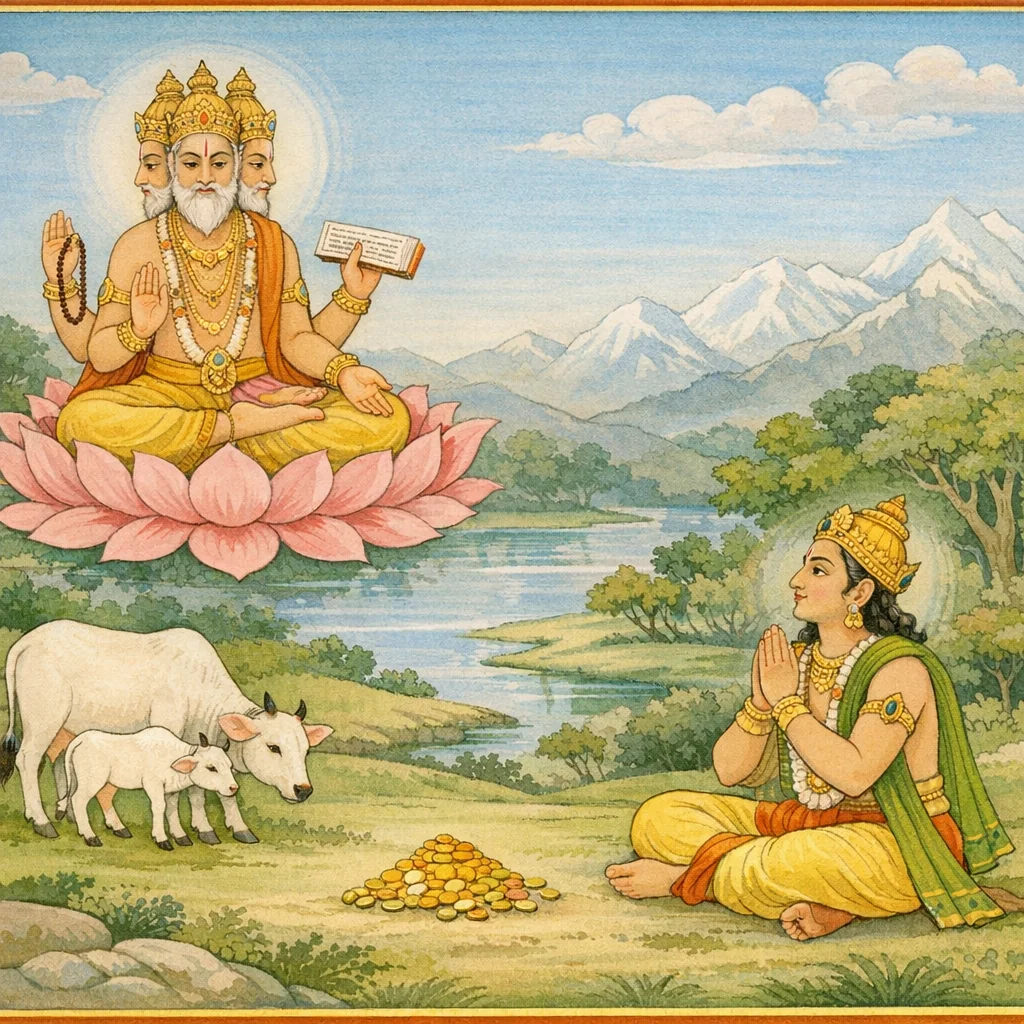
Adhyaya 77
गोमहात्म्य-प्रश्नोत्तरम् (Saudāsa–Vasiṣṭha on the Purifying Power of Cows)
Upa-parva: Dāna-Dharma Anuśāsana (Instruction on Gifts and Merit)
Bhīṣma recounts an earlier dialogue: King Saudāsa (Ikṣvāku lineage) approaches the sage Vasiṣṭha, described as an accomplished and widely revered purohita, and asks what is called the most purifying (pavitra) in the three worlds—something whose constant remembrance yields superior merit. Vasiṣṭha responds by articulating a doctrinal praise of cows: they are portrayed as foundational supports of beings, a source of auspiciousness, continuity (past and future), nourishment, and a stable locus where gifts do not perish. The chapter links cows to yajña-structures—havis, svāhā/vāṣaṭ formulas, and the fruit of sacrifice—asserting their ongoing ritual utility at morning and evening offerings. It then outlines a merit logic of cow-gifts: donations of one, ten, a hundred, or a thousand cows are declared comparable in fruit, while specific prestigious gifts (e.g., a kapilā cow with calf and suitable accoutrements, or a bull to a learned recipient) are associated with prosperity and favorable outcomes. The discourse also prescribes reverential practices—remembering and praising cows, offering salutations at dawn and dusk, avoiding contempt, and invoking cow-remembrance in fear or ominous dreams—culminating in a phalaśruti-like assurance that such remembrance confers protection in difficult circumstances.
Chapter Arc: दानधर्म के उपाख्यान में ब्रह्मा–इन्द्र संवाद खुलता है: दूसरों की गाय चुराकर दान/विक्रय करने, या गोहिंसा करने का दोष कितना भयावह है—और गोदान किस प्रकार कुलों का उद्धार करता है। → ब्रह्मा इन्द्र को बतलाते हैं कि भक्षार्थ, विक्रयार्थ या दानार्थ (ब्राह्मण के नाम पर) भी जो पराई गाय का अपहरण करता है, वह पुण्य का नहीं, पाप का भागी होता है; और जो उच्छृंखल होकर गोवध/गोमांस-भक्षण को अनुमोदित करता है, वह भी दोष में सहभागी बनता है। → गोदान का महात्म्य चरम पर पहुँचता है: गोदान के साथ सुवर्ण-दक्षिणा का विधान ‘परम’ कहा गया है; इससे दाता सात पीढ़ी पूर्वजों और सात पीढ़ी भावी संतानों का उद्धार करता है, और सुवर्ण कुल-शुद्धि का साधन बनता है। → भीष्म इस उपदेश को परंपरा-सिद्ध बताते हैं—ब्रह्मा से इन्द्र तक, और आगे राजवंशों/आचार्यों द्वारा श्रुत—और युधिष्ठिर को संकेत देते हैं कि यह पाठ ब्राह्मण-सभा में नित्य कहा जाए तो अक्षय लोक-फल प्राप्त होता है, विशेषतः यज्ञ, गोदान और देव-समागम के अवसरों पर।
Shlokas
Verse 1
ऑपन--#ह< बक। हक २ >> चतु:सप्ततितमो< ध्याय: दूसरोंकी गायको चुराकर देने या बेचनेसे दोष, गोहत्याके भयंकर परिणाम तथा गोदान एवं सुवर्ण-दक्षिणाका माहात्म्य इन्द्र उवाच जानन् यो गामपहरेद् विक्रीयाच्चार्थकारणात् | एतदू विज्ञातुमिच्छामि क्व नु तस्य गतिर्भवेत्,इन्द्रने पूछा--पितामह! यदि कोई जान-बूझकर दूसरेकी गौका अपहरण करे और धनके लोभसे उसे बेच डाले, उसकी परलोकमें कया गति होती है? यह मैं जानना चाहता हूँ इति श्रीमहाभारते अनुशासनपर्वणि दानधर्मपर्वणि चतु:सप्ततितमो<ध्याय: ।। ७४ |। इस प्रकार श्रीमह्याभारत अनुशासनपर्वके अन्तर्गत दानधर्मपर्वमें चौहतत्तरवाँ अध्याय पूरा हुआ ॥/ ७४ ॥ (दाक्षिणात्य अधिक पाठका ह “लोक मिलाकर कुल १५३६ “लोक हैं) #द-2८5 >> धन * पञ्चसप्ततितमोब ध्याय: व्रत, नियम, दम, सत्य, ब्रह्म॒चर्य, माता-पिता, गुरु आदिकी सेवाकी महत्ता युधिछ्िर उवाच विस्नरम्भितो5हं भवता धर्मान् प्रवदता विभो | प्रवक्ष्यामि तु संदेहं तन्मे ब्रूहि पितामह
Indra said: “O Grandsire, if someone knowingly steals another person’s cow and, driven by the motive of gain, even sells it—what destination does such a person attain after death? This is what I wish to understand.”
Verse 2
पितामह उवाच भक्षार्थ विक्रयार्थ वा ये5पहारं हि कुर्वते । दानार्थ ब्राह्मणार्थाय तत्रेदं श्रूयतां फलम्,ब्रह्माजीने कहा--इनन््द्र! जो खाने, बेचने या ब्राह्मणोंको दान करनेके लिये दूसरेकी गाय चुराते हैं, उन्हें क्या फल मिलता है, यह सुनो
Pitāmaha said: Those who commit theft—whether for food, for sale, or even for the purpose of giving (the stolen goods) in charity to Brahmins—listen now to the consequence that is declared in this matter.
Verse 3
विक्रयार्थ हि यो हिंस्याद् भक्षयेद् वा निरंकुश: । घातयान हि पुरुष येडनुमन्येयुररथिन:,जो उच्छुंंखल मनुष्य मांस बेचनेके लिये गौकी हिंसा करता या गोमांस खाता है तथा जो स्वार्थवश घातक पुरुषको गाय मारनेकी सलाह देते हैं, वे सभी महान् पापके भागी होते हैं
Whoever, for the sake of trade, harms or kills a cow without restraint, or eats its flesh; and whoever, out of self-interest, approves of or urges a slayer to kill a cow—all such men partake of a great sin.
Verse 4
घातक: खादको वापि तथा यश्चानुमन्यते । यावन्ति तस्या रोमाणि तावद् वर्षाणि मज्जति,गौकी हत्या करनेवाले, उसका मांस खानेवाले तथा गोहत्याका अनुमोदन करनेवाले लोग गौके शरीरमें जितने रोएँ होते हैं, उतने वर्षोतक नरकमें डूबे रहते हैं
Bhīṣma said: “Whether one is the killer, the eater of its flesh, or even one who approves of the act—such a person sinks in hell for as many years as there are hairs on that cow’s body.”
Verse 5
ये दोषा यादृशाश्ैव द्विजयज्ञोपघातके । विक्रये चापहारे च ते दोषा वै स्मृता: प्रभो,प्रभो! ब्राह्मणके यज्ञका नाश करनेवाले पुरुषको जैसे और जितने पाप लगते हैं, दूसरोंकी गाय चुराने और बेचनेमें भी वे ही दोष बताये गये हैं
Bhīṣma said: “O lord, the very same faults—of the same kind and measure—that are incurred by one who harms or destroys a Brāhmaṇa’s sacrifice are also declared to be incurred in the selling and in the stealing of another’s cow.”
Verse 6
अप॒दहृृत्य तु यो गां वै ब्राह्मणाय प्रयच्छति । यावद् दानफलं तस्यास्तावन्निरयमृच्छति,जो दूसरेकी गाय चुराकर ब्राह्मणको दान करता है, वह गोदानका पुण्य भोगनेके लिये जितना समय शास्त्रोंमें बताया गया है, उतने ही समयतक नरक भोगता है
Bhīṣma said: “If a man steals another’s cow and then gives that cow as a gift to a Brāhmaṇa, he must suffer in hell for exactly as long as the scriptures declare the merit-duration of that cow-gift.”
Verse 7
सुवर्ण दक्षिणामाहुर्गोप्रदाने महाद्युते । सुवर्ण परमित्युक्त दक्षिणार्थमसंशयम्,महातेजस्वी इन्द्र! गोदानमें कुछ सुवर्णकी दक्षिणा देनेका विधान है। दक्षिणाके लिये सुवर्ण सबसे उत्तम बताया गया है। इसमें संशय नहीं है
Bhīṣma said: “O illustrious one, in the gift of cows it is prescribed that a fee (dakṣiṇā) of gold be given. Gold is declared the supreme form of dakṣiṇā—of this there is no doubt.”
Verse 8
गोप्रदानात् तारयते सप्त पूर्वास्तथा परान् | सुवर्ण दक्षिणां कृत्वा तावदद्विगुणमुच्यते
Pitāmaha said: “By the gift of a cow, a man is said to deliver seven generations of his forefathers and likewise those who come after. If one adds a gold honorarium (dakṣiṇā) to that gift, the merit is declared to be twice as much.”
Verse 9
मनुष्य गोदान करनेसे अपनी सात पीढ़ी पहलेके पितरोंका और सात पीढ़ी आगे आनेवाली संतानोंका उद्धार करता है; किंतु यदि उसके साथ सोनेकी दक्षिणा भी दी जाय तो उस दानका फल दूना बताया गया है ।। सुवर्ण परमं दान॑ सुवर्ण दक्षिणा परा । सुवर्ण पावनं शक्र पावनानां परं स्मृतम्,क्योंकि इन्द्र! सुवर्णका दान सबसे उत्तम दान है। सुवर्णकी दक्षिणा सबसे श्रेष्ठ है, तथा पवित्र करनेवाली वस्तुओंमें सुवर्ण ही सबसे अधिक पावन माना गया है
Bhīṣma said: “The gift of gold is declared the highest of gifts, and a gold honorarium (dakṣiṇā) is the finest accompaniment to charity. O Śakra (Indra), gold is regarded as a purifier—indeed, among things that purify, it is remembered as the most purifying. In this ethical context, the teaching elevates generosity not merely as a social act but as a spiritually efficacious discipline, whose merit is intensified when the gift is made with fitting dakṣiṇā.”
Verse 10
कुलानां पावन प्राहुर्जातरूपं शतक्रतो । एषा मे दक्षिणा प्रोक्ता समासेन महाद्युते,महातेजस्वी शतक्रतो! सुवर्ण सम्पूर्ण कुलोंको पवित्र करनेवाला बताया गया है। इस प्रकार मैंने तुमसे संक्षेपमें यह दक्षिणाकी बात बतायी
Bhīṣma said: “O Śatakratu (Indra), they declare gold to be a purifier of lineages. This, O mighty one, is the sacrificial fee (dakṣiṇā) I have stated to you in brief.”
Verse 11
भीष्मजी कहते हैं--भरतश्रेष्ठ युधिष्ठिर! यह उपर्युक्त उपदेश ब्रह्माजीने इन्द्रको दिया। इन्द्रने राजा दशरथको तथा पिता दशरथने अपने पुत्र श्रीरामचन्द्रजीको दिया
Bhishma said: “O Yudhishthira, best of the Bharatas! This instruction, spoken above, was first given by Brahma to Indra. Indra passed it on to King Dasharatha, and Dasharatha, as a father, transmitted it to his own son, Sri Ramachandra.”
Verse 12
राघवो5पि प्रिय भ्रात्रे लकक्ष्मणाय यशस्विने । ऋषिभ्यो लक्ष्मणेनोक्तमरण्ये वसता प्रभो
Bhīṣma said: “Even Rāghava, for the sake of his beloved brother—the illustrious Lakṣmaṇa—conveyed to the sages, while dwelling in the forest, what was spoken by Lakṣmaṇa, O lord.”
Verse 13
भीष्म उवाच एतत् पितामहेनोक्तमिन्द्राय भरतर्षभ । इन्द्रो दशरथायाह रामायाह पिता तथा,प्रभो! श्रीरामचन्द्रजीने भी अपने प्रिय एवं यशस्वी भ्राता लक्ष्मणको इसका उपदेश दिया। फिर लक्ष्मणने भी वनवासके समय ऋषियोंको यह बात बतायी ।। पारम्पर्यागतं चेदमृषय: संशितव्रता: । दुर्धरं धारयामासू राजानश्वैव धार्मिका: इस प्रकार परम्परासे प्राप्त हुए इस दुर्धर उपदेशको उत्तम व्रतका पालन करनेवाले ऋषि और धर्मात्मा राजालोग धारण करते आ रहे हैं
Bhishma said: “O bull among the Bharatas, this teaching was spoken by the Grandsire to Indra; Indra conveyed it to Dasharatha, and the father in turn to Rama. Lord Shri Ramachandra too instructed this to his beloved and illustrious brother Lakshmana; and Lakshmana, during the forest-exile, communicated it to the sages. Thus, received through an unbroken lineage, this difficult-to-sustain discipline has been upheld by sages of firm vows and by righteous kings as well.”
Verse 14
उपाध्यायेन गदितं मम चेदं युधिष्ठिर । य इदं ब्राह्मणो नित्यं वदेद् ब्राह्मणसंसदि,(इति ब्रह्मा स भगवान् उवाच परमे श्वर:) युधिष्ठिर! मुझसे मेरे उपाध्याय (परशुरामजी) ने इस विषयका वर्णन किया था। जो ब्राह्मण अपनी मण्डलीमें बैठकर प्रतिदिन इस उपदेशको दुहराता है और यज्ञमें, गोदानके समय तथा दो व्यक्तियोंके भी समागममें इसकी चर्चा करता है, उसको सदा देवताओंके साथ अक्षयलोक प्राप्त होते हैं। यह बात भी परमेश्वर भगवान् ब्रह्माने स्वयं ही इन्द्रको बतायी है
Bhīṣma said: “Yudhiṣṭhira, this teaching was told to me by my own preceptor. Any brāhmaṇa who regularly recites it in an assembly of brāhmaṇas—bringing it up as well in sacrificial contexts, at the time of gifting cows, and even when two people meet in conversation—wins imperishable worlds in the company of the gods. This, too, was declared by the Supreme Lord Brahmā himself to Indra.”
Verse 15
यज्ञेषु गोप्रदानेषु द्योरपि समागमे । तस्य लोका: किलाक्षय्या दैवतै: सह नित्यदा,(इति ब्रह्मा स भगवान् उवाच परमे श्वर:) युधिष्ठिर! मुझसे मेरे उपाध्याय (परशुरामजी) ने इस विषयका वर्णन किया था। जो ब्राह्मण अपनी मण्डलीमें बैठकर प्रतिदिन इस उपदेशको दुहराता है और यज्ञमें, गोदानके समय तथा दो व्यक्तियोंके भी समागममें इसकी चर्चा करता है, उसको सदा देवताओंके साथ अक्षयलोक प्राप्त होते हैं। यह बात भी परमेश्वर भगवान् ब्रह्माने स्वयं ही इन्द्रको बतायी है
Bhishma said: ‘At sacrifices, at the time of gifting cows, and even at the meeting of two persons, whoever repeatedly recites and discusses this instruction gains worlds that do not perish, dwelling forever in the company of the gods. Thus did the blessed Brahmā, the supreme Lord, declare this.’
Verse 73
इस प्रकार श्रीमह्याभारत अनुशासनपर्वके अन्तर्गत दानधर्मपर्वमें ब्रह्माजी और इन्द्रका संवादविषयक तिहत्तरवाँ अध्याय पूरा हुआ
Thus ends the seventy-third chapter of the Dāna-dharma section within the Anuśāsana Parva of the Śrī Mahābhārata, presenting the dialogue between Brahmā and Indra. The colophon marks the completion of this unit, framing the teaching as part of the Mahābhārata’s ethical instruction on the duties and merits of giving.
Frequently Asked Questions
Saudāsa asks what is most ‘pavitra’ (purifying) across the three worlds—an object of constant remembrance that yields the highest merit for a mortal.
It emphasizes disciplined reverence and merit-making through go-dāna and regular respectful remembrance (kīrtana/namas) of cows, integrating these with the ritual economy of homa and ghṛta usage.
Yes. The discourse repeatedly links cow-gifts and cow-remembrance with protection and favorable outcomes, culminating in the claim that praising/reminding oneself of cows in adverse or fearful situations leads to release from fear.