Adhyaya 90
Ādi Parva, Adhyāya 90 — Pūror Vaṃśa, Kuru-Pravara, and the Janamejaya Line (Genealogical Recitation)
Upa-parva: Anuvaṃśa (Pūru–Kuru Vaṃśānukīrtana) — Dynastic Genealogy and Legitimacy Discourse
This chapter opens with Janamejaya requesting a fuller, more detailed account of ancestral origins, expressing that condensed narration does not satisfy his interest in the dynasty’s sacred genealogy. Vaiśaṃpāyana responds by presenting a structured lineage: from Dakṣa and Aditi through Vivasvān, Manu, Ilā, Purūravas, and Yayāti; then the bifurcation into Yādavas (from Yadu) and Pauravas (from Pūru). The recitation continues through a sequence of rulers with occasional etymological explanations tied to deeds (e.g., Prācinvān, Ayutanāyī, Bharata, Hāstinapura via Hastī, Śaṃtanu). The narrative then reaches the critical Kuru nodes: Pratīpa’s sons (Devāpi, Śaṃtanu, Bāhlīka), Śaṃtanu’s marriage to Gaṅgā producing Devavrata (Bhīṣma), and the integration of Satyavatī and Vyāsa (Dvaipāyana). It records the deaths and succession issues of Citrāṅgada and Vicitravīrya, Satyavatī’s concern about dynastic extinction, and Vyāsa’s production of Dhṛtarāṣṭra, Pāṇḍu, and Vidura. The account then compresses forward: Pāṇḍu’s curse episode and the divine births of the Pāṇḍavas; the Pāṇḍavas’ movements (including the lac-house plot, encounters with non-human adversaries, and Draupadī’s marriage); the next generation (Abhimanyu and Uttarā) and the preservation of Parīkṣit by Kṛṣṇa’s intervention. The chapter closes with Parīkṣit’s marriage and the birth of Janamejaya, ending with a phalaśruti-like claim that hearing Pūru’s lineage purifies moral fault.
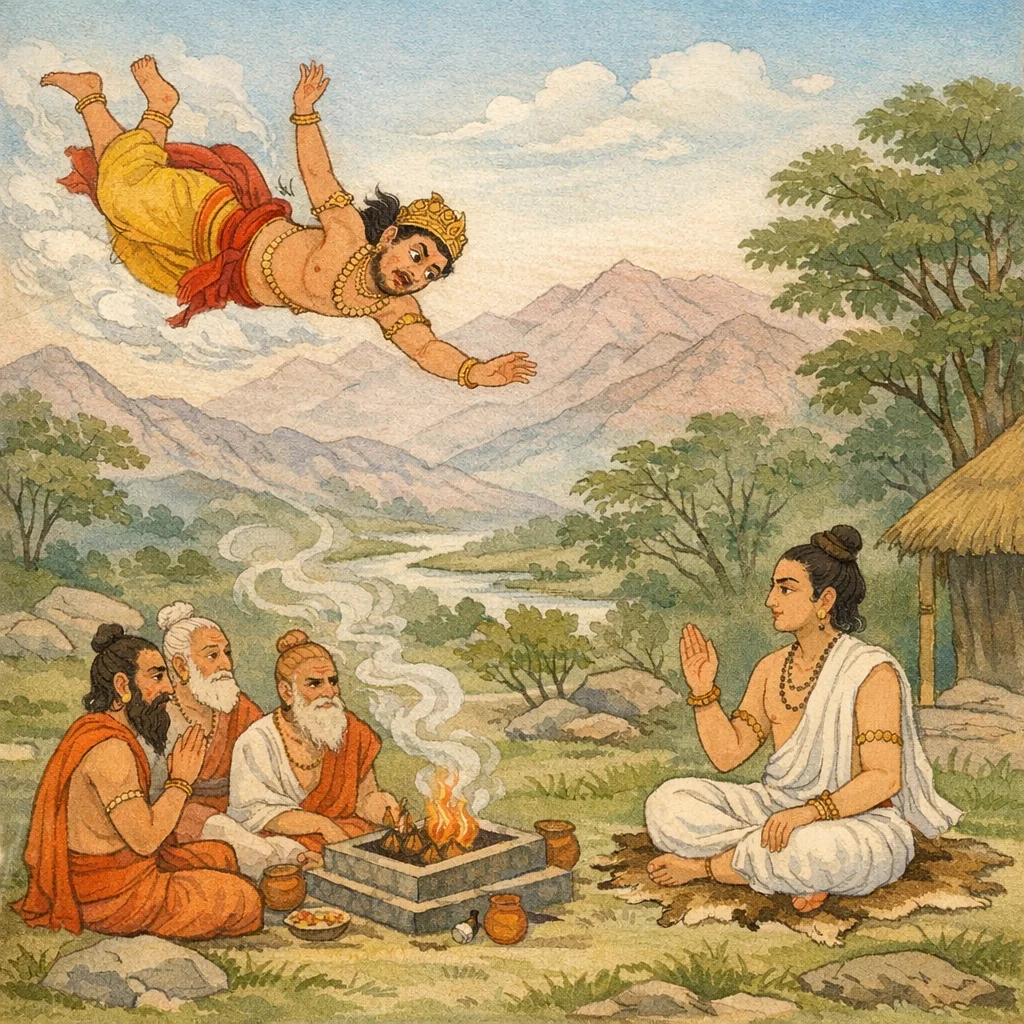
Chapter Arc: स्वर्गलोक में पुण्य-क्षय से डगमगाते हुए राजा ययाति अपना परिचय देते हैं—‘मैं नहुष-पुत्र ययाति, पूरु का पिता’—और सत्पुरुषों के बीच गिर पड़ने की लज्जा से काँप उठते हैं। → ययाति और अष्टक के बीच ‘वृद्धि’ का मानदण्ड उठता है: क्या पूज्यता केवल आयु से आती है, या विद्या-तप-जन्म-शील से? अष्टक आयु-गौरव को काटते हैं और धर्म-आचरण, विनय, वेदाध्ययन, यज्ञ, तप तथा अहंकार-शून्यता को श्रेष्ठता का आधार बताते हैं। → अष्टक का निर्णायक उपदेश—धन से हर्ष न हो, दुःख से तपन न हो; धीर पुरुष समभाव से रहे, ‘दिष्टं बलीय’ मानकर न हर्षित हो न शोकाकुल—ययाति के स्वर्ग-पतन की पीड़ा को सीधे धर्म-दर्शन में रूपान्तरित कर देता है। → ययाति बताते हैं कि वे प्रजापति के दुर्लभ लोक में दीर्घकाल रहे, पर पुण्य क्षीण होने पर पतन निश्चित हुआ; पतन-क्षण में देवताओं ने उन्हें अष्टक आदि की यज्ञभूमि का संकेत दिया, और वे हवि-गन्ध व धूम-चिह्नों का अनुसरण कर वहाँ पहुँचे—यानी पतन भी सत्संग और यज्ञ-धर्म की ओर ले जाने वाला मार्ग बन गया। → ययाति अब यज्ञभूमि पर उपस्थित हैं—आगे यह तय होना शेष है कि सत्पुरुषों/यजमानों के साथ संवाद और पुण्य-विनिमय से उनका पतन रुकेगा या नया धर्म-निर्णय जन्म लेगा।
Shlokas
Verse 1
ऑपनआ कराता बछ। अर: एकोननवतितमो<ध्याय: ययाति और अष्टकका संवाद ययातिरुवाच अहं ययातिर्नहुषस्य पुत्र: पूरो: पिता सर्वभूतावमानात् | प्रभ्रंशित: सुरसिद्धर्षिलोकात् परिच्युत: प्रपताम्यल्पपुण्य:,ययातिने कहा--महात्मन्! मैं नहुषका पुत्र और पूरुका पिता ययाति हूँ। समस्त प्राणियोंका अपमान करनेसे मेरा पुण्य क्षीण हो जानेके कारण मैं देवताओं, सिद्धों तथा महर्षियोंके लोकसे च्युत होकर नीचे गिर रहा हूँ
Yayāti said: “I am Yayāti, son of Nahuṣa and father of Pūru. Because I dishonored all beings, my merit has been exhausted. Cast down from the realms of the gods, Siddhas, and seers, I have fallen away and now plunge downward, bereft of virtue.”
Verse 2
अहं हि पूर्वो वयसा भवदभ्य- स्तेनाभिवादं भवतां न प्रयुञ्जे । यो विद्यया तपसा जन्मना वा वृद्ध: स पूज्यो भवति द्विजानाम्,मैं आपलोगोंसे अवस्थामें बड़ा हूँ, अतः आपलोगोंको प्रणाम नहीं कर रहा हूँ। द्विजातियोंमें जो विद्या, तप और अवस्थामें बड़ा होता है, वह पूजनीय माना जाता है
I am older than you in years; therefore I do not offer you salutations. Among the twice-born, he who is greater in learning, in austerity, and in age is held to be worthy of honor.
Verse 3
जटद्टक उवाच अवादीस्त्वं वयसा य: प्रवृद्ध: स वै राजन नाभ्यधिक: कथ्यते च | यो विद्यया तपसा सम्प्रवृद्ध: स एव पूज्यो भवति द्विजानाम्,अष्टक बोले--राजन्! आपने कहा है कि जो अवस्थामें बड़ा हो, वही अधिक सम्माननीय कहा जाता है। परंतु द्विजोंमें तो जो विद्या और तपस्यामें बढ़ा-चढ़ा हो, वही पूज्य होता है
Jāṭaṭaka said: “O King, you have declared that the one who is advanced in age is therefore spoken of as the more worthy. Yet among the twice-born, it is the one who has grown great through learning and austerity who alone is truly to be honored.”
Verse 4
ययातिरुवाच प्रतिकूल कर्मणां पापमाहु- स्तद् वर्तते5प्रवणे पापलोक्यम् । सनन््तो<सतां नानुवर्तन्ति चैतद् यथा चैषामनुकूलास्तथा55सन्,ययातिने कहा--पापको पुण्यकर्मोका नाशक बताया जाता है, वह नरककी प्राप्ति करानेवाला है और वह उद्दण्ड पुरुषोंमें ही देखा जाता है। दुराचारी पुरुषोंके दुराचारका श्रेष्ठ पुरुष अनुसरण नहीं करते हैं। पहलेके साधु पुरुष भी उन श्रेष्ठ पुरुषोंक ही अनुकूल आचरण करते थे
Yayāti said: “They declare that sin arises from actions done in opposition to what is right; it leads to the attainment of sinful realms, and it is found especially among the unrestrained. The good do not follow the misconduct of the wicked; rather, being virtuous, they act in ways that are fitting and agreeable to righteousness.”
Verse 5
अभूद् धनं मे विपुलं गतं तद् विचेष्टमानो नाधिगन्ता तदस्मि । एवं प्रधार्यात्महिते निविष्टो यो वर्तते स विजानाति धीर:,मेरे पास पुण्यरूपी बहुत धन था; किंतु दूसरोंकी निन्दा करनेके कारण वह सब नष्ट हो गया। अब मैं चेष्टा करके भी उसे नहीं पा सकता। मेरी इस दुरवस्थाको समझ-बूझकर जो आत्मकल्याणमें संलग्न रहता है, वही ज्ञानी और वही धीर है
Jaratkāru said: “Once I possessed abundant wealth—wealth in the form of merit—but it has slipped away. Though I strive, I can no longer recover it. Therefore, whoever reflects on my fallen condition and remains devoted to his own true welfare (the good of the self) is the one who truly understands; he alone is steadfast and wise.”
Verse 6
महाधनो यो यजते सुयज्ञै- र्य: सर्वविद्यासु विनीतबुद्धि: । वेदानधीत्य तपसा<5<योज्य देहं दिव॑ समायात् पुरुषो वीतमोह:,जो मनुष्य बहुत धनी होकर उत्तम यज्ञोंद्वारा भगवानूकी आराधना करता है, सम्पूर्ण विद्याओंको पाकर जिसकी बुद्धि विनययुक्त है तथा जो वेदोंको पढ़कर अपने शरीरको तपस्यामें लगा देता है, वह पुरुष मोहरहित होकर स्वर्गमें जाता है
He who, though possessed of great wealth, worships the Lord through excellent sacrifices; whose intellect is disciplined and humble amid all branches of learning; and who, having studied the Vedas, yokes his body to austerity—such a man, freed from delusion, attains heaven. The verse praises prosperity guided by dharma: wealth becomes meritorious when joined to reverent ritual, learning to humility, and knowledge to self-restraint.
Verse 7
न जातु हृष्येन्महता धनेन वेदानधीयीतानहंकृतः स्यात् | नानाभावा बहवो जीवलोके दैवाधीना नष्टचेष्टाधिकारा: । तत् तत् प्राप्य न विहन्येत धीरो दिष्टं बलीय इति मत्वा55त्मबुद्धा,महान् धन पाकर कभी हर्षसे उललसित न हो, वेदोंका अध्ययन करे, किंतु अहंकारी न बने। इस जीव-जगत्में भिन्न-भिन्न स्वभाववाले बहुत-से प्राणी हैं, वे सभी प्रारब्धके अधीन हैं, अतः उनके धनादि पदार्थोंके लिये किये हुए उद्योग और अधिकार सभी व्यर्थ हो जाते हैं। इसलिये धीर पुरुषको चाहिये कि वह अपनी बुद्धिसे “प्रारब्ध ही बलवान् है” यह जानकर दुःख या सुख जो भी मिले, उसमें विकारको प्राप्त न हो
Jaratkāru said: “One should never exult merely because great wealth has been obtained. One should study the Vedas, yet not become arrogant. In this world of living beings there are many different dispositions; all are governed by destiny, and thus their efforts and claims to control outcomes are often rendered futile. Therefore, whatever comes to one, the steadfast person should not be shaken—understanding that what is ordained is stronger.”
Verse 8
सुखं हि जन्तुर्यदि वापि दु:खं दैवाधीनं विन्दते नात्मशक्त्या । तस्माद् दिष्टं बलवन्मन्यमानो न संज्वरेन्नापि हृष्येत् कथंचित्,जीव जो सुख अथवा दु:ख पाता है, वह प्रारब्धसे ही प्राप्त होता है, अपनी शक्तिसे नहीं। अतः प्रारब्धको ही बलवान् मानकर मनुष्य किसी प्रकार भी हर्ष अथवा शोक न करे
Whether a living being meets with happiness or with sorrow, it comes under the governance of destiny, not merely through one’s own power. Therefore, regarding what is ordained as the stronger force, a person should neither burn with grief nor exult in joy in any circumstance.
Verse 9
दुःखैर्न तप्येन्न सुखै: प्रहष्येत् समेन वर्तेत सदैव धीर: । दिष्टं बलीय इति मन्यमानो न संज्वरेन्नापि हृष्येत् कथंचित्,दुःखोंसे संतप्त न हो और सुखोंसे हर्षित न हो। धीर पुरुष सदा समभावसे ही रहे और भाग्यको ही प्रबल मानकर किसी प्रकार चिन्ता एवं हर्षके वशीभूत न हो
A steadfast man should not be scorched by sorrow nor exult in pleasure; the wise ever moves in evenness. Knowing that what is allotted—destiny (daiva)—is the stronger power, he is in no way mastered by anxiety or by delight.
Verse 10
भये न मुहाम्यष्टकाहं कदाचित् संतापो मे मानसो नास्ति कश्षित् । धाता यथा मां विदधीत लोके ध्रुवं तथाहं भवितेति मत्वा,अष्टक! मैं कभी भयमें पड़कर मोहित नहीं होता, मुझे कोई मानसिक संताप भी नहीं होता; क्योंकि मैं समझता हूँ कि विधाता इस संसारमें मुझे जैसे रखेगा, वैसे ही रहूँगा
O Aṣṭaka, I am never bewildered when fear arises, nor do I suffer any anguish of mind. For I am certain that whatever station the Ordainer (Dhātṛ) assigns me in this world, in that very condition I shall surely remain.
Verse 11
संस्वेदजा अण्डजाश्षोद्धिदश्न सरीसृपा: कृमयो<थाप्सु मत्स्या: । तथाश्मानस्तृणकाष्ठ॑ च सर्वे दिष्टक्षये स्वां प्रकृति भजन्ति,स्वेदज, अण्डज, उद्धिज्ज, सरीसूप, कृमि, जलमें रहनेवाले मत्स्य आदि जीव तथा पर्वत, तृण और काष्ठ--ये सभी प्रारब्ध-भोगका सर्वथा क्षय हो जानेपर अपनी प्रकृतिको प्राप्त हो जाते हैं
Creatures born of sweat, those born from eggs, those that sprout from the earth, reptiles, worms, and fish that dwell in water—likewise stones, grass, and wood: when the allotted force of destiny (the stock of past results to be experienced) is completely exhausted, all of these return to their own original nature.
Verse 12
अनित्यतां सुखदु:खस्य बुद्ध्वा कस्मात् संतापमष्टकाहं भजेयम् | कि कुर्या वै कि च कृत्वा न तप्ये तस्मात् संतापं वर्जयाम्यप्रमत्त:,अष्टक! मैं सुख तथा दुःख दोनोंकी अनित्यताको जानता हूँ, फिर मुझे संताप हो तो कैसे? मैं क्या करूँ: और क्या करके संतप्त न होऊँ, इन बातोंकी चिन्ता छोड़ चुका हूँ। अतः सावधान रहकर शोक-संतापको अपनेसे दूर रखता हूँ
Having understood the impermanent nature of both pleasure and pain, how could I, O Aṣṭaka, give myself over to grief? What could I do—and what could I do—that would leave me entirely free from regret? Therefore I have abandoned such anxious brooding; remaining vigilant, I keep sorrow and torment at a distance from myself.
Verse 13
(दुःखे न खिद्येन्न सुखेन माद्येत् समेन वर्तेत स धीरधर्मा । दिष्टं बलीय: समवेक्ष्य बुद्ध्या न सज्जते चात्र भृशं मनुष्य: ।।) जो दुःखमें खिन्न नहीं होता, सुखसे मतवाला नहीं हो उठता और सबके साथ समान भावसे बर्ताव करता है, वह धीर कहा गया है। विज्ञ मनुष्य बुद्धिसे प्रारब्धको अत्यन्त बलवान् समझकर यहाँ किसी भी विषयमें अधिक आसक्त नहीं होता। वैशम्पायन उवाच एवं ब्रुवाणं नृपतिं ययाति- मथाष्टक: पुनरेवान्वपृच्छत् । मातामहं सर्वगुणोपपन्नं तत्र स्थितं स्वर्गलोके यथावत्,वैशम्पायनजी कहते हैं--जनमेजय! राजा ययाति समस्त सदगुणोंसे सम्पन्न थे और नातेमें अष्टकके नाना लगते थे। वे अन्तरिक्षमें वैसे ही ठहरे हुए थे, मानो स्वर्गलोकमें हों। जब उन्होंने उपर्युक्त बातें कहीं, तब अष्टकने उनसे पुनः प्रश्न किया
One who is not cast down by sorrow, not intoxicated by happiness, and who conducts himself with equal regard toward all—such a person is called steadfast in dharma. The wise, recognizing with clear understanding that what is allotted (diṣṭa) is exceedingly powerful, does not become deeply attached here to any object or condition. Vaiśampāyana said: When King Yayāti—Aṣṭaka’s maternal grandfather, endowed with every virtue—spoke thus, standing there in the mid-region as though in heaven itself, Aṣṭaka questioned him again.
Verse 14
अष्टक उवाच ये ये लोकाः पार्थिवेन्द्र प्रधाना- स्त्वया भुक्ता यं च काल॑ यथावत् | तान् मे राजन ब्रूहि सर्वान् यथावत् क्षेत्रज्मवद् भाषसे त्वं हि धर्मान्,अष्टक बोले--महाराज! आपने जिन-जिन प्रधान लोकोंमें रहकर जितने समयतक वहाँके सुखोंका भलीभाँति उपभोग किया है, उन सबका मुझे यथार्थ परिचय दीजिये। राजन्! आप तो महात्माओंकी भाँति धर्मोका उपदेश कर रहे हैं
Aṣṭaka said: “O lord of kings, tell me accurately of all those foremost worlds in which you have dwelt and fully enjoyed their pleasures, and also the length of time you spent in each. O King, describe them all to me just as they truly are—for you speak of dharma like one who knows the field and its knower.”
Verse 15
ययातिरुवाच राजाहमासमिह सार्वभौम- स्ततो लोकान् महतश्चलाजयं वै | तत्रावसं वर्षसहस्रमात्र ततो लोकं परमस्म्यभ्युपेत:,ययातिने कहा--अष्टक! मैं पहले समस्त भूमण्डलमें प्रसिद्ध चक्रवर्ती राजा था। तदनन्तर सत्कर्मोद्वारा बड़े-बड़े लोकोंपर मैंने विजय प्राप्त की और उनमें एक हजार वर्षोतक निवास किया। इसके बाद उनसे भी उच्चतम लोकमें जा पहुँचा
Yayāti said: “Aṣṭaka, in this very world I was once a universal sovereign king. Thereafter, by the power of meritorious deeds, I attained victory over great celestial realms and dwelt in them for a thousand years. Then, rising beyond even those, I reached a still higher, supreme world.”
Verse 16
ततः पुरी पुरुहृतस्य रम्यां सहस्रद्वारां शतयोजनायताम् । अध्यावसं वर्षसहसतमात्र ततो लोकं परमस्म्यभ्युपेत:,वहाँ सौ योजन विस्तृत और एक हजार दरवाजोंसे युक्त इन्द्रकी रमणीय पुरी प्राप्त हुई। उसमें मैंने केवल एक हजार वर्षोतक निवास किया और उसके बाद उससे भी ऊँचे लोकमें गया
Then I reached the lovely city of Puruhūta (Indra), with a thousand gates and a hundred yojanas in extent. There I dwelt for only a thousand years, and after that I went on to a realm higher still.
Verse 17
ततो दिव्यमजंर प्राप्प लोक॑ प्रजापतेलॉकपतेर्दुरापम् । तत्रावसं वर्षसहसमात्रं ततो लोकं परमस्म्यभ्युपेत:,तदनन्तर लोकपालोंके लिये भी दुर्लभ प्रजापतिके उस दिव्य लोकमें जा पहुँचा, जहाँ जरावस्थाका प्रवेश नहीं है। वहाँ एक हजार वर्षतक रहा, फिर उससे भी उत्तम लोकमें चला गया
Then I reached the divine, ageless world of Prajāpati—the Lord of worlds—so difficult to attain. There I dwelt for only a thousand years; thereafter I went on to an even higher realm.
Verse 18
स देवदेवस्य निवेशने च विहृत्य लोकानवसं यथेष्टम् । सम्पूज्यमानस्त्रिदशै: समस्तै- स्तुल्यप्रभावद्युतिरी श्वराणाम्,वह देवाधिदेव ब्रह्माजीका धाम था। वहाँ मैं अपनी इच्छाके अनुसार भिन्न-भिन्न लोकोंमें विहार करता हुआ सम्पूर्ण देवताओंसे सम्मानित होकर रहा। उस समय मेरा प्रभाव और तेज देवेश्वरोंके समान था
That was the abode of the God of gods, Brahmā. Having sported there, I dwelt as I pleased, roaming through various worlds; honoured by all the Thirty-three gods, I possessed a majesty and radiance equal to that of the divine lords.
Verse 19
तथावसं नन्दने कामरूपी संवत्सराणामयुतं शतानाम् | सहाप्सरोभिविंहरन् पुण्यगन्धान् पश्यन् नगान् पुष्यितांश्चवारुरूपान्,इसी प्रकार मैं नन््दनवनमें इच्छानुसार रूप धारण करके अप्सराओंके साथ विहार करता हुआ दस लाख वर्षोतक रहा। वहाँ मुझे पवित्र गन्ध और मनोहर रूपवाले वृक्ष देखनेको मिले, जो फूलोंसे लदे हुए थे
Thus dwelling in Nandana, able to assume forms at will, I spent a million years sporting together with the Apsarases. There I beheld mountains and wondrous trees, heavy with blossoms, whose fragrance was pure and auspicious—an image of celestial enjoyment gained through prior merit, yet still bound to the limits of time.
Verse 20
तत्र स्थितं मां देवसुखेषु सक्तं काले5तीते महति ततो&5तिमात्रम् | दूतो देवानामत्रवीदुग्ररूपो ध्वंसेत्युच्चैस्त्रि: प्लुतेन स्वरेण,वहाँ रहकर मैं देवलोकके सुखोंमें आसक्त हो गया। तदनन्तर बहुत अधिक समय बीत जानेपर एक भयंकर रूपधारी देवदूत आकर मुझसे ऊँची आवाजमें तीन बार बोला--“गिर जाओ, गिर जाओ, गिर जाओ'
Dwelling there, I became attached to the pleasures of the gods. Then, after a very long time had passed—far beyond measure—a terrifying messenger of the gods appeared and, in a loud voice with a prolonged tone, cried out to me three times: “Fall! Fall! Fall!” The moment exposes the moral peril of complacency in heavenly enjoyments: even celestial reward is impermanent, and attachment invites a sudden reversal when merit is exhausted.
Verse 21
एतावन्मे विदितं राजसिंह ततो भ्रष्टो5हं नन्दनात् क्षीणपुण्य: । वाचो<5श्रौष॑ चान्तरिक्षे सुराणां सानुक्रोशा: शोचतां मां नरेन्द्र,राजशिरोमणे! मुझे इतना ही ज्ञात हो सका है। तदनन्तर पुण्य क्षीण हो जानेके कारण मैं नन्दनवनसे नीचे गिर पड़ा। नरेन्द्र! उस समय मेरे लिये शोक करनेवाले देवताओंकी अन्तरिक्षमें यह दयाभरी वाणी सुनायी पड़ी--
“This much alone I came to know, O lion among kings. Thereafter, when my merit was exhausted, I fell down from Nandana (Indra’s pleasure-grove). O lord of men, I then heard in the mid-air the compassionate words of the gods, who were lamenting for me.”
Verse 22
अहो कष्ट क्षीणपुण्यो ययाति: पतत्यसौ पुण्यकृत् पुण्यकीर्ति: । तानब्रुवं पतमानस्ततोऊहं सतां मध्ये निपतेयं कथं नु,“अहो! बड़े कष्टकी बात है कि पवित्र कीर्तिवाले ये पुण्यकर्मा महाराज ययाति पुण्य क्षीण होनेके कारण नीचे गिर रहे हैं।” तब नीचे गिरते हुए मैंने उनसे पूछा--'देवताओ! मैं साधु पुरुषोंके बीच गिर, इसका क्या उपाय है!”
Aṣṭaka said: “Alas, how grievous! King Yayāti—renowned for holy fame and famed for righteous deeds—is falling down because his merit has been exhausted. As I too was falling, I addressed those beings and asked: ‘How may I fall among the virtuous? What is the means for that?’”
Verse 23
तैराख्याता भवतां यज्ञभूमि: समीक्ष्य चेमां त्वरितमुपागतो5स्मि । हविर्गन्ध॑ देशिकं यज्ञभूमे- र्धूमापाड़ं प्रतिगृह प्रतीत:,तब देवताओंने मुझे आपकी यज्ञभूमिका परिचय दिया। मैं इसीको देखता हुआ तुरंत यहाँ आ पहुँचा हूँ। यज्ञभूमिका परिचय देनेवाली हविष्यकी सुगन्धका अनुभव तथा धूमप्रानन््तका अवलोकन करके मुझे बड़ी प्रसन्नता और सान्त्वना मिली है
The gods pointed out to me your sacrificial ground. Having looked upon it, I have come here at once. On sensing the guiding fragrance of the oblation belonging to this altar, and on beholding the rising column of sacrificial smoke, I felt assured and inwardly satisfied.
Verse 89
इति श्रीमहाभारते आदिपर्वणि सम्भवपर्वणि उत्तरयायाते एकोननवतितमो< ध्याय:,इस प्रकार श्रीमह्ाभारत आदिपव॑के अन्तर्गत सम्भवपर्वमें उत्तरयायातविषयक नवासीवाँ अध्याय पूरा हुआ
Thus, in the Śrī Mahābhārata, within the Ādi Parva and specifically the Sambhava Parva, the eighty-ninth chapter—concerning the episode of Uttara-yāyāta—comes to its close. (This is a colophon marking the end of the chapter rather than a spoken verse.)
Frequently Asked Questions
The central dilemma is dynastic preservation versus normative constraints: when succession fails (Vicitravīrya dies heirless), the tradition authorizes exceptional mechanisms (Vyāsa’s niyoga) to sustain political order and lineage legitimacy.
Genealogy is presented as ethical infrastructure: individual actions (vows, restraint, ritual duty, or impulsive harm such as Pāṇḍu’s) propagate consequences across generations, shaping both legitimacy and suffering.
Yes. The closing statement asserts that hearing the Pūru lineage (pūror vaṃśa) and the Pāṇḍava line is meritorious and is said to free the listener from moral fault (a purification claim typical of phalaśruti-style closures).