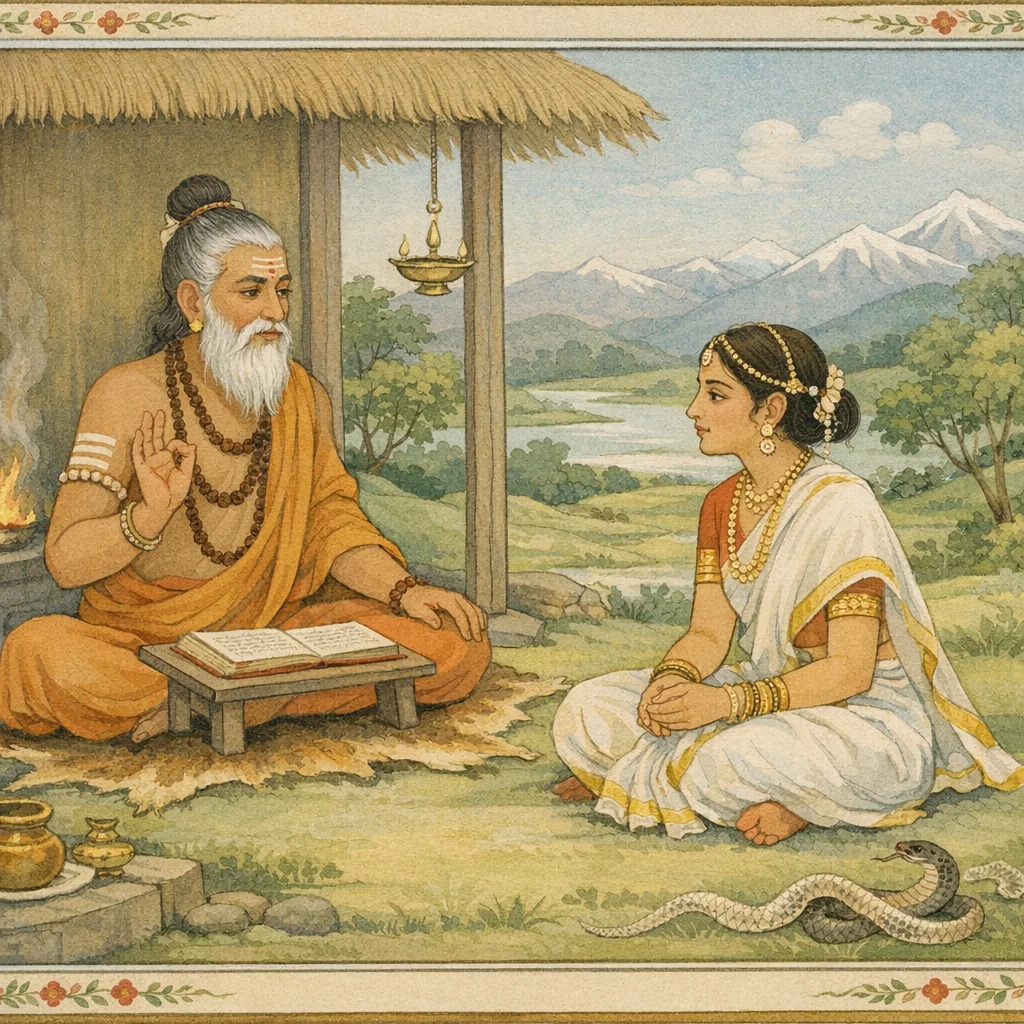
Adhyaya 79
Yayāti’s Request for Youth: Sons’ Refusals and Pūru’s Acceptance (ययातेः यौवन-विनिमयः)
Upa-parva: Anuśaṅga (Yayāti-Upākhyāna: Youth Exchange and Succession Episode)
Vaiśaṃpāyana narrates that King Yayāti, afflicted by old age due to a prior curse associated with Kāvya Uśanas (Śukra), returns to his city and requests his eldest son Yadu to accept senescence (jarā) while lending him youth (yauvana) for a fixed term of one thousand years. Yadu refuses, describing the physical and social degradation of old age; Yayāti responds with a punitive pronouncement restricting Yadu’s access to kingship. Yayāti repeats the proposal to Turvasu, Druhyu, and Anu; each declines with specific critiques of aging (loss of pleasure, strength, speech, ritual capacity), and each refusal is met with a consequential declaration shaping their future status and descendants. Finally, Yayāti addresses Pūru with the same request; Pūru consents without hesitation, agreeing to take on jarā and give his youth to his father. Yayāti, pleased, grants Pūru prosperity in subjects and sovereignty, making the ethical exchange a foundation for later dynastic precedence.
Chapter Arc: देवयानी के भीतर अपमान और क्रोध की ज्वाला उठती है; पिता शुक्राचार्य उसे देखते हैं और जानते हैं कि यह अग्नि यदि वश में न आई तो कुल, शिष्य-परंपरा और भविष्य—सबको जला देगी। → शुक्राचार्य देवयानी को क्रोध-निग्रह और क्षमा का उपदेश देते हैं—जो उठते क्रोध को घोड़े की भाँति वश में करे वही ‘यन्ता’ है; जो अक्रोध से क्रोध को मन से निकाल दे, उसने सब जीत लिया। साथ ही वे समाज-नीति बताते हैं: जो आचार-कुल की निंदा करते हैं, पापबुद्धि हैं, उनसे दूर रहो; जो सदाचार की प्रशंसा करते हैं, साधु हैं, उनके बीच निवास करो। → उपदेश का तीखा शिखर तब आता है जब शुक्राचार्य शिष्य के ‘अशिष्य-वृत्त’ को अक्षम्य बताते हैं और वाणी के बाणों से होने वाले धीमे, दीर्घकालिक दुःख का चित्र खींचते हैं—ऐसा अपमान रात-दिन रुलाता है; इसलिए पण्डित को ऐसे लोगों का संग नहीं करना चाहिए। → शुक्राचार्य का निष्कर्ष स्पष्ट है: क्षमा और आत्म-नियंत्रण ही विजय हैं, और संगति का चयन ही रक्षा—निंदक, परुष-वक्ता, कारणहीन द्वेष रखने वालों से दूरी; साधु, प्रशंसक, शीलवान लोगों के निकट रहना। देवयानी के असंतोष को वे नीति और धैर्य की लगाम देते हैं। → देवयानी के भीतर का अपमान शांत होगा या वह प्रतिशोध का मार्ग चुनेगी—यह प्रश्न अगले प्रसंग की ओर कथा को धकेल देता है।
Shlokas
Verse 1
(दाक्षिणात्य अधिक पाठके १३ श्लोक मिलाकर कुल ५४ श्लोक हैं) भीकम (2 अमान एकोनाशीतितमो< ध्याय: शुक्राचार्यद्वारा देवयानीको समझाना और देवयानीका असंतोष शुक्र उवाच (मम विद्या हि निर्दधन्धा ऐश्वर्य हि फलं मम । दैन्यं शाठ्यं च जैह्म्यं च नास्ति मे यदधर्मत: ।।) यः परेषां नरो नित्यमतिवादांस्तितिक्षते । देवयानि विजानीहि तेन सर्वमिदं जितम्,शुक्राचार्यने कहा--बेटी! मेरी विद्या द्वन्द्धरहित है। मेरा ऐश्वर्य ही उसका फल है। मुझमें दीनता, शठता, कुटिलता और अधर्मपूर्ण बर्ताव नहीं है। देवयानी! जो मनुष्य सदा दूसरोंके कठोर वचन (दूसरोंद्वारा की हुई अपनी निन्दा)-को सह लेता है, उसने इस सम्पूर्ण जगतपर विजय प्राप्त कर ली, ऐसा समझो। जो उभरे हुए क्रोधको घोड़ेके समान वशमें कर लेता है, वही सत्पुरुषोंद्वारा सच्चा सारथि कहा गया है। किंतु जो केवल बागडोर या लगाम पकड़कर लटकता रहता है, वह नहीं
Śukra said: “My daughter, my learning is free from inner conflict, and its fruit is prosperity. In me there is no wretchedness, deceit, crookedness, or any conduct born of unrighteousness. Understand this, Devayānī: the man who continually endures the harsh words of others has, by that very endurance, conquered this whole world.”
Verse 2
यः समुत्पतितं क्रोधं निगृह्लाति हयं यथा । स यन्तेत्युच्यते सद्धिर्न यो रश्मिषु लम्बते,शुक्राचार्यने कहा--बेटी! मेरी विद्या द्वन्द्धरहित है। मेरा ऐश्वर्य ही उसका फल है। मुझमें दीनता, शठता, कुटिलता और अधर्मपूर्ण बर्ताव नहीं है। देवयानी! जो मनुष्य सदा दूसरोंके कठोर वचन (दूसरोंद्वारा की हुई अपनी निन्दा)-को सह लेता है, उसने इस सम्पूर्ण जगतपर विजय प्राप्त कर ली, ऐसा समझो। जो उभरे हुए क्रोधको घोड़ेके समान वशमें कर लेता है, वही सत्पुरुषोंद्वारा सच्चा सारथि कहा गया है। किंतु जो केवल बागडोर या लगाम पकड़कर लटकता रहता है, वह नहीं
Śukra said: “He who restrains anger when it suddenly surges up—just as one brings a horse under control—is called a true charioteer by the virtuous. But one who merely hangs on to the reins is not (a real driver).”
Verse 3
यः समुत्पतितं क्रोधमक्रोधेन निरस्यति । देवयानि विजानीहि तेन सर्वमिदं जितम्,देवयानी! जो उत्पन्न हुए क्रोधको अक्रोध (क्षमाभाव)-के द्वारा मनसे निकाल देता है, समझ लो, उसने सम्पूर्ण जगत्को जीत लिया
Śukra said: “O Devayānī, know this: the one who casts out the anger that has arisen—by means of non-anger, forbearance, and self-control—has, by that very act, conquered this entire world.”
Verse 4
यः समुत्पतितं क्रोधं क्षमयेह निरस्यति । यथोरगस्त्वचं जीर्णा स वै पुरुष उच्यते,जैसे साँप पुरानी केंचुल छोड़ता है, उसी प्रकार जो मनुष्य उभड़नेवाले क्रोधको यहाँ क्षमाद्वारा त्याग देता है, वही श्रेष्ठ पुरुष कहा गया है
Śukra said: “Just as a serpent sheds its worn-out skin, so he who, in this world, casts away the anger that suddenly rises through forbearance is indeed called a true man, a person of excellence.”
Verse 5
यः संधारयते मन्युं योतिवादांस्तितिक्षते । यश्न तप्तो न तपति दृढं सो<र्थस्य भाजनम्,जो क्रोधको रोक लेता है, निन्दा सह लेता है और दूसरेके सतानेपर भी दुःखी नहीं होता, वही सब पुरुषार्थोका सुदृढ़ पात्र है
Śukra said: “He who restrains his anger, who endures harsh and insulting speech, and who—though provoked—does not burn inwardly with resentment, is a firm and worthy vessel for artha (worldly prosperity and success).”
Verse 6
यो यजेदपरिश्रान्तो मासि मासि शतं समा: । नक़्ुद्धेयद् यश्न सर्वस्य तयोरक्रोधनोडधिकः,जो मनुष्य सौ वर्षोतक प्रत्येक मासमें बिना किसी थकावटके निरन्तर यज्ञ करता रहता है और दूसरा जो किसीपर भी क्रोध नहीं करता, उन दोनोंमें क्रोध न करनेवाला ही श्रेष्ठ है
Śukra said: “If one person, without ever growing weary, performs sacrifices month after month for a full hundred years, and another person never becomes angry with anyone at all—between these two, the one free from anger is the greater.”
Verse 7
(क्ुद्धस्य निष्फलान्येव दानयज्ञतपांसि च | तस्मादक्रोधने यज्ञस्तपो दानं महाफलम् ।। न पूतो न तपस्वी च न यज्वा न च कर्मवित् । क्रोधस्य यो वशं गच्छेत् तस्य लोकद्वयं न च ।। पुत्रभृत्यसुहन्मित्रभार्या धर्मश्च सत्यता । तस्यैतान्यपयास्यन्ति क्रोधशीलस्य निश्चितम् ।।) यत् कुमारा: कुमार्यश्न वैरं कुर्युरचेतस: । न तत् प्राज्ञोडनुकुर्वीत न विदुस्ते बलाबलम्,क्रोधीके यज्ञ, दान और तप--सभी निष्फल होते हैं। अतः जो क्रोध नहीं करता, उसी पुरुषके यज्ञ, तप और दान महान् फल देनेवाले होते हैं। जो क्रोधके वशीभूत हो जाता है, वह कभी पवित्र नहीं होता तथा तपस्या भी नहीं कर सकता। उसके द्वारा यज्ञका अनुष्ठान भी सम्भव नहीं है और वह कर्मके रहस्यको भी नहीं जानता। इतना ही नहीं, उसके लोक और परलोक दोनों ही नष्ट हो जाते हैं। जो स्वभावसे ही क्रोधी है, उसके पुत्र, भृत्स, सुहृद्, मित्र, पत्नी, धर्म और सत्य--ये सभी निश्चय ही उसे छोड़कर दूर चले जायँगे। अबोध बालक और बालिकाएँ अज्ञानवश आपसमें जो वैर-विरोध करते हैं, उसका अनुकरण समझदार मनुष्योंको नहीं करना चाहिये; क्योंकि वे नादान बालक दूसरोंके बलाबलको नहीं जानते
Śukra said: “For one who is angry, gifts, sacrifices, and austerities become fruitless. Therefore, for the man who is free from anger, sacrifice, austerity, and charity yield great reward. He who comes under the sway of anger is neither purified nor truly ascetic; he cannot properly perform sacrifice, nor does he understand the inner meaning of action. Indeed, for him both this world and the next are lost. For the habitually wrathful, sons, servants, well-wishers, friends, wife, dharma, and truthfulness—these all certainly depart from him. The enmity that foolish boys and girls create out of ignorance should not be imitated by the wise, for those childish ones do not know another’s strength and weakness.”
Verse 8
देवयान्युवाच वेदाहं तात बालापि धर्माणां यदिहान्तरम् । अक्रोधे चातिवादे च वेद चापि बलाबलम्,देवयानीने कहा--पिताजी! यद्यपि मैं अभी बालिका हूँ फिर भी धर्म-अधर्मका अन्तर समझती हूँ। क्षमा और निन्दाकी सबलता और निर्बलताका भी मुझे ज्ञान है
Devayānī said: “Father, though I am still a young girl, I understand the distinction between dharma and adharma in this matter. I also know the strength and weakness of forbearance (freedom from anger) and of harsh, excessive speech.”
Verse 9
शिष्यस्याशिष्यवृत्तेस्तु न क्षन्तव्यं बुभूषता । तस्मात् संकीर्णवृत्तेषु वासो मम न रोचते,परंतु जो शिष्य होकर भी शिष्योचित बर्ताव नहीं करता, अपना हित चाहनेवाले गुरुको उसकी धृष्टता क्षमा नहीं करनी चाहिये। इसलिये इन संकीर्ण आचार-विचारवाले दानवोंके बीच निवास करना अब मुझे अच्छा नहीं लगता
Śukra said: “When a disciple behaves in a manner unworthy of a disciple, a teacher who seeks the disciple’s true welfare should not excuse such insolence. Therefore, living among these demons of mixed and corrupted conduct no longer pleases me.”
Verse 10
पुमांसो ये हि निन्दन्ति वृत्तेनाभिजनेन च । न तेषु निवसेत् प्राज्ञ: श्रेयोडर्थी पापबुद्धिषु,जो पुरुष दूसरोंके सदाचार और कुलकी निन्दा करते हैं, उन पापपूर्ण विचारवाले मनुष्योंमें कल्याणकी इच्छावाले विद्वान् पुरुषको नहीं रहना चाहिये
Śukra said: “Those men who disparage others for their good conduct and for their noble lineage are of sinful intent. A wise person who seeks true welfare should not dwell among such people.”
Verse 11
ये त्वेममभिजानन्ति वृत्तेनाभिजनेन वा | तेषु साधुषु वस्तव्यं स वास: श्रेष्ठ उच्पते,जो लोग आचार, व्यवहार अथवा कुलीनताकी प्रशंसा करते हों, उन साधु पुरुषोंमें ही निवास करना चाहिये और वही निवास श्रेष्ठ कहा जाता है
Śukra said: “Those who recognize a person for his good conduct or for his noble lineage—among such virtuous people one should choose to dwell. That kind of residence and company is declared the best.”
Verse 12
(सुयन्त्रिता वरा नित्यं विहीनाश्न धनैर्नरा: । दुर्वत्ता: पापकर्माणश्वाण्डाला धनिनो5पि वा ।। अकारणाद ये द्विषन्ति परिवादं वदन्ति च । न तत्रास्य निवासो<स्ति पाप्मभि: पापतां व्रजेत् ।। सुकृते दुष्कृते वापि यत्र सज्जति यो नर: । ध्रुवं रतिर्भवेत् तत्र तस्माद् दोषं न रोचयेत् ।।) वाग् दुरुक्त महाघोरें दुहितुर्वषपर्वण: । मम मथ्नाति हृदयमग्निकाम इवारणिम्,धनहीन मनुष्य भी यदि सदा अपने मनपर संयम रखें तो वे श्रेष्ठ हैं और धनवान् भी यदि दुराचारी तथा पापकर्मी हों, तो वे चाण्डालके समान हैं। जो अकारण किसीके साथ द्वेष करते हैं और दूसरोंकी निन्दा करते रहते हैं, उनके बीचमें सत्पुरुषका निवास नहीं होना चाहिये; क्योंकि पापियोंके संगसे मनुष्य पापात्मा हो जाता है। मनुष्य पाप अथवा पुण्य जिसमें भी आसक्त होता है, उसीमें उसकी दृढ़ प्रीति हो जाती है, इसलिये पापकर्ममें प्रीति नहीं करनी चाहिये। तात! वृषपर्वाकी पुत्री शर्मिष्ठाने जो अत्यन्त भयंकर दुर्वचन कहा है, वह मेरे हृदयको मथ रहा है। ठीक उसी तरह, जैसे अग्नि प्रकट करनेकी इच्छावाला पुरुष अरणीकाष्ठका मन्थन करता है
Śukra said: “Men who are ever self-restrained are truly noble even if they lack wealth; but even the wealthy, if of corrupt conduct and sinful deeds, are like outcastes. Where people hate without cause and continually speak slander, a good man should not dwell; for by association with the wicked one is led into wickedness. Whatever—merit or sin—a person becomes attached to, toward that his attachment surely grows firm; therefore one should not take delight in wrongdoing. My child, the terribly harsh words spoken by Vṛṣaparvan’s daughter (Śarmiṣṭhā) churn my heart, as one who desires fire churns the araṇi sticks.”
Verse 13
न हातो दुष्करतरं मन्ये लोकेष्वपि त्रिषु । (नि:संशयो विशेषेण परुषं मर्मकृन्तनम् । सुहन्मित्रजनास्तेषु सौहदं न च कुर्वते ।।) य: सपत्नश्रियं दीप्तां हीनश्री: पर्युपासते । मरणं शोभनं तस्य इति विद्वधज्जना विदु:,इससे बढ़कर महान् दुःखकी बात मैं अपने लिये तीनों लोकोंमें और कुछ नहीं मानती हूँ। इसमें संदेह नहीं कि कटुवचन मर्मस्थलोंको विदीर्ण करनेवाला होता है। कटुवादी मनुष्योंसे उनके सगे-सम्बन्धी और मित्र भी प्रेम नहीं करते हैं। जो श्रीहीन होकर शत्रुओंकी चमकती हुई लक्ष्मीकी उपासना करता है, उस मनुष्यका तो मर जाना ही अच्छा है; ऐसा विद्वान् पुरुष अनुभव करते हैं
Śukra said: “I consider that there is no hardship more difficult for me, even in the three worlds, than this. Without doubt, harsh speech is especially cruel, for it cuts into one’s vital points. Those who speak bitterly do not win affection even from their own kin and friends. And the person who, bereft of fortune, waits upon the blazing prosperity of his rivals—of such a one, the wise hold that death itself is preferable.”
Verse 79
(अवमानमवाप्रोति शनैर्नीचेषु सड़त: । वाक्सायका वदनान्निष्पतन्ति यैराहत: शोचति रात्र्यहानि । शनैर्दु:खं शस्त्रविषाग्निजातं तान् पण्डितो नावसजेत् परेषु ।। संरोहति शरैरविद्धं वनं परशुना हतम् | वाचा दुरुक्तं बीभत्सं न संरोहति वाक्क्षतम् ।।) नीच पुरुषोंके संगसे मनुष्य धीरे-धीरे अपमानित हो जाता है। मुखसे जो कटुवचनरूपी बाण छूटते हैं, उनसे आहत होकर मनुष्य रात-दिन शोकमें डूबा रहता है। शस्त्र, विष और अग्निसे प्राप्त होनेवाला दुःख शनै:-शनै: अनुभवमें आता है (परंतु कट॒ुवचन तत्काल ही अत्यन्त कष्ट देने लगता है)। अतः विद्वान् पुरुषको चाहिये कि वह दूसरोंपर वाग्वाण न छोड़े। बाणसे बिंधा हुआ वृक्ष और फरसेसे काटा हुआ जंगल फिर पनप जाता है, परंतु वाणीद्वारा जो भयानक कटु वचन निकलता है, उससे घायल हुए हृदयका घाव फिर नहीं भरता। इति श्रीमहाभारते आदिपर्वणि सम्भवपर्वणि ययात्युपाख्याने एकोनाशीतितमो<ध्याय:
Śukra said: By associating with base people, a man gradually comes to suffer humiliation. From the mouth fly arrows of speech; struck by them, one grieves day and night. Pain caused by weapons, poison, or fire is felt in due course, but the hurt born of harsh words pierces at once; therefore a wise person should not hurl verbal arrows at others. A tree pierced by arrows, and a forest cut down by an axe, can grow again; but the wound made by vile, repulsive speech does not heal.
Frequently Asked Questions
The dilemma is whether filial obedience can ethically extend to assuming a parent’s suffering (old age) to enable the parent’s continued pursuit of desire, especially when the request affects one’s own life-course and future rulership.
The chapter frames legitimacy as responsibility-bearing: willingness to accept hardship for collective continuity is portrayed as a qualifying criterion for authority, while self-preservation is shown to carry long-range social consequences.
No explicit phalaśruti is stated here; the chapter functions instead as etiological meta-commentary by linking ethical choice to genealogical outcome—Pūru’s acceptance becomes the narrative rationale for his line’s later prominence.