Adhyaya 72
कच-देवयानी संवादः (Kaca–Devayānī Dialogue and the Curse on Vidyā)
Upa-parva: Sanjīvanī-vidyā Upākhyāna (Kaca–Devayānī Episode)
Vaiśaṃpāyana narrates Devayānī addressing Kaca after his completion of vows and release by his teacher, as he prepares to depart for the deva realm. Devayānī praises Kaca’s lineage, conduct, learning, tapas, and self-restraint, and requests a formal marriage acceptance. Kaca replies with deference, affirming her honor as his guru’s daughter, but refuses the proposal by framing their relation as dharmically akin to siblinghood due to his residence within her father’s body during the prior rescues, thereby asserting a non-marriage boundary. Devayānī counters by appealing to their repeated encounters and her sustained devotion, warning that refusal will impair the success of his knowledge. Kaca maintains that his refusal is grounded in ṛṣi-dharma and teacher authorization, accepts the curse without imputing fault, and issues a counter-curse: Devayānī will not obtain a ṛṣi-born husband, and Kaca’s knowledge will bear fruit only for the one he teaches. The chapter closes with Kaca’s swift return to the devas, who commend his extraordinary service and promise enduring renown and due recompense.
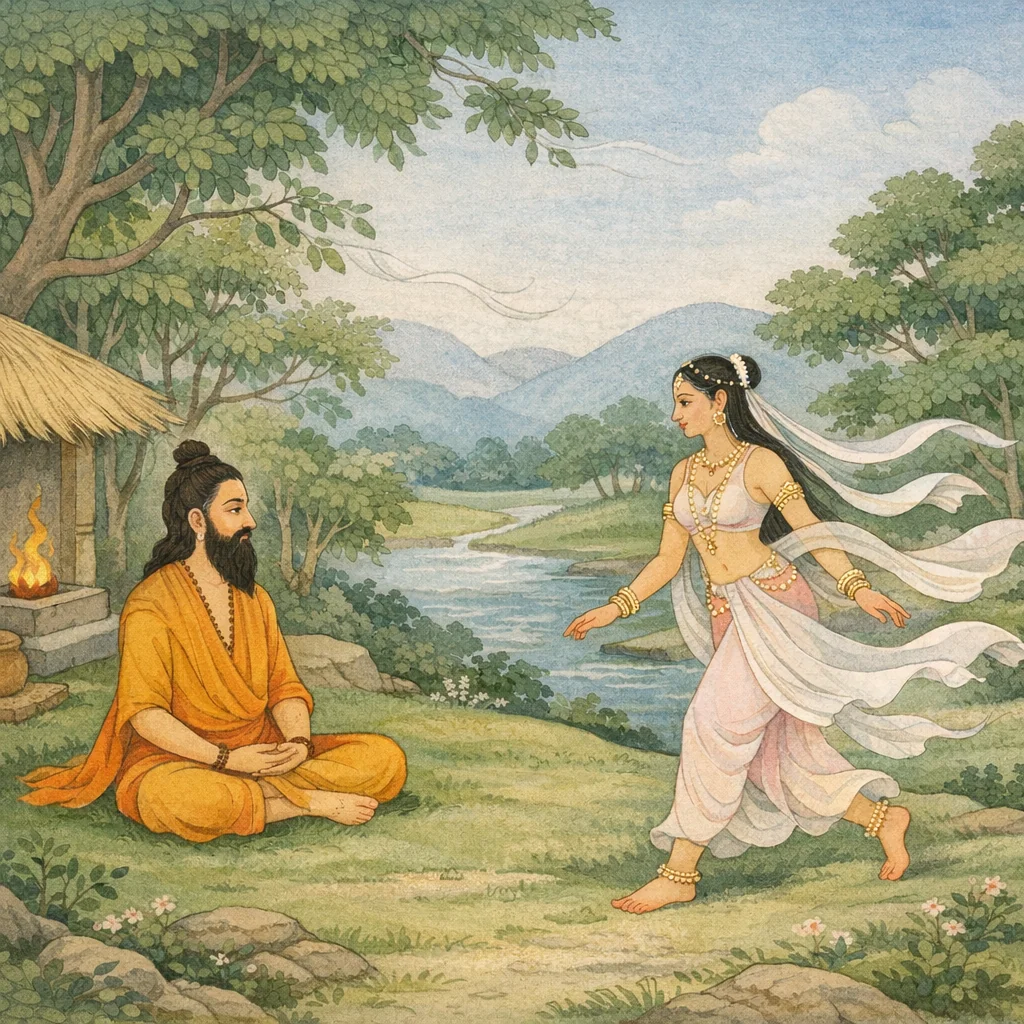
Chapter Arc: Menaka, the shy yet radiant apsara, enters the forest hermitage and beholds Vishvamitra—his sins scorched away by tapas—burning like a living fire of austerity. → After saluting the rishi, Menaka begins to play near him; the wind, as if complicit, snatches at her moon-bright garment. Her feigned embarrassment and smiling reproach toward Vayu sharpen the scene into a deliberate temptation. → Vishvamitra, catching sight of Menaka’s unveiled beauty and unnameable youth, is struck—his mind turning from tapas to desire; the great ascetic becomes kama-vasha (overpowered by passion). → The chapter seals the turning: the rishi’s inner conquest falters, and the stage is set for their union and its consequence—Shakuntala’s birth and the forest’s protective hush around the coming child. → From this lapse of tapas will arise a child of destiny—how will the forest, the rishis, and fate receive the newborn who will later bind kings and lineages?
Shlokas
Verse 1
(दाक्षिणात्य अधिक पाठके १५ श्लोक मिलाकर कुल ५७ श्लोक हैं) अपना छा सं: - दुष्यन्तके पिताके 'इलिल' और “ईलिन' दोनों ही नाम मिलते हैं। द्विसप्ततितमो< ध्याय: मेनका-विश्वामित्र-मिलन, कन््याकी उत्पत्ति, शकुन्त पक्षियोंके द्वारा उसकी रक्षा और कण्वका उसे अपने आश्रमपर लाकर शकुन्तला नाम रखकर पालन करना कण्व उवाच एवमुक्तस्तया शक्र: संदिदेश सदागतिम् । प्रातिष्ठत तदा काले मेनका वायुना सह,(शकुन्तला दुष्यन्तसे कहती है--) महर्षि कण्वने (पूर्वोक्त ऋषिसे शेष वृत्तान्त इस प्रकार) कहा--मैनकाके ऐसा कहनेपर इन्द्रदेवने वायुको उसके साथ जानेका आदेश दिया। तब मेनका वायुदेवके साथ समयानुसार वहाँसे प्रस्थित हुई
Kaṇva said: When Menakā had spoken thus, Śakra (Indra) instructed Vāyu—ever swift in his coming and going—to accompany her. Then, at the proper time, Menakā set out from there together with the Wind-god.
Verse 2
अथापश्यद् वरारोहा तपसा दग्धकिल्बिषम् | विश्वामित्रं तप्यमानं मेनका भीरुराश्रमे,वनमें पहुँचकर भीरु स्वभाववाली सुन्दरी मेनकाने एक आश्रममें विश्वामित्र मुनिको तप करते देखा। वे तपस्याद्वारा अपने समस्त पाप दग्ध कर चुके थे
Then Menakā, the fair-limbed maiden of timid nature, came upon the hermitage and saw Viśvāmitra engaged in severe austerities. By the power of his tapas he had already burned away the stains of wrongdoing.
Verse 3
अभिवाद्य ततः सा त॑ प्राक्रीडदृषिसंनिधौ । अपोवाह च वासो<स्या मारुत: शशिसंनिभम्,उस समय महर्षिको प्रणाम करके वह अप्सरा उनके समीपवर्ती स्थानमें ही भाँति- भाँतिकी क्रीड़ाएँ करने लगी। इतनेमें ही वायुने मेनकाका चन्द्रमाके समान उज्ज्वल वस्त्र उसके शरीरसे हटा दिया
Having paid her respects to the ṛṣi, she began to sport in various ways close by him. Just then Marut, the Wind, swept away from her body her garment, bright as the moon.
Verse 4
सागच्छत् त्वरिता भूमिं वासस्तदभिलिप्सती । स्मयमानेव सव्रीड मारुतं वरवर्णिनी,यह देख सुन्दरी मेनका लजाकर वायुदेवको कोसती एवं मुसकराती हुई-सी वह वस्त्र लेनेकी इच्छासे तुरंत ही उस स्थानकी ओर दौड़ी गयी, जहाँ वह गिरा था
Eager to recover her garment, the exquisitely beautiful woman hurried toward the spot on the ground where it had fallen. Smiling as though playfully, yet with modest embarrassment, she seemed to reproach the Wind-god.
Verse 5
पश्यतस्तस्य तत्रर्षेरप्पयग्निसमतेजस: । विश्वामित्रस्ततस्तां तु विषमस्थामनिन्दिताम्
As that sage—radiant like a blazing fire—looked on there, Viśvāmitra then noticed the blameless woman, standing in a precarious and difficult situation.
Verse 6
गृद्धां वाससि सम्भ्रान्तां मेनकां मुनिसत्तम: । अनिर्देश्यवयोरूपामपश्यद् विवृतां तदा
Then the foremost of sages beheld Menakā—startled and flustered, her garment in disarray—revealed before him; her youth and beauty were so extraordinary as to seem beyond precise description.
Verse 7
तस्या रूपगुणान् दृष्टवा स तु विप्रर्षभस्तदा । चकार भावं संसर्गात् तया कामवशं गत:,उसके रूप और गुणोंको देखते ही विप्रवर विश्वामित्र कामके अधीन हो गये। सम्पर्कमें आनेके कारण मेनकामें उनका अनुराग हो गया
Seeing her beauty and virtues, that foremost of Brahmins at once fell under the sway of desire; through close association with her, affection for Menakā arose in him.
Verse 8
न्यमन्त्रयत चाप्येनां सा चाप्यैच्छदनिन्दिता । तौ तत्र सुचिरं कालमुभौ व्यहरतां तदा
Kaṇva said: He invited her to accept him, and she too—blameless in conduct—consented. There, in that place, the two of them lived together for a long time, passing their days in mutual companionship.
Verse 9
रममाणौ यथाकामं यथैकदिवसं तथा । (कामक्रोधावजितवान मुनिर्नित्यं क्षमान्वित: । चिरार्जितस्य तपस: क्षयं स कृतवानृषि: ।। तपस: संक्षयादेव मुनिर्मोहं समाविशत् | कामरागाभिभूतस्य मुने: पार्श्व जगाम सा ।।) जनयामास स मुनिर्मेनकायां शकुन्तलाम्
Kaṇva said: As they sported together according to their desire, day after day passed as though it were a single day. Though the sage had long conquered desire and anger and was ever endowed with forbearance, he caused the austerity he had amassed over a long time to waste away. From the very diminution of his tapas, delusion entered the sage; and when the ascetic was overpowered by passion and attachment, she (Menakā) drew near to him. Thus that sage begot Śakuntalā upon Menakā.
Verse 10
प्रस्थे हिमवतो रम्ये मालिनीमभितो नदीम् | जाततमुत्सृज्य तं गर्भ मेनका मालिनीमनु
Kaṇva said: In a lovely region of the Himālaya, by the river Mālinī, Menakā, having given birth, abandoned the newborn child and went away along the Mālinī.
Verse 11
कृतकार्या ततस्तूर्णमगच्छच्छक्रसंसदम् | त॑ं वने विजने गर्भ सिंहव्याप्रसमाकुले
Having accomplished her purpose, she quickly departed for the assembly of Śakra (Indra). In that lonely, secluded forest—where the pregnant woman was left amid a region roamed by lions and tigers—Kaṇva portrays the perilous setting that frames the coming moral duty of protection and care.
Verse 12
दृष्टवा शयानं शकुना: समन्तात् पर्यवारयन् | नेमां हिंस्युर्वने बालां क्रव्यादा मांसगृद्धिन:
Kaṇva said: Seeing the young girl lying there, the birds gathered all around and formed a protective ring. In the forest, flesh-eating beasts—greedy for meat—did not harm that child. The scene underscores a moral order in which innocence is safeguarded, as if nature itself restrains violence against the blameless.
Verse 13
उन्होंने मेनकाको अपने निकट आनेका निमन्त्रण दिया। अनिन्द्य सुन्दरी मेनका तो यह चाहती ही थी, उनसे सम्बन्ध स्थापित करनेके लिये वह राजी हो गयी। तदनन्तर वे दोनों वहाँ सुदीर्घध कालतक इच्छानुसार विहार तथा रमण करते रहे। वह महान् काल उन्हें एक दिनके समान प्रतीत हुआ। काम और क्रोधपर विजय न पा सकनेवाले उन सदा क्षमाशील महर्षिने दीर्घकालसे उपार्जित की हुई तपस्याको नष्ट कर दिया। तपस्याका क्षय होनेसे मुनिके मनपर मोह छा गया। तब मेनका काम तथा रागके वशीभूत हुए मुनिके पास गयी। ब्रह्मन! फिर मुनिने मेनकाके गर्भसे हिमालयके रमणीय शिखरपर मालिनी नदीके किनारे शकुन्तलाको जन्म दिया। मेनकाका काम पूरा हो चुका था; वह उस नवजात गर्भको मालिनीके तटपर छोड़कर तुरंत इन्द्र-लोकको चली गयी। सिंह और व्याप्रोंसे भरे हुए निर्जन वनमें उस शिशुको सोते देख शकुन्तों (पक्षियों)-ने उसे सब ओरसे पाँखोंद्वारा ढक लिया; जिससे कच्चे मांस खानेवाले गीध आदि जीव वनमें इस कन्याकी हिंसा न कर सकें ।। ८-- १२ || पर्यरक्षन्त तां तत्र शकुन्ता मेनकात्मजाम् | उपस्प्रष्ठं गतश्चाहमपश्यं शयितामिमाम्
There, the śakuntas (birds) kept watch over Menakā’s daughter on every side. After performing my ablutions, I came and saw this infant lying there. The episode shows how a lapse from ascetic restraint can lead to delusion, yet providence and compassion still protect the innocent child, preserving the moral order that the newborn is destined to fulfill.
Verse 14
द्विजा ऊचु: विश्वामित्रसुतां ब्रह्मन् न्यास भूतां भरस्व वै । कामक्रोधावजितवान् सखा ते कौशिकीं गत: ।। तस्मात् पोषय तत्पुत्रीं दयावानिति ते<ब्रुवन् । पक्षी बोले-ब्रह्मन! यह विश्वामित्रकी कन्या आपके यहाँ धरोहरके रूपमें आयी है। आप इसका पालन-पोषण कीजिये। कौशिकीके तटपर गये हुए आपके सखा विज्वामित्र काम और क्रोधको नहीं जीत सके थे। आप दयालु हैं; इसलिये उनकी पुत्रीका पालन कीजिये। इस प्रकार पक्षियोंने कहा। कण्व उवाच सर्वभूतरुतज्ञो5हं दयावान् सर्वजन्तुषु । निर्जने5पि महारण्ये शकुनै: परिवारिताम् ।।) आनयित्वा ततश्चैनां दुहितृत्वे न्यवेशयम्,कण्व मुनि कहते हैं--ब्रह्मन! मैं समस्त प्राणियोंकी बोली समझता हूँ और सब जीवोंके प्रति दयाभाव रखता हूँ। अतः उस निर्जन महावनमें पक्षियोंसे घिरी हुई इस कन्याको वहाँसे लाकर मैंने इसे अपनी पुत्रीके पदपर प्रतिष्ठित किया
The birds said, “O Brahmin, this daughter of Viśvāmitra has come to you as a trust; do indeed bear the responsibility for her. Your friend Viśvāmitra, having gone to the bank of the Kauśikī, did not conquer desire and anger. Therefore, being compassionate, nurture his daughter.” Thus the birds spoke. Kaṇva said, “I understand the voices of all creatures and I am compassionate toward all beings. Therefore, though she was in a lonely great forest, surrounded by birds, I brought this girl from there and established her in the status of my own daughter.”
Verse 15
शरीरकृत् प्राणदाता यस्य चान्नानि भुज्जते । क्रमेणैते त्रयो<प्युक्ता: पितरो धर्मशासने,जो गर्भाधानके द्वारा शरीरका निर्माण करता है, जो अभयदान देकर प्राणोंकी रक्षा करता है और जिसका अन्न भोजन किया जाता है, धर्मशास्त्रमें क्रमश: ये तीनों पुरुष पिता कहे गये हैं
Kaṇva said: “He who brings about one’s body (through begetting), he who preserves one’s life by granting protection, and he whose food one eats—these three, in this order, are all declared to be ‘fathers’ in the teachings of dharma.”
Verse 16
निर्जने तु वने यस्माच्छकुन्तै: परिवारिता । शकुन्तलेति नामास्या: कृतं चापि ततो मया,निर्जन वनमें इसे शकुन्तोंने घेर रखा था, इसलिये “शकुन्तान् लाति रक्षकत्वेन गृह्नाति' इस व्युत्पत्तिक अनुसार इस कन्याका नाम मैंने 'शकुन्तला” रख दिया
Kaṇva said: “Because, in that lonely forest, she was surrounded and attended by śakuntas (birds), I therefore gave her the name ‘Śakuntalā.’”
Verse 17
एवं दुहितरं विद्धि मम विप्र शकुन्तलाम् | शकुन्तला च पितरं मन्यते मामनिन्दिता,ब्रह्म! इस प्रकार शकुन्तला मेरी बेटी हुई, आप यह जान लें। प्रशंसनीय शील- स्वभाववाली शकुन्तला भी मुझे अपना पिता मानती है
Kaṇva said: “O Brahmin, know this—Śakuntalā is my daughter. And Śakuntalā herself, blameless in conduct, regards me as her father.”
Verse 18
शकुन्तलोवाच एतदाचष्ट पृष्ट: सन् मम जन्म महर्षये | सुतां कण्वस्य मामेवं विद्धि त्वं मनुजाधिप,शकुन्तला कहती है--राजन्! उन महर्षिके पूछनेपर पिता कण्वने मेरे जन्मका यह वृत्तान्त उन्हें बताया था। इस तरह आप मुझे कण्वकी ही पुत्री समझिये। मैं अपने जन्मदाता पिताको तो जानती नहीं, कण्वको ही पिता मानती हूँ। महाराज! इस प्रकार जो वृत्तान्त मैंने सुन रखा था, वह सब आपको बता दिया
Śakuntalā said: “When the great sage asked about my birth, this is what my father Kaṇva related to him. Therefore, O lord of men, know me to be Kaṇva’s daughter. I do not know the father who begot me; I regard Kaṇva alone as my father. O king, I have told you exactly the account I had heard.”
Verse 19
कण्वं हि पितरं मन्ये पितरं स्वमजानती । इति ते कथितं राजन् यथावृत्तं श्रुतं मया,शकुन्तला कहती है--राजन्! उन महर्षिके पूछनेपर पिता कण्वने मेरे जन्मका यह वृत्तान्त उन्हें बताया था। इस तरह आप मुझे कण्वकी ही पुत्री समझिये। मैं अपने जन्मदाता पिताको तो जानती नहीं, कण्वको ही पिता मानती हूँ। महाराज! इस प्रकार जो वृत्तान्त मैंने सुन रखा था, वह सब आपको बता दिया
Śakuntalā says: “O King, since I do not know my biological father, I regard Kaṇva alone as my father. Thus, O King, I have told you exactly as I heard it—the account of my birth as it was related.”
Verse 56
अग्निके समान तेजस्वी महर्षि विश्वामित्रके देखते-देखते वहाँ यह घटना घटित हुई। वह अनिन्द्य सुन्दरी विषम परिस्थितिमें पड़ गयी थी और घबराकर वस्त्र लेनेकी इच्छा कर रही थी। उसका रूप-सौन्दर्य अवर्णनीय था। तरुणावस्था भी अद्भुत थी। उस सुन्दरी अप्सराको मुनिवर विश्वामित्रने वहाँ नंगी देख लिया
Kaṇva said: Before the very eyes of the radiant sage Viśvāmitra—whose splendor was like fire—this incident occurred. An irreproachable and beautiful apsaras found herself in a difficult predicament; frightened, she sought to obtain clothing. Her beauty was beyond description, and her youthful bloom was extraordinary. In that place, the eminent sage Viśvāmitra saw the lovely apsaras unclothed.
Verse 71
इस प्रकार श्रीमह्याभारत आदिपर्वके अन्तर्गत सम्भवपर्वमें शकुन्तलोपाख्यानविषयक इकद्तत्तवाँ अध्याय पूरा हुआ
Thus ends the seventy-second chapter of the Sambhava Parva within the Ādi Parva of the Śrī Mahābhārata, devoted to the episode of Śakuntalā. This colophon marks the completion of a narrative unit and signals a transition from the moral and familial origins highlighted in Śakuntalā’s story toward the broader unfolding of the dynasty’s destiny.
Verse 72
इति श्रीमहाभारते आदिपर्वणि सम्भवपर्वणि शकुन्तलोपाख्याने द्विसप्ततितमो<ध्याय:
Thus ends the seventy-second chapter in the Śrī Mahābhārata, within the Ādi Parva—specifically the Sambhava Parva—concluding the upākhyāna of Śakuntalā. This closing colophon signals the completion of a narrative unit that foregrounds lineage, legitimacy, and dharma through Śakuntalā’s story, situating it within the larger account of origins and succession.
Verse 133
निर्जने विपिने रम्ये शकुन्तै: परिवारिताम् । (मां दृष्टवैवान्वपद्यन्त पादयो: पतिता द्विजा: । अब्रुवज्छकुना: सर्वे कल॑ मधुरभाषिण: ।। इस प्रकार वहाँ शकुन्त ही मेनकाकुमारीकी रक्षा कर रहे थे। उसी समय आचमन करनेके लिये जब मैं मालिनीतटपर गया तो देखा--यह रमणीय निर्जन वनमें पक्षियोंसे घिरी हुई सो रही है। मुझे देखते ही वे सब मधुरभाषी पक्षी मेरे पैरोंपर गिर गये और सुन्दर वाणीमें इस प्रकार कहने लगे
Kaṇva said: “In a lovely, solitary forest I saw her, surrounded by birds. The moment they noticed me, those twice-born birds fell at my feet and, speaking in a soft and sweet tone, addressed me.” The scene frames the child’s protection as a quiet, dharmic guardianship of the vulnerable, where even creatures of the wild recognize a righteous ascetic and seek his aid rather than fear him.
Frequently Asked Questions
The dilemma is whether relational desire and perceived reciprocity can override guru-dharma: Devayānī seeks marriage, while Kaca asserts that his student status and guru-kinship impose a binding boundary against acceptance.
The chapter emphasizes that disciplined role-ethics (niyama) can legitimately constrain personal preference, and that knowledge and power are ethically conditioned—speech and intention shape outcomes as much as accomplishment.
No explicit phalaśruti is stated; the implicit meta-commentary is functional: vidyā’s ‘fruit’ is shown to depend on ethical context and transmission—Kaca’s learning remains effective, but only through authorized teaching to another.