Adhyaya 193
Ādi Parva, Adhyāya 193 — Hastināpura Mantra: Duryodhana’s Proposals to Divide the Pāṇḍavas
Upa-parva: Mantra-Pariṣad Nīti (Hastināpura Counsel on Counter-Strategy)
Dhṛtarāṣṭra opens by stating that he shares the same line of thought as his interlocutors yet does not wish to disclose his inner intention to Vidura, indicating a deliberate management of court transparency. He then invites Duryodhana and Karṇa (Rādheya) to articulate what course appears ‘attainable’ (prāpta) in the immediate political moment. Duryodhana outlines multiple policy options: employing skilled agents and persuasive brahmins to create divisions among Kuntī’s sons and Mādrī’s sons; attempting to influence King Drupada through wealth and inducements directed at his sons and ministers; encouraging the Pāṇḍavas to abandon Yudhiṣṭhira’s leadership or to prefer residence elsewhere by narrating defects of their current situation; using intermediaries adept at stratagems to set the brothers against one another; destabilizing Draupadī’s alignment with the brothers by targeted allurements; and prioritizing covert neutralization of Bhīma, described as the principal support of the Pāṇḍavas’ strength. The chapter argues that with Bhīma removed, morale and capacity for kingship decline, while Arjuna’s battlefield superiority is framed as contingent on Bhīma’s support. Duryodhana urges swift execution before trust solidifies with Drupada, and concludes by asking Karṇa to judge whether these measures are sound or unsound, thereby formalizing the counsel process and distributing responsibility across the advisory circle.
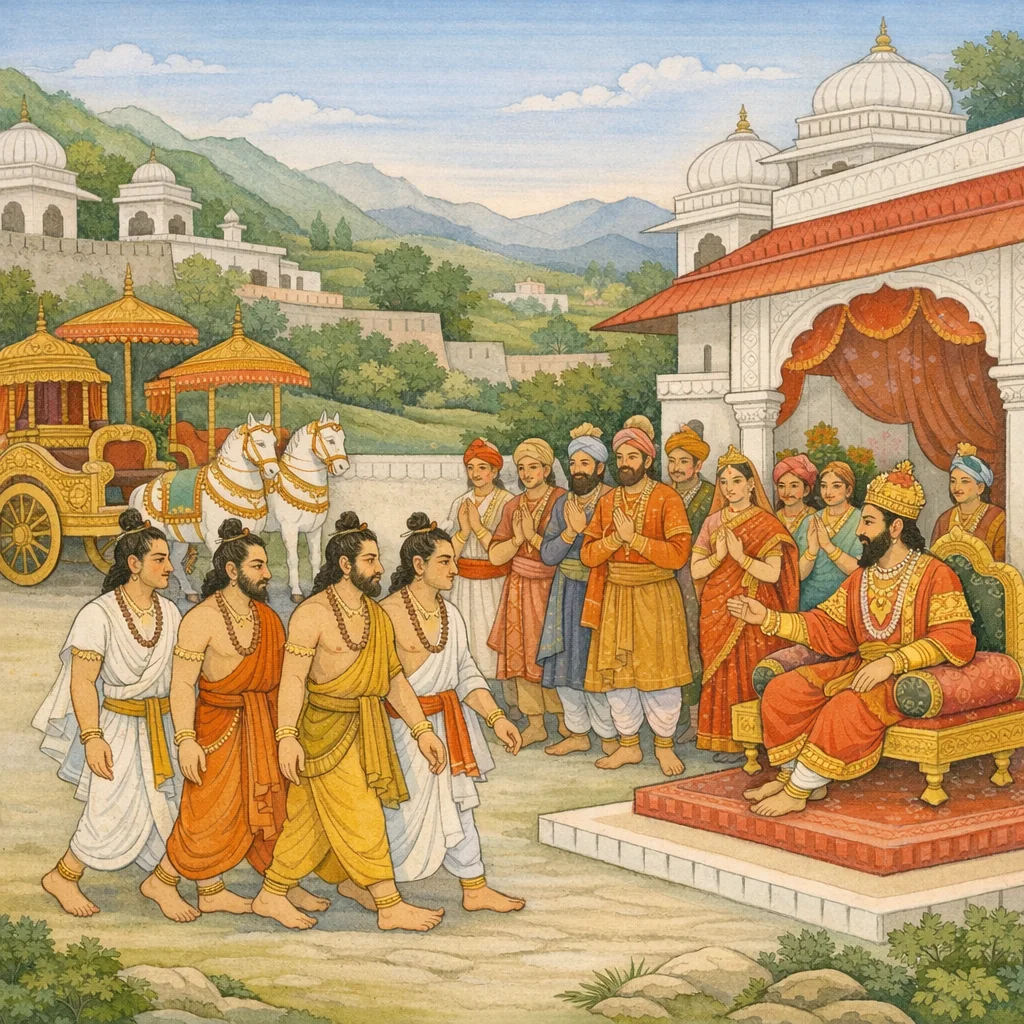
Chapter Arc: पुरोहित के वचनों और पाञ्चाल-आमंत्रण के संकेतों के बीच पाण्डवों का रथों पर आरूढ़ होकर द्रुपद-निवास की ओर प्रस्थान—एक अनजान परीक्षा का द्वार खुलता है। → युधिष्ठिर जिज्ञासा-वश अनेक द्रव्य, क्रीड़ा-सामग्री और आवश्यक वस्तुएँ जुटवाते हैं; कुन्ती और कृष्णा सहित सब एकत्र होकर राजकीय वैभव के साथ आगे बढ़ते हैं, पर भीतर-भीतर यह आशंका रहती है कि पाञ्चाल-राजसभा उन्हें किस दृष्टि से देखेगी—अतिथि या प्रत्याशी? → द्रुपद के भवन में पाण्डवों की सिंह-सी चाल, गूढ़ कंधे, भुजगेन्द्र-भोग-से दीर्घ बाहु और ऋषि-सा वेश देखकर राजा, मंत्री, पुत्र, सचिव और जनसमुदाय हर्ष से उमड़ पड़ते हैं—उनकी वीरता और कुलीनता का मौन प्रमाण सभा के सामने प्रकट हो जाता है। → द्रुपद-पुत्र तथा द्रुपद सहित समस्त राजपरिवार और अमात्यगण प्रसन्न होकर कुन्ती-सुतों का स्वागत-सत्कार करते हैं; पाण्डव पाञ्चाल-गृह में सम्मानित अतिथि के रूप में प्रतिष्ठित होते हैं। → यह सत्कार केवल अतिथि-धर्म है या द्रौपदी-स्वयंवर से पूर्व ‘परीक्षा’ का प्रथम चरण—अगला निर्णय अभी शेष है।
Shlokas
Verse 1
/ ऑपनआक्रात बछ। अ-काज जा त्रिनवर्त्याधिकशततमो< ध्याय: पाण्डवों और कुन्तीका द्रपदके घरमें जाकर सम्मानित होना और राजा द्रुपदद्वारा पाण्डवोंके शील-स्वभावकी परीक्षा दूत उवाच जन्यार्थमन्नं द्रुपदेन राज्ञा विवाहहेतोरुपसंस्कृतं च | तदाप्रुवध्वं कृतसर्वकार्या: कृष्णां च तत्रैव चिरं न कार्यम्,दूत बोला--महाराज द्रुपदने विवाहके निमित्त बरातियोंको जिमानेके लिये उत्तम भोजनसामग्री तैयार करायी है। अतः आपलोग सम्पूर्ण दैनिक कार्योंसे निवृत्त हो उसे पायें। राजकुमारी कृष्णाको भी विवाहविधिसे वहीं प्राप्त करें। इसमें विलम्ब नहीं करना चाहिये
The messenger said: “King Drupada has had excellent provisions prepared to feed the guests, and he has arranged everything with the marriage in view. Therefore, once you have completed your necessary daily duties, come and partake of it. And bring Princess Kṛṣṇā (Draupadī) there as well for the marriage rites—there should be no delay.”
Verse 2
इमे रथा: काउचनपदझचित्रा: सदश्वयुक्ता वसुधाधिपार्हा: । एतान् समारुह समेत सर्वे पाञज्चालराजस्य निवेशनं तत्,ये सुवर्णमय कमलोंसे सुशोभित तथा राजाओंकी सवारीके योग्य विचित्र रथ खड़े हैं, इनमें उत्तम घोड़े जुते हुए हैं; इनपर सवार हो आप सब लोग महाराज ट्रुपदके महलमें पधारें
“Here are chariots—splendid and variously adorned, fit for kings—with fine horses already yoked. Mount them all together and go to the residence of the Pañcāla king, Drupada.”
Verse 3
वैशम्पायन उवाच ततः प्रयाता: कुरुपुड्रवास्ते पुरोहितं तं परियाप्य सर्वे | आस्थाय यानानि महान्ति तानि कुन्ती च कृष्णा च सहैकयाने,वैशम्पायनजी कहते हैं-जनमेजय! वहाँ वे सभी कुरुश्रेष्ठ पाण्डव पुरोहितजीको विदा करके उन विशाल रथोंपर आरूढ़ हो (राजभवनकी ओर) चले। उस समय कुन्ती और कृष्णा एक साथ एक ही सवारीपर बैठी हुई थीं
Vaiśampāyana said: Then those foremost Kurus—the Pāṇḍavas—having respectfully taken leave of the family priest, all set out. Mounting their great conveyances, they proceeded onward; and at that time Kuntī and Kṛṣṇā (Draupadī) rode together in a single vehicle.
Verse 4
श्रुत्वा तु वाक्यानि पुरोहितस्य यान्युक्तवान् भारत धर्मराज: । जिज्ञासयैवाथ कुरूत्तमानां द्रव्याण्यनेकान्युपसंजहार,भारत! उस समय धर्मराज युधिष्ठिरने जो बातें कही थीं, उन्हें पुरोहितके मुखसे सुनकर उन कुरुश्रेष्ठ वीरोंके शीलस्वभावकी परीक्षाके लिये राजा द्रुपदने अनेक प्रकारकी वस्तुओंका संग्रह किया
Vaiśampāyana said: Hearing from the family priest the words that Dharmarāja Yudhiṣṭhira had spoken, King Drupada—wishing to test the character and conduct of those foremost among the Kurus—had many kinds of valuables gathered together.
Verse 5
फलानि माल्यानि च संस्कृतानि वर्माणि चर्माणि तथा55सनानि । गाश्चैव राजन्नथ चैव रज्जू- बीजानि चान्यानि कृषीनिमित्तम्,राजन! (सब प्रकारके) फल, सुन्दर ढंगसे बनायी हुई मालाएँ, कवच, ढाल, आसन, गौएँ रस्सियाँ, बीज एवं खेतीके अन्य सामान तथा अन्य कारीगरियोंके सब सामान पूर्णरूपसे वहाँ संगृूहीत किये गये थे। इसके सिवा, खेलके लिये जो आवश्यक वस्तुएँ होती हैं, उन सबको राजा ट्रुपदने वहाँ जुटाकर रखा था
Vaiśampāyana said: “O king, there were gathered there fruits and well-prepared garlands, coats of mail and leather shields, and also seats; likewise cows, ropes, and various seeds and other requisites meant for agriculture.”
Verse 6
अन्येषु शिल्पेषु च यान्यपि स्यु: सर्वाणि कृत्यान्यखिलेन तत्र । क्रीडानिमित्तान्यपि यानि तत्र सर्वाणि तत्रोपजहार राजा,राजन! (सब प्रकारके) फल, सुन्दर ढंगसे बनायी हुई मालाएँ, कवच, ढाल, आसन, गौएँ रस्सियाँ, बीज एवं खेतीके अन्य सामान तथा अन्य कारीगरियोंके सब सामान पूर्णरूपसे वहाँ संगृूहीत किये गये थे। इसके सिवा, खेलके लिये जो आवश्यक वस्तुएँ होती हैं, उन सबको राजा ट्रुपदने वहाँ जुटाकर रखा था
Vaiśampāyana said: “O king, whatever tasks and requisites belong to the various crafts—indeed all of them without exception—were assembled there. And even the items needed for games and recreation were all gathered there by the king.”
Verse 7
वर्माणि चर्माणि च भानुमन्ती खडगा महान्तो<श्वरथाश्न चित्रा: धनूंषि चाग्रयाणि शराश्न चित्रा: शक्त्यृष्टय:ः काउ्चनभूषणाश्व,दूसरी ओर कवच, चमकती हुई ढालें, तलवारें, बड़े-बड़े विचित्र घोड़े तथा रथ, श्रेष्ठ धनुष, विचित्र बाण, सुवर्ण-भूषित शक्तियाँ एवं ऋष्टियाँ, प्रास, भुशुण्डियाँ, फरसे तथा सब प्रकारकी युद्धसामग्री, उत्तम वस्तुओंसे युक्त शय्या-आसन और नाना प्रकारके वस्त्र भी वहाँ संग्रह करके रखे गये थे
Vaiśampāyana said: There were stored there coats of mail and leather armours, radiant shields, and great swords; also splendid horses and chariots. Along with these were excellent bows and variegated arrows, and spears and lances adorned with gold—an amassed treasury of war-gear, prepared in full measure for conflict and display of power.
Verse 8
प्रासा भुशुण्ड्यश्न परश्वधाश्न सांग्रामिकं चैव तथैव सर्वम् | शय्यासनान्युत्तमवस्तुवन्ति तथैव वासो विविध च तत्र,दूसरी ओर कवच, चमकती हुई ढालें, तलवारें, बड़े-बड़े विचित्र घोड़े तथा रथ, श्रेष्ठ धनुष, विचित्र बाण, सुवर्ण-भूषित शक्तियाँ एवं ऋष्टियाँ, प्रास, भुशुण्डियाँ, फरसे तथा सब प्रकारकी युद्धसामग्री, उत्तम वस्तुओंसे युक्त शय्या-आसन और नाना प्रकारके वस्त्र भी वहाँ संग्रह करके रखे गये थे
Vaiśampāyana said: There, spears, bhuśuṇḍī-maces, and battle-axes—indeed every kind of implement of war—were stored. Along with these were excellent beds and seats furnished with fine materials, and many varieties of garments as well.
Verse 9
कुन्ती तु कृष्णां परिगृहा साध्वी- मन्त:पुरं द्रुपदस्याविवेश । स्त्रियश्ष॒ तां कौरवराजपत्नीं प्रत्यर्चयामासुरदीनसत्त्वा:,कुन्तीदेवी सती-साध्वी कृष्णाको साथ ले ट्रुपदके रनिवासमें गयीं। वहाँकी उदारहृदया स्त्रियोंने कौरवराज पाण्डुकी धर्मपत्नीका (बड़ा) आदर-सत्कार किया
Then the virtuous Kuntī, taking Kṛṣṇā (Draupadī) with her, entered King Drupada’s inner apartments. There, the noble-hearted women received and honored her with due reverence, acknowledging her as the lawful queen of the Kuru line.
Verse 10
तान् सिंहविक्रान्तगतीन् निरीक्ष्य महर्षभाक्षानजिनोत्तरीयान् । गूढोत्तरांसान् भुजगेन्द्र भोग- प्रलम्बबाहून् पुरुषप्रवीरान्,राजन! पाण्डवोंकी चाल-ढाल सिंहके समान पराक्रमसूचक थी, उनकी आँखें साँड़के समान बड़ी-बड़ी थीं, उन्होंने काले मृगचर्मके ही दुपट्टे ओढ़ रखे थे, उनकी हँसलीकी हड्डियाँ मांससे छिपी हुई थीं और भुजाएँ नागराजके शरीरके समान मोटी एवं विशाल थीं। उन पुरुषसिंह पाण्डवोंको देखकर राजा ट्रुपद, उनके सभी पुत्र, मन्त्री, इष्ट-मित्र और समस्त नौकर-चाकर ये सब-के-सब वहाँ बड़े ही प्रसन्न हुए
Vaiśaṃpāyana said: O king, seeing those foremost of men—the Pāṇḍavas—whose stride proclaimed lion-like prowess, whose eyes were large like those of a mighty bull, who wore black antelope-skins as their upper garments, whose collarbones were hidden by firm flesh, and whose long arms were thick and massive like the coils of the king of serpents—King Drupada, together with his sons, ministers, well-wishers, friends, and attendants, all became greatly delighted.
Verse 11
राजा च राज्ञ: सचिवाश्न सर्वे पुत्राश्न॒ राज्ञ: सुहृदस्तथैव । प्रेष्याश्न सर्वे नेखिलेन राजन् हर्ष समापेतुरतीव तत्र,राजन! पाण्डवोंकी चाल-ढाल सिंहके समान पराक्रमसूचक थी, उनकी आँखें साँड़के समान बड़ी-बड़ी थीं, उन्होंने काले मृगचर्मके ही दुपट्टे ओढ़ रखे थे, उनकी हँसलीकी हड्डियाँ मांससे छिपी हुई थीं और भुजाएँ नागराजके शरीरके समान मोटी एवं विशाल थीं। उन पुरुषसिंह पाण्डवोंको देखकर राजा ट्रुपद, उनके सभी पुत्र, मन्त्री, इष्ट-मित्र और समस्त नौकर-चाकर ये सब-के-सब वहाँ बड़े ही प्रसन्न हुए
Vaiśampāyana said: There, the king, all the king’s ministers, the king’s sons, and likewise his well-wishers, together with all attendants without exception, were filled with great joy. Seeing the Pāṇḍavas—men of leonine bearing and evident prowess—Drupada’s entire circle rejoiced, for their presence signaled strength allied with rightful purpose and the hope of a dharmic alliance.
Verse 12
ते तत्र वीरा: परमासनेषु सपादपीठेष्वविशड्कमाना: । यथानुपूर्व विविशुर्नराग्रया- स्तथा महार्हेषु न विस्मयन्त:,वे नरश्रेष्ठ वीर पाण्डव वहाँ लगे हुए पादपीठसहित बहुमूल्य श्रेष्ठ सिंहासनोंपर बिना किसी हिचक या संकोचके मनमें तनिक भी विस्मय न करते हुए बड़े-छोटेके क्रमसे जा बैठे
Vaiśampāyana said: There, those heroic men—foremost among warriors—without hesitation or misgiving, entered and took their seats in due order upon the finest, richly valued thrones furnished with footstools, showing no astonishment, as befits the noble and disciplined.
Verse 13
उच्चावचं पार्थिवभोजनीयं पात्रीषु जाम्बूनदराजतीषु । दासाश्ष दास्यश्व सुमृष्टवेषा: सम्भोजकाश्षाप्युपजहुरज्ञम्,तब स्वच्छ और सुन्दर पोशाक पहने हुए दास-दासी तथा रसोइयोंने सोने-चाँदीके बरतनोंमें राजाओंके भोजन करनेयोग्य अनेक प्रकारकी सामान्य और विशेष भोजन- सामग्री लाकर परोसी
Vaiśampāyana said: Attendants—male and female—neatly dressed, along with the servers, brought and set before them a variety of foods, both ordinary and choice, fit for kings to eat, served in vessels of gold and silver. The scene underscores royal hospitality and the careful observance of social duty through orderly service and generous provision.
Verse 14
डबल >> -अिया दा "3७.ाइ इक: लक लिए ८ - 0७, जप - £ 52 न्त्ज कस कल >4>०>०: श्यैं कर ऋत्कत 7 त्ऋतप कद जी है 20.20:20:84956% 9 //4] ४५१८ न ते तत्र भुक्त्वा पुरुषप्रवीरा यथा55त्मकामं सुभुशं प्रतीता: । उत्क्रम्प सर्वाणि वसूनि राजन् सांग्रामिकं ते विविशुर्नवीरा:,मनुष्योंमें श्रेष्ठ पाण्डव वहाँ अपनी रुचिके अनुसार उन सब वस्तुओंको खाकर बहुत अधिक प्रसन्न हुए। राजन! (तदनन्तर वहाँ संग्रह की हुई अन्य) सब वैभव-भोगकी सामग्रियोंको छोड़कर वे वीर पहले उसी स्थानपर गये, जहाँ युद्धकी सामग्रियाँ रखी गयी थीं
Having eaten there to their heart’s content, those foremost of men were greatly delighted. Then, O king, leaving behind all the other stored riches and enjoyments, those heroes proceeded to the place where the implements and supplies for war had been kept.
Verse 15
तल््लक्षयित्वा ट्रुपदस्य पुत्रो राजा च सर्व: सह मन्त्रिमुख्यै: । समर्थयामासुरुपेत्य हृष्टा: कुन्तीसुतान् पार्थिव राजपुत्रान्,जनमेजय! यह सब देखकर राजा ट्रपद, राजकुमार और सभी प्रधान मन्त्री बड़े प्रसन्न हुए और उनके पास जाकर उन्होंने अपने मनमें यही निश्चय किया कि ये राजकुमार कुन्तीदेवीके ही पुत्र हैं
Seeing this, Drupada’s son, the king himself, and all the leading ministers—delighted—approached them and came to a firm conclusion: these royal youths, the sons of kings, were indeed the sons of Kuntī. Thus, their recognition was grounded not in rumor but in observed signs and prudent deliberation.
Verse 193
इति श्रीमहाभारते आदिपर्वणि वैवाहिकपर्वणि युधिष्ठिरादिपरीक्षणे त्रिनवत्यधिकशततमो<ध्याय:
Thus, in the Śrī Mahābhārata, within the Ādi Parva, in the section concerning the marriage (Vaivāhika Parva), the chapter on the testing of Yudhiṣṭhira and the other brothers concludes here as the one hundred and ninety-third chapter.
Frequently Asked Questions
The dilemma concerns whether political security can justify concealment from an ethical counselor (Vidura) and the use of divisive, covert, or manipulative measures against kin. The chapter stages the conflict between rājānīti as expediency and dharma as restraint.
The passage illustrates that intent, method, and counsel structure outcomes: policies built on secrecy and fragmentation may yield short-term advantage but deepen systemic instability. It also shows how identifying a community’s ‘support pillar’ (here, Bhīma) becomes a strategic lens in political reasoning.
No explicit phalaśruti is stated. The meta-level significance is implicit: the chapter functions as a diagnostic record of counsel and intention, helping readers interpret later events as consequences of deliberated policy rather than accidental escalation.