Adhyaya 192
द्रौपदी-वरण-प्रत्ययः — Intelligence Reports and the Kaurava Court’s Response
Upa-parva: Svayaṃvara–Hāstināpura Pratyāvṛtti (Draupadī-vivāha-prasaṅga)
Vaiśaṃpāyana narrates how royal agents report that Draupadī has been won by Arjuna and joined to the Pāṇḍavas. The kings, astonished, reassess earlier assumptions that Kuntī and her sons perished in the lac-house fire, and some openly censure Bhīṣma and Dhṛtarāṣṭra in connection with Purocana’s cruel stratagem. After the svayaṃvara concludes, the rulers depart. Duryodhana returns to Hāstināpura with his brothers, Aśvatthāman, Karṇa, and Kṛpa, subdued by the outcome; Duḥśāsana attributes the event to fate and notes that Arjuna’s identity was not recognized. Vidura informs the court that the Pāṇḍavas are safe, honored by Drupada, and supported by strong relations. Dhṛtarāṣṭra responds with outward satisfaction and orders abundant ornaments for Draupadī, while also revealing a preference for his own son based on misapprehension. Duryodhana and Karṇa then request a private audience (excluding Vidura) and argue that strengthening rivals is not true growth; they propose continuous efforts to diminish the Pāṇḍavas’ power so they do not ‘overwhelm’ the Kauravas with their allies.
Chapter Arc: धृष्टद्युम्न द्रौपदी-स्वयंवर के अद्भुत विजेता का रूप-वर्णन करता है—वह युवा, व्यायत, रक्तनेत्र, कृष्णाजिनधारी, देवतुल्य, जिसने कठिन धनुष पर प्रत्यंचा चढ़ाकर लक्ष्य को भूमि पर गिरा दिया। → राजाओं की सभा में असह्य क्रोध उठता है; द्रौपदी विजेता के पीछे प्रसन्न होकर चलती है, पर पराजित नरेशों का अपमान-बोध उन्हें आक्रमण को उकसाता है। उधर पाण्डव ब्राह्मण-वेष में कुटिया लौटते हैं; द्रौपदी भिक्षा-रूप अन्न स्वीकार कर वृद्धा (कुन्ती) को पहले परोसती है और फिर उन ‘नरप्रवीरों’ की सेवा करती है—गोपनीयता और मर्यादा का तनाव भीतर ही भीतर बढ़ता है। → द्रुपद के मन में पाण्डु के प्रति पुराना स्नेह जागता है और वह निश्चय करता है—‘यह मेरी पुत्री पाण्डु-पुत्रों की स्नुषा बने’; इसी लक्ष्य से वह पुरोहित को पाण्डवों के पास भेजता है। पुरोहित और युधिष्ठिर का संवाद आरम्भ होकर विवाह-नियति को औपचारिक दिशा देता है। → पुरोहित के आगमन से द्रुपद की मंशा स्पष्ट होती है: वह विजेता की पहचान, पाण्डवों की कुशल-क्षेम और द्रौपदी के भविष्य को धर्मसम्मत रीति से बाँधना चाहता है; युधिष्ठिर पक्ष भी संवाद के माध्यम से स्थिति को संयमित और विधिसंगत बनाने की ओर बढ़ता है। → द्रुपद का ‘मनोरथ’ पूर्ण होने की आशा व्यक्त होती है—पर यह मनोरथ किस रूप में सिद्ध होगा (द्रौपदी का विवाह किस प्रकार/किससे), इसका निर्णय अगले प्रसंग पर टिका रह जाता है।
Shlokas
Verse 1
अ-णक्राछ (वैवाहिकपर्व) द्विनवत्यधिकशततमो< ध्याय: धृष्टय्युम्नके द्वारा द्रोपदी तथा पाण्डवोंका हाल सुनकर राजा द्रपदका उनके पास पुरोहितको भेजना तथा पुरोहित और युधिष्ठिरकी बातचीत वैशम्पायन उवाच ततस्तथोक्तः परिद्ृष्टरूप: पित्रे शशंसाथ स राजपुत्र: । धृष्टद्युम्न: सोमकानां प्रबहों वृत्तं यथा येन हृता च कृष्णा,वैशम्पायनजी कहते हैं--जनमेजय! राजा द्रपदके यों कहनेपर सोमकशिरोमणि राजकुमार धृष्टद्युम्न अत्यन्त हर्षमें भरकर वहाँ जो वृत्तान्त हुआ था एवं जो कृष्णाको ले गया, वह कौन था, वह सब समाचार कहने लगे
Vaiśampāyana said: Thus addressed and having clearly understood the matter, the prince reported it to his father. Dhṛṣṭadyumna, lord of the Somakas, recounted in full what had occurred there and by whom Kṛṣṇā (Draupadī) had been taken away—setting the scene for Drupada to respond in accordance with royal duty and dharma.
Verse 2
धृष्टह्ुम्न उवाच योडसौ युवा व्यायतलोहिताक्ष: कृष्णाजिनी देवसमानरूप: । यः कार्मुकाग्रयं कृतवानधिज्यं लक्ष्यंच यः पातितवान् पृथिव्याम्,धृष्टद्युम्न बोले--महाराज! जिन विशाल एवं लाल नेत्रोंवाले, कृष्णमृगचर्मधारी तथा देवताके समान मनोहर रूपवाले तरुण वीरने श्रेष्ठ धनुषपर प्रत्यंचा चढ़ायी और लक्ष्यको वेधकर पृथ्वीपर गिराया था, वे किसीका भी साथ न करके अकेले ही बड़े वेगसे आगे बढ़े। उस समय बहुत-से श्रेष्ठ ब्राह्मण उन्हें घेरे हुए थे और उनकी भूरि-भूरि प्रशंसा कर रहे थे। सम्पूर्ण देवताओं तथा ऋषियोंसे सेवित देवराज इन्द्र जैसे दैत्योंकी सेनाके भीतर नि:शंक होकर विचरते हैं, उसी प्रकार वे नवयुवक वीर निर्भीक होकर राजाओंके बीचसे निकले
Dhṛṣṭadyumna said: “O great king, that young hero—broad-built, with reddish eyes, wearing a black antelope-skin, and handsome like a god—was the one who strung the excellent bow and, striking the target, made it fall to the ground. He advanced swiftly, alone, joining no one. Many eminent brāhmaṇas surrounded him then, praising him again and again. And just as Indra, wielder of the vajra, served by gods and seers, moves fearlessly amid the sons of Diti (the Daityas), so that youthful warrior passed out from among the kings, utterly unafraid.”
Verse 3
असज्जमानकश्षु ततस्तरस्वी वृतो द्विजाग्रयैरभिपूज्यमान: । चक्राम वज्रीव दिते: सुतेषु सर्वेश्व देवे ऋषिभिश्न जुष्ट:,धृष्टद्युम्न बोले--महाराज! जिन विशाल एवं लाल नेत्रोंवाले, कृष्णमृगचर्मधारी तथा देवताके समान मनोहर रूपवाले तरुण वीरने श्रेष्ठ धनुषपर प्रत्यंचा चढ़ायी और लक्ष्यको वेधकर पृथ्वीपर गिराया था, वे किसीका भी साथ न करके अकेले ही बड़े वेगसे आगे बढ़े। उस समय बहुत-से श्रेष्ठ ब्राह्मण उन्हें घेरे हुए थे और उनकी भूरि-भूरि प्रशंसा कर रहे थे। सम्पूर्ण देवताओं तथा ऋषियोंसे सेवित देवराज इन्द्र जैसे दैत्योंकी सेनाके भीतर नि:शंक होकर विचरते हैं, उसी प्रकार वे नवयुवक वीर निर्भीक होकर राजाओंके बीचसे निकले
Dhṛṣṭadyumna said: Then that swift and powerful youth, unattached to any party and surrounded by foremost brāhmaṇas who honored and praised him, strode forward. Just as Vajrī (Indra), served by all the gods and sages, moves fearlessly amid the sons of Diti (the Daityas), so did that young hero pass without hesitation through the midst of the assembled kings—calm, confident, and unshaken in purpose.
Verse 4
कृष्णा प्रगृह्माजिनमन्वयात् त॑ नागं॑ यथा नागवधू: प्रहृष्टा | अमृष्यमाणेषु नराधिपेषु क्रुद्धेषु वै तत्र समापतत्सु,उस समय राजकुमारी कृष्णा अत्यन्त प्रसन्न हो उनका मृगचर्म थामकर ठीक उसी तरह उनके पीछे-पीछे जा रही थी, जैसे गजराजके पीछे हथिनी जा रही हो। यह देख राजा लोग सहन न कर सके और क्रोधमें भरकर युद्ध करनेके लिये उसपर चारों ओरसे टूट पड़े। तब एक दूसरा वीर बहुत बड़े वृक्षको उखाड़कर राजाओंकी उस मण्डलीमें कूद पड़ा और जैसे कोपमें भरे हुए यमराज समस्त प्राणियोंका संहार करते हैं, उसी प्रकार वह उन नरेशोंको मानो कालके गालमें भेजने लगा
Draupadī, delighted, took hold of the deerskin and followed him closely—like a joyful she-elephant following her lord. Seeing this, the assembled kings could not endure it; angered, they rushed in from all sides to attack him.
Verse 5
ततो<5पर: पार्थिवसड्घमध्ये प्रवृद्धमारुज्य महीप्ररोहम् । प्रकालयन्नेव स पार्थिवौघान् क्रुद्धोइन्तक: प्राणभृतो यथैव,उस समय राजकुमारी कृष्णा अत्यन्त प्रसन्न हो उनका मृगचर्म थामकर ठीक उसी तरह उनके पीछे-पीछे जा रही थी, जैसे गजराजके पीछे हथिनी जा रही हो। यह देख राजा लोग सहन न कर सके और क्रोधमें भरकर युद्ध करनेके लिये उसपर चारों ओरसे टूट पड़े। तब एक दूसरा वीर बहुत बड़े वृक्षको उखाड़कर राजाओंकी उस मण्डलीमें कूद पड़ा और जैसे कोपमें भरे हुए यमराज समस्त प्राणियोंका संहार करते हैं, उसी प्रकार वह उन नरेशोंको मानो कालके गालमें भेजने लगा
Then another warrior, wrenching up a great tree that had grown from the earth, leapt into the midst of the assembled kings. With furious force he began to strike down the host of rulers, sending them toward death—like Antaka (Death) himself, enraged, destroying living beings.
Verse 6
तौ पार्थिवानां मिषतां नरेन्द्र कृष्णामुपादाय गतौ नराग्रयौ । विभ्राजमानाविव चन्द्रसूर्योी बाह्ां पुराद् भार्गवकर्मशालाम्,नरेन्द्र! चन्द्रमा और सूर्यकी भाँति प्रकाशित होनेवाले वे दोनों नरश्रेष्ठ सब राजाओंके देखते-देखते द्रौपदीको साथ ले नगरसे बाहर कुम्हारके घरमें चले गये
O king, while the assembled monarchs looked on, those two foremost of men took Kṛṣṇā (Draupadī) with them and departed. Shining like the moon and the sun, they went out of the city to the Bhārgava’s workshop—the potter’s dwelling—thus drawing her away from the public gaze and the contesting kings.
Verse 7
तत्रोपविष्टार्चिरिवानलस्य तेषां जनित्रीति मम प्रतर्क: । तथाविधैरेव नरप्रवीरै- रुपोपविष्टैस्त्रिभिरग्निकल्पै:,उस घरमें अग्निशिखाके समान तेजस्विनी एक स्त्री बैठी हुई थीं। मेरा अनुमान है कि वे उन वीरोंकी माता रही होंगी। उनके आस-पास अग्नितुल्य तेजस्वी वैसे ही तीन श्रेष्ठ नरवीर और बैठे हुए थे >> |
There I saw a woman seated, radiant like the flame of a fire. I infer that she must have been the mother of those heroes. Around her, three foremost warriors—of the same kind—were seated as well, blazing with fire-like splendor.
Verse 8
तस्यास्ततस्तावभिवाद्य पादौ उक्ता च कृष्णा त्वभिवादयेति । स्थितां च तत्रैव निवेद्य कृष्णां भिक्षाप्रचाराय गता नराग्रया:,इन दोनों वीरोंने माताके चरणोंमें प्रणाम करके द्रौपदीसे भी उन्हें प्रणाम करनेके लिये कहा। प्रणाम करके वहीं खड़ी हुई कृष्णाको उन्होंने माताको सौंप दिया और स्वयं वे नरश्रेष्ठ वीर भिक्षा लानेके लिये चले गये
Then those two heroes bowed at their mother’s feet and told Kṛṣṇā (Draupadī) as well to offer her reverence. After she had paid homage and stood there, they entrusted Kṛṣṇā to their mother’s care, and the foremost of men went out to seek alms.
Verse 9
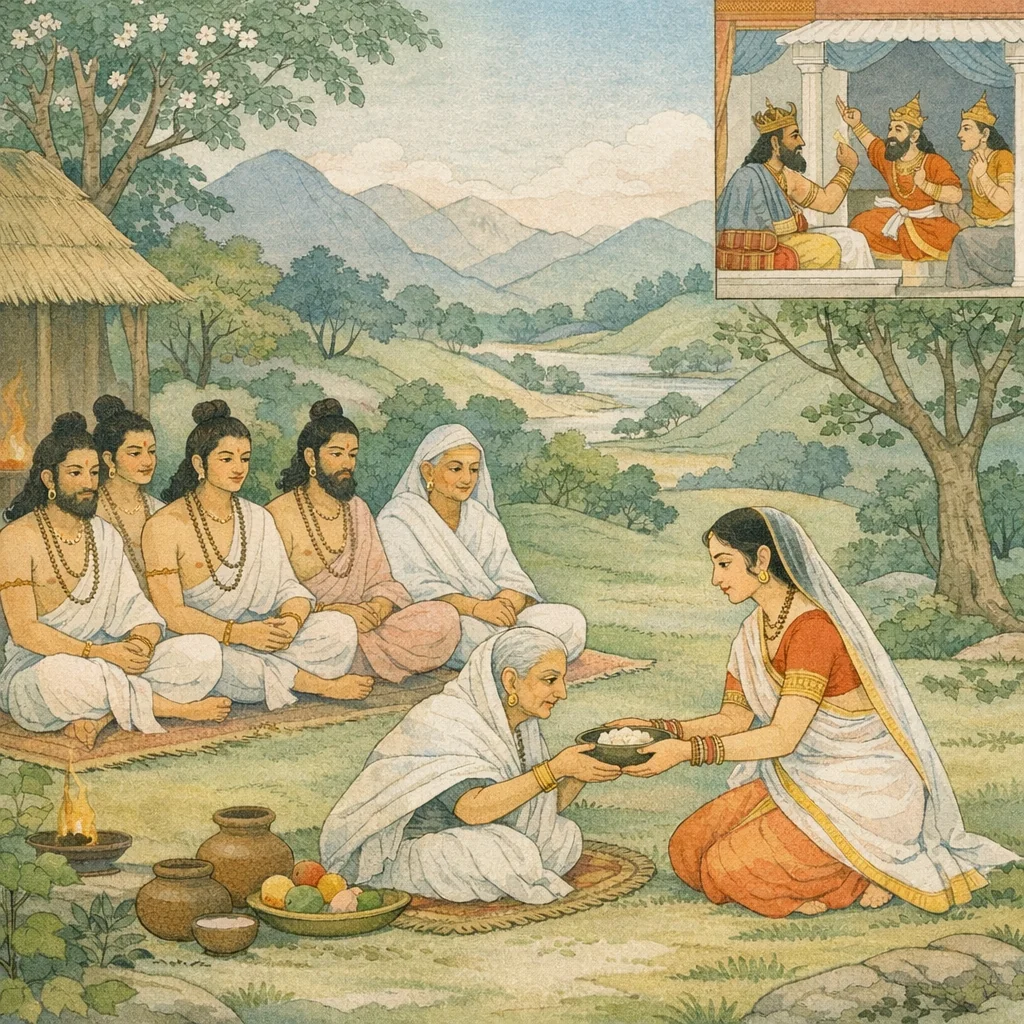
तेषां तु भैक्ष॑ं प्रतिगृह्म कृष्णा दत्त्वा बलिं ब्राह्मणसाच्च कृत्वा । तां चैव वृद्धां परिवेष्य तांश्व नरप्रवीरान् स्वयमप्यभुड्धक्त,जब वे लौटे तब उनकी भिक्षामें मिले हुए अन्नको लेकर (उनकी माताके आज्ञानुसार) द्रौपदीने देवताओंको बलि समर्पित की, ब्राह्मणोंको दिया और उन वृद्धा स्त्री तथा उन प्रमुख नरवीरोंको अलग-अलग भोजन परोसकर अन्तमें स्वयं भी बचे हुए अन्नको खाया
Having received the alms-food brought by them, Kṛṣṇā (Draupadī), in accordance with proper household duty, first offered a portion as an oblation (bali) to the divine powers and then gave due shares to the Brāhmaṇas. She then served that elderly woman and those foremost of men, and only afterward ate herself what remained.
Verse 10
सुप्तास्तु ते पार्थिव सर्व एव कृष्णा च तेषां चरणोपधाने । आसीत् पृथिव्यां शयनं च तेषां दर्भाजिनाग्रास्तरणोपपन्नम्,राजन्! भोजनके बाद वे सब सो गये। कृष्णा उनके पैरोंके समीप सोयी। धरतीपर ही उनकी शय्या बिछी थी। नीचे कुशकी चटाइयाँ थीं और ऊपर मृगचर्म बिछा हुआ था
O king, after the meal they all fell asleep. Kṛṣṇā lay down near their feet. Their bed was spread upon the bare earth, with mats of darbha grass beneath and animal skins laid over them.
Verse 11
सोते समय वे वर्षाकालके मेघके समान गम्भीर गर्जना करते हुए आपसमें बड़ी विचित्र बातें करने लगे। वे पाँचों वीर जो बातें कह रहे थे, वे वैश्यों, शूद्रों तथा ब्राह्मणों-जैसी नहीं थीं
While they lay asleep, those five heroes began speaking among themselves in strangely remarkable ways, their voices deep and rumbling like thunderclouds in the rainy season. The words they uttered did not resemble the ordinary speech of vaiśyas, śūdras, or even brāhmaṇas—suggesting a discourse marked by uncommon power, intent, and a heroic ethos beyond conventional social patterns.
Verse 12
निःसंशयं क्षत्रियपुड्रवास्ते यथा हि युद्ध कथयन्ति राजन् । आशा हि नो व्यक्तमियं समृद्धा मुक्तान् हि पार्थाज्छूणुमो डग्निदाहात्,राजन! जिस प्रकार वे युद्धका वर्णन करते थे, उससे यह मान लेनेमें तनिक भी संदेह नहीं रह जाता कि वे लोग क्षत्रियशिरोमणि हैं। हमने सुना है, कुन्तीके पुत्र लाक्षागृहकी आगमें जलनेसे बच गये हैं। अतः हमारे मनमें जो पाण्डवोंसे सम्बन्ध करनेकी अभिलाषा थी, अवश्य वही सफल हुई जान पड़ती है
Dhṛṣṭadyumna said: “There is no doubt, O King: from the way they speak of battle, they are surely foremost among kṣatriyas. Indeed, our hope now seems clearly fulfilled, for we have heard that the sons of Pṛthā (Kuntī)—the Pāṇḍavas—have escaped the burning of the house of lac. Therefore the desire in our hearts to form a bond with the Pāṇḍavas appears destined to succeed.”
Verse 13
ते नर्दमाना इव कालमेघा: कथा विचित्रा: कथयाम्बभूवु: | न वैश्यशूद्रौोपयिकी: कथास्ता न च द्विजानां कथयन्ति वीरा:,यथा हि लक्ष्यं निहतं धनुश्न सज्यं कृतं तेन तथा प्रसहा | यथा हि भाषन्ति परस्परं ते छन्ना ध्रुवं ते प्रचरन्ति पार्था: जिस प्रकार उन्होंने धनुषपर बलपूर्वक प्रत्यंचा चढ़ायी, जिस तरह दुर्भद्य लक्ष्यको बेध गिराया और जिस प्रकार वे सभी भाई आपसमें बातें करते हैं, उससे यह निश्चय हो जाता है कि कुन्तीके पुत्र ही ब्राह्मणवेषमें छिपे हुए विचर रहे हैं
“Roaring like thunderclouds, they began to exchange wondrous, many‑hued talk. Their speech was not of the sort used by vaiśyas or śūdras, nor did those heroes speak in the manner of ordinary brahmins. From the way the bow was strung with force, from the way the difficult target was struck down, and from the way they converse among themselves, it is certain: the sons of Kuntī—the Pārthas—are moving about here in disguise.”
Verse 14
ततः स राजा द्रुपद: प्रहृष्ट: पुरोहितं प्रेषयामास तेषाम् । विद्याम युष्मानिति भाषमाणो महात्मान: पाण्डुसुतास्तु कच्चित्,जनमेजय! इस समाचारसे राजा द्रुपदको बड़ी प्रसन्नता हुई, उन्होंने उसी समय उनके पास अपने पुरोहितको भेजते हुए कहा--“आप उन लोगोंसे कहियेगा कि मैं आपलोगोंका परिचय जानना चाहता हूँ। क्या आपलोग महात्मा पाण्डुके पुत्र हैं?
Then King Drupada, filled with joy, sent his family priest to them. Speaking thus—“I wish to know who you are”—he asked, “O Janamejaya, are you perhaps the noble sons of Pāṇḍu?”
Verse 15
गृहीतवाक्यो नृपते: पुरोधा गत्वा प्रशंभामभिधाय तेषाम् । वाक्यं समग्र नृपतेर्यथाव- दुवाच चानुक्रमविक्रमेण,राजाका अनुरोध मानकर पुरोहितजी गये और उन सबकी प्रशंसा करके राजा द्रुपदके वचनोंको ठीक-ठीक एकके बाद एक करके क्रमश: कहने लगे--
Having received the king’s message, the royal priest went to them and, after offering words of praise, conveyed in full the king’s statement—accurately and in proper sequence—recounting it step by step as it had been spoken.
Verse 16
विज्ञातुमिच्छत्यवनी श्वरो वः पाज्चालराजो वरदो वरार्हा: । लक्ष्यस्य वेद्धारमिमं हि दृष्टवा हर्षस्य नान्तं प्रतिपद्यते सः,“वरदानके योग्य वीर पुरुषो! वर देनेमें समर्थ पांचालदेशके राजा द्रपद आपलोगोंका परिचय जानना चाहते हैं। इन वीर पुरुषको लक्ष्यवेध करते देखकर उन्हें हर्षकी सीमा नहीं रह गयी है
Dṛṣṭadyumna said: “The king of this land, Drupada of Pāñcāla—worthy of the highest honor and able to grant boons—wishes to know who you are. Having seen this hero strike the target, he is overcome with joy and cannot find its limit.”
Verse 17
आखूयात च ज्ञातिकुलानुपूर्वी पदं शिरस्सु द्विषतां कुरुध्वम् प्रह्नादयध्वं हृदयं ममेद॑ पाञ्चालराजस्य च सानुगस्य,“आपलोग अपनी जाति और कुल आदिका यथावत् वर्णन करें, शत्रुओंके माथेपर पैर रखें और मेरे तथा अनुचरोंसहित पांचालराजके हृदयको आनन्द प्रदान करें
“Declare, in due order, your birth and lineage; set your foot upon the brows of your foes; and gladden my heart and the heart of the king of Pāñcāla, together with his attendants.”
Verse 18
पाण्डुहिं राजा द्रुपदस्य राज्ञ: प्रियः सखा चात्मसमो बभूव । तस्यैष कामो दुहिता ममेयं स््नुषां प्रदास्यामि हि कौरवाय,“महाराज पाण्डु राजा ट्रुपदके आत्माके समान प्रिय मित्र थे। इसलिये उनकी यह अभिलाषा थी कि मैं अपनी इस पुत्रीका विवाह पाण्डुकुमारसे करूँ। इसे राजा पाण्डुको पुत्रवधूके रूपमें समर्पित करूँ:
Dhṛṣṭadyumna said: “King Pāṇḍu was the beloved friend of King Drupada, dear to him and regarded as equal to his own self. Therefore Drupada cherished this wish: ‘I shall give this my daughter in marriage as a daughter-in-law to the Kaurava line (that is, to Pāṇḍu’s son).’”
Verse 19
अयं हि कामो द्रुपदस्य राज्ञो हृदि स्थितो नित्यमनिन्दिताड़ा: । यदर्जुनो वै पृथुदीर्घबाहु- र्धर्मेण विन्देत सुतां ममैताम्,सर्वांगसुन्दर शूरवीरो! राजा द्रुपदके हृदयमें नित्य निरन्तर यह कामना रही है कि मोटी एवं विशाल भुजाओंवाले अर्जुन मेरी इस पुत्रीका धर्मपूर्वक पाणि-ग्रहण करें
Dhrishtadyumna said: “This desire has ever dwelt in the heart of King Drupada: that Arjuna—broad and long-armed—should, in accordance with dharma, win and lawfully take my daughter.”
Verse 20
अशथोक्तवाक्यं हि पुरोहितं स्थितं ततो विनीतं समुदीक्ष्य राजा,जब विनयशील पुरोहितजी यह बात कह चुके, तब राजा युधिष्ठिरने उनकी ओर देखकर पास बैठे हुए भीमसेनको यह आज्ञा दी कि “इन्हें पाद्य और अर्घ्य समर्पित करो। ये महाराज ट्रुपदके माननीय पुरोहित हैं। अतः इनका हमें विशेष आदर-सत्कार करना चाहिये”
After the priest—standing before him—had spoken his respectful and truthful words, the king (Yudhiṣṭhira), seeing his humility, looked toward Bhīmasena seated nearby and instructed him: “Offer him water for washing the feet and the arghya. He is the honored priest of King Drupada; therefore we must receive him with special reverence and hospitality.”
Verse 21
समीपतो भीममिदं शशास प्रदीयतां पाद्यमर्घ्य तथास्मै । मान्य: पुरोधा द्रुपदस्य राज्ञ- स्तस्मै प्रयोज्याभ्यधिका हि पूजा,जब विनयशील पुरोहितजी यह बात कह चुके, तब राजा युधिष्ठिरने उनकी ओर देखकर पास बैठे हुए भीमसेनको यह आज्ञा दी कि “इन्हें पाद्य और अर्घ्य समर्पित करो। ये महाराज ट्रुपदके माननीय पुरोहित हैं। अतः इनका हमें विशेष आदर-सत्कार करना चाहिये”
Dhṛṣṭadyumna said: Seeing Bhīma nearby, he commanded him, “Offer him water for washing the feet (pādya) and the arghya offering as well. He is the honored family priest of King Drupada; therefore, he deserves from us a special and heightened reception.”
Verse 22
भीमस्ततस्तत् कृतवान् नरेन्द्र तां चैव पूजां प्रतिगृहा हर्षात् सुखोपविष्टं तु पुरोहितं तदा युधिष्ठिरो ब्राह्मणमित्युवाच,जनमेजय! तब भीमसेनने पाद्य, अर्घ्य निवेदन करके उनका विधिवत् पूजन किया। उनकी दी हुई पूजाको प्रसन्नतापूर्वक ग्रहण करके पुरोहितजी जब बड़े सुखसे आसनपर बैठ गये, तब राजा युधिष्ठिरने उन ब्राह्मणदेवतासे इस प्रकार कहा--
Dhṛṣṭadyumna said: Then Bhīma, O king, performed those rites and duly honored him according to custom. The family priest accepted that worship with delight; and when he had sat comfortably upon the seat, Yudhiṣṭhira addressed that brahmin—revered as a living embodiment of sacred authority—thus, O Janamejaya.
Verse 23
पाज्चालराजेन सुता निसृष्टा स्वधर्मदृष्टेन यथा न कामात् । प्रदिष्टशुल्का द्रुपदेन राज्ञा सा तेन वीरेण तथानुवृत्ता,“ब्रह्मन! पाञ्चालराज ट्रुपदने यह कन्या अपनी इच्छासे नहीं दी है, उन्होंने अपने धर्मके अनुसार लक्ष्यवेधकी शर्त करके अपनी कन्या देनेका निश्चय किया था। उस वीर पुरुषने उसी शर्तको पूर्ण करके यह कन्या प्राप्त की है
Dhṛṣṭadyumna said: “O brahmin! This daughter was not bestowed by the king of the Pāñcālas out of personal desire. Rather, with his gaze fixed on dharma, King Drupada resolved to give his daughter only under the condition of the prescribed feat—the target-hitting trial. Having fulfilled that very condition, that heroic man has rightfully obtained her, and she has accordingly accepted him.”
Verse 24
न तत्र वर्णेषु कृता विवक्षा न चापि शीले न कुले न गोत्रे ।। कृतेन सज्येन हि कार्मुकेण विद्धेन लक्ष्येण हि सा विसृष्टा,*राजाने वहाँ वर्ण, शील, कुल और गोत्रके विषयमें कोई अभिप्राय नहीं व्यक्त किया था। धनुषपर प्रत्यंचा चढ़ाकर लक्ष्यवेध कर देनेपर ही कन््यादानकी घोषणा की थी। इस महात्मा वीरने उसी घोषणाके अनुसार राजाओंकी मण्डलीमें राजकुमारी कृष्णापर विजय पायी है। ऐसी दशामें सोमकवंशी राजा द्रुपदको अब सुखका अभाव करनेवाला संताप नहीं करना चाहिये
Dhṛṣṭadyumna said: “In that proclamation there was no stated preference regarding social class, personal conduct, family lineage, or clan. The condition was simply this: having strung the bow and struck the target, the maiden would be bestowed. Therefore, this great hero has, in accordance with that very announcement, won Princess Kṛṣṇā in the assembly of kings. In such a situation, King Drupada of the Somaka line should not give way to grief that only destroys his own happiness.”
Verse 25
सेयं तथानेन महात्मनेह कृष्णा जिता पार्थिवसड्घमध्ये । नैवंगते सौमकिरद्य राजा संतापमर्हत्यसुखाय कर्तुम्,*राजाने वहाँ वर्ण, शील, कुल और गोत्रके विषयमें कोई अभिप्राय नहीं व्यक्त किया था। धनुषपर प्रत्यंचा चढ़ाकर लक्ष्यवेध कर देनेपर ही कन््यादानकी घोषणा की थी। इस महात्मा वीरने उसी घोषणाके अनुसार राजाओंकी मण्डलीमें राजकुमारी कृष्णापर विजय पायी है। ऐसी दशामें सोमकवंशी राजा द्रुपदको अब सुखका अभाव करनेवाला संताप नहीं करना चाहिये
Dhṛṣṭadyumna said: Here, in this very manner, Princess Kṛṣṇā has been won by this great-souled hero in the midst of the assembled kings. Therefore, now that matters have turned out thus, the Somaka king should not give way to grief that only breeds unhappiness; he ought to accept the outcome in accordance with the announced condition and refrain from self-torment.
Verse 26
कामश्न यो5सौ द्रुपदस्य राज्ञ: स चापि सम्पत्स्यति पार्थिवस्य । सम्प्राप्यरूपां हि नरेन्द्रकन्या- मिमामहं ब्राह्मण साधु मन्ये,“ब्राह्मण! राजा द्रपदकी जो पहलेकी अभिलाषा है, वह भी पूरी होगी। इस राजकन्याको हम सर्वथा ग्रहण करनेयोग्य एवं उत्तम मानते हैं
Dhṛṣṭadyumna said: “Brāhmaṇa, that long-cherished desire of King Drupada will indeed be fulfilled, and the king’s purpose will be accomplished. Having obtained this princess of royal lineage, renowned for her beauty and worth, I judge this match to be wholly proper and auspicious.”
Verse 27
न तद् धनुर्मन्दबलेन शक्यं मौर्व्या समायोजयितुं तथा हि । न चाकृतास्त्रेण न हीनजेन लक्ष्यं तथा पातयितुं हि शक्यम्,“कोई बलहीन पुरुष उस विशाल धनुषपर प्रत्यंचा नहीं चढ़ा सकता था। जिसने अस्त्रविद्याकी पूर्ण शिक्षा न पायी हो, ऐसे पुरुषके अथवा किसी नीच कुलके मनुष्यके लिये भी उस लक्ष्यको गिराना असम्भव था
Dhṛṣṭadyumna said: “That great bow cannot be strung by a man of feeble strength—so it truly is. Nor can the target be brought down in that manner by one who has not been fully trained in the science of weapons, nor by a man of low birth. Such a feat is impossible for them.”
Verse 28
तस्मान्न तापं दुहितुर्निमित्तं पाञज्चालराजो<हति कर्तुमद्य । न चापि तत्पातनमन्यथेह कर्तु हि शक््यं भुवि मानवेन,“अतः पांचालराजको अब अपनी पुत्रीके लिये पश्चात्ताप करना उचित नहीं है। इस पृथ्वीपर उस वीरके सिवा ऐसा कोई मनुष्य नहीं है, जो उस लक्ष्यको वेध सके”
Dhṛṣṭadyumna said: “Therefore the king of the Pāñcālas should not repent today on account of his daughter. And on this earth, apart from that hero, there is no man who can pierce and bring down that target.”
Verse 29
एवं ब्रुवत्येव युधिष्ठिरे तु पाञज्चालराजस्य समीपतोडन्य: । तत्राजगामाशु नरो द्वितीयो निवेदयिष्यन्निह सिद्धमन्नम्,राजा युधिष्ठिर यों कह ही रहे थे कि पांचालराज ट्रपदके पाससे एक दूसरा मनुष्य यह समाचार देनेके लिये शीघ्रतापूर्वक आया कि “राजभवनमें आपलोगोंके लिये भोजन तैयार है!
Even as Yudhiṣṭhira was speaking, another man came quickly from the vicinity of the king of the Pāñcālas. He arrived to announce that the meal had been prepared—signaling the palace’s readiness to extend hospitality and proper reception to the guests.
Verse 192
इति श्रीमहाभारते आदिपर्वणि वैवाहिकपर्वणि पुरोहितयुधिष्ठिरसंवादे द्विनवत्यधिकशततमो< ध्याय:,इस प्रकार श्रीमहाभारत आदिपर्वके अन्तर्गत वैवाहिकपर्वनें पुरोहितयुधिष्ठिरविषयक एक सौ बानबेवाँ अध्याय पूरा हुआ
Thus ends the one hundred and ninety-second chapter in the Ādi Parva of the Śrī Mahābhārata, within the Vaivāhika section, in the dialogue between the family priest and Yudhiṣṭhira.
Verse 193
कृतं हि तत् स्यात् सुकृतं ममेद॑ यशभश्न पुण्यं च हितं तदेतत् । “उनका यह कहना है कि यदि मेरा यह मनोरथ पूर्ण हो जाय, तो मैं समझूँगा कि यह मेरे शुभ कर्मोका फल प्राप्त हुआ है। यही मेरे लिये यश, पुण्य और हितकी बात होगी”
If that wish of mine is fulfilled, I would regard it as the true fruition of my good deeds. For me, this alone would become fame, merit, and genuine benefit—an outcome aligned with what is right and auspicious.
Frequently Asked Questions
The court confronts the ethical tension between acknowledging the Pāṇḍavas’ legitimate success and alliance (a dharmic recognition) versus pursuing rival-containment through ongoing power-reduction strategies, raising questions about just governance and kinship duty.
The text juxtaposes daiva (contingency/fate) with pauruṣa (agency), showing how actors interpret outcomes to justify policy; it also implies that concealed wrongdoing (e.g., the lac-house plot) persists as reputational and political liability.
No explicit phalaśruti appears here; the chapter functions as narrative-ethical linkage, clarifying how information, public posture, and private counsel shape the epic’s later escalation.