Adhyaya 149
Kuntī–Brāhmaṇa Saṃvāda on Atithi-dharma and Crisis Strategy (Ādi Parva 149)
Upa-parva: Baka-vadha (Ekacakrā Upākhyāna) — Hospitality and Apaddharma Episode
Kuntī counsels a brāhmaṇa family not to succumb to despair and proposes a practical remedy to their fear of a rākṣasa who demands periodic offerings. She rejects sending the brāhmaṇa’s young son, ascetic daughter, or wife, and instead offers that one of her five sons will go on the family’s behalf. The brāhmaṇa refuses, arguing that self-preserving complicity in a brāhmaṇa’s death is morally irredeemable; he emphasizes that abandoning a guest, killing a supplicant, or causing a brāhmaṇa’s death constitutes extreme cruelty, and that intentional participation admits no expiation. Kuntī reaffirms protection of brāhmaṇas as her settled view, but asserts confidence in her son’s capability—strength, discipline, and prior success against formidable opponents—implying the plan is not sacrificial but corrective. She additionally mandates confidentiality so her sons, as learners, are not distracted into hazardous curiosity without a teacher’s permission. Vaiśaṃpāyana closes the unit by noting the brāhmaṇa couple’s approval and their joint request to the ‘son of the Wind’ (Bhīma) to proceed, which he accepts.
Chapter Arc: लाक्षागृह-दाह से बचकर निकले पाण्डव वन-छाया में छिपे हैं; उसी क्षण विदुर की गुप्त योजना का अगला चरण प्रकट होता है—एक संकेत-भाषा में बोलता नाविक, जो उन्हें गंगा पार कराने आया है। → विदुर के गुप्तचर द्वारा भेजा गया नाविक अपनी विश्वसनीयता का संकेत देता है और बताता है कि नौका जलमार्ग के लिए उपयुक्त है; परन्तु पीछा करने वालों का भय, रात का अँधेरा, और कुन्ती सहित पाँचों भाइयों की थकान—हर कदम को जोखिम बना देती है। → विदुर-चोदित नाविक पाण्डवों को गंगा की धारा पर चढ़ाता है और वेगवती नदी को पार कराता है—यह पार उतरना केवल यात्रा नहीं, मृत्यु के फंदे से निकलकर जीवन की ओर निर्णायक छलाँग है। → पाण्डव गंगा के उस पार पहुँचकर विदुर को प्रत्युत्तर-संदेश भेजते हैं और शीघ्रता से गुप्त रूप में आगे बढ़ जाते हैं, ताकि कोई उन्हें पहचान न सके। → अब वे अज्ञात वन-मार्गों में विलीन हैं—पर प्रश्न शेष है: क्या धृतराष्ट्र-पक्ष के खोजी उन्हें फिर से घेर लेंगे, या यह गुप्त पलायन उन्हें नए आश्रय तक पहुँचा देगा?
Shlokas
Verse 1
अत-#-#क+ अष्टचत्वारिशर्दाधिकशततमो< ध्याय: विदुरजीके भेजे हुए नाविकका पाण्डवोंको गंगाजीके पार उतारना वैशम्पायन उवाच एतस्मिन्नेव काले तु यथासम्प्रत्ययं कवि: । विदुर: प्रेषयामास तद् वन॑ पुरुषं शुचिम्,वैशम्पायनजी कहते हैं-जनमेजय! इसी समय परम ज्ञानी विदुरजीने अपने विश्वासके अनुसार एक शुद्ध विचारवाले पुरुषको उस वनमें भेजा इस प्रकार श्रीमह्ाभारत आदिपर्वके अन्तर्गत जदुगृहपर्वमें पाण्डवोंके गंगापार होनेसे सम्बन्ध रखनेवाला एक सौ अड़तालीसवाँ अध्याय पूरा हुआ ॥/ १४८ ॥। ऑपन--माजल छा जि एकोनपज्चाशर्दाधिकशततमो< ध्याय: धृतराष्ट्र आदिके द्वारा पाण्डवोंके लिये शोकप्रकाश एवं जलांजलिदान तथा पाण्डवोंका वनमें प्रवेश वैशम्पायन उवाच अथ रात्र्यां व्यतीतायामशेषो नागरो जन: । तत्राजगाम त्वरितो दिदृक्षु: पाण्डुनन्दनान्
Vaiśampāyana said: O Janamejaya, at that very time Vidura, a man of profound intelligence, sent into that forest a man of pure mind, in accordance with his trust. And when the night had passed, the entire body of townspeople hurried there, eager to see the sons of Pāṇḍu.
Verse 2
सुरंगद्वारा मातासहित पाण्डवोंका लाक्षागृहसे निकलना भीम अपने चारों भाइयोंको तथा माताको उठाकर ले चले स गत्वा तु यथोद्देशं पाण्डवान् ददृशे वने । जनन्या सह कौरव्य मापयानान् नदीजलम्,कुरुनन्दन! उसने विदुरजीके बताये अनुसार ठीक स्थानपर पहुँचकर वनमें मातासहित पाण्डवोंको देखा, जो नदीमें कितना जल है, इसका अनुमान लगा रहे थे
Vaiśampāyana said: Having gone to the very spot that had been indicated, he saw the Pāṇḍavas in the forest along with their mother, O scion of the Kurus, as they were measuring and estimating the water of the river.
Verse 3
विदितं तन्महाबुद्धेर्विदुरस्य महात्मन: । ततस्तस्यापि चारेण चेष्टितं पापचेतस:,परम बुद्धिमान् महात्मा विदुरको गुप्तचरद्वारा उस पापासक्त पुरोचनकी चेष्टाओंका भी पता चल गया था। इसीलिये उन्होंने उस समय उस बुद्धिमान् मनुष्यको वहाँ भेजा था। उसने मन और वायुके समान वेगसे चलनेवाली एक नाव पाण्डवोंको दिखायी, जो सब प्रकारसे हवाका वेग सहनेमें समर्थ और ध्वजा-पताकाओंसे सुशोभित थी। उस नौकाको चलानेके लिये यन्त्र लगाया गया था। वह नाव गंगाजीके पावन तटपर विद्यमान थी और उसे विश्वासी मनुष्योंने बनाकर तैयार किया था
Vaiśampāyana said: The matter had become known to the great-souled Vidura, a man of profound intelligence. Through his own agents he also learned the movements and schemes of the sinful-minded Purocana—thus discerning the danger and preparing a means of escape for the Pāṇḍavas.
Verse 4
ततः प्रवासितो विद्वान् विदुरेण नरस्तदा । पार्थानां दर्शयामास मनोमारुतगामिनीम्,परम बुद्धिमान् महात्मा विदुरको गुप्तचरद्वारा उस पापासक्त पुरोचनकी चेष्टाओंका भी पता चल गया था। इसीलिये उन्होंने उस समय उस बुद्धिमान् मनुष्यको वहाँ भेजा था। उसने मन और वायुके समान वेगसे चलनेवाली एक नाव पाण्डवोंको दिखायी, जो सब प्रकारसे हवाका वेग सहनेमें समर्थ और ध्वजा-पताकाओंसे सुशोभित थी। उस नौकाको चलानेके लिये यन्त्र लगाया गया था। वह नाव गंगाजीके पावन तटपर विद्यमान थी और उसे विश्वासी मनुष्योंने बनाकर तैयार किया था
Then, at that time, a wise man—sent out on Vidura’s instructions—showed the Pārthas a boat swift as mind and wind. The episode reveals Vidura’s vigilant, dharma-guided protection: through discreet intelligence he had discerned Purocana’s sinister designs, and therefore arranged a secure means of escape for the Pāṇḍavas.
Verse 5
सर्ववातसहां नावं यन्त्रयुक्तां पताकिनीम् । शिवे भागीरथीतीरे नरैर्विस्रम्भिभि: कृताम्,परम बुद्धिमान् महात्मा विदुरको गुप्तचरद्वारा उस पापासक्त पुरोचनकी चेष्टाओंका भी पता चल गया था। इसीलिये उन्होंने उस समय उस बुद्धिमान् मनुष्यको वहाँ भेजा था। उसने मन और वायुके समान वेगसे चलनेवाली एक नाव पाण्डवोंको दिखायी, जो सब प्रकारसे हवाका वेग सहनेमें समर्थ और ध्वजा-पताकाओंसे सुशोभित थी। उस नौकाको चलानेके लिये यन्त्र लगाया गया था। वह नाव गंगाजीके पावन तटपर विद्यमान थी और उसे विश्वासी मनुष्योंने बनाकर तैयार किया था
Vaiśampāyana said: On the auspicious bank of the Bhāgīrathī (Gaṅgā) there stood a boat—built by trustworthy men—able to withstand every wind, fitted with a mechanical contrivance for rowing, and adorned with flags and streamers. It had been prepared as a discreet means of rescue, reflecting Vidura’s foresight and his ethical resolve to protect the innocent from treachery.
Verse 6
ततः पुनरथोवाच ज्ञापकं पूर्वचोदितम् युधिष्ठिर निबोधेदं संज्ञार्थ वचनं कवे:,तदनन्तर उस मनुष्यने कहा--'युधिष्छिरजी! ज्ञानी विदुरजीके द्वारा पहले कही हुई यह बात, जो मेरी विश्वसनीयताको सूचित करनेवाली है, पुनः सुनिये। मैं आपको संकेतके तौरपर स्मरण दिलानेके लिये इसे कहता हूँ
Then he spoke again, repeating the previously prompted reminder: “O Yudhiṣṭhira, understand this statement of the sage-poet, uttered as a sign—meant to serve as a token of recognition and to confirm my trustworthiness.”
Verse 7
कक्षघ्न: शिशिरघ्नक्षु महाकक्षे बिलौकस: । न हन्तीत्येवमात्मानं यो रक्षति स जीवति,“(तुमसे विदुरजीने कहा था--) 'घास-फ़ूस तथा सूखे वृक्षोंके जंगलको जलानेवाली और सर्दीको नष्ट कर देनेवाली आग विशाल वनमें फैल जानेपर भी बिलमें रहनेवाले चूहे आदि जन्तुओंको नहीं जला सकती। यों समझकर जो अपनी रक्षाका उपाय करता है, वही जीवित रहता है”
Vaiśampāyana said: “Fire can burn grass and dry wood and can even dispel winter; yet when it spreads through a vast forest, it still cannot burn the creatures that live hidden in burrows. Knowing this—‘it will not kill me’—the one who takes measures to protect himself is the one who survives.” The saying underscores prudent self-protection: danger may be widespread, but foresight and sheltering oneself through timely strategy preserves life.
Verse 8
तेन मां प्रेषितं विद्धि विश्वस्तं संज्ञयानया । भूयश्वैवाह मां क्षत्ता विदुर: सर्वतो<$र्थवित्,“इस संकेतसे आप यह जान लें कि “मैं विश्वास-पात्र हूँ और विदुरजीने ही मुझे भेजा है।' इसके सिवा, सर्वतोभावेन अर्थसिद्धिका ज्ञान रखनेवाले विदुरजीने पुनः मुझसे आपके लिये यह संदेश दिया कि “कुन्ती-नन्दन! तुम युद्धमें भाइयोंसहित दुर्योधन, कर्ण और शकुनिको अवश्य परास्त करोगे, इसमें संशय नहीं है
“By this sign, know that I have been sent and that I am trustworthy. Moreover,” said Vidura, the chamberlain—one who understands what is beneficial in every respect—“he has again conveyed to me a message for you.” The verse frames the message as ethically reliable: it establishes the messenger’s credibility through a prearranged token and underscores Vidura’s role as a discerning counselor who speaks for the welfare of all.
Verse 9
कर्ण दुर्यो धनं चैव भ्रातृभि: सहितं रणे । शकुनिं चैव कौन्तेय विजेतासि न संशय:,“इस संकेतसे आप यह जान लें कि “मैं विश्वास-पात्र हूँ और विदुरजीने ही मुझे भेजा है।' इसके सिवा, सर्वतोभावेन अर्थसिद्धिका ज्ञान रखनेवाले विदुरजीने पुनः मुझसे आपके लिये यह संदेश दिया कि “कुन्ती-नन्दन! तुम युद्धमें भाइयोंसहित दुर्योधन, कर्ण और शकुनिको अवश्य परास्त करोगे, इसमें संशय नहीं है
Vaiśampāyana said: “O son of Kuntī, in battle you will surely defeat Duryodhana and Karṇa, along with their brothers, and also Śakuni—of this there is no doubt.” The words serve as a heartening message, affirming the righteousness and resolve of the Pāṇḍava cause and strengthening moral courage before the coming conflict.
Verse 10
इयं वारिपथे युक्ता नौरप्सु सुखगामिनी । मोचयिष्यति व: सर्वानस्माद् देशान्न संशय:,“यह नौका जलमार्गके लिये उपयुक्त है। जलमें यह बड़ी सुगमतासे चलनेवाली है। यह नाव तुम सब लोगोंको इस देशसे दूर छोड़ देगी, इसमें संदेह नहीं है”
Vaiśaṃpāyana said: “This boat is well-suited for travel along the waterway; upon the waters it moves with ease. It will carry all of you away from this region—of that there is no doubt.”
Verse 11
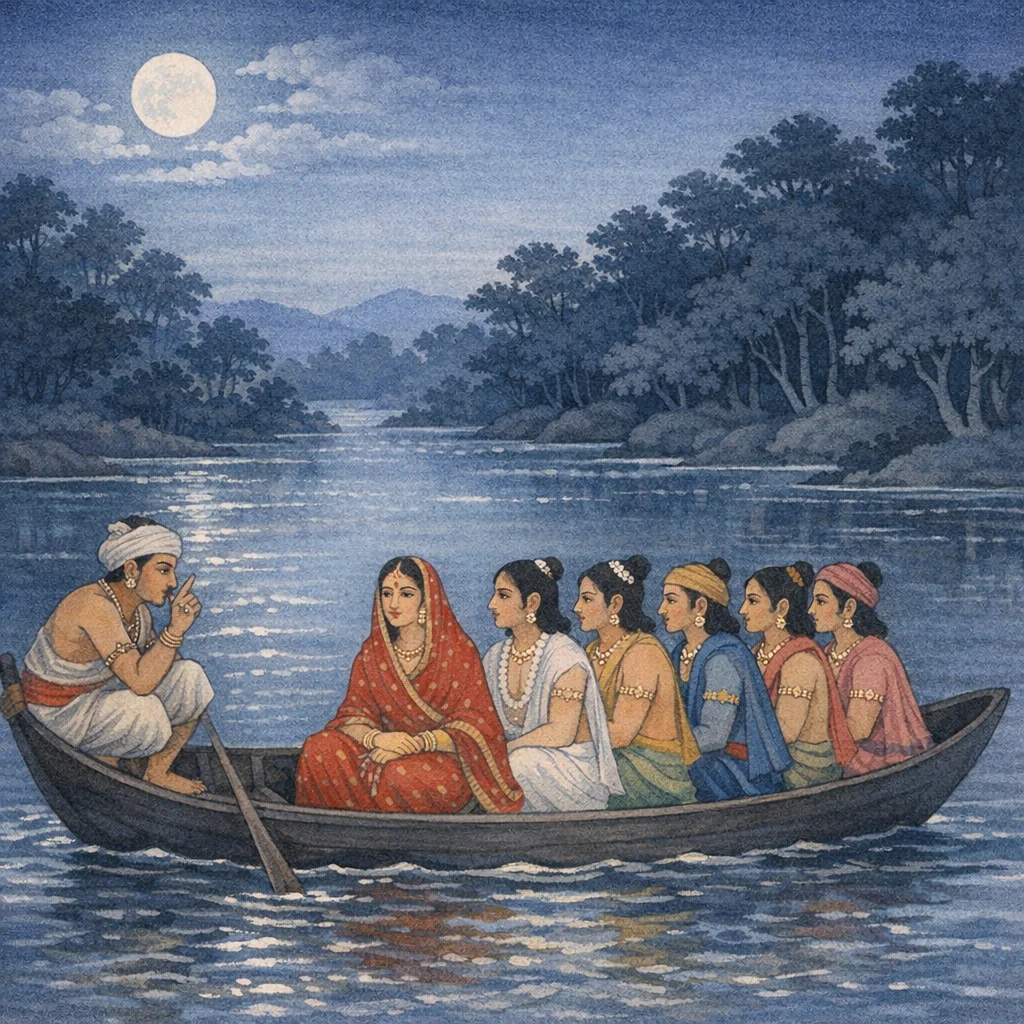
अथ तान् व्यथितान् दृष्टवा सह मात्रा नरोत्तमान् | नावमारोप्य गड्जायां प्रस्थितानब्रवीत् पुनः:,इसके बाद मातासहित नरश्रेष्ठ पाण्डवोंको अत्यन्त दुःखी देख नाविकने उन सबको नावपर चढ़ाया और जब वे गंगाके मार्गसे प्रस्थान करने लगे, तब फिर इस प्रकार कहा --
Seeing those best of men—the Pāṇḍavas—distressed, along with their mother, the boatman helped them board his boat. And as they set out upon the course of the Gaṅgā, he addressed them once again, with concern and a sense of duty toward the afflicted.
Verse 12
विदुरो मूर्ध्न्युपाप्राय परिष्वज्य वचो मुहुः । अरिएटं गच्छताव्यग्रा: पन्थानमिति चाब्रवीत्,“विदुरजीने आप सभी पाण्डुपुत्रोंको भावनाद्वारा हृदयसे लगाकर और मस्तक सूँघकर यह आशीर्वाद फिर कहलाया है कि “तुम शान्तचित्त हो कुशलपूर्वक मार्गपर बढ़ते जाओ”
Vidura embraced the sons of Pāṇḍu again and again with heartfelt affection, and, smelling the crown of their heads in blessing, said: “Go on your way with minds at peace; proceed safely along the path, without agitation.”
Verse 13
इत्युक्त्वा स तु तान् वीरान् पुमान् विदुरचोदित: । तारयामास राजेन्द्र गड़ां नावा नरर्षभान्,राजेन्द्र! विदुरजीके भेजनेसे आये हुए उस नाविकने उन शूरवीर नरश्रेष्ठ पाण्डवोंसे ऐसी बात कहकर उसी नावसे उन्हें गंगाजीके पार उतार दिया
Vaiśampāyana said: Having spoken thus, that man—prompted by Vidura—ferried those heroic bull-like men, the Pāṇḍavas, across the Gaṅgā in a boat, O best of kings. The episode underscores discreet assistance offered in the service of dharma: timely, practical help given to the righteous in danger without public display.
Verse 14
तारयित्वा ततो गड्जां पार प्राप्तांक्ष सर्वश: । जयाशिष: प्रयुज्याथ यथागतमगाद्धि सः,पार उतारनेके पश्चात् जब वे गंगाजीके दूसरे तटपर जा पहुँचे, तब उन सबके लिये “जय हो, जय हो” यह आशीर्वाद सुनाकर वह नाविक जैसे आया था, उसी प्रकार लौट गया
After ferrying them all across the Gaṅgā and seeing them safely reach the far bank, the boatman bestowed blessings of victory—“May you be victorious! May you be victorious!”—upon them. Then, just as he had come, he returned the same way.
Verse 15
पाण्डवाश्न महात्मान: प्रतिसंदिश्य वै कवे: । गड्जमुत्तीर्य वेगेन जम्मुर्गूढठमलक्षिता:,महात्मा पाण्डव भी विद्वान् विदुरजीको उनके संदेशका उत्तर देकर गंगापार हो अपनेको छिपाते हुए वेगपूर्वक वहाँसे चल दिये। कोई भी उन्हें देख या पहचान न सका
Vaiśampāyana said: Having delivered their reply to the sage-poet, the high-souled Pāṇḍavas swiftly crossed the Gaṅgā and departed in haste, keeping themselves concealed. Moving unseen and unrecognized, they left that place without anyone being able to identify them.
Verse 147
इस प्रकार श्रीमह्ााभारत आदिपर्वके अन्तर्गत जदुगृहपर्वमें जतुय॒ृहदाहविषयक एक सौ सैंतालीसवाँ अध्याय पूरा हुआ
Thus ends the one hundred and forty-seventh chapter of the Jatugṛha episode within the Ādi Parva of the Śrī Mahābhārata, dealing with the burning of the lac-house.
Verse 148
इति श्रीमहाभारते आदिपर्वणि जतुगृहपर्वणि गड्जोत्तरणे अष्टचत्वारिंशदधिकशततमो< ध्याय:
Thus ends the one-hundred-and-forty-eighth chapter of the Ādi Parva of the Śrī Mahābhārata, within the section on the lac-house episode, in the sub-episode concerning the crossing of the Gaṅgā (gaṅgottaraṇa).
Frequently Asked Questions
Whether preserving one household by sending a person as “tribute” constitutes intolerable moral fault—especially if it entails intentional involvement in a brāhmaṇa’s death—versus pursuing a strategy that ends coercion while maintaining guest-protection and minimizing culpability.
Dharma is not mere rule-following but calibrated responsibility: protect the vulnerable, avoid irreversible wrongdoing driven by fear, and choose an effective remedy that reduces future harm. Intention and participation matter in assessing moral burden.
No explicit phalaśruti is stated here; the meta-commentary is structural: Vaiśaṃpāyana’s narration frames the dialogue as an applied dharma case, and the insistence on secrecy underscores how ethical action is coupled with prudent management of knowledge and risk.