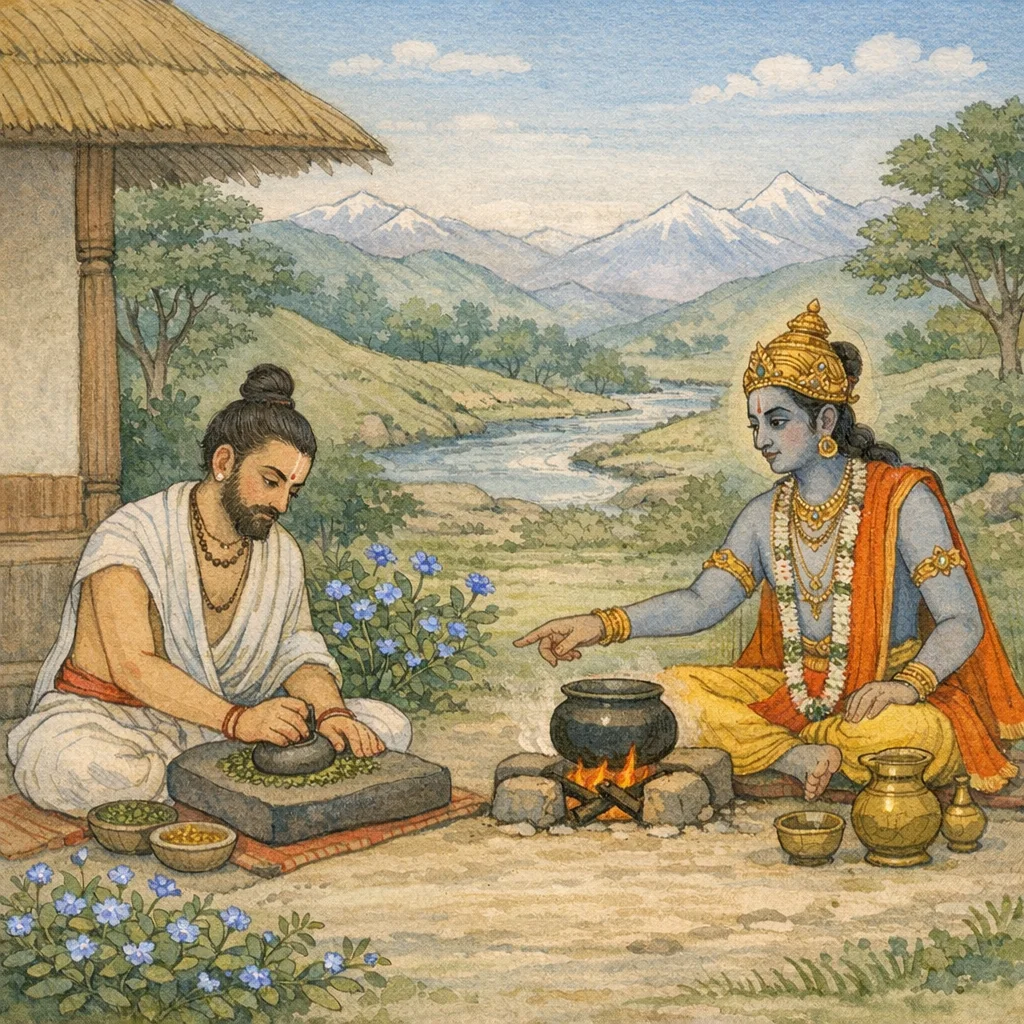
Adhyaya 174
Preparations of Medicated Ghee and Oils (Ghṛta–Taila Yoga); Brāhmī-ghṛta and Nārāyaṇa Taila
Continuing the Brahma Khanda’s practical, life-sustaining teaching, Dhanvantari instructs Suśruta in snehakalpanā: the proper cooking of medicated ghee (ghṛta) and oils (taila) with specified herb groups, measured proportions, and controlled heat. The chapter begins with medhya ingredients—śaṅkhapuṣpī, vacā, somā, brāhmī—and gives the named Brāhmī-ghṛta, cooked with kaṇṭakārī juice and milk to strengthen śruti (learning/retention) and medhā (intellect). It then broadens to disease-destroying ghṛtas and oils, including an aromatic vāta-pacifying oil gently cooked and stored in silver. The centerpiece is Nārāyaṇa Taila (and its corresponding ghee), taught as Viṣṇu’s remedy for deep-seated vāta disorders across the tissues, disability-like conditions, kuṣṭha, senescent debility, and sexual weakness. The chapter closes with specialized oils for bhagandara (fistula) and for gaṇḍamālā (glandular swellings) using ajmoda, and with burn-care sequencing—cleansing first, then applying softening and healing oil—setting the therapeutic tone for what follows.
Shlokas
Verse 1
नाम त्रिसप्तन्युत्तरशततमो ऽध्यायः धन्वतरिरुवाच / घृततैलादि वक्ष्यामि शृणु सुश्रुत रोगनुत् / शङ्खपुष्पी वचा सोमा ब्राह्मी ब्रह्मसुवर्चला
“The chapter named the one-hundred-and-seventy-fourth.” Dhanvantari said: “I shall describe preparations of ghee (ghṛta), oil, and the like; listen, O Suśruta, remover of diseases. (The herbs are:) śaṅkhapuṣpī, vacā, somā, brāhmī, and brahma-suvarcalā.”}]}
Verse 2
अभया च गुडूची च अटरूपकवागुजी / एतैरक्षसमैर्भागैर्घृतप्रस्थं विपाचयेत्
With abhayā, guḍūcī, aṭarūpaka, and vāgujī—each in equal measure (one akṣa)—one should cook one prastha of ghṛta (ghee), preparing a medicated ghṛta.
Verse 3
कण्टकार्या रसप्रस्थक्षीरप्रस्थममन्वितम् / एतद्ब्राह्मीघृतं नाम श्रुतिमेधाकरं परम्
With one prastha of kaṇṭakārī juice and one prastha of milk cooked together, this is called Brāhmī-ghṛta; it is supremely beneficial for strengthening śruti (learning) and medhā (intellect).
Verse 4
त्रिफलाचित्रकबलानिर्गुण्डी निम्बवासकाः / पुनर्नवा गुडूची च बृहती च शतावरी
Triphala, citraka, balā, nirguṇḍī, nimba, and vāsaka; also punarnavā, guḍūcī, bṛhatī, and śatāvarī—these are the herbs to be used.
Verse 5
एतैर्घृतं यथालाभं सर्वरोगविमर्दनम् / बलाशतकषाये तु तैलस्यार्धाढकं पचेत् / कल्कैर्मधूकमञ्जिष्ठाचन्दनोत्पलपद्मकैः
With these herbs, prepare ghṛta according to what is available; it becomes a crusher of all diseases. And in a decoction of the ‘balā-śata’ group, one should cook half an āḍhaka of oil, using kalkas (pastes) of madhūka, mañjiṣṭhā, candana, utpala, and padmaka.
Verse 6
सूक्ष्मैलापिप्पलीकुष्ठत्वगेलागुरुकेसरैः / गन्धाश्वजीवनीयैश्च क्षीराढकसमाश्रितम्
Prepared with fine cardamom, pippalī (long pepper), kuṣṭha (costus), tvak (cinnamon bark), cardamom, fragrant aguru, and kesara (saffron)—together with aromatic and vitality-promoting herbs—this is to be combined with one āḍhaka of milk.
Verse 7
एतन्मृद्वग्निना पक्वं स्थापयेद्राजते शुभे / सर्ववातविकारांस्तु सर्वधात्वन्तराश्रयान्
After cooking it over a gentle fire, one should store it in a clean, auspicious vessel of silver; it pacifies all disorders of vāta, even those lodged within the various bodily dhātus (tissues).
Verse 8
तैलमेतत्प्रशमयेद्वल्याक्यं राजवल्लभम् / शतावरीरसप्रस्थं क्षीरप्रस्थं तथैव च
This oil calms the ailment called valyākya and is cherished by kings; it should be prepared with one prastha of śatāvarī juice and likewise one prastha of milk.
Verse 9
शतपुष्पं देवदारु मांसी शैलेयकं बला / चन्दनं तगरं कुष्टं मनः शिला ज्योतिष्मती
Śatapushpa, devadāru, māṃsī, śaileyaka, balā; sandalwood (candana), tagara, kuṣṭha, manaḥśilā (realgar), and jyotiṣmatī—these are the ingredients for the formulation being taught.
Verse 10
एतैः कर्षसमैः कल्कैः घृतप्रस्थं विपाचयेत् / कुव्जवामनपङ्गूनां बधिरव्यङ्गकुष्ठिनाम्
With these pastes (kalkās), each in the measure of one karṣa, one prastha of ghee (ghṛta) should be cooked into a medicated ghee. It is intended for the hunchbacked, dwarfed, lame, deaf, disfigured, and those afflicted with kuṣṭha (skin disease).
Verse 11
वायुना भग्नगात्राणां ये च सीदन्ति मैथुने / जराजर्जरगात्राणां चाध्मानमुख शोषिणाम्
It is also for those whose limbs are weakened, as though ‘broken’, by disorders of vāyu; for those who fail during sexual union; for bodies worn down by old age; and for those afflicted with bloating and dryness of the mouth, with wasting.
Verse 12
त्वग्गताश्चापि ये वाता शिरास्नायुगताश्च ये / सर्वांस्तान्नाशयत्याशु तैलं रोगकुलान्तकम्
Whether the vāta disorders have lodged in the skin, or have entered the vessels and the tendons/ligaments, this oil swiftly destroys them all—an ender of whole families of diseases.
Verse 13
नारायणमिदं तैलं विष्णुनोक्तं रुगर्दनम् / पृथक्तैलं घृतं कुर्यात्समस्तैरौषधैः पृथक्
This is the Nārāyaṇa Oil, taught by Viṣṇu, a crusher of pain. One should prepare oil and ghee separately—each made separately with the full set of medicines.
Verse 14
शतावर्या गुडूच्या वा चित्रकै गोचनान्वितैः / निर्गुण्ड्या वा प्रसारः स्यात्कण्टकार्या रसादिभिः
The preparation may be further processed using śatāvarī or guḍūcī, together with citraka and gocanā; or it may be made with nirgundī; likewise with kaṇṭakārī, using its expressed juices and the like.
Verse 15
वर्षाभूवालया वापि वासकन फलत्रिकैः / ब्राहया चैग्ण्डकेनापि भृङ्गराजेन कुष्टिना
One may also prepare the remedy with varṣābhū, bhūvālayā, vāsaka, and the three fruits (Triphala); likewise with brāhmī, eṇḍaka, bhṛṅgarāja, and kuṣṭha—these are prescribed medicinal combinations.
Verse 16
मुसल्या दशमूलेन खदिरेण वटादिभिः / वटिका मोदको वापि चूर्ण स्यात्सर्वरोगनुत्
With musalā, daśamūla, khadira, and vata and similar plants, one may prepare pills, boluses/electuaries (modaka), or a powder—such a preparation is said to dispel all diseases.
Verse 17
घृतेन मधुना वापि अद्भिः खण्डगुडादिभिः / लवणैः कटुकैर्युक्तं यथालाभं च गेगनुत्
It may be administered with ghee or honey, or with water, together with sugar, jaggery, and the like; combined with salts and pungent substances, and used as available—thus it becomes disease-dispelling.
Verse 18
चित्रकार्कत्रिवृद्वापि यवानीहयमारकम् / सुधां च बालां गणिकां सप्तपर्णसुवर्चिकाम्
One should take chitraka, arka, trivrit, vāpi, yavānī, hayamāraka, along with sudhā, bālā, gaṇikā, and also saptaparṇa and suvarcikā.
Verse 19
ज्योतिष्मतीञ्च संभृत्य तैलं धीरो विपाचयेत् / एतन्निष्यन्दनं तैलं भृशं दद्याद्भगन्दरे
Having gathered jyotiṣmatī as well, the wise physician should cook (prepare) the oil. This filtered/expressed medicated oil should be applied liberally in cases of bhagandara (fistula).
Verse 20
शोधनं गेपणं चैव सर्ववर्णकरं परम् / चित्रकाद्यं महातैलं सर्वरोगप्रभञ्जनम्
It is cleansing and healing, and supremely restores healthy complexion. This great medicated oil beginning with chitraka destroys all diseases.
Verse 21
अजमोदं ससिन्दूरं हरितालं निशाद्वयम् / क्षारद्वयं फेनयुतमार्द्रक सर (शवः लोद्भवम्
Ajmoda (ajwain/parsley), along with sindūra (red lead), haritāla (yellow orpiment), the two ‘niśā’ drugs, the two alkaline salts (kṣāra), a foam-bearing substance, and the essence of fresh ginger—together with the additional ingredient noted as ‘śava-lodbhava’—are to be taken as the formulation.
Verse 22
इन्द्रवारुण्यपामार्गकदलैः स्यन्दनैः समम् / एभिः सर्षपजं तैलमजामूत्रैश्चयोजितम्
Together with the expressed juices (syandana) of indravāruṇī, pāmārga, and banana leaves, prepare mustard oil and combine it also with goat’s urine.
Verse 23
मृद्वग्निना पचेदेत्गव्यक्षीरेण संयुतम् / अजमोदादिकं तैलं गण्डमालां व्यपोहति
Cook this on a gentle fire, combined with cow’s milk. This ajamoda-based medicated oil removes gaṇḍamālā (glandular swellings of the neck).
Verse 24
विदग्धस्तु पचेत्पक्वं चैव विशोधयेत् / रोपणं मृदुभावं च तैलेनानेन कारयेत्
In cases of a burn, one should first apply the appropriate heating/cooking measure and then cleanse the affected part. Healing and softening should then be effected by applying this oil.
Frequently Asked Questions
Brāhmī-ghṛta is a medicated ghee prepared using kaṇṭakārī juice and milk (with ghṛta cooking). The text highlights it as especially beneficial for strengthening śruti (learning) and medhā (intellect), aligning it with medhya-oriented therapy.
The chapter explicitly names it “Nārāyaṇa Oil,” taught by Viṣṇu, sacralizing its authority. It is presented as a powerful vāta-pacifying remedy effective even when vāta disorders lodge in different tissues (dhātu), addressing debility, deformity/lameness-type conditions, kuṣṭha, dryness/wasting, and age-related decline.
It prescribes a medicated oil cooked from a herb set beginning with citraka and including jyotiṣmatī, then filtered/expressed, to be applied liberally in bhagandara. The oil is described as cleansing, healing, and complexion-restoring.
It teaches an ajmoda-based medicated mustard oil prepared with specified adjuncts and expressed plant juices, combined with goat’s urine and cooked with cow’s milk on gentle fire, stated to remove gaṇḍamālā.