Adhyaya 50
सगरदिग्विजयः (Sagara’s World-Conquest / Digvijaya)
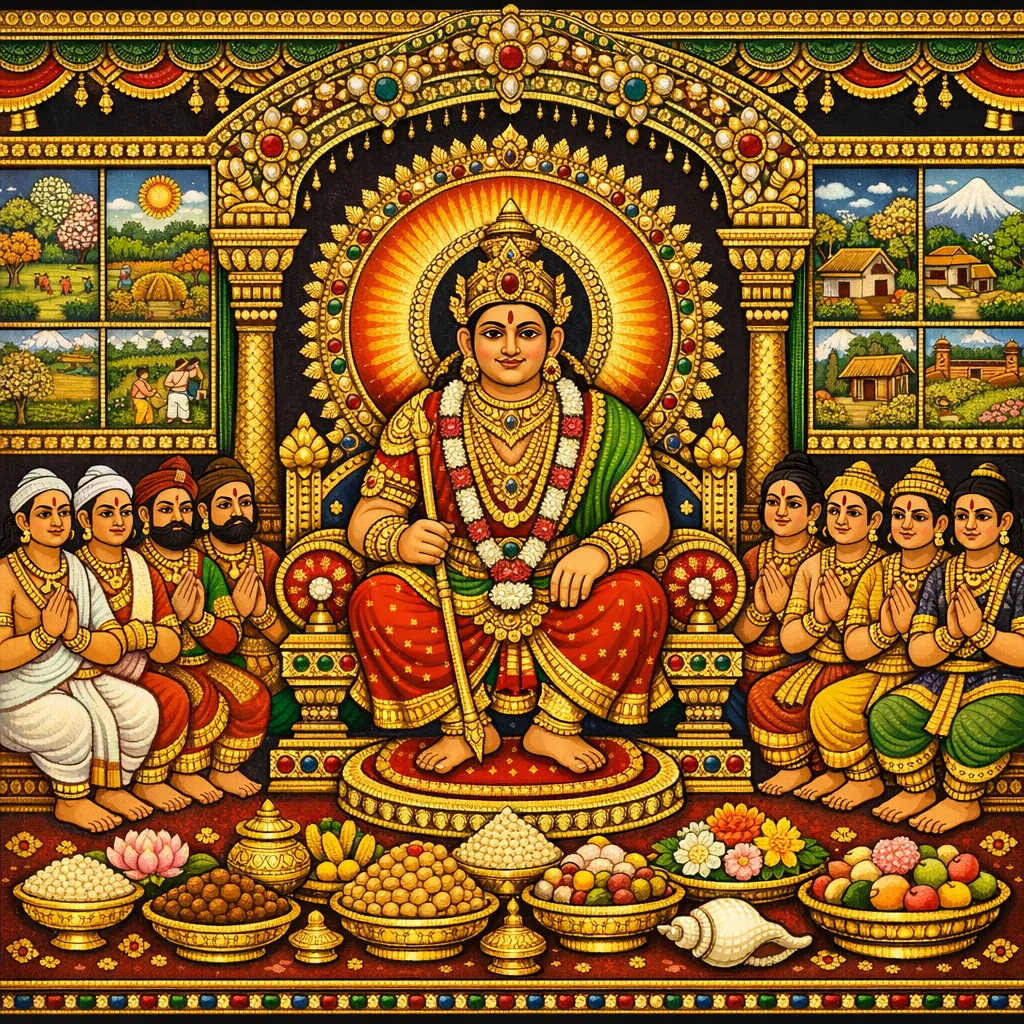
Introduced in a colophonic register, this chapter presents Jaimini’s account of King Sagara’s exemplary rule over the “saptadvīpavatī” earth. It upholds rājadharma as the stabilizer of social and cosmic order: the king establishes the four varṇas in their proper dharmas, guards the realm through disciplined senses, and leads society to follow the best models of conduct. An ideal polity is portrayed—no untimely death, flourishing and untroubled kingdoms, innumerable settlements of cāturvarṇya communities, and success in all undertakings. Material plenty is matched by moral signs: public devotion to the king, celebration and civic harmony, absence of poverty, illness, and greed, reverence for gurus, love of learning, fidelity, fear of blame, and avoidance of wicked company. The picture closes with regular seasons and abundant agriculture, offering a template of dharmic kingship tied to territorial plenitude rather than technical cosmography or esoteric ritual.
Shlokas
Verse 1
इति श्रीब्रह्माण्डे महापुराणे वायुप्रोक्ते मध्यमभागे तृतीय उपोद्धातपादे सगरदिग्विजयो नामैकोनपञ्चाशत्तमो ऽध्यायः // ४९// जैमिनिरुवाच एवं स राजा विधिवत्पालयामास मेदिनीम् / सप्तद्वीपवतीं सम्यक्साक्षाद्धर्म इवापरः
Thus, in the Śrī Brahmāṇḍa Mahāpurāṇa, in the middle section spoken by Vāyu, within the third Upoddhāta-pāda, ends the forty-ninth chapter called “Sagara’s Conquest of the Quarters.” Jaimini said: that king duly protected the earth of the seven continents, like Dharma himself in another form.
Verse 2
ब्राह्मणादींस्तथा वर्णान्स्वेस्वे धर्मे पृथक्पृथक् / स्थापयित्वा यथान्यायं ररक्षाव्याहतेन्द्रियः
He established the brāhmaṇas and the other varṇas, each separately, in their own dharmas according to justice, and with untroubled senses he protected the realm.
Verse 3
प्रजाश्च सर्ववर्णेषु यथाश्रेष्ठानुवर्त्तिनः / वर्णाश्चैवानुलोम्येन तद्वदर्थेषु च क्रमात्
In all the varṇas the people followed the best among their own; and the varṇas too stood in harmonious order (anuloma), and likewise in matters of artha everything proceeded step by step.
Verse 4
न सति स्थविरे बालं मृत्युरभयुपगच्छति / सर्ववर्णेषु भूपाले महीं तस्मिन्प्रशासति
So long as that steadfast king ruled the earth, death did not even approach a child; while that bhūpāla governed the land, fearlessness prevailed among all the varṇas.
Verse 5
स्फीतान्यपेतबाधानि तदा राष्ट्राणि कृत्स्नशः / तेष्वसंख्या जनपदाश्चातुर्वर्ण्यजनावृताः
Then all the realms were flourishing and free from affliction; within them were countless janapadas, filled with people of the four varṇas.
Verse 6
ते चासंख्यागृहग्रामशतोपेता विभागशः / देशाश्चावासभुयिष्टा नृपे तस्मिन्प्रशासति
When that king ruled, countless clusters of hundreds of houses and villages were arranged by divisions, and throughout the lands dwellings were exceedingly abundant.
Verse 7
अनाश्रमी द्विजः कश्चिन्न बभूव तदाभुवि / प्रजानां सर्ववर्णेषु प्रारंभाः फलदायिनः
Then, upon that earth, there was no dwija who was without an āśrama; and among the people of all varṇas, every undertaking that began was fruitful.
Verse 8
स्वोचितान्येव कर्माणि प्रारभन्ते च मानवाः / पुरुषार्थोपपन्नानि कर्माणि च तदा नृणाम्
People undertook only the duties proper to them, and in that time the deeds of men were aligned with puruṣārtha, thus becoming truly meaningful.
Verse 9
महोत्सवसमुद्युक्ताः पुरग्रामव्रजाकराः / अन्योन्यप्रियकामाश्च राजभक्तिसमन्विताः
The people of cities, villages, and the vraja were devoted to great festivals, wishing one another what was dear, and filled with loyal devotion to the king.
Verse 10
ननिन्दितो ऽभिशस्तो वा दरिद्रो व्याधितो ऽपि वा / प्रजासु कश्चिल्लुब्धो वा कृपणो वापि नाभवत्
Among the subjects there was none despised or accused, none poor or even sick; and there was no one greedy, nor anyone miserly.
Verse 11
जनाः परगुणप्रीताः स्वसंपर्काभिकाङ्क्षिणाः / गुरुषु प्रणता नित्यं सद्विद्याव्यसनादृताः
People delighted in others’ virtues and longed for holy fellowship (satsanga); they ever bowed to the gurus and devoted themselves to the pursuit of true sacred knowledge.
Verse 12
परापवादभीताश्च स्वदाररतयो ऽनिशम् / निसर्गात्खलसंसर्गविरता धर्मतत्पराः
They feared slander and shunned backbiting, ever devoted to their own wives; by nature they avoided the company of the wicked and were intent upon dharma.
Verse 13
आस्तिकाः सर्वशो ऽभूवन् प्रजास्तस्मिन्प्रशासति / एवं सुबाहुतन्ये स्वप्रतापार्जितां महीम्
While he ruled, the people became āstika in every way; thus, in the line of Subāhu, he governed the earth won by his own valor and splendor.
Verse 14
ऋतवश्च महाभाग यथाकालानुवर्तिनः / शालिभूयिष्ठसस्याढ्या सदैव सकला मही
O greatly blessed one, the seasons moved in their proper time; the whole earth was ever rich in crops, especially abundant in śāli rice.
Verse 15
बभूव नृपशार्दूले तस्मिन् राज्यानि शासति
When that king, a tiger among rulers, governed his realms, such auspicious prosperity prevailed.
Verse 16
यस्याष्टादशमण्डलाधिपतिभिः सेवार्थमभ्यागतैः प्रख्यातोरुपराक्रमैर्नृपशतैर्मूर्द्धाभिषिक्तैः पृथक् / संविष्टैर्मणिविष्टरेषु नितरामध्यास्यमानामरैः शक्रस्येव विराजते दिवि सभा रत्नप्रभोद्भासिता
His assembly in heaven, radiant with the luster of jewels, shines like the court of Śakra (Indra): the lords of the eighteen mandalas come to render service, and hundreds of consecrated kings famed for mighty valor sit apart, while the Immortals, seated on gem-studded thrones, continually adorn that hall.
Verse 17
संकेताविषयान्तराभ्युपगमाः सर्वे ऽपि सोपायनाः कृत्वा सैन्यनिवेशनानि परितः पुर्याः पृथक् पार्थिवाः / द्रष्टुं काङ्क्षितराजकाः सतनयाविज्ञापयन्तो मुहुर्द्वास्थैरेव नरेश्वराय सुचिरं वत्स्यन्तमन्तःपुरे
All the kings, having accepted the agreed terms in various matters and bringing gifts, set up their separate military encampments around the city. Longing to behold the king they sought, they—together with their sons—again and again sent petitions through the gatekeepers to the lord of men, as though he were to remain long within the inner palace.
Verse 18
नमन्नरेद्रमुकुटश्रेणीनामतिघर्षणात् / किणीकृतौ विराजेते चरणौ तस्य भूभुजः
From the intense rubbing of the rows of crowns of kings bowing down, the feet of that lord of the earth bore marks of wear; yet those very feet shone all the more splendidly.
Verse 19
सेवागतनरेद्रौघविनिकीर्णैः समन्ततः / रत्नैर्भाति सभा तस्य गुहा सोमे रवी यथा
With jewels scattered all around by the multitude of kings who came to serve, his assembly gleams—like a cavern lit by moon and sun.
Verse 20
एवं स राजा धर्मेण भानुवंशशिखामणिः / अनन्यशासनामुर्वीमन्वशासदरिन्दमः
Thus that king—the crest-jewel of the Bhānu lineage, subduer of foes—ruled the earth in accordance with dharma, an earth that obeyed no command but his alone.
Verse 21
इत्थं पालयतः पृथ्वीं सगरस्य महीपतेः / न चापपात मुत् पुत्रमुखालोकनजृंभिता
Thus King Sagara guarded the earth; gladdened by the sight of his son’s face, he never fell into despondency.
Verse 22
विना तां दुःखितो ऽत्यर्थं चितयामास नैकधा / अहो कष्टमपुत्रो ऽहमस्मिन्वंशे ध्रुवं तु यत्
Without her he was sorely afflicted and pondered again and again: “Alas, what hardship! In this lineage I am surely without a son.”
Verse 23
प्रयान्ति नूनमस्माकं पितरः पिण्डविप्लवम् / निरयादपि सत्पुत्रे संजाते पितरः किल
Surely our forefathers suffer when the piṇḍa offerings are cut off; for when a worthy son is born, the Pitṛs are said to be freed even from hell.
Verse 24
प्रीत्या प्रयान्ति तद्गेहं जातकर्मक्रियोत्सुकाः / महता सुकृतेनापि संप्राप्तस्य दिवं किल
With joy they come to that house, eager for the jātakarma rite and other sacraments; even to one who has reached heaven by great merit, they are said to come thus.
Verse 25
अपुत्रस्यामराः स्वर्गे द्वारं नोद्धाटयन्ति हि / पिता तु लोकमुभयोः स्वर्लोकं तत्पितामहाः
For one without a son, the gods do not open the gate of heaven; but when there is a son, the father gains a place in both worlds, and his forefathers attain Svargaloka.
Verse 26
जेष्यन्ति किल सत्पुत्रे जाते वंशद्वये ऽपि च / अनपत्यतयाहं तु पुत्रिणां या भवेद्गतिः
When a noble son is born, victory is said to come even to both lineages; but I, being without offspring, shall meet the fate that befalls the sonless.
Verse 27
न तां प्राप्क्यामि वै नूनं सुदुर्लभतरा हि सा / पदादैन्द्रात्किलाभिन्नमृद्धं राज्यमखण्डितम्
That state I shall surely not attain, for it is exceedingly hard to obtain; even a prosperous, undivided kingdom—said to be no different from Indra’s own station—cannot equal it.
Verse 28
मम यत्तदपुण्यस्य याति निष्फलतामिह / इदं मत्पूर्वजैरेव सिंहासनमधिष्ठितम्
The fruit of my unmeritorious karma is coming to nothing here; this lion-throne was indeed occupied by my own forefathers.
Verse 29
अपुत्रत्वेन राज्यं च पराधीनत्वमेष्यति / तस्मादौर्वाश्रममहं गत्वा तं मुनिपुङ्गवम्
Through sonlessness the kingdom too will fall into another’s power; therefore I shall go to the hermitage of Sage Aurva, to that foremost of seers.
Verse 30
प्रसादयिष्ये पुत्रार्थं भार्याभ्यां सहितो ऽधुना / गत्वा तस्मै त्वपुत्रत्वं विनिवेद्य महात्मने
Now, together with my two queens, I shall seek his favor for the sake of a son; I will go and lay before that great-souled sage my childlessness.
Verse 31
स यद्वक्ष्यति तत्सर्वं करिष्ये नात्र संशयः / इति सञ्चिन्त्य मनसा सगरोराजसत्तमः
Sagara, the noblest of kings, reflected in his heart: “Whatever he shall say, that all I will do—of this there is no doubt.”
Verse 32
इत्येष कृत्यविद्राजन्गन्तुमौर्वाश्रमं प्रति / स मन्त्रिप्रवरे राज्यं प्रतिष्ठाप्य ततो वनम्
O King, this duty-knowing monarch resolved to go to the āśrama of Sage Aurva. Having entrusted and established the realm under his foremost minister, he then set out for the forest.
Verse 33
प्रययौ रथमारुह्य भार्याभ्यां सहितो मुदा / जगाम रथघोषेण मेघनादातिशङ्किभिः
Joyfully he mounted his chariot, accompanied by his two queens, and set forth. The roar of the chariot made people tremble, mistaking it for the thunder of clouds.
Verse 34
स्तब्धेक्षणैर्लक्ष्यमाणो मार्गोपान्ते शिखण्डिभिः / प्रियाभ्यां दर्शयन्राजन्सारङ्गांस्तिमितेक्षणान्
Peacocks by the roadside watched him with unblinking eyes. O King, as he went he pointed out to his beloved queens the sāraṅga deer, calm and steady of gaze.
Verse 35
क्षममूर्ध्वमुखान्सद्यः पलायनपरान्पुनः / वृक्षान्पुष्पफलोपेतान्विलोक्य मुदितो ऽभवत्
Seeing creatures that lifted their heads from the ground yet were again at once ready to flee, and beholding trees laden with flowers and fruits, he became filled with joy.
Verse 36
अम्लानकुसुमैः स्वादुफलैः शाद्वलभूमिकैः / सुस्निग्धपल्लवच्छायैरभितः संभृतं नगैः
That forest was filled with unfading blossoms, sweet fruits, and green grassy ground; on every side it was enclosed by mountains whose tender leafage cast a soft, luxuriant shade.
Verse 37
चूताग्रपल्लवास्वादस्निग्धकण्ठपिकारवैः / श्रोत्राभिरामजनकैस्संघुष्टं सर्वतोदिशम्
The calls of koel birds—soft-throated, tasting the tender tips of mango leaves—rang out in every direction, delighting the ear on all sides.
Verse 38
सर्वर्तुकुसुमोपेतं भ्रमद्भ्रमरमण्डितम् / प्रसूनस्तबकानम्रबल्लरीवेल्लितद्रुमम्
It bore blossoms of every season, adorned with whirling bees; and its trees were entwined with creepers that bent low beneath the weight of clustered flowers.
Verse 39
कपियूथसमाक्रान्तव नस्पतिशतावृतम् / उन्मत्तशिखिसारङ्गकूजत्पक्षिगणान्वितम्
It was thronged with troops of monkeys and covered with hundreds of plants; filled with exuberant peacocks, sāranga deer, and flocks of birds calling out in song.
Verse 40
गायद्विद्याधरवधूगीतिकासुमनोहरम् / संचरत्किन्नरीद्वन्द्वविराजद्वनगह्वरम्
That forest gorge was exceedingly enchanting with the songs of the Vidyādhara maidens as they sang; and it shone with the splendor of Kinnarī pairs wandering through it.
Verse 41
हंससारसचक्राह्वकारण्डवशुकादिभिः / सुस्वरैरावृतोपान्तैः सरोभिः परिवारितम्
That place was encircled by lakes whose banks were filled with sweet-voiced birds—hamsas, sarasas, cakravākas, kāraṇḍavas, parrots, and the like.
Verse 42
सरः स्वंबुज कह्लारकुमुदोत्पलराशिषु / शनैः परिवहन्मन्दमारुतापूर्णदिङ्मुखम्
That lake, over its masses of lotus, kahlāra, kumuda, and utpala blooms, slowly carried a gentle breeze, filling the faces of all directions.
Verse 43
एवंविधगुणोपेतमधिगाह्य तपोवनम् / गच्छन्रथेनाथ नृपः प्रहर्षं परमं ययौ
Entering that ascetic forest endowed with such qualities, the king rode on in his chariot and attained the highest delight.
Verse 44
उपशान्ताशयः सो ऽथ संप्राप्याश्रममण्डलम् / भार्याभ्यां सहितः श्रीमान्वाहादवरुरोह वै
With his mind calmed, the illustrious king reached the āśrama precinct and, together with his two queens, dismounted from his conveyance.
Verse 45
धुर्यान्विश्रामयेत्युक्त्वा यन्तारमवनीपतिः / आससादाश्रमोपान्तं महर्षेर्भावितात्मनः
Telling the charioteer, “Let the draft animals rest,” the lord of the earth approached the vicinity of the āśrama of that great ṛṣi, whose soul was well-cultivated.
Verse 46
स श्रुत्वा मुनिशिष्येभ्यः कृतनित्यक्रियादरम् / मुनिं द्रष्टुं विनीतात्मा प्रविवेशाश्रमं तदा
Hearing from the sage’s disciples of their reverent devotion to the daily rites, he, humble of soul, then entered the āśrama to behold the muni.
Verse 47
मुनिमध्ये समासीनमृषिवृन्दैः समन्वितम् / ननाम शिरसा राजा भार्याभ्यां सहितो मुदा
Seeing the muni seated amid the sages, surrounded by a host of ṛṣis, the king, together with his two queens, bowed his head in joyful reverence.
Verse 48
कृतप्रणामं नृपतिमृषिरौर्वः प्रतापवान् / उपविशेति प्रेम्णा वै सह ताभ्यां समादिशत्
To the king who had finished his obeisance, the mighty sage Aurva lovingly said, “Be seated,” together with your two queens.
Verse 49
अर्घ्यपाद्यादिभिः सम्यक्पूजयित्वा महामुनिः / आतिथ्येन च वन्येन सभार्यं तमतोषयत्
The great muni duly honored him with arghya, pādya, and the like, and with forest-offerings of hospitality he satisfied the king together with his queens.
Verse 50
अथातिथ्योपविश्रान्तं प्रणम्या सीनमग्रतः / राजानमब्रवीदौर्वः शनैर्मृद्वक्षरं वचः
Then, when the king had rested after the rites of hospitality, Aurva bowed to him, sat before him, and spoke slowly in gentle words.
Verse 51
कुशलं ननु ते राज्ये बाह्येष्वाभ्यन्तरेषु च / अपिधर्मेण सकलाः प्रजास्त्वं परिरक्षसि
Is your kingdom well and prosperous, both outwardly and within? And do you protect all your subjects in accordance with Dharma?
Verse 52
अपि जेतुं त्रिवर्गं त्वमुपायैः सम्यगीहसे / फलन्ति हि गुणास्तुभ्यं त्वया सम्यक्प्रचोदिताः
Do you strive, by proper means, to master the three aims—Dharma, Artha, and Kama? For your virtues bear fruit when you rightly set them in motion.
Verse 53
दिष्ट्यात्वया जिताः सर्वे रिपवो नृपसत्तम / दिष्ट्या च सकलं राज्यं त्वया धर्मेण रक्ष्यते
O best of kings, by blessed fortune you have conquered all foes; and by that same good fortune your entire realm is safeguarded through Dharma.
Verse 54
धर्म एव स्थितिर्येषां तेषां नास्त्यत्रविप्लवः / न तं रक्षति किं धर्मः स्वयं येनाभिरक्षितः
For those whose very footing is Dharma, there is no upheaval here. Whom Dharma itself protects—what need is there of any other guardian?
Verse 55
पूर्वमेवाहमश्रौषं विजित्य सकलां महीम् / सबलोनगरीं प्राप्तः कृतदारो भवानिति
I had already heard that, having conquered the whole earth, you arrived in the city with your forces and have now entered the married state.
Verse 56
राज्ञां तु प्रवरो धर्मो यत्प्रजापरिपालनम् / भवन्ति सुखिनो नूनं तेनैवेह परत्र च
The foremost dharma of kings is the protection and care of their subjects; by that alone people are surely happy, here and hereafter.
Verse 57
स भवान्राज्य भरणं परित्यज्य मदन्तिकम् / भार्याभ्यां सहितो राजन्समायातो ऽसि मे वद
O King, you have set aside the burden of the realm and come to me with your two queens; tell me, what is the reason?
Verse 58
जैमिनिरुवाच एवमुक्तस्तु मुनिना सगरो राजसत्तमः / कृताञ्जलिपुटो भूत्वा प्राह तं मधुरं वचः
Jaimini said: Thus addressed by the sage, Sagara, best of kings, folded his hands in reverence and spoke to him sweet words.
Frequently Asked Questions
It presents an idealized portrait of King Sagara’s governance: establishing varṇa-specific duties, protecting the realm, and generating social harmony and prosperity across the saptadvīpa earth.
Vaṃśānucarita is foregrounded through the king-centered historical-ethical narrative; cosmology appears as a framing epithet (“saptadvīpavatī medinī”) rather than as a measurement-driven bhuvana-kośa section.
No. The sampled material is not Lalitopākhyāna; it is rajadharma and social-order narration centered on Sagara, without Shakta battle-myths, vidyā/yantra exposition, or Bhāṇḍāsura motifs.