Adhyaya 5
हिरण्यकशिपुजन्म-तपः-वरप्रभावः (Birth, Austerity, and Boon-Power of Hiraṇyakaśipu)
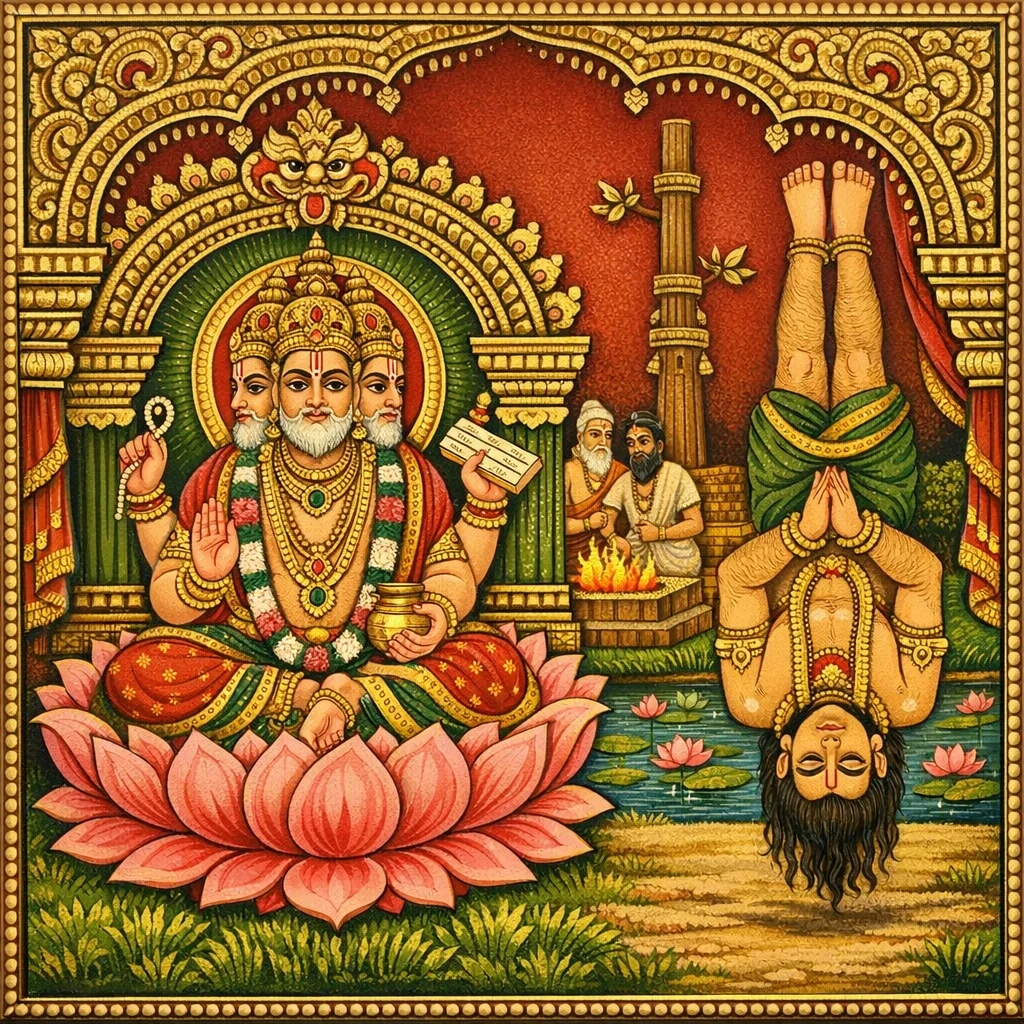
The sages formally ask for the utpatti (origin), nidhana (end), and vistāra (full particulars) of many orders of beings—daityas, dānavas, gandharvas, uragas, rākṣasas, serpents, bhūtas, piśācas, vasus, birds, and even plant-life—signaling a genealogical and cosmological catalog. The Sūta replies by focusing on Diti’s asuric offspring within Kaśyapa’s line: the births of Hiraṇyakaśipu and his younger brother Hiraṇyākṣa, set against Kaśyapa’s aśvamedha at Puṣkara. Using name-etymology as a guide (Hiraṇyakaśipu, “remembered by that act/karma”), the chapter then portrays Hiraṇyakaśipu’s extreme tapas—long fasting and an inverted posture—by which Brahmā is pleased and grants extraordinary boons, implying the daitya’s ascendancy over the devas. Thus ritual setting, lineage markers, and ascetic authorization are woven together to show how boon-empowered beings periodically unsettle cosmic order, preparing the ground for later avatāra or restoration narratives.
Shlokas
Verse 1
इति ब्रह्माण्डे महापुराणे वायुप्रोक्ते मध्यामभागे तृतीय उपोद्धातपादे जयाभिव्याहारो नाम चतुर्थो ऽध्यायः ऋषिरुवाच दैत्यानां दानवानां च गन्धर्वोरगरक्षसाम् / सर्पभूतापिशा चानां वसूनां पक्षिवीरुधाम्
Thus, in the Brahmāṇḍa Mahāpurāṇa, proclaimed by Vāyu, in the middle section, within the third Upoddhāta-pāda, is the fourth chapter called “Jayābhivyāhāra”. The Ṛṣi said: concerning the Daityas and Dānavas, the Gandharvas, Uragas, and Rākṣasas; the serpents, bhūtas, and piśācas; the Vasus, and also birds and plants.
Verse 2
उत्पत्तिं निधनं चैव विस्तारात्कथयस्व नः / एवमुक्तस्तदा सूतः प्रत्युवाचर्षिसत्तमम्
Tell us in full detail of their origin and also of their end. Thus addressed, Sūta then replied to the foremost of Ṛṣis.
Verse 3
सूत उवाच दितेः पुत्रद्वयं जज्ञे कन्या चैका महाबला / कश्यपस्यात्मजौ तौ तु सर्वेभ्यः पूर्वजौ स्मृतौ
Suta said: From Diti were born two sons, and also one daughter of great might. Those two were sons of Kashyapa and are remembered as the eldest among all.
Verse 4
सौत्ये ऽहन्यतिरा त्रस्य कश्यपस्याश्वमेधिकाः / हिरण्यकशिपुर्नाम प्रथितं पृथगासनम्
Suta said: On the day of the Sauta rite, as Kashyapa’s Ashvamedha observances were being performed, there appeared a distinct and famed seat called Hiranyakashipu.
Verse 5
दित्या गर्भाद्विनिः सृत्य तत्रासीनः समन्ततः / हिरण्य कशिपुस्तस्मात् कर्मणा तेन स समृतः
Emerging from Diti’s womb, he sat there facing all directions; by that very deed he came to be remembered as Hiranyakashipu.
Verse 6
ऋषय ऊचुः हिरण्यकशिपोर्जन्म नाम चैव महात्मनः / प्रभावं चैव दैत्यस्य विस्ताराद्ब्रूहि नः प्रभो
The sages said: O Lord, tell us in full of the birth of the great-souled Hiranyakashipu—his name as well—and the might of that Daitya.
Verse 7
सूत उवाच कश्यपस्याश्वमेधो ऽभूत्पुण्ये वै पुष्करे तदा / ऋषिभिदेंवताभिश्च गन्धर्वैरुपशोभितः
Suta said: Then, in the holy tirtha of Pushkara, Kashyapa performed the Ashvamedha, splendidly adorned by sages, deities, and Gandharvas.
Verse 8
उत्सृष्टे स्वे च विधिना आख्यानादौ यथाविधि / आसनान्युपकॢप्तानि सौवर्णानि तु पञ्च वै
When, according to their own rite, the opening of the sacred account was duly set in order, five seats of gold were prepared.
Verse 9
कुलस्पदापि? त्रीण्यत्र कूर्चः फलकमेव च / मुख्यर्त्विजस्तु चत्वारस्तेषां तान्युपकल्पयन्
Here were three clan-seats, along with a kūrca and a plank; these were arranged for the four chief priests.
Verse 10
कॢप्त तत्रासनं चैकं होतुरर्थे हिरण्यम् / निषसाद सगर्भो ऽत्र तत्रासीनः शशंस च
There a single golden seat was set apart for the hotṛ; Sagarbha sat down there and, seated, uttered the sacred praise.
Verse 11
आख्यानमानुपूर्व्येण महर्षिः कश्यपो यथा / तं दृष्ट्वा ऋषयस्तस्य नाम कुर्वन्ति वर्द्धितम्
As the great sage Kaśyapa related the account in due sequence; seeing him, the seers enlarged and exalted his name.
Verse 12
हिरण्यकशिपुस्तस्मात्कर्मणा तेन स स्मृतः / हिरण्यक्षो ऽनुजस्तस्य सिंहिका तस्य चानुजा
By that deed he was remembered as Hiraṇyakaśipu; his younger brother was Hiraṇyākṣa, and his younger sister was Siṃhikā.
Verse 13
राहोः सा जननी देवी विप्र चित्तेः परिग्रहः / हिरण्यकशिपुर्दैत्यश्चचार परमं तपः
She, the Goddess, was the mother of Rahu and the consort of Vipracitta; and the daitya Hiranyakashipu performed supreme austerity.
Verse 14
शतं वर्षसहस्राणां निराहारो ह्यधःशिराः / वरयामास ब्रह्माणं तुष्टं दैत्यो वरेण तु
For a hundred thousand years he remained without food, with his head downward; then the daitya sought a boon from Brahma, who was pleased.
Verse 15
सर्वामरत्वमवधं सर्वभूतेभ्य एव हि / योगद्देवान् विनिर्जित्य सर्वदेवत्वमास्थितः
He asked for complete immortality, invulnerable to all beings; and by the power of yoga he conquered the gods and assumed dominion as though over all divinities.
Verse 16
कारये ऽहमिहैश्वर्यं बलवीर्यसमन्वितः / दानवास्त्वसुराश्चैव देवाश्च सह चारणैः
Here I shall establish sovereignty, endowed with strength and valor; the dānavas and asuras, and even the gods together with the cāraṇas (shall be brought under control).
Verse 17
भवन्तु वशगाः सर्वे मत्समीपानुभोजनाः / आर्द्रशुष्कैरवध्यश्च दिवा रात्रौ तथैव च / एवमुक्तस्तदा ब्रह्मानुजज्ञे सांतरं वरम्
“Let all be subject to me and partake of enjoyments in my very presence; let me be unkillable by what is wet or dry, by day or by night.” Thus spoken, Brahma granted him a boon with limiting conditions.
Verse 18
ब्रह्मोवाच / महानयं वरस्तात वृतो दितिसुत त्वया / एही दानीं प्रतिज्ञानं भविष्यत्येवमेव तु
Brahmā said: “O son of Diti, you have chosen a mighty boon. Come now; your vow shall indeed come to pass just so.”
Verse 19
दत्त्वा चाभिमतं तस्मै तत्रेवान्तरधादथ / सो ऽपि दैत्यस्तदा सर्वं जगत्स्थावरजङ्गमम्
Having granted him the boon he desired, Brahmā vanished there itself. Then that Daitya beheld the whole world, both the moving and the unmoving.
Verse 20
महिम्ना व्याप्य संतस्थे बहुमूर्त्तिरमित्रजित् / स एव तपति व्योम्नि चन्द्रसूर्यत्वमास्थितः
That conqueror of foes, assuming many forms, pervaded all by his majesty and stood established. He himself blazes in the sky, taking on the state of moon and sun.
Verse 21
स एव वायुर्भूत्वा च ववौ जगति सर्वदा / स गोपालो ऽविपालश्च कर्षकश्च स एव ह
He himself became the wind and ever blew throughout the world. He is Gopāla, the keeper of cattle, and he himself is the tiller of the soil.
Verse 22
स ज्ञाता सर्वलोकेषु मन्त्रव्याख्याकरस्तथा / नेता गोप्ता गोपयिता दीक्षितो याजकः स तु
He is known in all worlds, and he is the expounder of mantras. He is the leader, the protector, the keeper of what is hidden, the initiated one, and the priest who performs the rites.
Verse 23
तस्य देवाः सुराः सर्वे तदासन्सोमपायिनः / एवंप्रभावो दैत्यो ऽसावतो भूयो निबोधत
Then all the Devas and the Suras became drinkers of Soma. Such was the might of that Daitya; therefore, hear further.
Verse 24
तस्मै सर्वे नमस्कारं कुर्वन्तीज्यः स एव च / हिरण्यकशिपोर्दैत्यैः श्लोको गीतः पुरा त्विह
All bowed to him in reverence; he alone was held worthy of worship. Here is the ancient verse once sung by the Daityas of Hiranyakashipu.
Verse 25
हिरण्यकशिपू राजा यां यामाशां निरैक्षत / तस्यै तस्यै तदा देवा नमश्चक्रुर्महर्षिभिः
Whichever quarter King Hiranyakashipu looked toward, in that very direction the Devas, together with the great Rishis, bowed to him.
Verse 26
तस्यासीन्नरसिंहस्तु मृत्युर्विष्णुः पुरा किल / नरात्तु यस्माज्जन्मास्य नरमूर्त्तिश्च यत्प्रभुः
It is said of old that for him Vishnu Himself became Death, manifest as Narasimha. For His birth was from ‘nara’ (man), and the Lord’s form too was human-shaped.
Verse 27
तस्मात्स नरसिंहो वै गीयते वेदवादिभिः / सागरस्य च वेलायामुच्छ्रित स्तपसो विभुः
Therefore Narasimha is sung by the proclaimers of the Vedas. That mighty Lord, uplifted by austerity, shone forth upon the ocean’s shore.
Verse 28
शरीरं तस्य देवस्य ह्यासीद्देवमयं प्रभो / नाम्ना सुदर्शनं चैव विश्रुतश्च महाबलः
The body of that Lord was indeed divine, O Master. He was renowned by the name Sudarshana and possessed great strength.
Verse 29
ततः स बाहुयुद्धेन दैत्येन्द्रं तं महाबलम् / नखैर्बिभद संक्रुद्धो नार्द्राः शुष्का नखा इति
Then, enraged, he tore apart that mighty king of demons in hand-to-hand combat with his nails, considering that nails are neither wet nor dry.
Verse 30
हिरण्याक्षसुताः पञ्च विक्रान्ताः सुमहाबलाः / शंबरः शकुनिश्चैव कालनाभस्तथैव च
Hiranyaksha had five sons who were valiant and exceedingly powerful: Shambara, Shakuni, and also Kalanabha.
Verse 31
महानाभः सुविक्रान्तो सुत संतापनस्तथा / हिरण्यक्षसुता ह्येते देवैरपि दुरासदाः
Mahanabha the very valiant, and the son Santapana. These sons of Hiranyaksha were unassailable even by the gods.
Verse 32
तेषां पुत्राश्च पौत्राश्च दैतेयाः सगणाः स्मृताः / स शतानि सहस्राणि निहतास्तारकामये
Their sons and grandsons, the Daityas along with their followers, numbering hundreds and thousands, were slain in the Tarakamaya war.
Verse 33
हिरण्यकशिपोः पुत्राश्चत्वारः सुमहाबलाः / प्रह्लादः पूर्वजस्तेषामनुह्ना दस्तथापरः
Hiraṇyakaśipu had four sons of mighty strength; among them Prahlāda was the eldest, and then came Anuhlāda and Da and the others.
Verse 34
संह्रादश्चैव ह्रादश्च ह्रादपुत्रौ निबोधत / सुंदो निसुन्दश्च तथा ह्रादपुतौ बभूवतुः
Saṃhrāda and Hrāda—know that Hrāda had two sons, named Sunda and Nisunda.
Verse 35
ब्रह्यघ्नौ तौ महावीरौ मूकस्तु ह्राददायकः / मारीचः सुन्दपुत्रस्तु ताडकायामजायत
Those two (Sunda and Nisunda) were great heroes, stained by the sin of brahmahatyā; Mūka was the attendant of Hrāda. And Mārīca, the son of Sunda, was born of Tāḍakā.
Verse 36
दण्डके निहतः सो ऽथ राघवेण बलीयसा / मूको विनिहतश्चापि कैराते सव्यसाचिना
He (Mārīca) was slain in the Daṇḍaka forest by the mighty Rāghava (Śrī Rāma); and Mūka too was destroyed in the land of the Kirātas by Savyasācin (Arjuna).
Verse 37
संह्रादस्य तु दैत्यस्य निवातकवचाः कुले / उत्पन्ना महता चैव तपसा भाविताः स्वयम्
In the lineage of the daitya Saṃhrāda were born the Nivātakavacas, who were themselves refined and empowered by great austerity (tapas).
Verse 38
अरयो देवतानां ते जंभस्य शतदुन्दुभिः / तथा दक्षो सुरश्चण्डश्चत्वारो देत्यनायकाः
They were foes of the Devas—Śatadundubhi of Jambha; and likewise Dakṣa and Suracaṇḍa—four leaders among the Daityas.
Verse 39
बाष्कलस्य सुता ह्येते काल नेमेः सुताञ्छृणु / ब्रह्मजित्क्रतुजिच्चैव देवान्तकनरान्तकौ
These are the sons of Bāṣkala; now hear the sons of Kālanemi—Brahmajit, Kratujit, and also Devāntaka and Narāntaka.
Verse 40
कालनेमिसुता ह्येते शभोस्तु शृणुत प्रजाः / राजाजश्चैव गोमश्च शंभोः पुत्रौ प्रकीर्त्तितौ
These are the sons of Kālanemi; O people, hear also of Śabha—Rājāja and Goma are proclaimed as the sons of Śambhu.
Verse 41
विरोजनस्य पुत्रश्च बलिरेकः प्रतापवान् / बलेः पुत्रशतं जज्ञे राजानः सर्व एव ते
Bali, the son of Virocana, stood alone in mighty splendor; to Bali were born a hundred sons—every one of them a king.
Verse 42
तेषां प्रधानाश्चत्वारो विक्रान्ताः सुमहाबलाः / सहस्रबाहुः श्रेष्ठो ऽभूद्बाणो राजा प्रतापवान्
Among them, four were foremost—valiant and of immense might; Sahasrabāhu was the greatest, and King Bāṇa too was radiant in power.
Verse 43
कुंभगर्त्तो दयो भोजः कुञ्चिरित्येवमा दयः / शकुनी पूतना चैव कन्ये द्वे तु बलेः स्मृते
Kumbhagartta, Daya, Bhoja, and Kuncir—these are spoken of as the Dayas. Sakunī and Pūtanā too; and two maidens, daughters of Bali, are remembered.
Verse 44
बलेः पुत्राश्च पौत्राश्च शतशो ऽथ सहस्रशः / बालेया नाम विख्याता गणा विक्रान्तपौरुषाः
Bali’s sons and grandsons were in the hundreds, and then in the thousands. Renowned as the Baleyas, they were hosts of conquering valor and mighty prowess.
Verse 45
बाणस्य चैन्द्रधन्वा तु लोहिन्यामुदपद्यत / दितिर्विहितपुत्रा वै तोषयामास कश्यपम्
To Bana was born Aindradhanvā, begotten of Lohinī. Diti, blessed with a son, brought satisfaction to the sage Kaśyapa.
Verse 46
तां कश्यपः प्रसन्नात्मा सम्यगाराधितस्त्वथ / वरेण छन्दयामास सा च वव्रे वरं तत
Then Kaśyapa, pleased in heart and rightly worshiped, invited her to choose a boon; and she thereupon chose a single boon.
Verse 47
अथ तस्यै वरं प्रादात्प्रार्थितो भगवान्पुनः / उक्ते वरे तु मा तुष्टा दितिस्तं समभाषत
Then, entreated once more, the Blessed Lord granted her a boon. Yet even when the boon was spoken, Diti was not satisfied and addressed him again.
Verse 48
मारीचं कण्यपं देवी भर्त्तारं प्राञ्जलिस्तदा / हतपुत्रास्मि भगवन्नादित्यैस्तव सूनुभिः
Then the goddess Diti, with palms joined, spoke to her husband Marichi Kashyapa: “O Bhagavan, your sons, the Adityas, have slain my sons; I am bereft of children.”
Verse 49
शक्रहन्तारमिच्छमि पुत्रं दीर्घतपो ऽर्जितम् / साहं तपश्चरिष्यामि गर्भमाधातुमर्हसि
“I desire a son, won by long austerity, who will slay Shakra (Indra). I shall perform tapas; grant that I may conceive.”
Verse 50
पुत्रमिन्द्रवधे युक्तं त्वं मै वै दातुमर्हसि / तस्यास्तद्वचनं श्रुत्वा मारीचः कश्यपस्तदा
“You must grant me a son fit to slay Indra.” Hearing her words, then Marichi Kashyapa…
Verse 51
प्रत्युवाच महातेजा दितिं परमदुः खितः / एवं भवतु गर्भे तु शुचिर्भव तपोधने
Then Marichi Kashyapa, mighty in splendor and deeply grieved, replied to Diti: “So be it; but, O treasure of tapas, remain pure while you bear the child.”
Verse 52
जनयिष्यसि पुत्रं त्वं शक्रहन्तारमाहवे / पूर्णं वर्षसहस्रं तु शुचिर्यदि भविष्यसि
“If you remain pure for a full thousand years, you will give birth to a son who will slay Shakra (Indra) in battle.”
Verse 53
पुत्रं त्रिलोकप्रवरं मन्मथं जनयिष्यसि / एवमुक्त्वा महातेजास्तथा समभावत्तदा
You shall bear Manmatha, the most excellent son in the three worlds. Having spoken thus, the great radiant sage then became calm and composed.
Verse 54
तामालभ्य स्वभवनं जगाम भगवानृषिः / गते भर्त्तरि सा देवी दितिः परमहर्षिता
Touching her in blessing, the venerable sage returned to his own abode. When her husband had departed, the goddess Diti rejoiced exceedingly.
Verse 55
कुशप्लवनमासाद्य तपस्तेपे सुदारुणम् / शक्रस्तु समुपश्रुत्य संवादं तं तयोः प्रभुः
Reaching the forest of Kuśaplavan, she undertook a most severe austerity. Meanwhile Śakra, the lord, overheard the discourse between the two.
Verse 56
कुशप्लवनमागम्य दितिं वाक्यमभाषत / शुश्रूषां ते करिष्यामि मानुज्ञां दातुमर्हसि
Coming to Kuśaplavan, he spoke to Diti: “I shall attend upon you in service; be pleased to grant me your permission.”
Verse 57
समिधश्चाहरिष्यामि पुष्पाणि च फलानि च / यथा त्वं मन्यसे वत्स सुश्रूषाभिरतो भव
I shall also bring the sacred kindling (samidh), as well as flowers and fruits. As you deem fit, O vatsa, remain devoted to service.
Verse 58
सर्वकर्मसु निष्णात आत्मनो हितमाचर / वरं श्रुत्वा तु त द्वाक्यं मातुः शक्रः प्रहर्षितः
Be skilled in every duty and practice what brings welfare to yourself. Hearing his mother’s noble words, Śakra was filled with great joy.
Verse 59
शुश्रूषाभिरतो भूत्वा कलुषेणान्तरात्मना / शुश्रूषते तु तां शक्रः सर्वकालमनुव्रतः
Intent on service, though his inner self was tainted, Śakra attended upon her at all times, faithful to his vow.
Verse 60
फलपुष्पाण्युपादाय समिधश्च दृढव्रतः / गात्रसंवाहनं काले श्रमापनयने तथा
Steadfast in his vow, he brought fruits, flowers, and sacred fuel-sticks; and at the proper times he massaged her limbs, easing away fatigue.
Verse 61
शक्रः सर्वेषु कालेषु दितिं परिचचार ह / किञ्चिच्छिष्टे व्रते देवी तुष्टा शक्रमुवाच ह
Śakra attended upon Diti at all times. When only a little of her observance remained, the Goddess, pleased, spoke to Śakra.
Verse 62
प्रतीताहं ते सुरश्रेष्ठ दशवर्षाणि पुत्रक / अवशिष्ठानि भद्रं ते भ्रातरं द्रक्ष्यसे ततः
O best of the gods, my child! For ten years I have been pleased with you. Blessings upon you; when the remaining time is fulfilled, then you shall behold your brother.
Verse 63
तमहं त्वत्कृते पुत्र सह धास्ये जयैषिणम् / त्रैलोक्यविजयं पुत्र भोक्ष्यसे सह तेन वै
O son, for your sake I shall bear along with me him who seeks victory; and you, my son, together with him shall surely enjoy the conquest of the three worlds.
Verse 64
नाहं पुत्राभिजानामि मद्भक्तिगतमानसम् / एवमुक्त्वा दितिः शक्रं मध्यं प्राप्ते दिवाकरे
I do not recognize, O son, a son whose mind is absorbed in devotion to me. Saying thus, when the sun had reached midday, Diti spoke to Śakra.
Verse 65
निद्रयापहृता दवी शिरः कृत्वा तु जानुनि / केशान्कृत्वा तु पादस्थान्सा सुष्वाप च देवता
Overcome by sleep, the goddess placed her head upon her knees, let her hair fall toward her feet, and that divine lady slept.
Verse 66
अधस्ताद्यत्तु नाभेर्वै सर्वं तदशुचि स्मृतम् / ततस्तामशुचिं ज्ञात्वा सोंतरं तदमन्यत
Whatever lies below the navel is remembered as impure. Therefore, knowing that impurity, he considered another way to enter within.
Verse 67
दृष्ट्वा तु कारणं सर्वं तस्य बुद्धिरजायत / गर्भं निहन्तु वै देव्या स हि दोषो ऽत्र दृश्यते
Seeing the whole cause, a resolve arose in him: “Let the goddess’s womb be struck down, for here indeed the fault is seen.”
Verse 68
ततो विवेश दित्या वै ह्युपस्थेनोदरं वृषा / प्रविश्य चापि तं दृष्ट्वा गभमिन्द्रो महौजसम्
Then Indra entered the womb of Diti. Having entered, he beheld that fetus of great brilliance and energy.
Verse 69
भीतस्तं सप्तधा गभ बिभेद रिपुमात्मनः / म गर्भो भिद्यमानस्तु वज्रणशतपर्वणा
Frightened, he split that fetus, his own enemy, into seven parts. The fetus was being pierced by the hundred-jointed Thunderbolt (Vajra).
Verse 70
रुरोद सुस्वरं भीमं वेपमानः पुनः पुनः / मारोद मारोद इति गर्भं शक्रो ऽभ्यभाषत
It cried out with a loud and terrible sound, trembling again and again. 'Ma roda' (Do not cry), 'Ma roda', Indra said to the fetus.
Verse 71
तं गर्भं सप्तधा कृत्वा ह्येकैकं सप्तधा पुनः / कुलिशेन बिभेदेन्द्रस्ततो दितिरबुध्यता
Having divided that fetus into seven parts, and each one into seven again, Indra split them with his Thunderbolt. Then Diti woke up.
Verse 72
न हन्तव्यो न हन्तव्य इत्येवं दितिरब्रवीत् / निष्पपात ततो वज्री मातुर्वचनगौरवात्
'Do not kill, do not kill,' thus Diti spoke. Then, out of respect for his mother's words, the Wielder of the Thunderbolt came out.
Verse 73
प्राञ्जलिर्वज्रसहितो दितिं शक्रो ऽभ्यभाषत / अशुचिर्देवि सुप्तासि पादयोर्गतमूर्द्धजा
With palms joined and the vajra in hand, Śakra spoke to Diti: “O Goddess, you are in a state of impurity; you sleep, and your hair has fallen toward your feet.”
Verse 74
तदं तरमनुप्राप्य गर्भं हेतारमाहवे / भिन्नवानहमेतं ते बहुधा क्षन्तुमर्हसि
Seizing that moment, I came upon the embryo—the cause of war—and split it into many parts; you should forgive me again and again.
Verse 75
तस्मिंस्तु विफले गर्भे दितिः परमदुःखिता / सहस्राक्षं दुराधर्षं वाक्यं सानुनयाब्रवीत्
When that pregnancy was brought to ruin, Diti was overwhelmed with grief; then, with supplication, she spoke to the unassailable Thousand-Eyed One.
Verse 76
ममापराधाद्गर्भो ऽयं यदि ते विफलीकृतः / नापराधो ऽस्ति देवेश तव पुत्र महाबल
If by my fault this pregnancy of yours has been made futile, O Lord of the gods, O son of great might—there is no blame in you.
Verse 77
शत्रोर्वधे न दोषो ऽस्ति भेतव्यं न च ते विभो / प्रियं तु कृतमिच्छामि श्रेयो गर्भस्य मे कुतः
In slaying an enemy there is no fault, O Mighty One, nor should you fear; yet I wish what you have done to be dear—where, then, is the welfare of my womb?
Verse 78
भवन्तु मम पुत्राणां सप्त स्थानानि वै दिवि / वातस्कन्धानिमान्सप्त चरन्तु मम पुत्रकाः
May my sons indeed have seven stations in the heavens; may my sons roam through these seven hosts of wind.
Verse 79
मरुतस्ते तु विख्याता गतास्ते सप्तसप्तकाः / पृथिव्यां प्रथमस्कन्धो द्वितीयश्चापि भास्करे
They became renowned as the Maruts, departing in groups of seven; the first host is on Earth, and the second is with Bhāskara, the Sun.
Verse 80
सोमे तृतीयो विज्ञेयश्चतुर्थो ज्योतिषां गणे / ग्रहेषु पञ्चमस्चैव षष्ठः सप्तर्षिमण्डले
The third is to be known as abiding in Soma, the Moon; the fourth in the host of the luminaries. The fifth is among the planets, and the sixth in the circle of the Seven Ṛṣis.
Verse 81
ध्रुवे तु सप्तमश्चैव वातस्कन्धाश्चसप्त ये / तानेते विचरन्त्वद्य कालेकाले ममात्मजाः
The seventh is in Dhruva; and these seven wind-hosts—may my sons traverse them from this day onward, time after time.
Verse 82
वातस्कन्धाधिपा भूत्वा चरन्तु मम पुत्रकाः / पृथिव्यां प्रथमस्कन्ध आ मेघेब्यो य आवहः
Becoming lords of the wind-hosts, may my sons wander. On Earth is the first host, which brings down (the waters and the like) from the clouds.
Verse 83
चरन्तु मम पुत्रास्ते सप्त ये प्रथमे गणे / द्वितीयश्चापि मेघेभ्य आसूर्यात्प्रवहस्ततः
Let my seven sons, who are in the first host, roam forth; and the second host, from the clouds down to beneath the Sun, is called Pravaha.
Verse 84
वातस्कन्धो हि विज्ञेयो द्वितीयश्चरतां गणः / सूर्यादूर्ध्वमधः सोमादुद्वहो ऽथ स वै स्मृतः
The second roaming host is to be known as Vataskandha; it lies above the Sun and below Soma, and thus is remembered as Udvaha.
Verse 85
वातस्कन्धस्तृतीयश्च पुत्राणां चरता गणः / सोमादूर्द्ध्वमधर्क्षेभ्यश्चतुर्थ संवहस्तु सः
The third roaming host of the sons is also called Vataskandha; above Soma and below the constellations, it is known as the fourth, Samvaha.
Verse 86
चतुर्थो मम पुत्राणां गणस्तु चरतां विभो / ऋक्षेभ्यश्च तथैवोर्द्ध्वमा ग्रहाद्विवहस्तु यः
O Mighty One, the fourth roaming host of my sons is above the constellations and extends up to the realm of the planets (beneath them); it is called Vivaha.
Verse 87
वातस्कन्धः पञ्चमस्तु पुत्राणां चरतां गणः / ग्रहेभ्य ऊर्द्ध्वमार्षिभ्यः षष्ठो ह्यनुवहश्च यः
The fifth roaming host of the sons is called Vataskandha; and the sixth, above the planets up to the seers (the Seven Rishis), is called Anuvaha.
Verse 88
वातस्कन्धस्तत्र मम पुराणां चरता गणः / ऋषिभ्य ऊर्द्ध्वमाध्रौवं सप्तमो यः प्रकीर्त्तितः
There abides the host called Vātaskandha, roaming with my Purāṇas; it is famed as the seventh, rising beyond the ṛṣis up to Dhruvaloka.
Verse 89
वातस्कन्धः परिवहस्तत्र तिष्ठन्तु मे सुताः / एतान्सर्वाश्चरन्त्वन्ते कालेकाले ममात्मजाः
Let Vātaskandha course there; let my sons abide in that place. And at the end of each season of time, let my offspring roam through all these realms.
Verse 90
त्वत्कृतेन च नाम्ना वै भवतु मरुतस्त्विमे / ततस्तेषां तु नामानि मत्पुत्राणां शतक्रतो
By the name you have bestowed, let these be known as the Maruts; then, O Śatakratu, hear the names of my sons.
Verse 91
तद्विधैः कर्मभिश्चैव समवेहि पृथक्पृथक् / शक्रज्योतिस्तथा सत्यः सत्यज्योतिस्तथापरः
Know them each apart, together with their fitting deeds: Śakrajyoti; then Satya; and another, Satyajyoti.
Verse 92
चित्रज्योतिश्च ज्योतिष्मान् सुतपश्चैत्य एव च / प्रथमो ऽयं गणः प्रोक्तो द्वितीयं तु निबोधत
Citrajyoti, Jyotiṣmān, Sutapa, and Caitya—this is declared the first host; now understand the second as well.
Verse 93
ऋतजित्सत्यजिश्चैव सुषेणः सेनजित्तथा / सुतमित्रो ह्यमित्रश्च सुरमित्रस्तथापरः
Ritajit and Satyajit, likewise Sushena and Senajit; also Sutamitra, Amitra, and Suramitra—these too are named among the gaṇas.
Verse 94
गण एष द्वितीयस्तु तृतीयं च निबोधत / धातुश्च धनदश्चैव ह्युग्रो भीमस्तथैव च
This is the second gaṇa; now learn of the third—Dhatu, Dhanada, Ugra, and Bhima.
Verse 95
वरुणश्च तृतीयं च मया प्रोक्तं निबोधत / अभियुक्ताक्षिकश्चैव साह्वायश्च गणः स्मृतः
The third gaṇa is Varuna—know it as I have declared; and Abhiyuktakshika and Sahvaya are remembered as gaṇas as well.
Verse 96
ईदृक् चैव तथान्यादृक् समरिद्द्रुमवृचक्षकाः / मितश्च समितश्चैव पञ्चमश्च तथा गणः
Idrik and Anyadrik, Samariddrumavrchakshaka; and Mita and Samita—thus is the fifth gaṇa.
Verse 97
ईदृक् च पुरुषश्चैव नान्यादृक् समचेतनः / संमितः समवृत्तिश्च प्रतिहर्ता च षड् गणाः
Idrik and Purusha, and also Anyadrik and Samachetana; Sammita, Samavritti, and Pratiharta—these are the six gaṇas.
Verse 98
यज्ञैश्चित्वास्तुवन्सर्वे तथान्ये मानुषा विशः / दैत्यदेवाः समाख्याताः सप्तैते सप्तसप्तकाः
By yajñas they all worshipped and sang praises, and so did other human communities. They were called the Daitya-devas—seven sets, each a group of seven.
Verse 99
एते ह्येकोनपञ्चाशन्मरुतो नामतः स्मृताः / प्रसंख्यातास्तदा ताभ्यां दित्या शक्रेण चैव वै
These are remembered by name as forty-nine Maruts. Then Diti and Śakra (Indra) together counted and reckoned them.
Verse 100
कृत्वा चैतानि नामानि दितिरिन्द्रमुवाच ह / वातस्कन्धांश्चरन्त्वेते भ्रतरो मम पुत्रकाः
Having assigned these names, Diti said to Indra: “Let my sons, brothers to one another, roam as hosts of wind.”
Verse 101
विचरन्तु च भद्रं ते देवैः सह ममात्मजाः / तस्यास्तद्वचनं श्रुत्वा महस्राक्षः पुरन्दरः
May my sons roam in auspiciousness together with the Devas. Hearing her words, the thousand-eyed Purandara (Indra) …
Verse 102
उवाच प्राञ्जलिर्भूत्वा मातर्भवतु तत्तथा / सर्व मेतद्यथोक्तं ते भविष्यति न संशयः
With folded hands he said: “Mother, so be it. Everything as you have spoken shall come to pass—without doubt.”
Verse 103
एवंभूता महात्मानः कुमारा लोकसंमताः / देवैः सह भविष्यन्ति यज्ञभाजस्तवात्म जाः
Such Kumāras, great-souled and approved by the world, shall dwell with the gods; as your own sons they will be entitled to a share in the yajña.
Verse 104
तस्मात्ते मरुतो देवाः सर्वे चेन्द्रानुजा वराः / विज्ञेयाश्चामराः सर्वे दितिपुत्रास्तरस्विनः
Therefore those Marut gods are all the noble younger brothers of Indra; know that they are all immortal, sons of Diti, mighty in strength.
Verse 105
एवं तौ निश्चयं कृत्वा मातापुत्रौ तपोवने / जग्मतुस्त्रिदिवं त्दृष्टौ शक्रमाभूद्गतज्वरः
Thus mother and son, having made their resolve in the forest of austerity, went to Tridiva; upon seeing them, Śakra (Indra) was freed from his fever.
Verse 106
मरुतां च शुभं जन्म शृणुयाद्यः पठेच्च वा / वादे विजयमाप्नोति लब्धात्मा च भवत्युत
Whoever hears or recites the auspicious birth of the Maruts attains victory in debate, and moreover becomes inwardly fulfilled.
Frequently Asked Questions
The Kaśyapa–Diti line within the broader progenitor network: Hiraṇyakaśipu and Hiraṇyākṣa are presented as key daitya nodes, alongside Siṃhikā (linked to Rāhu through maternity) and the marital connection to Vipracitti.
A tapas → Brahmā-prasāda → vara (boon) sequence: prolonged, severe austerity is narrated as the legitimating cause for exceptional boons, which then enable the daitya’s supremacy over devas and beings.
It anchors genealogy to a ritual-historical coordinate: the births and naming-etiologies are situated during Kaśyapa’s Aśvamedha at Puṣkara, turning the yajña into a contextual tag that organizes persons, events, and authority.