Adhyaya 49
Sagarapratijñāpālana (Fulfilment of Sagara’s Vow) — Keśinī-vivāha and Royal Return
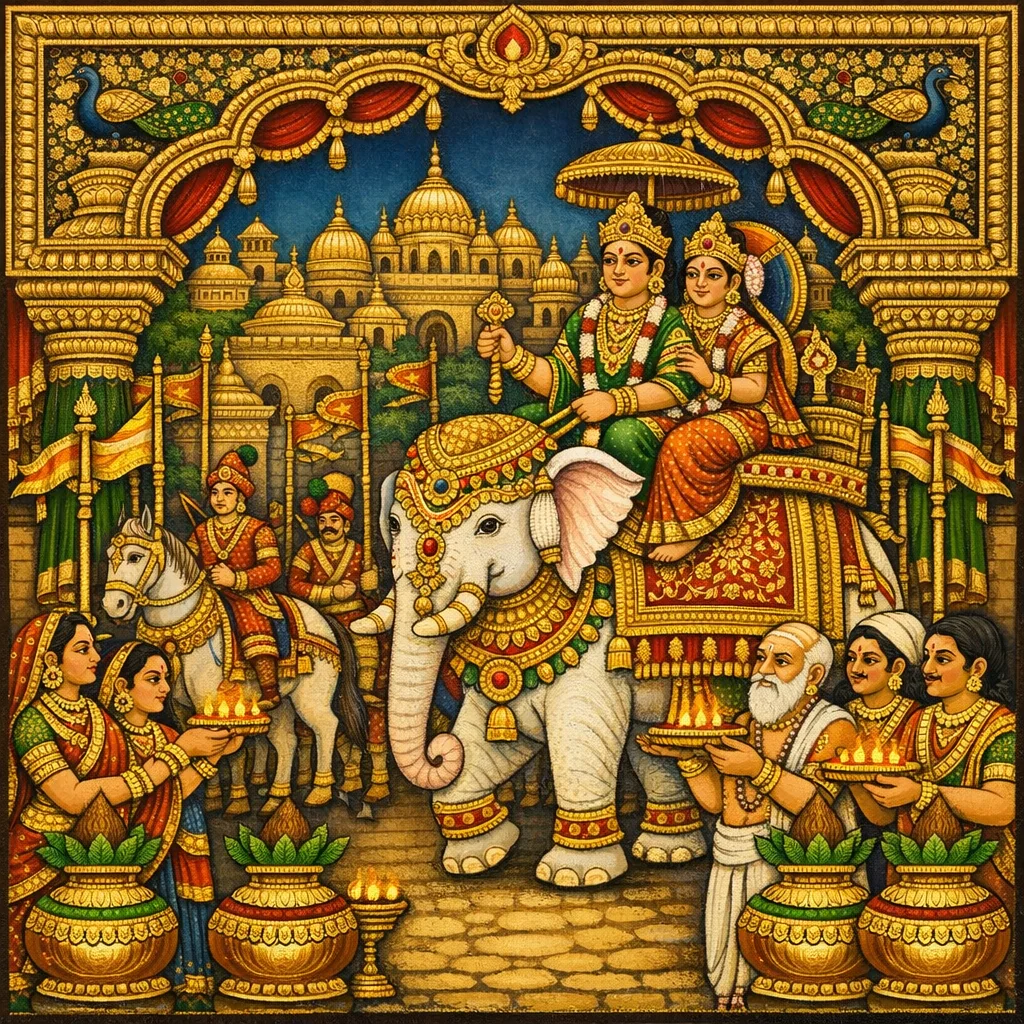
Framed as Jaimini’s narration, this chapter continues the Sagara-upākhyāna, showing Sagara fulfilling his vow through conquest, alliance, and a ritually sanctioned marriage. After taking leave of the sage Vasiṣṭha, Sagara marches with a great army to Vidarbha, where the king honors him and offers his incomparable daughter Keśinī. The marriage is solemnized at an auspicious time with the sacred fire (vahni) as witness. Hosted and gifted, Sagara then travels through allied lands—mentioning Śūrasena and the Yādavas of Mathurā—bringing other kings under tribute and agreement to consolidate his rule. He dismisses subordinate rulers to their own realms and gradually returns to Ayodhyā, welcomed by many peoples. The city prepares a festival reception: streets cleansed and sprinkled, full pots set out, banners and incense displayed, gates adorned, and households performing celebratory rites, portraying kingship as both political order and public sacrality.
Shlokas
Verse 1
इति श्रीब्रह्माण्डे महापुराणे वायुप्रोक्ते मध्यमभागे तृतीय उपोद्धातपादे सगरोपाख्याने सगरप्रतिज्ञापालनं नामाष्टाचत्वारिंशत्तमो ऽध्यायः // ४८// जैमिनिरुवाच अथानुज्ञाय सगरो वसिष्ठमृषिसत्तमम् / बलेन महता युक्तो विदर्भानभ्यवर्त्तत
Thus ends the forty-eighth chapter named 'The Fulfillment of Sagara's Vow' in the Sri Brahmanda Mahapurana. Jaimini said: Then, having received permission from Vasistha, the best of sages, Sagara marched towards Vidarbha accompanied by a great army.
Verse 2
ततो विदर्भराट् तस्मै स्वसुतां प्रीतिपूर्वकम् / केशिन्याख्यामनुपमामनुरूपां न्यवेदयत्
Then the king of Vidarbha, with heartfelt joy, offered him his own daughter—Keśinī by name—peerless and well-suited to him.
Verse 3
स तस्या राजशार्दूलो विधिवद्वह्निसाक्षिकम् / शुभे मुहूर्ते केशिन्याः पार्णिं जग्राह भूमिपः
That lord of the earth, a tiger among kings, duly took Keśinī’s hand in marriage at an auspicious hour, with the sacred fire as witness.
Verse 4
स्थित्वा दिनानि कतिचिद्गृहे तस्यातिसत्कृतः / विदर्भराज्ञा संमन्त्र्य ततो गन्तुं प्रजक्रमे
After staying a few days in his house, greatly honored, and consulting with the king of Vidarbha, he then set about to depart.
Verse 5
अनुज्ञातस्ततस्तेन पारिबर्हैश्च सत्कृतः / निष्क्रम्य तत्पुराद्राजा शूरसेनानुपेयिवान्
Then, granted leave by him and honored with gifts and bridal offerings, the king departed that city and set out toward the land of Śūrasena.
Verse 6
संभावितस्ततश्चैव यादवैर्मातृसोदरैः / धनौघैस्तर्पितस्तैश्च मधुराया विनिर्ययौ
There the Yādavas, his maternal kinsmen, honored him; and, satisfied by them with abundant wealth, he departed from Mathurā.
Verse 7
एवं स सगरो राजा विजित्य वसुधामिमाम् / करैश्च स नृपान्सर्वांश्चक्रे संकेतगानपि
Thus King Sagara, having conquered this whole earth, made all other kings pay tribute and set in place the tokens of their submission.
Verse 8
ततो ऽनुमान्य नृपतीन्निजराज्याय सानुगान् / अनुजज्ञे नरपतिः समस्ताननुयायिनः
Then, honoring the kings with their retinues, the lord of men granted them leave to return to their own realms and dismissed all his attendants.
Verse 9
ततो बलेन महाता स्कन्धावारसमन्वितः / शनैरपीडयन्देशान्स्वराज्यमुपजग्मिवान्
Thereafter, with a mighty host and its encampments, he pressed the lands along the way little by little and returned to his own kingdom.
Verse 10
संभाव्यमानश्च मुहुरुपदाभिरनेकशः / नानाजनपदैस्तूर्ममयोध्यां समुपागमत्
Honored again and again with many gifts, and accompanied by people from diverse provinces, he soon arrived in Ayodhya.
Verse 11
तदागमनमाज्ञाय नागरः सकलो जनः / नगरीं तामलञ्चक्रे महोत्सवसमुत्सुकः
When his coming was known, all the citizens, eager for a great festival, set about adorning the city.
Verse 12
ततः सा नगरी सर्वा कृतकौतुकमङ्गला / सिक्तसंमृष्टभूभागा पूर्णकुम्भशतावृता
Then the entire city was adorned with auspicious festive rites; the ground was sprinkled with water and cleansed, and it was encircled by hundreds of full ceremonial pots (pūrṇa-kumbhas).
Verse 13
समुच्छ्रितध्वजशता पताकाभिरंलकृता / सर्वत्रागरुधूपाञढ्या विचित्रकुसुमोज्ज्वला
It was adorned with hundreds of lofty banners and pennants; everywhere the fragrance of agaru incense abounded, and it shone with many-colored flowers.
Verse 14
सद्रत्नतोरणोत्तुङ्गगोपुराट्टलभूषिता / प्रसूनलाजवर्षैश्च स्वलङ्कृतमहापथा
It was adorned with splendid jeweled archways and lofty gopuras and towers; and its great roads were beautified by showers of flowers and laja (parched grain).
Verse 15
महोत्सवसमायुक्ता प्रतिगेहमभूत्पुरी / संबूजिताशेषवास्तुदेवतागृहमालिनी
Filled with a great festival, the city became festive in every house; and, with all the Vāstu deities worshiped in their dwellings, it shone like a garland of homes.
Verse 16
दिक्चक्रजयिनो राज्ञः संदर्शनमुदान्वितैः / पौरजानपदैर्त्दृष्टैः सर्वतः समलङ्कृता
Eager to behold the king who had conquered the circle of directions, townsfolk and countryfolk were seen everywhere; and the city was splendidly adorned on every side.
Verse 17
ततः प्रकृतयः सर्वे तथान्तः पुरवासिनः / वारकाताकदबैश्च नगरीभिश्च सवृताः
Then all the people and the dwellers of the inner palace, together with those from cities such as Vārakātākadaba, gathered and surrounded on every side.
Verse 18
अभ्याययुस्ततः सर्वे समत्य पुरवासिनः / स तैः समेत्य नृपतिर्लब्धाशीर्वाद सक्त्क्रियः
Then all the townspeople advanced together. The king met them, received their blessings, and was honored with due rites of welcome.
Verse 19
बधिरीकृतदिक्चक्रो जयशब्देन भूरिणा / नानावादित्रसंघोषमिश्रेण मधुरेण च
With the profuse cry of “jaya!”, the quarters seemed deafened; and there rose a sweet, blended roar of many kinds of instruments.
Verse 20
सत्कृत्य तान्यथा योगं सहितस्तैर्मुदान्वितैः / आनन्दयन्प्रजाः सर्वाः प्रविवेश पुरोत्तमम्
Honoring them as was fitting, and accompanied by those filled with joy, he entered the foremost city, gladdening all the people.
Verse 21
वेदघोषैः सुमधुरैर्ब्राह्मणैरभिनन्दितः / संस्तूयमानः सुभृशं सूतमागधवन्दिभिः
He was welcomed by brāhmaṇas with exquisitely sweet Vedic chants, and was lavishly praised by sūtas, māgadhas, and court bards.
Verse 22
जयशब्दैश्च परितो नानाजनपदेरितैः / कलतालरवोन्मिश्रवीणावेणुतलस्वनैः
All around rose cries of “Jaya!” voiced by people from many lands, mingled with the clatter of hand-cymbals and the sweet tones of vīṇā and veṇu-flute.
Verse 23
गायद्भिर्गायकजनैर्नृत्यद्भिर्गणिकाजनैः / अन्वीयमानो विलसच्छ्वेतच्छत्रविराजितः
Amid the singers’ hymns and the dancers’ graceful steps, he moved on attended, radiant beneath a gleaming white ceremonial parasol.
Verse 24
विकीर्यमाणः परितः सल्लाजकुसुमोत्करैः / पुरीमयोध्यामविशत्स्वपुरीमिव वासवः
As heaps of sallāja blossoms were scattered all around, he entered the city of Ayodhyā like Vāsava (Indra) entering his own Amarāvatī.
Verse 25
दृष्टिपूतेन गन्धेन ब्राह्मणानां च वर्त्मना / जगाम मध्येनगरं गृहं श्रीमदलङ्कृतम्
Amid fragrance as if purified by the very gaze, and along the path of the brāhmaṇas, he went to the splendid, auspiciously adorned house in the heart of the city.
Verse 26
अवरुह्य ततो यानाद्भार्याभ्यां सहितो मुदा / प्रविवेश गृहं मातुर्हृष्टपुष्टजनायुतम्
Then, alighting from his conveyance, joyfully with his two wives, he entered his mother’s house, filled with glad and thriving folk.
Verse 27
पर्यङ्कस्थामुपागम्य मातरं विनयान्वितः / तत्पादौ संस्पृशन्मूर्ध्ना प्रणाममकरोत्तदा
With humility he approached his mother seated upon the couch; touching her feet with his head, he then bowed in reverence.
Verse 28
साभिनन्द्य तमाशीर्भिर्हर्षगद्गदया गिरा / ससंभ्रमं समुत्थाय पर्यष्वजत चात्मजम्
She welcomed him with blessings; her voice trembling with joy, she rose in haste and embraced her son.
Verse 29
सहर्षं बहुधाशीर्भिरभ्यनन्ददुभे स्नुषे / स तां संभाव्य कथया तत्र स्थित्वा चिरादिव
With gladness he greeted both daughters-in-law with many blessings; then, honoring them with kindly speech, he remained there as though for a long while.
Verse 30
अनुज्ञातस्तया राजा निश्चक्राम तदालयात् / ततः सानुचरो राजा श्वेतव्यजनवीजितः
Granted leave by her, the king departed from that residence; then, attended by his retinue, he proceeded while white chāmaras fanned him.
Verse 31
सुरराज इव श्रीमान्सभां समगमच्छनैः / संप्रविश्य सभां दिव्यामनेकनृपसेविताम्
Glorious like Indra, king of the gods, he slowly approached the assembly; entering, he came into that divine hall attended by many kings.
Verse 32
नत्वा गुरुजनं सर्वमाशीर्भिश्चाभिनन्दितः / सिंहासने शुभे दिव्ये निषसाद नरेश्वरः
Having bowed to all the venerable elders and been greeted with their blessings, the lord of men sat upon the auspicious, divine lion-throne.
Verse 33
संसेव्यमानश्च नृपैर्नानाजनपदेश्वरैः / नानाविधाः कथाः कुर्वन्स तत्र नृपसत्तमः
Attended by kings, lords of many realms, that best of rulers there engaged in manifold conversations and tales.
Verse 34
संप्रीयमामः सुतरामुवास सह बन्धुभिः / प्रतिज्ञां पालयित्वैवं जितदिङ्मण्डलो नृपः
Greatly delighted, he dwelt with his kinsmen; thus, keeping his vow, the king became conqueror of the circle of all directions.
Verse 35
अन्वतिष्ठद्यन्थान्याय मर्थत्रयमुदारधीः / स्वप्रभावजिताशेषवैरिर्दिङ्मण्डलाधिपः
That magnanimous lord of the quarters, having subdued all foes by his own might, shunned injustice and upheld the three aims of life—Dharma, Artha, and Kama.
Verse 36
एकातपत्रां पृथिवीमन्वशासद्वृषो यथा / स्वर्यातस्य पितुः पूर्वं परिभावममर्षितः
He ruled the earth under a single royal canopy, like the bull that embodies Dharma; yet he could not endure the former insult done to his father who had gone to heaven.
Verse 37
स यां प्रतिज्ञामारूढस्तां सम्यक्परिपूर्य च / सप्तद्वीपाब्धिनगरग्रामायतनमालिनीम्
Having taken up that vow, he fulfilled it rightly, and he protected the earth—garlanded with the seven continents, the oceans, cities, villages, and sacred tirtha-abodes.
Verse 38
जित्वा शत्रूनशेषेण पालयामास मेदिनीम / एवं गच्छति काले च वसिष्ठो भगवानृषिः
Having conquered all enemies without remainder, he ruled and protected the earth. Thus, as time passed, the blessed sage Vasiṣṭha arrived.
Verse 39
अभ्यजगाम तं भूयो द्रष्टुकामो जरेश्वरम् / तमायान्तमतिप्रेक्ष्य मुनिवर्यं ससंभ्रमः
Once more he approached, longing to behold Jareśvara. Seeing that foremost of sages drawing near, the king was stirred with reverent haste.
Verse 40
प्रत्युज्जगामार्घहस्तः सहितस्तैर्नपैर्नृपः / अर्ध्यपाद्यादिभिः सम्यक्पूजयित्वा महामतिः
The king, accompanied by those rulers, went forth to welcome him, arghya in hand. That great-minded one duly honored him with arghya, pādya, and the other ritual offerings.
Verse 41
प्रणाममकरोत्तस्मै गुरुभक्तिसमन्वितः / आशीर्भिर्वर्द्धयित्वा तं वसिष्ठः सगरं तदा
Filled with devotion to his guru, he bowed in reverence to him. Then Vasiṣṭha blessed Sagara with benedictory words, causing him to flourish.
Verse 42
आस्यतामिति होवाच सह सर्वैर्नरेश्वरैः / उपाविशत्ततो राजा काञ्चने परमासने
Then, together with all the kings, he said, “Be seated.” Thereupon the king sat upon the supreme golden throne.
Verse 43
मुनिना समनुज्ञातः सभार्यः सह राजभिः / आपवस्तुनृपश्रेष्ठमुपासीनमुपह्वरे
With the sage’s permission, he—together with his wife and the other kings—approached the best of rulers, seated within the assembly hall.
Verse 44
उवाच शृण्वतां राज्ञां शनैर्मृद्वक्षरं वचः / वसिष्ठ उवाच कुशलं ननु ते राजन्वाह्येष्वाभ्यन्तरेषु च
As the kings listened, Vasiṣṭha spoke slowly in gentle words: “O King, are you well—both outwardly and within?”
Verse 45
मन्त्रिष्वमात्यवर्गेषु राज्ये वा सकले ऽधुना / दिष्ट्या च विजिताः सर्वे समग्रबलवाहनाः
Are your ministers and officials, and indeed the whole kingdom, in good order now? And by good fortune, have all enemies been conquered, with your forces and mounts fully arrayed?
Verse 46
अयत्नेनैव युद्धेषु भवता रिपवो हि यत् / दिष्ट्यारूढप्रतिज्ञेन मम मानयता वचः
This too is auspicious: in battles you subdued your foes with scarcely any effort, for you stood firm in your vow and honored my word.
Verse 47
अरयस्त्यक्तधर्माणस्त्वया जीवविसर्जिताः / तान्विजित्येतराञ्जेतुं पुनर्दिग्विजयेच्छया
The foes who had forsaken dharma were made to relinquish their lives by you. Having conquered them, and wishing to subdue the rest, you again desired a digvijaya—victory over all quarters.
Verse 48
गतस्सवाहनबलस्त्वमित्यशृणवं वचः / जितदिङ्मण्डलं भूयः श्रुत्वा त्वां नगरस्थितम्
I heard the report that you had set forth with your forces and mounts. Then I heard again that, having conquered the circle of the directions, you now abide in the city.
Verse 49
प्रीत्याहमागतो द्रष्टुमिदानीं राजसत्तम / जैमिनिरुवाच वसिष्ठेनैवमुक्तस्तु सगरस्तालजङ्घजित्
O best of kings, I have come now in affection to behold you. Jaimini said: thus addressed by Vasiṣṭha, Sagara—the conqueror of Tālajaṅgha—…
Verse 50
कृताञ्जलिपुटो भूत्वा प्रत्युवाच महामुनिम् / सगर उवाच कुशलं ननु सर्वत्र महर्षे नात्र संशयः
With palms joined, he replied to the great sage. Sagara said: “O maharṣi, all is well everywhere; of this there is no doubt.”
Verse 51
कल्याणाभिमुखाः सर्वे देवताश्च मुने ऽनिशम् / भवान्ध्यायति कल्याणं मनसा यस्य संततम्
O muni, all the devas are ever turned toward auspiciousness, for you continually contemplate kalyāṇa—holy well-being—in your mind without cease.
Verse 52
तस्य मे चोपसर्गाश्च संभवन्ति कथं मुने / भवतानुगृहीतो ऽस्मि कृतार्थश्चाधुना कृतः
O sage, how could such afflictions befall me? By your grace I am blessed; now I have become fulfilled and accomplished.
Verse 53
यन्मां द्रष्टुमिहायातः स्वयमेव भवान्गुरो / यन्मह्यमाह भगवान्विपक्षविजयादिकम्
O Guru, you yourself have come here to see me; and the Blessed Lord has spoken to me of victory over opposing foes and other matters.
Verse 54
तत्तथानुष्ठितं किं तु सर्वं भवदनुग्रहात् / भवत्प्रसादतः सर्वं मन्ये प्राप्तं महीक्षिताम्
All was carried out as it should be, yet everything was through your favor; O king, I deem that all has been attained by your gracious blessing.
Verse 55
अन्यथा मम का शक्तिः शत्रून्हन्तुं तथाविधान् / अनल्पी कुरुते फल्यं यन्मे व्यवसितं भवान्
Otherwise, what power had I to slay enemies of such a kind? The resolve you have ordained for me is no small thing; it yields abundant fruit.
Verse 56
फलमल्पमपि प्रीत्यै स्यादगस्याधिरोपितुः / जैमिनिरुवाच एवं संभावितः सम्यक्सगेरण महामुनिः
Even a small fruit brings joy to one who has upheld the exalted Agastya. Jaimini said: thus did Sagara duly honor the great sage.
Verse 57
अभ्यनुज्ञाय तं भूयः प्रजागाम निजाश्रमम् / वसिष्टे तु गते राजा सगरःप्रीतमानसः
Granting him leave once more, he returned to his own hermitage. When Vasiṣṭha had departed, King Sagara’s heart was filled with joy.
Verse 58
अयोध्यायामभिवसन्प्रशशासाखिलां भुवम् / भार्याभ्यां समुपेताभ्यां रूपशीलगुणादिभिः
Dwelling in Ayodhyā, he ruled the whole earth. At his side were his two queens, endowed with beauty, virtue, and noble qualities.
Verse 59
बुभुजे विषयान्रम्यान्यथाकामं यथासुखम् / सुमतिः केशिनी चोभे विकसद्वदनांबुजे
He enjoyed delightful pleasures as he wished and as he found ease. Sumati and Keśinī both shone with faces like lotuses in bloom.
Verse 60
रूपौदार्यगुणोपेते पीनवृत्तपयोधरे / नीलकुञ्चितकेशाढ्ये सर्वाभरणभूषिते
They were endowed with beauty, generosity of spirit, and virtues; with full, rounded breasts; rich in dark, curling hair, and adorned with every ornament.
Verse 61
सर्वलक्षणसंपन्ने नवयौवनगोचरे / प्रिये सन्निहिते तस्य नित्यं प्रियहिते रते
Perfect in every auspicious mark, they shone in the fresh radiance of youth. As his beloveds, they stayed ever near him, always devoted to what was dear and beneficial to him.
Verse 62
स्वाचारभावचेष्टाभिर्जह्रतुस्तन्मनो ऽनिशम् / स चापि भरणोत्कर्षप्रतीतात्मा महीपतिः
By their noble conduct, disposition, and deeds, his mind was continually captivated. And that lord of the earth, assured of his excellence in sustaining and protecting, became steadfast in heart.
Verse 63
रममाणो यथाकामं सह ताभ्यां पुरे ऽवसत् / अन्येषां भुवि राज्ञां तु राजशब्दो न चाप्यभूत्
Rejoicing as he wished together with the two, he dwelt in the city. For the other kings upon the earth, even the very title “king” seemed no longer to remain.
Verse 64
गुणेन चाभवत्तस्य सगरस्य महात्मनः / अल्पो ऽपि धर्मः सततं यथा भवति मानसे
Such was the virtue of the great-souled Sagara: even a little dharma ever remained steadily established within his mind.
Verse 65
रा५स्तस्यार्थकामौ तु न तथा विपुलावपि / अलुब्धमानसोर्ऽथं च भेजे धर्ममपीडयन्
For him, artha and kama, though abundant, were not of such weight; with a mind free from greed he pursued artha without oppressing dharma.
Verse 66
तदर्थमेव राजेन्द्र कामं चापीडयंस्तयोः
O Rajendra, for that very reason he did not suppress kama between the two, but kept it within proper measure.
Frequently Asked Questions
It strengthens Sagara’s dynastic legitimacy within the Solar lineage by recording a politically meaningful marriage alliance: the Vidarbha king gives his daughter Keśinī to Sagara in a ritually validated ceremony, a key node for later lineage continuity.
Vidarbha (marriage alliance), Śūrasena and the Yādavas (networks of kinship/alliance), Mathurā (departure point after honors), and Ayodhyā (capital return and civic festival), collectively mapping Sagara’s political circuit.
The marriage is explicitly performed according to rule and with Agni as witness at an auspicious muhūrta, while Sagara’s kingship is shown as dharmically ordered: conquest tempered by tribute, formal recognition of subordinate rulers, and public auspicious festivities upon return.