Adhyaya 35
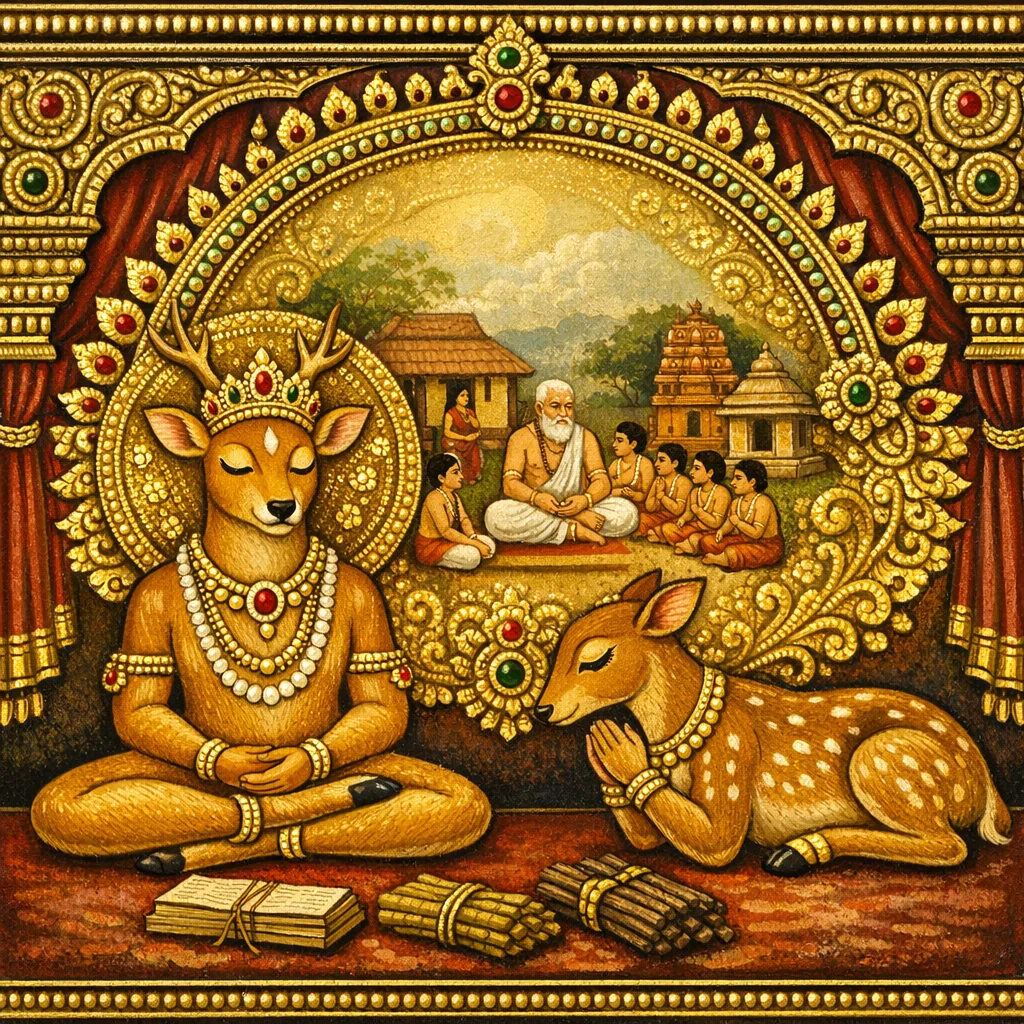
Mṛga–Mṛgī Saṃvāda: Karmakāraṇa and Pūrvajanma-kathana (The Deer and Doe Dialogue on Karma and Past Birth)
This chapter unfolds as an inquiry-driven dialogue, moving from praise of sacred narrative (satkathā) to a question of causality: how devotion-centered knowledge (bhakti) and compassion arise, and why two beings have gained an animal birth (tiryak). After hearing Bhārgava-related exploits, King Sagara asks the sage Vasiṣṭha for a fuller Nārāyaṇa-kathā that weaves past, present, and future. Vasiṣṭha agrees to tell a “great account” focused on a deer (mṛga). In the embedded tale, the doe (mṛgī) extols the deer’s awakened, supra-sensory insight and asks for the karmic cause that led both into animal embodiment. The deer begins recalling a former life: in Draviḍa-deśa he was born a brāhmaṇa of Kauśika gotra, son of Śivadatta, with three brothers (Rāma, Dhama, Pṛthu), and himself named Sūri. Their father initiates them and teaches the Vedas with auxiliaries and esoteric portions; the brothers devote themselves to study and guru-service, gathering forest materials each day. The chapter thus illustrates the microcosmic law of saṃsāra—karma leading to embodiment—underlying genealogical continuity and moral history.
Shlokas
Verse 1
इति श्रीब्रह्माण्डे महापुराणे वायुप्रोक्ते मध्यभागे तृतीय उपोद्धातपादे भार्गवचरिते चतुस्त्रिंशत्तमो ऽध्यायः // ३४// सगर उवाच मुने परमतत्त्वज्ञध्यानज्ञानार्थकोविद / भगवद्भक्तिसंलीनमानसानुग्रहः कुतः
Sagara said: O Sage, knower of the Supreme Truth, expert in the meaning of meditation and knowledge, whence comes the grace for a mind absorbed in devotion to the Lord?
Verse 2
त्वयापि हि महाभाग यतः शंससि सत्कथाः / श्रुत्वा मृगमुखात्सर्वं भार्गवस्य विचेष्टितम्
O greatly fortunate one, you too proclaim sacred tales, for from Mṛgamukha you have heard in full the deeds and exploits of Bhārgava.
Verse 3
भूतं भवद्भविष्यं च नारायणकथान्वितम् / पुनः प्रपच्छ किं नाथ तन्मे वद सविस्तरम्
Concerning past, present, and future, all bound to the sacred narrative of Nārāyaṇa—O Lord, I ask again: tell it to me in full detail.
Verse 4
वसिष्ठ उवाच शृणु राजन्प्रवक्ष्यामि मृगस्य चरितं महत् / यथा पृष्टं तया सो ऽस्यै वर्णयामास तत्त्ववित्
Vasiṣṭha said: “Listen, O King; I shall proclaim the great tale of the Deer. Just as she inquired, so did that knower of truth describe it to her.”
Verse 5
श्रुत्वा तु चरितं तस्य भार्गवस्य महात्मनः / भूयः प्रपच्छ तं कान्तं ज्ञानतत्त्वार्थमादरात्
Having heard the account of that great-souled Bhārgava, she respectfully questioned her beloved once more about the meaning of the truth of knowledge (jñāna-tattva).
Verse 6
मृग्युवाच साधुसाधु महाभाग कृतार्थस्त्वं न संशयः / यदस्य दर्शनात्ते ऽद्य जातं ज्ञानमतीद्रियम्
The doe said: “Well said, well said, O greatly fortunate one—you have truly attained your aim, without doubt; for by beholding him today, knowledge beyond the senses has arisen in you.”
Verse 7
अथातश्चात्मनः सर्वं ममापि वद कारणम् / कर्मणा येन संप्राप्तावावां तिर्यग्जनिं प्रभो
O Lord, now tell the full cause—mine and yours as well: by what karma did we both attain a tiryak birth, a birth among beasts?
Verse 8
इति वाक्यं समाकर्ण्य प्रियायाः स मृगः स्वयम् / वर्णयामास चरितं मृग्यश्चैवात्मनस्तदा
Hearing his beloved’s words, the deer himself then began to recount the tale of his own life and that of the doe.
Verse 9
मृग उवाच शृणु प्रिये महाभागे यथाऽवां मृगतां गतौ / संसारे ऽस्मिन्नमहाभागे भावो ऽस्य भवकारणम्
The deer said: “Listen, my beloved of great fortune, how we both came to deerhood. In this samsara, O blessed one, bhava—the inner disposition—is the cause of becoming.”
Verse 10
जीवस्य सदसभ्द्यां हि कर्मभ्यामागतः स्मृतिम् / पुरा द्रविडदेशे तु नानाऋद्धिसमाकुले
For the jiva, memory (smriti) arises from both kinds of karma—good and evil. Long ago, in the Dravida land, filled with many prosperities, (my remembrance awakened).
Verse 11
ब्राह्मणानां कुले वाहं जातः कौशिकगोत्रिणाम् / पिता मे शिवदत्तो ऽभून्नाम्ना शास्त्रविशारदः
I was born in a Brahmin family of the Kaushika gotra. My father was named Śivadatta, a master well-versed in the shastras.
Verse 12
तस्य पुत्रा वयं जाताश्चत्वारो द्विजसत्तमाः / ज्येष्ठो रामो ऽनुजस्तस्य धमस्तस्यानु जः पृथुः
We were born as his four sons, the finest among the twice-born. The eldest was Rama; his younger brother was Dhama; and Dhama’s younger brother was Prithu.
Verse 13
चतुर्थो ऽहं प्रिये जातो सूरिरित्यभिविश्रुतः / उपनीय क्रमात्सर्वाञ्छिवदत्तो महायशाः
I was the fourth, beloved, born renowned by the name Suri. The greatly illustrious Shivadatta, in due order, performed the upanayana for us all.
Verse 14
वेदानध्यापयामास सांगांश्च सरहस्यकान् / चत्वारो ऽपि वयं तत्र वेदाध्ययनतत्पराः
He taught us the Vedas, together with their limbs and their hidden mysteries. There, all four of us were wholly devoted to the study of the Veda.
Verse 15
गुरुशुश्रूषणे युक्ता जाता ज्ञानपरायणाः / गत्वारण्यं फलान्यंबुसमित्कुशमृदो ऽन्वहम्
Engaged in devoted service to the guru, we became steadfast in sacred knowledge. Day after day we went to the forest, bringing fruits, water, samit-fuel, kusha grass, and clay.
Verse 16
आनीय पित्रे दत्त्वाथ कुर्मो ऽध्ययनमेव हि / एकदा तु वयं सर्वे संप्राप्ता पर्वते वने
Having brought these and given them to our father, we devoted ourselves solely to study. Once, all of us came upon a forest on the mountain.
Verse 17
औद्भिदं नाम लोलक्षि कृतमालातटे स्थितम् / सर्वे स्नात्वा महानद्यामुषसि प्रीतमानसाः
O Lolākṣī, on the bank of the Kṛtamālā stood the sacred ford called Audbhida. At dawn they all bathed in that great river, their hearts filled with joy.
Verse 18
दत्तार्घाः कृतजप्याश्च समारूढा नागोत्तमम् / शालस्तमालैः प्रियकैः पनसैः कोविदारकैः
Having offered arghya and completed their japa, they all mounted the finest Nāga— the noble elephant. It was surrounded by śāla and tamāla trees, priyaka, panasa, and kovidāra.
Verse 19
सरलार्जुनपूगैश्च खर्जूरैर्नारिकेलकैः / जंबूभिः सहकारैश्च कट्फलैर्बृहतीद्रुमैः
There were sarala and arjuna trees, areca palms, date palms, and coconut trees; also jambū, sahakāra (mango), and katphala—great towering trees.
Verse 20
अन्यैर्नानाविधैर्वृक्षैः परार्थप्रतिपादकैः / स्निग्धच्छायैः समाहृष्टनानापक्षिनिनादितैः
There were many other kinds of trees as well, bestowing benefit upon others. Their shade was cool and gentle, and the place rang with the joyful calls of many birds.
Verse 21
शार्दूल हरिभिर्भल्लैर्गण्डकैर्मृगनाभिभिः / गचैन्द्रैः शारभाद्यैश्च सेवितं कन्दरागतैः
That region was inhabited by cave-dwelling beasts—tigers (śārdūla), lions (hari), bears (bhalla), rhinoceroses (gaṇḍaka), musk-deer (mṛganābhi), lordly elephants, and creatures such as the śārabha and more.
Verse 22
मल्लिकापाटलाकुन्दकर्णिकारकदंबकैः / सुगन्धिभिर्वृतं चान्यैर्वातोद्धूतपरगिभिः
That place was encircled by fragrant blossoms—mallikā, pāṭalā, kunda, karṇikāra, and kadamba—along with other flowers whose pollen was lifted and scattered by the wind.
Verse 23
नानामणिगणाकीर्णैर्नीलपीतसितारुणैः / शृङ्गैः समुल्लिखन्तं च व्योम कौतुकसं युतम्
Its horns, studded with clusters of many gems—blue, yellow, white, and crimson—seemed to score the very sky; the sight was filled with wondrous delight.
Verse 24
अत्युच्चपातध्वनिभिर्निर्झरैः कन्दरोद्गतैः / गर्ज्जतमिव संसक्तं व्यालाद्यैर्मृगपक्षिभिः
With the thunder of waterfalls plunging from great heights and streaming out of caverns, the place seemed to roar, teeming with serpents and other beasts, with deer and birds.
Verse 25
तत्रातिकौतुकाहृष्टदृष्टयोभ्रातरो वयम् / नास्मार्ष्म चात्मनात्मानं वियुक्ताश्च परस्परम्
There we brothers, our eyes gladdened by overwhelming wonder, forgot even ourselves and became separated from one another.
Verse 26
एतस्मिन्नन्तरे चैका मृगी ह्यगात्पिपासिता / निर्झरापात शिरसि पातुकामा जलं प्रिये
Just then, my beloved, a thirsty doe came to the head of the waterfall, longing to drink the water.
Verse 27
तस्याः पिबन्त्यास्तु जलं शार्दूलो ऽतिभयङ्करः / तत्र प्राप्तो यदृच्छातो जगृहे तां भयर्दिताम्
As she was drinking water, a most dreadful tiger came there by chance and seized her, stricken with fear.
Verse 28
अहं तद्ग्रहणं पश्यन्भयेन प्रपलायितः / अत्युच्चवत्त्वात्पतितो मृतश्चैणीमनुस्मरन्
Seeing her being seized, I fled in terror; falling from a great height, I died while still remembering that doe.
Verse 29
सा मृता त्वं मृगी जाता मृग स्त्वाहमनुस्मरन् / जातो भद्रे न जाने वै क्व गाता भ्रातरो ऽग्रजाः
She died; you were born as a doe, and I—remembering you—was born as a stag. O gentle one, I do not know where the elder brothers have gone.
Verse 30
एतन्मे स्मृतिमापन्नं चरितं तव चात्मतः / भूतं भविष्यं च तथा शृणु भद्रे वदाम्यहम्
This tale—yours and mine—has returned to my memory; O gentle one, listen also to what was and what shall be, as I now speak.
Verse 31
यो ऽयं वा वृष्ठसंलग्नो व्याधो दूरस्थितो ऽभवत् / रामस्यास्य भयात्सो ऽपि भक्षितो हरिणा धुना
That hunter, drenched by rain and standing far off, has also—out of fear of this Rama—now been devoured by a deer.
Verse 32
प्राणांस्त्यक्त्वा विधानेन स्वर्गलोकं गमिष्यति / अवाभ्यां तु जलं पीतं मध्यमे पुष्करे त्विह
Having relinquished life according to the prescribed rite, he will go to the heavenly world. Here, in the middle Pushkara, we two have drunk the water.
Verse 33
संदृष्टो भार्गवश्चायं साक्षाद्विष्णुस्वरूपधृक् / तेनानेकभवोत्पन्नं पातकं नाशमागतम्
This Bhārgava was beheld as one who bears the very form of Vishnu. By his darśana, the sin born of many lives was brought to destruction.
Verse 34
अगस्त्यदर्शनं लब्ध्वा श्रुत्वा स्तोत्रं गतिप्रदम् / गमिष्यावः शुभांल्लोकान्येषु गत्वा न शोचति
Having gained the darśana of Agastya and heard the stotra that grants the path, we shall go to auspicious worlds—where, having gone, one does not grieve.
Verse 35
इत्येवमुक्त्वा स मृगः प्रियायै प्रियदर्शनः / विरराम प्रसन्नात्मा पश्यन्राममना तुरः
Having spoken thus, the fair-seeming deer addressed his beloved. With a tranquil heart he fell silent, gazing upon Rāma with eager longing.
Verse 36
भर्गवः श्रुतवांश्चैव मृगोक्तं शिष्यसंयुतः / विस्मितो ऽभूच्च राजेन्द्र गन्तुं कृतमतिस्तथा
O king, Bhārgava, accompanied by his disciples, heard the deer’s words and was filled with wonder; then he too resolved to depart.
Verse 37
अकृतव्रमसंयुक्तो ह्यगस्त्यस्याश्रमं प्रति / स्नात्वा नित्यक्रियां कृत्वा प्रतस्थे हर्षितो भृशम्
Endowed with sacred vows and disciplines, he set out toward the hermitage of Sage Agastya. Having bathed and performed his daily rites, he departed in great delight.
Verse 38
रामेण गच्छता मार्गे दृष्टो व्याधो मृतस्तदा / सिंहस्य संप्रहारेम विस्मितेन महात्मना
As Rama proceeded along the path, he then saw a hunter lying dead, slain by the blow of a lion; the great-souled one was astonished.
Verse 39
अध्यर्द्धयोजनं गत्वा कनिष्ठं पुष्करं प्रति / स्नात्वा माध्याह्निकीं सन्ध्यां चका रातिमुदान्वितः
Having gone a yojana and a half, he reached the lesser Pushkara. There he bathed, performed the midday sandhyā, and became filled with joy.
Verse 40
हितं तदात्मनः प्रोक्तं मृगेण स विचारयन् / तावत्तत्पृष्ठसंलग्नं मृगयुग्ममुपागतम्
As he pondered the words spoken by the deer for his own good, just then a pair of deer approached, as though clinging close behind his back.
Verse 41
पुष्करे तु जलं पीत्वाभिषिच्यात्मतनुं जलैः / पश्यतो भार्गवस्यागादगस्त्याश्रमसंमुखम्
At Pushkara he drank the water and sprinkled his own body with it as an abhiṣeka; as Bhārgava looked on, he went forth toward the hermitage of Agastya.
Verse 42
रामो ऽपि सन्ध्यां निर्वर्त्त्य कुंभजस्याश्रमं ययौ / विपद्गतं पुष्करं तु पश्यमानो महामनाः
Rama too, having completed the sandhyā rite, went to the hermitage of Kumbhaja (Agastya). Great-souled, he beheld Pushkara fallen into distress.
Verse 43
विष्णोः पदानि नागानां कुण्डं सप्तर्षिसंस्थितम् / गत्वोपस्पृश्य शुच्यंभो जगामागस्त्यसंश्रयम्
He went to the Footprints of Vishnu and to the Nāgas’ sacred pool where the Seven Ṛṣis abided. Touching the pure water in purification, he proceeded to Agastya’s refuge.
Verse 44
यच्च ब्रह्मसुता राजन्समायाता सरस्वती / त्रीन्संपूरयितुं कुण्डानग्निहोत्रस्य वै विधेः
And, O king, Sarasvati, daughter of Brahma, came there as well, to fill the three fire-pits in accordance with the ordinance of the agnihotra rite.
Verse 45
तत्र तीरे शुभं पुण्यं नानामुनिनिषेवितम् / ददर्श महदाश्चर्यं भार्गवः कुंभजाश्रमम्
There on the bank was an auspicious, holy place, frequented by many sages. Bhārgava beheld a great marvel—the hermitage of Kumbhaja.
Verse 46
मृगैः सिंहैः सहगतैः सेवितं शान्तमानसैः / कुटरैरर्जुनैर्निंबैः पारिभद्रधवेगुदैः
That hermitage was graced by deer and lions dwelling together with tranquil hearts, and was encircled by kutara, arjuna, nimba, pāribhadrā, dhava, and gūda trees.
Verse 47
खदिरासनखर्जूरैः संकुलं बदरीद्रुमैः / तत्र प्रविश्य वै रामो ह्यकृतव्रणसंयुतः
Into that thicket of khadira, āsana, date-palms, and badarī trees, Rāma—unwounded—entered.
Verse 48
ददर्श मुनिमासीनं कुम्भजं शान्तमानसम् / स्तिमितोदसरः प्रख्यं ध्यायन्तं ब्रह्म शाश्वतम्
There he beheld the sage Kumbhaja seated—his mind serene, like a still lake—meditating upon the eternal Brahman.
Verse 49
कौश्यां वृष्यां मार्गकृत्तिं वसानं पल्लवोटजे / ननाम च महाराज स्वाभिधानं समुच्चरन्
In a leaf-built hut he wore kauśeya cloth and a deer-skin; then, O great king, Rāma bowed, uttering his own name.
Verse 50
रामो ऽस्मि जामदग्न्यो ऽहं भवन्तं द्रष्टुमागतः / ताद्विद्धि प्रणिपातेन नमस्ते लोकभावन
I am Rāma, the son of Jamadagni; I have come to behold you. Know this by my prostration—O sustainer of the worlds, salutations to you.
Verse 51
इत्युक्तवन्तं रामं तु उन्मील्य नयने शनैः / दृष्ट्वा स्वागतमुच्चार्य तस्मायासनमादिशत्
When Rāma had spoken thus, the sage slowly opened his eyes; seeing him, he uttered “Welcome,” and directed a seat for him.
Verse 52
मधुपर्कं समानीय शिष्येण मुनिपुङ्गवः / ददौ पप्रच्छ कुशलं तपसश्च कुलस्य च
Having his disciple bring the madhuparka, the foremost of sages offered it, and then asked after the welfare of his austerities and his lineage.
Verse 53
स पृष्टस्तेन वै रामो घटोद्भवमुवाच ह / भवत्संदर्शनादीश कुशलं मम सर्वतः
Asked thus, Rama said to Ghaṭodbhava: “O Lord, by the grace of your darśana, I am well in every way.”
Verse 54
किं त्वङ्कं संशयं जातं छिन्धि स्ववचनामृतैः / मृगश्चैको मया दृष्टो मध्यमे पुष्करे विभो
What doubt has arisen in you? Sever it with the nectar of your words. O mighty one, in the middle Puṣkara I saw a single deer.
Verse 55
तेनोक्तमखिलं वृत्तं मम भूतमनागतम् / तच्छूत्वा विस्मयाविष्टो भवच्छरणमागतः
He told me in full all that has been and all that is yet to come in my life. Hearing it, overwhelmed with wonder, I have come to seek refuge in you.
Verse 56
पाहि मां कृपया नाथ साधयन्त महामनुम् / शिवेन दत्तं कवच मम साधयतो गुरो
O Lord, in compassion protect me—I am engaged in the sādhana of the great mantra. O Guru, may the kavaca bestowed by Śiva guard me as I practice.
Verse 57
कृष्मस्य समतीत तु साधिकं हि शरच्छतम् / न च सिद्धिमवाप्तो ऽहं तन्मे त्वं कृपया वद
After the kṛṣma season passed, more than a hundred autumns have gone by, yet I have not attained siddhi; therefore, out of compassion, tell me the reason.
Verse 58
वसिष्ठ उवाच एवं प्रश्नं समाकर्ण्य रामस्य सुमहात्मनः / क्षणं ध्यात्वा महाराज मृगोक्तं ज्ञातवान् हृदा
Vasiṣṭha said: Hearing this question of the great-souled Rāma, O mighty king, he reflected for a moment and knew in his heart what the deer had spoken.
Verse 59
मृगं चापि समायातं मृग्या सह निजाश्रमे / श्रोतुं कृष्णामृतं स्तोत्रं सर्वं तत्कारण मुनिः / विचार्याश्वासयामास भार्गवः स्ववचोमृतैः
The deer too came to his own āśrama with the doe, to hear the hymn called “Kṛṣṇāmṛta.” The sage considered the whole cause, and Bhārgava comforted him with the nectar of his words.
Frequently Asked Questions
The embedded past-life account supplies gotra and family-line anchors: a brāhmaṇa birth in Kauśika-gotra, son of Śivadatta, with named siblings (Rāma, Dhama, Pṛthu) and the narrator identified as Sūri—serving as micro-genealogy within a karmic explanation.
Karma governs embodiment: the chapter explicitly frames animal birth (tiryag-janma) as a result of prior actions, while also showing how smṛti (memory) and jñāna (knowledge) can arise within saṃsāra through satsanga/satkathā and devotion-oriented disposition.
No. The sampled content is not from Lalitopakhyana; it is a karmic-past-life narrative framed by Sagara and Vasiṣṭha. Any Shākta Vidyā/Yantra discussions belong to later, distinct sections and are not indicated by the speakers, motifs, or entities present here.