Adhyaya 15
Aśauca-vidhi (Rules of Impurity) within Śrāddha-kalpa — Chapter on Testing/Selecting Brahmanas and Honoring the Atithi
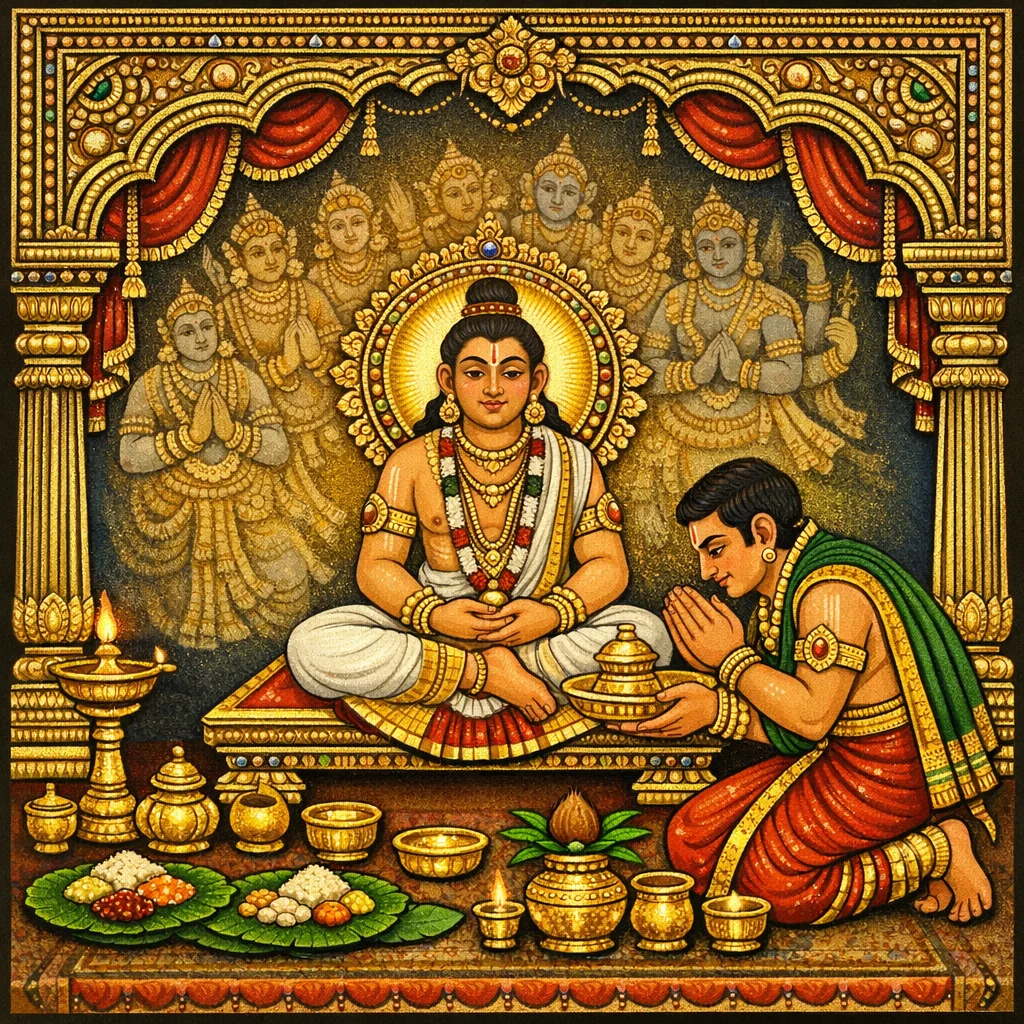
The sages address Sūta, praising the śrāddha-kalpa already taught and asking for fuller, authoritative guidance on śrāddha. Sūta agrees and, having given the main rite, now adds the “pariśiṣṭa” (supplement): standards and cautions for examining and selecting Brahmanas (brahmaṇānāṃ parīkṣaṇam) and for righteous conduct toward the guest (atithi). One should avoid employing a person in whom faults are seen, yet one must not over-scrutinize an unknown dvija at śrāddha, for siddhas may wander the earth in Brahmana form. Therefore the proper rule is steadfast hospitality: greet the arriving atithi with folded hands and honor him with arghya/pādya, anointing, and food. Devas and yogeśvaras are said to move in many forms to lead beings into dharma; honoring guests yields fruits equal to great sacrifices (agniṣṭoma, etc.), while slighting an atithi at śrāddha brings divine rejection. Devas and pitṛs enter the Brahmana as a vehicle of grace—unhonored he “burns,” honored he grants desires—hence constant reverence to the atithi is enjoined.
Shlokas
Verse 1
इति श्रीब्रह्माण्डे महापुराणे वायुप्रोक्ते मध्यभागे तृतीय उपोद्धातपादे श्राद्धकल्पे ऽशौचविधिर्नाम चतुर्दशो ऽध्योयः // १४// ऋषय ऊचुः अहो धन्यस्त्वया सूत श्राद्धकल्पः प्रकीर्तितः / श्रुता नः श्राद्धकल्पास्तु ऋषिभिर्ये प्रकीर्त्तिताः
Thus, in the Śrī Brahmāṇḍa Mahāpurāṇa, in the middle section spoken by Vāyu, in the third introductory pāda, within the Śrāddha-kalpa, is the fourteenth chapter called “The Rite of Aśauca.” The ṛṣis said: “O Sūta, blessed are you, for you have proclaimed the Śrāddha-kalpa; we have also heard the Śrāddha-kalpas declared by the sages.”
Verse 2
अतीव विस्तरो ह्यस्य विशेषेण तु कीर्त्तितः / देवाशेषं महाप्राज्ञ ऋषेस्तस्य मतं यथा
This has indeed been set forth in great detail, and with special emphasis; O most wise one, relate that sage’s view exactly as it is, together with what remains concerning the gods.
Verse 3
सूत उवाच कीर्त्तयिष्यामि वो विप्रा ऋषेस्तस्य मतं तु यत् / श्राद्धं प्रति महाभागस्तन्मे श्रुणुत विस्तरात्
Sūta said: “O vipras, I shall proclaim the view of that sage; concerning Śrāddha, O fortunate ones, listen to me as I set it forth in full detail.”
Verse 4
उक्तं श्राद्धंमया पूर्वं विधिश्च श्राद्धकर्मणि / परिशिष्टं प्रवक्ष्यामि ब्रह्मणानां परिक्षणम्
Earlier I have spoken of the Śrāddha and the rite prescribed for the Śrāddha act. Now I shall declare what remains: the examination of the brāhmaṇas.
Verse 5
न मीमांस्याः सदा विप्राः पवित्रंह्येतदुत्तमम् / दैवे पित्र्ये च नियतं श्रूयते वै परीक्षणम्
O vipras, do not ever be lost in mīmāṃsā disputation; this is the highest and most purifying rule. In offerings to the gods and to the Fathers, examination is indeed heard of as obligatory.
Verse 6
यस्मिन्दोषाः प्रदृश्येरम्स हि कार्येषु वर्जितः / जानीयाद्वापि संवासाद्वर्जयेत्तं प्रयत्नतः
He in whom faults are seen is to be excluded from sacred duties. Even through close association one may know him; therefore avoid him with earnest effort.
Verse 7
अविज्ञातं द्विजं श्राद्धे न परीक्षेत पण्डितः / सिद्धा हि विप्ररूपेण चरन्ति पृथिवीमिमाम्
In the Śrāddha, a learned man should not test an unknown dvija; for the siddhas roam this earth in the very guise of vipras.
Verse 8
तस्मादतिथिमायान्तमभिगच्छेत्कृताञ्जलिः / पूजयेच्चार्घ्यपाद्याभ्यां तथाभ्यञ्जनभोजनैः
Therefore, when a guest arrives, one should go forth with joined palms. One should honor him with arghya and water for the feet, and also with anointing and food.
Verse 9
उर्वी सागरपर्यन्तां देवा योगेश्वरः सदा / नानारूपैश्चरन्त्येते प्रजा धर्मेण योजयन्
Across the earth that reaches to the ocean, the Devas—the Yogeshvara—ever move in many forms, guiding the people to be joined with Dharma.
Verse 10
तस्माद्दद्यात्सदा दान्तः समभ्यार्च्यातिथिं नरः / व्यञ्जनानि तु वक्ष्यामि फलं तेषां तथैव च
Therefore, a self-restrained man should always give in charity and duly worship the guest. Now I shall speak of the dishes, and likewise of their fruits.
Verse 11
अग्निष्टोमं पयसा प्राप्नुयाद्वै फलं तथोक्थस्य च पायसेन / सषोडशी सत्रफलं घृतेन मध्वातिरात्रस्य फलं तथैव
With milk one attains the fruit of the Agniṣṭoma; with sweet milk-rice (pāyasa), the fruit of the Ukthya. With ghee comes the fruit of the Ṣoḍaśī and the Sattra; with honey, likewise, the fruit of the Atirātra.
Verse 12
तथाप्नुयाच्छ्रद्दधा नो नरो वै सर्वैः कामैर्भोजयेद्यस्तु विप्रान् / सर्वार्थदं सर्वविप्रातिथेयं फलं च भुङ्क्ते सर्वमेधस्य नित्यम्
Likewise, the man of steadfast śraddhā who feeds the vipras with every desired offering attains that very reward: the fruit that grants all aims, the fruit of honoring every brahmin-guest, and ever the fruit of the Sarvamedha sacrifice.
Verse 13
यस्तु श्राद्धे ऽतिथिं प्राप्तं दैवे चाप्यवमन्यते / तं वै देवा निरस्यन्ति हतो यद्वत्परावसुः
But he who, at a śrāddha, scorns the guest who has arrived, and even in rites for the Devas shows contempt—him the Devas cast away; he perishes like Parāvasu.
Verse 14
देवाश्च पितरश्चैव तेमेवान्तर्हिता द्विजम् / आविश्य विप्रं मोक्ष्यन्ति लोकानुग्रहकारणात्
O twice-born one, the Devas and the Pitṛs, though unseen, enter that brāhmaṇa and, for the welfare of the world, grant him liberation.
Verse 15
अपूजितो दहत्येष दिशेत्कामांश्च पूजितः / सर्वस्वेनापि तस्माद्धि पूजयेदतिथिं सदा
If the sacred guest is not honored, he burns; if honored, he grants one’s desires. Therefore, even with all one has, one should always worship the atithi.
Verse 16
वानप्रस्थो गृहस्थश्च सतामभ्यागतो यथा / वालखिल्यो यतिश्चैव विज्ञेयो ह्यतिथिः सदा
A vānaprastha or a householder who comes to the dwelling of the virtuous, and likewise a vālakhilya and a yati—each should always be known as an atithi.
Verse 17
अभ्यागतः पाकचारदतिथिः स्यादपावकः / अतिथेरतिथिः प्रोक्तः सो ऽतिथिर्योग उच्यते
A guest who arrives at the time of the meal is called ‘apāvaka’; and the guest of a guest is declared to be the atithi known as ‘yoga’.
Verse 18
नाव्रती न च संकीर्णो नाविद्यो नाविशेषवित् / न च संतानसंबद्धो न देवी नागसे ऽतिथिः
An atithi is not one without vows, nor one of tainted conduct; not the ignorant, nor one who knows no proper distinctions; not a kinsman of one’s own lineage, not a goddess, and not a sinner—such is not called an atithi.
Verse 19
पिपासिताय श्रान्ताय भ्रान्तायातिबुभुक्षते / तस्मै सत्कृत्य दातव्यं यज्ञम्य फलमिच्छता
To one who is thirsty, weary, bewildered, and exceedingly hungry, the seeker of yajña’s fruit should give a gift with due honor.
Verse 20
न वक्तव्यं सदा विप्र क्षुधिते नास्ति किञ्चन / तस्मै सत्कृत्य दातव्यं सदापचितिरेव सः
O vipra, do not always tell the hungry, “There is nothing.” Honor him and give—this alone is enduring reverence.
Verse 21
अक्लिष्ट मव्रणं युक्तं कृशवृत्तिमयाचकम् / एकान्तशीलं धीमन्तं सदा श्राद्धेषु भोजयेत्
One who is untroubled, uninjured, disciplined, living on little, not begging, fond of solitude, and wise—such a one should always be fed at śrāddha rites.
Verse 22
नो ददामि तमित्येवं ब्रूयाद्यो वै दुरात्मवान् / अपि जातिशतं गत्वा न स मुच्येत किल्बिषात्
The wicked-hearted who says, “I will not give,” even after a hundred births is not freed from sin.
Verse 23
समोदं भोजयेद्विप्रानेकपङ्क्त्यां तु यो नरः / नियुक्तो ह्यनि युक्तो वा पङ्क्त्या हरति किल्बिषम्
Whoever joyfully feeds the vipras in many rows—whether appointed or not—by that row-feast removes sin.
Verse 24
पाप्मानं गृह्यते क्षिप्रमिष्टापूर्त्तं च नश्यति / यतिस्तु सर्वविप्राणां सर्वेषामग्रतो भवेत्
Sin swiftly takes hold, and the merit of iṣṭa‑pūrta (sacrifices and pious gifts) is lost; but the yati (renunciant) stands foremost among all vipras (brahmins).
Verse 25
पञ्च वेदान्सेतिहासान्यः पठेद्द्विजसत्तमः / योगादनन्तरं सो ऽथ नियोक्तव्यो विजानता
The foremost dvija who recites the five Vedas together with the Itihāsas—after the practice of yoga, he should be appointed by the wise to the proper duty.
Verse 26
त्रिवेदो ऽनन्तरं तस्य द्विवेदस्तदनन्तरम् / एकवेदस्ततः पश्चादुपाध्यायस्ततः परम्
After him comes the knower of three Vedas, then the knower of two Vedas; then the knower of one Veda; and beyond them, the upādhyāya (teaching preceptor)—in due order.
Verse 27
पावना ये ऽत्र संख्यातास्तान्प्रवक्ष्ये निबोधत / य एते पूर्वनिर्द्दिष्टाः सर्वे ते ह्यनुपूर्वशः
Those who are reckoned here as purifiers, I shall now declare—listen well; all those previously indicated are indeed in successive order.
Verse 28
षडङ्गविद्ध्यानयोगौ सर्वतत्रस्तथैव च / यायावरश्च पञ्चैते विज्ञेयाः पङ्क्तिपावनाः
The knower of the ṣaḍaṅgas, the practitioner of dhyāna‑yoga, the adept in all tantras, and the yāyāvara—these five are to be known as paṅkti‑pāvana, purifiers of the sacred row.
Verse 29
श्राद्धकल्पे भवेद्यस्तु सन्निपत्य तु पावनः / चतुर्दशानां विद्यानामेकस्यामपि पारगाः
In the rite of śrāddha, one who assembles and becomes purifying should be accomplished in at least one of the fourteen sacred sciences.
Verse 30
यथावद्वर्त्तमानाश्च सर्वे ते पङ्क्तिपावनाः / असंदेहस्तु सौपर्णाः पञ्चाग्नेयाश्च सामगाः
All who conduct themselves according to rule are purifiers of the ritual row; without doubt they are Sauparṇas, established in the five-fire observance, and chanters of the Sāma.
Verse 31
यश्चरेद्विधिवद्विप्र समा द्वादश संततः / त्रिनाचिकेतस्त्रै विद्यो यश्च धर्मान्द्विजः पठेत्
O vipra, one who practices continuously for twelve years according to the ordinance is called trināciketa and traividya; and so too is the twice-born who recites the dharmas.
Verse 32
बार्हस्पत्ये महाशास्त्रे यश्च पारङ्गतो द्विजः / सर्वे ते पावना विप्राः पङ्क्तीनां समुदात्दृताः
The twice-born who is well-versed in the great Bārhaspatya śāstra—all such vipras are purifying and are to be received with honor in the ritual rows.
Verse 33
आमन्त्रितस्तु यः श्राद्धे योषितं सेवते द्विजः / पितरस्तस्य तन्मासं तस्मिन्रितसि शेरते
If a dvija, though invited to a śrāddha, indulges in union with a woman, his pitṛs lie prostrate for that whole month in that season.
Verse 34
ध्याननिष्ठाय दातव्यं सानुक्रोशाय धीमते / यतिं वा वालखिल्यं वा भोजयेच्छ्राद्दकर्मणि
One should give alms to the wise who are steadfast in meditation and endowed with compassion; in the rite of śrāddha, one should feed a yati or a Vālakhilya sage.
Verse 35
वानप्रस्थाय कुर्वाणः पूजामात्रेण तुष्यते / गृहस्थं भोजयेद्यस्तु विश्वेदेवास्तु पूजिताः
A vānaprastha is satisfied by mere worship; but whoever feeds a householder thereby worships the Viśvedevas as well.
Verse 36
वानप्रस्थेन ऋषयो वालखिल्यैः पुरन्दरः / यतीनां तु कृता पूजा साक्षाद्ब्रह्मा तुं पूजितः
By honoring a vānaprastha, the ṛṣis are honored; by honoring the Vālakhilyas, Purandara (Indra) is honored; and by worshiping the yatis, Brahmā himself is worshiped directly.
Verse 37
आश्रमो ऽपावनो यस्तु पञ्चमस्संकरात्मकः / चत्वारस्त्वाश्रमाः पूच्याः श्राद्धे देवे तथैव च
The fifth āśrama, of mixed and confused nature, is impure; in śrāddha and in worship of the gods, only the four āśramas are to be revered.
Verse 38
चतुराश्रमबाह्येभ्य स्तेभ्यः श्राद्धे न दापयेत् / यस्तिष्ठेद्वायुभक्षश्च चातुराश्रमबाह्यतः
In śrāddha one should not give offerings to those outside the four āśramas; even one who lives as a ‘feeder on air’ (vāyubhakṣa), if outside the cāturāśrama, should not be given.
Verse 39
अनाश्रमीतपस्तेपे न तं तत्र निमन्त्रयेत् / अयतिर्मोक्षवादी च श्रुतौ तौ पङ्क्तिदूषकौ
One who performs penance without belonging to an Ashrama should not be invited. He who speaks of Moksha without self-control is declared in the scriptures to be a defiler of the row.
Verse 40
उग्रेण तपसा युक्ता बहुज्ञाश्चित्रवादिनः / निन्दन्ति च द्विजातिभ्यः सर्वे ते पङ्क्तिदूषकाः
Those engaged in terrible penances, those who speak strangely despite possessing much knowledge, and those who revile the twice-born—all these are defilers of the row.
Verse 41
औपवस्तास्तथा सांख्या नास्तिका वेदनिन्दकाः / ध्यानं निन्दन्ति ये केचित्सर्वे ते पङ्क्तिदूषकाः
Those who fast hypocritically, the Sankhyas, atheists, revilers of the Vedas, and those who criticize meditation—all these are defilers of the row.
Verse 42
वृथा मुण्डाश्च जटिलाः सर्वे कार्पटिकास्तथा / निर्घृणान्भिन्नवृत्तांश्च सर्वभक्षांश्च वर्जयेत्
One should avoid those who shave their heads or wear matted hair in vain, those wearing rags for show, the cruel, those of bad conduct, and those who eat indiscriminately.
Verse 43
कारुकादीननाचारांल्लोकवेदबहिष्कृतान् / गाय नान्वेदवृत्तांश्च हव्यकव्ये न भोजयेत्
Artisans, those of bad conduct, those ostracized from society and the Vedas, and professional singers—one should not feed them in rites for gods or ancestors.
Verse 44
एतैस्तु वर्त्तयेद्यस्तु कृष्णवर्णं स गच्छति / यो ऽश्नाति सह शूद्रेणा सर्वे ते पङ्क्तिदूषणाः
He who lives by these practices goes to the state called kṛṣṇa-varṇa. Whoever eats together with a Śūdra—all such are declared defilers of the sacred dining line.
Verse 45
व्याकर्षणं सत्त्वनिबर्हणं च कृषिर्वणिज्या पशुपालनं च / शुश्रूषणं चाप्यगुरोररेर्वाप्यकार्यमेतद्धि सदा द्विजानाम्
Ploughing, the destruction of living beings, farming, trade, and herding; and likewise service to a teacher and any unworthy act even for an enemy—these are ever declared improper for the dvija.
Verse 46
मिथ्यासंकल्पिनः सर्वानुद्वृत्तांश्च विवर्जयेत् / मिथ्याप्रवादी निन्दाकृत्तथा सूचकदांभिकौ
One should shun all who harbor false intentions and those who are insolently wayward; likewise the liar, the slanderer, the informer, and the hypocritical pretender.
Verse 47
उपपातकसंयुक्ताः पातकैश्च विशेषतः / वेदे नियोगदातारो लोभमोहफलर्थिनः
Those tainted with subsidiary sins (upapātaka) and, all the more, with grave transgressions; who pose as givers of Vedic ‘niyoga’, seeking reward through greed and delusion.
Verse 48
ब्रह्मविक्रयिणस्तान्वै श्राद्धकर्मणि वर्जयेत् / न वियोगास्तु वेदानां यो नियुङ्क्ते स पापकृत्
Those who sell Brahma-vidyā—the Veda—should indeed be excluded from the śrāddha rite. Whoever enjoins ‘niyoga’ by sundering the Vedas is a doer of sin.
Verse 49
वक्ता वेदफलाद्भ्रश्येद्दाता दानफलात्तथा / भृतको ऽध्यापयेद्यस्तु भृतकाध्यापितस्तु यः
He who teaches the Veda for hire falls away from the fruit of the Veda; and he who gives payment for such teaching likewise loses the fruit of giving. Both the hired teacher and the one taught for hire are blameworthy.
Verse 50
नार्हतस्तावपि श्राद्धे ब्रह्माणः क्रयविक्रयी / क्रयश्च विक्रयश्चैवाजीवितार्थे विगर्हितौ
In the śrāddha rite, brahmins engaged in buying and selling are not fit either, for purchase and sale done for livelihood are censured.
Verse 51
वृत्तिरेषा तु वैश्यस्य ब्राह्मणस्य तु पातकम् / आहरेद्भृतितो वेदान् वेदेभ्यश्चोपजीवति
This livelihood may befit a vaiśya, but for a brāhmaṇa it is a sin: he who procures/teaches the Veda for wages and lives off the Veda is at fault.
Verse 52
उभौ तौ नार्हतः श्राद्धं पुत्रिकापतिरेव च / वृथा दारांश्च यो गच्छेद्यो यजेत वृथाध्वरैः
Neither of those two is fit for the śrāddha, nor is the husband of a putrikā. He who goes after women in vain, and he who performs empty sacrifices—these too are unfit.
Verse 53
नार्हतस्तावपि श्राद्धं द्विजो यश्चैव वार्धुषी / स्त्रियो रक्तान्तरा येषां परदारपराश्च ये
In the śrāddha rite, a twice-born who lives by interest is not fit either. Those whose wives are in their courses (in impurity), and those devoted to another’s wife—these too are unfit.
Verse 54
अर्थकामरताश्चैव न ताञ्छ्राद्धेषु भोजयेत् / वर्णाश्रमाणां धर्मेषु विरुद्धाःसर्वकर्मणि
Those devoted to wealth and desire should not be fed at the śrāddha. Those opposed to the dharmas of varṇa and āśrama are contrary in every sacred act.
Verse 55
स्तेनश्च सर्वयाजी च सर्वे ते पङ्क्तिदूषकाः / यश्च सूकरवद्भुङ्क्ते यश्च पाणितले द्विजः
A thief, and one who performs sacrifices for just anyone—such men all defile the dining row. So too one who eats like a swine, and the dvija who eats from his palm.
Verse 56
न तदश्नन्ति पितरो यश्च वाच्यं समश्नुते / स्त्रीशूद्रायान्नमेतद्वै श्राद्धोच्छिष्टं न दापयेत्
The Pitṛs do not partake of such food; so too of one who eats what is blameworthy (forbidden). This śrāddha-leavings should not be given as food to women or to śūdras.
Verse 57
यो दद्याच्चानुसंमोहान्न तद्गच्छति वै पितॄन् / तस्मान्न देयमन्नाद्यमुच्छिष्टं श्राद्धकर्मणि
If one, through delusion (unknowing), gives such food, it does not reach the Pitṛs. Therefore, in the śrāddha rite one should not give leavings (ucchiṣṭa) of food and the like.
Verse 58
अन्यच्च दधिसर्पिर्भ्यां शिष्टं पुत्राय नान्यथा / अवशेषं तु दातव्यमन्नाद्यं तु विशेषतः
Whatever remains of curd (dadhi) and ghee (ghṛta) should be given only to the son, not otherwise. But other leftovers should be given in charity—especially food and edibles.
Verse 59
पुष्पमूलफलैर्वापि तुष्टा गच्छेयुरन्ततः / यावन्न श्रपितं चान्नं यावतौष्ण्यं न मुञ्चति
Even with flowers, roots, and fruits, the Pitṛs are at last satisfied and depart—so long as the cooked food has not yet lost its warmth.
Verse 60
तावदश्नन्ति पितरो यावदश्नन्ति वाग्यताः / दत्तं प्रतिग्रहो होमो भोजनं बलिरेव च
The Pitṛs partake for as long as the speech-restrained ones partake; giving, receiving, homa, the meal, and the bali-offering—all these belong to the śrāddha.
Verse 61
सांगुष्ठेन तथा पाद्यं नासुरेभ्यो यथा भवेत् / एतान्येव च सर्वाणि दानानि च विशेषतः
The pādya should be offered in the manner that includes the thumb, so that it does not go to the Asuras; and especially these alone are the prescribed gifts (in the śrāddha).
Verse 62
अन्तर्जानूपविष्टेन तद्वदाचमनं भवेत् / मुण्डाञ्जटिलकाषायाञ्श्राद्धकर्मणि वर्जयेत्
Seated with the knees drawn inward, one should perform ācaman in that manner; and in the śrāddha rite one should avoid the shaven-headed, the jaṭā-wearers, and those in kāṣāya robes (marks of renunciation).
Verse 63
ये तु वृत्ते स्थिता नित्यं ज्ञानिनो ध्यानिनस्तथा / देवभक्ता महात्मानः पुनीयुर्दर्शनादपि
Those who ever abide in righteous conduct—knowers and meditators, great souls devoted to the Devas—purify even by mere darśana, by their very sight.
Verse 64
शिखिभ्यो धातुरक्तेभ्यस्त्रिदण्डेभ्यः प्रदापयेत् / सर्वं योगेश्वरैर्व्याप्तं त्रैलोक्यं हि निरन्तरम्
Let one give alms to those with ochre-red śikhā and to the bearers of the tri-daṇḍa; for the three worlds are ceaselessly pervaded everywhere by the Yogīśvaras.
Verse 65
तस्मात्पश्यन्ति ते सर्वं यत्किञ्चिज्जगतीगतम् / व्यक्ताव्यक्तं वशे कृत्वा सर्वस्यापि च यत्परम्
Therefore they behold all that has entered the world; having brought the manifest and the unmanifest under their sway, they know also the Supreme that is beyond all.
Verse 66
सत्यासत्यं च यद्दृष्टं सद सच्च महात्मभिः / सर्वज्ञानानि सृष्टानि मोक्षादीनिमहात्मभिः
What the Mahātmās have beheld as true and untrue, as being and non-being—those very Mahātmās have set forth all knowledges, including the ways of mokṣa and the rest.
Verse 67
तस्मात्तेषां सदा भक्तः फलं प्राप्नोति वोत्तमम्
Therefore, one who is ever devoted to them attains the highest fruit.
Verse 68
ऋचश्च यो वेद स वेद वेदान्यजूंषि यो वेद यज्ञम् / सामानि यो वेद स वेद ब्रह्म यो मानसं वेद स वेद सर्वम्
He who knows the Ṛc knows the Vedas; he who knows the Yajus knows the yajña. He who knows the Sāman knows Brahman; he who knows the mānasa—the mind—knows all.
Frequently Asked Questions
It is primarily ritual-legal: a supplement to śrāddha-kalpa focusing on aśauca-related conduct, Brahmana selection cautions, and the dharma of honoring the atithi; no explicit royal/sage genealogy is cataloged in the sampled verses.
Because siddhas are said to move through the world disguised as Brahmanas; excessive suspicion risks offending a potentially divine visitor, so the text prioritizes respectful hospitality while still advising avoidance when clear faults are observed.
Devas and pitrs are described as ‘entering’ the Brahmana/guest as an instrument of lokānugraha (world-benefit); honoring him yields sacrifice-like merit and desired results, while disrespect leads to divine rejection—making hospitality a cosmically consequential act.