Adhyaya 12
श्राद्धकल्पे पितृदेवपूजाक्रमः (Śrāddhakalpa: Order of Pitṛ and Deva Worship)
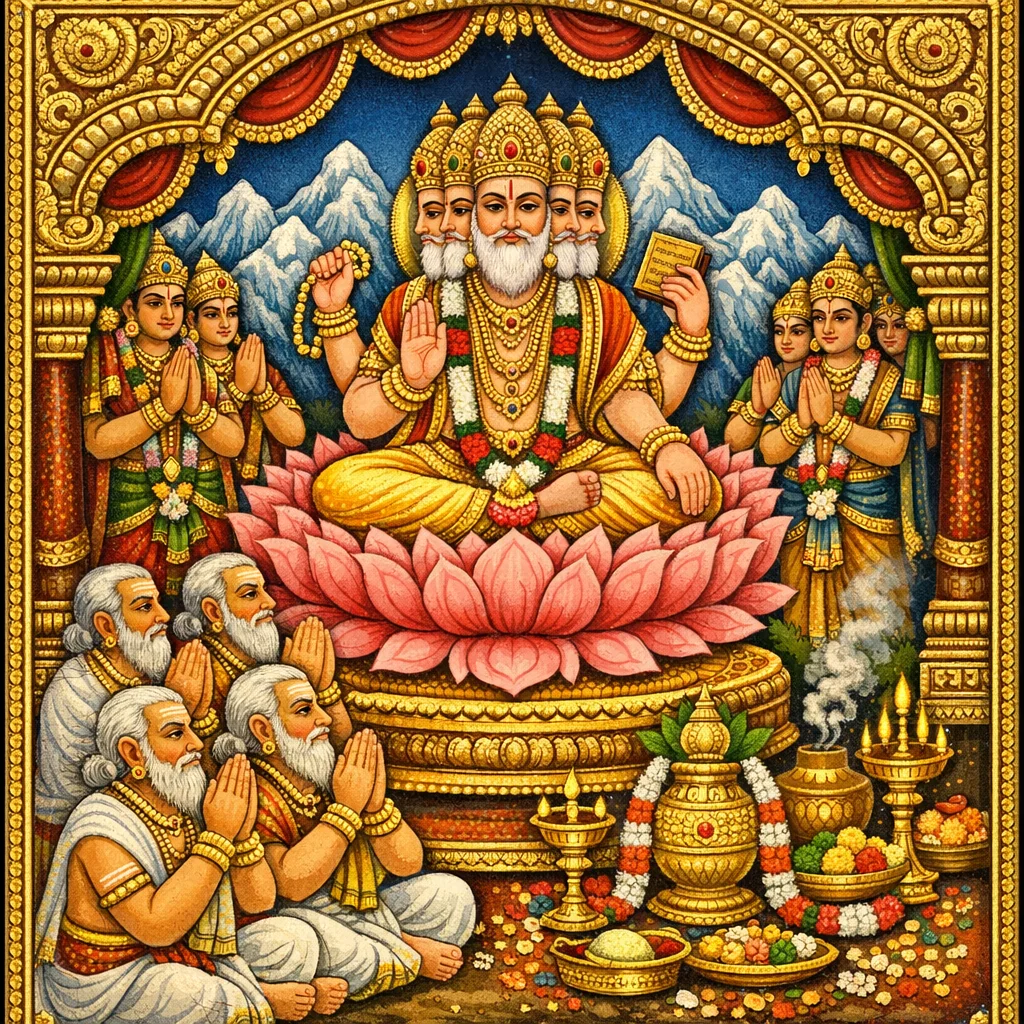
Set within the śrāddhakalpa, this Adhyāya presents ritual sequence as a cosmic covenant among devas, pitṛs, and humans. Sūta cites an authoritative rule (an Atharvaṇa-type procedure voiced by Bṛhaspati): worship the pitṛs first and the devas afterward, since the devas themselves strive to honor the pitṛs. The chapter then gives an origin-genealogy: Viśvā, daughter of Dakṣa, unites with Dharma and gives rise to ten renowned beings, the Viśvas, famed in the three worlds for austerity. On a peak of Himavat, pleased pitṛs grant boons; Brahmā responds by granting them their requested share in śrāddha. This is extended to human practice: garlands, fragrances, and food are offered first to pitṛs and then to devas, and even the order of ritual dismissal (visarjana) is prescribed. The Adhyāya closes by linking this rite-structure to wider Vedic duty, pointing to the pañca-mahāyajñas as the normative framework of human religious life.
Shlokas
Verse 1
इति श्रीब्रह्माण्डे महापुराणे वायुप्रोक्ते मध्यभागे तृतीये उपोद्धातपादे श्राद्धकल्पे समिद्वर्णन नामैकादशो ऽध्यायः // ११// सूत उवाच देवाश्चपितरश्चैव अन्योन्यं नियताः स्मृताः / आथर्वणस्त्वेष विधिरित्युवाच बृहस्पतिः
Thus, in the Śrī Brahmāṇḍa Mahāpurāṇa, proclaimed by Vāyu, in the middle section, the third Upoddhāta-pāda, within the Śrāddha-kalpa, is the eleventh chapter called “Samidvarṇana” (Description of the kindling-sticks). Sūta said: the Devas and the Pitṛs are remembered as mutually bound to one another; Bṛhaspati declared, “This rule is of the Ātharvaṇa tradition.”
Verse 2
पूजयेत पितॄन्पूर्वं देवांश्च तदनन्तरम् / देवा अपि पितॄन्पूर्वमर्च्चयन्ति हि यत्नतः
One should worship the Pitṛs first, and the Devas thereafter. For even the Devas, with due effort, first offer reverence to the Pitṛs.
Verse 3
दक्षस्य दुहिता नाम्ना विश्वा नामेति विश्रुता / विश्वाख्यास्तु सुतास्तस्यां धर्मतो जज्ञिरे दश
Daksha’s daughter was famed by the name Viśvā; through Dharma, ten daughters called Viśvā were born of her.
Verse 4
प्रख्याता स्त्रिषु लोकेषु सर्वलोकनमस्कृताः / समस्तास्ते महात्मानश्चेरुरुग्रं महत्तपः
Renowned in the three worlds and revered by all beings, those great souls together undertook fierce and mighty austerities.
Verse 5
हिमवच्छिखरे रम्ये देवर्षिगणसेविते / शुद्धेन मन्सा प्रीता ऊचुस्तान्पितरस्तदा
On the lovely peak of Himavat, attended by hosts of devarṣis, the Pitṛs—pleased with minds made pure—spoke to them then.
Verse 6
वरं वृणीध्वं प्रीताः स्म कं कामं कखामहे / एवमुक्ते तु पितृभिस्तदा त्रैलोक्यभावनः
The Pitṛs said, “We are pleased—choose a boon. What desire shall we fulfill for you?” Thus addressed, the sustainer of the three worlds (replied).
Verse 7
ब्रह्मोवाच महातेजास्तपसा तैस्तु तोषितः / प्रीतो ऽस्मि तपसानेन कं कामं करवाणि वः
Brahmā said: “By your austerities you have satisfied me, the one of great radiance. I am pleased by this tapas—what wish shall I grant you?”
Verse 8
एवमुक्तास्तदा विश्वे ब्रह्मणा विश्वकर्मणा / ऊचुस्ते सहिताः सर्वे ब्रह्माणां लोकभावनम्
When Brahmā, the Viśvakarman, had thus spoken, all the Viśvedevas together addressed Brahmā, the sustainer of the worlds.
Verse 9
श्राद्धे ऽस्माकं भवेदंशो ह्येष नः काङ्क्षितो वरः / प्रत्युवाच ततो ब्रह्मा तान्वै त्रिदशपूजितः
They said, “Let there be a share for us in the śrāddha rite; this is the boon we desire.” Then Brahmā, revered by the gods, replied to them.
Verse 10
भविष्यत्येवमेवं तु काङ्क्षितो वो वरस्तु यः / पितृभिश्च तथेत्युक्तमेवमेतन्न संशयः
Brahmā said, “So it shall be; the boon you desire will be fulfilled thus.” The Pitṛs too said, “So be it”; of this there is no doubt.
Verse 11
सहस्माभिस्तु भोक्तव्यं यत्किं चिद्दृश्यते त्विह / अस्माकं कल्पिते श्राद्धे युष्मानप्राशनं हि वै
Whatever is seen here is to be partaken of along with us; in the śrāddha ordained by us, your receiving of the food-offering shall indeed take place.
Verse 13
भविष्यति मनुष्येषु सत्यमे तद्ब्रुवामहे / माल्यैर्गन्धैस्तथान्नेन युष्मानग्रे ऽर्च्चयिष्यति /१ १२।१२// अग्रे दत्त्वा तु युष्माकमस्माकं दास्यते ततः / विसर्जनमथास्माकं पूर्वं पश्चात्तु दैवतम्
Among humankind it shall be so—we speak the truth. With garlands, fragrances, and food they will worship you first. Having offered to you beforehand, they will then give to us; thereafter our dismissal will be first, and only then that of the deities.
Verse 14
रक्षणं चैव श्राद्धस्य आतिथ्यस्य विधिद्वयम् / भूतानां देवतानां च पितॄणां चैव कर्मणि
The safeguarding of the śrāddha and the twofold ordinance of hospitality are prescribed as rites in the duties owed to bhūtas, to the Devas, and to the Pitṛs.
Verse 15
एवं कृते सम्यगेतत्सर्वमेव भविष्यति / एवं दत्त्वा वरं तेषां ब्रह्मा पितृगणैः सह
When this is done rightly, all of it shall indeed come to pass; thus, having granted them a boon, Brahmā remained together with the host of the Pitṛs.
Verse 16
क्षमानुग्रहकृद्देवः संचकार यथोदितम् / वेदे पञ्च महायज्ञा नराणां समुदाहृताः
The god who grants forgiveness and favor did exactly as was spoken; in the Veda, five Great Sacrifices (Mahāyajñas) are declared for humankind.
Verse 17
एतान्पञ्च महायज्ञान्निर्वपेत्सततं नरः / यत्र स्थास्यन्ति दातारस्तत्स्थानं वै निबोधत
Let a person continually perform these five Mahāyajñas; and know well the place where the givers shall stand established.
Verse 18
निर्भयं विरजस्कं च निःशोकं निर्व्यथक्लमम् / ब्राह्मं स्थानमवाप्नोति सर्वलोकपुरस्कृतम्
He attains the Brahmic abode—fearless, stainless of rajas, sorrowless, free from pain and weariness—honored before all the worlds.
Verse 19
शूद्रेणापि च कर्त्तव्याः पञ्चैते मन्त्रवर्जिताः / अतो ऽन्यथा तु यो भुङ्क्ते स ऋणं नित्यमश्नुते
Even a Śūdra should perform these five rites, without mantras. But one who eats otherwise, merely for enjoyment, ever incurs a constant debt (ṛṇa).
Verse 20
ऋणं भुङ्क्ते स पापात्मा यः पचेदात्मकारणात् / तस्मान्निर्वर्तयेत्पञ्च महायज्ञान्सदा बुधः
He who cooks only for his own sake is sinful and feeds upon debt (ṛṇa). Therefore the wise should always carry out the five great sacrifices (mahāyajñas).
Verse 21
उदक्पूर्वे बलिं कुर्यादुदकान्ते तथैव च / बलिं सुविहितं कुर्या दुच्चैरुच्चतरं क्षिपेत्
Let the bali-offering be made at the beginning of the water, and likewise at its end. Having duly arranged the offering, let it be cast upon a high place—higher still.
Verse 22
परशृङ्गं गवां मूत्रं बलिं सूत्रं समुत्क्षिपेत् / तन्निवेद्यो भवेत्पिण्डः पितॄणां यस्तु जीवति
Toward the other horn, near the gomūtra, let the bali-offering and the ritual thread (sūtra) be lifted and cast upward. Thus the living one becomes a piṇḍa fit to be offered to the Pitṛs.
Verse 23
इष्टेनान्नेन भक्ष्यैश्च भोजयेच्च यथाविधि / निवेद्यं केचिदिच्छन्ति जीवन्त्यपि हि यत्नतः
With cherished food and delicacies, let one feed others according to the rule. Some indeed desire the nivedya (offering), and by earnest effort they yet sustain life.
Verse 24
देवदेवा महात्मानो ह्येते पितर इत्युत / इच्छन्ति केचिदाचार्यः पश्चात्पिण्डनिवेदनम्
These Pitara, great-souled, are spoken of as deities among deities. Some teachers wish the offering of the piṇḍa to be made afterward.
Verse 25
पूजनं चैव विप्रणां पूर्वमेवेह नित्यशः / तद्धिधर्मार्थकुशलो नेत्युवाच बृहस्मतिः
Here, the worship of the vipras should always be done first. Bṛhaspati, skilled in dharma and artha, declared: “not so.”
Verse 26
पूर्वं निवेदयेत्पिण्डान्पश्चाद्विप्रांश्च भोजयेत् / योगात्मानो महात्मानः पितरो योग संभवाः
First one should offer the piṇḍas, and afterward feed the vipras. The Pitara are yogic in essence, great-souled, born of yoga.
Verse 27
सोममाप्याययन्त्येते पितरो योगसंस्थिताः / तस्माद्दद्याच्छुचिः पिण्डान्योगेभ्यस्तत्परायणः
These Pitara, established in yoga, cause Soma to flourish. Therefore, being pure and devoted to yoga, one should offer the piṇḍas.
Verse 28
पितॄणां हि भवेदेतत्साक्षादिव हुतं हविः / ब्रह्मणानां सहस्रस्य योगस्थं ग्रासयेद्यदि
For the Pitara, this becomes as though the havis were offered directly in the sacred fire—if one brahmin established in yoga is fed as if he were a thousand brahmins.
Verse 29
यजमानं च भोक्तॄंश् च नौरिवाम्भसि तारयेत् / असतां प्रग्रहो यत्र सतां चैव विमानता
Let him ferry the sacrificer and the diners across, like a boat upon the waters—where the wicked are favored and the good are held in contempt.
Verse 30
दण्डो दैवकृतस्तत्र सद्यः पतति दारुणः / इत्वा मम सधर्माणं बालिशं यस्तु भोजयेत्
There, a dreadful punishment wrought by the gods falls at once upon the one who deceives a simple person of my own dharma and makes him partake.
Verse 31
आदिकर्म समुत्सृज्य दाता तत्र विनश्यति / पिण्डमग्नौ सदा दद्यद्भोगार्थी प्रथमं नरः
Abandoning the primal rite, the giver perishes there. One who seeks enjoyment should first, always, offer the piṇḍa into the sacred fire.
Verse 32
दद्यात्प्रजार्थी यत्नेन मध्यमं मन्त्रपूर्वकम् / उत्तमां कान्तिमन्विच्छन्गोषु नित्यं प्रयच्छति
One who seeks offspring should, with care, give a middling gift, preceded by mantras. Seeking the highest radiance, one should give to cows each day.
Verse 33
प्रज्ञां चैव यशः कीर्त्तिमप्सु वै संप्रयच्छति / प्रार्थयन्दीर्घामायुश्च वायसेभ्यः प्रयच्छति
For wisdom, honor, and renown, one should offer the gift into the waters. Praying for long life, one should give offerings to crows.
Verse 34
सोकुमार्यमथान्विच्छन्कुक्कुटेभ्यः प्रयच्छति / एवमेतत्समुद्दिष्टं पिण्डनिर्वपणे फलम्
He who seeks gentleness and tender grace should offer it to the fowls. Thus is declared the fruit of the rite of placing the piṇḍa offerings.
Verse 35
आकाशे गमयेद्वापि अप्सु वा दक्षिणामुखः / पितॄणां स्थानमाकाशं दक्षिणा चैव दिग्भेवेत्
Facing south, one may send the piṇḍa into the sky or offer it into the waters. The abode of the Pitṛs is the firmament, and the southern quarter is their direction.
Verse 36
एके विप्राः पुनः प्राहुः पिण्डोद्धरणमग्रतः / अनुज्ञातस्तु तैर्विप्रैः कामसुद्ध्रियतामित्
Some brāhmaṇas again declare that first one should perform piṇḍa-uddharaṇa, lifting the foremost portion. With the sanction of those brāhmaṇas, this may be observed as one wishes.
Verse 37
पुष्पाणां च फलानां च भक्ष्याणामन्नतस्तथा / अग्रमुद्धृत्य सर्वेषां जुहुयाद्धव्यवाहने
From flowers, fruits, delicacies, and food, taking the foremost portion of all, one should offer it into the fire, Havyavāhana.
Verse 38
भङ्यमन्नं तथा पेयं मूलानि च फलानि च / हुत्वाग्नौ च ततः पिण्डान्निर्वपेद्दक्षिणा मुखः
Having offered into the fire roasted or pounded food, drink, roots, and fruits, then—facing south—one should place the piṇḍa offerings according to the rite.
Verse 39
वैवस्वताय सोमाय हुत्वा पिण्डान्निवेद्य च / उदकान्नयनं कृत्वा पश्चाद्विप्रांश्च भोजयेत्
Having offered the homa to Vaivasvata (Yama) and to Soma, and having presented the piṇḍa, one should perform the water-offering (tarpaṇa); thereafter one should feed the brāhmaṇas.
Verse 40
अनुपूर्वं ततो विप्रान्भक्ष्यैरन्नैश्च शक्तितः / स्निग्धैरुष्णैः सुगन्धैश्च तर्पयेत्तान्रसैरपि
Then, in due order, according to one’s means, one should satisfy the brāhmaṇas with foods and dishes—rich, warm, fragrant—and with savory juices as well.
Verse 41
एकाग्रः पर्युपासीनः प्रयतः प्राञ्जलिः स्थितः / तत्परः श्रद्दधानश्च कामानाप्नोति मानवः
With mind made one-pointed, seated nearby in attendance, disciplined and pure, standing with joined palms—intent on that rite and full of faith—a person attains the desired boons.
Verse 42
अक्षुद्रत्वं कृतज्ञत्वं दाक्षिण्यं संस्कृतं वचः / तपो यज्ञांश्च दानं च प्रयच्छन्ति पितामहाः
The Pitāmahas (ancestral fathers) bestow nobility of heart, gratitude, kindness, refined speech, austerity (tapas), sacrifices (yajña), and the grace of giving (dāna).
Verse 43
अतः परं विधिं सौम्यं भुक्तवत्सु द्विजातिषु / आनुपूर्व्येण विहितं तन्मे निगदतः शृणु
O gentle one, when the twice-born have finished their meal, listen as I declare the next observance, prescribed in proper sequence.
Verse 44
प्रोक्ष्य भूमिमथोद्धृत्य पूर्वं पितृपरायणः / ततो ऽन्निविकिरं कुर्याद्विधिदृष्टेन कर्मणा
Having sprinkled the ground and lifted it up, first devoted to the Pitṛs, one should then scatter the food-offering, performing the act as prescribed by rule.
Verse 45
स्वधा वाच्य ततो विप्रान् विधिवद्भूरितक्षिणान् / अन्नशेषमनुज्ञाप्य सत्कृत्य द्विजसत्तमान्
Then let him utter “svadhā”; thereafter, in due manner, he should worship the vipras with abundant dakṣiṇā, and—having sought leave regarding the remaining food—honour the best of the twice-born.
Verse 46
प्राञ्जलिः प्रयतश्चैव अनुगम्य विसर्जयेत्
Then, with joined palms and in disciplined purity, he should accompany them and respectfully dismiss them.
Frequently Asked Questions
Pitṛs are to be worshiped first, then devas; offerings (mālya, gandha, anna) are presented to pitṛs before the divine portion, and even the visarjana (dismissal) order is regulated to preserve śrāddha efficacy.
Dakṣa’s daughter Viśvā and her dharmic progeny (the celebrated Viśve/Viśvadevas) are introduced as an etiological backdrop, linking ritual authority to cosmic lineage and reinforcing that śrāddha is embedded in the universe’s moral–genealogical order.
Brahmā grants pitṛs an explicit share (aṃśa) in śrāddha, and the text forecasts that humans will institutionalize this by honoring pitṛs first with scents, garlands, and food, thereby formalizing ancestral entitlement within dharmic ritual.