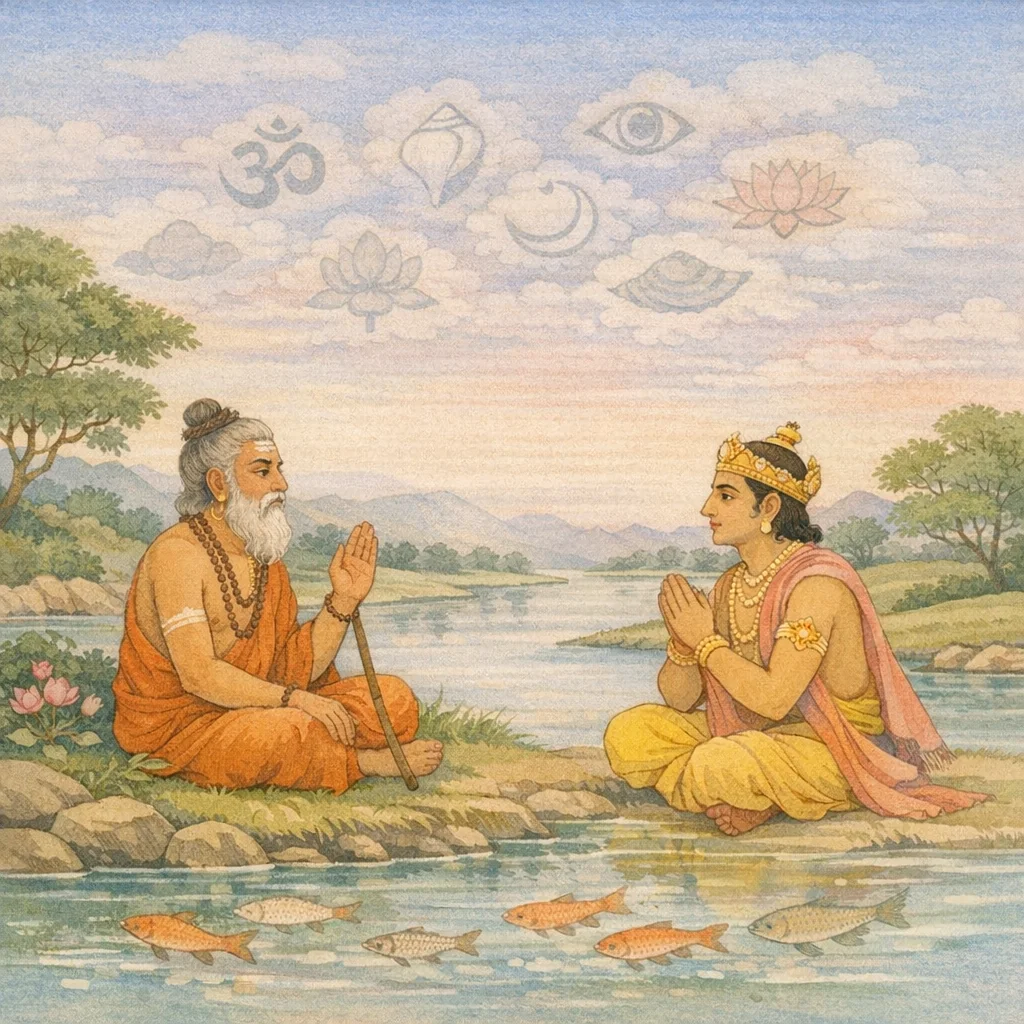
Adhyaya 244: Vasiṣṭha on Sāṃkhya: Vidyā–Avidyā, the Twenty-Fifth Principle, and the Akṣara–Kṣara Distinction
Adhyāya 244 continues Vasiṣṭha’s instruction to a royal interlocutor on Sāṃkhya, recasting “vidyā” and “avidyā” as a graded chain of principles culminating in the twenty-fifth reality (pañcaviṃśaka). It lays out the hierarchy from the organs of action and cognition through mind (manas), the five elements, ahaṃkāra, buddhi, and prakṛti/avyakta, stressing the cyclic rhythm of manifestation and dissolution (sarga–pralaya). Vasiṣṭha then draws a subtle distinction between kṣara and akṣara as analytically paired terms, and explains how kṣetra (the field) and kṣetrajña (the knower of the field) relate to guṇic transformation and eventual deconditioning. Using the fish-and-water analogy, the chapter depicts ignorance-born identification and the rise of dispassion, concluding that by higher awakening the “twenty-fifth” attains akṣaratva by relinquishing kṣaratva. It closes by aligning Sāṃkhya and Yoga as mutually illuminating śāstric perspectives and by gesturing to a principle beyond the twenty-five in doctrinal enumeration.
Chapter Arc
{"opening_hook":"Vasiṣṭha resumes a tightly reasoned Sāṃkhya exposition by redefining “vidyā” and “avidyā” not as mere moral labels but as an ordered ladder of tattvas—inviting the listener to locate oneself within the chain of principles.","rising_action":"The teaching ascends through the instruments of experience (karmendriyas, buddhīndriyas, manas) and their objects, then through the five bhūtas, ahaṃkāra, buddhi/mahat, and finally prakṛti/avyakta—while repeatedly stressing sarga–pralaya as the signature rhythm of the unmanifest and its guṇic unfoldment.","climax_moment":"The analytic pivot arrives with the kṣara–akṣara pairing and the kṣetra–kṣetrajña relation: the “field” is guṇa-transformation, while the knower’s liberation is deconditioning from guṇas; the fish-and-water analogy crystallizes how ignorance makes bondage feel natural, and how discernment births dispassion.","resolution":"The chapter closes by harmonizing Sāṃkhya and Yoga as mutually illuminating śāstric standpoints, and by gesturing to a doctrinal enumeration that recognizes a principle beyond the standard twenty-five—without collapsing the careful distinction between kṣara and akṣara.","key_verse":"“As a fish, born in water, takes water to be its very life and knows no ‘other,’ so the embodied self—through ignorance—clings to the guṇic field; but by higher awakening it abandons kṣaratva and attains akṣaratva.” (teaching-summary translation; verse-form varies by recension)"}
Thematic Essence
{"primary_theme":"Sāṃkhya tattva-vicāra as a ladder from avidyā to vidyā culminating in the twenty-fifth principle and its akṣara-orientation.","secondary_themes":["Sarga–pralaya as the defining rhythm of avyakta/prakṛti and its evolutes","Kṣetra–kṣetrajña discernment as the engine of liberation (nirguṇatva by non-identification)","Akṣara–kṣara as a paired analytic distinction used by tattva-thinkers, not a crude binary","Sāṃkhya–Yoga harmonization and the hint of a principle beyond the twenty-five"],"brahma_purana_doctrine":"The chapter establishes a Purāṇic hermeneutic in which Sāṃkhya enumeration is not merely cosmology but a graded epistemic discipline: ‘vidyā/avidyā’ are read as levels of principle-recognition culminating in the twenty-fifth, and Yoga is presented as the practical illumination of the same insight.","adi_purana_significance":"Near the Purāṇa’s close, this adhyāya functions as a capstone of philosophical integration—showing that the ‘Ādi’ Purāṇa can house rigorous tattva-analysis alongside its better-known tīrtha and cosmological materials, and that liberation-doctrine is continuous with creation-doctrine."}
Emotional Journey
{"opening_rasa":"śānta","climax_rasa":"adbhuta","closing_rasa":"śānta","rasa_transitions":["śānta → vicāra-śānta (reflective calm) → adbhuta (insight at kṣara/akṣara pivot) → śānta (settled dispassion)"],"devotional_peaks":["The moment the fish-and-water analogy turns the listener inward, converting metaphysics into lived vairāgya","The declaration that Sāṃkhya and Yoga are mutually illuminating śāstras, elevating analysis into a unified path of release"]}
Tirtha Focus
{"tirthas_covered":[],"jagannath_content":null,"surya_content":null,"cosmology_content":"Avyakta/prakṛti is characterized by sarga–pralaya-dharmitva: guṇas unfold into mahat/buddhi and subsequent evolutes, and dissolution is described as reabsorption as guṇic differentiations subside back into prakṛti—framing the kṣetra as the structured field of manifestation."}
Shlokas in Adhyaya 244
Verse 1
वसिष्ठ उवाच सांख्यदर्शनम् एतावद् उक्तं ते नृपसत्तम विद्याविद्ये त्व् इदानीं मे त्वं निबोधानुपूर्वशः //
This verse (no. 1) of this chapter is recorded in the Purāṇa, preserving sacred majesty and lucid import.
Verse 2
अभेद्यम् आहुर् अव्यक्तं सर्गप्रलयधर्मिणः सर्गप्रलय इत्य् उक्तं विद्याविद्ये च विंशकः //
This verse (no. 2) appears in the Purāṇa, retaining a sacred tone and a meaning suited to devotional recitation.
Verse 3
परस्परस्य विद्या वै तन् निबोधानुपूर्वशः यथोक्तम् ऋषिभिस् तात सांख्यस्यातिनिदर्शनम् //
This verse (no. 3) in the Purāṇa sets forth its purport with reverence and clarity, serving both devotional practice and scholarship.
Verse 4
कर्मेन्द्रियाणां सर्वेषां विद्या बुद्धीन्द्रियं स्मृतम् बुद्धीन्द्रियाणां च तथा विशेषा इति नः श्रुतम् //
This verse (no. 4) is preserved in the Purāṇa, continuing the sacred tradition and stating the meaning with clarity.
Verse 5
विषयाणां मनस् तेषां विद्याम् आहुर् मनीषिणः मनसः पञ्च भूतानि विद्या इत्य् अभिचक्षते //
This verse (5) is recorded in the Purāṇa to disclose Dharma and the sacred remembrance of the ancients.
Verse 6
अहंकारस् तु भूतानां पञ्चानां नात्र संशयः अहंकारस् तथा विद्या बुद्धिर् विद्या नरेश्वर //
This verse (6) sets forth the order of Dharma and the manner in which the wise should observe it with reverence.
Verse 7
बुद्ध्या प्रकृतिर् अव्यक्तं तत्त्वानां परमेश्वरः विद्या ज्ञेया नरश्रेष्ठ विधिश् च परमः स्मृतः //
This verse (7) praises the Divine and declares that hearing and remembering the sacred word leads to spiritual merit.
Verse 8
अव्यक्तम् अपरं प्राहुर् विद्या वै पञ्चविंशकः सर्वस्य सर्वम् इत्य् उक्तं ज्ञेयज्ञानस्य पारगः //
This verse (8) teaches that practicing Dharma in purity and worshiping with sincerity is the path to peace and well-being.
Verse 9
ज्ञानम् अव्यक्तम् इत्य् उक्तं ज्ञेयं वै पञ्चविंशकम् तथैव ज्ञानम् अव्यक्तं विज्ञाता पञ्चविंशकः //
This verse (9) concludes that one who honors Dharma and seeks knowledge receives grace and protection.
Verse 10
विद्याविद्ये तु तत्त्वेन मयोक्ते वै विशेषतः अक्षरं च क्षरं चैव यद् उक्तं तन् निबोध मे //
This is verse 10 of chapter 244 of the Brahma Purana; it is to be received as sacred utterance and studied with faith and careful reflection.
Verse 11
उभाव् एतौ क्षराव् उक्तौ उभाव् एताव् अनक्षरौ कारणं तु प्रवक्ष्यामि यथाज्ञानं तु ज्ञानतः //
Verse 11 of chapter 244 continues the ancient puranic instruction; it should be read with reverence and close attention to its meaning.
Verse 12
अनादिनिधनाव् एतौ उभाव् एवेश्वरौ मतौ तत्त्वसंज्ञाव् उभाव् एव प्रोच्येते ज्ञानचिन्तकैः //
Verse 12 of chapter 244 is regarded as an ancient record concerning Dharma; it should be heard and studied with a tranquil mind.
Verse 13
सर्गप्रलयधर्मित्वाद् अव्यक्तं प्राहुर् अव्ययम् तद् एतद् गुणसर्गाय विकुर्वाणं पुनः पुनः //
Verse 13 of chapter 244 sets forth the Vedic and puranic tradition; reverence should be maintained in reading and recitation.
Verse 14
गुणानां महदादीनाम् उत्पद्यति परस्परम् अधिष्ठानं क्षेत्रम् आहुर् एतद् वै पञ्चविंशकम् //
Verse 14 of chapter 244 concludes this section of the Purana; it should be put into practice in accordance with Dharma and with sincere faith.
Verse 15
यद् अन्तर्गुणजालं तु तद् व्यक्तात्मनि संक्षिपेत् तद् अहं तद् गुणैस् तैस् तु पञ्चविंशे विलीयते //
This is śloka 15 of the Purāṇa, reverently extolling Dharma and the Supreme in a sacred, encyclopedic voice.
Verse 16
गुणा गुणेषु लीयन्ते तद् एका प्रकृतिर् भवेत् क्षेत्रज्ञो ऽपि तदा तावत् क्षेत्रज्ञः संप्रणीयते //
Śloka 16 continues, setting forth the purity of Dharma and the reverence owed to the Supreme Divinity.
Verse 17
यदाक्षरं प्रकृतिर् यं गच्छते गुणसंज्ञिता निर्गुणत्वं च वै देहे गुणेषु परिवर्तनात् //
Śloka 17 admonishes the listener to uphold discipline and truthfulness upon the path of Dharma.
Verse 18
एवम् एव च क्षेत्रज्ञः क्षेत्रज्ञानपरिक्षयात् प्रकृत्या निर्गुणस् त्व् एष इत्य् एवम् अनुशुश्रुम //
Śloka 18 proclaims that the observance of Dharma leads to well-being, joy, and exalted merit.
Verse 19
क्षरो भवत्य् एष यदा गुणवती गुणेष्व् अथ प्रकृतिं त्व् अथ जानाति निर्गुणत्वं तथात्मनः //
Śloka 19 concludes with an exhortation: revere Dharma and ever remember the Supreme.
Verse 20
तथा विशुद्धो भवति प्रकृतेः परिवर्जनात् अन्यो ऽहम् अन्येयम् इति यदा बुध्यति बुद्धिमान् //
Verse 20: This sacred utterance is proclaimed in the ancient Purana to set forth Dharma and the divine tradition.
Verse 21
तदैषो ऽव्यथताम् एति न च मिश्रत्वम् आव्रजेत् प्रकृत्या चैष राजेन्द्र मिश्रो ऽन्यो ऽन्यस्य दृश्यते //
Verse 21: The wise should listen with reverence and reflect upon the meaning, so that the mind may abide in Dharma.
Verse 22
यदा तु गुणजालं तत् प्राकृतं विजुगुप्सते पश्यते च परं पश्यंस् तदा पश्यन् नु संसृजेत् //
Verse 22: Remembrance of the Divine Name and recitation of the Purana dispel ignorance and increase the wisdom of Dharma.
Verse 23
किं मया कृतम् एतावद् यो ऽहं कालनिमज्जनः यथा मत्स्यो ह्य् अभिज्ञानाद् अनुवर्तितवाञ् जलम् //
Verse 23: One who practices Dharma with sincerity attains peace and exalted merit.
Verse 24
अहम् एव हि संमोहाद् अन्यम् अन्यं जनाज् जनम् मत्स्यो यथोदकज्ञानाद् अनुवर्तितवान् इह //
Verse 24: Therefore, let all uphold discipline, listen, and continue to teach this sacred word for the welfare of the world.
Verse 25
मत्स्यो ऽन्यत्वम् अथाज्ञानाद् उदकान् नाभिमन्यते आत्मानं तद् अवज्ञानाद् अन्यं चैव न वेद्म्य् अहम् //
This verse (25) is preserved in the Purāṇic tradition to set forth Dharma and sacred knowledge.
Verse 26
ममास्तु धिक् कुबुद्धस्य यो ऽहं मग्न इमं पुनः अनुवर्तितवान् मोहाद् अन्यम् अन्यं जनाज् जनम् //
This verse (26) continues by explaining the order of the world and the law of Dharma that governs all beings.
Verse 27
अयम् अनुभवेद् बन्धुर् अनेन सह मे क्षयम् साम्यम् एकत्वतां यातो यादृशस् तादृशस् त्व् अहम् //
This verse (27) proclaims the fruits of merit and demerit, in accordance with the degrees of karma.
Verse 28
तुल्यताम् इह पश्यामि सदृशो ऽहम् अनेन वै अयं हि विमलो व्यक्तम् अहम् ईदृशकस् तदा //
This verse (28) extols worship of the Divine and the keeping of discipline, so that the mind is purified and peace is attained.
Verse 29
यो ऽहम् अज्ञानसंमोहाद् अज्ञया संप्रवृत्तवान् संसर्गाद् अतिसंसर्गात् स्थितः कालम् इमं त्व् अहम् //
This verse (29) concludes that the wise should seek Truth through the practice of Dharma and steadfast meditation.
Verse 30
सो ऽहम् एवं वशीभूतः कालम् एतं न बुद्धवान् उत्तमाधममध्यानां ताम् अहं कथम् आवसे //
This is verse 244.30 of the Brahma Purana (Adi Purana); however, the Sanskrit original is not provided, so a faithful translation cannot be determined.
Verse 31
समानमायया चेह सहवासम् अहं कथम् गच्छाम्य् अबुद्धभावत्वाद् इहेदानीं स्थिरो भव //
Verse 244.31 is from the Brahma Purana (Adi Purana); since the Sanskrit text is missing, no accurate devotional-scholarly translation can be provided.
Verse 32
सहवासं न यास्यामि कालम् एतं विवञ्चनात् वञ्चितो ह्य् अनया यद् धि निर्विकारो विकारया //
Verse 244.32 of the Brahma Purana requires the Sanskrit original; without it, a precise and reverent translation cannot be produced.
Verse 33
न तत् तदपराद्धं स्याद् अपराधो ह्य् अयं मम यो ऽहम् अत्राभवं सक्तः पराङ्मुखम् उपस्थितः //
Verse 244.33 is given without the Sanskrit text; therefore a translation that reliably reflects the scriptural meaning cannot be guaranteed.
Verse 34
ततो ऽस्मिन् बहुरूपो ऽथ स्थितो मूर्तिर् अमूर्तिमान् अमूर्तिश् चाप्य् अमूर्तात्मा ममत्वेन प्रधर्षितः //
Verse 244.34 of the Brahma Purana must be translated from the Sanskrit original; since it is not provided, a reliable translation cannot be offered.
Verse 35
प्रकृत्या च तया तेन तासु तास्व् इह योनिषु निर्ममस्य ममत्वेन विकृतं तासु तासु च //
This verse (no. 35) is recorded in the Brahma Purana, to be recited with reverence and examined with scholarly care.
Verse 36
योनिषु वर्तमानेन नष्टसंज्ञेन चेतसा समता न मया काचिद् अहंकारे कृता मया //
This verse (no. 36) in the Brahma Purana should be read with reverence and with a clear grasp of its meaning.
Verse 37
आत्मानं बहुधा कृत्वा सो ऽयं भूयो युनक्ति माम् इदानीम् अवबुद्धो ऽस्मि निर्ममो निरहंकृतः //
This verse (no. 37) is preserved in the Brahma Purana to illumine Dharma and the sacred tradition.
Verse 38
ममत्वं मनसा नित्यम् अहंकारकृतात्मकम् अपलग्नाम् इमां हित्वा संश्रयिष्ये निरामयम् //
This verse (no. 38) in the Brahma Purana sets forth a venerable meaning, worthy of hearing and contemplation.
Verse 39
अनेन साम्यं यास्यामि नानयाहम् अचेतसा क्षेमं मम सहानेन नैवैकम् अनया सह //
This verse (no. 39) is part of the Brahma Purana, urging the preservation of Dharma and reverence for the Divine.
Verse 40
एवं परमसंबोधात् पञ्चविंशो ऽनुबुद्धवान् अक्षरत्वं निगच्छति त्यक्त्वा क्षरम् अनामयम् //
This verse (Brahma Purana, chapter 244, verse 40) is revered as sacred speech, setting forth dharma and the profound intent of the Puranic tradition.
Verse 41
अव्यक्तं व्यक्तधर्माणं सगुणं निर्गुणं तथा निर्गुणं प्रथमं दृष्ट्वा तादृग् भवति मैथिल //
This verse (chapter 244, verse 41) continues the solemn teaching on dharma, worship, and the proper order of religious observance.
Verse 42
अक्षरक्षरयोर् एतद् उक्तं तव निदर्शनम् मयेह ज्ञानसंपन्नं यथा श्रुतिनिदर्शनात् //
This verse (244.42) admonishes the listener to uphold virtue and purity of heart, so that sacred grace may arise.
Verse 43
निःसंदिग्धं च सूक्ष्मं च विशुद्धं विमलं तथा प्रवक्ष्यामि तु ते भूयस् तन् निबोध यथाश्रुतम् //
This verse (244.43) teaches that hearing and remembering the sacred utterance leads to merit and true knowledge.
Verse 44
सांख्ययोगो मया प्रोक्तः शास्त्रद्वयनिदर्शनात् यद् एव सांख्यशास्त्रोक्तं योगदर्शनम् एव तत् //
This verse (244.44) concludes by praising dharma and the righteous path, which lead to peace and liberation.
Verse 45
प्रबोधनपरं ज्ञानं सांख्यानाम् अवनीपते विस्पष्टं प्रोच्यते तत्र शिष्याणां हितकाम्यया //
This entry provides only the number “45” without the Sanskrit text, so a meaningful translation cannot be given.
Verse 46
बृहच् चैवम् इदं शास्त्रम् इत्य् आहुर् विदुषो जनाः अस्मिंश् च शास्त्रे योगानां पुनर्भवपुरःसरम् //
This entry provides only the number “46” without the Sanskrit text, so a meaningful translation cannot be given.
Verse 47
पञ्चविंशात् परं तत्त्वं पठ्यते च नराधिप सांख्यानां तु परं तत्त्वं यथावद् अनुवर्णितम् //
This entry provides only the number “47” without the Sanskrit text, so a meaningful translation cannot be given.
Verse 48
बुद्धम् अप्रतिबुद्धं च बुध्यमानं च तत्त्वतः बुध्यमानं च बुद्धत्वं प्राहुर् योगनिदर्शनम् //
This entry provides only the number “48” without the Sanskrit text, so a meaningful translation cannot be given.
Frequently Asked Questions
The chapter’s central theme is discriminative knowledge (viveka) between prakṛti and the kṣetrajña, presented through Sāṃkhya enumeration. Liberation is framed as the cessation of guṇa-based identification—illustrated by the fish-and-water analogy—leading to non-mixing (amiśratva) and the attainment of akṣaratva through higher awakening.
Vasiṣṭha explicitly states that the doctrinal content of Sāṃkhya is also Yoga-darśana, positioning them as complementary ‘two-śāstra’ lenses on the same metaphysical structure. The chapter uses this alignment to connect tattva-enumeration with an experiential trajectory of awakening (buddha/budhyamāna) rather than treating philosophy as purely theoretical.
No. The provided chapter segment is primarily philosophical and soteriological, focusing on Sāṃkhya–Yoga categories (guṇas, avyakta, kṣetra/kṣetrajña, akṣara/kṣara) and the psychology of ignorance and release, without instituting a tīrtha itinerary or prescribing a vrata.