Sukta 6
Rishi: Atharvanic/Aṅgiras-type attribution (hymn-level tradition; verse-specific r̥ṣi not isolated here).
Devata: Protective guardians (spáśaḥ), noose-bearers; broadly the apotropaic divine retinue.
Chandas: Triṣṭubh (11-syllable cadence typical of this style)
Mantras
Mantra 1
ब्रह्मविद्या। ब्रह्म जज्ञानं प्रथमं पुरस्ताद् वि सीमतः सुरुचो वेन आवः । स बुध्न्याऽ उपमा अस्य विष्ठाः सतश्च योनिमसतश्च वि वः
Brahman—knowing, first in the beginning—Vena, of goodly radiance, from the boundary, set it forth. Its likenesses are the deep foundations, its stations; it spread abroad the womb of what is, and of what is not.
Mantra 2
अनाप्ता ये वः प्रथमा यानि कर्माणि चक्रिरे। वीरान् नो अत्र मा दभन् तद् व एतत् पुरो दधे
Unattaining were they, the first of you, who wrought those works: let them not here beguile our heroes; this very thing I set before you as a fore-guard.
Mantra 3
सहस्रधार एव ते समस्वरन् दिवो नाके मधुजिह्वा असश्चतः । तस्य स्पशो न नि मिषन्ति भूर्णयः पदेपदे पाशिनः सन्ति सेतवे
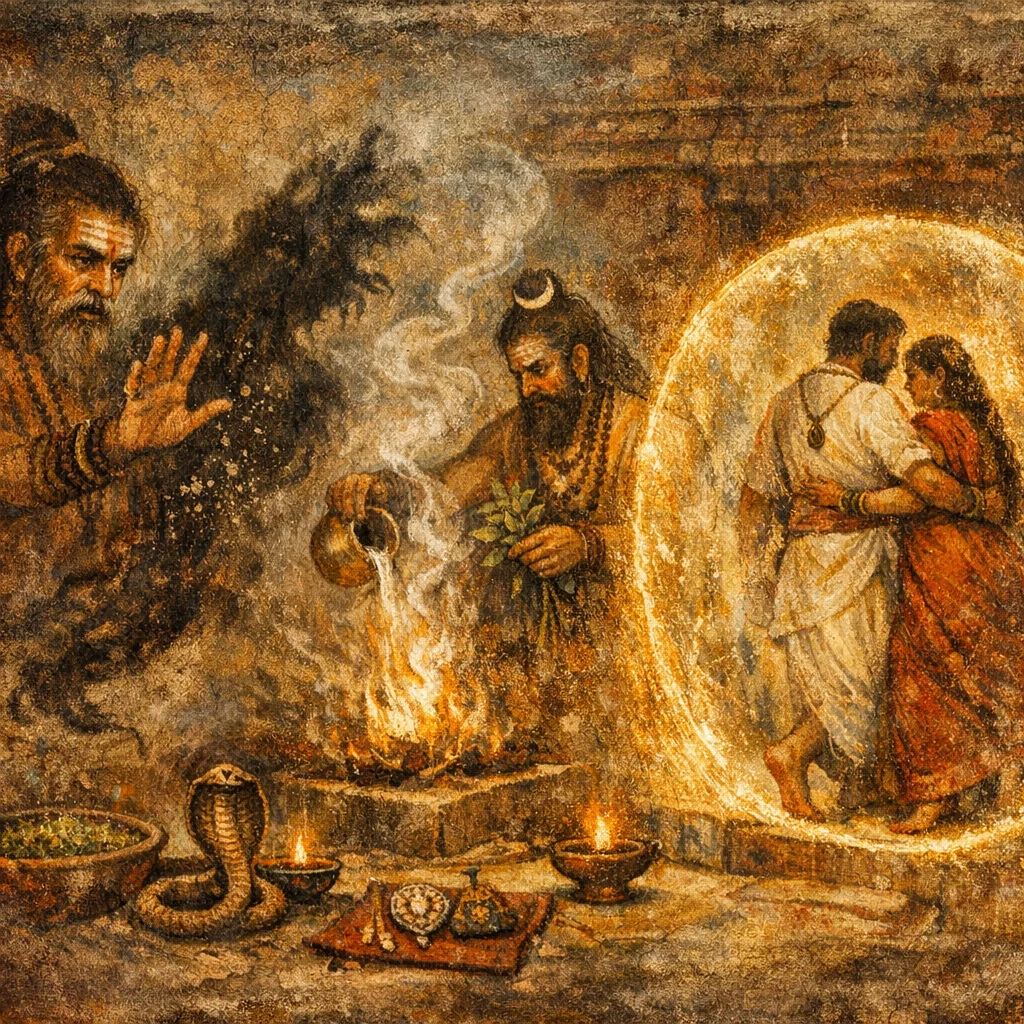
Thousand-streamed, verily, for thee they have sounded forth together in the heavenly vault—honey-tongued, unfailing. Of him the watchers wink not at all: the whirling guardians, noose-bearing, stand at every step to guard the passage.
Mantra 4
पर्यू षु प्र धन्वा वाजसातये परि वृत्राणि सक्षणिः । द्विषस्तदध्यर्णवेनेयसे सनिस्रसो नामासि त्रयोदशो मास इन्द्रस्य गृहः
Round about—Oṃ—press thou on, well and forth, for winning of the prize; round about the Vr̥tra-obstacles, striding strongly. Over the haters thou movest with a flood: Sanisrasa by name art thou, the thirteenth month, Indra’s house.
Mantra 5
न्वे३तेनारात्सीरसौ स्वाहा । तिग्मायुधौ तिग्महेती सुशेवौ सोमारुद्राविह सु मृडतं नः
Now, with this—O Arātsīrasau—svāhā! Sharp-weaponed, sharp-missiled, yet kindly, O Soma and Rudra, here be ye gracious unto us; grant us good relief.
Mantra 6
अवैतेनारात्सीरसौ स्वाहा । तिग्मायुधौ तिग्महेती सुशेवौ सोमारुद्राविह सु मृडतं नः
Down, with this—O Arātsīrasau—svāhā! Sharp-weaponed, sharp-missiled, yet kindly, O Soma and Rudra, here be ye gracious unto us; grant us good relief.
Mantra 7
अपैतेनारात्सीरसौ स्वाहा । तिग्मायुधौ तिग्महेती सुशेवौ सोमारुद्राविह सु मृडतं नः
Away, with this—O Arātsīrasau—svāhā! Sharp-weaponed, sharp-missiled, yet kindly, O Soma and Rudra, here be ye gracious unto us; grant us good relief.
Mantra 8
मुमुक्तमस्मान् दुरितादवद्याज्जुषेथां यज्ञममृतमस्मासु धत्तम्
Release us from mischance, from blameworthy offence; accept with favour the sacrifice, the deathless, and set it fast within us.
Mantra 9
चक्षुषो हेते मनसो हेते ब्रह्मणो हेते तपसश्च हेते । मेन्या मेनिरस्यमेनयस्ते सन्तु ये३स्माँ अभ्यघायन्ति
O weapon of the eye, O weapon of the mind, O weapon of spell, O weapon of fervid power—thou art Menī, wrath: let those be without wrath, who against us purpose evil.
Mantra 10
यो३ऽस्मांश्चक्षुषा मनसा चित्त्याकूत्या च यो अघायुरभिदासात्। त्वं तानग्ने मेन्यामेनीन् कृणु स्वाहा
Whoso with eye, with mind, with thought and purpose would assail us, evil-minded—do thou, O Agni, make those wrathful ones to be without wrath. Svāhā!
Mantra 11
इन्द्रस्य गृहोऽसि । तं त्वा प्र पद्ये तं त्वा प्र विशामि सर्वगुः सर्वपूरुषः सर्वात्मा सर्वतनूः सह यन्मेऽस्ति तेन
Thou art Indra’s house. To thee I resort; into thee I enter—possessing all cattle, possessing all men, whole in self, whole in body—together with whatsoever is mine.
Mantra 12
इन्द्रस्य शर्मासि ।तं त्वा प्र पद्ये तं त्वा प्र विशामि सर्वगुः सर्वपूरुषः सर्वात्मा सर्वतनूः सह यन्मेऽस्ति तेन
Thou art Indra’s shelter. To thee I resort; into thee I enter—possessing all cattle, possessing all men, whole in self, whole in body—together with whatsoever is mine.
Mantra 13
इन्द्रस्य वर्मासि ।तं त्वा प्र पद्ये तं त्वा प्रविशामि सर्वगुः सर्वपूरुषः सर्वात्मा सर्वतनूः सह यन्मेऽस्ति तेन
Thou art Indra’s armour. To thee I betake me; into thee I enter—complete in cattle, complete in men, complete in vital self, complete in body—together with whatsoever is mine, with that (all) I enter.
Mantra 14
इन्द्रस्य वरूथमसि । तं त्वा प्र पद्ये तं त्वा प्रविशामि सर्वगुः सर्वपूरुषः सर्वात्मा सर्वतनूः सह यन्मेऽस्ति तेन
Thou art Indra’s defence, his shelter. To thee I betake me; into thee I enter—complete in cattle, complete in men, complete in vital self, complete in body—together with whatsoever is mine, with that (all) I enter.
Frequently Asked Questions
It creates a protective perimeter by invoking unblinking divine watchers and noose-bearers who stop hostile forces at thresholds and along paths, and it seals protection by entering Indra’s shelter (varūtha).
No specific substance is required by the hymn itself. Practitioners may optionally use water-sprinkling or a boundary cord as a support, but the core efficacy is in the posted-guard and refuge formulas.
In Atharvanic protection, harm is not only external (intruders, sorcery) but also internalized as mischance and ritual-moral fault. The hymn asks that these be loosened, while ‘amṛta’—enduring protective vitality—be established in the client.