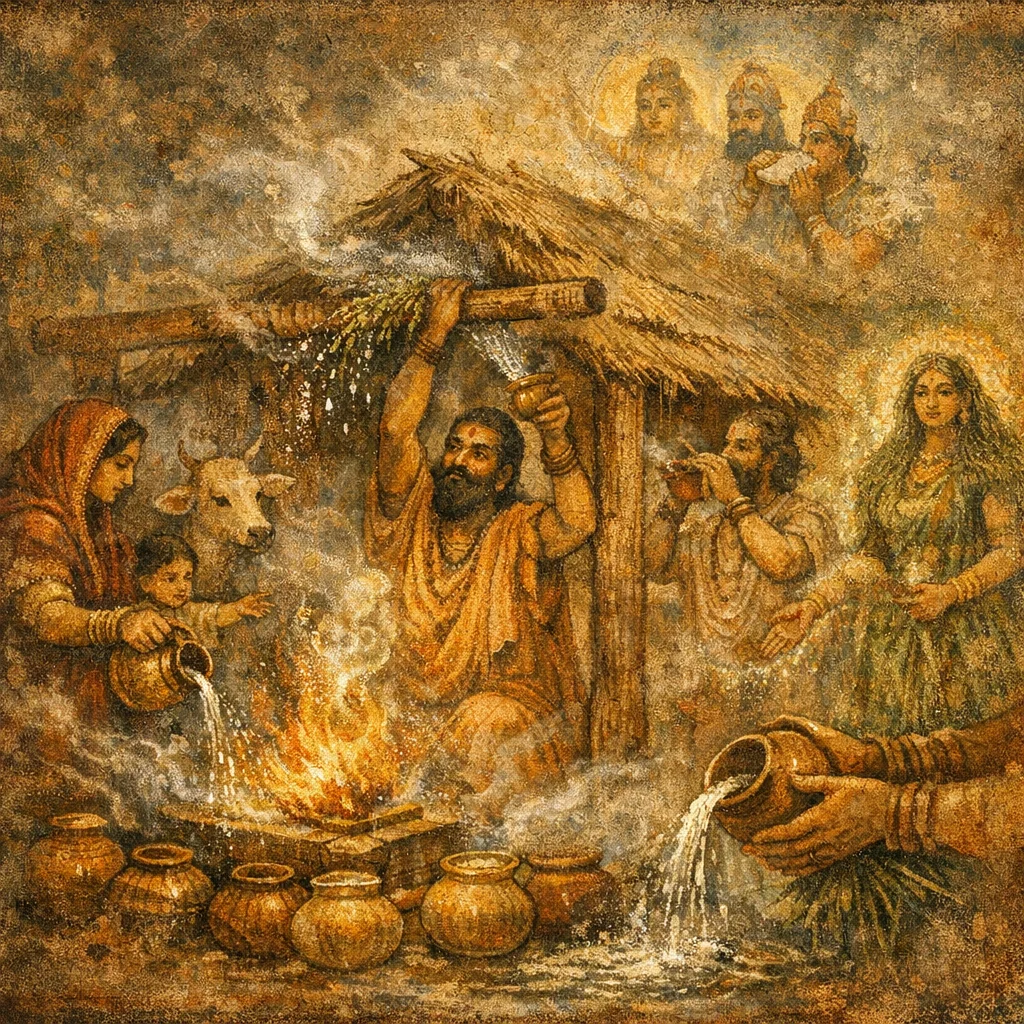
Sukta 12
Rishi: Atharvanic tradition (house-consecration hymn; r̥ṣi attribution varies by anukramaṇī)
Devata: Gṛha/Śālā and the consecrated house-timbers (with Ṛta/Virāj as sacral power)
Chandas: Triṣṭubh-like cadence (domestic benedictive style; exact metrical classification varies by pada division)
Mantras
Mantra 1
शालानिर्माणम्। इहैव ध्रुवां नि मिनोमि शालां क्षेमे तिष्ठाति घृतमुक्षमाणा । तां त्वा शाले सर्ववीराः सुवीरा अरिष्टवीरा उप सं चरेम
Here, even here, I set in place the steadfast Hall: in safety may she stand, bedewed with ghee. To thee, O Hall, may we draw near and move about—possessed of all brave sons, of good brave sons, of sons unhurt by harm.
Mantra 2
इहैव ध्रुवा प्रति तिष्ठ शालेऽश्वावती गोमती सूनृतावती । ऊर्जस्वती घृतवती पयस्वत्युच्छ्रयस्व महते सौभगाय
Here, even here, stand fast, O Hall—rich in horses, rich in kine, rich in kindly truth. Rich in nourishment, rich in ghee, rich in milk: rise aloft for mighty good fortune.
Mantra 3
धरुण्यऽसि शाले बृहच्छन्दाः पूतिधान्या । आ त्वा वत्सो गमेदा कुमार आ धेनवः सायमास्पन्दमानाः
A bearer art thou, O Hall, broad-measured, rich in cleansed grain. To thee may the calf come, to thee the young son; to thee may the milch-cows come at evening, coming home unshaken and unafraid.
Mantra 4
इमां शालां सविता वायुरिन्द्रो बृहस्पतिर्नि मिनोतु प्रजानन्। उक्षन्तूद्ना मरुतो घृतेन भगो नो राजा नि कृषिं तनोतु
This Hall may Savitar, Vāyu, Indra, and Bṛhaspati—knowing progeny—set firmly in its place. Let the Maruts sprinkle her with water, with ghee; and Bhaga, our king, let him spread forth for us the field’s tillage and increase.
Mantra 5
मानस्य पत्नि शरणा स्योना देवी देवेभिर्निमितास्यग्रे । तृणं वसाना सुमना असस्त्वमथास्मभ्यं सहवीरं रयिं दाः
O Lady of Mānas(a), a refuge, kindly—Goddess, by the Gods measured out and built in the beginning—clothed in grass, benevolent art thou: then unto us grant wealth, with heroes (sons) therewith.
Mantra 6
ऋतेन स्थूणामधि रोह वंशोग्रो विराजन्नप वृङ्क्ष्व शत्रून्। मा ते रिषन्नुपसत्तारो गृहाणां शाले शतं जीवेम शरदः सर्ववीराः
By Order (ṛta) mount thou upon the pillars; O ridge-beam, shining forth, cut off and cast away the foes. Let not the besetters of the house do thee hurt: in the hall may we live a hundred autumns, with all our heroes about us.
Mantra 7
एमां कुमारस्तरुण आ वत्सो जगता सह। एमां परिस्रुतः कुम्भ आ दध्नः कलशैरगुः
To this (home) the youthful boy hath come, and the calf with all that moves beside; to this have come the brimming jar, the curds, with pitchers in their train.
Mantra 8
पूर्णं नारि प्र भर कुम्भमेतं घृतस्य धाराममृतेन संभृताम्। इमां पातॄनमृतेना समङ्ग्धीष्टापूर्तमभि रक्षात्येनाम्
Bring forth, O woman, this jar filled full—its stream of ghee, with amṛta duly gathered. With amṛta anoint the guardians: merit of sacrifice and gift shall guard her round about.
Mantra 9
इमा आपः प्र भराम्ययक्ष्मा यक्ष्मनाशनीः । गृहानुप प्र सीदाम्यमृतेन सहाग्निना
These waters bring I forth—free from yakṣma, yakṣma-destroying. Unto the houses I draw near and take my seat, with amṛta, together with Agni.
Frequently Asked Questions
It is used to consecrate a newly built or newly occupied house/hall, making it stable, safe, and prosperous, while driving away enemies and harmful ‘besetters’ of the home.
The hymn treats the main timbers as sacral supports: once installed under ṛta (right order) and virāj (radiant power), the structure itself becomes a protector that ‘cuts off’ hostility.
The core rite relies on domestic substances—especially ghee and fresh grass—plus the house-timbers being installed. The ‘amulet’ effect is chiefly the consecrated architecture and the spoken blessing.