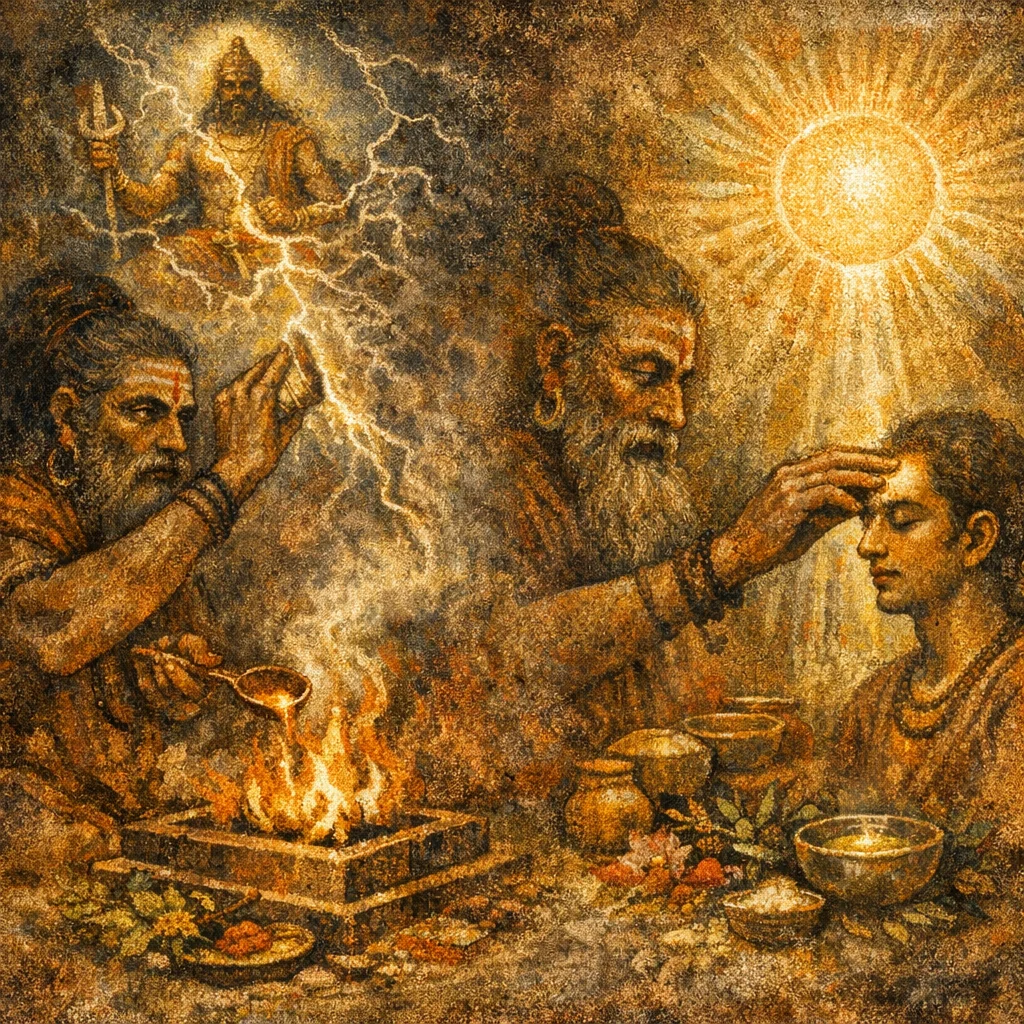
Sukta 47
Rishi: Traditionally connected with Sūrya/Āditya stanzas in AV 20 (RV-derived); specific r̥ṣi attribution varies by anukramaṇī tradition.
Devata: Sūrya (Āditya), as revealer and reverser of darkness/evil
Chandas: Triṣṭubh/Jagatī-type RV meter context (AV 20 is largely RV-recitational); exact meter for this pāda-set depends on pada division in the source.
Mantras
Mantra 1
तमिन्द्रं वाजयामसि महे वृत्राय हन्तवे । स वृषा वृषभो भुवत्
That Indra we quicken unto victory, for the great smiting of Vṛtra: may he become the Bull, the chief Bull.
Mantra 2
इन्द्रः स दामने कृत ओजिष्ठः स मदे हितः । द्युम्नी श्लोकी स सोम्यः
Indra—he, in his proper seat established—most puissant; he, in the rapture, set for deed: radiant in glory, famed in laud, he is the Soma-gracious.
Mantra 3
गिरा वज्रो न संभृतः सबलो अनपच्युतः । ववक्ष ऋष्वो अस्तृतः
By song, like a thunderbolt compacted, strong, unshifting: he hath waxed—lofty, unconquered.
Mantra 4
इन्द्रमिद् गाथिनो बृहदिन्द्रमर्केभिरर्किणः । इन्द्रं वाणीरनूषत
Indra indeed—the Great—do the gāthā-singers; Indra with hymns the hymn-crafty: Indra the voices have acclaimed.
Mantra 5
इन्द्र इद्धर्योः सचा संमिश्ल आ वचोयुजा । इन्द्रो वज्री हिरण्ययः
Indra indeed, with the two Bays in fellowship, close-knit—hither, speech-yoked: Indra, the bolt-bearer, golden-bright.
Mantra 6
इन्द्रो दीर्घाय चक्षस आ सूर्यं रोहयद् दिवि। वि गोभिरद्रिमैरयत्
Indra, for length of days and for clear seeing, hath set the Sun to mount in heaven; with kine—(with rays)—he drave the rock asunder.
Mantra 7
आ याहि सुषुमा हि त इन्द्र सोमं पिबा इमम्। एदं बर्हिः सदो मम
Come hither, most gracious; for thine, O Indra, is this Soma: drink thou this. Here is the Barhis, here my seat prepared.
Mantra 8
आ त्वा ब्रह्मयुजा हरी वहतामिन्द्र केशिना । उप ब्रह्माणि नः शृणु
Hither let thy two bays, yoked by sacred spell, bear thee, O Indra, long-maned: draw near; hear thou our holy utterances.
Mantra 9
ब्रह्माणस्त्वा वयं युजा सोमपामिन्द्र सोमिनः । सुतावन्तो हवामहे
With sacred spells we yoke thee—Soma-drinker, O Indra—(we) Soma-possessors; having pressed, we invoke thee.
Mantra 10
युञ्जन्ति ब्रध्नमरुषं चरन्तं परि तस्थुषः । रोचन्ते रोचना दिवि
They yoke the ruddy, tawny one that moves; the stations stand around him: the luminous realms shine in heaven.
Mantra 11
युञ्जन्त्यस्य काम्या हरी विपक्षसा रथे । शोणा धृष्णू नृवाहसा
They yoke for him his desired two bays upon the chariot, wide-ranging; ruddy, bold, man-bearing.
Mantra 12
केतुं कृण्वन्नकेतवे पेशो मर्या अपेशसे । समुषद्भिरजायथाः
Making a token for the tokenless, a fair form for him that lacketh form, O youthful Lord, thou wast born together with the dawnings.
Mantra 13
उदु त्यं जातवेदसं देवं वहन्ति केतवः । दृशे विश्वाय सूर्यम्
Up, verily, the radiant signs bear forth that Jātavedas, the God—Sūrya—for all to see.
Mantra 14
अप त्ये तायवो यथा नक्षत्रा यन्त्यक्तुभिः । सूराय विश्वचक्षसे
Away, like thieves, as stars depart with the nights, (let them vanish) before the Sun, the All-seeing.
Mantra 15
अदृश्रन्नस्य केतवो वि रश्मयो जनां अनु । भ्राजन्तो अग्नयो यथा
Seen are his radiant signs; his beams spread forth among the peoples, shining like fires ablaze.
Mantra 16
तरणिर्विश्वदर्शतो ज्योतिष्कृदसि सूर्य । विश्वमा भासि रोचन
A crosser art thou, seen of all; a maker of light art thou, O Sūrya: thou shinest forth upon the whole, O Radiant One.
Mantra 17
प्रत्यङ् देवानां विशः प्रत्यङ्ङुदेषि मानुषीः । प्रत्यङ् विश्वं स्वर्दृशे
Backward against the clans of Gods, backward thou risest against the tribes of men; backward against all, for the beholding of the heavenly light.
Mantra 18
येना पावक चक्षसा भुरण्यन्तं जनां अनु । त्वं वरुण पश्यसि
With that purifying eye wherewith thou followest the roving peoples, thou, O Varuṇa, beholdest.
Mantra 19
वि द्यामेषि रजस्पृथ्वहर्मिमानो अक्तुभिः । पश्यं जन्मानि सूर्य
Forth through the heaven thou goest, broad through the mid-air, meting out the day by nights, beholding births, O Sūrya.
Mantra 20
सप्त त्वा हरितो रथे वहन्ति देव सूर्य । शोचिष्केशं विचक्षणम्
Seven bay steeds in thy chariot bear thee, O god Sūrya—radiant-maned, of discerning sight.
Mantra 21
अयुक्त सप्त शुन्ध्युवः सूरो रथस्य नप्त्यः । ताभिर्याति स्वयुक्तिभिः
The Sun hath yoked the seven purifying daughters of his chariot; with them he goeth, by his self-yokings.
Frequently Asked Questions
It is a ritual idiom: the mantra makes harm and hostile influences ‘turn back’ and retreat, while the Sun’s light restores correct orientation and visibility.
Both. Its solar frame supports healing aims like clear sight and long life, and its apotropaic language is used to repel ill-omen, fear, and obstructive forces.
No specific substance is required by the hymn. Traditional practice often adds simple purity (water) and sunrise recitation, but the core instrument is the spoken mantra and focused intention.