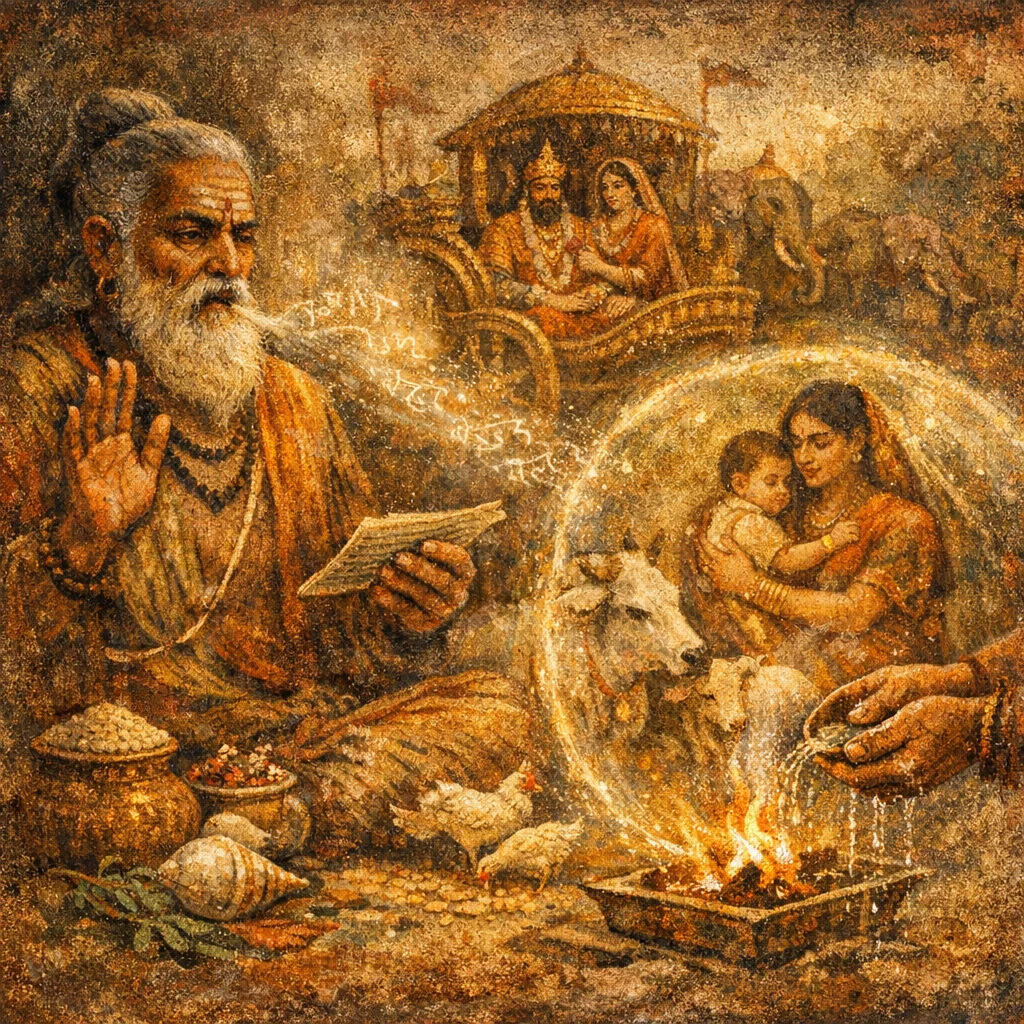
Sukta 127
Rishi: Khila/Anukramaṇī tradition uncertain; Book 20 often assigns Ṛgvedic attributions; here treated as ancillary laud-verse.
Devata: Nārāśaṃsa (personified praise; sometimes linked with Agni/ritual laudation)
Chandas: Triṣṭubh-like cadence (as in many RV-style laud verses; exact metrical diagnosis uncertain without full pada-count verification)
Mantras
Mantra 1
खिलानि । इदं जना उप श्रुत नराशंस स्तविष्यते । षष्टिं सहस्रा नवतिं च कौरम आ रुशमेषु दद्महे
Hear this, ye people, draw nigh and hearken: Nārāśaṃsa shall be lauded. Sixty thousand, and ninety more, a Kuru-gift—unto Rúśa, among these, we bestow it.
Mantra 2
उष्ट्रा यस्य प्रवाहणो वधूमन्तो द्विर्दश । वर्ष्मा रथस्य नि जिहीडते दिव ईषमाणा उपस्पृशः
Camels are his forward-bearing team, with brides in train, twice ten in number. The chariot’s lofty frame is set firm; heavenward they strain, drawing near to touch.
Mantra 3
एष इषाय मामहे शतं निष्कान् दश स्रजः । त्रीणि शतान्यर्वतां सहस्रा दश गोनाम्
This for our strengthening we acclaim: a hundred niṣka-gold, ten garlands. Three hundreds of horses, and ten thousands of kine.
Mantra 4
वच्यस्व रेभ वच्यस्व वृक्षे न पक्वे शकुनः । नष्टे जिह्वा चर्चरीति क्षुरो न भुरिजोरिव
Speak out, O Rebha, speak thou clearly, like a bird upon a ripened tree. Though the tongue be lost, it chatters harshly, like a razor, as of Bhurij.
Mantra 5
प्र रेभासो मनीषा वृषा गाव इवेरते । अमोतपुत्रका एषाममोत गा इवासते
Forth spring the singers’ inspired thoughts, like bulls, like cows they are impelled. The sons of Amota—of these, Amota’s cows, as it were, abide in settled store.
Mantra 6
प्र रेभ धीं भरस्व गोविदं वसुविदम्। देवत्रेमां वाचं स्रीणीहीषुर्नावीरस्तारम्
Forth, O Singer, bring thou inspired thought, a winner of kine, a winner of goodly wealth. God-ward whet thou this speech—an arrow—(and) a ship with its steersman for the crossing.
Mantra 7
राज्ञो विश्वजनीनस्य यो देवोऽमर्त्यां अति । वैश्वानरस्य सुष्टुतिमा सुनोता परिक्षितः
For the King, the All-men’s lord, for that God who passeth beyond the immortal (sphere), press forth—bring forth—the fair laudation of Vaiśvānara, (the praise) of Parikṣit.
Mantra 8
परिच्छिन्नः क्षेममकरोत् तम आसनमाचरन्। कुलायन् कृण्वन् कौरव्यः पतिर्वदति जायया
Enclosed about, he made security; that seat he occupied in wonted course. Nesting, building, the Kuru prince—the lord—speaks with his wife.
Mantra 9
कतरत् त आ हराणि दधि मन्थां परि श्रुतम्। जायाः पतिं वि पृच्छति राष्ट्रे राज्ञः परिक्षितः
‘Which shall I bring thee hither—curds, or the churned draught famed far and wide?’ Thus the wife asks her lord, within the realm of King Parikṣit.
Mantra 10
अभीवस्वः प्र जिहीते यवः पक्वः पथो बिलम्। जनः स भद्रमेधति राष्ट्रे राज्ञः परिक्षितः
In wealth-abounding wise the ripe barley is borne away; the pit is cleared from off the road. The people—these—thrive in blessed good, within the realm of King Parikṣit.
Mantra 11
इन्द्रः कारुमबूबुधदुत्तिष्ठ वि चरा जनम्। ममेदुग्रस्य चर्कृधि सर्व इत् ते पृणादरिः
Indra hath been awakened by the Singer: arise, go forth, and range among the people. For me—yea, of the fierce One—do thou accomplish it: every enemy shall but fill thee full (with tribute).
Mantra 12
इह गावः प्रजायध्वमिहाश्वा इह पूरुषाः । इहो सहस्रदक्षिणोऽपि पूषा नि षीदति
Here may the Cows bring forth; here may the Horses, here the Men increase. Here too may Pūṣan, rich in thousand gifts, sit down (among us).
Mantra 13
नेमा इन्द्र गावो रिषन् मो आसां गोप रीरिषत्। मासाममित्रयुर्जन इन्द्र मा स्तेन ईशत
Let not these cows, O Indra, be harmed; let not their herdsman injure them. Let no foe-minded man have power over them; O Indra, let not the thief be lord (of them).
Mantra 14
उप नो न रमसि सूक्तेन वचसा वयं भद्रेण वचसा वयम्। वनादधिध्वनो गिरो न रिष्येम कदा चन
Draw near and take delight in us through well-spoken speech—through auspicious speech, even we. From the forest, from the over-roaring voices, may we never at any time be harmed.
Frequently Asked Questions
Nārāśaṃsa is the personified power of “praise of men”—the force by which public, well-formed laudation makes generosity famous, legitimate, and spiritually fruitful.
Both, but its core is prosperity-through-praise: it sacralizes a donation (dānastuti/paustika). The ending also functions as a pacifying protection, asking that auspicious speech prevent harm from ominous or wild threats.
Most naturally at a public act of giving: the priest recites it before witnesses, names and counts the gift, and closes with auspicious-speech formulas to ‘seal’ the donation and stabilize the donor’s settled security (kṣema).