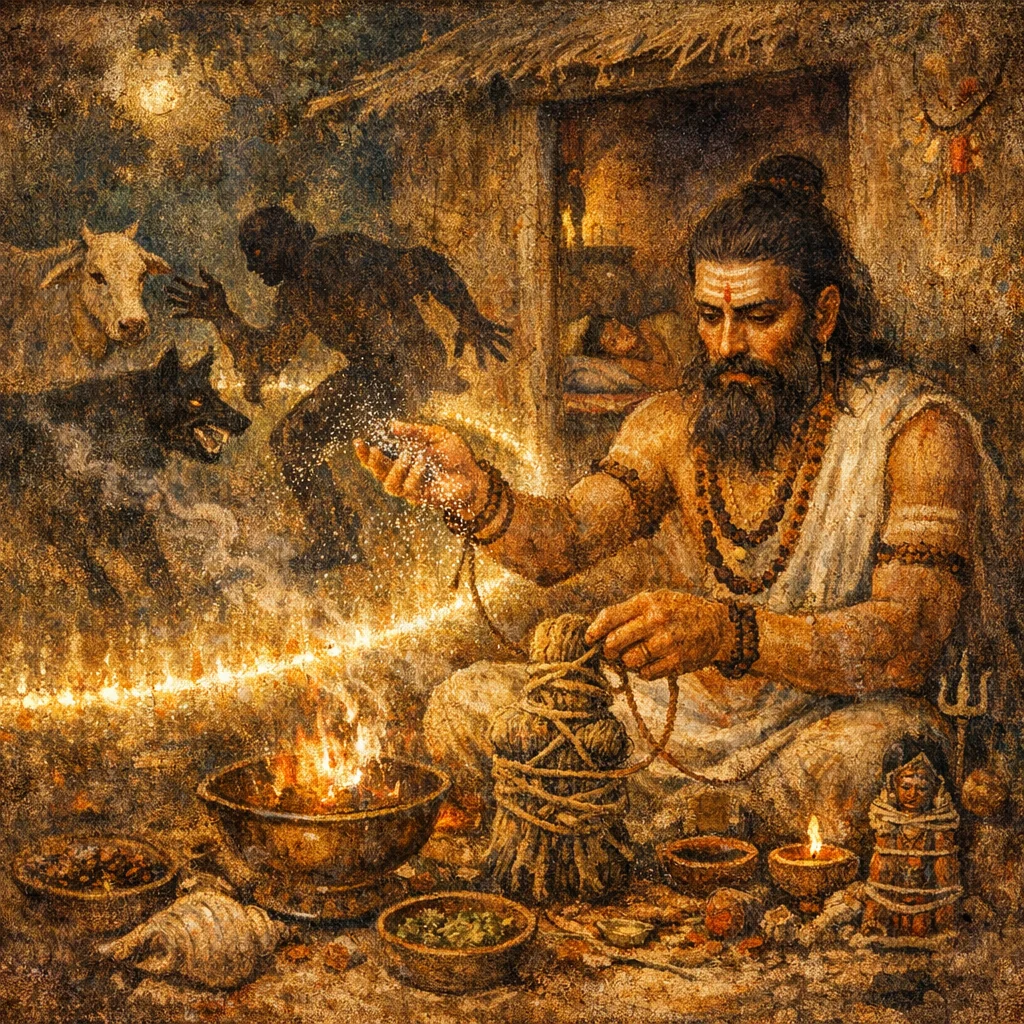
Sukta 47
Rishi: Traditionally associated with Rātri-hymn seers (Atharvanic attribution; specific r̥ṣi varies by anukramaṇī tradition).
Devata: Rātri (Night), as protective and auspicious power.
Chandas: Mixed/irregular (late Atharvanic style; not strictly RV-classical in cadence).
Mantras
Mantra 1
रात्रिः। आ रात्रि पार्थिवं रजः पितुरप्रायि धामभिः । दिवः सदांसि बृहती वि तिष्ठस आ त्वेषं वर्तते तमः
Night—come hither, O Night: over the earthly region thou hast advanced with thy stations. Great one, thou standest wide over the seats of heaven; unto thee the darkness turns on with impetuous speed.
Mantra 2
न यस्याः पारं ददृशे न योयुवद् विश्वमस्यां नि विशते यदेजति । अरिष्टासस्त उर्वि तमस्वति रात्रि पारमशीमहि भद्रे पारमशीमहि
Of her no man hath seen the farther shore; nor doth she hold back: into her entereth all that stirreth. Through thee, O Wide One, O Night of darkness, may we attain the farther side; O gracious One, may we attain the farther side.
Mantra 3
ये ते रात्रि नृचक्षसो द्रष्टारो नवतीर्नव । अशीतिः सन्त्यष्टा उतो ते सप्त सप्ततिः
They who are thine, O Night, the man-beholding watchers—nine-and-ninety; and there are eight-and-eighty; and thine, moreover, are seven-and-seventy.
Mantra 4
षष्टिश्च षट् च रेवति पञ्चाशत् पञ्च सुम्नयि । चत्वारश्चत्वारिंशच्च त्रयस्त्रिंशच्च वाजिनि
And sixty and six, O opulent One; fifty and five, O gracious One; and forty and four; and thirty and three, O prize-bestowing One.
Mantra 5
द्वौ च ते विंशतिश्च ते रात्र्येकादशावमाः । तेभिर्नो अद्य पायुभिर्नु पाहि दुहितर्दिवः
And two are thine, and twenty are thine, O Night; the last are eleven. With those protectors, even now, protect us to-day, O Daughter of Heaven.
Mantra 6
रक्षा माकिर्नो अधशंस ईशत मा नो दुःशंस ईशत । मा नो अद्य गवां स्तेनो मावीनां वृक ईशत
Protect: let no evil-speaker have mastery over us; let no ill-speaker have mastery over us. Let not to-day the thief have mastery over our cows, nor the wolf over our sheep.
Mantra 7
माश्वानां भद्रे तस्करो मा नृणां यातुधान्यः । परमेभिः पथिभिः स्तेनो धावतु तस्करः । परेण दत्वती रज्जुः परेणाघायुरर्षतु
Let not, O gracious Night, the thief come near our horses; let not the yātudhāna come near our men. By the farthest paths let the robber, the thief, run forth. Beyond, let the biting rope be; beyond, let the evil-liver pass away.
Mantra 8
अध रात्रि तृष्टधूममशीर्षाणमहिं कृणु । हनू वृकस्य जम्भयास्तेन तं द्रुपदे जहि
Then, O Night, make him a smoke-dark, headless serpent. With the wolf’s jaws, with the crushing bite—O thief—smite that man in the stocks.
Mantra 9
त्वयि रात्रि वसामसि स्वपिष्यामसि जागृहि। गोभ्यो नः शर्म यच्छाश्वेभ्यः पुरुषेभ्यः
In thee, O Night, we take our dwelling; we shall lie down to sleep—do thou keep watch. Grant us shelter for our cows, for our horses, for our men.
Frequently Asked Questions
It is recited for protection during the night—so people, home, and livestock remain safe from harm, hostile speech, theft, and predators, and the night ends auspiciously at dawn.
It is a poetic image for crossing the dangerous darkness and arriving at dawn safely—like reaching the far bank after a difficult crossing.
No. The hymn is primarily mantra-based; it works through invocation of Rātri as guardian. Many practitioners simply recite it at dusk or while keeping night watch, optionally near a lamp or hearth for steadiness.