Sukta 5
Rishi: Atharvanic tradition (often attributed to Brahmacārin/Brahmacarya complex in AV 11.5)
Devata: Brahmacarya (personified vow-power) / implicit Brahman
Chandas: Anuṣṭubh (predominant in this section)
Mantras
Mantra 1
ब्रह्मचर्यम्। ब्रह्मचारीष्णंश्चरति रोदसी उभे तस्मिन् देवाः संमनसो भवन्ति । स दाधार पृथिवीं दिवं च स आचार्यं१ तपसा पिपर्ति
Brahmacarya. The Brahmacārin, ardent, goeth his course through both the Worlds; within him the Gods become of one accord. He hath upheld Earth and Heaven; he, by his fervid austerity, sustaineth the Teacher.
Mantra 2
ब्रह्मचारिणं पितरो देवजनाः पृथग् देवा अनुसंयन्ति सर्वे । गन्धर्वा एनमन्वायन् त्रयस्त्रिंशत् त्रिशताः षट्सहस्राः सर्वान्त्स देवांस्तपसा पिपर्ति
The Fathers, and the heavenly folk, and the Gods, each in his several order, all gather and follow after the Brahmacārin. The Gandharvas attended him; the Thirty-three, the Three Hundred, the Six Thousand—all these Gods he, by his austerity, doth fill and sustain.
Mantra 3
आचार्यऽ उपनयमानो ब्रह्मचारिणं कृणुते गर्भमन्तः । तं रात्रीस्तिस्र उदरे बिभर्ति तं जातं द्रष्टुमभिसंयन्ति देवाः
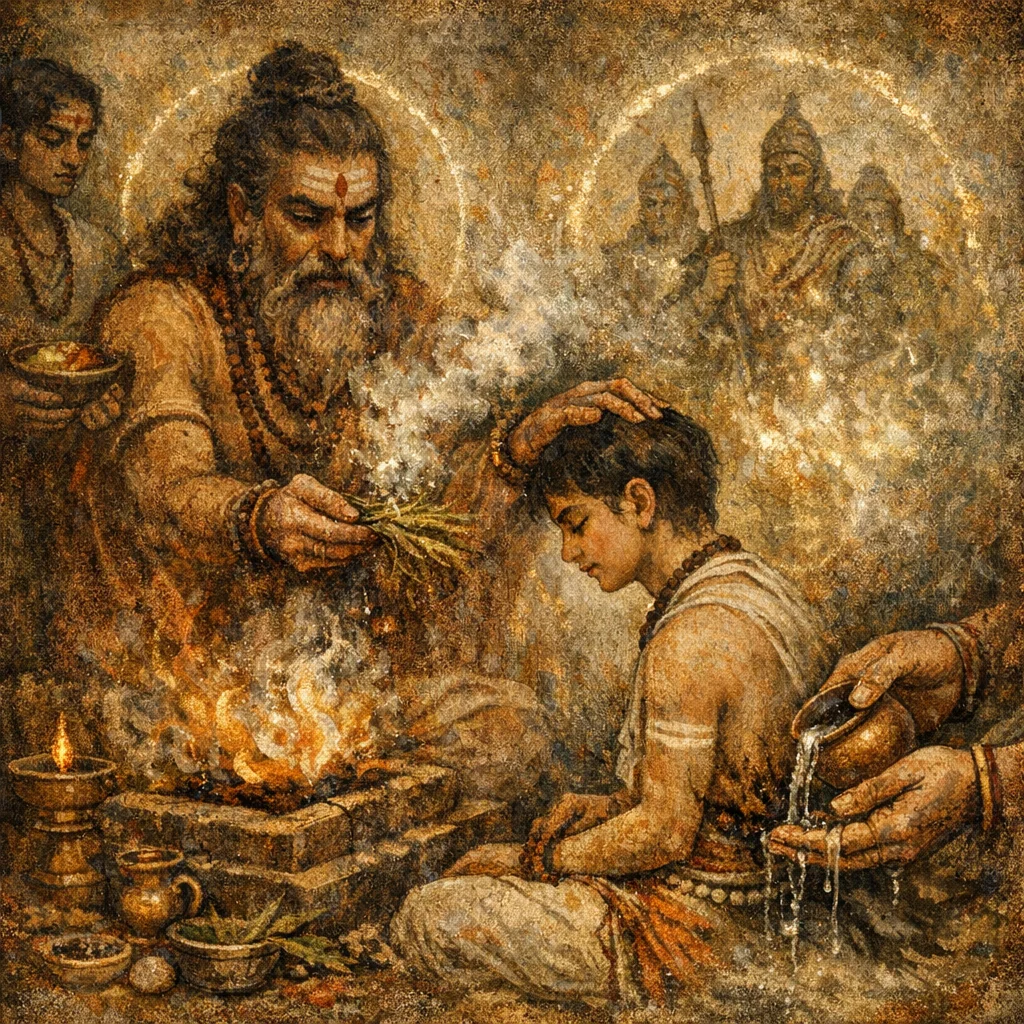
The Teacher, leading him near, within makes of the Brahmacārin an embryo. Three nights he bears him in the belly; him, when born, the Gods assemble to behold.
Mantra 4
इयं समित् पृथिवी द्यौर्द्वितीयोतान्तरिक्षं समिधा पृणाति । ब्रह्मचारी समिधा मेखलया श्रमेण लोकांस्तपसा पिपर्ति
This fuel is Earth; Heaven is the second; yea, with fuel he filleth also the Mid-air. The Brahmacārin, with fuel-stick, with girdle, with toil, with austerity, doth fill and sustain the worlds.
Mantra 5
पूर्वो जातो ब्रह्मणो ब्रह्मचारी घर्मं वसानस्तपसोदतिष्ठत्। तस्माज्जातं ब्राह्मणं ब्रह्म ज्येष्ठं देवाश्च सर्वे अमृतेन साकम्
First-born of brahman is the Brahmacārin: clothed in fervid heat, by austerity he arose. From him was born the Brāhmaṇa, brahman the eldest; and all the Gods together with immortality.
Mantra 6
ब्रह्मचार्येऽति समिधा समिद्धः कार्ष्णं वसानो दीक्षितो दीर्घश्मश्रुः । स सद्य एति पूर्वस्मादुत्तरं समुद्रं लोकान्त्संगृभ्य मुहुराचरिक्रत्
In brahmacarya, exceeding kindled with fuel, clad in the dark vesture, consecrated, long-bearded,—he straightway goeth from the former to the further ocean; the worlds he gathereth up, and again and again sets his course in ordered practice.
Mantra 7
ब्रह्मचारी जनयन् ब्रह्मापो लोकं प्रजापतिं परमेष्ठिनं विराजम्। गर्भो भूत्वामृतस्य योनाविन्द्रो ह भूत्वासुरांस्ततर्ह
The Brahmacārin, generating, brought forth the holy power, the Waters, the world, Prajāpati, Paramēṣṭhin, and Virāj. Having become an embryo in the womb of immortality, having indeed become Indra, he overpassed and subdued the Asuras.
Mantra 8
आचार्यऽ स्ततक्ष नभसी उभे इमे उर्वी गम्भीरे पृथिवीं दिवं च । ते रक्षति तपसा ब्रह्मचारी तस्मिन् देवाः संमनसो भवन्ति
The Teacher fashioned these two firmaments, both wide and deep—earth and heaven. Those the Brahmacārin guards by his tapas; in him the Gods become of one accord.
Mantra 9
इमां भूमिं पृथिवीं ब्रह्मचारी भिक्षामा जभार प्रथमो दिवं च । ते कृत्वा समिधावुपास्ते तयोरार्पिता भुवनानि विश्वा
This earth, the broad Earth, the Brahmacārin first obtained as alms—and heaven as well. Having made those two his kindling-sticks, he sits in attendance; upon those two are all the worlds made fast.
Mantra 10
अर्वागन्यः परो अन्यो दिवस्पृष्ठाद् गुहा निधी निहितौ ब्राह्मणस्य । तौ रक्षति तपसा ब्रह्मचारी तत् केवलं कृणुते ब्रह्म विद्वान्
One is on this side, the other is beyond; from the back of heaven, in secret, two treasures are laid up for the Brāhmaṇa. Those two the Brahmacārin guards by his tapas; that the knower of brahman makes wholly his own.
Mantra 11
अर्वागन्य इतो अन्यः पृथिव्या अग्नी समेतो नभसी अन्तरमे। तयोः श्रयन्ते रश्मयोऽधि दृढास्ताना तिष्ठति तपसा ब्रह्मचारी
One is on this side, the other from here; from earth the two Fires have met in the space between the two firmaments. Upon those two rest the firm rays; upon those he stands fast by his tapas—the Brahmacārin.
Mantra 12
अभिक्रन्दन् स्तनयन्नरुणः शितिङ्गो बृहच्छेपोऽनु भूमौ जभार । ब्रह्मचारी सिञ्चति सानौ रेतः पृथिव्यां तेन जीवन्ति प्रदिशश्चतस्रः
Roaring aloud, thundering, the ruddy one, bright-horned, great-trailed, bore it along and set it upon the earth. The Brahmacārin sprinkles seed upon the height; thereby the Earth is quickened, and by that the four quarters live.
Mantra 13
अग्नौ सूर्ये चन्द्रमसि मातरिश्वन् ब्रह्मचार्य१प्सु समिधमा दधाति । तासामर्चींषि पृथगभ्रे चरन्ति तासामाज्यं पुरुषो वर्षमापः
In Agni, in the Sun, in the Moon, O Mātariśvan, the Brahmacārin sets fuel within the waters. Their flames move each in its own wise, coursing in the cloud; of them the ghee is the Person, the rain the Waters.
Mantra 14
आचार्योऽ मृत्युर्वरुणः सोम ओषधयः पयः । जीभूता आसन्त्सत्वानस्तैरिदं स्व१राभृतम्
The Teacher was Death, was Varuṇa; he was Soma, the Plants, the Milk. They became the tongues of living creatures; by them this heaven was brought and won.
Mantra 15
अमा घृतं कृणुते केवलमाचार्यो भूत्वा वरुणो यद्यदैच्छत् प्रजापतौ । तद् ब्रह्मचारी प्रायच्छत् स्वन् मित्रो अध्यात्मनः
At home he makes ghee, and that alone: the Teacher, becoming Varuṇa, whatsoever he desired in Prajāpati— that the Brahmacārin handed forth; heaven—Mitra—within the self.
Mantra 16
आचार्योऽ ब्रह्मचारी ब्रह्मचरी प्रजापतिः । प्रजापतिर्वि राजति विराडिन्द्रोऽभवद् वशी
The Teacher is the Brahmacārin; the Brahmacārin is Prajāpati. Prajāpati rules forth in splendour: Virāj—Indra—he became, the masterful one.
Mantra 17
ब्रह्मचर्येण तपसा राजा राष्ट्रं वि रक्षति । आचार्योऽ ब्रह्मचर्येण ब्रह्मचारिणमिच्छते
By holy studentship, by ardent austerity, the King doth guard and widely shield the realm. The Teacher, by that studentship, desireth and seeketh the vowed Student.
Mantra 18
ब्रह्मचर्येण कन्या३ युवानं विन्दते पतिम्। अनड्वान् ब्रह्मचर्येणाश्वो घासं जिगीर्षति
By holy studentship the maiden winneth her youthful lord as spouse. By studentship the strong bull, and the horse, would fain win fodder for their need.
Mantra 19
ब्रह्मचर्येण तपसा देवा मृत्युमपाघ्नत । इन्द्रो ह ब्रह्मचर्येण देवेभ्यः स्व१राभरत्
By holy studentship, by fervent austerity, the Gods smote Death and drave him far away. Indra, in sooth, by studentship brought heaven’s light and won it for the Gods.
Mantra 20
ओषधयो भूतभव्यमहोरात्रे वनस्पतिः । संवत्सरः सहर्तुभिस्ते जाता ब्रह्मचारिणः
The Herbs, what hath been and what shall be, Day-and-Night, and Forest’s Lord; the Year with Seasons in his train—these all are born of the vowed Student.
Mantra 21
पार्थिवा दिव्याः पशव आरण्या ग्राम्याश्च ये। अपक्षाः पक्षिणश्च ये ते जाता ब्रह्मचारिणः
The beasts of earth, the beasts of heaven, the wild and those of village-home; the wingless things and birds that fly—these all are born of the vowed Student.
Mantra 22
पृथक् सर्वे प्राजापत्याः प्राणानात्मसु बिभ्रति । तान्त्सर्वान् ब्रह्म रक्षति ब्रह्मचारिण्याभृतम्
Severally all the Prajāpatic powers bear the breaths within their several selves. All those doth Brahman guard—Brahman brought hither by the Brahmacārin.
Mantra 23
देवानामेतत् परिषूतमनभ्यारूढं चरति रोचमानम्। तस्माज्जातं ब्राह्मणं ब्रह्म ज्येष्ठं देवाश्च सर्वे अमतेन साकम्
This, of the Gods, strained-pure, unmounted-on, goes radiant in its course. From it is born the Brāhmaṇa—Brahman the chief; and all the Gods together with immortality.
Mantra 24
ब्रह्मचारी ब्रह्म भ्राजद् बिभर्ति तस्मिन् देवा अधि विश्वे समोताः । प्राणापानौ जनयन्नाद् व्यानं वाचं मनो हृदयं ब्रह्म मेधाम्
The Brahmacārin beareth Brahman, shining; in him are all the Gods set, interwoven. Begetting prāṇa and apāna, thence he gendereth vyāna—speech, mind, the heart, Brahman, and inspired understanding.
Mantra 25
चक्षुः श्रोत्रं यशो अस्मासु धेह्यन्नं रेतो लोहितमुदरम्।२५॥ तानि कल्पद् ब्रह्मचारी सलिलस्य पृष्ठे तपोऽतिष्ठत् तप्यमानः समुद्रे। स स्नातो बभ्रुः पिङ्गलः पृथिव्यां बहु रोचते
Bestow on us eye and ear, and glory; food, seed, blood, and the belly. These did the Brahmacārin duly fashion: on the back of the waters he took his stand in heat, heating himself in the sea. Bathed, brown, tawny, on the earth he shineth forth full greatly.
Frequently Asked Questions
It praises Brahmacarya (disciplined sacred studentship) as a real power that produces tapas, radiance, and intelligence, while stabilizing the teacher–student institution and even strengthening protection of the realm.
It presents brahmacarya as an inner integration: regulated vitality supports speech, mind, and heart, culminating in medhā (inspired understanding) and brahmavarcasa (spiritual luster).
It is best used as a vow-affirming recitation before study or teaching—paired with ethical restraint, truthful speech, and calm breathing—so the recitation reinforces discipline, clarity, and steadiness rather than serving as a material-ritual spell.