Adhyaya 10
Deva–Asura Battle after the Nectar; Bali’s Illusions and Hari’s Intervention
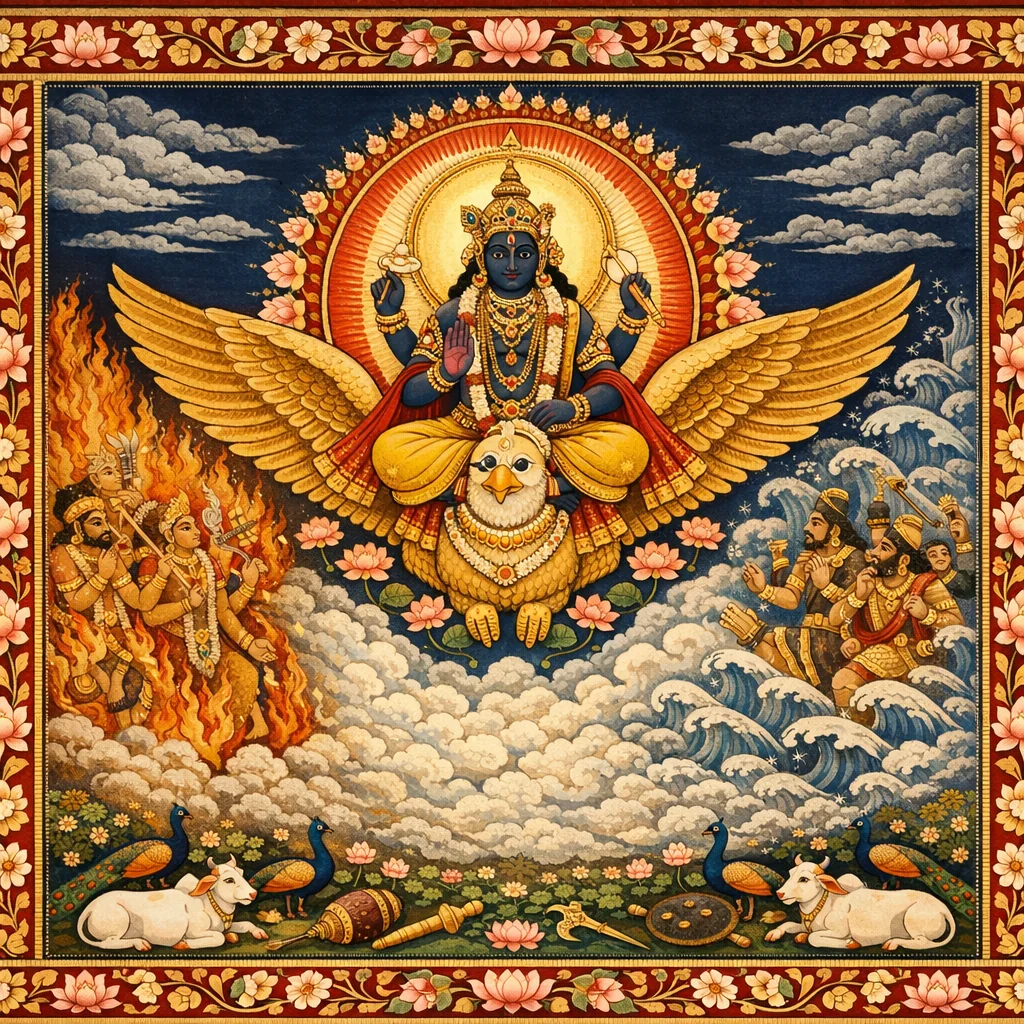
After the Ocean of Milk is churned and the devas receive amṛta, the asuras—excluded from the nectar despite their labor—erupt in envy and advance with weapons. Empowered by nectar and anchored in Nārāyaṇa’s shelter, the devas counterattack, and a vast, symmetrical battle unfolds with matched divisions, exotic mounts, and resounding war instruments. The chapter catalogs leading asura commanders under Mahārāja Bali, who appears in Maya’s wondrous, intermittently visible aircraft, while Indra stands on Airāvata amid the devas. Pairwise duels are assigned across cosmic offices (sun, moon, Vāyu, Varuṇa, Śiva, Bṛhaspati, Śukra, Durgā/Bhadrakālī, etc.), showing the universe’s administrative powers locked in conflict. Bali directly engages Indra, then vanishes into māyā, producing terrifying battlefield illusions—fire, floods, falling beasts, and demonic apparitions—until the devas, unable to counteract, meditate on the Supreme. Hari arrives on Garuḍa; His presence dissolves illusion like waking ends a dream. The Lord then begins decisive slaying of key asuras, reasserting divine protection and setting the stage for continued rout of demoniac forces.
Shlokas
Verse 1
श्रीशुक उवाच इति दानवदैतेया नाविन्दन्नमृतं नृप । युक्ता: कर्मणि यत्ताश्च वासुदेवपराङ्मुखा: ॥ १ ॥
Śukadeva Gosvāmī said: O King, the demons and Daityas all engaged with full attention and effort in churning the ocean, but because they were not devotees of Vāsudeva, the Supreme Personality of Godhead, Kṛṣṇa, they were not able to drink the nectar.
Verse 2
साधयित्वामृतं राजन्पाययित्वा स्वकान्सुरान् । पश्यतां सर्वभूतानां ययौ गरुडवाहन: ॥ २ ॥
O King, after the Supreme Personality of Godhead had brought to completion the affairs of churning the ocean and feeding the nectar to the demigods, who are His dear devotees, He left the presence of them all and was carried by Garuḍa to His own abode.
Verse 3
सपत्नानां परामृद्धिं दृष्ट्वा ते दितिनन्दना: । अमृष्यमाणा उत्पेतुर्देवान्प्रत्युद्यतायुधा: ॥ ३ ॥
Seeing the victory of the demigods, the demons became intolerant of their superior opulence. Thus they began to march toward the demigods with raised weapons.
Verse 4
तत: सुरगणा: सर्वे सुधया पीतयैधिता: । प्रतिसंयुयुधु: शस्त्रैर्नारायणपदाश्रया: ॥ ४ ॥
Thereafter, being enlivened because of drinking the nectar, the demigods, who are always at the shelter of the lotus feet of Nārāyaṇa, used their various weapons to counterattack the demons in a fighting spirit.
Verse 5
तत्र दैवासुरो नाम रण: परमदारुण: । रोधस्युदन्वतो राजंस्तुमुलो रोमहर्षण: ॥ ५ ॥
O King, a fierce battle on the beach of the Ocean of Milk ensued between the demigods and the demons. The fighting was so terrible that simply hearing about it would make the hair on one’s body stand on end.
Verse 6
तत्रान्योन्यं सपत्नास्ते संरब्धमनसो रणे । समासाद्यासिभिर्बाणैर्निजघ्नुर्विविधायुधै: ॥ ६ ॥
Both parties in that fight were extremely angry at heart, and in enmity they beat one another with swords, arrows and varieties of other weapons.
Verse 7
शङ्खतूर्यमृदङ्गानां भेरीडमरिणां महान् । हस्त्यश्वरथपत्तीनां नदतां निस्वनोऽभवत् ॥ ७ ॥
The sounds of the conchshells, bugles, drums, bherīs and ḍamarīs [kettledrums], as well as the sounds made by the elephants, horses and soldiers, who were both on chariots and on foot, were tumultuous.
Verse 8
रथिनो रथिभिस्तत्र पत्तिभि: सह पत्तय: । हया हयैरिभाश्चेभै: समसज्जन्त संयुगे ॥ ८ ॥
On that battlefield, the charioteers fought with the opposing charioteers, the infantry soldiers with the opposing infantry, the soldiers on horseback with the opposing soldiers on horseback, and the soldiers on the backs of elephants with the enemy soldiers on elephants. In this way, the fighting took place between equals.
Verse 9
उष्ट्रै: केचिदिभै: केचिदपरे युयुधु: खरै: । केचिद्गौरमुखैरृक्षैर्द्वीपिभिर्हरिभिर्भटा: ॥ ९ ॥
Some soldiers fought on the backs of camels, some on the backs of elephants, some on asses, some on white-faced and red-faced monkeys, some on tigers and some on lions. In this way, they all engaged in fighting.
Verse 10
गृध्रै: कङ्कैर्बकैरन्ये श्येनभासैस्तिमिङ्गिलै: । शरभैर्महिषै: खड्गैर्गोवृषैर्गवयारुणै: ॥ १० ॥ शिवाभिराखुभि: केचित् कृकलासै: शशैर्नरै: । बस्तैरेके कृष्णसारैर्हंसैरन्ये च सूकरै: ॥ ११ ॥ अन्ये जलस्थलखगै: सत्त्वैर्विकृतविग्रहै: । सेनयोरुभयो राजन्विविशुस्तेऽग्रतोऽग्रत: ॥ १२ ॥
O King, some soldiers fought on the backs of vultures, eagles, ducks, hawks and bhāsa birds. Some fought on the backs of timiṅgilas, which can devour huge whales, some on the backs of śarabhas, and some on buffalo, rhinoceroses, cows, bulls, jungle cows and aruṇas. Others fought on the backs of jackals, rats, lizards, rabbits, human beings, goats, black deer, swans and boars. In this way, mounted on animals of the water, land and sky, including animals with deformed bodies, both armies faced each other and went forward.
Verse 11
गृध्रै: कङ्कैर्बकैरन्ये श्येनभासैस्तिमिङ्गिलै: । शरभैर्महिषै: खड्गैर्गोवृषैर्गवयारुणै: ॥ १० ॥ शिवाभिराखुभि: केचित् कृकलासै: शशैर्नरै: । बस्तैरेके कृष्णसारैर्हंसैरन्ये च सूकरै: ॥ ११ ॥ अन्ये जलस्थलखगै: सत्त्वैर्विकृतविग्रहै: । सेनयोरुभयो राजन्विविशुस्तेऽग्रतोऽग्रत: ॥ १२ ॥
O King, some soldiers fought on the backs of vultures, eagles, ducks, hawks and bhāsa birds. Some fought on the backs of timiṅgilas, which can devour huge whales, some on the backs of śarabhas, and some on buffalo, rhinoceroses, cows, bulls, jungle cows and aruṇas. Others fought on the backs of jackals, rats, lizards, rabbits, human beings, goats, black deer, swans and boars. In this way, mounted on animals of the water, land and sky, including animals with deformed bodies, both armies faced each other and went forward.
Verse 12
गृध्रै: कङ्कैर्बकैरन्ये श्येनभासैस्तिमिङ्गिलै: । शरभैर्महिषै: खड्गैर्गोवृषैर्गवयारुणै: ॥ १० ॥ शिवाभिराखुभि: केचित् कृकलासै: शशैर्नरै: । बस्तैरेके कृष्णसारैर्हंसैरन्ये च सूकरै: ॥ ११ ॥ अन्ये जलस्थलखगै: सत्त्वैर्विकृतविग्रहै: । सेनयोरुभयो राजन्विविशुस्तेऽग्रतोऽग्रत: ॥ १२ ॥
O King, some soldiers fought on the backs of vultures, eagles, ducks, hawks and bhāsa birds. Some fought on the backs of timiṅgilas, which can devour huge whales, some on the backs of śarabhas, and some on buffalo, rhinoceroses, cows, bulls, jungle cows and aruṇas. Others fought on the backs of jackals, rats, lizards, rabbits, human beings, goats, black deer, swans and boars. In this way, mounted on animals of the water, land and sky, including animals with deformed bodies, both armies faced each other and went forward.
Verse 13
चित्रध्वजपटै राजन्नातपत्रै: सितामलै: । महाधनैर्वज्रदण्डैर्व्यजनैर्बार्हचामरै: ॥ १३ ॥ वातोद्धूतोत्तरोष्णीषैरर्चिर्भिर्वर्मभूषणै: । स्फुरद्भिर्विशदै: शस्त्रै: सुतरां सूर्यरश्मिभि: ॥ १४ ॥ देवदानववीराणां ध्वजिन्यौ पाण्डुनन्दन । रेजतुर्वीरमालाभिर्यादसामिव सागरौ ॥ १५ ॥
O King, O descendant of Mahārāja Pāṇḍu, the soldiers of both the demigods and demons were decorated by canopies, colorful flags, and umbrellas with handles made of valuable jewels and pearls. They were further decorated by fans made of peacock feathers and by other fans also. The soldiers, their upper and lower garments waving in the breeze, naturally looked very beautiful, and in the light of the glittering sunshine their shields, ornaments and sharp, clean weapons appeared dazzling. Thus the ranks of soldiers seemed like two oceans with bands of aquatics.
Verse 14
चित्रध्वजपटै राजन्नातपत्रै: सितामलै: । महाधनैर्वज्रदण्डैर्व्यजनैर्बार्हचामरै: ॥ १३ ॥ वातोद्धूतोत्तरोष्णीषैरर्चिर्भिर्वर्मभूषणै: । स्फुरद्भिर्विशदै: शस्त्रै: सुतरां सूर्यरश्मिभि: ॥ १४ ॥ देवदानववीराणां ध्वजिन्यौ पाण्डुनन्दन । रेजतुर्वीरमालाभिर्यादसामिव सागरौ ॥ १५ ॥
O King, O descendant of Mahārāja Pāṇḍu, the soldiers of both the demigods and demons were decorated by canopies, colorful flags, and umbrellas with handles made of valuable jewels and pearls. They were further decorated by fans made of peacock feathers and by other fans also. The soldiers, their upper and lower garments waving in the breeze, naturally looked very beautiful, and in the light of the glittering sunshine their shields, ornaments and sharp, clean weapons appeared dazzling. Thus the ranks of soldiers seemed like two oceans with bands of aquatics.
Verse 15
चित्रध्वजपटै राजन्नातपत्रै: सितामलै: । महाधनैर्वज्रदण्डैर्व्यजनैर्बार्हचामरै: ॥ १३ ॥ वातोद्धूतोत्तरोष्णीषैरर्चिर्भिर्वर्मभूषणै: । स्फुरद्भिर्विशदै: शस्त्रै: सुतरां सूर्यरश्मिभि: ॥ १४ ॥ देवदानववीराणां ध्वजिन्यौ पाण्डुनन्दन । रेजतुर्वीरमालाभिर्यादसामिव सागरौ ॥ १५ ॥
O King, O descendant of Mahārāja Pāṇḍu, the soldiers of both the demigods and demons were decorated by canopies, colorful flags, and umbrellas with handles made of valuable jewels and pearls. They were further decorated by fans made of peacock feathers and by other fans also. The soldiers, their upper and lower garments waving in the breeze, naturally looked very beautiful, and in the light of the glittering sunshine their shields, ornaments and sharp, clean weapons appeared dazzling. Thus the ranks of soldiers seemed like two oceans with bands of aquatics.
Verse 16
वैरोचनो बलि: सङ्ख्ये सोऽसुराणां चमूपति: । यानं वैहायसं नाम कामगं मयनिर्मितम् ॥ १६ ॥ सर्वसाङ्ग्रामिकोपेतं सर्वाश्चर्यमयं प्रभो । अप्रतर्क्यमनिर्देश्यं दृश्यमानमदर्शनम् ॥ १७ ॥ आस्थितस्तद् विमानाग्र्यं सर्वानीकाधिपैर्वृत: । बालव्यजनछत्राग्र्यै रेजे चन्द्र इवोदये ॥ १८ ॥
For that battle the most celebrated commander in chief, Mahārāja Bali, son of Virocana, was seated on a wonderful airplane named Vaihāyasa. O King, this beautifully decorated airplane had been manufactured by the demon Maya and was equipped with weapons for all types of combat. It was inconceivable and indescribable. Indeed, it was sometimes visible and sometimes not. Seated in this airplane under a beautiful protective umbrella and being fanned by the best of cāmaras, Mahārāja Bali, surrounded by his captains and commanders, appeared just like the moon rising in the evening, illuminating all directions.
Verse 17
वैरोचनो बलि: सङ्ख्ये सोऽसुराणां चमूपति: । यानं वैहायसं नाम कामगं मयनिर्मितम् ॥ १६ ॥ सर्वसाङ्ग्रामिकोपेतं सर्वाश्चर्यमयं प्रभो । अप्रतर्क्यमनिर्देश्यं दृश्यमानमदर्शनम् ॥ १७ ॥ आस्थितस्तद् विमानाग्र्यं सर्वानीकाधिपैर्वृत: । बालव्यजनछत्राग्र्यै रेजे चन्द्र इवोदये ॥ १८ ॥
For that battle the most celebrated commander in chief, Mahārāja Bali, son of Virocana, was seated on a wonderful airplane named Vaihāyasa. O King, this beautifully decorated airplane had been manufactured by the demon Maya and was equipped with weapons for all types of combat. It was inconceivable and indescribable. Indeed, it was sometimes visible and sometimes not. Seated in this airplane under a beautiful protective umbrella and being fanned by the best of cāmaras, Mahārāja Bali, surrounded by his captains and commanders, appeared just like the moon rising in the evening, illuminating all directions.
Verse 18
वैरोचनो बलि: सङ्ख्ये सोऽसुराणां चमूपति: । यानं वैहायसं नाम कामगं मयनिर्मितम् ॥ १६ ॥ सर्वसाङ्ग्रामिकोपेतं सर्वाश्चर्यमयं प्रभो । अप्रतर्क्यमनिर्देश्यं दृश्यमानमदर्शनम् ॥ १७ ॥ आस्थितस्तद् विमानाग्र्यं सर्वानीकाधिपैर्वृत: । बालव्यजनछत्राग्र्यै रेजे चन्द्र इवोदये ॥ १८ ॥
For that battle the most celebrated commander in chief, Mahārāja Bali, son of Virocana, was seated on a wonderful airplane named Vaihāyasa. O King, this beautifully decorated airplane had been manufactured by the demon Maya and was equipped with weapons for all types of combat. It was inconceivable and indescribable. Indeed, it was sometimes visible and sometimes not. Seated in this airplane under a beautiful protective umbrella and being fanned by the best of cāmaras, Mahārāja Bali, surrounded by his captains and commanders, appeared just like the moon rising in the evening, illuminating all directions.
Verse 19
तस्यासन्सर्वतो यानैर्यूथानां पतयोऽसुरा: । नमुचि: शम्बरो बाणो विप्रचित्तिरयोमुख: ॥ १९ ॥ द्विमूर्धा कालनाभोऽथ प्रहेतिर्हेतिरिल्वल: । शकुनिर्भूतसन्तापो वज्रदंष्ट्रो विरोचन: ॥ २० ॥ हयग्रीव: शङ्कुशिरा: कपिलो मेघदुन्दुभि: । तारकश्चक्रदृक् शुम्भो निशुम्भो जम्भ उत्कल: ॥ २१ ॥ अरिष्टोऽरिष्टनेमिश्च मयश्च त्रिपुराधिप: । अन्ये पौलोमकालेया निवातकवचादय: ॥ २२ ॥ अलब्धभागा: सोमस्य केवलं क्लेशभागिन: । सर्व एते रणमुखे बहुशो निर्जितामरा: ॥ २३ ॥ सिंहनादान्विमुञ्चन्त: शङ्खान्दध्मुर्महारवान् । दृष्ट्वा सपत्नानुत्सिक्तान्बलभित् कुपितो भृशम् ॥ २४ ॥
Surrounding Mahārāja Bali on all sides were the commanders and captains of the demons, sitting on their respective chariots. Among them were the following demons: Namuci, Śambara, Bāṇa, Vipracitti, Ayomukha, Dvimūrdhā, Kālanābha, Praheti, Heti, Ilvala, Śakuni, Bhūtasantāpa, Vajradaṁṣṭra, Virocana, Hayagrīva, Śaṅkuśirā, Kapila, Meghadundubhi, Tāraka, Cakradṛk, Śumbha, Niśumbha, Jambha, Utkala, Ariṣṭa, Ariṣṭanemi, Tripurādhipa, Maya, the sons of Puloma, the Kāleyas and Nivātakavaca. All of these demons had been deprived of their share of the nectar and had shared merely in the labor of churning the ocean. Now, they fought against the demigods, and to encourage their armies, they made a tumultuous sound like the roaring of lions and blew loudly on conchshells. Balabhit, Lord Indra, upon seeing this situation of his ferocious rivals, became extremely angry.
Verse 20
तस्यासन्सर्वतो यानैर्यूथानां पतयोऽसुरा: । नमुचि: शम्बरो बाणो विप्रचित्तिरयोमुख: ॥ १९ ॥ द्विमूर्धा कालनाभोऽथ प्रहेतिर्हेतिरिल्वल: । शकुनिर्भूतसन्तापो वज्रदंष्ट्रो विरोचन: ॥ २० ॥ हयग्रीव: शङ्कुशिरा: कपिलो मेघदुन्दुभि: । तारकश्चक्रदृक् शुम्भो निशुम्भो जम्भ उत्कल: ॥ २१ ॥ अरिष्टोऽरिष्टनेमिश्च मयश्च त्रिपुराधिप: । अन्ये पौलोमकालेया निवातकवचादय: ॥ २२ ॥ अलब्धभागा: सोमस्य केवलं क्लेशभागिन: । सर्व एते रणमुखे बहुशो निर्जितामरा: ॥ २३ ॥ सिंहनादान्विमुञ्चन्त: शङ्खान्दध्मुर्महारवान् । दृष्ट्वा सपत्नानुत्सिक्तान्बलभित् कुपितो भृशम् ॥ २४ ॥
Surrounding Mahārāja Bali on all sides were the commanders and captains of the demons, sitting on their respective chariots. Among them were the following demons: Namuci, Śambara, Bāṇa, Vipracitti, Ayomukha, Dvimūrdhā, Kālanābha, Praheti, Heti, Ilvala, Śakuni, Bhūtasantāpa, Vajradaṁṣṭra, Virocana, Hayagrīva, Śaṅkuśirā, Kapila, Meghadundubhi, Tāraka, Cakradṛk, Śumbha, Niśumbha, Jambha, Utkala, Ariṣṭa, Ariṣṭanemi, Tripurādhipa, Maya, the sons of Puloma, the Kāleyas and Nivātakavaca. All of these demons had been deprived of their share of the nectar and had shared merely in the labor of churning the ocean. Now, they fought against the demigods, and to encourage their armies, they made a tumultuous sound like the roaring of lions and blew loudly on conchshells. Balabhit, Lord Indra, upon seeing this situation of his ferocious rivals, became extremely angry.
Verse 21
तस्यासन्सर्वतो यानैर्यूथानां पतयोऽसुरा: । नमुचि: शम्बरो बाणो विप्रचित्तिरयोमुख: ॥ १९ ॥ द्विमूर्धा कालनाभोऽथ प्रहेतिर्हेतिरिल्वल: । शकुनिर्भूतसन्तापो वज्रदंष्ट्रो विरोचन: ॥ २० ॥ हयग्रीव: शङ्कुशिरा: कपिलो मेघदुन्दुभि: । तारकश्चक्रदृक् शुम्भो निशुम्भो जम्भ उत्कल: ॥ २१ ॥ अरिष्टोऽरिष्टनेमिश्च मयश्च त्रिपुराधिप: । अन्ये पौलोमकालेया निवातकवचादय: ॥ २२ ॥ अलब्धभागा: सोमस्य केवलं क्लेशभागिन: । सर्व एते रणमुखे बहुशो निर्जितामरा: ॥ २३ ॥ सिंहनादान्विमुञ्चन्त: शङ्खान्दध्मुर्महारवान् । दृष्ट्वा सपत्नानुत्सिक्तान्बलभित् कुपितो भृशम् ॥ २४ ॥
Surrounding Mahārāja Bali on all sides were the commanders and captains of the demons, sitting on their respective chariots. Among them were the following demons: Namuci, Śambara, Bāṇa, Vipracitti, Ayomukha, Dvimūrdhā, Kālanābha, Praheti, Heti, Ilvala, Śakuni, Bhūtasantāpa, Vajradaṁṣṭra, Virocana, Hayagrīva, Śaṅkuśirā, Kapila, Meghadundubhi, Tāraka, Cakradṛk, Śumbha, Niśumbha, Jambha, Utkala, Ariṣṭa, Ariṣṭanemi, Tripurādhipa, Maya, the sons of Puloma, the Kāleyas and Nivātakavaca. All of these demons had been deprived of their share of the nectar and had shared merely in the labor of churning the ocean. Now, they fought against the demigods, and to encourage their armies, they made a tumultuous sound like the roaring of lions and blew loudly on conchshells. Balabhit, Lord Indra, upon seeing this situation of his ferocious rivals, became extremely angry.
Verse 22
तस्यासन्सर्वतो यानैर्यूथानां पतयोऽसुरा: । नमुचि: शम्बरो बाणो विप्रचित्तिरयोमुख: ॥ १९ ॥ द्विमूर्धा कालनाभोऽथ प्रहेतिर्हेतिरिल्वल: । शकुनिर्भूतसन्तापो वज्रदंष्ट्रो विरोचन: ॥ २० ॥ हयग्रीव: शङ्कुशिरा: कपिलो मेघदुन्दुभि: । तारकश्चक्रदृक् शुम्भो निशुम्भो जम्भ उत्कल: ॥ २१ ॥ अरिष्टोऽरिष्टनेमिश्च मयश्च त्रिपुराधिप: । अन्ये पौलोमकालेया निवातकवचादय: ॥ २२ ॥ अलब्धभागा: सोमस्य केवलं क्लेशभागिन: । सर्व एते रणमुखे बहुशो निर्जितामरा: ॥ २३ ॥ सिंहनादान्विमुञ्चन्त: शङ्खान्दध्मुर्महारवान् । दृष्ट्वा सपत्नानुत्सिक्तान्बलभित् कुपितो भृशम् ॥ २४ ॥
Surrounding Mahārāja Bali on all sides were the commanders and captains of the demons, sitting on their respective chariots. Among them were the following demons: Namuci, Śambara, Bāṇa, Vipracitti, Ayomukha, Dvimūrdhā, Kālanābha, Praheti, Heti, Ilvala, Śakuni, Bhūtasantāpa, Vajradaṁṣṭra, Virocana, Hayagrīva, Śaṅkuśirā, Kapila, Meghadundubhi, Tāraka, Cakradṛk, Śumbha, Niśumbha, Jambha, Utkala, Ariṣṭa, Ariṣṭanemi, Tripurādhipa, Maya, the sons of Puloma, the Kāleyas and Nivātakavaca. All of these demons had been deprived of their share of the nectar and had shared merely in the labor of churning the ocean. Now, they fought against the demigods, and to encourage their armies, they made a tumultuous sound like the roaring of lions and blew loudly on conchshells. Balabhit, Lord Indra, upon seeing this situation of his ferocious rivals, became extremely angry.
Verse 23
तस्यासन्सर्वतो यानैर्यूथानां पतयोऽसुरा: । नमुचि: शम्बरो बाणो विप्रचित्तिरयोमुख: ॥ १९ ॥ द्विमूर्धा कालनाभोऽथ प्रहेतिर्हेतिरिल्वल: । शकुनिर्भूतसन्तापो वज्रदंष्ट्रो विरोचन: ॥ २० ॥ हयग्रीव: शङ्कुशिरा: कपिलो मेघदुन्दुभि: । तारकश्चक्रदृक् शुम्भो निशुम्भो जम्भ उत्कल: ॥ २१ ॥ अरिष्टोऽरिष्टनेमिश्च मयश्च त्रिपुराधिप: । अन्ये पौलोमकालेया निवातकवचादय: ॥ २२ ॥ अलब्धभागा: सोमस्य केवलं क्लेशभागिन: । सर्व एते रणमुखे बहुशो निर्जितामरा: ॥ २३ ॥ सिंहनादान्विमुञ्चन्त: शङ्खान्दध्मुर्महारवान् । दृष्ट्वा सपत्नानुत्सिक्तान्बलभित् कुपितो भृशम् ॥ २४ ॥
Surrounding Mahārāja Bali on all sides were the commanders and captains of the demons, sitting on their respective chariots. Among them were the following demons: Namuci, Śambara, Bāṇa, Vipracitti, Ayomukha, Dvimūrdhā, Kālanābha, Praheti, Heti, Ilvala, Śakuni, Bhūtasantāpa, Vajradaṁṣṭra, Virocana, Hayagrīva, Śaṅkuśirā, Kapila, Meghadundubhi, Tāraka, Cakradṛk, Śumbha, Niśumbha, Jambha, Utkala, Ariṣṭa, Ariṣṭanemi, Tripurādhipa, Maya, the sons of Puloma, the Kāleyas and Nivātakavaca. All of these demons had been deprived of their share of the nectar and had shared merely in the labor of churning the ocean. Now, they fought against the demigods, and to encourage their armies, they made a tumultuous sound like the roaring of lions and blew loudly on conchshells. Balabhit, Lord Indra, upon seeing this situation of his ferocious rivals, became extremely angry.
Verse 24
तस्यासन्सर्वतो यानैर्यूथानां पतयोऽसुरा: । नमुचि: शम्बरो बाणो विप्रचित्तिरयोमुख: ॥ १९ ॥ द्विमूर्धा कालनाभोऽथ प्रहेतिर्हेतिरिल्वल: । शकुनिर्भूतसन्तापो वज्रदंष्ट्रो विरोचन: ॥ २० ॥ हयग्रीव: शङ्कुशिरा: कपिलो मेघदुन्दुभि: । तारकश्चक्रदृक् शुम्भो निशुम्भो जम्भ उत्कल: ॥ २१ ॥ अरिष्टोऽरिष्टनेमिश्च मयश्च त्रिपुराधिप: । अन्ये पौलोमकालेया निवातकवचादय: ॥ २२ ॥ अलब्धभागा: सोमस्य केवलं क्लेशभागिन: । सर्व एते रणमुखे बहुशो निर्जितामरा: ॥ २३ ॥ सिंहनादान्विमुञ्चन्त: शङ्खान्दध्मुर्महारवान् । दृष्ट्वा सपत्नानुत्सिक्तान्बलभित् कुपितो भृशम् ॥ २४ ॥
Surrounding Mahārāja Bali on all sides were the commanders and captains of the demons, sitting on their respective chariots. Among them were the following demons: Namuci, Śambara, Bāṇa, Vipracitti, Ayomukha, Dvimūrdhā, Kālanābha, Praheti, Heti, Ilvala, Śakuni, Bhūtasantāpa, Vajradaṁṣṭra, Virocana, Hayagrīva, Śaṅkuśirā, Kapila, Meghadundubhi, Tāraka, Cakradṛk, Śumbha, Niśumbha, Jambha, Utkala, Ariṣṭa, Ariṣṭanemi, Tripurādhipa, Maya, the sons of Puloma, the Kāleyas and Nivātakavaca. All of these demons had been deprived of their share of the nectar and had shared merely in the labor of churning the ocean. Now, they fought against the demigods, and to encourage their armies, they made a tumultuous sound like the roaring of lions and blew loudly on conchshells. Balabhit, Lord Indra, upon seeing this situation of his ferocious rivals, became extremely angry.
Verse 25
ऐरावतं दिक्करिणमारूढ: शुशुभे स्वराट् । यथा स्रवत्प्रस्रवणमुदयाद्रिमहर्पति: ॥ २५ ॥
Sitting on Airāvata, an elephant who can go anywhere and who holds water and wine in reserve for showering, Lord Indra looked just like the sun rising from Udayagiri, where there are reservoirs of water.
Verse 26
तस्यासन्सर्वतो देवा नानावाहध्वजायुधा: । लोकपाला: सहगणैर्वाय्वग्निवरुणादय: ॥ २६ ॥
Surrounding Lord Indra, King of heaven, were the demigods, seated on various types of vehicles and decorated with flags and weapons. Present among them were Vāyu, Agni, Varuṇa and other rulers of various planets, along with their associates.
Verse 27
तेऽन्योन्यमभिसंसृत्य क्षिपन्तो मर्मभिर्मिथ: । आह्वयन्तो विशन्तोऽग्रे युयुधुर्द्वन्द्वयोधिन: ॥ २७ ॥
The demigods and demons came before each other and reproached one another with words piercing to the heart. Then they drew near and began fighting face to face in pairs.
Verse 28
युयोध बलिरिन्द्रेण तारकेण गुहोऽस्यत । वरुणो हेतिनायुध्यन्मित्रो राजन्प्रहेतिना ॥ २८ ॥
O King, Mahārāja Bali fought with Indra, Kārttikeya with Tāraka, Varuṇa with Heti, and Mitra with Praheti.
Verse 29
यमस्तु कालनाभेन विश्वकर्मा मयेन वै । शम्बरो युयुधे त्वष्ट्रा सवित्रा तु विरोचन: ॥ २९ ॥
Yamarāja fought with Kālanābha, Viśvakarmā with Maya Dānava, Tvaṣṭā with Śambara, and the sun-god with Virocana.
Verse 30
अपराजितेन नमुचिरश्विनौ वृषपर्वणा । सूर्यो बलिसुतैर्देवो बाणज्येष्ठै: शतेन च ॥ ३० ॥ राहुणा च तथा सोम: पुलोम्ना युयुधेऽनिल: । निशुम्भशुम्भयोर्देवी भद्रकाली तरस्विनी ॥ ३१ ॥
The demigod Aparājita fought with Namuci, and the two Aśvinī-kumāra brothers fought with Vṛṣaparvā. The sun-god fought with the one hundred sons of Mahārāja Bali, headed by Bāṇa, and the moon-god fought with Rāhu. The demigod controlling air fought with Puloma, and Śumbha and Niśumbha fought the supremely powerful material energy, Durgādevī, who is called Bhadra Kālī.
Verse 31
अपराजितेन नमुचिरश्विनौ वृषपर्वणा । सूर्यो बलिसुतैर्देवो बाणज्येष्ठै: शतेन च ॥ ३० ॥ राहुणा च तथा सोम: पुलोम्ना युयुधेऽनिल: । निशुम्भशुम्भयोर्देवी भद्रकाली तरस्विनी ॥ ३१ ॥
The demigod Aparājita fought with Namuci, and the two Aśvinī-kumāra brothers fought with Vṛṣaparvā. The sun-god fought with the one hundred sons of Mahārāja Bali, headed by Bāṇa, and the moon-god fought with Rāhu. The demigod controlling air fought with Puloma, and Śumbha and Niśumbha fought the supremely powerful material energy, Durgādevī, who is called Bhadra Kālī.
Verse 32
वृषाकपिस्तु जम्भेन महिषेण विभावसु: । इल्वल: सह वातापिर्ब्रह्मपुत्रैररिन्दम ॥ ३२ ॥ कामदेवेन दुर्मर्ष उत्कलो मातृभि: सह । बृहस्पतिश्चोशनसा नरकेण शनैश्चर: ॥ ३३ ॥ मरुतो निवातकवचै: कालेयैर्वसवोऽमरा: । विश्वेदेवास्तु पौलोमै रुद्रा: क्रोधवशै: सह ॥ ३४ ॥
O Mahārāja Parīkṣit, suppressor of enemies [Arindama], Lord Śiva fought with Jambha, and Vibhāvasu fought with Mahiṣāsura. Ilvala, along with his brother Vātāpi, fought the sons of Lord Brahmā. Durmarṣa fought with Cupid, the demon Utkala with the Mātṛkā demigoddesses, Bṛhaspati with Śukrācārya, and Śanaiścara [Saturn] with Narakāsura. The Maruts fought Nivātakavaca, the Vasus fought the Kālakeya demons, the Viśvedeva demigods fought the Pauloma demons, and the Rudras fought the Krodhavaśa demons, who were victims of anger.
Verse 33
वृषाकपिस्तु जम्भेन महिषेण विभावसु: । इल्वल: सह वातापिर्ब्रह्मपुत्रैररिन्दम ॥ ३२ ॥ कामदेवेन दुर्मर्ष उत्कलो मातृभि: सह । बृहस्पतिश्चोशनसा नरकेण शनैश्चर: ॥ ३३ ॥ मरुतो निवातकवचै: कालेयैर्वसवोऽमरा: । विश्वेदेवास्तु पौलोमै रुद्रा: क्रोधवशै: सह ॥ ३४ ॥
O Mahārāja Parīkṣit, suppressor of enemies [Arindama], Lord Śiva fought with Jambha, and Vibhāvasu fought with Mahiṣāsura. Ilvala, along with his brother Vātāpi, fought the sons of Lord Brahmā. Durmarṣa fought with Cupid, the demon Utkala with the Mātṛkā demigoddesses, Bṛhaspati with Śukrācārya, and Śanaiścara [Saturn] with Narakāsura. The Maruts fought Nivātakavaca, the Vasus fought the Kālakeya demons, the Viśvedeva demigods fought the Pauloma demons, and the Rudras fought the Krodhavaśa demons, who were victims of anger.
Verse 34
वृषाकपिस्तु जम्भेन महिषेण विभावसु: । इल्वल: सह वातापिर्ब्रह्मपुत्रैररिन्दम ॥ ३२ ॥ कामदेवेन दुर्मर्ष उत्कलो मातृभि: सह । बृहस्पतिश्चोशनसा नरकेण शनैश्चर: ॥ ३३ ॥ मरुतो निवातकवचै: कालेयैर्वसवोऽमरा: । विश्वेदेवास्तु पौलोमै रुद्रा: क्रोधवशै: सह ॥ ३४ ॥
O Mahārāja Parīkṣit, suppressor of enemies [Arindama], Lord Śiva fought with Jambha, and Vibhāvasu fought with Mahiṣāsura. Ilvala, along with his brother Vātāpi, fought the sons of Lord Brahmā. Durmarṣa fought with Cupid, the demon Utkala with the Mātṛkā demigoddesses, Bṛhaspati with Śukrācārya, and Śanaiścara [Saturn] with Narakāsura. The Maruts fought Nivātakavaca, the Vasus fought the Kālakeya demons, the Viśvedeva demigods fought the Pauloma demons, and the Rudras fought the Krodhavaśa demons, who were victims of anger.
Verse 35
त एवमाजावसुरा: सुरेन्द्रा द्वन्द्वेन संहत्य च युध्यमाना: । अन्योन्यमासाद्य निजघ्नुरोजसा जिगीषवस्तीक्ष्णशरासितोमरै: ॥ ३५ ॥
All of these demigods and demons assembled on the battlefield with a fighting spirit and attacked one another with great strength. All of them desiring victory, they fought in pairs, hitting one another severely with sharpened arrows, swords and lances.
Verse 36
भुशुण्डिभिश्चक्रगदर्ष्टिपट्टिशै: शक्त्युल्मुकै: प्रासपरश्वधैरपि । निस्त्रिंशभल्लै: परिघै: समुद्गरै: सभिन्दिपालैश्च शिरांसि चिच्छिदु: ॥ ३६ ॥
They severed one another’s heads, using weapons like bhuśuṇḍis, cakras, clubs, ṛṣṭis, paṭṭiśas, śaktis, ulmukas, prāsas, paraśvadhas, nistriṁśas, lances, parighas, mudgaras and bhindipālas.
Verse 37
गजास्तुरङ्गा: सरथा: पदातय: सारोहवाहा विविधा विखण्डिता: । निकृत्तबाहूरुशिरोधराङ्घ्रय- श्छिन्नध्वजेष्वासतनुत्रभूषणा: ॥ ३७ ॥
The elephants, horses, chariots, charioteers, infantry soldiers and various kinds of carriers, along with their riders, were slashed to pieces. The arms, thighs, necks and legs of the soldiers were severed, and their flags, bows, armor and ornaments were torn apart.
Verse 38
तेषां पदाघातरथाङ्गचूर्णिता- दायोधनादुल्बण उत्थितस्तदा । रेणुर्दिश: खं द्युमणिं च छादयन् न्यवर्ततासृक् स्रुतिभि: परिप्लुतात् ॥ ३८ ॥
Because of the impact on the ground of the legs of the demons and demigods and the wheels of the chariots, particles of dust flew violently into the sky and made a dust cloud that covered all directions of outer space, as far as the sun. But when the particles of dust were followed by drops of blood being sprinkled all over space, the dust cloud could no longer float in the sky.
Verse 39
शिरोभिरुद्धूतकिरीटकुण्डलै: संरम्भदृग्भि: परिदष्टदच्छदै: । महाभुजै: साभरणै: सहायुधै: सा प्रास्तृता भू: करभोरुभिर्बभौ ॥ ३९ ॥
In the course of the battle, the warfield became strewn with the severed heads of heroes, their eyes still staring and their teeth still pressed against their lips in anger. Helmets and earrings were scattered from these severed heads. Similarly, many arms, decorated with ornaments and clutching various weapons, were strewn here and there, as were many legs and thighs, which resembled the trunks of elephants.
Verse 40
कबन्धास्तत्र चोत्पेतु: पतितस्वशिरोऽक्षिभि: । उद्यतायुधदोर्दण्डैराधावन्तो भटान् मृधे ॥ ४० ॥
Many headless trunks were generated on that battlefield. With weapons in their arms, those ghostly trunks, which could see with the eyes in the fallen heads, attacked the enemy soldiers.
Verse 41
बलिर्महेन्द्रं दशभिस्त्रिभिरैरावतं शरै: । चतुर्भिश्चतुरो वाहानेकेनारोहमार्च्छयत् ॥ ४१ ॥
Mahārāja Bali then attacked Indra with ten arrows and attacked Airāvata, Indra’s carrier elephant, with three arrows. With four arrows he attacked the four horsemen guarding Airāvata’s legs, and with one arrow he attacked the driver of the elephant.
Verse 42
स तानापतत: शक्रस्तावद्भि: शीघ्रविक्रम: । चिच्छेद निशितैर्भल्लैरसम्प्राप्तान्हसन्निव ॥ ४२ ॥
Before Bali Mahārāja’s arrows could reach him, Indra, King of heaven, who is expert in dealing with arrows, smiled and counteracted the arrows with arrows of another type, known as bhalla, which were extremely sharp.
Verse 43
तस्य कर्मोत्तमं वीक्ष्य दुर्मर्ष: शक्तिमाददे । तां ज्वलन्तीं महोल्काभां हस्तस्थामच्छिनद्धरि: ॥ ४३ ॥
When Bali Mahārāja saw the expert military activities of Indra, he could not restrain his anger. Thus he took up another weapon, known as śakti, which blazed like a great firebrand. But Indra cut that weapon to pieces while it was still in Bali’s hand.
Verse 44
तत: शूलं तत: प्रासं ततस्तोमरमृष्टय: । यद् यच्छस्त्रं समादद्यात्सर्वं तदच्छिनद् विभु: ॥ ४४ ॥
Thereafter, one by one, Bali Mahārāja used a lance, prāsa, tomara, ṛṣṭis and other weapons, but whatever weapons he took up, Indra immediately cut them to pieces.
Verse 45
ससर्जाथासुरीं मायामन्तर्धानगतोऽसुर: । तत: प्रादुरभूच्छैल: सुरानीकोपरि प्रभो ॥ ४५ ॥
My dear King, Bali Mahārāja then disappeared and resorted to demoniac illusions. A giant mountain, generated from illusion, then appeared above the heads of the demigod soldiers.
Verse 46
ततो निपेतुस्तरवो दह्यमाना दवाग्निना । शिला: सटङ्कशिखराश्चूर्णयन्त्यो द्विषद्बलम् ॥ ४६ ॥
From that mountain fell trees blazing in a forest fire. Chips of stone, with sharp edges like picks, also fell and smashed the heads of the demigod soldiers.
Verse 47
महोरगा: समुत्पेतुर्दन्दशूका: सवृश्चिका: । सिंहव्याघ्रवराहाश्च मर्दयन्तो महागजा: ॥ ४७ ॥
Scorpions, large snakes and many other poisonous animals, as well as lions, tigers, boars and great elephants, all began falling upon the demigod soldiers, crushing everything.
Verse 48
यातुधान्यश्च शतश: शूलहस्ता विवासस: । छिन्धि भिन्धीति वादिन्यस्तथा रक्षोगणा: प्रभो ॥ ४८ ॥
O my King, many hundreds of male and female carnivorous demons, completely naked and carrying tridents in their hands, then appeared, crying the slogans “Cut them to pieces! Pierce them!”
Verse 49
ततो महाघना व्योम्नि गम्भीरपरुषस्वना: । अङ्गारान्मुमुचुर्वातैराहता: स्तनयित्नव: ॥ ४९ ॥
Fierce clouds, harassed by strong winds, then appeared in the sky. Rumbling very gravely with the sound of thunder, they began to shower live coals.
Verse 50
सृष्टो दैत्येन सुमहान्वह्नि: श्वसनसारथि: । सांवर्तक इवात्युग्रो विबुधध्वजिनीमधाक् ॥ ५० ॥
A great devastating fire created by Bali Mahārāja began burning all the soldiers of the demigods. This fire, accompanied by blasting winds, seemed as terrible as the Sāṁvartaka fire, which appears at the time of dissolution.
Verse 51
तत: समुद्र उद्वेल: सर्वत: प्रत्यदृश्यत । प्रचण्डवातैरुद्धूततरङ्गावर्तभीषण: ॥ ५१ ॥
Thereafter, whirlpools and sea waves, agitated by fierce blasts of wind, appeared everywhere, before everyone’s vision, in a furious flood.
Verse 52
एवं दैत्यैर्महामायैरलक्ष्यगतिभीरणे । सृज्यमानासु मायासु विषेदु: सुरसैनिका: ॥ ५२ ॥
While this magical atmosphere in the fight was being created by the invisible demons, who were expert in such illusions, the soldiers of the demigods became morose.
Verse 53
न तत्प्रतिविधिं यत्र विदुरिन्द्रादयो नृप । ध्यात: प्रादुरभूत् तत्र भगवान्विश्वभावन: ॥ ५३ ॥
O King, when the demigods could find no way to counteract the activities of the demons, they wholeheartedly meditated upon the Supreme Personality of Godhead, the creator of the universe, who then immediately appeared.
Verse 54
तत: सुपर्णांसकृताङ्घ्रिपल्लव: पिशङ्गवासा नवकञ्जलोचन: । अदृश्यताष्टायुधबाहुरुल्लस- च्छ्रीकौस्तुभानर्घ्यकिरीटकुण्डल: ॥ ५४ ॥
The Supreme Personality of Godhead, whose eyes resemble the petals of a newly blossomed lotus, sat on the back of Garuḍa, spreading His lotus feet over Garuḍa’s shoulders. Dressed in yellow, decorated by the Kaustubha gem and the goddess of fortune, and wearing an invaluable helmet and earrings, the Supreme Lord, holding various weapons in His eight hands, became visible to the demigods.
Verse 55
तस्मिन्प्रविष्टेऽसुरकूटकर्मजा माया विनेशुर्महिना महीयस: । स्वप्नो यथा हि प्रतिबोध आगते हरिस्मृति: सर्वविपद्विमोक्षणम् ॥ ५५ ॥
As the dangers of a dream cease when the dreamer awakens, the illusions created by the jugglery of the demons were vanquished by the transcendental prowess of the Supreme Personality of Godhead as soon as He entered the battlefield. Indeed, simply by remembrance of the Supreme Personality of Godhead, one becomes free from all dangers.
Verse 56
दृष्ट्वा मृधे गरुडवाहमिभारिवाह आविध्य शूलमहिनोदथ कालनेमि: । तल्लीलया गरुडमूर्ध्नि पतद् गृहीत्वा तेनाहनन्नृप सवाहमरिं त्र्यधीश: ॥ ५६ ॥
O King, when the demon Kālanemi, who was carried by a lion, saw that the Supreme Personality of Godhead, carried by Garuḍa, was on the battlefield, the demon immediately took his trident, whirled it and discharged it at Garuḍa’s head. The Supreme Personality of Godhead, Hari, the master of the three worlds, immediately caught the trident, and with the very same weapon he killed the enemy Kālanemi, along with his carrier, the lion.
Verse 57
माली सुमाल्यतिबलौ युधि पेततुर्य च्चक्रेण कृत्तशिरसावथ माल्यवांस्तम् । आहत्य तिग्मगदयाहनदण्डजेन्द्र तावच्छिरोऽच्छिनदरेर्नदतोऽरिणाद्य: ॥ ५७ ॥
Thereafter, two very powerful demons named Mālī and Sumālī were killed by the Supreme Lord, who severed their heads with His disc. Then Mālyavān, another demon, attacked the Lord. With his sharp club, the demon, who was roaring like a lion, attacked Garuḍa, the lord of the birds, who are born from eggs. But the Supreme Personality of Godhead, the original person, used His disc to cut off the head of that enemy also.
Frequently Asked Questions
The chapter states the theological reason: they were not devotees of Vāsudeva. In Bhāgavata logic, eligibility for the highest fruit is not based on labor alone but on consciousness and surrender. The asuras’ participation is instrumental, yet their intent is exploitative; thus providence (poṣaṇa) ensures amṛta serves the Lord’s devotees and cosmic order.
Bali employs māyā—battlefield jugglery producing mountains, fire, floods, beasts, and terror—to destabilize the devas’ morale. These effects succeed only while the devas lack a countermeasure within their own power. They fail the moment Hari appears, because the Lord’s transcendental potency is ontologically prior to material illusion; His presence nullifies māyā just as awakening ends a dream.
The text pairs major devas with major asuras (e.g., Bali–Indra; Kārttikeya–Tāraka; Varuṇa–Heti; Mitra–Praheti; Yama–Kālanābha; Viśvakarmā–Maya; Bṛhaspati–Śukra; Śiva–Jambha; moon–Rāhu; Durgā/Bhadrakālī vs Śumbha–Niśumbha). The purpose is to portray the entire cosmic administration engaged, emphasizing that dharma’s defense involves all levels of universal governance, yet remains ultimately dependent on Bhagavān’s intervention.
Hari’s arrival marks the turning point from contested power to decisive protection (poṣaṇa). Garuḍa symbolizes swift, sovereign intervention, and the Lord’s appearance demonstrates that remembrance and surrender invoke divine presence. The narrative underscores that when devotees are overwhelmed, the Supreme Lord personally dispels fear and restores order.
Kālanemi is an asura who attacks Garuḍa with a trident. Hari catches the weapon and kills Kālanemi with it, along with his lion mount. The episode illustrates the futility of aggression against the Supreme: the asura’s own instrument becomes the means of his defeat, highlighting the Lord’s mastery over all weapons and all worlds.