Adhyaya 77
नलस्य पुष्करजयो द्यूते (Nala’s Victory over Puṣkara in the Dice-Game)
Upa-parva: Nalopākhyāna (The Tale of Nala and Damayantī)
Bṛhadaśva narrates that after remaining away for a month, Nala (the Naiṣadha king) summons Bhīma and travels with a modest retinue toward Niṣadha. He approaches Puṣkara and announces a renewed engagement in dice, asserting he has amassed wealth again and proposing high stakes—explicitly including life as a wager—while also offering an alternative of martial resolution if gaming is refused. Puṣkara responds with derisive confidence and provocative speech, including disparagement tied to Damayantī. Nala, angered, restrains immediate violence and proceeds to the formal contest. The dice-game is conducted, and Nala decisively defeats Puṣkara, winning back kingdom and treasury and overcoming the earlier loss. After victory, Nala articulates a key clarification: the earlier defeat was not truly Puṣkara’s merit but attributed to Kali’s influence; he refuses to impute another’s fault to Puṣkara. Nala then releases Puṣkara’s life, reaffirms fraternal ties, and sends him back to his own city with honor. Puṣkara offers benedictions, departs with his people, and Nala re-enters his capital, pacifies the citizens, and restores stable governance.
Chapter Arc: स्नान-शुद्धि के बाद राजा नल (बाहुक-वेष में) विदर्भ-नरेश भीम के सम्मुख विनीत भाव से उपस्थित होते हैं; कुण्डिनपुर में ध्वजा-पताकाओं से सजा उत्सव-सा वातावरण है। → भीम नल को पुत्रवत् अपनाकर आदर देता है, दमयन्ती भी पिता को प्रणाम करती है; पर भीतर-भीतर पहचान, लज्जा, और बीते दुःखों की स्मृति—सब मिलकर एक अनकहा तनाव रचते हैं। साथ ही ऋतुपर्ण के आगमन/प्रस्थान का प्रसंग उठता है, क्योंकि वही बाहुक को साथ लाया था और अब अपने देश लौटने को उद्यत है। → राजा ऋतुपर्ण दमयन्ती-सहित राजपरिवार के सत्कार और नगर-उत्सव का समाचार सुनकर हर्षित होता है; नल-दमयन्ती के पुनर्मिलन की छाया में ऋतुपर्ण के ‘स्वदेशगमन’ का निर्णायक क्षण आता है—अतिथि-धर्म और कृतज्ञता के बीच विदाई का विधान तय होता है। → भीम द्वारा नगर की शोभा-वृद्धि, देवालयों की सजावट-पूजा, और अतिथियों का यथायोग्य सत्कार सम्पन्न होता है; ऋतुपर्ण को सम्मानपूर्वक विदा करने की तैयारी बनती है और संबंधों को ‘सखा-सम्बन्धी’ की मर्यादा में स्थिर किया जाता है। → ऋतुपर्ण के लौटते ही बाहुक/नल के रहस्य, कृतज्ञता-ऋण, और आगे के जीवन-निर्णयों (राज्य-प्राप्ति, पुनर्स्थापन) की अगली कड़ी के लिए कथा द्वार खोल देती है।
Shlokas
Verse 1
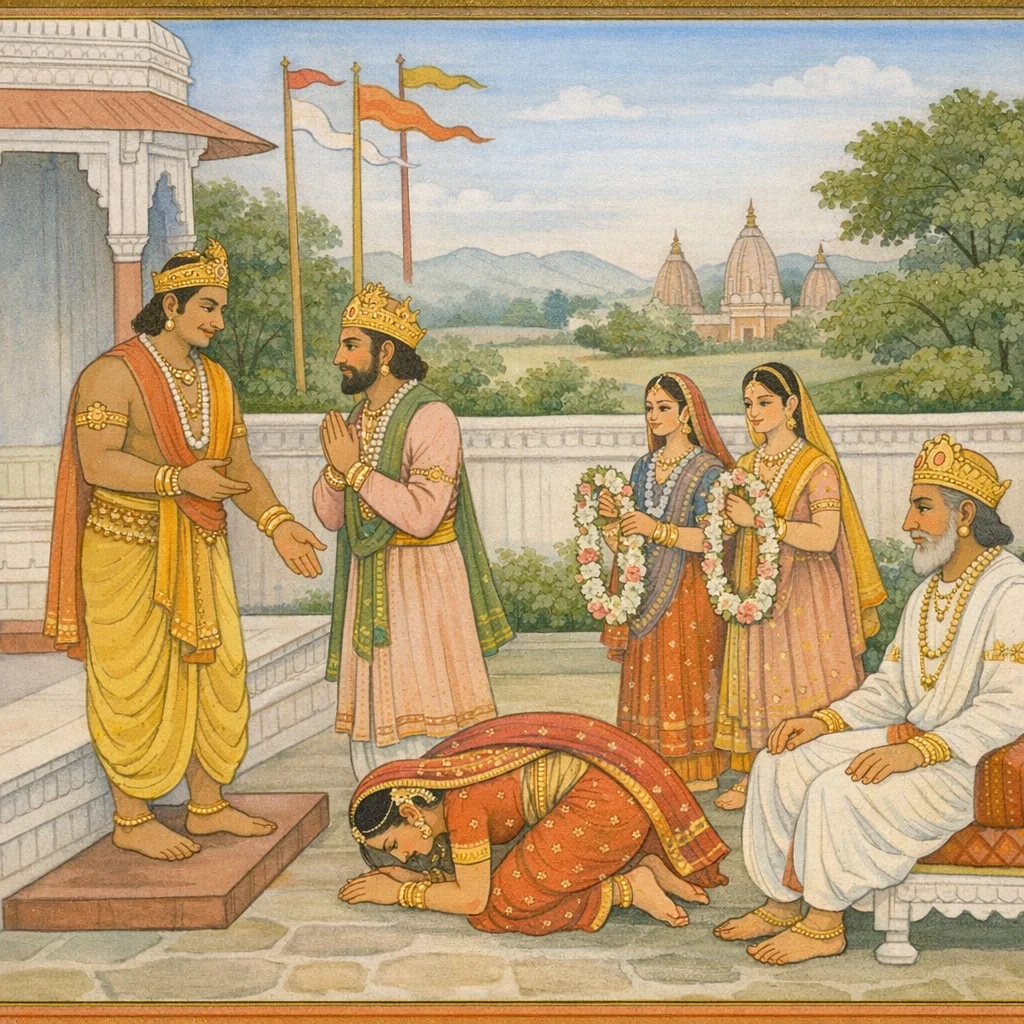
हि >> आय न () हि 7 आय सप्तसप्ततितमो<ध्याय: नलके प्रकट होनेपर विदर्भनगरमें महान् उत्सवका आयोजन, 3453? (के पर्णके साथ नलका वार्तालाप और ऋतुपर्णका अश्वविद्या सीखकर अयोध्या जाना बृहृदश्च उवाच अथ तां व्युषितो रात्रिं नलो राजा स्वलंकृतः । वैदर्भ्या सहितः काले ददर्श वसुधाधिपम्,बृहदश्वच मुनि कहते हैं--युधिष्ठि!! तदनन्तर वह रात बीतनेपर राजा नल वस्त्राभूषणोंसे अलंकृत हो दमयन्तीके साथ यथासमय राजा भीमसे मिले
Bṛhadaśva said: When that night had passed, King Nala—adorned with his own garments and ornaments—together with the princess of Vidarbha (Damayantī), at the proper time went and met the lord of the land (King Bhīma). The scene underscores timely, respectful conduct and the restoration of rightful social order through dignified self-presentation and proper audience with elders and rulers.
Verse 2
ततो5भिवादयामास प्रयत: श्वशुरं नल: । ततो<5नु दमयन्ती च ववन्दे पितरं शुभा,स्नानादिसे पवित्र हुए राजा नलने विनीतभावसे श्वशुरको प्रणाम किया। तत्पश्चात् शुभलक्षणा दमयन्तीने भी पिताकी वन्दना की
Then Nala, composed and self-restrained, respectfully greeted and paid homage to his father-in-law. After him, the auspicious Damayantī also bowed in reverence to her own father. The scene underscores the ethic of humility and proper conduct toward elders and parents, especially upon reunion and after purification rites.
Verse 3
तं॑ भीम: प्रतिजग्राह पुत्रवत् परया मुदा । यथाहँ पूजयित्वा च समाश्चासयत प्रभु:
Bhīma received him with overflowing joy, as one would welcome a son. After honoring him in a manner befitting his worth, the powerful Bhīma had him seated comfortably, showing the dharmic courtesy due to a respected guest and elder.
Verse 4
नलेन सहितां तत्र दमयन्तीं पतिव्रताम् । राजा भीमने बड़ी प्रसन्नताके साथ नलको पुत्रकी भाँति अपनाया और नलसहित पतिव्रता दमयन्तीका यथायोग्य आदर-सत्कार करके उन्हें आश्वासन दिया || ३ $ ।। तामर्हणां नलो राजा प्रतिगृह्य यथाविधि,जनस्य सम्प्रहृष्टस्य नलं दृष्टवा तथा55गतम् । राजा नलने उस पूजाको विधिपूर्वक स्वीकार करके अपनी ओरसे भी श्वशुरका सेवा- सत्कार किया। तदनन्तर विदर्भनगरमें राजा नलको इस प्रकार आया देख हर्षोल्लासमें भरी हुई जनताका महान् आनन्दजनित कोलाहल होने लगा
King Nala duly accepted the honors offered to him, as was proper, and in return rendered respectful service and hospitality to his father-in-law. When the people saw Nala arrive in this manner, they were filled with joy, and a great, glad uproar arose throughout the city—signaling the restoration of rightful order and the public affirmation of marital fidelity and royal dignity.
Verse 5
परिचर्या स्वकां तस्मै यथावत् प्रत्यवेदयत् । ततो बभूव नगरे सुमहान् हर्षज: स्वनः
Bṛhadaśva said: She duly reported to him the service she had rendered. Thereupon, throughout the city there arose a very great sound born of joy—an outward sign of collective relief and approval when proper conduct and faithful service are acknowledged.
Verse 6
अशोभयच्च नगरं पताकाध्वजमालिनम्,विदर्भनरेशने ध्वजा, पताकाओंकी पंक्तियोंसे कुण्डिनपुरको अद्भुत शोभासे सम्पन्न किया। सड़कोंको खूब झाड़-बुहारकर उनपर छिड़काव किया गया था। फूलोंसे उन्हें अच्छी तरह सजाया गया था। पुरवासियोंके द्वार-द्वारपर सुगंध फैलानेके लिये राशि-राशि फूल बिखेरे गये थे
Bṛhadaśva said: The city was made splendid, adorned with garlands of banners and standards. With rows of flags and pennants, Kuṇḍina—the capital of the king of Vidarbha—was endowed with a wondrous beauty. The streets were thoroughly swept and sprinkled with water, then decorated with flowers. At the doorway of every citizen, heaps of blossoms were strewn so that fragrance might spread everywhere—an outward sign of orderly hospitality and reverence for an auspicious occasion.
Verse 7
सिक्ता: सुमृष्टपुष्पाब्या राजमार्गा: स्वलंकृता: । द्वारि द्वारि च पौराणां पुष्पभड़: प्रकल्पित:,विदर्भनरेशने ध्वजा, पताकाओंकी पंक्तियोंसे कुण्डिनपुरको अद्भुत शोभासे सम्पन्न किया। सड़कोंको खूब झाड़-बुहारकर उनपर छिड़काव किया गया था। फूलोंसे उन्हें अच्छी तरह सजाया गया था। पुरवासियोंके द्वार-द्वारपर सुगंध फैलानेके लिये राशि-राशि फूल बिखेरे गये थे
Bṛhadaśva said: “The royal roads were sprinkled with water, carefully swept, and beautifully adorned with flowers. At the doorway of every townsman, heaps of flowers were arranged, so that fragrance and auspiciousness might spread throughout the city.”
Verse 8
अर्चितानि च सर्वाणि देवतायतनानि च । ऋतुपर्णोडपि शुभ्राव बाहुकच्छझिनं नलम्
Bṛhadaśva said: “All the shrines of the gods were duly worshipped; and even King Ṛtuparṇa, riding in the splendid chariot, shone forth with Nala—now disguised as Bāhuka—beside him.”
Verse 9
तमानाय्य नलं राजा क्षमयामास पार्थिवम्,उन्होंने राजा नलको बुलवाकर उनसे क्षमा माँगी
Having summoned King Nala, the king sought his forgiveness. The moment underscores a dharmic ideal: even rulers must acknowledge fault, restrain pride, and restore right relationship through humility and reconciliation.
Verse 10
सचतंकक्षमयामास हेतुभिरद्धिसम्मित: । स सत्कृतो महीपालो नैषध॑ं विस्मितानन:
Bṛhadaśva said: With reasons that were sound and well-considered, he pacified (and won over) Cataṅka. Thus honored, the king of Niṣadha—his face filled with wonder—(stood reassured), having been treated with due respect. The passage highlights how prudent reasoning and respectful conduct can dissolve hostility and restore right relations between rulers.
Verse 11
उवाच वाक्य तत्त्वज्ञो नैषधं वदतां वर: । बुद्धिमान् नलने भी अनेक युक्तियोंद्वारा उनसे क्षमा-याचना की। नलसे आदर-सत्कार पाकर वक्ताओंमें श्रेष्ठ एवं तत्त्वज्ञ राजा ऋतुपर्ण मुसकराते हुए मुखसे बोले-- ।। १० $ ।। दिष्ट्या समेतो दारै: स्वैर्भवानित्यभ्यनन्दत,“निषधनरेश! यह बड़े सौभाग्यकी बात है कि आप अपनी बिछुड़ी हुई पत्नीसे मिले।' ऐसा कहकर उन्होंने नलका अभिनन्दन किया
R̥tuparṇa said: “Fortune has favored you—you are reunited with your own wife.” Thus he congratulated Nala, the king of Niṣadha, rejoicing that Nala had regained what had been lost. Smiling, and honoring him with courteous words, R̥tuparṇa spoke in a spirit of goodwill, framing the reunion as a sign of auspicious destiny and restored household order.
Verse 12
किंचित् तु नापराधं ते कृतवानस्मि नैषध । अज्ञातवासे वसतो मद्गृहे वसुधाधिप,(और पुनः कहा--) “नैषध! भूपालशिरोमणे! आप मेरे घरपर जब अज्ञातवासकी अवस्थामें रहते थे, उस समय मैंने आपका कोई अपराध तो नहीं किया है?
Bṛhadaśva said: “O Naiṣadha, lord of the earth—while you were living incognito in my house, I did not commit even the slightest offense against you, did I?”
Verse 13
यदि वाबुद्धिपूर्वाणि यदि बुद्धयापि कानिचित् | मया कृतान्यकार्याणि तानि व्वं क्षन्तुमहसि,“उन दिनों यदि मैंने बिना जाने या जान-बूझकर आपके साथ अनुचित बर्ताव किये हों तो उन्हें आप क्षमा कर दें!
Bṛhadaśva said: “Whether through ignorance, or even knowingly in some instances, if I have done anything improper toward you, you ought to forgive those acts.”
Verse 14
नल उवाच न मे5पराध॑ कृतवांस्त्वं स्वल्पमपि पार्थिव । कृते5डपि च न मे कोप: क्षन्तव्यं हि मया तव,नलने कहा--'राजन्! आपने मेरा कभी थोड़ासा भी अपराध नहीं किया है और यदि किया भी हो तो उसके लिये मेरे हृदयमें क्रोध नहीं है। मुझे आपके प्रत्येक बर्तावको क्षमा ही करना चाहिये”
Nala said: “O king, you have not committed even the slightest offense against me. And even if something were done, there is no anger in my heart. Indeed, it is for me to forgive you in every respect.”
Verse 15
पूर्व ह्ूपि सखा मे5सि सम्बन्धी च जनाधिप । अत ऊर्ध्व॑ तु भूयस्त्वं प्रीतिमाहर्तुमहसि,जनेश्वरर आप पहले भी मेरे सखा और सम्बन्धी थे और इसके बाद भी आपको मुझपर अधिक-से-अधिक प्रेम रखना चाहिये
Nala said: “Even before this you were my friend and also my kinsman, O lord of men. Therefore, from this time onward you ought all the more to show me affection and goodwill.”
Verse 16
सर्वकामै: सुविहितै: सुखमस्म्युषितस्त्वयि | न तथा स्वगृहे राजन् यथा तव गृहे सदा,राजन! मेरी समस्त कामनाएँ वहाँ अच्छी तरह पूर्ण की गयीं और इसके कारण मैं सदा आपके यहाँ सुखी रहा। महाराज! आपके भवनमें मुझे जैसा आराम मिला, वैसा अपने घरमें भी नहीं मिला
Nala said: “Provided with every comfort and well-arranged enjoyments, I have lived happily in your care. O King, I did not find such ease even in my own home as I have always found in your house.”
Verse 17
इदं चैव हयज्ञानं त्वदीयं मयि तिष्ठति । तदुपाकर्तुमिच्छामि मन्यसे यदि पार्थिव । एवमुकक््त्वा ददौ विद्यामृतुपर्णाय नैषध:,आपका अभश्वविज्ञान मेरे पास धरोहरके रूपमें पड़ा है। राजन! यदि आप ठीक समझें तो मैं उसे आपको देनेकी इच्छा रखता हूँ। ऐसा कहकर निषधराज नलने ऋतुपर्णको अश्वविद्या प्रदान की
Nala said: “This knowledge of horses, which is truly yours, has remained with me as a trust. O king, if you deem it proper, I wish to return it to you.” Having spoken thus, Nala, the king of Niṣadha, bestowed upon Ṛtuparṇa the science of horsemanship—an act of restitution that restores what is due and seals their exchange in fairness rather than advantage.
Verse 18
सचतां प्रतिजग्राह विधिदृष्टेन कर्मणा | गृहीत्वा चाश्वह्नदयं राजन् भाज़ासुरिनृप:,युधिष्ठिर! ऋतुपर्णने भी शास्त्रीय विधिके अनुसार उनसे अश्वविद्या ग्रहण की। अश्वोंका रहस्य ग्रहण करके और निषधनरेश नलको पुनः द्यूतविद्याका रहस्य समझाकर दूसरा सारथि साथ ले राजा ऋतुपर्ण अपने नगरको चले गये
And he duly accepted it, performing the act in the manner prescribed by rule. Having received the secret ‘Heart of the Horse’—the true knowledge of horses—O king Yudhiṣṭhira, the ruler Ṛtuparṇa in turn instructed Niṣadha’s king Nala in the secret of dice-play, and then, taking another charioteer with him, departed for his own city. The episode underscores reciprocity governed by proper conduct: knowledge is exchanged not by coercion but through agreed, orderly procedure, and skill is shown as morally neutral—its ethical weight depends on how it is used.
Verse 19
निषधाधिपतेश्वापि दत्त्वाक्षहददयं नृप: । सूतमन्यमुपादाय ययौ स्वपुरमेव ह,युधिष्ठिर! ऋतुपर्णने भी शास्त्रीय विधिके अनुसार उनसे अश्वविद्या ग्रहण की। अश्वोंका रहस्य ग्रहण करके और निषधनरेश नलको पुनः द्यूतविद्याका रहस्य समझाकर दूसरा सारथि साथ ले राजा ऋतुपर्ण अपने नगरको चले गये
O Yudhiṣṭhira, even after giving the Niṣadha king (Nala) the secret of the ‘heart of dice’—the inner knowledge of play—the king (Ṛtaparṇa) took another charioteer and departed for his own city. The episode underscores an exchange of skills carried out with propriety: mastery is transmitted, obligations are repaid, and each returns to his rightful place without further deceit.
Verse 20
ऋतुपर्णे गते राजन् नलो राजा विशाम्पते । नगरे कुण्डिने काल॑ नातिदीर्घमिवावसत्,राजन! ऋतुपर्णके चले जानेपर राजा नल कुण्डिनपुरमें कुछ समयतक रहे। वह काल उन्हें थोड़े समयके समान ही प्रतीत हुआ
Nala said: “O king, when Ṛtuparṇa had departed, King Nala, lord of the people, stayed for some time in the city of Kuṇḍina. Yet that interval did not feel long to him; it passed as though it were only a brief moment.”
Verse 56
जनस्य सम्प्रहृष्टस्य नलं दृष्टवा तथा55गतम् । राजा नलने उस पूजाको विधिपूर्वक स्वीकार करके अपनी ओरसे भी श्वशुरका सेवा- सत्कार किया। तदनन्तर विदर्भनगरमें राजा नलको इस प्रकार आया देख हर्षोल्लासमें भरी हुई जनताका महान् आनन्दजनित कोलाहल होने लगा
When the people, filled with delight, saw King Nala arrive in that manner, a great, joy-born uproar arose in the city of Vidarbha. Having duly accepted the honor shown to him, Nala in turn rendered proper service and respectful hospitality to his father-in-law—illustrating the ethic of reciprocal honor and familial duty (dharma) in royal conduct.
Verse 76
इस प्रकार श्रीमहाभारत वनपर्वके अन्तर्गत नलोपाख्यानपर्वमें नलदमयन्तीसमागमविषयक छिह्त्तरवाँ अध्याय पूरा हुआ
Thus ends the seventy-seventh chapter of the Nala episode within the Vana Parva of the Mahābhārata, dealing with the reunion of Nala and Damayantī. The closing formula signals narrative completion and restoration of rightful order after suffering, emphasizing that perseverance and integrity ultimately lead to reconciliation and the reestablishment of dharma in personal life.
Verse 77
इति श्रीमहाभारते वनपर्वणि नलोपाख्यानपर्वणि ऋतुपर्णस्वदेशगमने सप्तसप्ततितमो<ध्याय:
Thus ends the seventy-seventh chapter in the Vana Parva of the Śrī Mahābhārata, within the Nalopākhyāna section, describing Ṛtūparṇa’s journey to his own country. This closing colophon marks the completion of the chapter’s narrative movement—return, transition, and the unfolding of consequences shaped by prior choices.
Verse 86
दमयन्त्या समायुक्तं जहषे च नराधिप: । सम्पूर्ण देवमन्दिरोंकी सजावट और देवमूर्तियोंकी पूजा की गयी थी। राजा ऋतुपर्णने भी जब यह सुना कि बाहुकके वेषमें राजा नल ही थे और अब वे दमयन्तीसे मिले हैं, तब उन्हें बड़ा हर्ष हुआ
Bṛhadaśva said: When the king was reunited with Damayantī, he smiled with joy. The royal city was fully adorned; the temples of the gods were decorated and the divine images were worshipped. And when King Ṛtuparṇa heard that the one who had served him in the guise of Bāhuka was none other than King Nala, and that Nala had now met Damayantī again, he too was filled with great happiness. The episode underscores the moral relief that follows truth revealed, loyalty repaid, and rightful union restored.
Frequently Asked Questions
Nala must choose between immediate violent retaliation after provocation versus a regulated resolution through agreed terms; after winning, he must decide whether to punish Puṣkara severely or to limit retribution and restore kinship norms.
The chapter models ethical closure: regain what was lost through composure and competence, but temper victory with restraint—distinguishing personal accountability from external causation and refusing to convert success into cruelty.
No explicit phalaśruti is stated in the provided passage; the implicit meta-function is exemplary—positioning Nala’s controlled victory and reconciliation as a didactic template within the larger exile discourse.