Adhyaya 60
Damayantī’s Lament, Serpent-Seizure, Rescue by the Hunter, and the Curse
Upa-parva: Nala-upākhyāna (Episode of Nala and Damayantī)
Bṛhadaśva narrates Damayantī’s awakening in a deserted forest after Nala’s departure. She calls out repeatedly, oscillating between fear, grief, and moral reproach, invoking Nala’s reputation for dharma and truthfulness and questioning the abandonment of a sleeping spouse. Her search becomes physically disordered—running, falling, crying—while her concern remains centered on Nala’s survival needs. In the midst of this distress, a massive serpent (ajāgara/grāha) seizes her. Even while being constricted, she laments not her own condition but Nala’s loneliness and hardship. A passing hunter hears her cries, approaches, and cuts the serpent to free her, then questions her identity and circumstances; she recounts events. Observing her appearance, the hunter becomes driven by desire and speaks in a coaxing manner. Damayantī perceives the intent, becomes intensely angered, and—grounding her statement in exclusive fidelity to Nala—utters a curse. Upon her words, the hunter falls dead, described as if burnt by fire, closing the chapter with a stark illustration of vow-backed speech as ethical sanction.
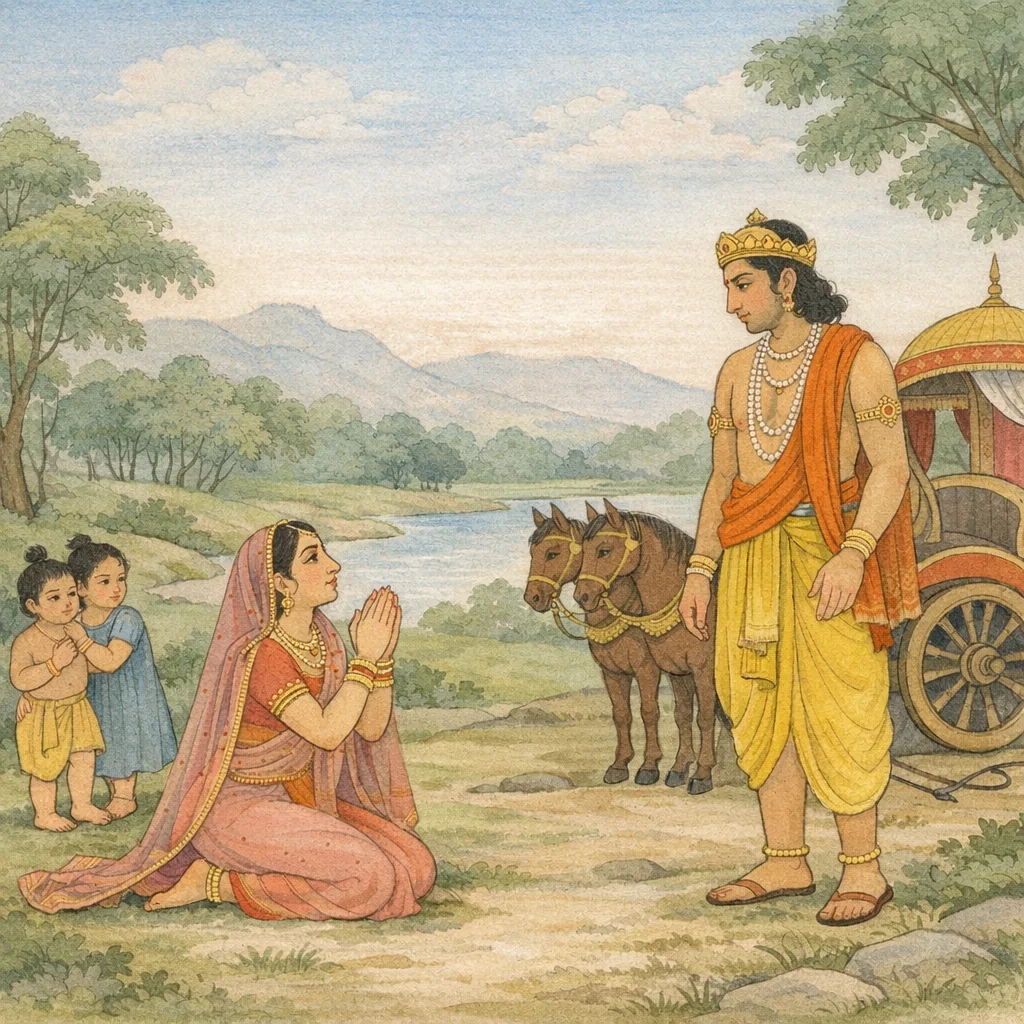
Chapter Arc: वन में भय और शोक से घिरी दमयन्ती पुण्यश्लोक नल की दशा देखकर भीतर ही भीतर किसी अनिष्ट की आहट सुनती है—और उसी क्षण एक कठोर निर्णय का बीज अंकुरित होता है। → दमयन्ती को आशंका होती है कि नल पर और बड़ा संकट आने वाला है; वह नल के हृतसर्वस्व, असहाय रूप को देखकर अपने बच्चों के भविष्य की रक्षा का उपाय सोचती है। वह वार्ष्णेय (सारथि) से शरण माँगकर आग्रह करती है कि दोनों बालकों को उसके मायके, कुण्डिनपुर (विदर्भ) पहुँचा दे—और साथ ही रथ, घोड़े तथा आवश्यक साधन भी उन्हें सौंप दे। → दमयन्ती का वार्ष्णेय से करुण, दृढ़ निवेदन—“सारथे! मैं तुम्हारी शरण में आई हूँ… मेरे मन का अशुभ भाव शान्त नहीं होता”—और फिर निर्णायक आदेश कि बच्चों को मेरे ज्ञातियों के पास रखकर तुम जहाँ चाहो जाओ; इस क्षण मातृत्व, त्याग और विवशता एक साथ चरम पर पहुँचते हैं। → वार्ष्णेय नल के शासन/अनुमति को जानकर मंत्रियों से विचार-विमर्श करता है, आज्ञा पाकर दोनों बच्चों (इन्द्रसेना और इन्द्रसेन) को रथ पर बैठाकर विदर्भ की ओर प्रस्थान करता है और कुण्डिनपुर पहुँचकर भीमराज को सब समाचार देता है। → उधर नल अत्यन्त दुःखी होकर अयोध्या पहुँचता है और राजा ऋतुपर्ण की सेवा में सारथि बन जाता है—यह नई संगति आगे किस रहस्य और परिवर्तन का द्वार खोलेगी?
Shlokas
Verse 1
हि मय ० (0) है 7 षष्टितमो< ध्याय: दुःखित दमयन्तीका वार्ष्णेयके द्वारा कुमार-कुमारीको कुण्डिनपुर भेजना बृहृदश्चव उवाच दमयन्ती ततो दृष्ट्वा पुण्यश्लोक॑ नराधिपम् | उन्मत्तवदनुन्मत्ता देवने गतचेतसम्,बृहदश्च मुनि कहते हैं--राजन्! तदनन्तर दमयन्तीने देखा कि पुण्यश्लोक महाराज नल उन्मत्तकी भाँति द्यूतक्रीडामें आसक्त हैं। वह स्वयं सावधान थी। उनकी वैसी अवस्था देख भीमकुमारी भय और शोकसे व्याकुल हो गयी और महाराजके हितके लिये किसी महत्त्वपूर्ण कार्यका चिन्तन करने लगी
Bṛhadaśva said: Then Damayantī, though herself steady and clear-minded, saw the king Nala—renowned for virtue—his mind carried away in the gambling hall, behaving as if mad. Seeing him in that condition, she was overwhelmed by fear and grief, and began to consider some decisive course of action for his welfare.
Verse 2
भयशोकसमाविष्टा राजन् भीमसुता तत: । चिन्तयामास तत् कार्य सुमहत् पार्थिवं प्रति,बृहदश्च मुनि कहते हैं--राजन्! तदनन्तर दमयन्तीने देखा कि पुण्यश्लोक महाराज नल उन्मत्तकी भाँति द्यूतक्रीडामें आसक्त हैं। वह स्वयं सावधान थी। उनकी वैसी अवस्था देख भीमकुमारी भय और शोकसे व्याकुल हो गयी और महाराजके हितके लिये किसी महत्त्वपूर्ण कार्यका चिन्तन करने लगी
Bṛhadaśva said: “O king, then Bhīma’s daughter (Damayantī), overwhelmed by fear and grief, began to ponder some very weighty course of action for the good of the sovereign.”
Verse 3
सा शड्कमाना तत् पापं चिकीर्षन्ती च तत्प्रियम् । नलं च हृतसर्वस्वमुपलभ्येदमब्रवीत्,उसके मनमें यह आशंका हो गयी कि राजापर बहुत बड़ा कष्ट आनेवाला है। वह उनका प्रिय एवं हित करना चाहती थी। अत: महाराजके सर्वस्वका अपहरण होता जान धायको बुलाकर (इस प्रकार बोली)
Verse 4
बृहत्सेनामतियशां तां धात्रीं परिचारिकाम् | हितां सर्वार्थकुशलामनुरक्तां सुभाषिताम्,उसकी धायका नाम बृहत्सेना था। वह अत्यन्त यशस्विनी और परिचर्याके कार्यमें निपुण थी। समस्त कार्योंके साधनमें कुशल, हितैषिणी, अनुरागिणी और मधुरभाषिणी थी
Bṛhadāśva said: “Her nurse and attendant was named Bṛhatsenā—highly renowned and skilled in service. She was well-wishing, competent in accomplishing every task, devoted in affection, and sweet-spoken.”
Verse 5
बृहत्सेने व्रजामात्यानानाय्य नलशासनात् | आचक्ष्व यद्धृतं द्रव्यमवशिष्टं च यद् वसु,(दमयन्तीने उससे कहा)--“बृहत्सेने! तुम मन्त्रियोंक पास जाओ तथा राजा नलकी आज्ञासे उन्हें बुला लाओ। फिर उन्हें यह बताओ कि अमुक-अमुक द्रव्य हारा जा चुका है और अमुक धन अभी अवशिष्ट है!
Verse 6
ततस्ते मन्त्रिण: सर्वे विज्ञाय नलशासनम् । अपि नो भागधेयं स्यादित्युक्त्वा नलमाव्रजन्
Then all his ministers, having understood King Nala’s command, went to Nala and said, “May there be a share for us as well.” The verse highlights the court’s dependence on royal direction and the ethical expectation that service and loyalty be met with rightful provision rather than abandonment.
Verse 7
तब वे सब मन्त्री राजा नलका आदेश जानकर “हमारा अहोभाग्य है', ऐसा कहते हुए नलके पास आये ।। तास्तु सर्वा: प्रकृतयो द्वितीयं समुपस्थिता: । न्यवेदयद् भीमसुता न च तत् प्रत्यनन्दत,वे सारी (मन्त्री आदि) प्रकृतियाँ दूसरी बार राजद्वारपर उपस्थित हुईं। दमयन्तीने इसकी सूचना महाराज नलको दी, परन्तु उन्होंने इस बातका अभिनन्दन नहीं किया
Then all the king’s subjects and officials (the prakṛtis) presented themselves at the palace gate a second time. Bhīma’s daughter, Damayantī, informed King Nala of their renewed attendance; yet Nala did not welcome or approve the report—showing his inward distress and reluctance to resume royal engagement despite the people’s loyalty.
Verse 8
वाक्यमप्रतिनन्दन्तं भर्तारमभिवीक्ष्य सा । दमयन्ती पुनर्वेश्म ब्रीडिता प्रविवेश ह,पतिको अपनी बातका प्रसन्नतापूर्वक उत्तर देते न देख दमयन्ती लज्जित हो पुनः महलके भीतर चली गयी। वहाँ फिर उसने सुना कि सारे पासे लगातार पुण्यश्लोक राजा नलके विपरीत पड़ रहे हैं और उनका सर्वस्व अपहृत हो रहा है। तब उसने पुनः धायसे कहा --बृहत्सेने! फिर राजा नलकी आज्ञासे जाओ और वार्ष्णेय सूतको बुला लाओ। कल्याणि! एक बहुत बड़ा कार्य उपस्थित हुआ है!
Seeing that her husband did not respond to her words with approval, Damayantī—overcome with modest shame—went back into the palace. There she again heard that the dice were repeatedly falling against King Nala, the renowned, and that all his wealth was being taken away. Then she said again to Dhāyasa: “Bṛhatsena! Go once more by King Nala’s command and summon Vārṣṇeya the charioteer. Auspicious one, a very great matter has arisen.”
Verse 9
निशम्य सतत चाक्षान् पुण्यश्लोकपराड्मुखान् । नलं च हृतसर्वस्वं धात्रीं पुनरुवाच ह,पतिको अपनी बातका प्रसन्नतापूर्वक उत्तर देते न देख दमयन्ती लज्जित हो पुनः महलके भीतर चली गयी। वहाँ फिर उसने सुना कि सारे पासे लगातार पुण्यश्लोक राजा नलके विपरीत पड़ रहे हैं और उनका सर्वस्व अपहृत हो रहा है। तब उसने पुनः धायसे कहा --बृहत्सेने! फिर राजा नलकी आज्ञासे जाओ और वार्ष्णेय सूतको बुला लाओ। कल्याणि! एक बहुत बड़ा कार्य उपस्थित हुआ है!
Hearing that the dice, again and again, were turning against the illustrious King Nala—and that Nala was being stripped of all he possessed—Damayantī spoke once more to her nurse. The scene underscores how swiftly fortune can reverse through addiction and imprudence, and how a devoted wife responds with urgent, practical resolve when dharma and household stability are threatened.
Verse 10
बृहत्सेने पुनर्गच्छ वाष्णेयं नलशासनात् । सूतमानय कल्याणि महत् कार्यमुपस्थितम्,पतिको अपनी बातका प्रसन्नतापूर्वक उत्तर देते न देख दमयन्ती लज्जित हो पुनः महलके भीतर चली गयी। वहाँ फिर उसने सुना कि सारे पासे लगातार पुण्यश्लोक राजा नलके विपरीत पड़ रहे हैं और उनका सर्वस्व अपहृत हो रहा है। तब उसने पुनः धायसे कहा --बृहत्सेने! फिर राजा नलकी आज्ञासे जाओ और वार्ष्णेय सूतको बुला लाओ। कल्याणि! एक बहुत बड़ा कार्य उपस्थित हुआ है!
Bṛhatsena said: “Bṛhatsene, go again—by King Nala’s command—and bring Vārṣṇeya, the charioteer. O auspicious lady, a very grave matter has arisen.”
Verse 11
बृहत्सेना तु सा श्रुत्वा दमयन्त्या: प्रभाषितम् । वा्ष्णेयमानयामास पुरुषैराप्तकारिभि:,बृहत्सेनाने दमयन्तीकी बात सुनकर विश्वसनीय पुरुषोंद्वारा वाष्णेयको बुलाया। तब अनिन्द्य स्वभाववाली और देश-कालको जाननेवाली भीमकुमारी दमयन्तीने वार्ष्णेयको मधुर वाणीमें सान्त्वना देते हुए यह समयोचित बात कही--
Bṛhatsenā, having heard what Damayantī had spoken, caused Vārṣṇeya to be brought by trustworthy men who would carry out her intent. Then Damayantī—of blameless disposition and mindful of what suited the time and place—spoke to Vārṣṇeya in sweet words, consoling him and saying what was fitting for the moment.
Verse 12
वाष्णेयं तु ततो भैमी सान्त्वयऊ“लक्ष्णया गिरा । उवाच देशकातलज्ञा प्राप्तकालमनिन्दिता,बृहत्सेनाने दमयन्तीकी बात सुनकर विश्वसनीय पुरुषोंद्वारा वाष्णेयको बुलाया। तब अनिन्द्य स्वभाववाली और देश-कालको जाननेवाली भीमकुमारी दमयन्तीने वार्ष्णेयको मधुर वाणीमें सान्त्वना देते हुए यह समयोचित बात कही--
Then Bhīmī (Damayantī) addressed Vārṣṇeya in a gentle, reassuring voice. Blameless in conduct and discerning of place and time, she spoke words suited to the moment—offering consolation while guiding the course of action with tact and propriety.
Verse 13
जानीषे त्वं यथा राजा सम्यग वृत्त: सदा त्वयि | तस्य त्वं विषमस्थस्य साहाय्यं कर्तुमहसि,'सूत! तुम जानते हो कि महाराज तुम्हारे प्रति कैसा अच्छा बर्ताव करते थे। आज वे विषम संकटमें पड़ गये हैं, अतः तुम्हें भी उनकी सहायता करनी चाहिये
Bṛhadaśva said: “You know well how the king has always behaved rightly and kindly toward you. Now that he has fallen into a difficult crisis, it is fitting that you, too, should render him help.”
Verse 14
यथा यथा हि नृपति: पुष्करेणैव जीयते । तथा तथास्य वै द्यूते रागो भूयोडभिवर्धते
Bṛhadaśva said: “For, as often as the king is defeated at dice with Puṣkara, so often does his craving for gambling grow all the more. Each loss only feeds his attachment, drawing him back again into the very play that ruins him.”
Verse 15
“राजा जैसे-जैसे पुष्करसे पराजित हो रहे हैं, वैसे-ही-वैसे जूएमें उनकी आसक्ति बढ़ती जा रही है ।। यथा च पुष्करस्याक्षा: पतन्ति वशवर्तिन: । तथा विपर्ययश्चापि नलस्याक्षेषु दृश्यते,'जैसे पुष्करके पासे उसकी इच्छाके अनुसार पड़ रहे हैं, वैसे ही नलके पासे विपरीत पड़ते देखे जा रहे हैं
Bṛhadaśva said: “Just as the dice fall under Puṣkara’s control, so too the opposite is seen in Nala’s throws. As the king is defeated again and again by Puṣkara, his attachment to the gambling only increases, drawing him further into ruin.”
Verse 16
सुहृत्स्वजनवाक्यानि यथावन्न शृणोति च । ममापि च तथा वाक्य नाभिनन्दति मोहित:,*वे सुहदों और स्वजनोंके वचन अच्छी तरह नहीं सुनते हैं। जूएने उन्हें ऐसा मोहित कर रखा है कि इस समय वे मेरी बातका भी आदर नहीं कर रहे हैं। मैं इसमें महामना नैषधका निश्चय ही कोई दोष नहीं मानती। जूएसे मोहित होनेके कारण ही राजा मेरी बातका अभिनन्दन नहीं कर रहे हैं
He does not properly listen to the words of his well-wishers and kinsmen. Deluded as he is, he does not even welcome my counsel. I do not see any fault in the noble king of Niṣadha here; it is only because he is bewitched by gambling that he fails to honor what I say.
Verse 17
नूनं मनन्ये न दोषो5स्ति नैषधस्य महात्मन: । यत् तु मे वचनं राजा नाभिनन्दति मोहित:,*वे सुहदों और स्वजनोंके वचन अच्छी तरह नहीं सुनते हैं। जूएने उन्हें ऐसा मोहित कर रखा है कि इस समय वे मेरी बातका भी आदर नहीं कर रहे हैं। मैं इसमें महामना नैषधका निश्चय ही कोई दोष नहीं मानती। जूएसे मोहित होनेके कारण ही राजा मेरी बातका अभिनन्दन नहीं कर रहे हैं
Surely, I think there is no fault in the great-souled king of Niṣadha. It is only that, deluded as he is, the king does not welcome my words. His judgment has been clouded, and so he fails to honor even well-meant counsel—an ethical reminder that addiction and infatuation can eclipse discernment and make a ruler deaf to the advice of friends and kin.
Verse 18
शरणं त्वां प्रपन्नास्मि सारथे कुरु मद्गच: । न हि मे शुध्यते भाव: कदाचित् विनशेदपि,'सारथे! मैं तुम्हारी शरणमें आयी हूँ, मेरी बात मानो। मेरे मनमें अशुभ विचार आते हैं, इससे अनुमान होता है कि राजा नलका राज्यसे च्युत होना सम्भव है
Bṛhadaśva said: “I have come to you for refuge, O charioteer—do as I ask. For my inner feeling does not become clear or tranquil; even at times it seems as though it may perish. From these ominous stirrings of mind, I fear that King Nala may indeed be driven from his kingdom.”
Verse 19
नलस्य दयितानश्वान् योजयित्वा मनोजवान् | इदमारोप्य मिथुन कुण्डिनं यातुमरहसि,“तुम महाराजके प्रिय, मनके समान वेगशाली अश्वोंको रथमें जोतकर उसपर इन दोनों बच्चोंको बिठा लो और कुण्डिनपुरको चले जाओ”
Bṛhadaśva said: “Yoke Nala’s beloved horses—swift as the mind—to the chariot. Having seated this pair of children upon it, you should set out for Kuṇḍina.” The instruction underscores urgent, responsible action: protect the vulnerable and ensure their safe passage by the best means available.
Verse 20
मम ज्ञातिषु निक्षिप्य दारकौ स्यन्दनं तथा । अश्वांश्वेमान् यथाकामं वस वान्यत्र गच्छ वा,“वहाँ इन दोनों बालकोंको, इस रथको और इन घोड़ोंको भी मेरे भाई-बन्धुओंकी देख- रेखमें सौंपकर तुम्हारी इच्छा हो तो वहीं रह जाना या अन्यत्र कहीं चले जाना”
Bṛhadaśva said: “Entrust these two children, this chariot, and these horses to the care of my kinsmen. Then, as you wish, either stay there or go elsewhere.” The statement frames a responsible handover of dependents and resources, emphasizing lawful guardianship and freedom of choice once proper protection has been arranged.
Verse 21
दमयन्त्यास्तु तद् वाक्यं वाष्णेयो नलसारथि: । न्यवेदयदशेषेण नलामात्येषु मुख्यश:,दमयन्तीकी यह बात सुनकर नलके सारथि वार्ष्णेयने नलके मुख्य-मुख्य मन्त्रियोंसे यह सारा वृत्तान्त निवेदित किया
Having heard Damayantī’s message, Vārṣṇeya, the charioteer of King Nala, reported the entire matter in full to Nala’s principal ministers. The episode underscores responsible communication: a trusted messenger conveys a distressed person’s words accurately and completely to those empowered to act, so that right counsel and timely help may follow.
Verse 22
तैः समेत्य विनिश्चित्य सो<नुज्ञातो महीपते । ययौ मिथुनमारोप्य विदर्भास्तेन वाहिना,राजन्! उनसे मिलकर इस विषयपर भलीभाँति विचार करके उन मन्त्रियोंकी आज्ञा ले सारथि वार्ष्णेयने दोनों बालकोंको रथपर बैठाकर विदर्भ देशको प्रस्थान किया
O king, after meeting with them and deliberating carefully on the matter, he obtained their consent. Then the charioteer Vārṣṇeya set the two children upon the chariot and departed with that conveyance toward the land of Vidarbha—acting with due authorization and prudent counsel rather than impulsive force.
Verse 23
हयांस्तत्र विनिक्षिप्य सूतो रथवरं च तम् | इन्द्रसेनां च तां कन्यामिन्द्रसेनं च बालकम्,वहाँ पहुँचकर उसने घोड़ोंको, उस श्रेष्ठ रथ-को तथा उस बालिका इन्द्रसेनाको एवं राजकुमार इन्द्रसेनको वहीं रख दिया तथा राजा भीमसे विदा ले आर्तभावसे राजा नलकी दुर्दशाके लिये शोक करता हुआ घूमता-घामता अयोध्या नगरीमें चला गया
Having reached that place, the charioteer left there the horses, that excellent chariot, the maiden Indrasenā, and the young boy Indrasena. Then, taking leave of King Bhīmasena, he wandered on—grieving with deep anguish over King Nala’s misfortune—and proceeded to the city of Ayodhyā. The episode underscores responsible guardianship and loyal service: even amid sorrow, one ensures the safety of dependents and fulfills one’s duty before departing.
Verse 24
आमन्त्र्य भीम॑ राजानमार्त: शोचन् नल॑ नृपम् । अटमानस्ततो<योध्यां जगाम नगरीं तदा,वहाँ पहुँचकर उसने घोड़ोंको, उस श्रेष्ठ रथ-को तथा उस बालिका इन्द्रसेनाको एवं राजकुमार इन्द्रसेनको वहीं रख दिया तथा राजा भीमसे विदा ले आर्तभावसे राजा नलकी दुर्दशाके लिये शोक करता हुआ घूमता-घामता अयोध्या नगरीमें चला गया
Having taken leave of King Bhīma, the distressed narrator laments the pitiable condition of King Nala. Then, wandering on in sorrow, he proceeded to the city of Ayodhyā. The scene underscores the ethical weight of loyalty and compassion: even when one must depart, one does not abandon concern for a righteous person fallen into misfortune.
Verse 25
ऋतुपर्ण स राजानमुपतस्थे सुदुःखित: । भृतिं चोपययौ तस्य सारथ्येन महीपते,युधिष्ठिर! वह अत्यन्त दुःखी हो राजा ऋतुपर्णकी सेवामें उपस्थित हुआ और उनका सारथि बनकर जीविका चलाने लगा
Deeply afflicted, he approached King Ṛtuparṇa and entered his service. By serving as the king’s charioteer, O Yudhiṣṭhira, he sustained himself—enduring hardship with discipline and humility as the means of livelihood.
Verse 60
इति श्रीमहाभारते वनपर्वणि नलोपाख्यानपर्वणि कुण्डिनं प्रति कुमारयो: प्रस्थापने षष्टितमो5 ध्याय:,इस प्रकार श्रीमह्ाभारत वनपवके अन्तर्गत नलोपाख्यानपर्वमें नलकी कन्या और पुत्रको कुण्डिनपुर भेजनेसे सम्बन्ध रखनेवाला साठवाँ अध्याय पूरा हुआ
Thus, in the Śrī Mahābhārata, within the Vana Parva and specifically the Nalopākhyāna section, the sixtieth chapter concludes—describing the sending of Nala’s son and daughter toward Kuṇḍina (Kuṇḍinapura). The colophon marks the completion of this episode, emphasizing the restoration of familial duty and rightful protection of the children through their return to their maternal lineage and royal shelter.
Frequently Asked Questions
The dilemma is the collision between a spouse’s proclaimed dharma/truth and the act of abandonment: Damayantī challenges how a ‘satyavāk’ king could leave her asleep, turning personal anguish into an ethical audit of conduct.
The sequence frames vulnerability and protection as dharmic obligations, while presenting desire-driven exploitation as ethically corrosive; it also depicts satya-based speech (a vow-truth claim) as narratively efficacious moral force.
No explicit phalaśruti appears here; the chapter functions through implicit meta-commentary by dramatizing consequences—linking fidelity, truth-claims, and misconduct to immediate narrative outcomes within the broader Nala-upākhyāna.