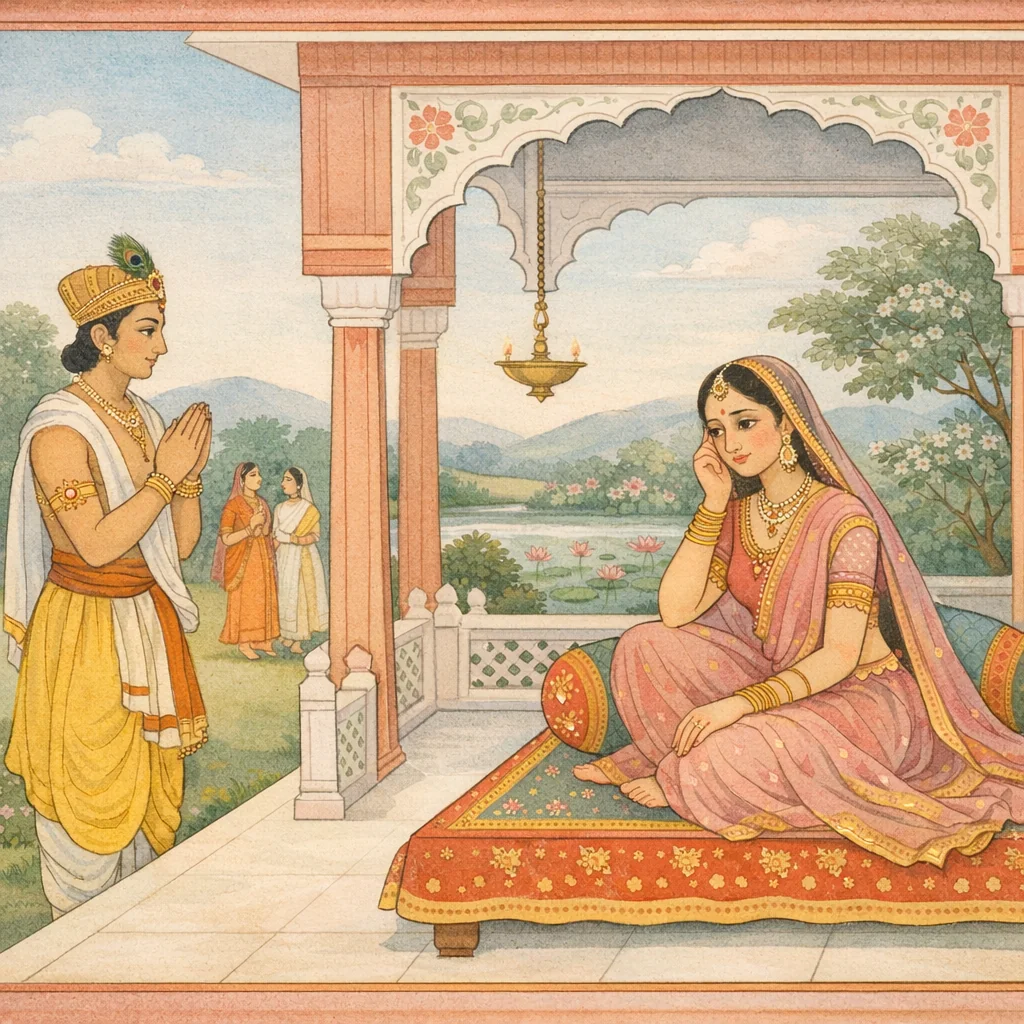
Adhyaya 56
अक्षद्यूतप्रवेशः — Kali’s Entry and the Initiation of the Dice-Contest
Upa-parva: Nala–Damayantī Upākhyāna (Episode of Nala and Damayantī)
Bṛhadaśva narrates how Kali, having made a pact with Dvāpara, seeks an opening to enter King Nala of Niṣadha. After years of watchfulness, Kali finds a minor lapse in ritual cleanliness: Nala performs ablutions and sits for twilight observance but neglects cleansing of the feet, enabling Kali to ‘enter’ him. Kali then approaches Puṣkara and repeatedly urges him to challenge Nala to dice, promising assistance for victory. Puṣkara confronts Nala and insists on gambling; Nala, unable to tolerate the summons—especially under Damayantī’s gaze—consents and treats it as a formal wager. Under Kali’s influence, Nala is defeated in stakes of gold, wealth, vehicles, and garments; his companions cannot restrain him despite recognizing the intoxication of play. Ministers and citizens gather at the door seeking to intervene; a charioteer informs Damayantī, who tearfully urges Nala to meet them, but the king remains unresponsive. The assembly withdraws in distress and shame, while the prolonged dice-contest continues for many months, during which Nala repeatedly loses.
Chapter Arc: देवताओं के दूत-रूप में पहुँचा नल दमयन्ती के अंतःपुर में संवाद आरम्भ करता है—एक ओर स्वयंबर की घड़ी निकट, दूसरी ओर लोकपालों की अदृश्य उपस्थिति का भय। → नल, देवताओं की ओर से, दमयन्ती को लोकपालों का वरण करने का संकेत देता है; दमयन्ती अपने सर्वस्व-समर्पण और हंसों के वचनों से जगी प्रेमाग्नि का उल्लेख कर नल के प्रति अपनी अडिग निष्ठा प्रकट करती है। → दमयन्ती अश्रुपूरित नेत्रों और काँपती वाणी से निर्णायक प्रतिज्ञा करती है कि वह लोकपालों के सामने ही नल का वरण करेगी—ताकि देवताओं का अपमान भी न हो और उसका धर्म-संकल्प भी न टूटे। → नल दमयन्ती के निश्चय और उसके धर्मयुक्त उपाय को सुनकर संदेश को यथावत देवताओं तक पहुँचाने का वचन देता है; फिर लौटकर त्रिदशों के समक्ष दमयन्ती का वृत्तान्त निवेदित करता है। → स्वयंबर में जब लोकपाल भी उपस्थित होंगे और नल भी—दमयन्ती नल को कैसे पहचानकर वरण करेगी?
Shlokas
Verse 1
/ छः “+(9) #ल्दिम #औ2४22 षट्पज्चाशत्तमो< ध्याय: नलका दमयन्तीसे वार्तालाप करना और लौटकर देवताओंको उसका संदेश सुनाना बृहदश्व उवाच सा नमस्कृत्य देवेभ्य: प्रहस्य नलमब्रवीत् । प्रणयस्व यथाश्रद्धं राजन् कि करवाणि ते,बृहदश्व मुनि कहते हैं--राजन्! दमयन्तीने अपनी श्रद्धाके अनुसार देवताओंको नमस्कार करके नलसे हँसकर कहा--“महाराज! आप ही मेरा पाणिग्रहण कीजिये और बताइये, मैं आपकी क्या सेवा करूँ
Bṛhadaśva said: Having bowed to the gods, she smiled and spoke to Nala: “O king, accept me in marriage according to your faith and intention; tell me—what shall I do for you?”
Verse 2
अहं चैव हि यच्चान्यन्ममास्ति वसु किंचन । तत् सर्व तव विश्रब्धं कुरु प्रणयमी श्वर,“नरेश्वर! मैं तथा मेरा जो कुछ दूसरा धन है, वह सब आपका है। आप पूर्ण विश्वस्त होकर मेरे साथ विवाह कीजिये
Bṛhadaśva said: “I myself—and whatever other wealth of mine there is—belongs wholly to you. Be completely at ease and trustful; enter into a bond of affection and alliance with me, O lord, O king of men.”
Verse 3
हंसानां वचन यत् तु तन्मां दहति पार्थिव । त्वत्कृते हि मया वीर राजान: संनिपातिता:,'भूपाल! हंसोंकी जो बात मैंने सुनी" वह (मेरे हृदयमें कामाग्नि प्रजजलित करके सदा) मुझे दग्ध करती रहती है। वीर! आपहीको पानेके लिये मैंने यहाँ समस्त राजाओंका सम्मेलन कराया है
Bṛhadaśva said: “O king, the words spoken by the swans—what I heard—still burn me within. For your sake alone, O hero, I have caused the kings to assemble here.”
Verse 4
यदि त्वं भजमानां मां प्रत्याख्यास्यसि मानद । विषमग्निं जल॑ं रज्जुमास्थास्ये तव कारणात्,“मानद! आपके चरणोंमें भक्ति रखनेवाली मुझ दासीको यदि आप स्वीकार नहीं करेंगे तो मैं आपके ही कारण विष, अग्नि, जल अथवा फाँसीको निमित्त बनाकर अपना प्राण त्याग दूँगी'
Bṛhadaśva said: “O noble one, if you reject me though I am devoted to you, then because of you I will resort to poison, fire, water, or a noose, and give up my life.”
Verse 5
एवमुक्तस्तु वैदर्भ्या नलस्तां प्रत्युवाच ह | तिष्ठत्सु लोकपालेषु कथं मानुषमिच्छसि,दमयन्तीके ऐसा कहनेपर राजा नलने उससे पूछा--'(तुम्हें पानेके लिये उत्सुक) लोकपालोंके होते हुए तुम एक साधारण मनुष्यको कैसे पति बनाना चाहती हो?
Thus addressed by the princess of Vidarbha, Nala replied to her: “Damayantī, when the guardians of the worlds themselves stand ready, how can you wish to choose a mere human as your husband?” In this moment Nala frames her choice as an ethical and social dilemma—whether personal love may rightly prevail when divine suitors are present.
Verse 6
येषामहं लोककृतामीश्व॒राणां महात्मनाम् | न पादरजसा तुल्यो मनस्ते तेषु वर्तताम्,“जिन लोकस्रष्टा महामना ईश्वरोंके चरणोंकी धूलके समान भी मैं नहीं हूँ, उन्हींकी ओर तुम्हें मन लगाना चाहिये
Bṛhadaśva said: “Of those great-souled Lords who are the makers and sustainers of the worlds, I am not even equal to the dust of their feet. Therefore, let your mind rest upon them.”
Verse 7
विप्रियं ह्याचरन् मर्त्यों देवानां मृत्युमृच्छति । त्राहि मामनवद्याड्ि वरयस्व सुरोत्तमान्
Bṛhadaśva said: “A mortal who acts in a manner displeasing (to the gods) indeed meets death at the hands of the gods. Save me, O blameless lady; choose the best among the gods (as your boon).”
Verse 8
“निर्दोष अंगोंवाली सुन्दरी! देवताओंके विरुद्ध चेष्टा करनेवाला मानव मृत्युको प्राप्त हो जाता है; अतः तुम मुझे बचाओ और उन श्रेष्ठ देवताओंका ही वरण करो ।। विरजांसि च वासांसि दिव्य॒ज्षित्रा: स्रजस्तथा । भूषणानि तु मुख्यानि देवान् प्राप्य तु भुड़क्ष्य वै,“तथा देवताओंको ही पाकर निर्मल वस्त्र, दिव्य एवं विचित्र पुष्पहार तथा मुख्य-मुख्य आभूषणोंका सुख भोगो
Bṛhadaśva said: “O flawless-limbed beauty! A mortal who acts in opposition to the gods meets death. Therefore protect me, and choose those excellent gods alone. Having attained the gods, you will indeed enjoy spotless garments, divine and wondrous garlands, and the finest ornaments.”
Verse 9
य इमां पृथिवीं कृत्स्नां संक्षिप्य ग्रसते पुन: । हुताशमीशं देवानां का त॑ं न वरयेत् पतिम्,“जो इस सारी पृथ्वीको संक्षिप्त करके पुनः अपना ग्रास बना लेते हैं, उन देवेश्वर अग्निको कौन नारी अपना पति न चुनेगी?
He who can draw this entire earth into himself, compressing it and consuming it again—who would not choose that Fire, the divine lord of the gods, as her husband? The statement underscores how overwhelming power and cosmic sovereignty can compel admiration and choice, even in matters as intimate as marriage.
Verse 10
यस्य दण्डभयात् सर्वे भूतग्रामा: समागता: । धर्ममेवानुरुध्यन्ति का त॑ं न वरयेत् पतिम्,“जिनके दण्डके भयसे संसारमें आये हुए समस्त प्राणिसमुदाय धर्मका ही पालन करते हैं, उन यमराजको कौन अपना पति नहीं वरेगी?
Out of fear of his punitive authority, all assemblies of living beings that have come into the world keep to dharma alone. Who, then, would not choose that Yama as her husband?
Verse 11
धर्मात्मानं महात्मानं दैत्यदानवमर्दनम् | महेन्द्र सर्वदेवानां का त॑ न वरयेत् पतिम्,'दैत्यों और दानवोंका मर्दन करनेवाले धर्मात्मा महामना सर्वदेवेश्वर महेन्द्रका कौन नारी पतिरूपमें वरण न करेगी?
Bṛhadaśva said: “Who among women would not choose as her husband Mahendra—righteous in soul, great-hearted, the crusher of Daityas and Dānavas, and the sovereign of all the gods?”
Verse 12
क्रियतामविशड्केन मनसा यदि मन्यसे । वरुणं लोकपालानां सुहृद्वाक्यमिदं शृूणु,“यदि तुम ठीक समझती हो तो लोकपालोंमें प्रसिद्ध वरुणको नि:शंक होकर अपना पति बनाओ। यह एक हितैषी सुहृदका वचन है, इसे सुनो”
Bṛhadaśva said: “If you deem it proper, then with a mind free from doubt, accept Varuṇa—renowned among the world-guardians—as your husband. This is the counsel of a well-wishing friend; listen to it.”
Verse 13
नैषधेनैवमुक्ता सा दमयन्ती वचो<ब्रवीत् । समाप्लुताभ्यां नेत्राभ्यां शोकजेनाथ वारिणा,तदनन्तर निषधराज नलके ऐसा कहनेपर दमयन्ती शोकाश्रुओंसे भरे हुए नेत्रोंद्वारा देखती हुई इस प्रकार बोली--
Bṛhadaśva said: Thus addressed by the king of Niṣadha, Damayantī replied. Her eyes were flooded with tears born of grief, and looking through them she spoke these words—signaling both her suffering and her steadfast resolve in the face of misfortune.
Verse 14
देवेभ्यो5हें नमस्कृत्य सर्वेभ्य: पृथिवीपते । वृणे त्वामेव भर्तारें सत्यमेतद् ब्रवीमि ते,'पृथ्वीपते! मैं सम्पूर्ण देवताओंको नमस्कार करके आपहीको अपना पति चुनती हूँ। यह मैंने आपसे सच्ची बात कही है”
Having bowed to all the gods, she addresses the lord of the earth: “I choose you alone as my husband. This is the truth—I speak it to you sincerely.” The line underscores a deliberate, public act of choice framed by reverence and truthfulness, presenting marriage as a dharmic commitment grounded in satya (truth) and personal resolve.
Verse 15
तामुवाच ततो राजा वेपमानां कृताञ्जलिम् | दौत्येनागत्य कल्याणि तथा भद्रे विधीयताम्,ऐसा कहकर दमयन्ती दोनों हाथ जोड़े थर-थर काँपने लगी। उस अवस्थामें राजा नलने उससे कहा--“कल्याणि! मैं इस समय दूतका कार्य करनेके लिये आया हूँ; अतः भद्रे! इस समय वही करो जो मेरे स्वरूपके अनुरूप हो
Then the king addressed her, as she stood trembling with folded hands: “O auspicious lady, I have come here in the role of a messenger; therefore, O gentle one, let what is to be done now be done in a manner befitting my office.”
Verse 16
कथं हाहं प्रतिश्रुत्य देवतानां विशेषतः । परार्थे यत्नमारभ्य कथं स्वार्थमिहोत्सहे,“मैं देवताओंके सामने प्रतिज्ञा करके विशेषत: परोपकारके लिये प्रयत्न आरम्भ करके अब यहाँ स्वार्थ-साधनके लिये कैसे उत्साहित हो सकता हूँ?
Bṛhadaśva said: “How could I—after making a solemn promise before the gods, and having undertaken effort especially for the sake of another—now, here, bring myself to pursue my own self-interest? Such a turn would betray the very ethical ground of my vow.”
Verse 17
एष धर्मो यदि स्वार्थो ममापि भविता ततः । एवं स्वार्थ करिष्यामि तथा भद्रे विधीयताम्,“यदि यह धर्म सुरक्षित रहे तो उससे मेरे स्वार्थकी भी सिद्धि हो सकती है। भद्रे! तुम ऐसा प्रयत्न करो, जिससे मैं इस प्रकार धर्मयुक्त स्वार्थकी सिद्धि करूँ:
Bṛhadaśva said: “If this course is truly dharma, and from it my own rightful interest may also be fulfilled, then I shall pursue my interest in just that way. Therefore, O gentle lady, let it be arranged accordingly—make such an effort that I may attain my aim without departing from dharma.”
Verse 18
ततो बाष्पाकुलां वाचं दमयन्ती शुचिस्मिता । प्रत्याहरन्ती शनकैर्नलं राजानमब्रवीत्,यह सुनकर पवित्र मुसकानवाली दमयन्ती राजा नलसे धीरे-धीरे अश्लुगद्गदवाणीमें बोली--“नरेश्वर! मैंने उस निर्दोष उपायको दूँढ़ निकाला है, राजन! जिससे आपको किसी प्रकार दोष नहीं लगेगा
Verse 19
उपायो<यं मया दृष्टो निरपायो नरेश्वर । येन दोषो न भविता तव राजन् कथंचन,यह सुनकर पवित्र मुसकानवाली दमयन्ती राजा नलसे धीरे-धीरे अश्लुगद्गदवाणीमें बोली--“नरेश्वर! मैंने उस निर्दोष उपायको दूँढ़ निकाला है, राजन! जिससे आपको किसी प्रकार दोष नहीं लगेगा
Bṛhadaśva said: “O lord of men, I have found a means—one that is free from danger—by which, O king, no blame or moral fault will attach to you in any way.”
Verse 20
त्वं चैव हि नरश्रेष्ठ देवाश्रैन्द्रपुरोगमा: । आयान्तु सहिता: सर्वे मम यत्र स्वयंवर:,“नरश्रेष्ठी] आप और इन्द्र आदि सब देवता एक ही साथ उस रंगमण्डपमें पधारें, जहाँ मेरा स्वयंवर होनेवाला है
O best of men, you too—and all the gods led by Indra—should come together to the place where my svayaṃvara is to be held. Let the entire assembly arrive in unity, for there my choice of husband will be made in the presence of the foremost beings.
Verse 21
ततो<5हं लोकपालानां संनिधौ त्वां नरेश्वर । वरयिष्ये नरव्यात्र नैवं दोषो भविष्यति,“नरेश्वर! नरव्याप्र! तदनन्तर मैं उन लोकपालोंके समीप ही आपका वरण कर लूँगी। ऐसा करनेसे (आपको कोई) दोष नहीं लगेगा”
Then I shall choose you, O lord of men, in the very presence of the world-guardians. O tiger among men, if it is done in that public and divine assembly, no blame will attach to you—your acceptance will be ethically unimpeachable.
Verse 22
एवमुक्तस्तु वैदर्भ्या नलो राजा विशाम्पते । आजमगाम पुनस्तत्र यत्र देवा: समागता:,युधिष्ठिर! विदर्भराजकुमारीके ऐसा कहनेपर राजा नल पुनः वहीं लौट आये, जहाँ देवताओंसे उनकी भेंट हुई थी
Thus addressed by the princess of Vidarbha, King Nala—O lord of the people—returned again to the very place where the gods had assembled, O Yudhiṣṭhira. The verse highlights Nala’s dutiful response: he acts after hearing Damayantī’s words and proceeds back to the divine meeting-point, indicating obedience to circumstance and the weight of commitments made in the presence of higher powers.
Verse 23
तमपश्यंस्तथा5<5यान्तं लोकपाला महेश्वरा: । दृष्टवा चैनं ततो<पृच्छन् वृत्तान्तं सर्वमेव तम्,महान् शक्तिशाली लोकपालोंने इस प्रकार राजा नलको लौटते देखा और उन्हें देखकर उनसे सारा वृत्तान्त पूछा--
Seeing him returning in that manner, the mighty guardians of the worlds (the Lokapālas) observed him. After beholding him, they questioned him in full about everything that had occurred—seeking the complete account of events, as is fitting when rulers and protectors inquire into the causes and consequences of a king’s fortunes.
Verse 24
कच्चिद् दृष्टा त्वया राजन् दमयन्ती शुचिस्मिता । किमब्रवीच्च न: सर्वान् वद भूमिप तेडनघ,“राजन! क्या तुमने पवित्र मुसकानवाली दमयन्तीको देखा है? पापरहित भूपाल! हम सब लोगोंको उसने क्या संदेश दिया, बताओ”
Bṛhadaśva said: “O king, have you seen Damayantī, she of the pure and gentle smile? And what did she say to all of us? Tell us, O blameless lord of the earth.”
Verse 25
नल उवाच भवद्धिरहमादिष्टो दमयन्त्या निवेशनम् | प्रविष्ट: सुमहाकक्ष॑ दण्डिभि: स्थविरैर्वृतम्,नलने कहा--देवताओ! आपकी आज्ञा पाकर मैं दमयन्तीके महलमें गया। उसकी ड्योढ़ी विशाल थी और दण्डधारी बूढ़े रक्षक उसे घेरकर पहरा दे रहे थे
Nala said: “By your command, I went to Damayantī’s residence. When I entered, I found its great forecourt vast, and it was surrounded by elderly guards bearing staffs, keeping watch.”
Verse 26
प्रविशन्तं च मां तत्र न कश्निद् दृष्टवान् नर: । ऋते तां पार्थिवसुतां भवतामेव तेजसा,आपलोगोंके प्रभावसे उसमें प्रवेश करते समय मुझे वहाँ उस राजकन्या दमयन्तीके सिवा दूसरे किसी मनुष्यने नहीं देखा
Nala said: “When I entered there, no man saw me at all—except that princess, the king’s daughter. It was only by the power and radiance of you (gods) that this occurred.”
Verse 27
सख्यश्चास्या मया दृष्टास्ताभिश्नाप्युपलक्षित: । विस्मिताश्चा भवन् सर्वा दृष्टवा मां विबुधेश्वरा:,दमयन्तीकी सखियोंको भी मैंने देखा और उन सखियोंने भी मुझे देखा। देवेश्वरो! वे सब मुझे देखकर आश्वर्यचकित हो गयीं
Nala said: “I saw her companions, and they too recognized me. O lord of the gods, when they beheld me, all of them were struck with astonishment.”
Verse 28
वर्ण्यमानेषु च मया भवत्सु रुचिरानना | मामेव गतसंकल्पा वृणीते सा सुरोत्तमा:,श्रेष्ठ देवताओ! जब मैं आपलोगोंके प्रभावका वर्णन करने लगा, उस समय सुमुखी दमयन्तीने मुझमें ही अपना मानसिक संकल्प रखकर मेरा ही वरण किया
Nala said: “While I was describing your excellences to her, that fair-faced Damayantī fixed her resolve upon me alone and chose me—O best of the gods.”
Verse 29
अब्रवीच्चैव मां बाला आयान्तु सहिता: सुरा: । त्वया सह नरव्याप्र मम यत्र स्वयंवर:,उस बालाने मुझसे यह भी कहा कि “नरव्याप्र! सब देवता आपके साथ उस स्थानपर पधारें, जहाँ मेरा स्वयंवर होनेवाला है
Nala said: “The maiden also told me, ‘O tiger among men, let the gods come together with you to the place where my svayaṃvara is to be held.’” The line underscores the public, dharmic character of the svayaṃvara and the extraordinary pressure created when divine powers enter a human choice.
Verse 30
तेषामहं संनिधौ त्वां वरयिष्यामि नैषध । एवं तव महाबाहो दोषो न भवितेति ह,“निषधराज! मैं उन देवताओंके समीप ही आपका वरण कर लूँगी। महाबाहो! ऐसा होनेपर आपको दोष नहीं लगेगा”
Nala said: “O king of Niṣadha, I shall choose you while those gods are present. Thus, O mighty-armed one, no blame will attach to you.”
Verse 31
एतावदेव विबुधा यथावृत्तमुपाह्तम् मयाइशेषे प्रमाणं तु भवन्तस्त्रिदशेश्वरा:,देवताओ! दमयन्तीके महलका इतना ही वृत्तान्त है, जिसे मैंने ठीक-ठीक निवेदन कर दिया। देवेश्वरगण! अब इस सम्पूर्ण विषयमें आप सब देवतालोग ही प्रमाण हैं, अर्थात् आप ही साक्षी हैं
Nala said: “O wise gods, this much alone is the account as it truly happened, which I have reported in full. O lords of the thirty-three, in this entire matter you yourselves are the decisive authority—indeed, you are the witnesses.”
Verse 55
इस प्रकार श्रीमह्याभारत वनपर्वके अन्तर्गत नलोपाख्यानपर्वमें नलके देवदूत बनकर दमयन्तीके पास जानेसे सम्बन्ध रखनेवाला पचपनवाँ अध्याय पूरा हुआ
Thus ends the fifty-fifth chapter of the Nala episode within the Vana Parva of the Śrī Mahābhārata, describing how Nala, taking on the role of a divine messenger, went to Damayantī. The closing note underscores the ethical tension of acting as an intermediary under divine pressure while remaining bound to personal integrity and rightful conduct.
Verse 56
इति श्रीमहा भारते वनपर्वणि नलोपाख्यानपर्वणि नलकर्त्कदेवदौत्ये षट्पञज्चाशत्तमो<ध्याय:
Thus ends the fifty-sixth chapter in the Vana Parva of the Śrī Mahābhārata, within the Nalopākhyāna section, in the episode concerning the divine embassy undertaken by Nala. This is a colophon marking the close of the chapter and situating the narrative within its larger ethical frame of duty, fidelity, and the testing of character.
Frequently Asked Questions
The dilemma is the conflict between royal composure and compulsive response to provocation: Nala treats the challenge as a legitimate wager while his judgment is compromised, raising the question of when a ruler must refuse socially framed ‘honor’ demands that endanger the polity.
The chapter teaches that small failures in discipline and attentiveness can become gateways for larger ethical collapse; kingship is presented as continuous self-regulation, where ritual care, restraint, and responsiveness to counsel protect both personal integrity and public welfare.
No explicit phalaśruti is stated in these verses; the meta-function is exemplum-based instruction—Bṛhadaśva’s narration implicitly frames the episode as a cautionary model for understanding suffering, vulnerability to vice, and the governance costs of impaired agency.