Adhyaya 245
Vyāsa’s Consolation to Yudhiṣṭhira: Tapas, Kāla, and the Difficulty of Dāna (दान-तपस्-विवेकः)
Upa-parva: Āraṇyaka-parva — Vyāsa-upadeśa on Tapas and Dāna (contextual episode within the exile narrative)
Vaiśaṃpāyana reports that the Pandavas have endured eleven years of forest life, subsisting on fruits and roots while bearing severe hardship. Yudhiṣṭhira, afflicted by remorse and recalling harsh speech connected to the dice-game crisis, remains inwardly unsettled; the others—Arjuna, Bhīma, the twins, and Draupadī—endure while looking to him. Vyāsa arrives, is received with formal respect, and speaks compassionately. He instructs that great well-being is not attained without tapas; that happiness and suffering alternate under kāla; and that the wise, knowing rise and fall, neither grieve nor exult. He enumerates practical virtues—truth, straightforwardness, non-anger, sharing, self-restraint, calm, non-violence, purity, and control of the senses—as instruments of meritorious action, while warning that adharmic tendencies lead to degraded outcomes. Yudhiṣṭhira then asks whether dāna or tapas yields greater merit and which is more difficult. Vyāsa answers that nothing is more difficult than giving, because wealth is pursued with intense desire and obtained with hardship; relinquishing hard-earned resources is therefore arduous. He qualifies that giving should be from wealth acquired by just means and offered to worthy recipients in proper place and time with purified intent; unjustly sourced giving does not protect the giver. The chapter closes by introducing an ancient illustrative account concerning Mudgala and the renunciation of a measure of rice.
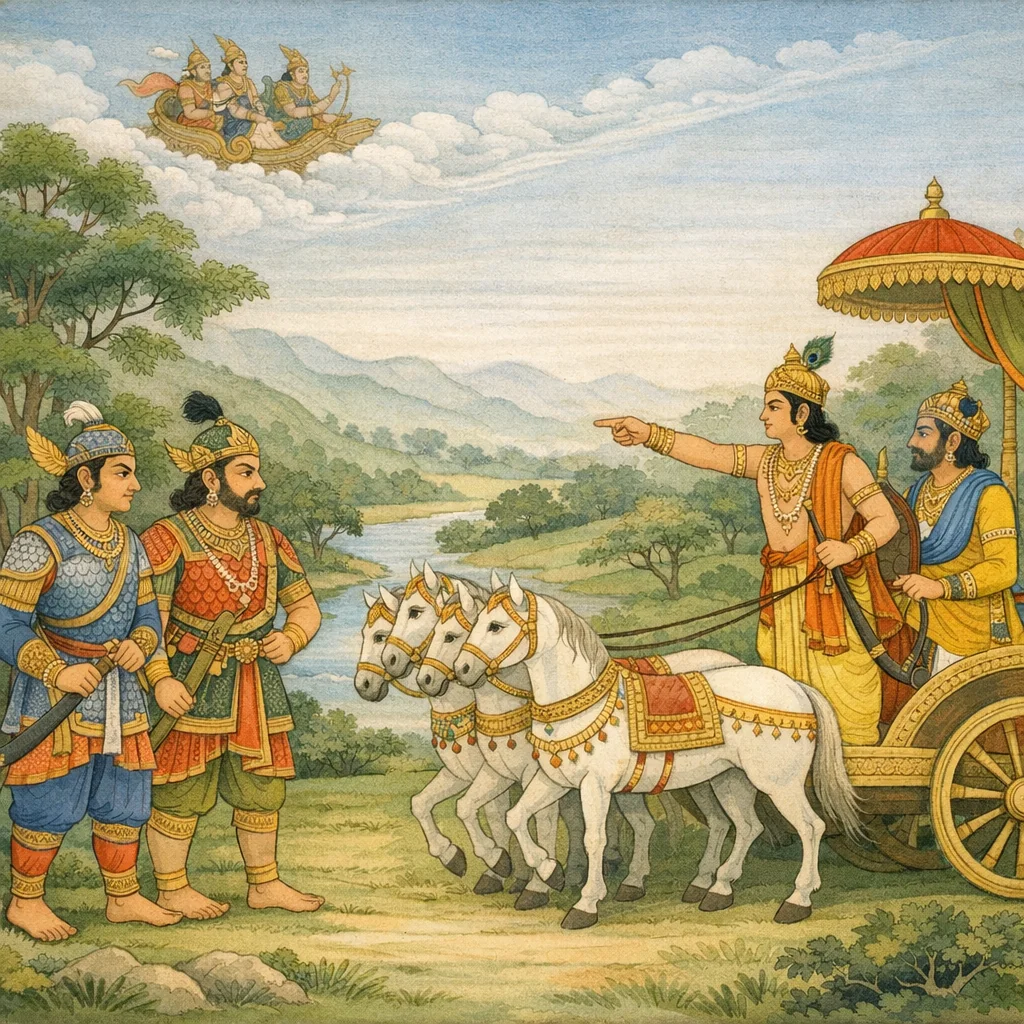
Chapter Arc: घोषयात्रा-पर्व के बीच वन-प्रदेश में आकाशचारी गन्धर्वों और पाण्डवों का सामना होता है; दोनों पक्ष अपने-अपने दिव्य कवच-आयुध धारण कर युद्ध के लिए सज्ज हो उठते हैं। → जाम्बूनद-विचित्र कवचों से सुसज्जित महारथी रथों पर चढ़ते हैं, ध्वज-धनुष-बाण सँभालते हैं; अर्जुन (सव्यसाची) गन्धर्वों को समझाने का प्रयत्न करता है, पर गन्धर्व-सेना कोमल उपदेश से वश में नहीं आती। → अर्जुन गन्धर्वराज के आचरण पर तीखा धर्मोपदेश करता है—‘पर-स्त्री का अपहरण और मनुष्यों से युद्ध घृणित कर्म हैं’; उपदेश निष्फल होते ही दोनों ओर से भयंकर संग्राम छिड़ जाता है। → युधिष्ठिर के पूर्वोक्त संयम-स्मरण के साथ पाण्डव आरम्भ में मृदुता से युद्ध करते हैं, किन्तु गन्धर्वों की उग्रता के कारण संघर्ष तीव्र रूप ले लेता है और युद्ध पूर्ण रूप से स्थापित हो जाता है। → बलशाली गन्धर्वों और भयानक वेग वाले पाण्डवों के बीच ‘अत्यन्त भयंकर युद्ध’ आरम्भ—आगे किसका पलड़ा भारी होगा, यह अगले अध्याय पर टिका रहता है।
Shlokas
Verse 1
(दाक्षिणात्य अधिक पाठके १५६३ श्लोक मिलाकर कुल ३७३ श्लोक हैं) 7 की (9) #22.8 #2.5:.१ चतुश्नत्वारिशर्दाधिकद्विशततमो< ध्याय: पाण्डवोंका गन्धवॉोंके साथ युद्ध वैशम्पायन उवाच युधिष्ठिरवच: श्रुत्वा भीमसेनपुरोगमा: । प्रहष्टदना: सर्वे समुत्तस्थुर्नरर्षभा:,वैशम्पायनजी कहते हैं--जनमेजय! युधिष्ठिरकी बात सुनकर भीमसेन आदि सभी नरश्रेष्ठ पाण्डव युद्धके लिये उठ खड़े हुए। उन सबके मुखपर प्रसन्नता छा रही थी
Vaiśampāyana said: Hearing Yudhiṣṭhira’s words, all the bull-like men among the Pāṇḍavas—led by Bhīmasena—rose at once, their faces bright with joy, readying themselves for battle. The passage frames their readiness as a disciplined response to their elder’s counsel, suggesting resolve guided by leadership rather than mere aggression.
Verse 2
अभेद्यानि ततः सर्वे समनहान्त भारत | जाम्बूनदविचित्राणि कवचानि महारथा:,भारत! तदनन्तर उन समस्त महारथियोंने जाम्बूनद नामक सुवर्णसे विभूषित एवं विचित्र शोभा धारण करनेवाले अभेद्य कवच धारण किये
Vaiśampāyana said: Then, O Bhārata, all those great chariot-warriors fully armed themselves, donning inviolable coats of mail—ornate and variegated, adorned with Jāmbūnada gold. The scene underscores the deliberate, disciplined preparation for impending combat, where outward splendor and protective armor accompany the grave resolve of war.
Verse 3
आयुधानि च दिव्यानि विविधानि समादधु: । ते दंशिता रथै: सर्वे ध्वजिन: सशरासना:
Vaiśampāyana said: They took up many kinds of divine weapons. All of them, fully armed and equipped, mounted their chariots—bearing banners and carrying bows along with their arrows—ready for the duty that lay ahead.
Verse 4
तान् रथान् साधुसम्पन्नान् संयुक्ताउ्जवनै्हयै:
Vaiśampāyana said: Those chariots, well-equipped and excellently furnished, were yoked with swift, youthful horses—signs of careful preparation and disciplined readiness for the journey ahead.
Verse 5
आस्थाय रथशार्दूला: शीघ्रमेव ययुस्तत: । उन रथोंमें तेज चलनेवाले घोड़े जुते हुए थे। वे सभी रथ युद्धकी आवश्यक सामग्रियोंसे पूर्णतः सम्पन्न थे। रथियोंमें श्रेष्ठ पाण्डव उनपर आरूढ़ हो शीघ्र ही वहाँसे चल दिये ।। ४३ || ततः कौरवसैन्यानां प्रादुरासीन््महास्वन:,फिर तो कौरव सैनिकोंकी बड़ी भयंकर गर्जना सुनायी देने लगी। महारथी पाण्डवोंको एक साथ धावा बोलते देख विजयश्रीसे सुशोभित होनेवाले आकाशचारी महारथी गन्धर्व बड़ी उतावलीके साथ क्षणभरमें उस वनके भीतर ऐसे एकत्र हो गये मानो उन्हें किसीका भय न हो। तदनन्तर अपनी विजयसे उल्लसित होते हुए सारे गन्धर्व शत्रुओंका सामना करनेके लिये लौट पड़े
Vaiśaṃpāyana said: Mounting their excellent chariots, they set out at once in great haste. Then a tremendous roar arose from the Kaurava forces. Seeing the foremost Pāṇḍava warriors charging together, the sky-ranging Gandharva heroes—already radiant with the confidence of victory—swiftly gathered within that forest as if fearless of any opponent, and then, exulting in their success, turned back to meet the enemy head-on.
Verse 6
प्रयातान् सहितान् दृष्टवा पाण्डुपुत्रान् महारथान् | जितकाशिनश्नृ खचरास्त्वरिताश्न महारथा:,फिर तो कौरव सैनिकोंकी बड़ी भयंकर गर्जना सुनायी देने लगी। महारथी पाण्डवोंको एक साथ धावा बोलते देख विजयश्रीसे सुशोभित होनेवाले आकाशचारी महारथी गन्धर्व बड़ी उतावलीके साथ क्षणभरमें उस वनके भीतर ऐसे एकत्र हो गये मानो उन्हें किसीका भय न हो। तदनन्तर अपनी विजयसे उल्लसित होते हुए सारे गन्धर्व शत्रुओंका सामना करनेके लिये लौट पड़े
Vaiśampāyana said: Seeing the sons of Pāṇḍu—those great chariot-warriors—advancing together, the sky-ranging Gandharva heroes, radiant with the confidence of victory, hurriedly gathered within that forest as though fearing no one. Then, exulting in their success, all the Gandharvas turned back to face the enemy.
Verse 7
क्षणेनैव वने तस्मिन् समाजग्मुरभीतवत् | न्यवर्तन्त ततः सर्वे गन्धर्वा जितकाशिन:,फिर तो कौरव सैनिकोंकी बड़ी भयंकर गर्जना सुनायी देने लगी। महारथी पाण्डवोंको एक साथ धावा बोलते देख विजयश्रीसे सुशोभित होनेवाले आकाशचारी महारथी गन्धर्व बड़ी उतावलीके साथ क्षणभरमें उस वनके भीतर ऐसे एकत्र हो गये मानो उन्हें किसीका भय न हो। तदनन्तर अपनी विजयसे उल्लसित होते हुए सारे गन्धर्व शत्रुओंका सामना करनेके लिये लौट पड़े
Vaiśampāyana said: In that very forest, in a single moment, the Gandharvas gathered together as if fearless. Then, all those Gandharvas—shining with the confidence of victory—turned back again to face their foes.
Verse 8
दृष्टवा रथागतान् वीरान् पाण्डवांश्ष॒तुरो रणे । तांस्तु विभ्राजितान् दृष्टवा लोकपालानिवोद्यतान्
Vaiśampāyana said: Seeing the four Pāṇḍava heroes mounted on their chariots upon the battlefield—and beholding them shining with splendor, poised for action like the very guardians of the worlds—(the onlookers were struck with awe). The verse frames the Pāṇḍavas’ martial readiness as righteous and divinely sanctioned, suggesting that disciplined valor in a just cause can appear as a form of cosmic order made visible.
Verse 9
राज्ञस्तु वचन स्मृत्वा धर्मपुत्रस्य धीमत:
Remembering the king’s instruction—those words of the wise Dharmaputra—Vaiśaṃpāyana continues the account, indicating that the ensuing action is guided by recalled counsel and a commitment to righteous conduct.
Verse 10
न तु गन्धर्वराजस्य सैनिका मन्दचेतस:
Vaiśampāyana said: But the troops of the king of the Gandharvas were not dull-witted; they did not act with careless judgment. In the unfolding conflict, this line underscores that power joined with alert intelligence becomes formidable, and that ethical discernment in action depends not merely on strength but on clarity of mind.
Verse 11
ततस्तान् युधि दुर्धर्षान् सव्यसाची परंतप:,तो भी उस समय शत्रुओंको संताप देनेवाले सव्यसाची अर्जुनने रणदुर्जय आकाशचारी गन्धर्वोंकी समझाते हुए इस प्रकार कहा--“तुम सब लोग मेरे भाई राजा दुर्योधनको छोड़ दो'
Then Arjuna—Savyasācin, the scorcher of foes—addressed those formidable warriors in the midst of battle, seeking to restrain them with counsel: “Release my brother, King Duryodhana.”
Verse 12
सान्त्वपूर्वमिदं वाक्यमुवाच खचरान् रणे । विसर्जयत राजानं भ्रातरं मे सुयोधनम्,तो भी उस समय शत्रुओंको संताप देनेवाले सव्यसाची अर्जुनने रणदुर्जय आकाशचारी गन्धर्वोंकी समझाते हुए इस प्रकार कहा--“तुम सब लोग मेरे भाई राजा दुर्योधनको छोड़ दो'
Then, in the midst of battle, he addressed the sky-ranging Gandharvas with conciliatory words: “Release the king—my brother Suyodhana (Duryodhana).” In this appeal, the speaker seeks to restrain violence through persuasion, asserting kinship-duty even toward a flawed relative and attempting to avert an escalation of hostility.
Verse 13
त एवमुक्ता गन्धर्वा: पाण्डवेन यशस्विना । उत्स्मयन्तस्तदा पार्थमिदं वचनमन्नुवन्,यशस्वी पाण्डुनन्दन अर्जुनके ऐसा कहनेपर गन्धर्वोने मुसकराकर उनसे इस प्रकार कहा--
Vaiśampāyana said: Thus addressed by the illustrious Pāṇḍava, the Gandharvas smiled at Pārtha (Arjuna) and then replied to him with these words. The scene underscores a courteous yet subtly testing exchange, where celestial beings respond with measured amusement to a human hero’s speech.
Verse 14
एकस्यैव वयं तात कुर्याम वचन भुवि । यस्य शासनमाज्ञाय चरामो विगतज्वरा:,“तात! हम भूमण्डलमें केवल एक व्यक्तिकी ही आज्ञाका पालन करते हैं। भारत! जिनके शासनको शिरोधार्य करके हम निश्चिन्त हो सर्वत्र विचरते हैं। हमारे उन्हीं एकमात्र स्वामीने जैसी आज्ञा दी है वैसा बर्ताव हम कर रहे हैं। अतः इन देवेश्वरके सिवा दूसरा कोई ऐसा व्यक्ति नहीं है जो हमलोगोंपर शासन कर सके”
Vaiśampāyana said: “Dear one, on this earth we obey the command of one alone. Having accepted his rule as our authority, we move about everywhere free from anxiety. We act exactly as our sole master has instructed; therefore, apart from this Lord of the gods, there is no other who can truly command us.”
Verse 15
तेनैकेन यथा5<दिष्टं तथा वर्ताम भारत । न शास्ता विद्यते5स्माकमन्यस्तस्मात् सुरेश्वरात्,“तात! हम भूमण्डलमें केवल एक व्यक्तिकी ही आज्ञाका पालन करते हैं। भारत! जिनके शासनको शिरोधार्य करके हम निश्चिन्त हो सर्वत्र विचरते हैं। हमारे उन्हीं एकमात्र स्वामीने जैसी आज्ञा दी है वैसा बर्ताव हम कर रहे हैं। अतः इन देवेश्वरके सिवा दूसरा कोई ऐसा व्यक्ति नहीं है जो हमलोगोंपर शासन कर सके”
Vaiśaṃpāyana said: “O Bhārata, we conduct ourselves exactly as we have been commanded by that one Lord alone. For us there exists no other ruler besides that Sovereign of the gods. Bearing his rule upon our heads, we move about everywhere without fear; therefore, apart from that divine Lord, no one else has the authority to govern us.”
Verse 16
एवमुक्त: स गन्धर्व: कुन्तीपुत्रो धनंजय: । गन्धर्वान् पुनरेवेदं वचन प्रत्यभाषत,गन्धवोंके ऐसा कहनेपर कुन्तीनन्दन अर्जुनने पुनः उन्हें इस प्रकार उत्तर दिया --
Vaiśampāyana said: When the Gandharva had spoken thus, Kuntī’s son Dhanañjaya (Arjuna) addressed the Gandharvas once again with these words—signaling a renewed reply in the midst of a tense encounter, where restraint, clarity of speech, and adherence to right conduct are about to be tested.
Verse 17
न तद् गन्धर्वराजस्य युक्त कर्म जुगुप्सितम् । परदाराभिमर्श श्ष मानुषैश्व समागम:,“गन्धर्वो! परायी स्त्रियोंका अपहरण और मनुष्योंके साथ युद्ध-ये घृणित कर्म गन्धर्वराज चित्रसेनको शोभा नहीं देते हैं
Vaiśampāyana said: “Such conduct is not fitting for the king of the Gandharvas. To violate another man’s wife and to engage in violent conflict with human beings—these are reprehensible deeds and do not befit Citraseṇa.”
Verse 18
उत्सृज्यध्वं महावीर्यान् धृतराष्ट्रसुतानिमान् । दारांश्नैषां विमुज्चध्वं धर्मराजस्य शासनात्
Vaiśampāyana said: “Release these sons of Dhṛtarāṣṭra, men of great prowess. And, by the command of Dharmarāja, set their wives free as well.”
Verse 19
“अतः तुमलोग धर्मराज युधिष्ठिरकी आज्ञासे इन महापराक्रमी धृतराष्ट्रके पुत्रों तथा इनकी स्त्रियोंको छोड़ दो ।। यदा साम्ना न मुज्चध्वं गन्धर्वा धृतराष्ट्रजान् । मोक्षयिष्यामि विक्रम्प स्वयमेव सुयोधनम्,“गन्धर्वो! यदि इस प्रकार समझाने-बुझानेसे तुमलोग धूृतराष्ट्रके पुत्रोंको नहीं छोड़ोगे, तो मैं स्वयं ही पराक्रम करके दुर्योधनको छुड़ा लूँगा”
Vaiśampāyana said: “Therefore, by the command of Dharmarāja Yudhiṣṭhira, release these mighty sons of Dhṛtarāṣṭra, along with their women. O Gandharvas, if you will not let the sons of Dhṛtarāṣṭra go when addressed with conciliation, then I myself will display valor and free Suyodhana (Duryodhana).”
Verse 20
एवमुक्त्वा ततः पार्थ: सव्यसाची धनंजय: । ससर्ज निशितान् बाणान् खचरान् खचरान् प्रति,ऐसा कहकर सव्यसाची अर्जुनने गन्धरवोके एक-एक दलपर अपने तीखे आकाशगामी बाणोंकी वर्षा आरम्भ कर दी
Having spoken thus, Pārtha—Arjuna, the ambidextrous Dhanañjaya—then let fly his sharp, sky-ranging arrows, directing them against the airborne Gandharvas. The scene marks a decisive shift from words to disciplined force: action undertaken to check aggression and protect honor, yet bounded by the warrior’s code of measured, purposeful combat.
Verse 21
तथैव शरवर्षेण गन्धर्वास्ते बलोत्कटा: | पाण्डवानभ्यवर्तन्त पाण्डवाक्षु दिवौकस:,इसी प्रकार बलोन्मत्त गन्धर्व भी बाणोंकी बौछार करते हुए पाण्डवोंसे भिड़ गये। इधरसे पाण्डव भी गन्धवोका डटकर सामना करने लगे
Vaiśampāyana said: “In the same way, those mighty Gandharvas, pouring down a rain of arrows, rushed upon the Pāṇḍavas. And the Pāṇḍavas, for their part, stood firm and met the celestial warriors head-on.”
Verse 22
ततः सुतुमुलं युद्ध गन्धर्वाणां तरस्विनाम् । बभूव भीमवेगानां पाण्डवानां च भारत
Then a fiercely tumultuous battle broke out between the mighty Gandharvas and the Pāṇḍavas, whose onrush was like Bhīma’s—O Bhārata. The clash is framed as an overwhelming surge of force, setting the moral tension between valor and restraint amid sudden conflict.
Verse 36
पाण्डवा: प्रत्यदृश्यन्त ज्वलिता इव पावका: । फिर नाना प्रकारके दिव्य आयुध हाथमें लिये, कवच धारण करके रथोंपर आरूढ़ हो ध्वज और धनुषसे सुशोभित वे समस्त पाण्डव प्रज्वलित अग्नियोंके समान दिखायी देने लगे
Vaiśampāyana said: The Pāṇḍavas came into view like blazing fires. Armed with various divine weapons, clad in armour, mounted upon their chariots, and adorned with banners and bows, they appeared radiant and formidable—an image of disciplined power marshalled for a righteous purpose.
Verse 86
व्यूढानीका व्यतिष्ठन्त गन्धमादनवासिन: । उन्होंने देखा, चारों वीर पाण्डव युद्धके लिए उद्यत हो रथपर बैठे हुए आ रहे हैं और अपनी कान्तिसे लोकपालोंके समान उद्धासित हो रहे हैं। यह देखकर गन्धमादननिवासी गन्धर्व अपनी सेनाकी व्यूहरचना करके खड़े हो गये
Vaiśampāyana said: The Gandharvas dwelling on Gandhamādana drew up their forces in a battle-array and stood firm. Seeing the four heroic Pāṇḍavas approaching on their chariots, ready for combat and shining like the guardians of the worlds, they responded with disciplined preparedness—an image of how martial order is marshalled when a formidable, radiant power advances.
Verse 93
क्रमेण मृदुना युद्धमुपक्रान्तं च भारत । भारत! परम बुद्धिमान् धर्मपुत्र राजा युधिष्ठिरके पूर्वोक्त वचनोंको स्मरण करके पाण्डवोंने कोमलतापूर्वक ही युद्ध आरम्भ किया
Vaiśampāyana said: “O Bhārata, the battle was begun gradually and with restraint. Remembering the earlier counsel spoken to him, the supremely wise Dharmaputra—King Yudhiṣṭhira—had the Pāṇḍavas commence the fighting with gentleness, keeping ethical self-control even amid conflict.”
Verse 106
शक््यन्ते मृदुना श्रेय: प्रतिपादयितुं तदा । परंतु गन्धर्वराज चित्रसेनके मूढ़ सैनिक ऐसे नहीं थे जिन्हें कोमलतापूर्ण बर्तावके द्वारा कल्याणके पथपर लाया जा सके
Vaiśaṃpāyana said: “At that time, it is indeed possible to guide people toward what is truly beneficial by gentle means. But the deluded soldiers of Citraratha’s Gandharva-king, Citrasena, were not the kind who could be brought onto the path of welfare through soft and conciliatory conduct.”
Verse 244
भारत! तदनन्तर बलशाली गन्धर्वों तथा भयानक वेगवाले पाण्डवोंमें अत्यन्त भयंकर युद्ध प्रारम्भ हो गया ।। इति श्रीमहा भारते वनपर्वणि घोषयात्रापर्वणि पाण्डवगन्धर्वयुद्धे चतुश्नत्वारिंशदधिकद्विशततमो<ध्याय:
O Bharata, immediately thereafter a most dreadful battle began—between the mighty Gandharvas and the Pandavas, whose onrush was fearsome. The narrative turns from display and pride to the sobering consequences of conflict, where strength and speed become instruments of peril rather than protection.
Frequently Asked Questions
Yudhiṣṭhira confronts how to metabolize culpability and anger from the dice-game aftermath while still acting ethically; the inquiry crystallizes into evaluating whether disciplined austerity (tapas) or generosity (dāna) is more meritorious and more difficult in practice.
Adversity is governed by kāla’s alternation; the wise maintain equilibrium. Tapas is presented as a supreme instrument of attainment, while dāna is framed as exceptionally arduous because it requires relinquishing what desire and labor have secured—therefore it must be guided by justice, suitability, and purity of intent.
No formal phalaśruti formula appears; instead, the text provides a normative assurance that even small gifts given at the right time to a worthy recipient with a purified mind are remembered as yielding ‘endless fruit’ (anantaphala) after death, functioning as an implicit merit-claim.