Adhyaya 138
भरद्वाजपुत्रवधः (The Slaying of Bharadvāja’s Son and the Sage’s Lament)
Upa-parva: Lomāśa–Bharadvāja Episode (Āśrama-vṛttānta / Grief and Ritual Response)
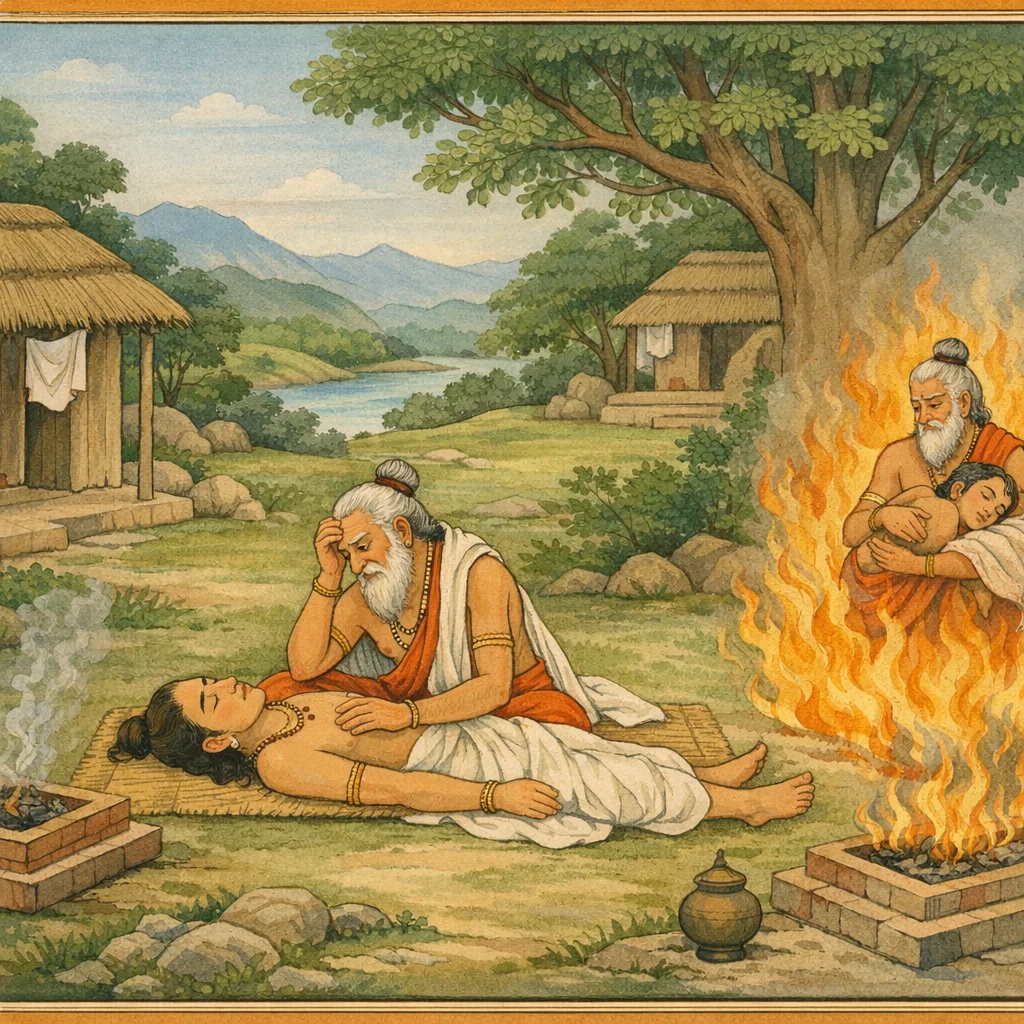
Lomāśa reports that Bharadvāja, having completed svādhyāya and daily rites, returns to his hermitage carrying a bundle of kindling. Formerly the fires would rise in welcome, but now they do not, signaling disorder in the agnihotra. Observing the anomaly, Bharadvāja questions a blind śūdra household-guardian about the welfare of the āśrama and specifically whether his son has gone to Raibhya’s residence despite earlier prohibition. The guardian states that the son did go and has been killed by a stronger rākṣasa bearing a spear; the guardian had attempted to block the assailant at the doorway of the fire-house, but the youth was struck down. Hearing this, Bharadvāja takes up his lifeless son and laments: he reflects on the purpose of austerity, the bitterness that can arise even in a previously gentle person, and the cascading harm produced by anger and curse under distress. He then performs the cremation, kindles the fire fully, and enters the sacred fire thereafter, marking an extreme conclusion of grief framed by ritual action.
Chapter Arc: लोमश ऋषि तीर्थयात्रा के प्रसंग में भरद्वाज के आश्रम का दृश्य उठाते हैं—जहाँ प्रतिदिन स्वागत करने वाली अग्नियाँ आज मौन हैं, मानो किसी अनिष्ट का संकेत दे रही हों। → भरद्वाज अग्निहोत्र में विकृति देखकर गृहपाल शूद्र से पूछते हैं; शूद्र अत्यन्त अप्रिय वचन कहकर यवक्रीत के मारे जाने और पुत्र-हानि का समाचार देता है। भरद्वाज मृत पुत्र को उठाकर शोक-विलाप करते हैं और रैभ्य-मुनि के शाप/प्रतिशाप की स्मृति से क्रोध व विवशता और तीव्र हो उठती है। → पुत्रशोक से विह्वल भरद्वाज विलाप की पराकाष्ठा पर पहुँचकर पुत्र का दाह-संस्कार करते हैं और फिर स्वयं सुसमिद्ध अग्नि में प्रवेश कर जाते हैं—शोक, क्रोध और वैराग्य एक ही क्षण में दहक उठते हैं। → लोमश युधिष्ठिर को बताते हैं कि भरद्वाज का विलाप समाप्त हुआ, पुत्र का अन्त्येष्टि-कर्म हुआ, और ऋषि ने अग्नि-प्रवेश द्वारा अपने जीवन का समापन कर दिया; कथा एक शोकान्त निष्कर्ष पर ठहरती है। → भरद्वाज के अग्नि-प्रवेश के बाद रैभ्य-यवक्रीत-प्रसंग की शेष परिणति और उससे जुड़ी आगे की दैवी/ऋषि-परम्परा की प्रतिक्रिया अगले प्रसंग की ओर संकेत करती है।
Shlokas
Verse 1
अपना स२ (0 अवज असल सप्तत्रिशर्दाधिकशततमोब< ध्याय: भरद्वाजका पुत्रशोकसे विलाप करना, रैभ्यमुनिको शाप देना एवं स्वयं अग्निमें प्रवेश करना लोगश उवाच भरद्वाजस्तु कौन्तेय कृत्वा स्वाध्यायमाद्विकम् | समित्कलापमादाय प्रविवेश स्वमाश्रमम्
Lomaśa said: “O son of Kuntī, the sage Bharadvāja, having completed his daily Vedic recitation befitting a twice-born, took up a bundle of sacred fuel-sticks and entered his own hermitage.”
Verse 2
त॑ सम दृष्टवा पुरा सर्वे प्रत्युत्तिष्ठन्ति पावका: । न त्वेनमुपतिष्ठन्ति हतपुत्र॑ं तदाग्नय:
Formerly, whenever they saw him, all the sacred fires would rise up in reverent welcome. But now, seeing him bereft of his son, those very fires no longer rise to honor him—signaling a rupture in auspicious order and the withdrawal of ritual support in a moment of grief and moral disturbance.
Verse 3
वैकृतं त्वग्निहोत्रे स लक्षयित्वा महातपा: । तमन्ध॑ शूद्रमासीनं गृहपालमथाब्रवीत्
Noticing something irregular in the performance of the Agnihotra, the great ascetic observed an blind Śūdra seated there—the house-guardian—and then addressed him. The scene frames a moral inquiry: when sacred duty is disrupted, the seeker must investigate with discernment rather than haste, and speak directly to the responsible person.
Verse 4
अग्निहोत्रगृहमें यह विकृति देखकर उन महातपस्वी भरद्वाजने वहाँ बैठे हुए अन्धे गृहरक्षक शूद्रसे पूछा-- ।। कि नु मे नाग्नय: शूद्र प्रतिनन्दन्ति दर्शनम् । त्वं चापि न यथापूर्व कच्चित् क्षेममिहाश्रमे
Seeing this abnormality in the Agnihotra-house, the great ascetic Bharadvāja questioned the blind Śūdra who served as the household-guardian there: “Why is it, O Śūdra, that my sacred fires do not seem to welcome my presence? And you too are not as you were before—tell me, is all well and safe here in this hermitage?”
Verse 5
कच्चिन्न रैभ्यं पुत्रो मे गतवानल्पचेतन: । एतदाचक्ष्व मे शीघ्रं न हि शुद्धयति मे मन:,“दास! क्या कारण है कि आज अग्नियाँ पूर्ववत् मेरा दर्शन करके प्रसन्नता नहीं प्रकट करती हैं। इधर तुम भी पहले-जैसे समादरका भाव नहीं दिखाते हो। इस आश्रममें कुशल तो है न? कहीं मेरा मन्दबुद्धि पुत्र रैभ्यके पास तो नहीं चला गया? यह बात मुझे शीघ्र बताओ; क्योंकि मेरा मन शान्त नहीं हो रहा है”
“Has my dull-witted son perhaps gone to Raibhya? Tell me this at once, for my mind does not become calm.”
Verse 6
शूद्र बवाच रैभ्यं यातो नूनमयं पुत्रस्ते मन्दचेतन: । तथा हि निहत: शेते राक्षसेन बलीयसा,शूद्र बोला--भगवन्! अवश्य ही आपका यह मन्दमति पुत्र रैभ्यके यहाँ गया था। उसीका यह फल है कि एक महाबली राक्षसके द्वारा मारा जाकर पृथ्वीपर पड़ा है
The Śūdra said: “Surely this dull-witted son of yours must have gone to Raibhya. That is precisely the consequence: he lies here slain, struck down by a mightier rākṣasa.”
Verse 7
प्रकाल्यमानस्तेनायं शूलहस्तेन रक्षसा । अग्न्यागारं प्रति द्वारि मया दोर्भ्या निवारित:,राक्षस अपने हाथमें शूल लेकर इसका पीछा कर रहा था और यह अग्निशालामें घुसा जा रहा था। उस समय मैंने दोनों हाथोंसे पकड़कर इसे द्वारपर ही रोक लिया
As this man was being hotly pursued by the rākṣasa holding a spear in his hand, he rushed toward the fire-sanctuary. At the very doorway I seized him with both arms and restrained him there—intervening to prevent a violent breach at a sacred threshold and to check the rākṣasa’s immediate aggression.
Verse 8
ततः स विहताशो<त्र जलकामो<शुचिर्ध्रुवम् । निहतः सो$तिवेगेन शूलहस्तेन रक्षसा,निश्चय ही अपवित्र होनेके कारण यह शुद्धिके लिये जल लेनेकी इच्छा रखकर यहाँ आया था, परंतु मेरे रोक देनेसे यह हताश हो गया। उस दशामें उस शूलधारी राक्षसने इसके ऊपर बड़े वेगसे प्रहार करके इसे मार डाला
Then, here, he became utterly despondent. Being impure and certainly desiring water for purification, he had come to this place; but because I prevented him, he lost hope. In that condition, the spear-wielding rākṣasa struck him with great force and killed him. The episode underscores how obstruction of a rightful act of purification can precipitate calamity, and how violence exploits moments of vulnerability.
Verse 9
भरद्वाजस्तु तच्छुत्वा शूद्रस्य विप्रियं महत् । गतासुं पुत्रमादाय विललाप सुदुःखित:,शूद्रका कहा हुआ यह अत्यन्त अप्रिय वचन सुनकर भरद्वाज बड़े दुखी हो गये और अपने प्राणशून्य पुत्रको लेकर विलाप करने लगे
Hearing that exceedingly harsh and unwelcome statement spoken by the Śūdra, Bharadvāja was overwhelmed with grief. Taking up his son, now bereft of life, he lamented in deep sorrow—an image of a father’s anguish and the moral weight carried by cruel speech and its consequences.
Verse 10
भरद्वाज उवाच ब्राह्मणानां किलार्थाय ननु त्वं तप्तवांस्तप: | द्विजानामनथधीता वै वेदा: सम्प्रतिभान्त्विति,भरद्वाजने कहा--बेटा! तुमने ब्राह्मणोंके हितके लिये भारी तपस्या की थी। तुम्हारी तपस्याका यह उद्देश्य था कि द्विजोंको बिना पढ़े ही सब वेदोंका ज्ञान हो जाय
Verse 11
तथा कल्याणशीलस्त्व॑ ब्राह्म॒णेषु महात्मसु । अनागा: सर्वभूतेषु कर्कशत्वमुपेयिवान्,इस प्रकार महात्मा ब्राह्मणोंके प्रति तुम्हारा स्वभाव अत्यन्त कल्याणकारी था। किसी भी प्राणीके प्रति तुम कोई अपराध नहीं करते थे। फिर भी तुम्हारा स्वभाव कुछ कठोर हो गया था
Verse 12
लोमशजी कहते हैं--कुन्तीनन्दन! भरद्वाज मुनि प्रतिदिनका स्वाध्याय पूरा करके बहुत-सी समिधाएँ लिये आश्रममें आये। उस दिनसे पहले सभी अग्नियाँ उनको देखते ही उठकर स्वागत करती थीं, परंतु उस समय उनका पुत्र मारा गया था, इसलिये अशौचयुक्त होनेके कारण उनका अग्नियोंने पूर्ववत् खड़े होकर स्वागत नहीं किया,प्रतिषिद्धो मया तात रैभ्यावसथदर्शनात् | गतवानेव त॑ द्रष्टं कालान्तकयमोपमम् तात! मैंने तुम्हें बार-बार मना किया था कि तुम रैभ्यके आश्रमकी ओर न देखना, परंतु तुम उसे देखने चले ही गये और वह तुम्हारे लिये काल, अन्तक एवं यमराजके समान हो गया। महान् तेजस्वी होनेपर भी उसकी बुद्धि बड़ी खोटी है। वह जानता था कि मुझ बूढ़ेके तुम एक ही पुत्र हो तो भी वह दुष्ट क्रोधके वशीभूत हो ही गया
Lomaśa said: “Dear child, I had repeatedly forbidden you to look toward the hermitage of Raibhya. Yet you went to see it—and that sight became for you like Kāla (Time), Antaka (Death), and Yama (the Lord of Death). Though he is greatly radiant, his judgment is grievously perverse. Even knowing that you were my only son in my old age, that wicked man still fell under the sway of anger.”
Verse 13
य:ः स जानन् महातेजा वृद्धस्यैकं ममात्मजम् | गतवानेव कोपस्य वशं परमदुर्मति:,तात! मैंने तुम्हें बार-बार मना किया था कि तुम रैभ्यके आश्रमकी ओर न देखना, परंतु तुम उसे देखने चले ही गये और वह तुम्हारे लिये काल, अन्तक एवं यमराजके समान हो गया। महान् तेजस्वी होनेपर भी उसकी बुद्धि बड़ी खोटी है। वह जानता था कि मुझ बूढ़ेके तुम एक ही पुत्र हो तो भी वह दुष्ट क्रोधके वशीभूत हो ही गया
Bharadvāja said: “That man—though possessed of great spiritual brilliance—was of utterly perverse judgment. Even knowing that you are my only son in my old age, he still went under the sway of wrath. My child, I warned you again and again not to look toward Raibhya’s hermitage; yet you went and looked, and that very act became for you like Death, the Ender, and Yama himself.”
Verse 14
पुत्रशोकमनुप्राप्त एष रैभ्यस्य कर्मणा । त्यक्ष्यामि त्वामृते पुत्र प्राणानिष्टतमान् भुवि,बेटा! आज रैभ्यके इस कठोर कर्मसे मुझे पुत्रशोक प्राप्त हुआ है। तुम्हारे बिना मैं इस पृथ्वीपर अपने परम प्रिय प्राणोंका भी परित्याग कर दूँगा
Bharadvāja said: “Because of Raibhya’s deed, this grief for my son has come upon me. O son, without you I will abandon even my very life-breath—dearest to me in this world.”
Verse 15
यथाहं पुत्रशोकेन देहं त्यक्ष्यामि किल्बिषी । तथा ज्येष्ठ: सुतो रैभ्यं हिंस्पाच्छीघ्रमनागसम्,जैसे मैं पापी अपने पुत्रके शोकसे व्याकुल हो अपने शरीरका त्याग कर रहा हूँ, उसी प्रकार रैभ्यका ज्येष्ठ पुत्र अपने निरपराध पिताकी शीघ्र हत्या कर डालेगा
Bharadvāja said: “As I, stained by sin, am about to abandon my body, tormented by grief for my son, so too will Raibhya’s eldest son swiftly do violence—indeed, kill—his blameless father.”
Verse 16
सुखिनो वै नरा येषां जात्या पुत्रो न विद्यते । ते पुत्रशोकमप्राप्य विचरन्ति यथासुखम्,संसारमें वे मनुष्य सुखी हैं, जिन्हें पुत्र पैदा ही नहीं हुआ है; क्योंकि वे पुत्रशोकका अनुभव न करके सदा सुखपूर्वक विचरते हैं
Bharadvāja said: Truly, those men are happy to whom, by fate, no son is born. For, having never encountered the grief that comes from a son, they move through the world at ease, untroubled and content.
Verse 17
ये तु पुत्रकृताच्छोकाद् भुशं व्याकुलचेतस: । शपन्तीष्टान् सखीनारततस्तिभ्य: पापतरो नु कः,जो पुत्रशोकसे मन-ही-मन व्याकुल हो गहरी व्यथाका अनुभव करते हुए अपने प्रिय मित्रोंको भी शाप दे डालते हैं, उनसे बढ़कर महापापी दूसरा कौन हो सकता है?
Bharadvāja said: Those who, overwhelmed by the grief caused by a son and with minds violently agitated, go so far as to curse even their beloved friends—who could be more sinful than they?
Verse 18
परासुश्न सुतो दृष्ट: शप्तश्नेष्ट: सखा मया । ईदृशीमापदं कोजत्र द्वितीयोडनुभविष्यति,मैंने अपने पुत्रकी मृत्यु देखी और प्रिय मित्रको शाप दे दिया। मेरे सिवा संसारमें दूसरा कौन-सा मनुष्य है जो ऐसी विपत्तिका अनुभव करेगा
Bharadvāja said: “I have seen my own son die, and in my anguish I have cursed a beloved friend. Who else in this world, besides me, will ever have to endure a calamity of this kind?”
Verse 19
लोगमश उवाच विलप्यैवं बहुविधं भरद्वाजो5दहत् सुतम् । सुसमिद्धं ततः पश्चात् प्रविवेश हुताशनम्
Lomāśa said: Having lamented in many ways like this, Bharadvāja consigned his son to the fire. Then, when the blaze was fully kindled, he himself thereafter entered the sacred fire—an act of grief-driven self-immolation that underscores the peril of being overwhelmed by sorrow rather than steadied by dharma and restraint.
Verse 136
इस प्रकार श्रीमहाभारत वनपर्वके अन्तर्गत तीर्थयात्रापर्वमें लोमशती र्थयात्राके प्रस॑ंगमें यवक्रीतोपाख्यानविषयक एक सौ छत्तीसवाँ अध्याय पूरा हुआ
Thus ends the one-hundred-and-thirty-sixth chapter of the Mahābhārata’s Vana Parva, within the Tīrtha-yātrā Parva, in the context of Lomasha’s pilgrimage narrative, dealing with the episode (upākhyāna) of Yavakrīta. The colophon marks the completion of this unit, situating the story within the larger ethical frame of pilgrimage, instruction, and the consequences of one’s conduct.
Verse 137
लोमशजी कहते हैं--युधिष्ठि!! इस तरह भाँति-भाँतिके विलाप करके भरद्वाजने अपने पुत्रका दाह-संस्कार किया। तत्पश्चात् स्वयं भी वे जलती आगमें प्रवेश कर गये ।। इति श्रीमहाभारते वनपर्वणि तीर्थयात्रापर्वणि लोमशतीर्थयात्रायां यवक्रीतोपाख्याने सप्तत्रिंशदधिकशततमो<ध्याय:
Lomaśa said: “Yudhiṣṭhira, after lamenting in many ways, Bharadvāja performed the cremation rites for his son. Thereafter, he himself entered the blazing fire.”
Frequently Asked Questions
The dilemma concerns ethical self-governance under bereavement: whether grief justifies harsh speech, curse, or retaliatory intent, and how one preserves dharma when emotional pain pressures judgment.
The chapter implies that ritual discipline and ethical restraint are tested most severely during loss; it also warns that anger and impulsive speech can multiply harm beyond the initiating tragedy.
No explicit phalaśruti is stated in the provided verses; the chapter’s meta-function is conveyed indirectly through exemplification—linking disrupted ritual order, grief discourse, and consequential action within the epic’s moral pedagogy.