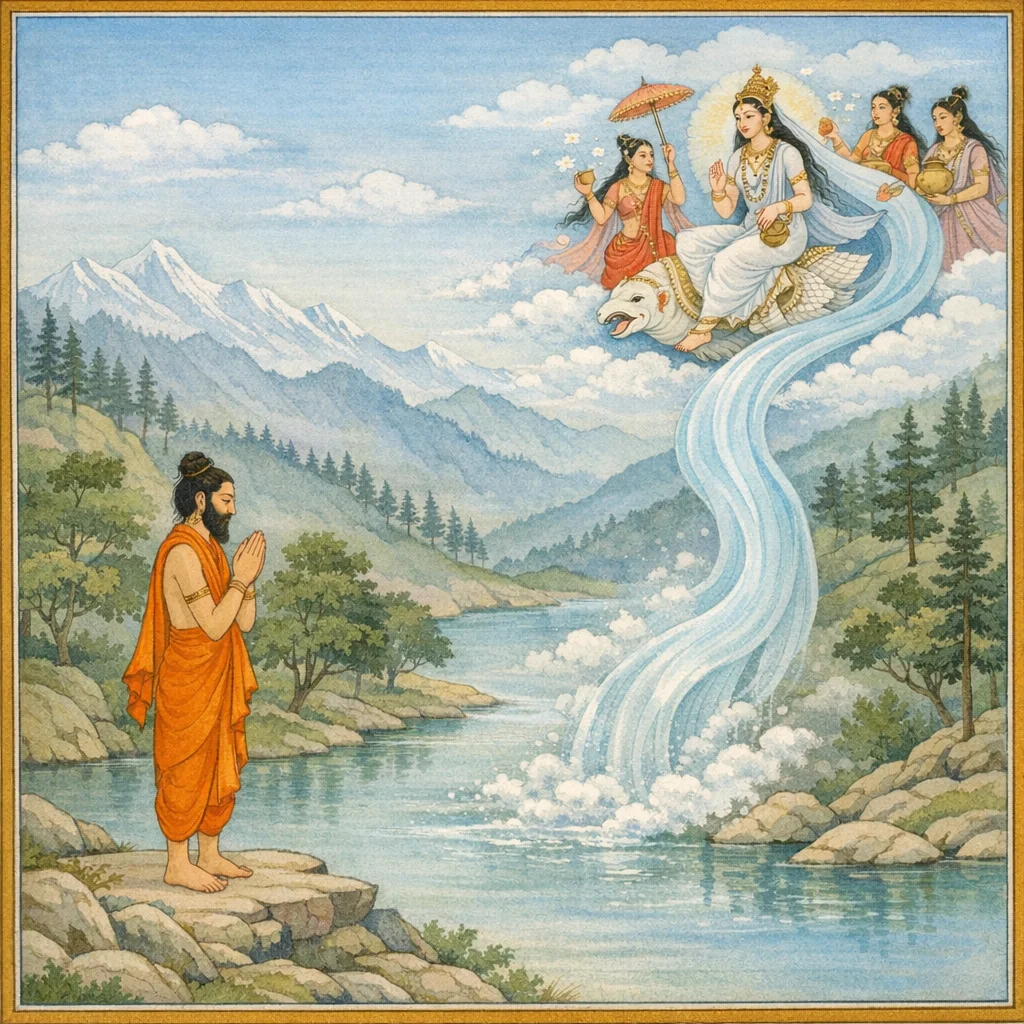
Adhyaya 108
गङ्गाधारणम् (Gaṅgādhāraṇa) — Śiva Bears the Descent of Gaṅgā
Upa-parva: Tīrtha-yātrā (Pilgrimage Narratives) — Gaṅgāvataraṇa / Bhāgīratha Episode
Lomāśa narrates how, after hearing Bhāgīratha’s request and the gods’ interest, the Lord (Śiva/Īśāna/Hara) assents to support the divine river’s fall from the sky. Śiva proceeds to Himavat, accompanied by formidable attendants, and instructs Bhāgīratha to invite the ‘daughter of the mountain’ to descend, promising to bear her as she drops from heaven. Bhāgīratha, purified and reverent, meditates upon Gaṅgā; she then descends suddenly, drawing gods, sages, gandharvas, nāgas, and rākṣasas as witnesses. The river is depicted with dynamic imagery—whirling currents, foam, fish and crocodiles—while Śiva receives and stabilizes her on his forehead like a pearl-garland. From there she spreads in three streams and, upon reaching earth, asks Bhāgīratha to indicate the route. Bhāgīratha leads Gaṅgā to the ocean to fulfill the purpose of filling Varuṇa’s abode and enabling ancestral rites; he designates Gaṅgā in a filial relation and offers water to the ancestors, achieving his aim. The chapter closes with Lomāśa indicating he has explained how Gaṅgā became tripathagā and, in continuation, references Agastya’s associated feats as part of the broader inquiry.
Chapter Arc: Lomasha narrates to the Pandavas the dread fate of Sagara’s sons—burnt to ashes by the great Kapila—and the terrible consequence: their path to heaven is blocked, their rites incomplete, their lineage burdened with an unredeemed calamity. → Bhagiratha, hearing of the ghastly end and the fathers’ ‘unattained heaven’, entrusts his kingdom to ministers and goes to the Himalaya to perform fierce tapas. The landscape swells with omen and beauty—strange birds calling, jewel-like regions haunted by potent serpents—mirroring the peril of the vow. Ganga herself appears and asks what boon he seeks, yet the problem deepens: even if she agrees to descend, who can bear her cosmic fall? → Bhagiratha’s resolve hardens into a twofold conquest: he wins Ganga’s assent for the sake of his ancestors, and then, by austerity, propitiates Shambhu (Shiva), the world-sustainer, to receive and restrain Ganga’s descent—so the river may reach the ashes without shattering the earth. → With Shiva pleased and the plan secured, Bhagiratha obtains the necessary boons: Ganga’s descent is made possible through divine containment, and the purpose is fixed—her waters will sanctify the remains and open the way to svarga for the fallen forefathers. → The boons are granted, but the decisive act remains: the actual descent and the final liberation of the ancestors are poised to unfold beyond this chapter.
Shlokas
Verse 1
(दाक्षिणात्य अधिक पाठके ३ ६ श्लोक मिलाकर कुल ७३ ३ “लोक हैं) हू... “+(>9) #2:.# #25-२ अष्टाधिकशततमोब् ध्याय: भगीरथका हिमालयपर तपस्याद्वारा गंगा और महादेवजीको प्रसन्न करके उनसे वर प्राप्त करना लोगश उवाच स तु राजा महेष्वासश्नक्रवर्ती महारथ: । बभूव सर्वलोकस्य मनोनयननन्दन:,लोमशजी कहते हैं--राजन्! महान् धनुर्धर महारथी राजा भगीरथ चक्रवर्ती नरेश थे। वे सब लोगोंके मन और नेत्रोंको आनन्द प्रदान करनेवाले थे
Lomaśa said: “That king—Bhagīratha—was a mighty archer, a universal sovereign, and a great chariot-warrior. He became a source of delight to the minds and eyes of all people,” indicating a ruler whose excellence and conduct inspired public joy and confidence, setting the ethical frame for his later austerities undertaken for the welfare of the world.
Verse 2
स सुश्राव महाबाहुः कपिलेन महात्मना । पितृणां निधन घोरमप्राप्तिं त्रिदिवस्य च,नरेश्वरर! उन महाबाहुने जब यह सुना कि महात्मा कपिलद्दधारा हमारे (साठ हजार) पितरोंकी भयंकर मृत्यु हुई है और वे स्वर्गप्राप्तिसे वंचित रह गये हैं तब उन्होंने व्यथित हृदयसे अपना राज्य मन्त्रीको सौंप दिया और स्वयं हिमालयके शिखरपर तपस्या करनेके लिये प्रस्थान किया
Then the mighty-armed king heard from the great sage Kapila of the dreadful destruction of his forefathers and that they had been deprived of attaining heaven. Stricken with grief and a sense of responsibility, he entrusted his kingdom to his minister and set out for the peaks of the Himalaya to undertake austerities—seeking to remedy the fate of the ancestors through disciplined renunciation and righteous effort.
Verse 3
स राज्यं सचिवे न्यस्य हृदयेन विदूयता । जगाम हिमवत्पाश्वं तपस्तप्तुं नरेश्वर,नरेश्वरर! उन महाबाहुने जब यह सुना कि महात्मा कपिलद्दधारा हमारे (साठ हजार) पितरोंकी भयंकर मृत्यु हुई है और वे स्वर्गप्राप्तिसे वंचित रह गये हैं तब उन्होंने व्यथित हृदयसे अपना राज्य मन्त्रीको सौंप दिया और स्वयं हिमालयके शिखरपर तपस्या करनेके लिये प्रस्थान किया
Lośa said: With his heart torn by grief, the king entrusted his kingdom to his minister and departed for the slopes of the Himālaya to undertake austerities. Having heard that the great sage Kapila had caused the dreadful death of his (sixty thousand) forefathers and that they had been deprived of attaining heaven, the mighty-armed ruler, distressed in mind, renounced immediate royal concerns and set out for penance—seeking a higher remedy through tapas and responsibility toward ancestors.
Verse 4
आरिराधयिषुर्गड्रां तपसा दग्धकिल्बिष: | सो5पश्यत नरश्रेष्ठ हिमवन्तं नगोत्तमम्,नरेश्वरर! तपस्यासे सारा पाप नष्ट करके वे गंगाजीकी आराधना करना चाहते थे। उन्होंने देखा कि गिरिराज हिमालय विविध धातुओंसे विभूषित नाना प्रकारके शिखरोंसे अलंकृत है। वायुके आधारपर उड़नेवाले मेघ चारों ओरसे उसका अभिषेक कर रहे हैं
Desiring to propitiate the river Gaṅgā, his sins scorched away by austerity, he beheld—O best of men—the Himavant, foremost of mountains. The narrative frames tapas (self-discipline) as a purifying force that prepares one for reverent approach to sacred powers; the vision of Himālaya signals entry into a sanctified landscape where devotion and inner cleansing converge.
Verse 5
शज्जैर्बहुविधाकारैर्धातुमद्धिरलंकृतम् । पवनालम्बिभिममेंघै: परिषिक्ते समन््ततः,नरेश्वरर! तपस्यासे सारा पाप नष्ट करके वे गंगाजीकी आराधना करना चाहते थे। उन्होंने देखा कि गिरिराज हिमालय विविध धातुओंसे विभूषित नाना प्रकारके शिखरोंसे अलंकृत है। वायुके आधारपर उड़नेवाले मेघ चारों ओरसे उसका अभिषेक कर रहे हैं
Lomaśa said: “O king, they wished to worship the Gaṅgā after destroying their sins through austerity. They beheld the lordly Himālaya—adorned with many kinds of peaks and embellished with mineral-rich ores of varied forms—while clouds, borne along by the wind, poured down upon it from every side as though performing a consecration.”
Verse 6
नदीकुण्जनिमम्बैश्व प्रासादैरुपशोभितम् । गुहाकन्दरसंलीनसिंहव्याप्रनिषेवितम्,अनेकानेक नदियों, निकुण्जों, घाटियों और प्रासादों (मन्दिरों)-से इसकी बड़ी शोभा हो रही है। गुफाओं और कन्दराओंमें छिपे हुए सिंह तथा व्याप्रोंसे यह पर्वत सदा सेवित होता है
Lomaśa said: “This mountain is splendidly adorned with rivers, leafy groves, and lofty shrines. It is ever frequented by lions and tigers that lie hidden in its caves and ravines—majestic, beautiful, and formidable at once.”
Verse 7
शकुनैश्न विचित्राज्: कूजद्धिविविधा गिर: । भड़राजैस्तथा हंसैर्दात्यूहैर्जलकुक्कुटै:,भाँति-भाँतिके कलरव करते हुए विचित्र अंगोंवाले पक्षी, भृंगराज, हंस, चातक, जलमुर्ग, मोर, शतपत्र नामक पक्षी, चक्रवाक, कोकिल, चकोर, असितापांग और पुत्रप्रिय आदि इस पर्वतकी शोभा बढ़ाते हैं
Verse 8
मयूरै: शतपत्रैश्न जीवं जीवककोकिलै: । चकोरैरसितापाज्जैस्तथा पुत्रप्रियेरपि,भाँति-भाँतिके कलरव करते हुए विचित्र अंगोंवाले पक्षी, भृंगराज, हंस, चातक, जलमुर्ग, मोर, शतपत्र नामक पक्षी, चक्रवाक, कोकिल, चकोर, असितापांग और पुत्रप्रिय आदि इस पर्वतकी शोभा बढ़ाते हैं
Lomaśa said: “Peacocks, the śatapatra birds, the jīvaṃjīvaka and cuckoos, along with cakora birds, the dark-eyed asitāpāṅga, and the so‑called ‘son‑loving’ birds too—each calling out in many different ways—enhance the beauty of this mountain.”
Verse 9
जलस्थानेषु रम्येषु पद्मिनीभिश्व संकुलम् । सारसानां च मधुरैव्यद्वति: समलंकृतम्,वहाँके रमणीय जलाशयोंमें पद्मसमूह भरे हुए हैं। सारसोंके मधुर कलरव उस पर्वतीय प्रदेशको सुशोभित कर रहे हैं। हिमालयकी शिलाओंपर किन्नर और अप्सराएँ बैठी हैं। वहाँके वृक्षोंपर चारों ओरसे दिग्गजोंके दाँतोंकी रगड़ दिखायी देती है। हिमालयके इन शिखरोंपर विद्याधरगण विचर रहे हैं। नाना प्रकारके रत्न सब ओर व्याप्त हैं। प्रज्वलित जिह्वावाले भयंकर विषधर सर्प इस गिरिप्रदेशका सेवन करते हैं। यह शैलराज कहीं तो सुवर्णके समान उद्धासित होता है, कहीं चाँदीके समान चमकता है और कहीं कज्जलराशिके समान काला दिखायी देता है। नरश्रेष्ठ भगीरथ उस हिमवान् पर्वतपर गये और घोर तपस्यामें लग गये। उन्होंने सहस्र वर्षोतक फल, मूल और जलका आहार किया। एक हजार दिव्य वर्ष बीत जानेपर महानदी गंगाने स्वयं साकार होकर उन्हें प्रत्यक्ष दर्शन दिया
Lomaśa describes a delightful mountain region where charming pools are thick with lotus-beds. The sweet calls of the sārasas (cranes) adorn and enliven the forested landscape. The passage evokes a sacred, awe-inspiring Himalayan setting—beautiful yet formidable—suggesting that places of tapas and pilgrimage often unite serenity with danger, and that the seeker must cultivate steadiness amid both delight and fear.
Verse 10
किन्नरैरप्सरोभिश्न निषेवितशिलातलम् । दिग्वारणविषाणाग्रै: समन्ताद् धृष्टपादपम्,वहाँके रमणीय जलाशयोंमें पद्मसमूह भरे हुए हैं। सारसोंके मधुर कलरव उस पर्वतीय प्रदेशको सुशोभित कर रहे हैं। हिमालयकी शिलाओंपर किन्नर और अप्सराएँ बैठी हैं। वहाँके वृक्षोंपर चारों ओरसे दिग्गजोंके दाँतोंकी रगड़ दिखायी देती है। हिमालयके इन शिखरोंपर विद्याधरगण विचर रहे हैं। नाना प्रकारके रत्न सब ओर व्याप्त हैं। प्रज्वलित जिह्वावाले भयंकर विषधर सर्प इस गिरिप्रदेशका सेवन करते हैं। यह शैलराज कहीं तो सुवर्णके समान उद्धासित होता है, कहीं चाँदीके समान चमकता है और कहीं कज्जलराशिके समान काला दिखायी देता है। नरश्रेष्ठ भगीरथ उस हिमवान् पर्वतपर गये और घोर तपस्यामें लग गये। उन्होंने सहस्र वर्षोतक फल, मूल और जलका आहार किया। एक हजार दिव्य वर्ष बीत जानेपर महानदी गंगाने स्वयं साकार होकर उन्हें प्रत्यक्ष दर्शन दिया
Lomasha said: “Its rocky terraces are frequented by Kinnaras and Apsarases. All around, the trees bear the marks of having been rubbed and scraped by the tips of the tusks of the great elephants of the quarters—signs of the mountain’s wild majesty and of beings who move there beyond ordinary human reach.”
Verse 11
विद्याधरानुचरितं नानारत्नसमाकुलम् । विषोल्बणभुजंगैश्व दीप्तजिद्दैर्निषिवितम्,वहाँके रमणीय जलाशयोंमें पद्मसमूह भरे हुए हैं। सारसोंके मधुर कलरव उस पर्वतीय प्रदेशको सुशोभित कर रहे हैं। हिमालयकी शिलाओंपर किन्नर और अप्सराएँ बैठी हैं। वहाँके वृक्षोंपर चारों ओरसे दिग्गजोंके दाँतोंकी रगड़ दिखायी देती है। हिमालयके इन शिखरोंपर विद्याधरगण विचर रहे हैं। नाना प्रकारके रत्न सब ओर व्याप्त हैं। प्रज्वलित जिह्वावाले भयंकर विषधर सर्प इस गिरिप्रदेशका सेवन करते हैं। यह शैलराज कहीं तो सुवर्णके समान उद्धासित होता है, कहीं चाँदीके समान चमकता है और कहीं कज्जलराशिके समान काला दिखायी देता है। नरश्रेष्ठ भगीरथ उस हिमवान् पर्वतपर गये और घोर तपस्यामें लग गये। उन्होंने सहस्र वर्षोतक फल, मूल और जलका आहार किया। एक हजार दिव्य वर्ष बीत जानेपर महानदी गंगाने स्वयं साकार होकर उन्हें प्रत्यक्ष दर्शन दिया
Lomaśa said: “This region, frequented by the Vidyādharas, is filled on every side with many kinds of jewels. It is also inhabited by dreadful, highly venomous serpents whose tongues blaze like fire.” The description underscores the Himalaya’s double nature—sublime and alluring, yet perilous—suggesting that sacred or extraordinary realms demand vigilance and self-mastery alongside wonder.
Verse 12
क्वचित् कनकसंकाशं क्वचिद् रजतसंनि भम् । क्वचिदजञ्जनपुड्जाभं हिमवन्तमुपागमत्,वहाँके रमणीय जलाशयोंमें पद्मसमूह भरे हुए हैं। सारसोंके मधुर कलरव उस पर्वतीय प्रदेशको सुशोभित कर रहे हैं। हिमालयकी शिलाओंपर किन्नर और अप्सराएँ बैठी हैं। वहाँके वृक्षोंपर चारों ओरसे दिग्गजोंके दाँतोंकी रगड़ दिखायी देती है। हिमालयके इन शिखरोंपर विद्याधरगण विचर रहे हैं। नाना प्रकारके रत्न सब ओर व्याप्त हैं। प्रज्वलित जिह्वावाले भयंकर विषधर सर्प इस गिरिप्रदेशका सेवन करते हैं। यह शैलराज कहीं तो सुवर्णके समान उद्धासित होता है, कहीं चाँदीके समान चमकता है और कहीं कज्जलराशिके समान काला दिखायी देता है। नरश्रेष्ठ भगीरथ उस हिमवान् पर्वतपर गये और घोर तपस्यामें लग गये। उन्होंने सहस्र वर्षोतक फल, मूल और जलका आहार किया। एक हजार दिव्य वर्ष बीत जानेपर महानदी गंगाने स्वयं साकार होकर उन्हें प्रत्यक्ष दर्शन दिया
Lomaśa describes the Himalaya as a mountain of shifting splendor: in some places it gleams like gold, in others it shines like silver, and elsewhere it appears dark like a heap of collyrium. Into this awe-inspiring region the noble Bhagiratha went and undertook severe austerities, living on fruits, roots, and water for a thousand years. When a thousand divine years had passed, the great river Gaṅgā manifested in visible form and granted him her direct audience—affirming the ethical power of steadfast tapas performed for the welfare of the world.
Verse 13
स तु तत्र नरश्रेष्स्तपो घोरं समाश्रितः । फलमूलाम्बुसम्भक्ष: सहस्रपरिवत्सरान्,वहाँके रमणीय जलाशयोंमें पद्मसमूह भरे हुए हैं। सारसोंके मधुर कलरव उस पर्वतीय प्रदेशको सुशोभित कर रहे हैं। हिमालयकी शिलाओंपर किन्नर और अप्सराएँ बैठी हैं। वहाँके वृक्षोंपर चारों ओरसे दिग्गजोंके दाँतोंकी रगड़ दिखायी देती है। हिमालयके इन शिखरोंपर विद्याधरगण विचर रहे हैं। नाना प्रकारके रत्न सब ओर व्याप्त हैं। प्रज्वलित जिह्वावाले भयंकर विषधर सर्प इस गिरिप्रदेशका सेवन करते हैं। यह शैलराज कहीं तो सुवर्णके समान उद्धासित होता है, कहीं चाँदीके समान चमकता है और कहीं कज्जलराशिके समान काला दिखायी देता है। नरश्रेष्ठ भगीरथ उस हिमवान् पर्वतपर गये और घोर तपस्यामें लग गये। उन्होंने सहस्र वर्षोतक फल, मूल और जलका आहार किया। एक हजार दिव्य वर्ष बीत जानेपर महानदी गंगाने स्वयं साकार होकर उन्हें प्रत्यक्ष दर्शन दिया
Then that best of men, having reached that place, undertook a severe austerity. Living only on fruits, roots, and water, he sustained this discipline for a thousand years—an act of steadfast self-restraint undertaken to accomplish a higher purpose through tapas rather than force.
Verse 14
संवत्सरसहस्रे तु गते दिव्ये महानदी । दर्शयामास तं गड्जा तदा मूर्तिमती स्वयम्,वहाँके रमणीय जलाशयोंमें पद्मसमूह भरे हुए हैं। सारसोंके मधुर कलरव उस पर्वतीय प्रदेशको सुशोभित कर रहे हैं। हिमालयकी शिलाओंपर किन्नर और अप्सराएँ बैठी हैं। वहाँके वृक्षोंपर चारों ओरसे दिग्गजोंके दाँतोंकी रगड़ दिखायी देती है। हिमालयके इन शिखरोंपर विद्याधरगण विचर रहे हैं। नाना प्रकारके रत्न सब ओर व्याप्त हैं। प्रज्वलित जिह्वावाले भयंकर विषधर सर्प इस गिरिप्रदेशका सेवन करते हैं। यह शैलराज कहीं तो सुवर्णके समान उद्धासित होता है, कहीं चाँदीके समान चमकता है और कहीं कज्जलराशिके समान काला दिखायी देता है। नरश्रेष्ठ भगीरथ उस हिमवान् पर्वतपर गये और घोर तपस्यामें लग गये। उन्होंने सहस्र वर्षोतक फल, मूल और जलका आहार किया। एक हजार दिव्य वर्ष बीत जानेपर महानदी गंगाने स्वयं साकार होकर उन्हें प्रत्यक्ष दर्शन दिया
When a thousand divine years had passed, the great river Gaṅgā—taking on a visible, embodied form—appeared before him and granted him direct audience. The moment underscores the ethical logic of tapas: sustained self-discipline and purity of purpose culminate in divine response, not as a reward for power, but as confirmation of steadfast resolve directed toward the welfare of the world.
Verse 15
गड़ोवाच किमिच्छसि महाराज मत्त: कि च ददानि ते । तद् ब्रवीहि नरश्रेष्ठ करिष्यामि वचस्तव,गंगाजीने कहा--महाराज! तुम मुझसे क्या चाहते हो, मैं तुम्हें क्या दूँ? नरश्रेष्ठ! बताओ, मैं तुम्हारी याचना पूर्ण करूँगी
Gaṅgā said: “O great king, what do you desire from me, and what shall I grant you? Speak it plainly, best of men; I will fulfill your request.”
Verse 16
एवमुक्त: प्रत्युवाच राजा हैमवर्ती तदा । (नदीं भगीरथो राजन् प्रणिपत्य कृताञ्जलि: ।) पितामहा मे वरदे कपिलेन महानदि
Thus addressed, the king of the Himalayan region replied at that time: “O King, Bhagiratha—having bowed down to the river with folded hands—said, ‘O grandsire, O giver of boons! O great river, (connected) with Kapila…’” The passage frames Bhagiratha’s approach as one of reverent humility and supplication, emphasizing the ethical force of devotion and respectful speech when seeking a boon for the good of one’s ancestors.
Verse 17
अन्वेषमाणास्तुरगं नीता वैवस्वतक्षयम् । षष्टिस्तानि सहस्राणि सागराणां महात्मनाम्
While searching for the horse, those great-souled sons of Sagara—sixty thousand in number—were led to the realm of Vaivasvata (Yama), meeting their death. The verse underscores how unchecked zeal and force, even in a royal cause, can end in ruin when not guided by restraint and right judgment.
Verse 18
कपिल देवमासाद्य क्षणेन निधनं गता: । तेषामेवं विनष्टानां स्वर्गे वासो न विद्यते
Having encountered the divine Kapila, they met their end in an instant. Since they were thus destroyed, no abode in heaven is available to them—implying that a ruinous end born of wrongdoing and spiritual blindness does not yield the merit that leads to heavenly reward.
Verse 19
यावत् तानि शरीराणि त्वं जलै्नाभिषिज्चसि । तावत् तेषां गतिरनास्ति सागराणां महानदि
Lomaśa said: “So long as you keep sprinkling those bodies with water, there will be no onward course for them—O great river that flows to the ocean.”
Verse 20
स्वर्ग नय महाभागे मत्पितृन् सगरात्मजान् | तेषामर्थेन याचामि त्वामहं वै महानदि
Lośa said: “O noble one, lead my forefathers—the sons of Sagara—to heaven. For their sake I beseech you, O great river.”
Verse 21
राजन! उनके ऐसा कहनेपर राजा भगीरथने हिमालयनन्दिनी गंगाको हाथ जोड़कर प्रणाम किया और इस प्रकार कहा--“वरदायिनी महानदी! मेरे पितामह यज्ञसम्बन्धी अश्वका पता लगाते हुए कपिलके कोपसे यमलोकको जा पहुँचे हैं। वे सब महात्मा सगरके पुत्र थे और उनकी संख्या साठ हजार थी। भगवान् कपिलके निकट जाकर वे सब-के-सब क्षणभरमें भस्म हो गये। इस प्रकार दुर्मुत्युसे मरनेके कारण उन्हें स्वर्गमें निवास नहीं प्राप्त हुआ है। महानदी! जबतक तुम अपने जलसे उनके भस्म हुए शरीरोंको सींच न दोगी तबतक उन सगरपुत्रोंकी सदगति नहीं हो सकती। महाभागे! मेरे पितामह सगरकुमारोंको स्वर्गमें पहुँचा दो। महानदी! मैं उन्हींके उद्धारके लिये तुमसे याचना करता हूँ || १६-- २० || लोगश उवाच एतच्छुत्वा वचो राज्ञो गड़्ा लोकनमस्कृता । भगीरथमिदं वाक्य सुप्रीता समभाषत,लोमशजी कहते हैं--राजन्! राजा भगीरथकी यह बात सुनकर विश्ववन्दिता गंगा अत्यन्त प्रसन्न हुईं और उनसे इस प्रकार बोलीं--
Lomasha said: Hearing the king’s words, the Gaṅgā—revered by all the worlds—became greatly pleased. She then addressed Bhagiratha with these words. The episode frames Bhagiratha’s plea as an act of filial duty and compassionate responsibility: the liberation of the ancestors depends upon a righteous effort joined to sacred means.
Verse 22
करिष्यामि महाराज वचतस्ते नात्र संशय: । वेग॑ं तु मम दुर्धार्य पतन्त्या गगनाद् भुवम्,“महाराज! मैं तुम्हारी बात मानूँगी, इसमें संशय नहीं है; परंतु आकाशसे पृथ्वीपर गिरते समय मेरे वेगको रोकना बहुत कठिन है
“O great king, I will do as you command—of that there is no doubt. Yet, as I plunge from the sky down to the earth, the force of my descent is exceedingly hard to restrain.”
Verse 23
न शक्तस्त्रिषु लोकेषु कश्चिद् धारयितुं नूप । अन्यत्र विबुधश्रेष्ठान्नीलकण्ठान्महेश्वरात्,“राजन! देवश्रेष्ठ महेश्वर नीलकण्ठको छोड़कर तीनों लोकोंमें कोई भी मेरा वेग धारण नहीं कर सकता
“O king, no one in the three worlds is capable of bearing my force—except Maheśvara, the foremost of the gods, the Blue-throated Lord.”
Verse 24
त॑ तोषय महाबाहो तपसा वरदं हरम् । सतु मां प्रच्युतां देवः शिरसा धारयिष्यति,“महाबाहो! तुम तपस्याद्वारा उन्हीं वरदायक भगवान् शिवको संतुष्ट करो। स्वर्गसे गिरते समय वे ही मुझे अपने मस्तकपर धारण करेंगे
“O mighty-armed one, please satisfy Hara—Śiva, the bestower of boons—through austerity. For when I fall down from heaven, that very god will uphold me upon his head.”
Verse 25
एतच्छुत्वा ततो राजन् महाराजो भगीरथः,राजन! यह सुनकर महाराज भगीरथ कैलासपर्वतपर गये और वहाँ उन्होंने तीव्र तपस्या करके कुछ समयके बाद भगवान् शंकरको प्रसन्न किया
Hearing this, O King, the great monarch Bhagīratha set out for Mount Kailāsa. There he undertook severe austerities, and after some time he succeeded in pleasing Lord Śaṅkara. The episode highlights steadfast effort and disciplined devotion as the means to gain divine support for a righteous purpose.
Verse 26
कैलासं पर्वतं गत्वा तोषयामास शंकरम् | तपस्तीव्रमुपागम्य कालयोगेन केनचित्,राजन! यह सुनकर महाराज भगीरथ कैलासपर्वतपर गये और वहाँ उन्होंने तीव्र तपस्या करके कुछ समयके बाद भगवान् शंकरको प्रसन्न किया
Lomasha said: “O king, having gone to Mount Kailāsa, he pleased Śaṅkara. Undertaking severe austerities, and after some time had passed in due course, he won the Lord’s favor.”
Verse 27
अगृलह्लाच्च वरं तस्माद् गड़ाया धारणे नृप । स्वर्गे वासं समुद्धिश्य पितृणां स नरोत्तम:,नरेश्वर! तत्पश्चात् गंगाजीकी प्रेरणाके अनुसार नरश्रेष्ठ भगीरथने अपने पितरोंको स्वर्गलोककी प्राप्ति करानेके उद्देश्यसे महादेवजीसे गंगाजीके वेगको धारण करनेके लिये वरकी याचना की
Then, O king, that best of men sought a boon for the bearing of the Gaṅgā’s force. With the aim of securing his forefathers’ dwelling in heaven, he petitioned Mahādeva to sustain the river’s impetuous descent—an act of filial duty that places ancestral welfare above personal gain.
Verse 108
इति श्रीमहाभारते वनपर्वणि तीर्थयात्रापर्वणि लोमशतीर्थयात्रायामगस्त्योपाख्याने अष्टाधिकशततमो< ध्याय:,इस प्रकार श्रीमहाभारत वनपर्वके अन्तर्गत तीर्थयात्रापर्वमें लोमशती र्थयात्राके प्रसंगमें अगस्त्योपाख्यानविषयक एक सौ आठवाँ अध्याय पूरा हुआ
Thus, in the Śrī Mahābhārata, within the Vana Parva, in the Tīrtha-yātrā Parva, in the account of Lomāśa’s pilgrimage, the Agastya episode concludes with the one-hundred-and-eighth chapter. (This is a colophon marking the end of the chapter rather than a spoken narrative verse.)
Verse 243
स करिष्यति ते काम॑ पितृणां हितकाम्यया | (तपसा<55राधित: शम्भुर्भगवॉल्लोकभावन: ।) “विश्वभावन भगवान् शंकर तपस्याद्वारा आराधना करनेपर तुम्हारे पितरोंके हितकी इच्छासे अवश्य तुम्हारा मनोरथ पूर्ण करेंगे”
He will surely fulfill your wish, for you seek the welfare of your forefathers. Śambhu—Lord Śaṅkara, the blessed sustainer of the worlds—when propitiated through austerity, grants the desired boon, especially when the intent is righteous and aimed at ancestral good.
Frequently Asked Questions
How a potentially destructive cosmic force (Gaṅgā’s heavenly descent) can be ethically and practically integrated into the human world—requiring mediation (Śiva’s bearing) and right intention (Bhāgīratha’s ancestral duty).
Legitimate aims are achieved through disciplined effort joined with humility and proper mediation: tapas initiates change, but cosmic power must be regulated and directed toward socially constructive ends (purification and remembrance).
No explicit phalaśruti is stated in the provided passage; the meta-function is implicit—explaining Gaṅgā’s sanctity (tripathagā status) and grounding tīrtha practice and ancestral offerings in a canonical origin narrative.